

French School, Circa 1770–1790, In The Circle Of Jean-frédéric Schall - Seduction In Music
French school, circa 1770–1790, in the circle of Jean-Frédéric Schall, after a composition by Jean-Michel Moreau.
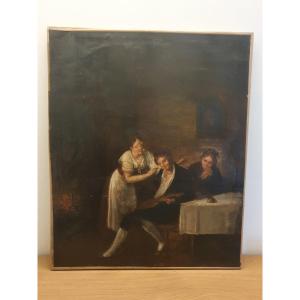
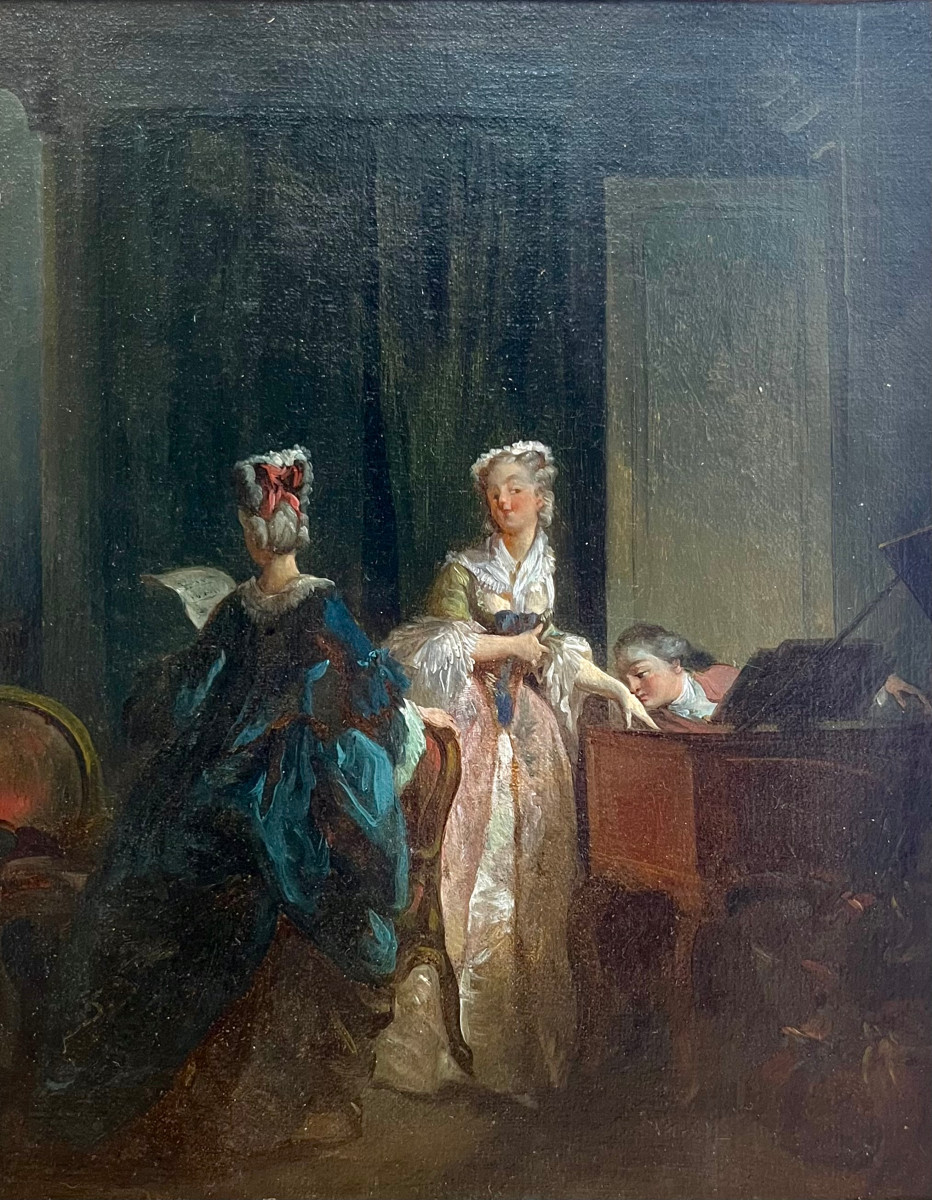
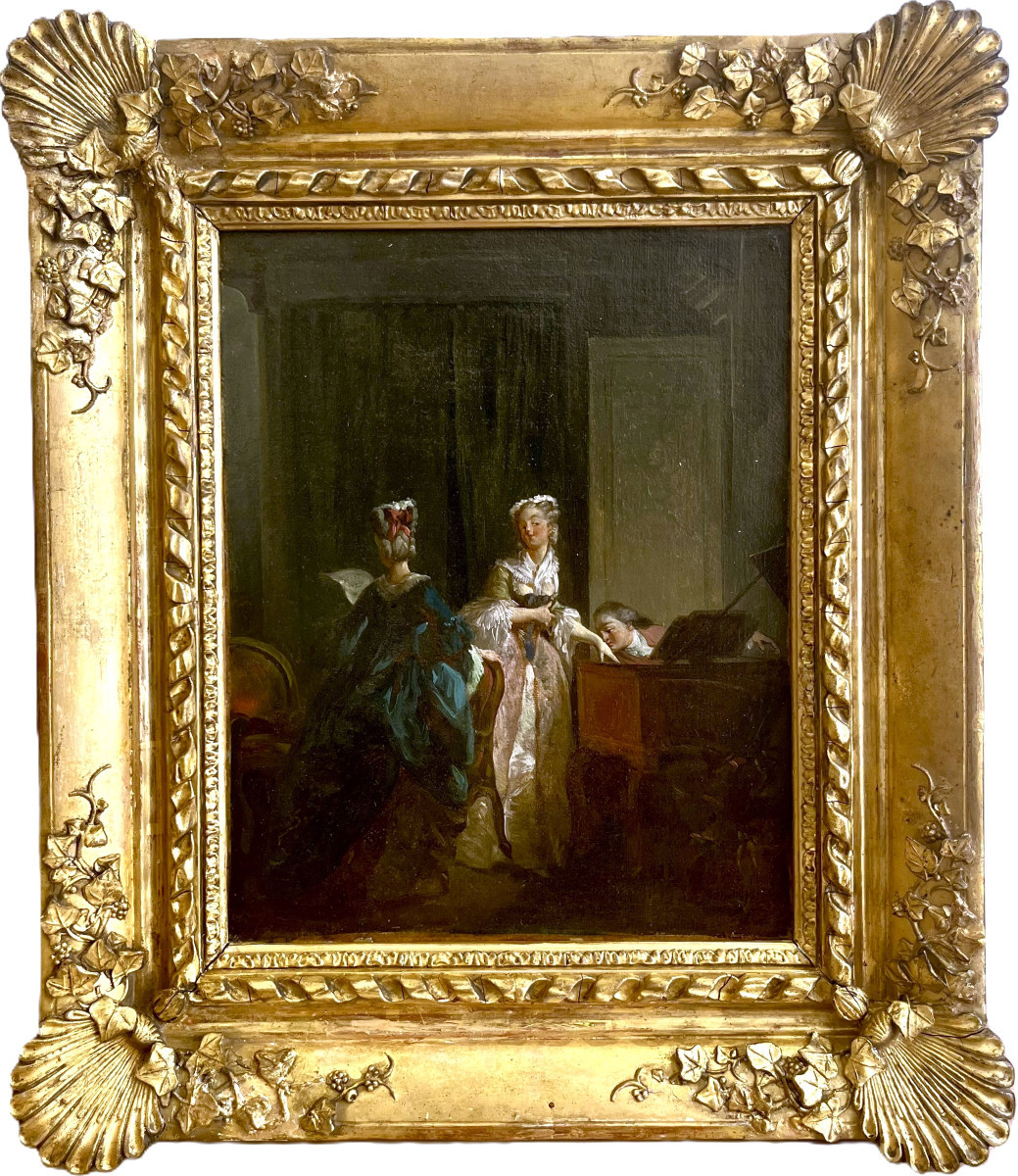
This painting, illustrating the story of Julie, or The New Heloise by Jean-Jacques Rousseau based on an engraving, depicts an intimate scene emblematic of The New Heloise (Part IV, Letter 2). Saint-Preux, seated at the harpsichord, accompanies a sung duet and takes advantage of a moment when Julie looks away to kiss Claire's hand. This discreet, almost imperceptible gesture concentrates all the emotional charge of the passage and subtly conveys the complexity of Rousseauist feelings, between moral restraint and budding passion. The composition takes place in an aristocratic 18th-century interior, carefully described : harpsichord, elegant furniture, graceful postures, and exchanged glances compose a refined scene, characteristic of the aesthetics of the waning Enlightenment.
Jean-Michel Moreau was one of the main illustrators of the complete edition of Jean-Jacques Rousseau's works published between 1774 and 1783 in London and Brussels. His engravings, highly appreciated from the moment they appeared, contributed greatly to the dissemination and iconographic success of La Nouvelle Héloïse. In terms of its subject matter and spirit, this scene closely resembles the painted compositions of several major artists of the second half of the 18th
century, such as Jean-Frédéric Schall, Pierre-Antoine Baudouin, and Louis-Léopold Boilly, who developed in their paintings
gallant and sentimental interior scenes, often linked to music, literature, and the subtle expression of emotions.
This painting, illustrating the story of Julie, or The New Heloise by Jean-Jacques Rousseau based on an engraving, depicts an intimate scene emblematic of The New Heloise (Part IV, Letter 2). Saint-Preux, seated at the harpsichord, accompanies a sung duet and takes advantage of a moment when Julie looks away to kiss Claire's hand. This discreet, almost imperceptible gesture concentrates all the emotional charge of the passage and subtly conveys the complexity of Rousseauist feelings, between moral restraint and budding passion. The composition takes place in an aristocratic 18th-century interior, carefully described : harpsichord, elegant furniture, graceful postures, and exchanged glances compose a refined scene, characteristic of the aesthetics of the waning Enlightenment.
Jean-Michel Moreau was one of the main illustrators of the complete edition of Jean-Jacques Rousseau's works published between 1774 and 1783 in London and Brussels. His engravings, highly appreciated from the moment they appeared, contributed greatly to the dissemination and iconographic success of La Nouvelle Héloïse. In terms of its subject matter and spirit, this scene closely resembles the painted compositions of several major artists of the second half of the 18th
century, such as Jean-Frédéric Schall, Pierre-Antoine Baudouin, and Louis-Léopold Boilly, who developed in their paintings
gallant and sentimental interior scenes, often linked to music, literature, and the subtle expression of emotions.
5 900 €
Period: 18th century
Style: Louis 16th, Directory
Condition: Good condition
Material: Oil painting
Length: 27
Width: 21
Reference (ID): 1676157
Availability: In stock
Print