THIS OBJECT WAS SOLD
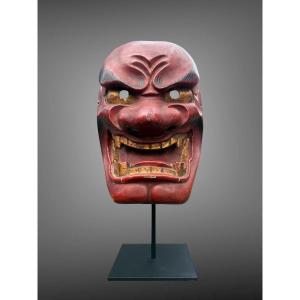
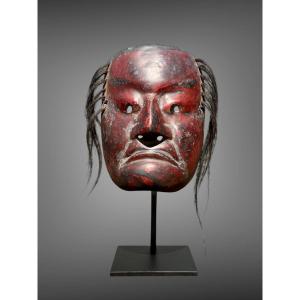
Noh Theatre Mask - Ko-omote - Meiji Period (1868-1912).

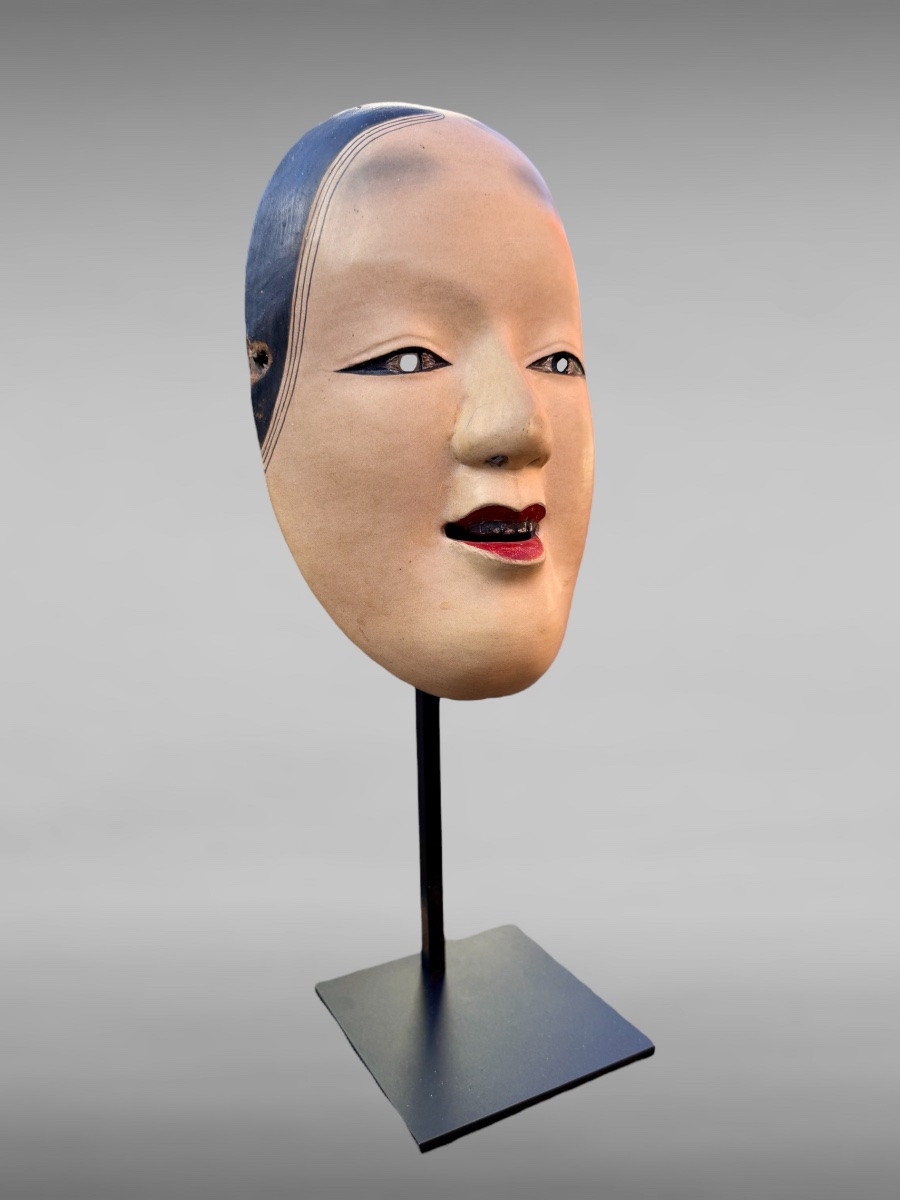
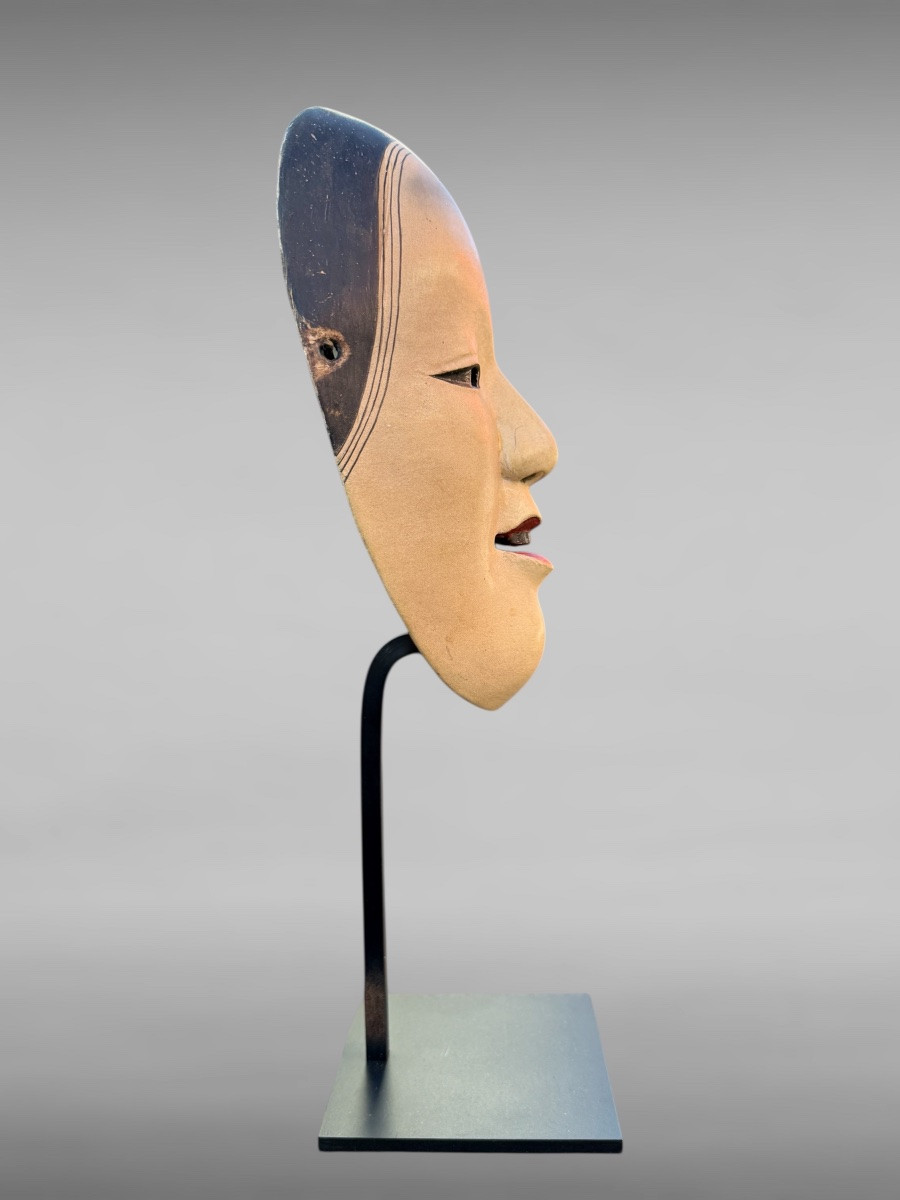
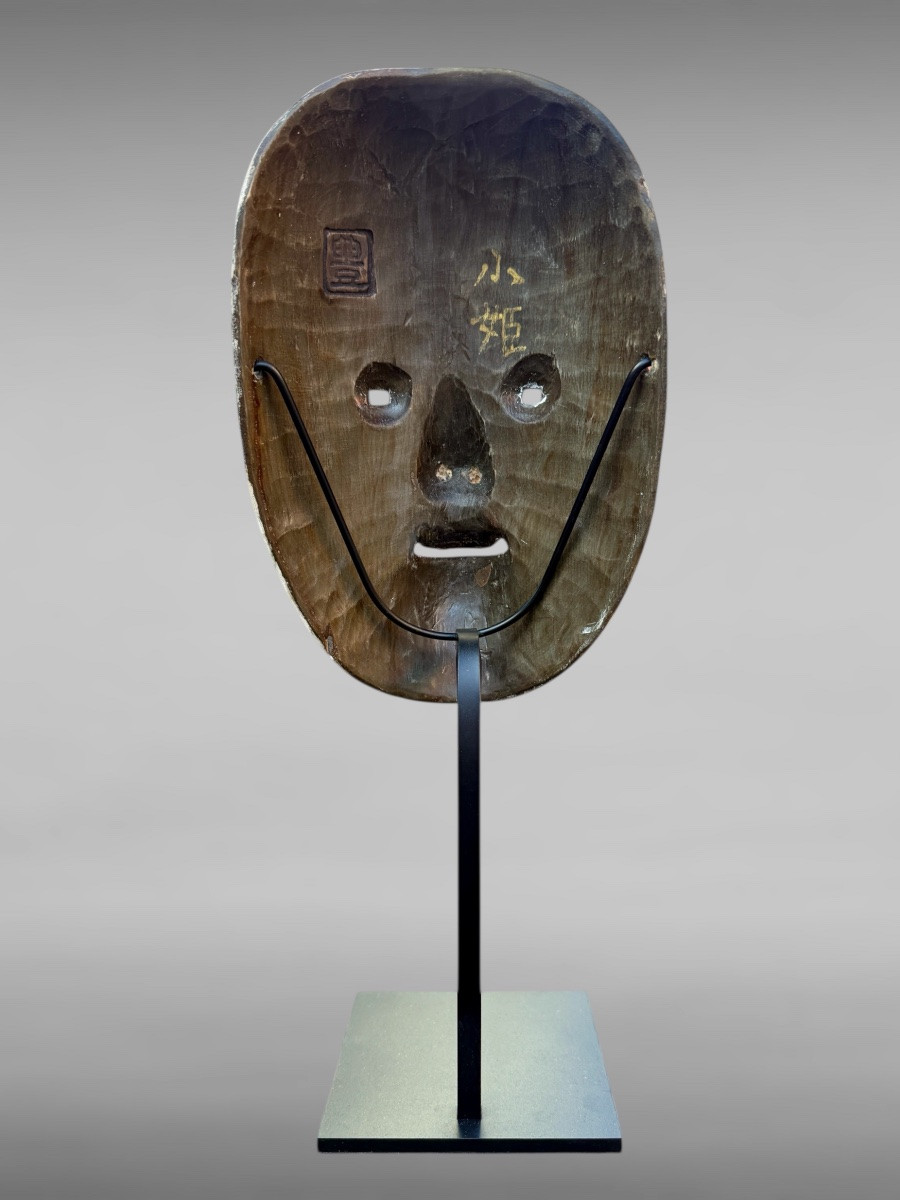
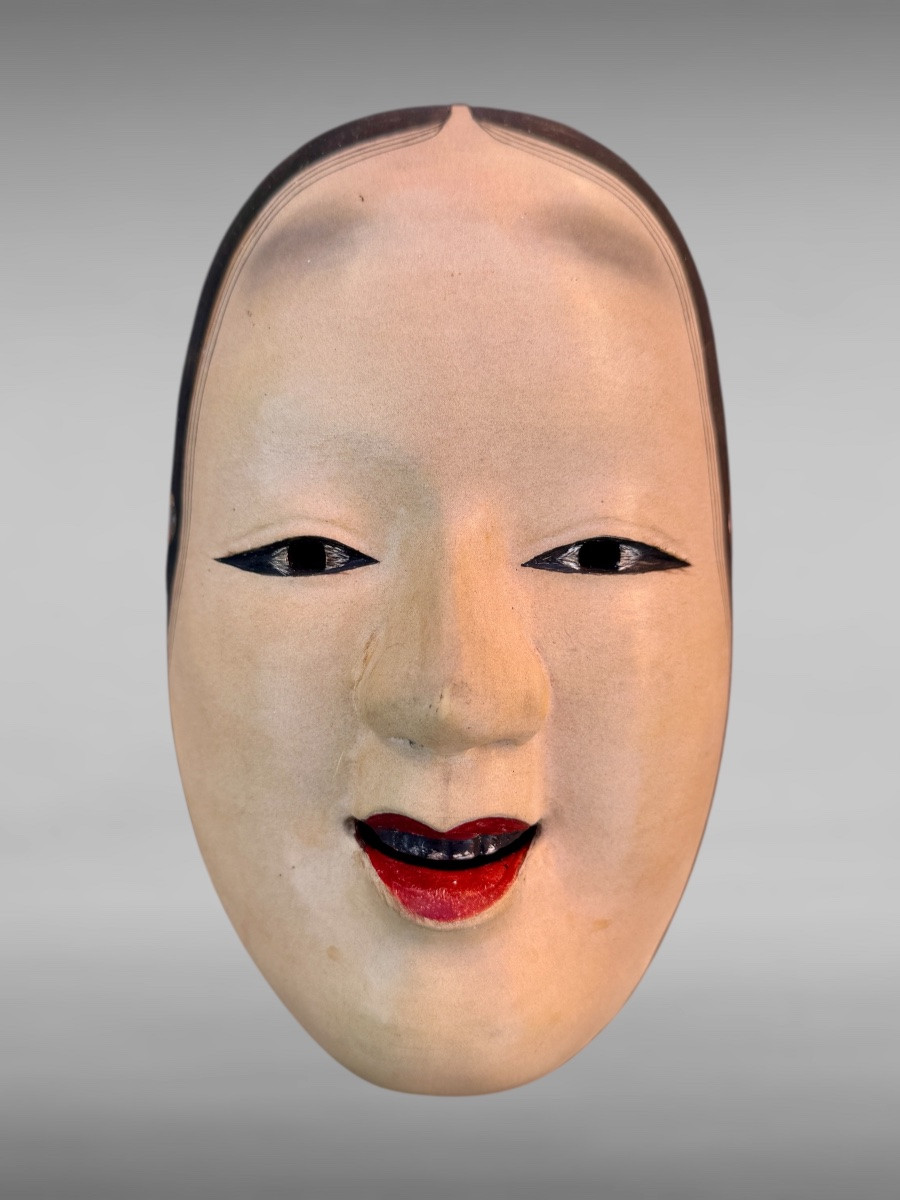
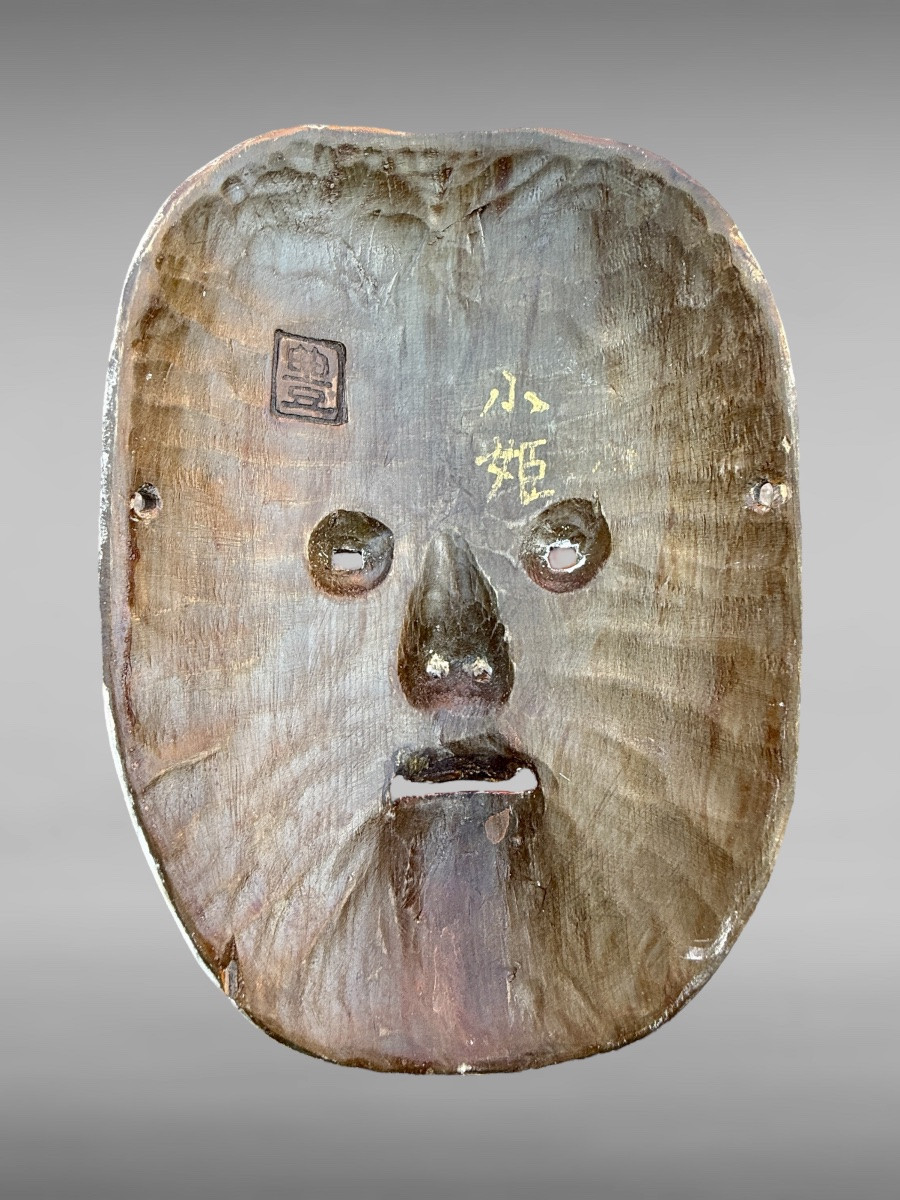
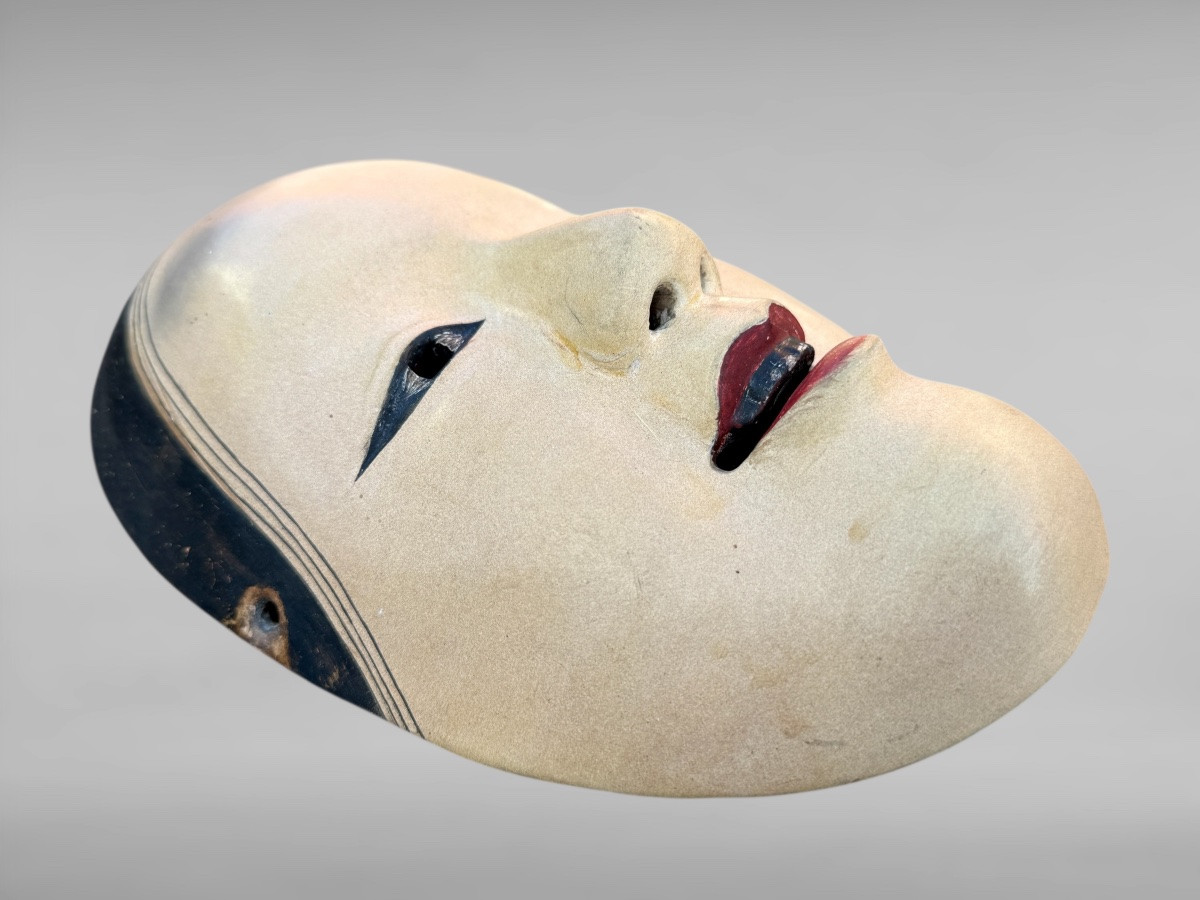
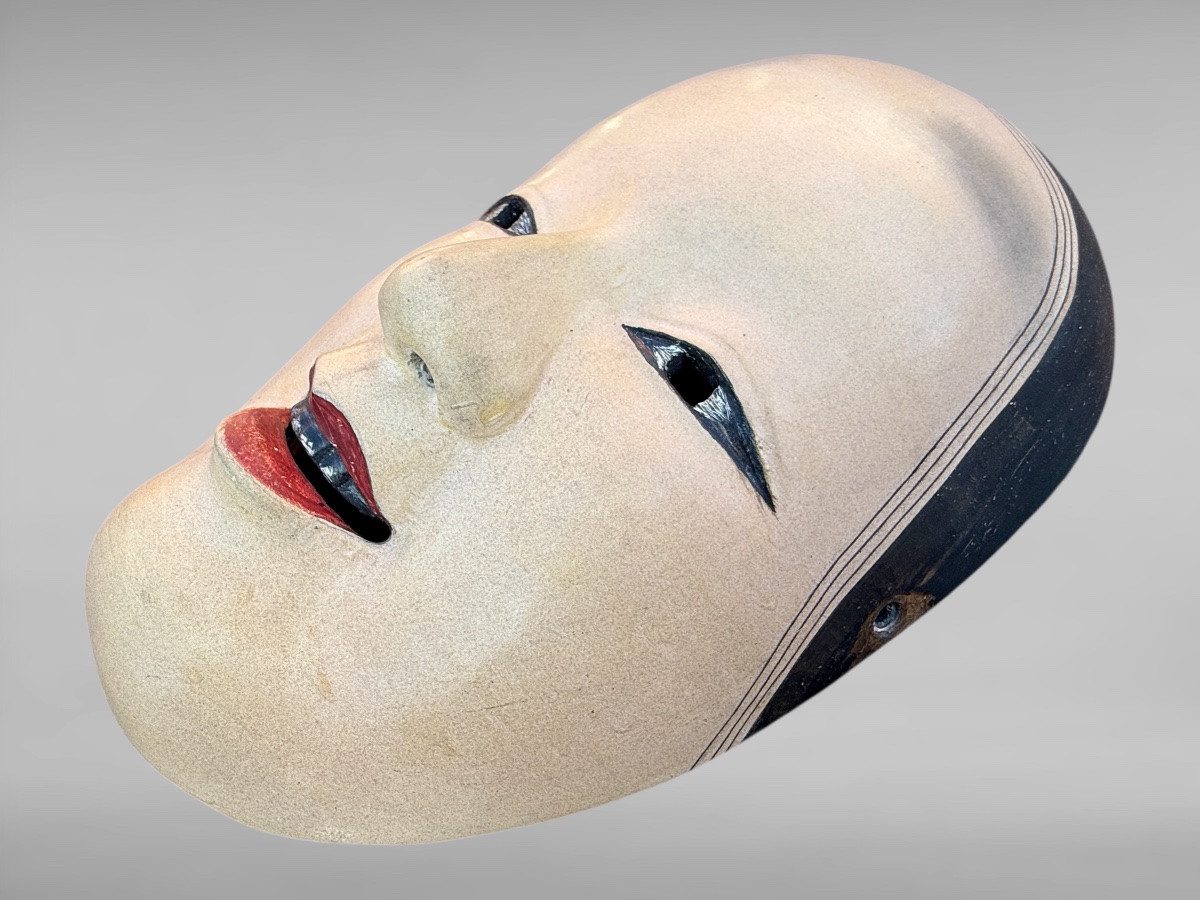
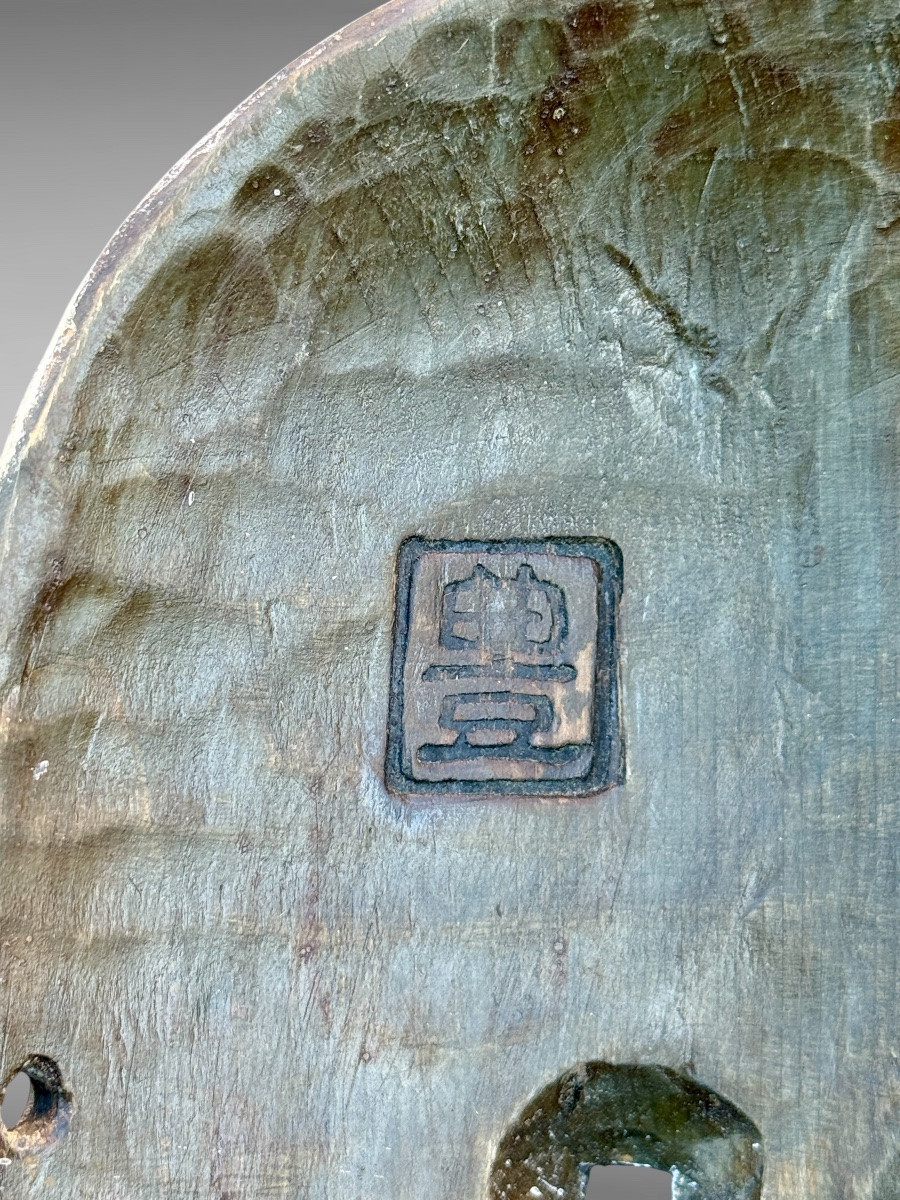
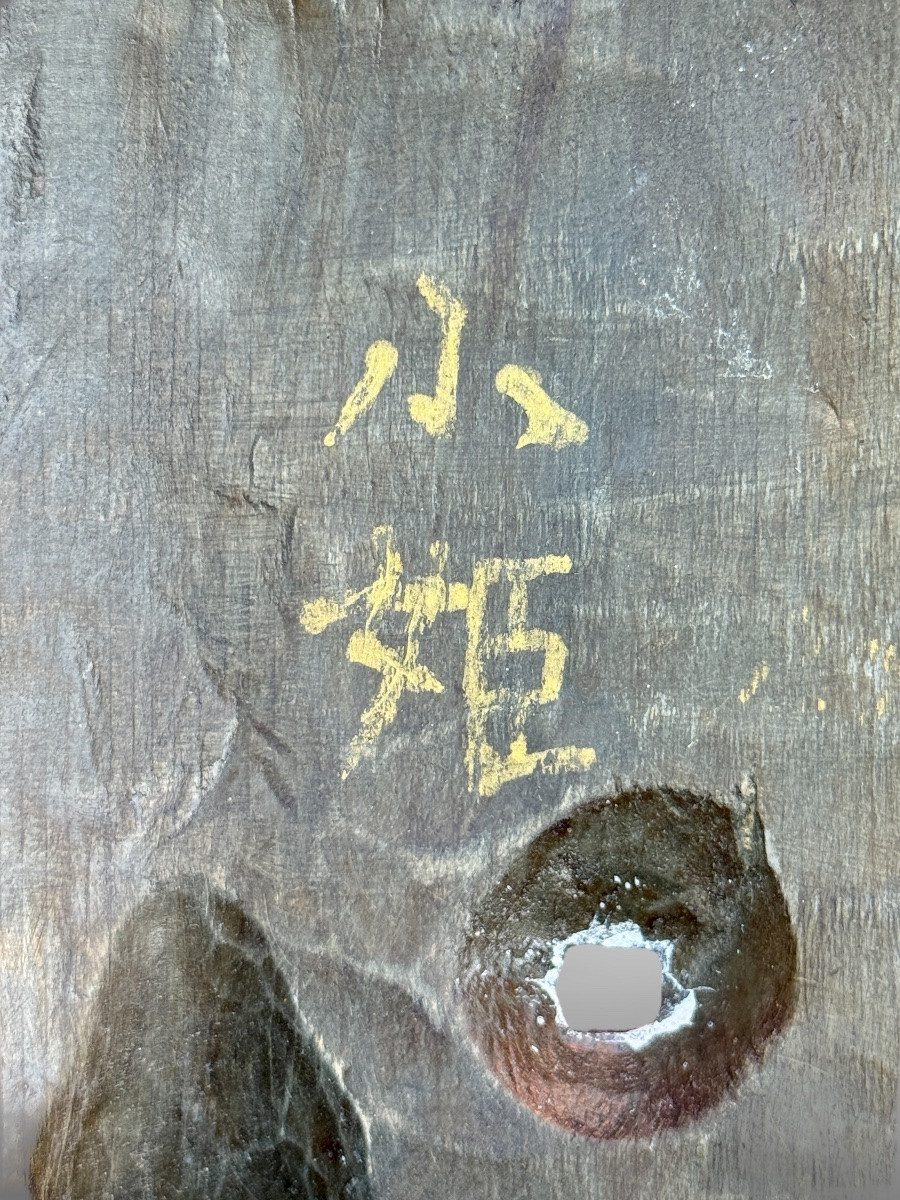
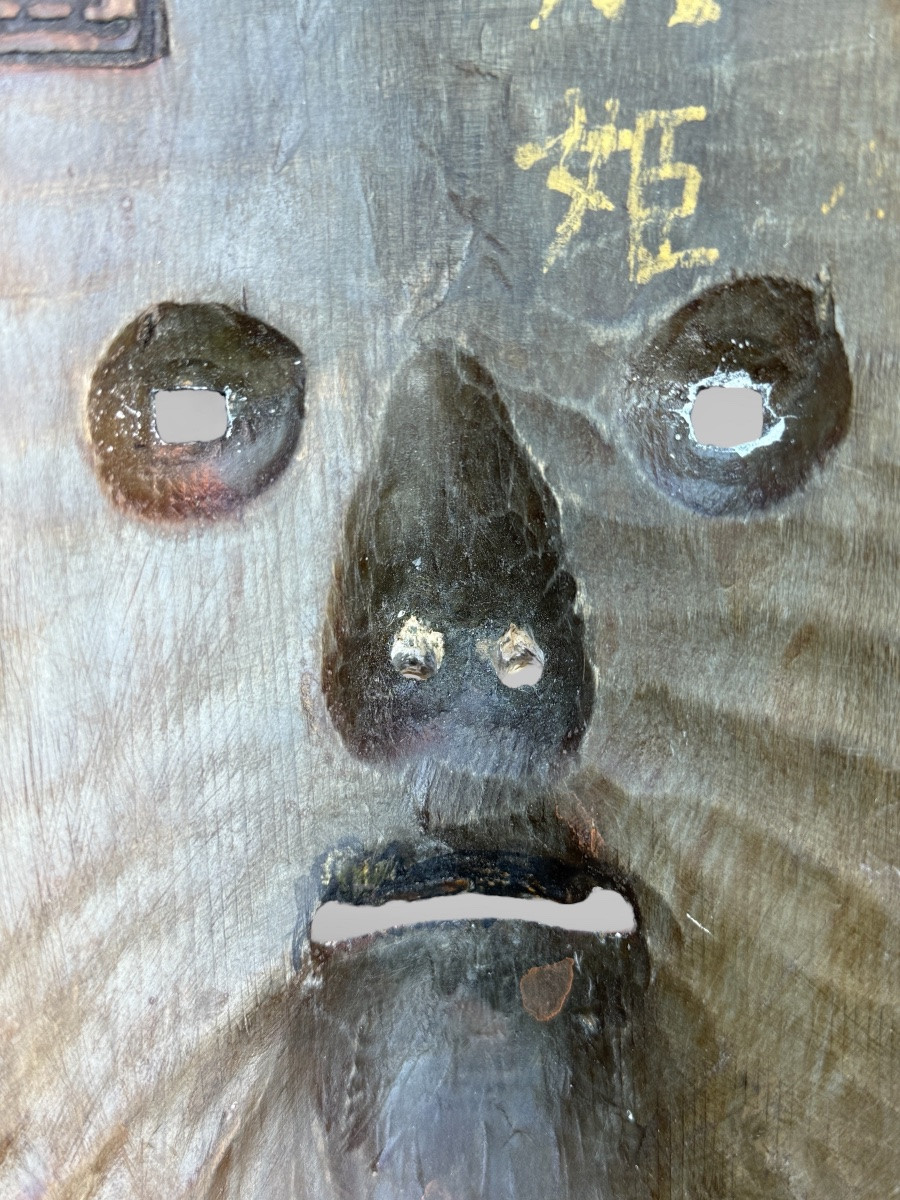
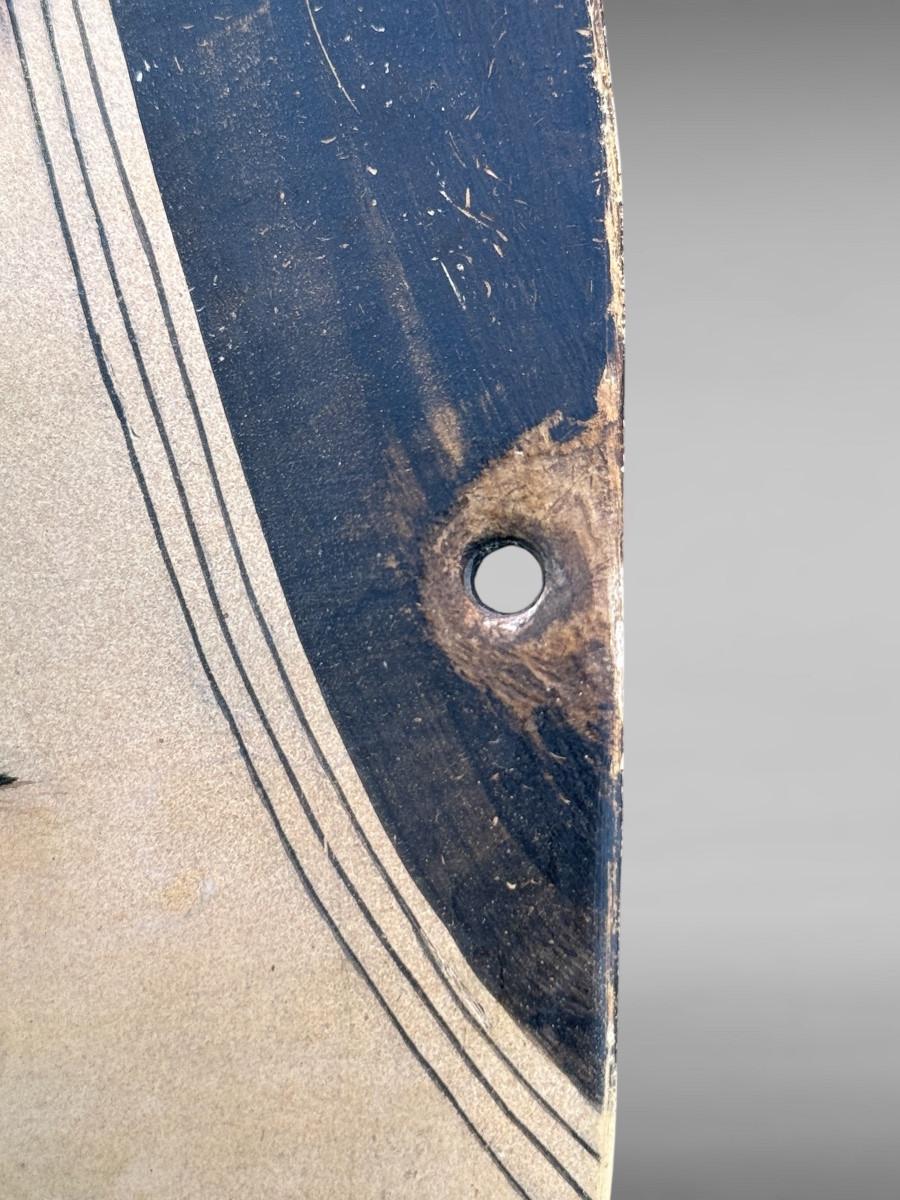


JAPAN - Meiji Period (1868-1912). Noh theater mask depicting the character Fukai, carved from monoxide-treated hinoki wood. Oval in shape, with a smooth, high forehead, half-closed eyes, and high eyebrows reminiscent of the Heian period (794-1185), the slightly open mouth reveals the upper row of black lacquered teeth. The hair is painted black with a center parting from which three strands of hair fall. There are chisel marks on the reverse, a seal (branded stamp), and two Chinese characters painted in yellow. Dimensions: 22 x 14 x 6 cm. Sold with the base. Dimensions with base: 35 x 14 x 10 cm. Notes: Noh is a purely Japanese classical theater style that draws inspiration from literary and poetic themes, implicitly blending Buddhist and Shinto concepts with folk beliefs. Noh began to develop in the 14th century, drawing inspiration from another theatrical form very popular at the time called *Sarugaku no Noh* (monkey music). During this period, Kan-ami and his son Zeami, actors and playwrights, established the rules of Noh that are still followed today. A Noh performance consists of three to five acts separated by comic interludes (kyōgen), and can thus last several hours. An orchestra and a chorus accompany the actors' performances, which combine danced pantomimes and lyrical songs. These dramas, mostly recounting stories of war, love, and jealousy, offer two types of plays: those dealing with real events and those featuring supernatural beings. This form of performance uses masks, considered the embodiment of the divine presence, worn only by the principal actor (shite). The Noh mask (nomen) is placed on the actor's face in such a way that the cheeks and chin remain visible, and it is slightly tilted downwards. This type of mask is called Ko-Omote or Manbi and belongs to the category of women's masks. It represents a smiling young woman with round cheeks. The face is white, and the eyebrows are painted. The straight hair is parted in the middle, and the teeth are blackened, a mark of elegance. This feminine type reflects the ideal of beauty of the medieval Japanese aristocracy. The face, with its slight smile, exudes a subtle charm that can give way to melancholy depending on the actor's performance. The masks are carved from hinoki wood (Japanese cypress) and lacquered on the reverse to make them impervious to the actor's perspiration. The carved wood is then coated with a preparation called gofun (pulverized oyster shell powder bound with animal glue and pigments). After drying, the mask is polished, and the hair, eyes, mouth, and teeth are painted with India ink and pigments. At the end of the manufacturing process, artificial "aging" is achieved by intentionally distressing the cord holes, eyes, and mouth in such a way as to highlight the mask's use and function without compromising its harmony and beauty; a color (koshoku = old color) is also applied. This process does not aim to plausibly reproduce the marks of time, but rather to evoke the timeless nature inherent in Noh theater. A mask that appeared devoid of any history could not correspond to the world of Noh. Noh masks therefore refer simultaneously to life, to a culture, to its conventions, to theatrical characters, to sculptors, to expressions and, of course, to a particular aesthetic.
Explore similar pieces and discover your ideal find:
Wood Sculptures