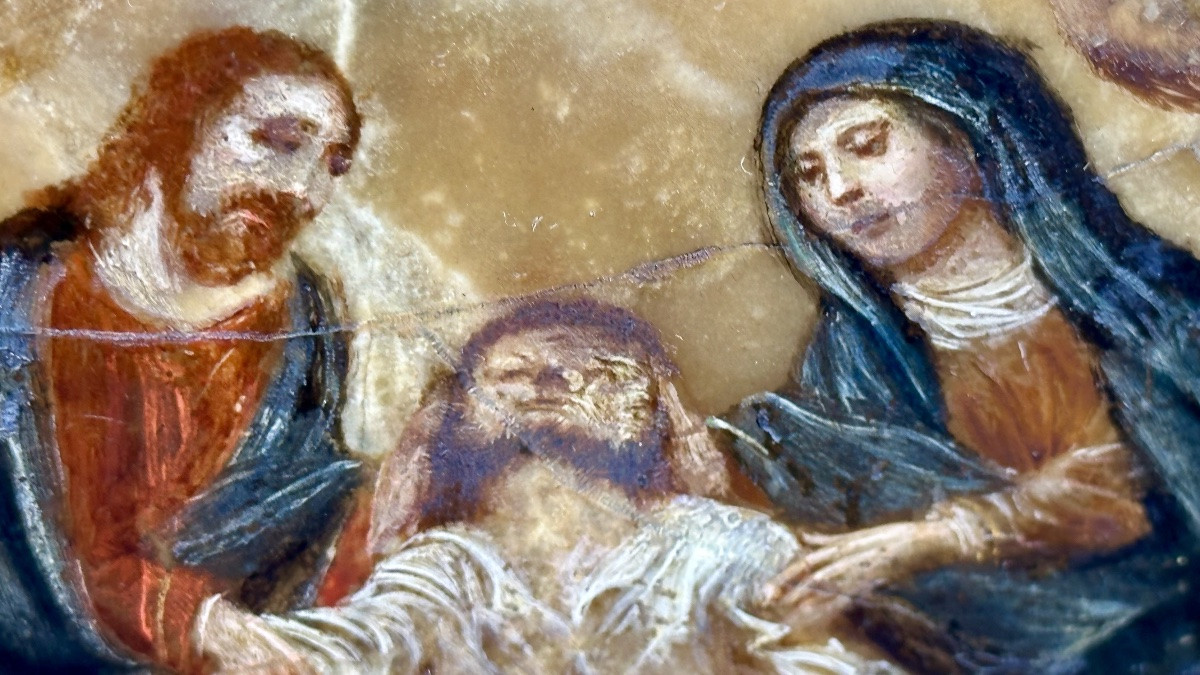


Painting, Oil On Flowered Alabaster "death Of Saint Joseph" - 17th Century.
Painting, oil on flowered alabaster "Death of Saint Joseph" - 17th century.
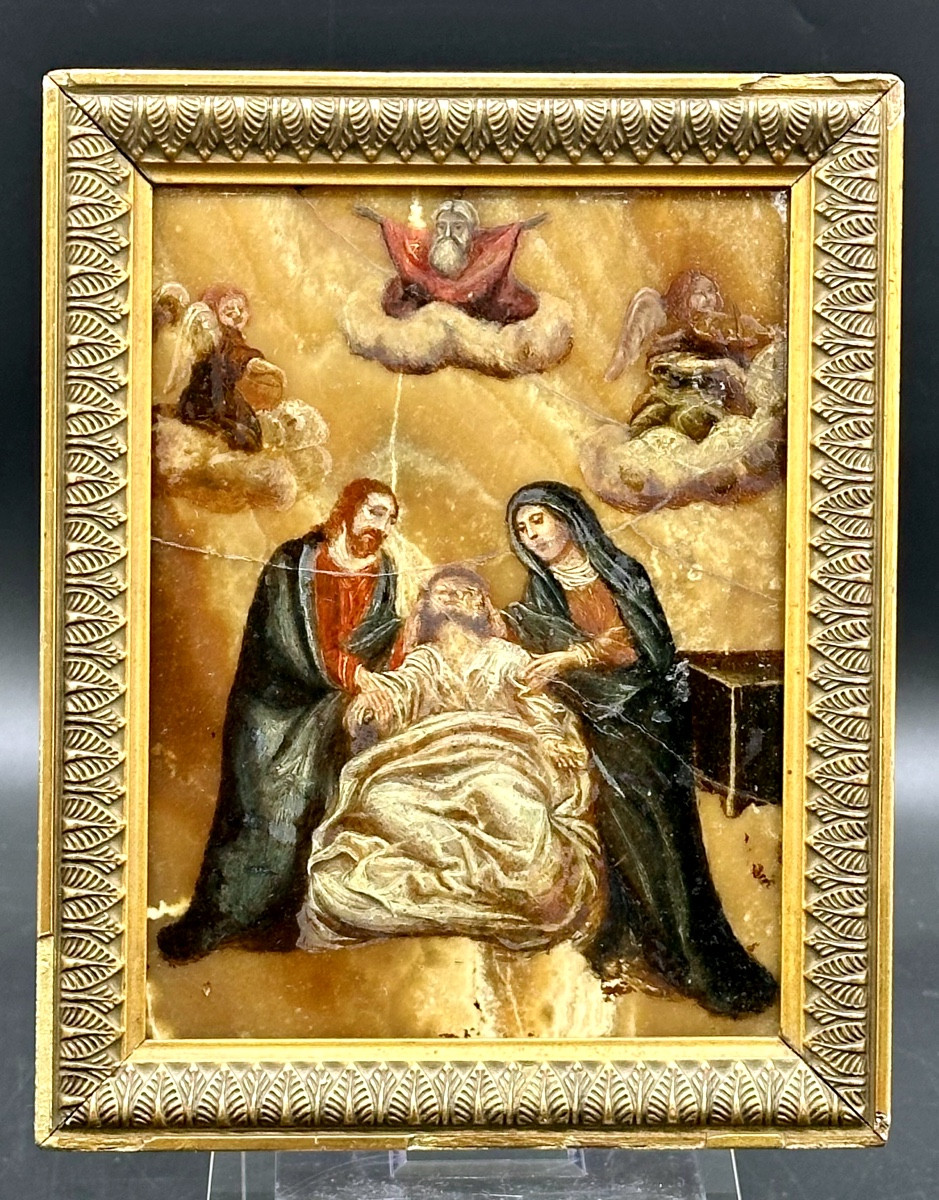
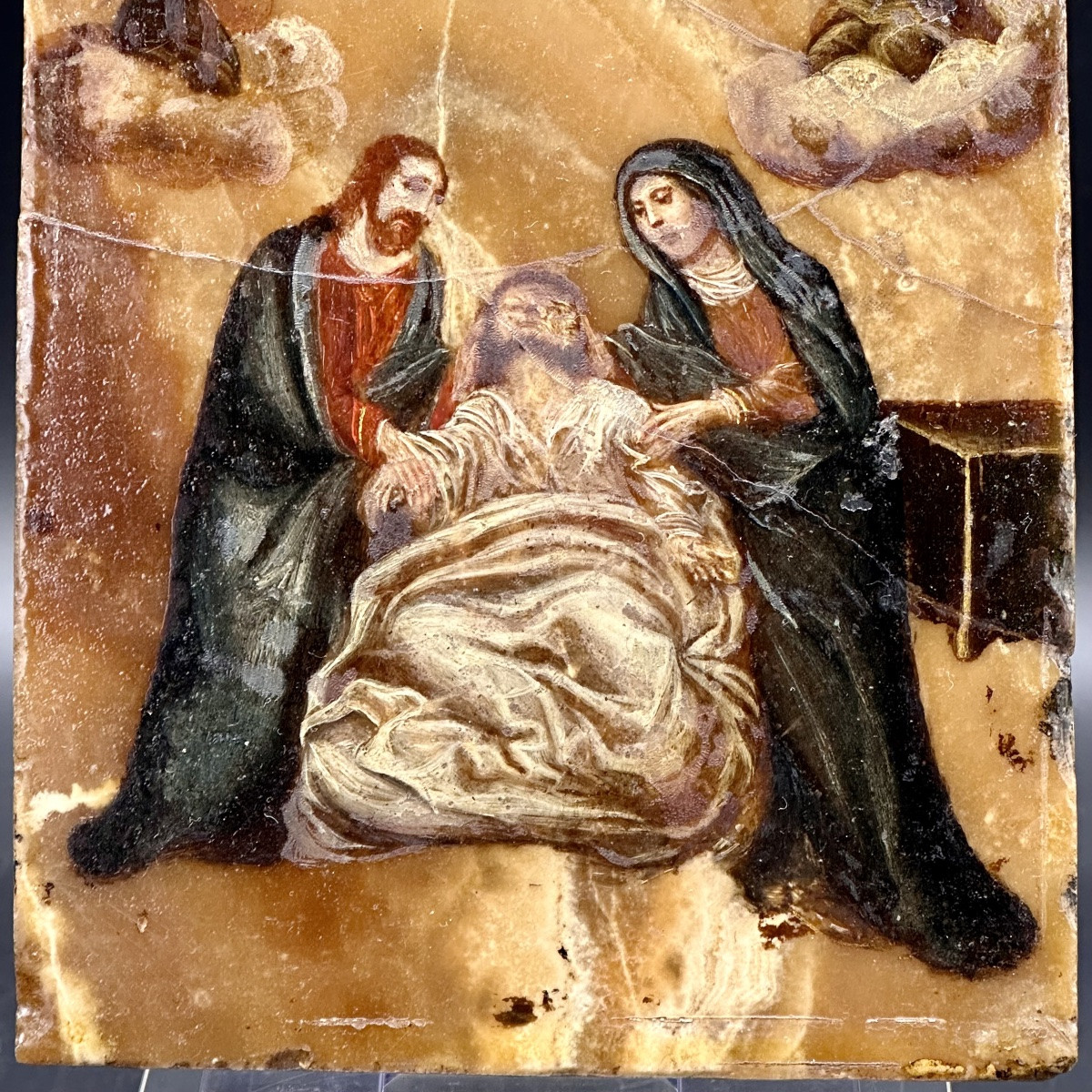
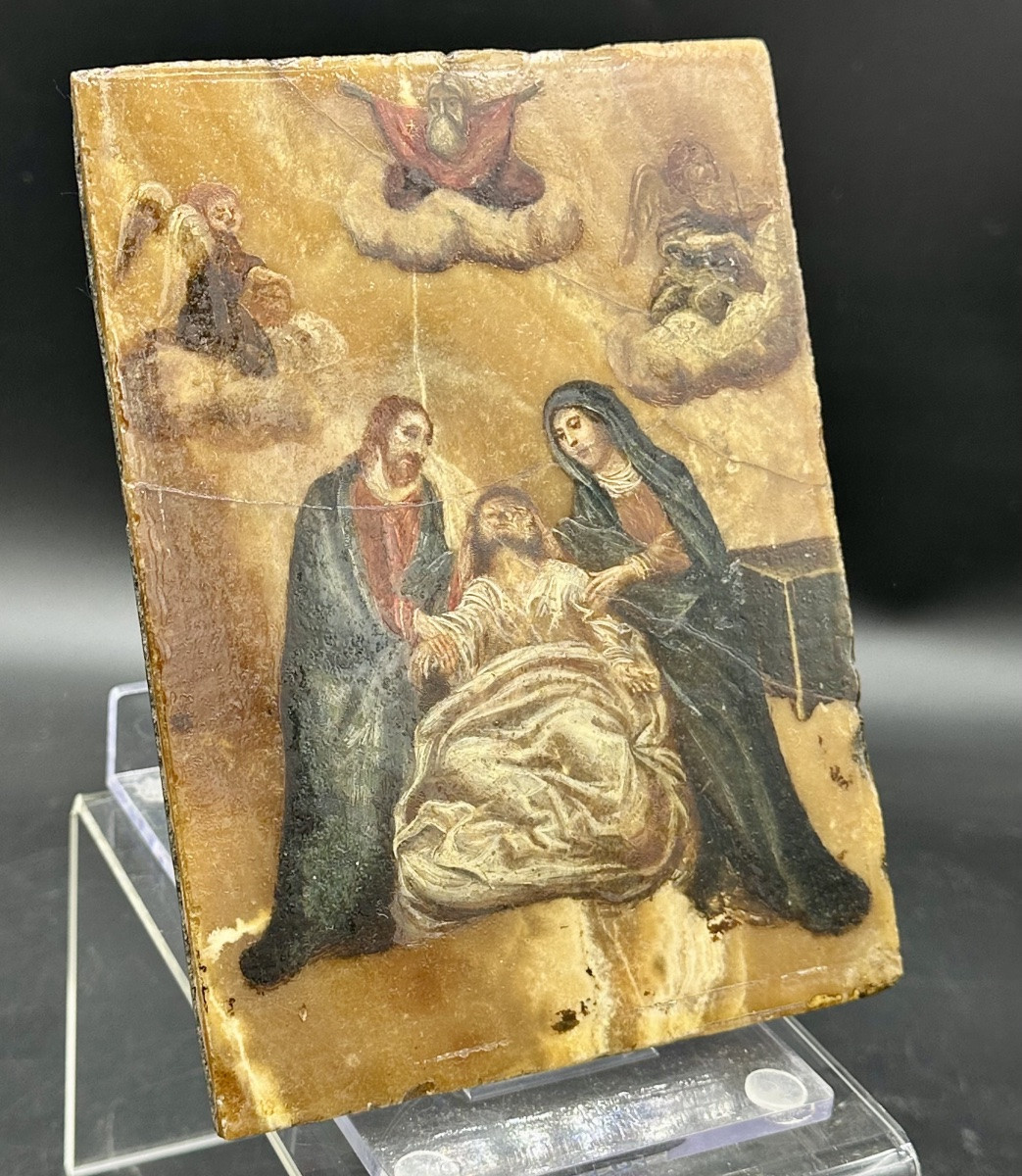
This is an ancient devotional painting depicting the scene of the Death of Saint Joseph, a common subject in sacred art from the 17th century onwards.
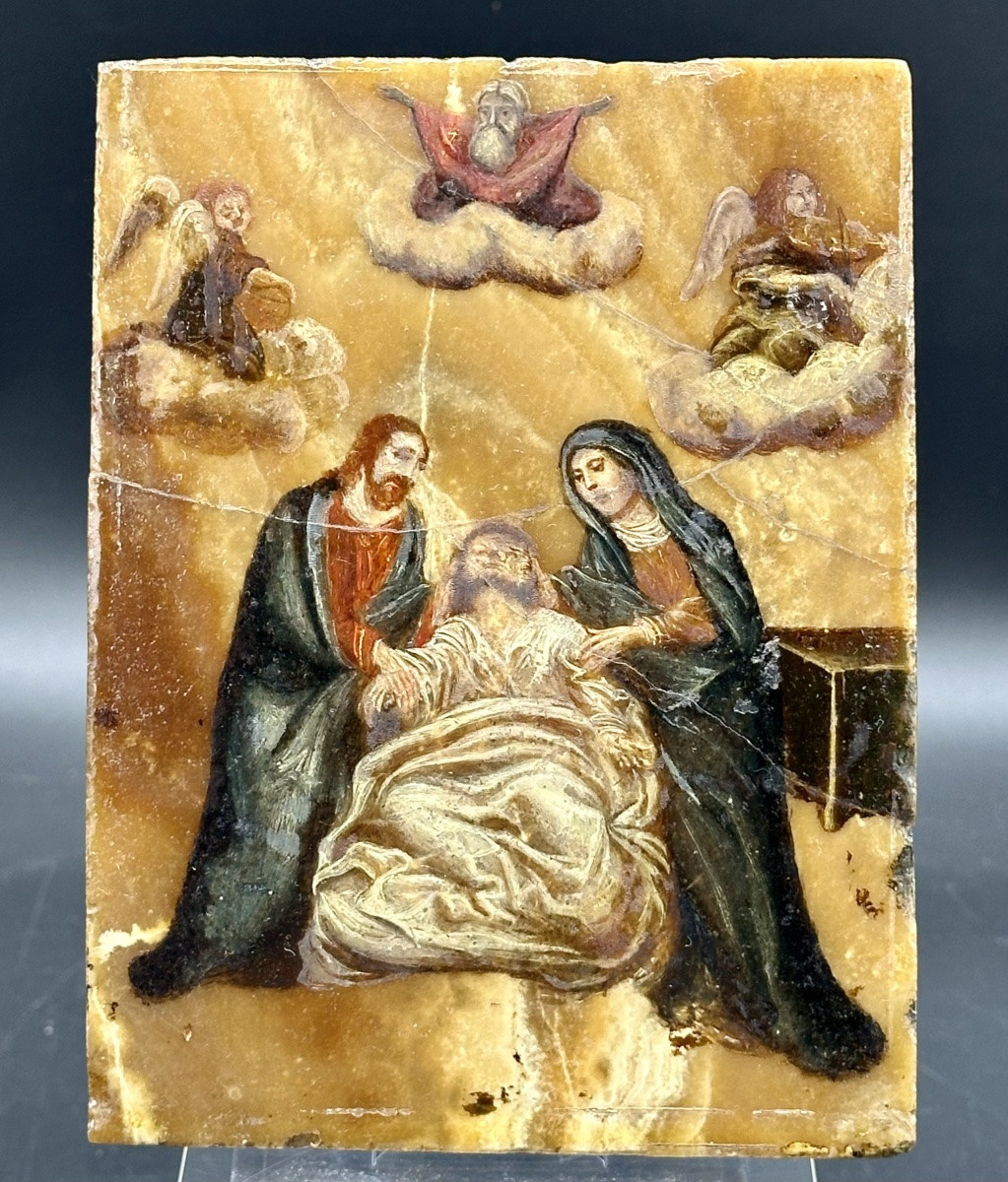
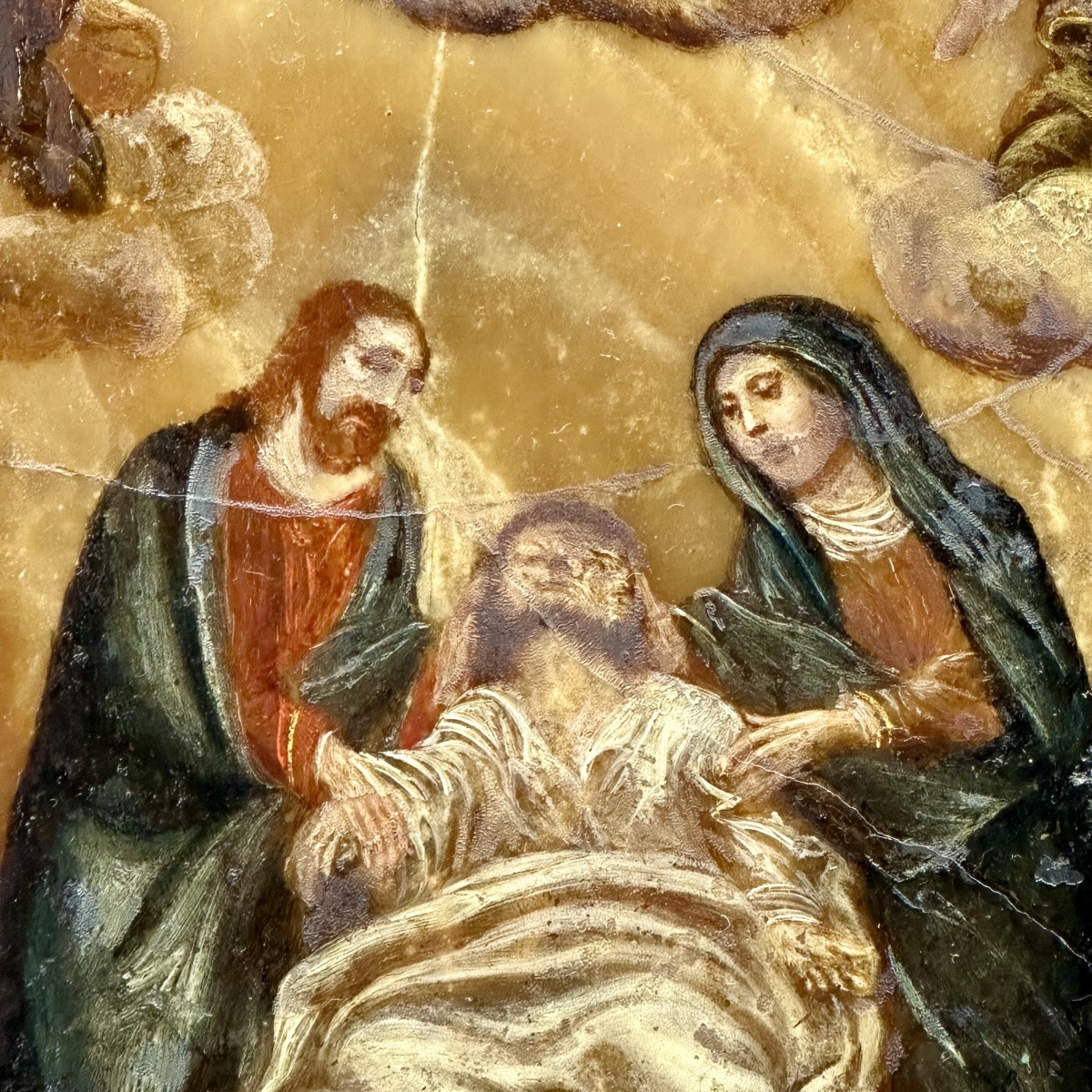
The painting shows Saint Joseph dying, lying on a bed, attended by Jesus and the Virgin Mary.
This iconography emphasizes Joseph's role as patron of the dying. Jesus is depicted next to him, while Mary is on the other side of the bed.
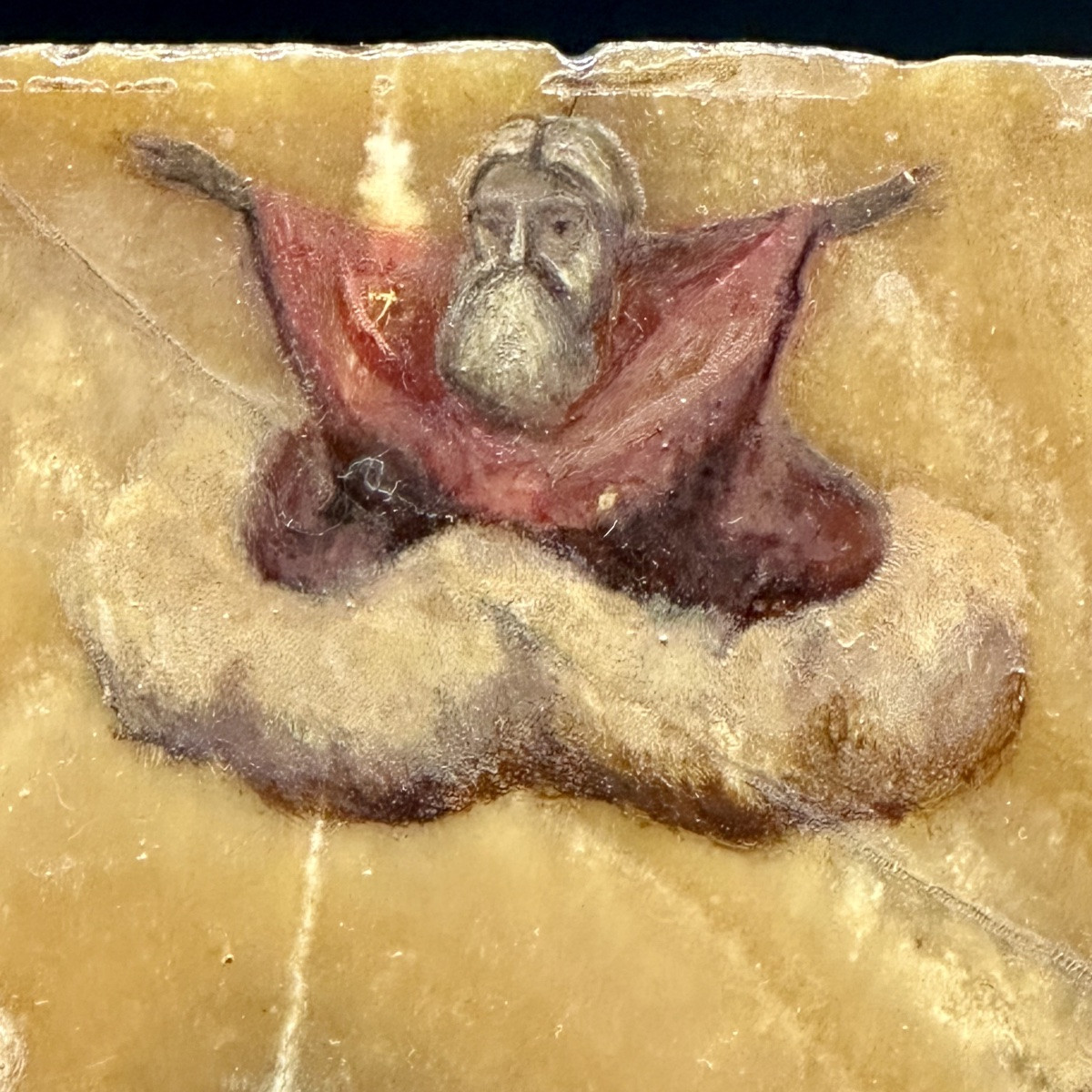
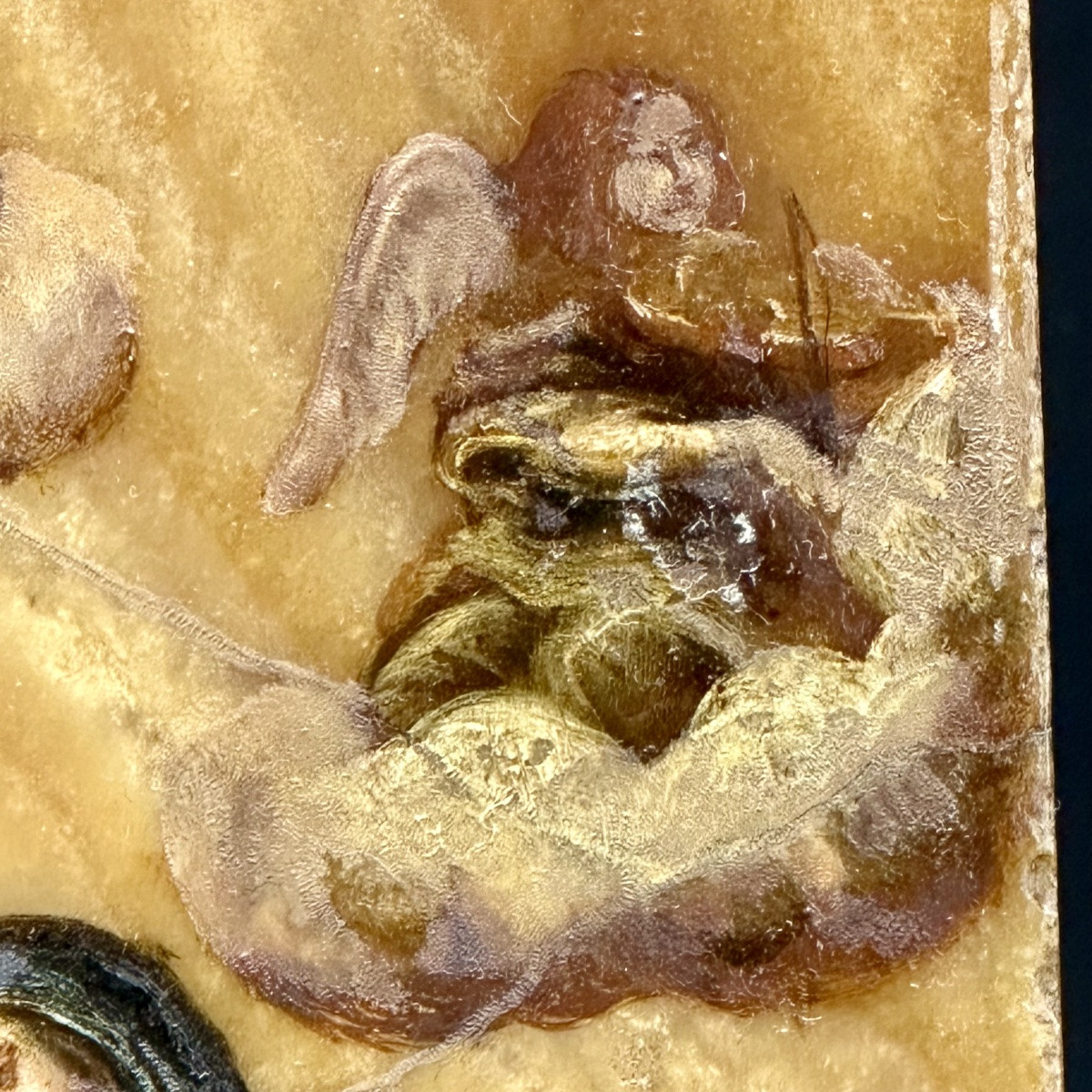
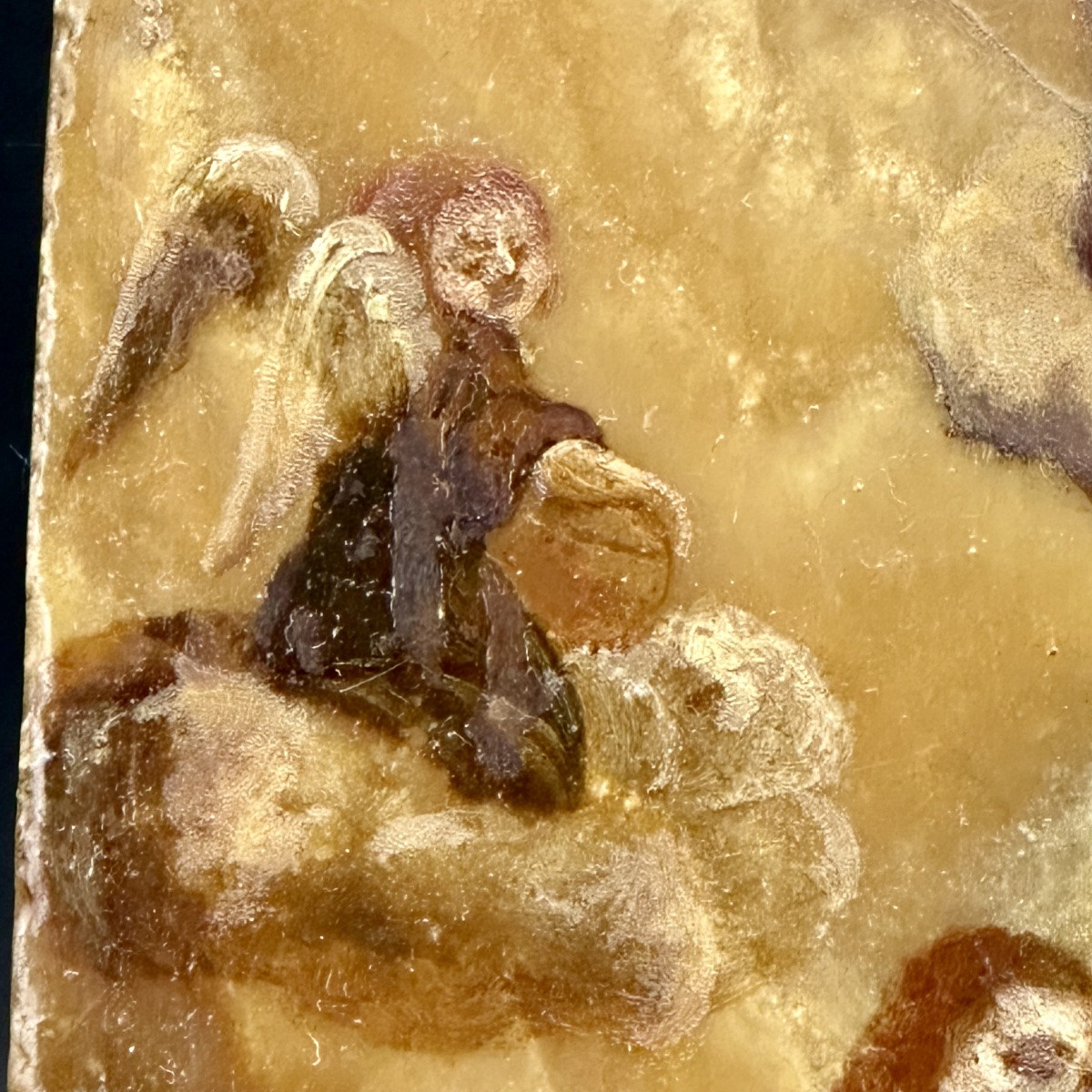
In the upper section, angels and cherubs on clouds watch the scene with God the Father blessing.
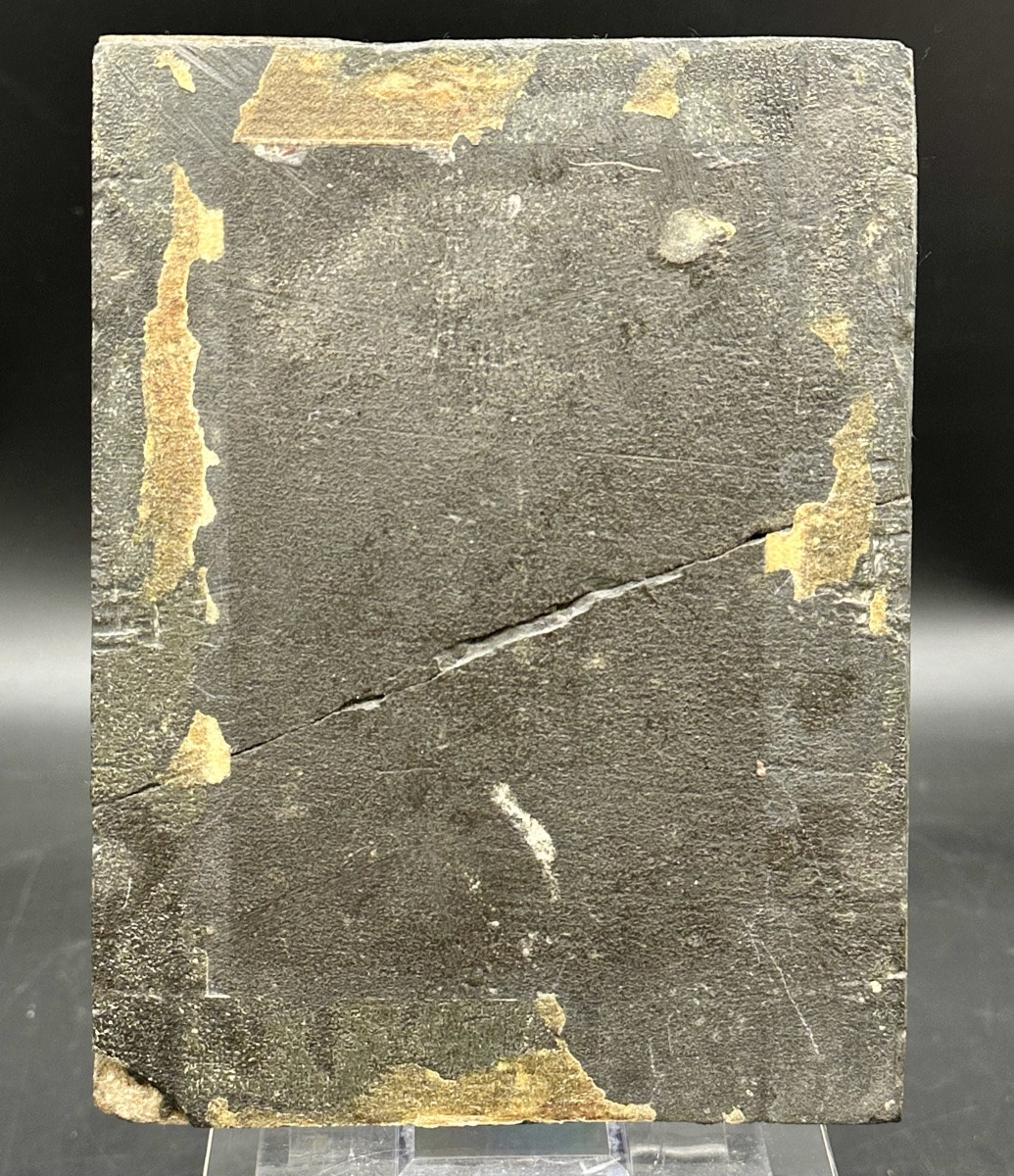
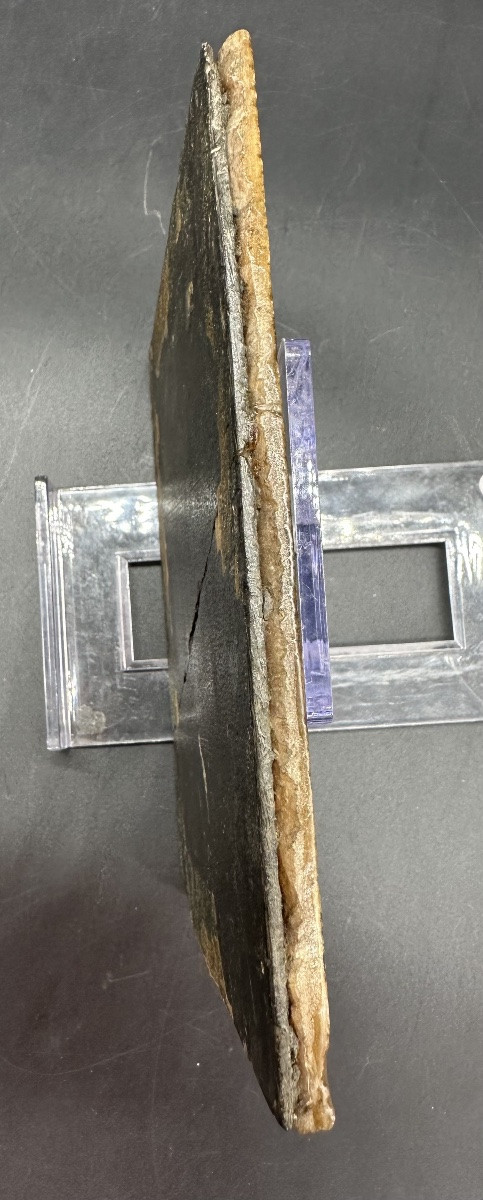
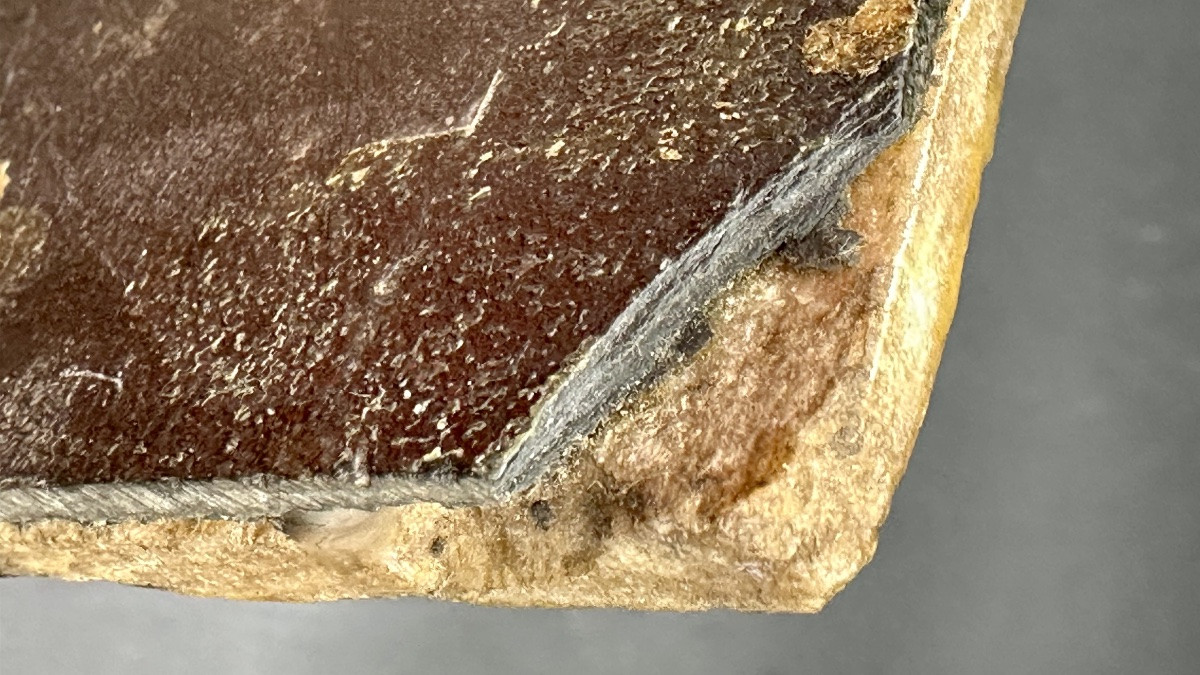
The alabaster panel cracked over time and was glued and then mounted on a slate panel.
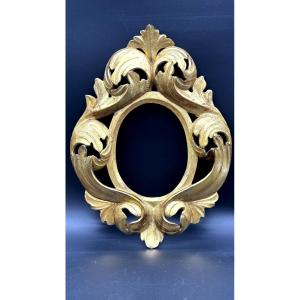
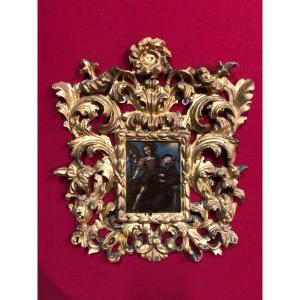
The painting is enclosed in a small, non-contemporary gilded wooden frame.
The use of translucent stone as a support gives the image a unique luminous effect.
L'albâtre fleuri est une pierre ornementale caractérisée par un motif de taches ou de stries circulaires (selon l'orientation de la taille).
Autrefois, les marbriers distinguaient de nombreuses variétés de cet albâtre, obtenues simplement en taillant la roche selon différents angles, et leur donnaient des noms poétiques (tels que « occhiato », « fiorito », « écaille de tortue »).
L'albâtre est considéré comme un matériau précieux et recherché, notamment pour sa beauté, sa translucidité qui diffuse la lumière et sa longue histoire artistique.
Utilisé depuis l'Antiquité (par les Égyptiens et les Étrusques), il fut redécouvert à la Renaissance pour des œuvres d'art sacré.
Dimensions : 17 x 13 cm
Époque : XVIIe siècle
This is an ancient devotional painting depicting the scene of the Death of Saint Joseph, a common subject in sacred art from the 17th century onwards.
The painting shows Saint Joseph dying, lying on a bed, attended by Jesus and the Virgin Mary.
This iconography emphasizes Joseph's role as patron of the dying. Jesus is depicted next to him, while Mary is on the other side of the bed.
In the upper section, angels and cherubs on clouds watch the scene with God the Father blessing.
The alabaster panel cracked over time and was glued and then mounted on a slate panel.
The painting is enclosed in a small, non-contemporary gilded wooden frame.
The use of translucent stone as a support gives the image a unique luminous effect.
L'albâtre fleuri est une pierre ornementale caractérisée par un motif de taches ou de stries circulaires (selon l'orientation de la taille).
Autrefois, les marbriers distinguaient de nombreuses variétés de cet albâtre, obtenues simplement en taillant la roche selon différents angles, et leur donnaient des noms poétiques (tels que « occhiato », « fiorito », « écaille de tortue »).
L'albâtre est considéré comme un matériau précieux et recherché, notamment pour sa beauté, sa translucidité qui diffuse la lumière et sa longue histoire artistique.
Utilisé depuis l'Antiquité (par les Égyptiens et les Étrusques), il fut redécouvert à la Renaissance pour des œuvres d'art sacré.
Dimensions : 17 x 13 cm
Époque : XVIIe siècle
880 €
Period: 17th century
Style: Louis 14th, Regency
Condition: Fully restored
Material: Alabaster
Width: cm. 13
Height: cm. 17
Reference (ID): 1675133
Availability: In stock
Print