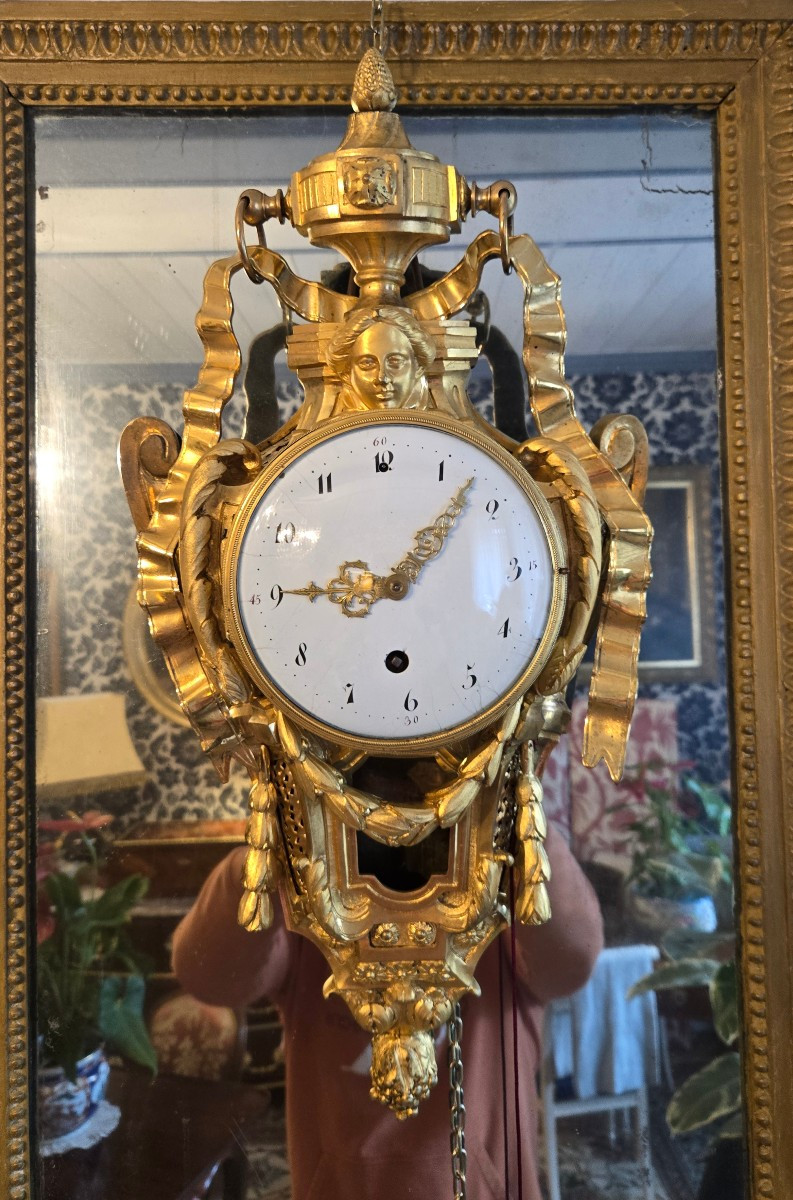
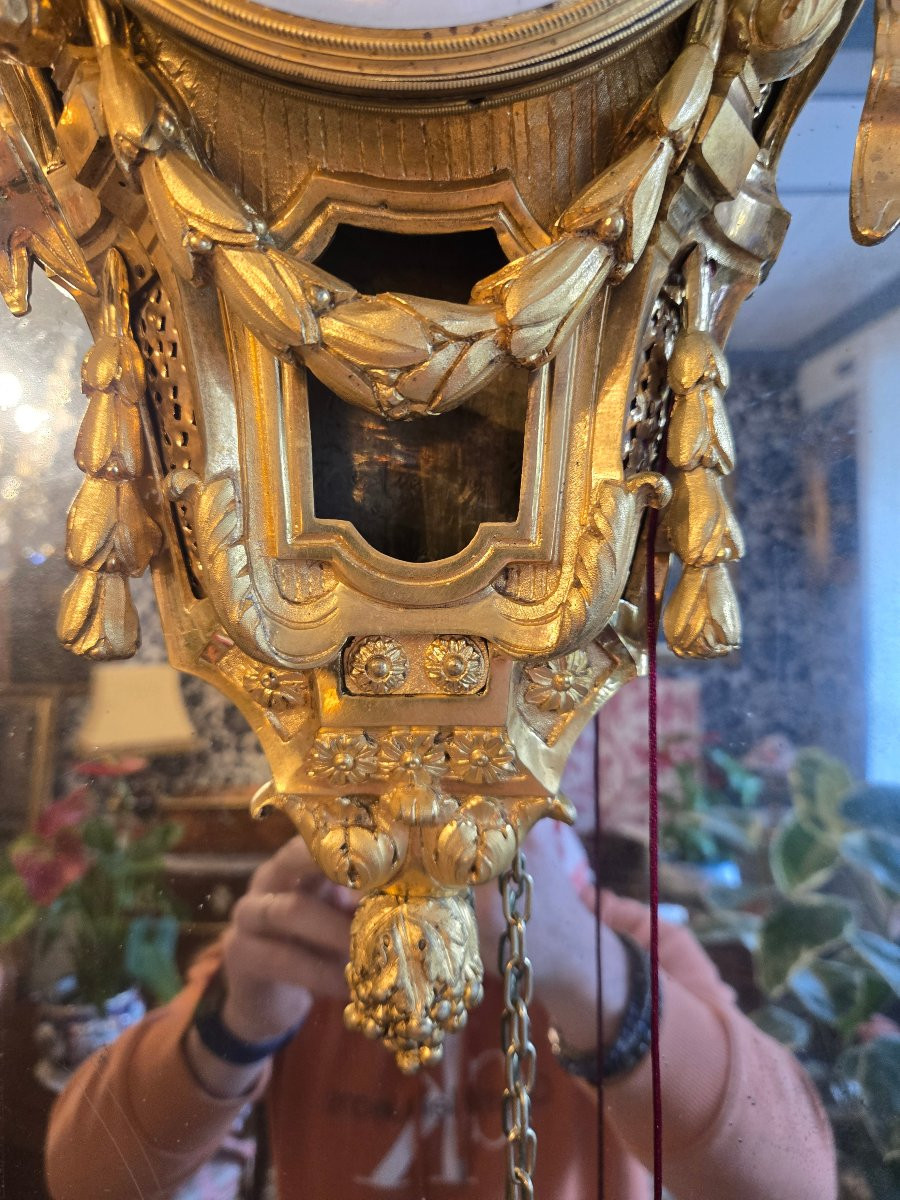
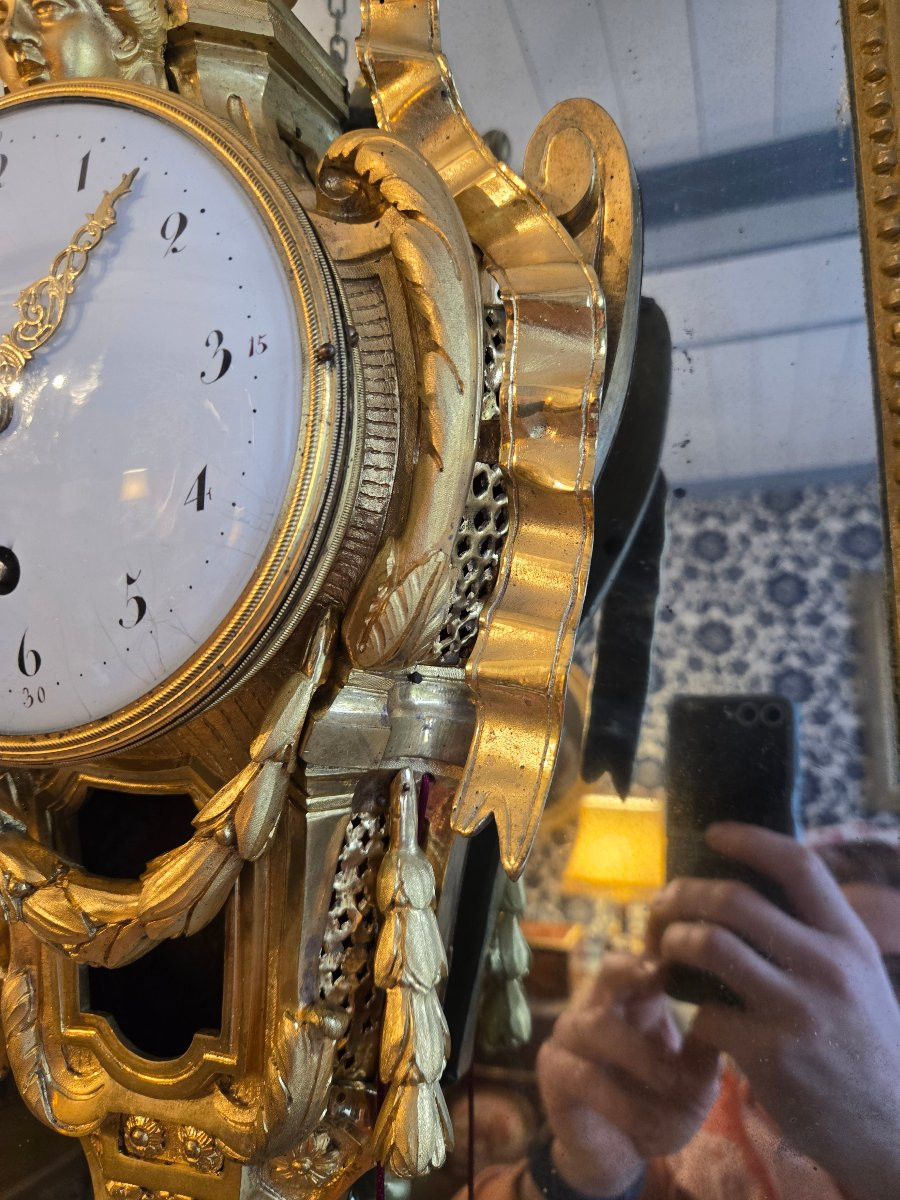
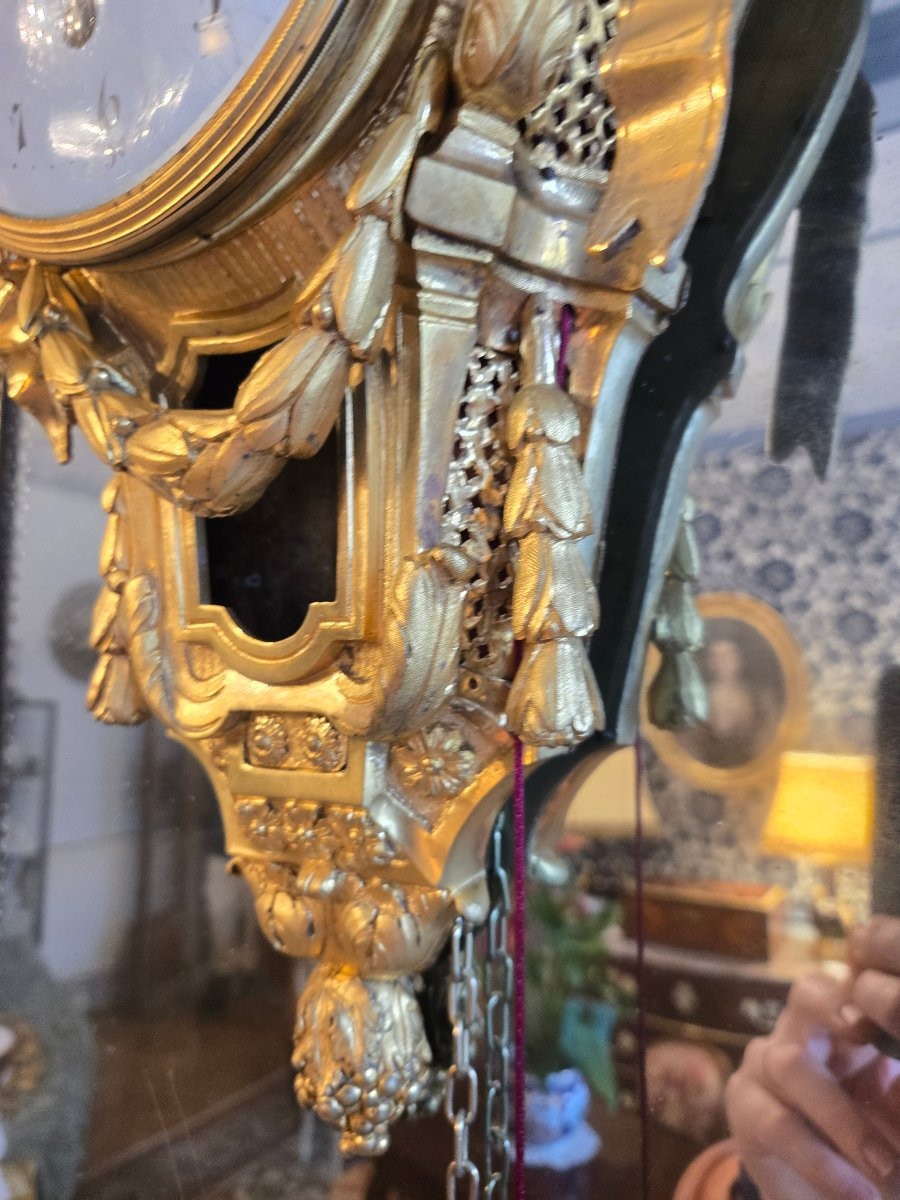
"Louis XVI Period Alcove Clock With A Striking Mechanism On Demand. "
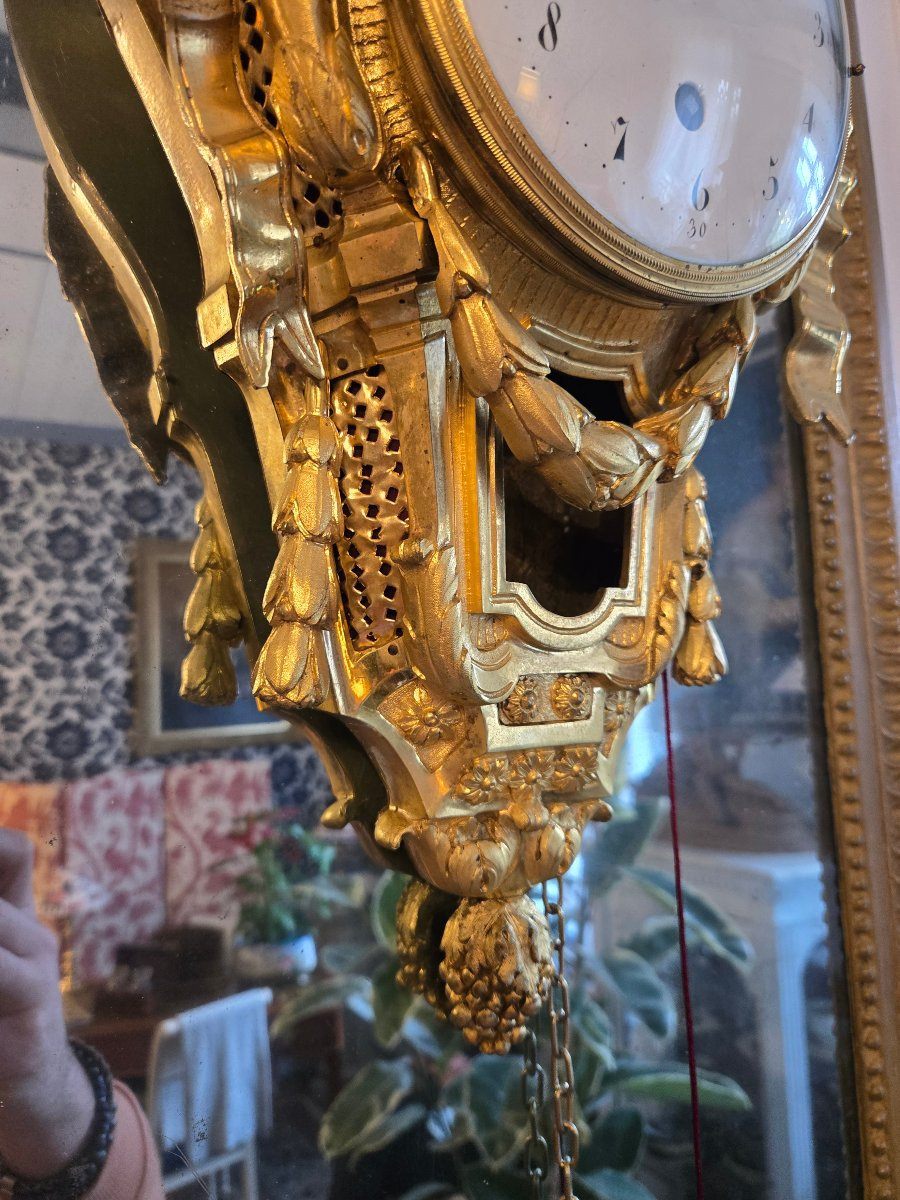
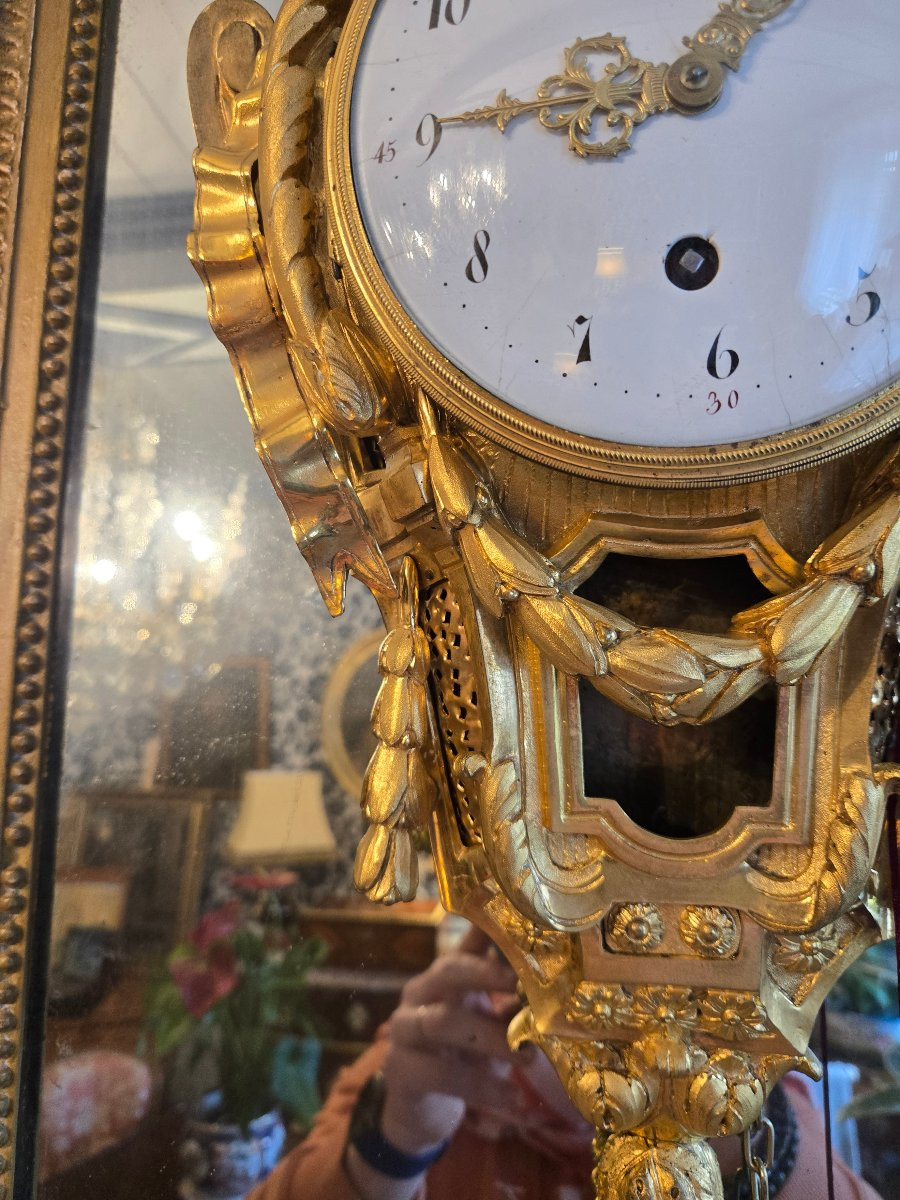
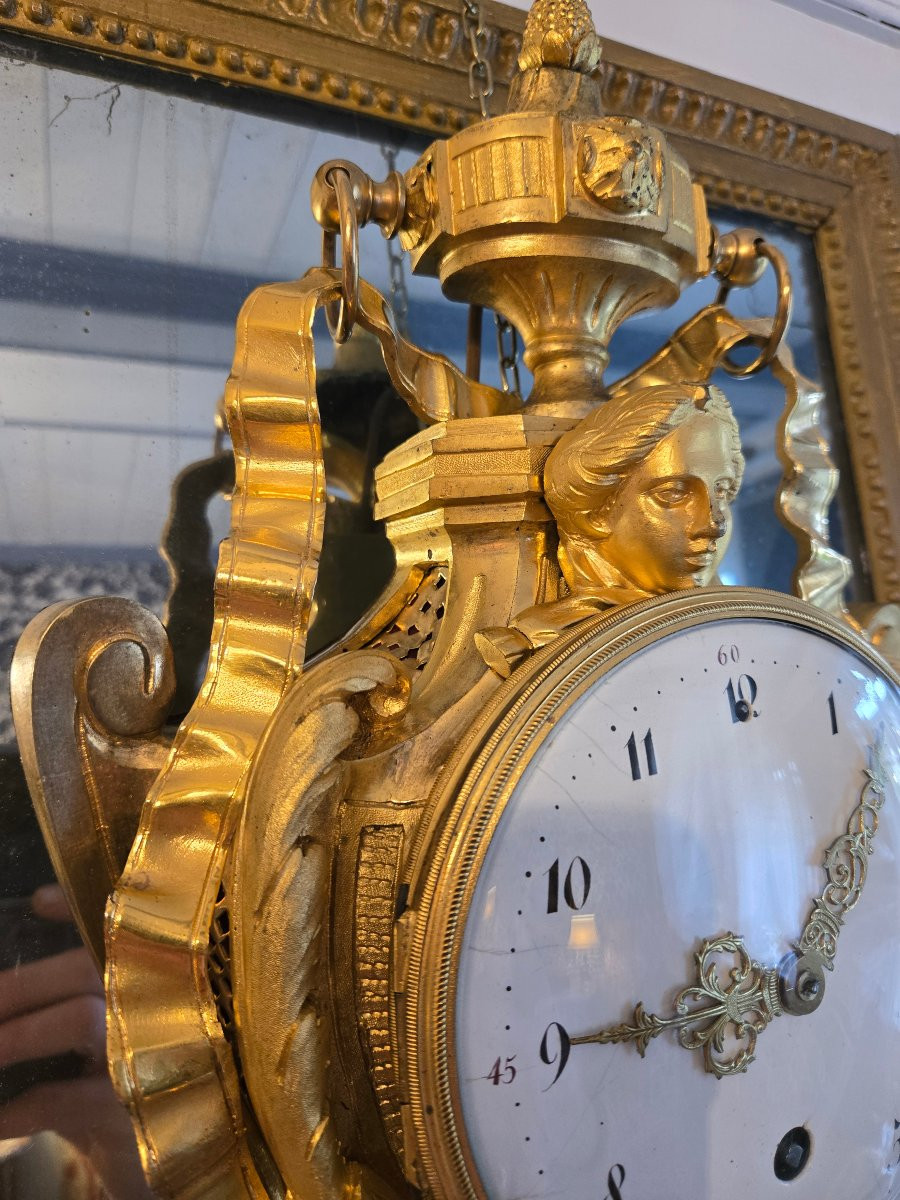
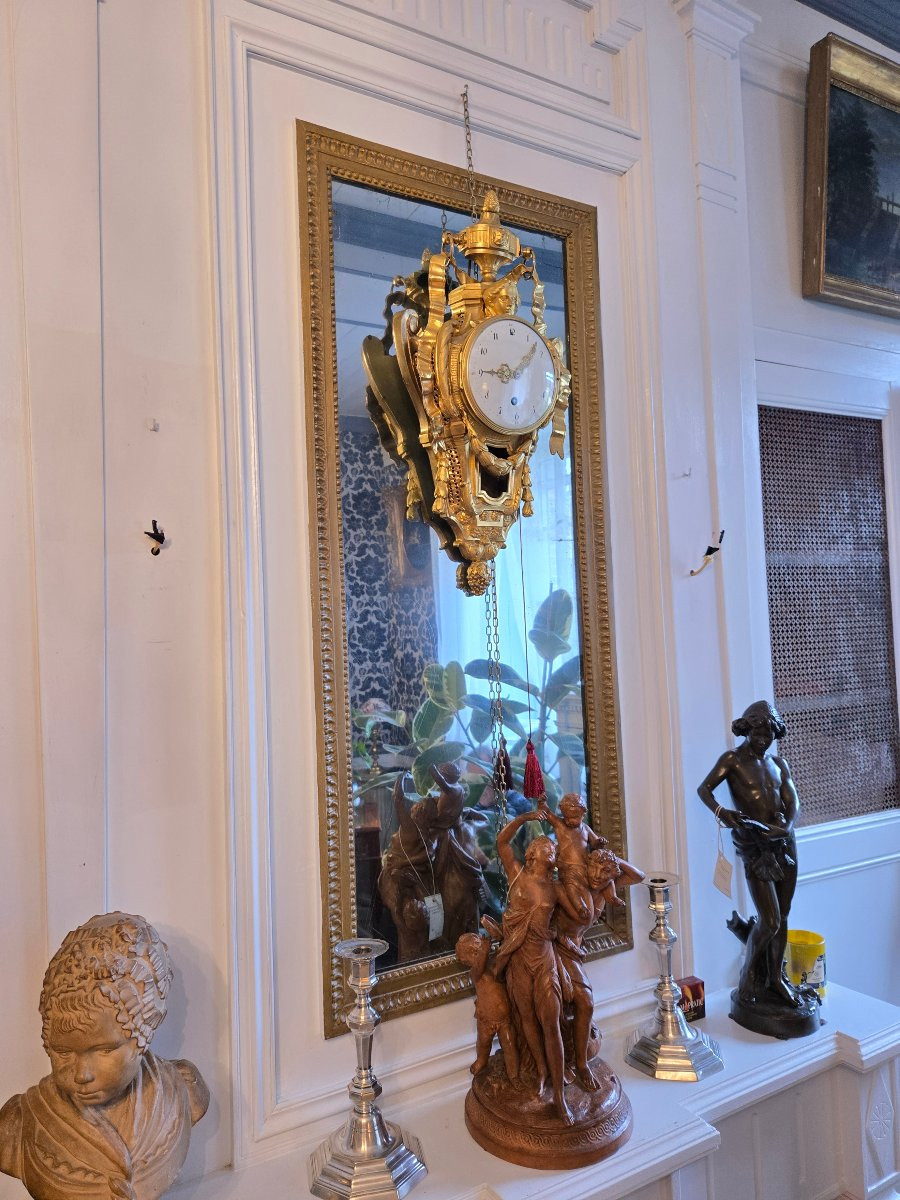
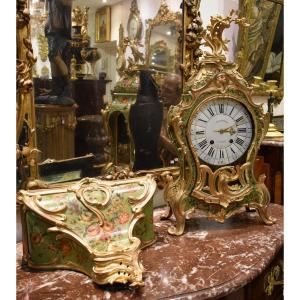
A Louis XVI period clock case attributed to Robert Osmond (1711–1789). This very elegant alcove clock, with a striking mechanism on demand, is crafted from finely chased and mercury-gilded bronze and is remarkably well-preserved, both in terms of its chasing and gilding. The case, attributed to the renowned Parisian bronze sculptor Robert Osmond, is based on the "ribbon" style clock case, widely documented in the second half of the 18th century and referenced in Osmond's Book of Drawings (a collection of drawings and clock designs, circa 1755–1780), now held at the INHA library. This model, sometimes referred to as the "grand model" or "royal model," is well-known in monumental formats; however, it is much less common in an alcove version, such as the example presented here. The exquisitely refined composition perfectly illustrates the decorative vocabulary of the transition from the late Louis XV to the Louis XVI style: an elongated cartouche with a tapered base, a projecting circular dial encircled by a finely chased laurel wreath, a delicately modeled female mascaron surmounting the bezel, knotted and pleated ribbons forming lateral drops suspended by rings, openwork backgrounds with a mesh pattern on the sides, an openwork lower section decorated with rosettes and florets, and a pine cone-shaped base. The casting and chasing are of exceptional quality, with a clear and precise relief characteristic of the finest Parisian pieces of the period. The bronze and gilding are in perfect condition, retaining the original mercury gilding, which is homogeneous, luminous, and beautifully contrasted, with a subtle interplay of matte and burnished tones. The absence of significant wear or subsequent repairs gives this cartel clock an exceptional presence and decorative legibility, superior to that of many comparable examples known on the market or sold at auction. The circular white enamel dial, with Arabic numerals and a peripheral minute track, is powered by its original movement, which is in perfect working order. The movement is complete, supplied with its balance wheel and winding key. The suspension, originally a wire suspension, was replaced at some point with a Brocot suspension, a common technical improvement in the 19th century, ensuring greater accuracy without compromising the integrity of the mechanism. The clock features a striking mechanism on demand, a particularly sought-after complication for alcove clocks: by pulling a cord, the time can be struck at will, without automatic activation, a feature specifically suited to a bedroom or private space. Due to its unusual size, the quality of its chasing, the exceptional state of preservation of its gilding, and the presence of its original movement in perfect working order, this cartel clock is a very fine example of Parisian decorative clockmaking from the late 18th century, directly from the repertoire of the great bronze casters who supplied the finest clockmakers of their time. Dimensions: Height: 57 cm Width: 28 cm 








 Le Magazine de PROANTIC
 TRÉSORS Magazine
 Rivista Artiquariato