THIS OBJECT WAS SOLD
Rare Japanese Flower Vase In Hammered Bronze, Decorated With Natural Bamboo And Crab Motifs




Japan, late Meiji period – early Taishō period (circa 1900-1925).
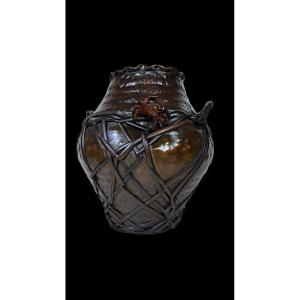
This rare and exquisitely crafted Japanese flower vase is made of remarkably light hammered bronze, demonstrating exceptional mastery of metalwork. It is distinguished by the use of genuine bamboo elements, carefully applied and interwoven around the vase – an exceptionally rare practice, as bamboo is far more often imitated in bronze than used in its natural state.
The bronze body has a subtly irregular, hand-hammered surface that lends the form depth and vitality. Its unusual lightness for a vase of this size testifies to the artisan's technical skill and the refined metalwork characteristic of the late Meiji period. The genuine bamboo structure surrounding the vase is skillfully curved, fitted, and secured, creating a dynamic lattice that emphasizes both the structure and the visual rhythm. Two finely sculpted crabs in relief enliven the composition, their precise details contrasting with the understated bronze background. In Japanese symbolism, bamboo evokes resilience and integrity, while the crab suggests adaptability and perseverance—forming a poetic dialogue deeply rooted in traditional aesthetics. The gently undulating rim underscores the piece's handcrafted character. The bronze surface retains a rich, natural patina in warm brown and dark copper tones, harmonizing beautifully with the organic warmth of the bamboo.
The vase is unsigned, a common characteristic of refined decorative works intended for the demanding national or international markets of the early 20th century. The combination of a light, hammered bronze body and preserved natural bamboo elements gives this object exceptional rarity and value. The overall condition is very good: the bronze retains a beautiful original patina, and the bamboo elements are well-preserved and stable.
A rare and poetic work of Japanese decorative art, uniting metal and natural materials with exceptional technical finesse. Both sculptural and refined, this vase strikingly testifies to the spirit of experimentation and craftsmanship of Japan at the end of the Meiji era and the beginning of the Taishō era.
This rare and exquisitely crafted Japanese flower vase is made of remarkably light hammered bronze, demonstrating exceptional mastery of metalwork. It is distinguished by the use of genuine bamboo elements, carefully applied and interwoven around the vase – an exceptionally rare practice, as bamboo is far more often imitated in bronze than used in its natural state.
The bronze body has a subtly irregular, hand-hammered surface that lends the form depth and vitality. Its unusual lightness for a vase of this size testifies to the artisan's technical skill and the refined metalwork characteristic of the late Meiji period. The genuine bamboo structure surrounding the vase is skillfully curved, fitted, and secured, creating a dynamic lattice that emphasizes both the structure and the visual rhythm. Two finely sculpted crabs in relief enliven the composition, their precise details contrasting with the understated bronze background. In Japanese symbolism, bamboo evokes resilience and integrity, while the crab suggests adaptability and perseverance—forming a poetic dialogue deeply rooted in traditional aesthetics. The gently undulating rim underscores the piece's handcrafted character. The bronze surface retains a rich, natural patina in warm brown and dark copper tones, harmonizing beautifully with the organic warmth of the bamboo.
The vase is unsigned, a common characteristic of refined decorative works intended for the demanding national or international markets of the early 20th century. The combination of a light, hammered bronze body and preserved natural bamboo elements gives this object exceptional rarity and value. The overall condition is very good: the bronze retains a beautiful original patina, and the bamboo elements are well-preserved and stable.
A rare and poetic work of Japanese decorative art, uniting metal and natural materials with exceptional technical finesse. Both sculptural and refined, this vase strikingly testifies to the spirit of experimentation and craftsmanship of Japan at the end of the Meiji era and the beginning of the Taishō era.
Explore similar pieces and discover your ideal find:
Asian Bronze Sculptures