THIS OBJECT WAS SOLD
Jeanne Soubourou (1879-1968) Limousin Hills ~1940/50. Limoges, Jouhaud, Crozant, Fauré...

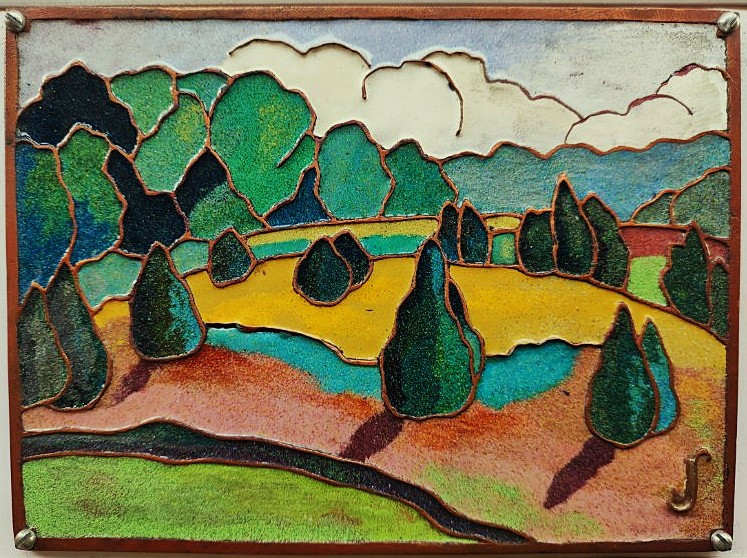

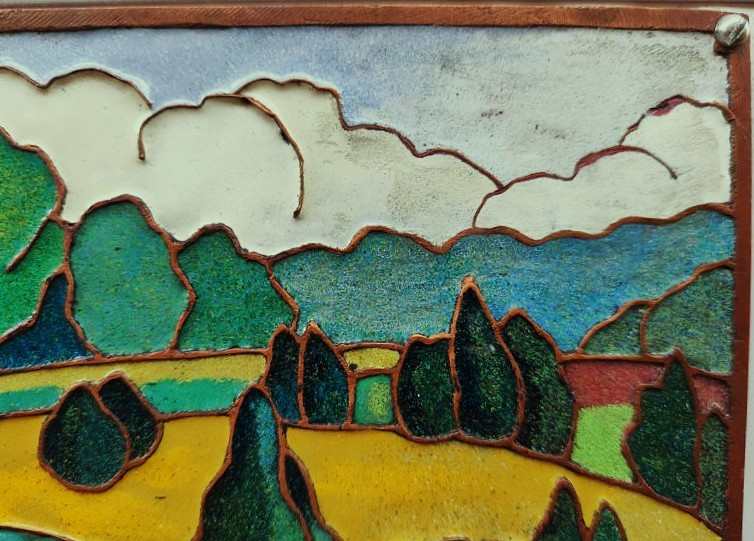
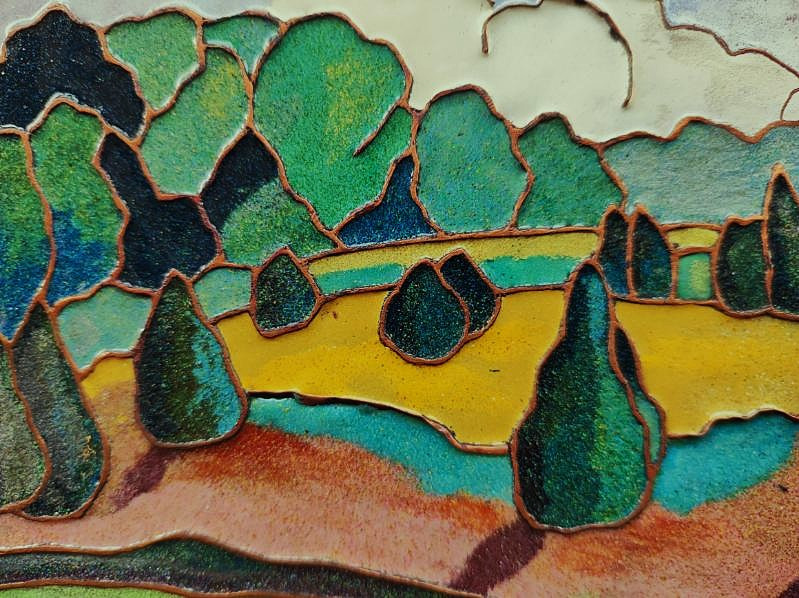

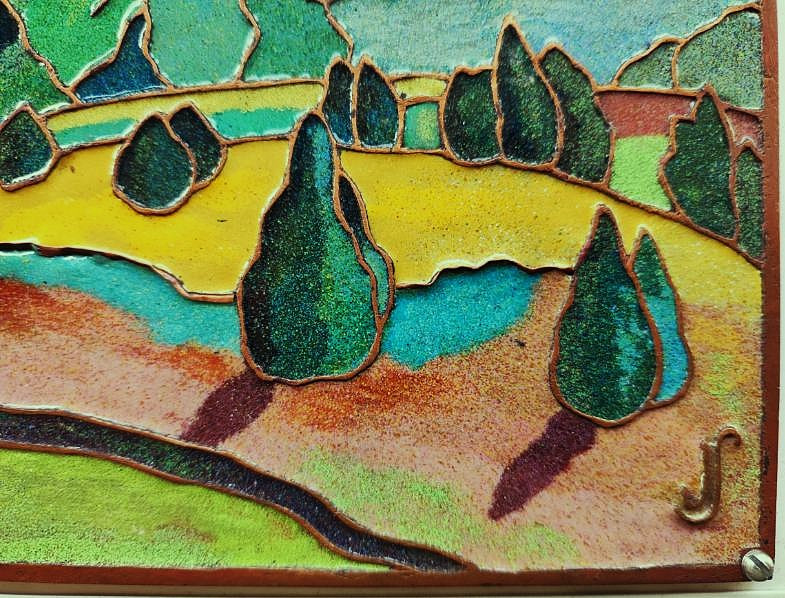
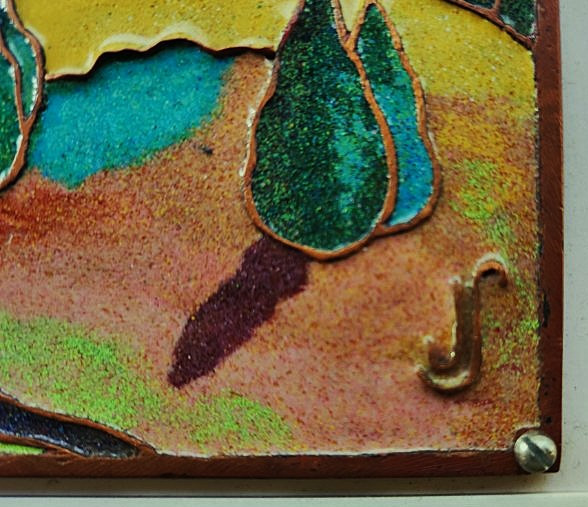
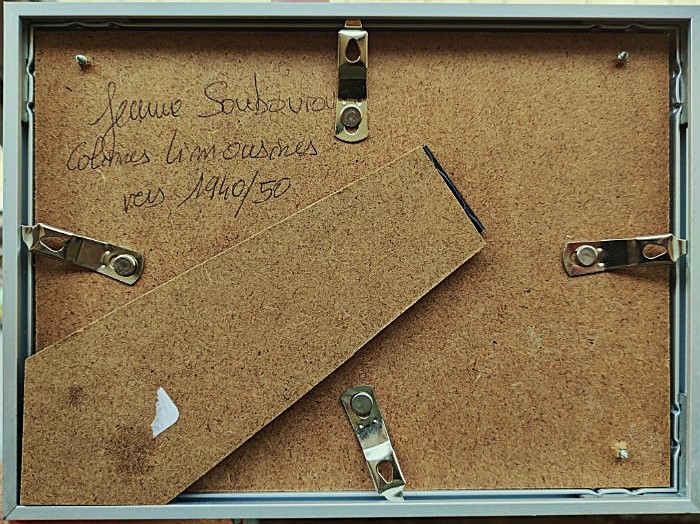
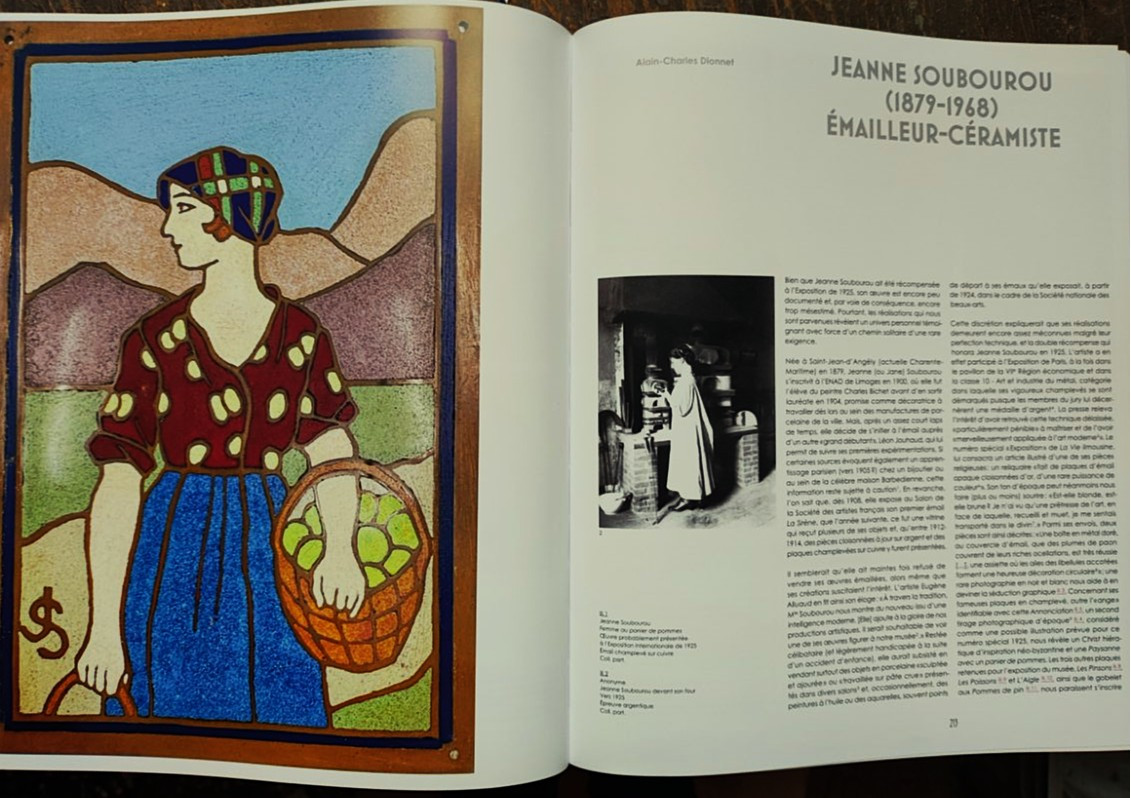


Superb enamel on copper by Jeanne Soubourou depicting the Limousin hills around 1940/1950, signed with her usual monogram in the lower right corner. The enamel alone measures 11.6 x 15.6 cm, and 14 x 19 cm including the frame. This magnificent enamel by Jeanne Soubourou depicts hills in the Limousin region, most likely in Haute-Vienne. Created around 1940, she employs one of her most spectacular and sought-after techniques: cloisonné. While she was partly inspired by Léon Jouhaud in her graphic style, she distinguished herself by using both cloisonné and champlevé techniques, which Jouhaud himself never employed. This technique, originating in the Renaissance, is one of the most difficult, and it's safe to say that Jeanne mastered it perfectly. It is said that Jeanne Soubourou was inspired by Jouhaud, most likely, but it should not be forgotten that she was of the same generation, which does not make her a follower, as she created enamels from the 1910s/1920s, at the very beginning of Jouhaud's production. Moreover, she is strongly represented in the very beautiful exhibition currently on display at the BAL in Limoges on the year 1925, and a large article is devoted to her in the excellent book "Limoges Art Déco 1925 ou Faire Moderne" published by Les Ardents Editeurs (see last photos). Jeanne Soubourou (1879-1968) Enrolled at the National School of Decorative Arts in Limoges, Jeanne Soubourou was first a student of the painter Charles Bichet before practicing enameling with Léon Jouhaud. Exhibiting regularly, she presented champlevé pieces over time, a technique that remained neglected despite the renewed interest in enamels. It was precisely her vigorous plaques that attracted attention at the International Exhibition of Modern Decorative and Industrial Arts in 1925. Wishing to reconnect with medieval tradition and the spirit of the Limoges school, she infused them with a certain modernity through intense color. On this large plaque, the incised, guilloché, and gilded field occupies the left half along an oblique axis, reserving the right side for the Magi symbolizing the peoples of Arabia, Africa, and Europe; its broken and original tones, its "quotation" of 12th-century enamels (white dots on one of the reliefs) make this a major work. This enamel is in perfect condition, delivered in a modern frame. The piece is guaranteed authentic.
Explore similar pieces and discover your ideal find:
Landscapes