


Russian Watercolor By Artur Vladimirovich Fonvizin, Elegant Woman In A Carriage, 20th Century
Artist: Artur Vladimirovich Fonvizin
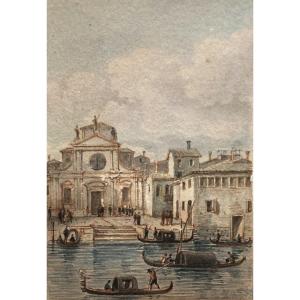
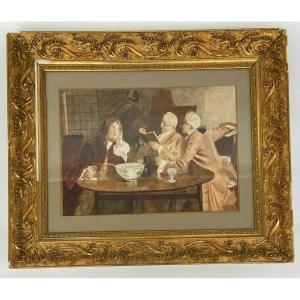
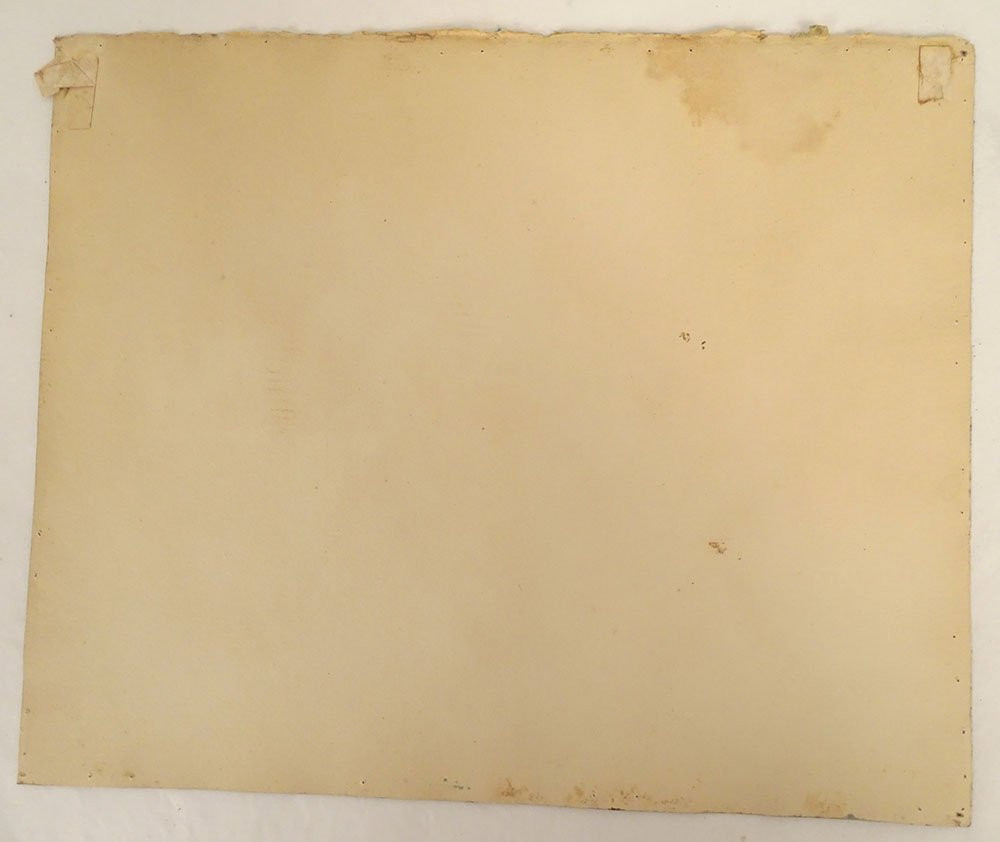
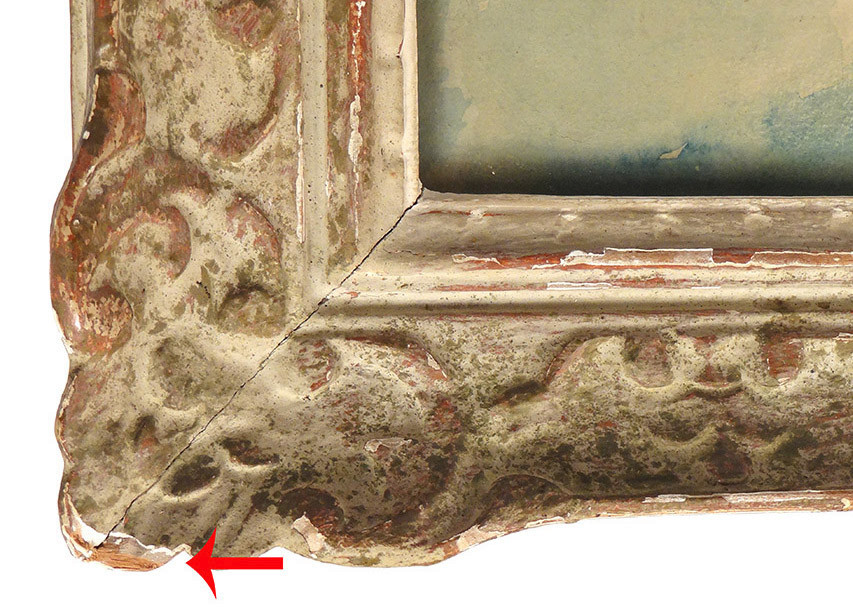
A rare Russian watercolor signed Artur Vladimirovich Fonvizin* depicting an elegantly dressed woman and a gentleman in a horse-drawn carriage, perhaps socialites or actors from Moscow, dating from the 1930s-40s. This watercolor is in good condition and of superb quality. Signed lower right. It is under glass. Note: tiny stains and yellowing on the paper, minor damage to the frame, see photos. *Artur Vladimirovich Fonvizin (1883-1973) was a Russian-Soviet watercolor painter. In 1901, he went to study at the Moscow School of Painting, Sculpture and Architecture. His early works were signed von Wiesen. His teachers were K.N. Gorski, V.N. Baksheev, and P.I. Klodt. There he met Mikhail Larionov, the leader of the Union of Youth, who was ready to "subvert the old art." When the Union organized an exhibition without the school authorities' permission, he was expelled from the school, along with Mikhail Larionov and Sergei Sudeikin. In 1904, he moved to Munich, where he continued his studies in private art studios. In 1906, he returned to Russia to live for a time with his parents in their village. From 1907 until the Great War, as a member of Larionov's group, Fonvizin participated in the Blue Rose (1907), Stephanos (1909), Union of Youth, the first Jack of Diamonds exhibition (December 1910), and the Target and The Donkey's Tail (1910-12) exhibitions. He participated in the Golden Fleece and Stephanos Crown salons and joined the World of Art movement. His works from this period can be characterized as Symbolist, in the so-called Lyrical Primitive style. His most famous works from this period are The Bride (1902), Leda (1904), and Composition with the Figure of Christ (1904). When World War I began, Fonvizin moved to the Tambov province, where he painted extensively from nature. In 1918, he headed the art studio of the Proletarian Culture Artistic Organization in Tambov. In 1922, he became a member of the Makovets Creative Organization and participated in its exhibitions. In 1923, he taught at the Nizhny Novgorod Art College. In 1926, he returned to the Tambov Illustrative Art Studio. In 1927, he went to Moscow, where the following year he joined the Moscow Artists' Society and the Association of Artists of Revolutionary Russia. At the same time, he switched to watercolor, his primary medium for the rest of his life. In 1929, he visited Leningrad, where he sketched views of the city; in the early 1930s, he traveled to Kerch and Askania-Nova. His first solo exhibition was held at the Pushkin Museum in 1936. From the early 1940s until his death, the main themes of the artist's work were portraits of theatrical actresses in costume, sketches of the circus, images of pre-revolutionary life, pictures of flowers, and landscapes. In 1943, Fonvizin went into exile in Kazakhstan. There, he began his Karaganda and Cabmen cycles. From 1958 to 1960, the artist lived in the village of Pirogovo, where he painted landscapes. He continued to exhibit his work after World War II. His solo exhibitions were held at the Union of Theatre Artists of the Russian Federation (1940), the Central House of Artistic Workers (1944, 1947), the Central House of Writers (1955), the Moscow Union of Artists (1958), and the Union of Artists of the USSR (1969). In 1970, he was awarded the title of Honored Artist of the Russian Federation. He died on August 19, 1973, in Moscow. Fonvizin's watercolor sketches and portraits of actors and artists, landscapes, and still lifes are held in the Tretyakov Gallery, the Pushkin Museum, and the State Russian Museum. He is a highly regarded artist on Artprice. Dimensions: Frame 38.5 cm x 32.5 cm, Window 26.5 cm x 20.5 cm. 900 360. All photos are available at: www.antiques-delaval.com
4 500 €
Period: 20th century
Style: Other Style
Condition: Good condition
Length: cadre 38,5 cm x 32,5 cm fenêtre 26,5 cm x 20,5 cm
Reference (ID): 1670530
Availability: In stock
Print