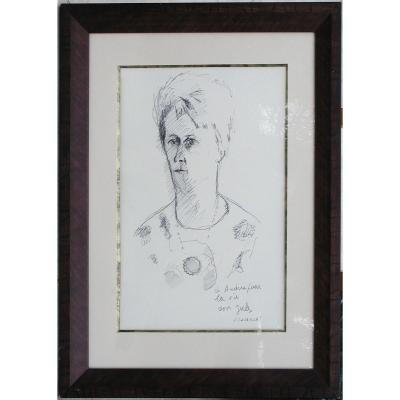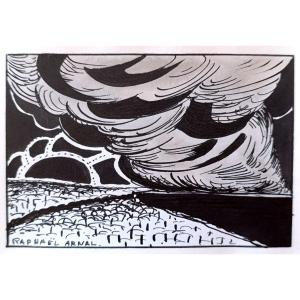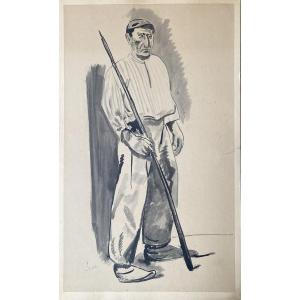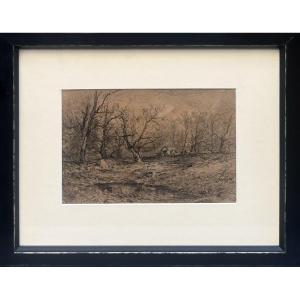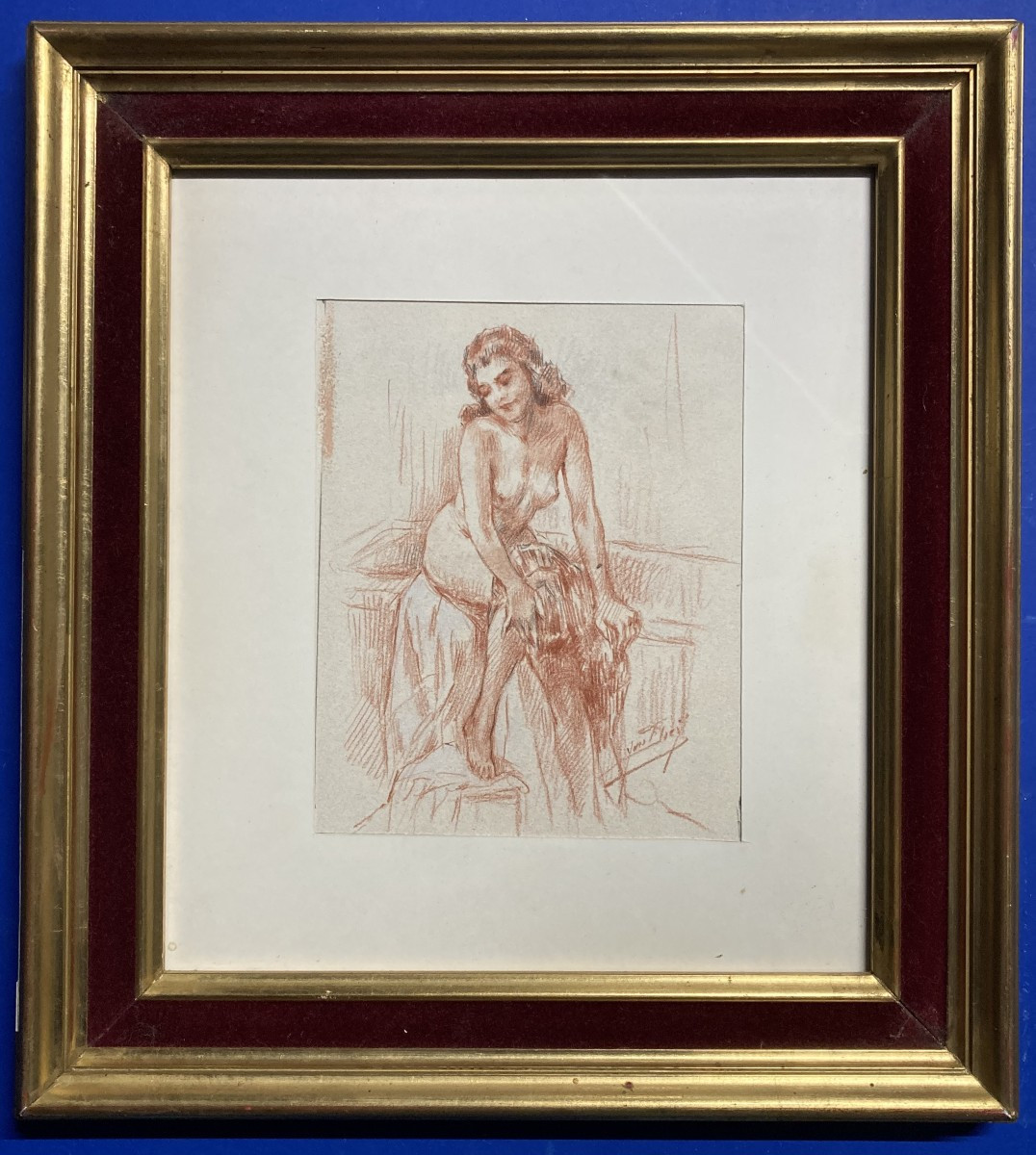






Yves Diey (1892-1984), Female Nude - Portrait De Louise, Sanguine And Black Pencil Drawing
Artist: Yves Diey (1892-1984)
Yves DIEŸ (1892-1984)
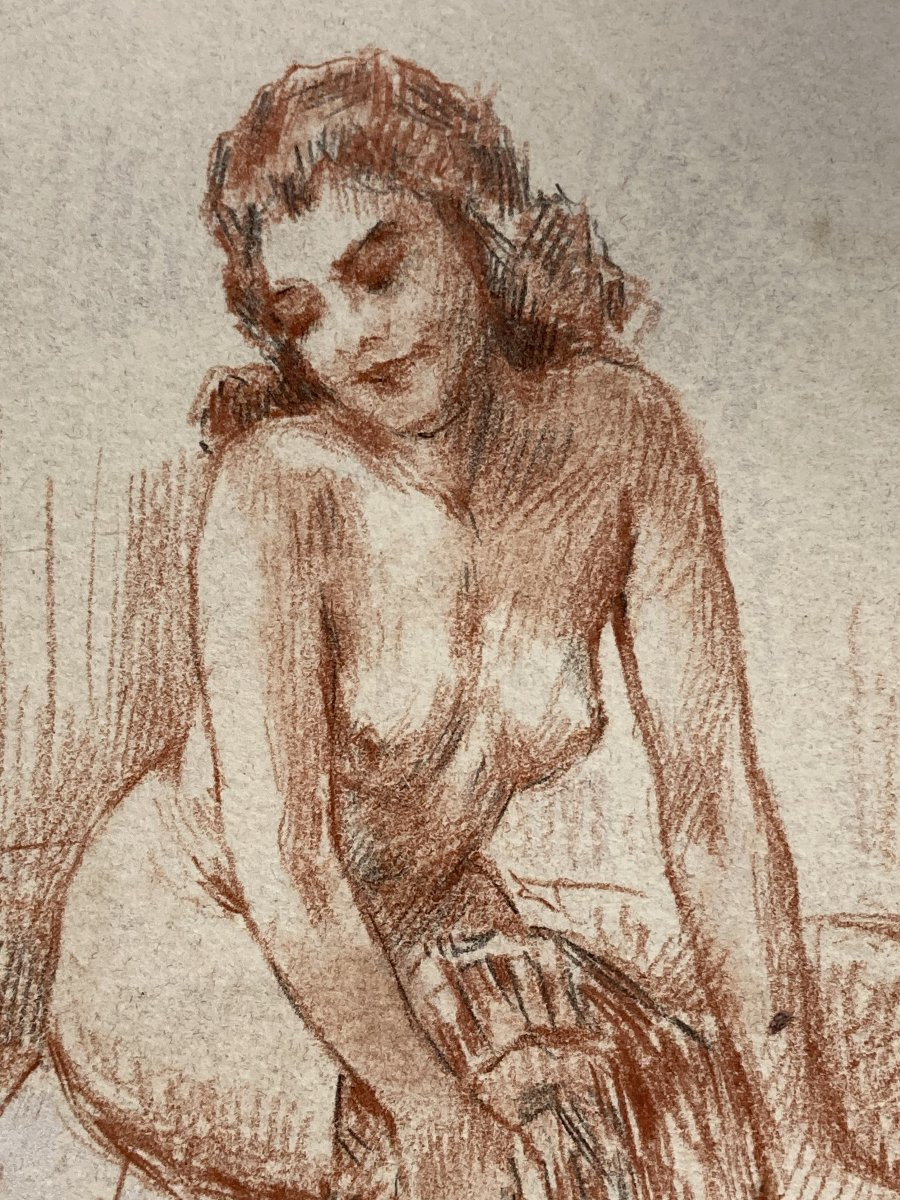
Female Nude - Portrait of Louise
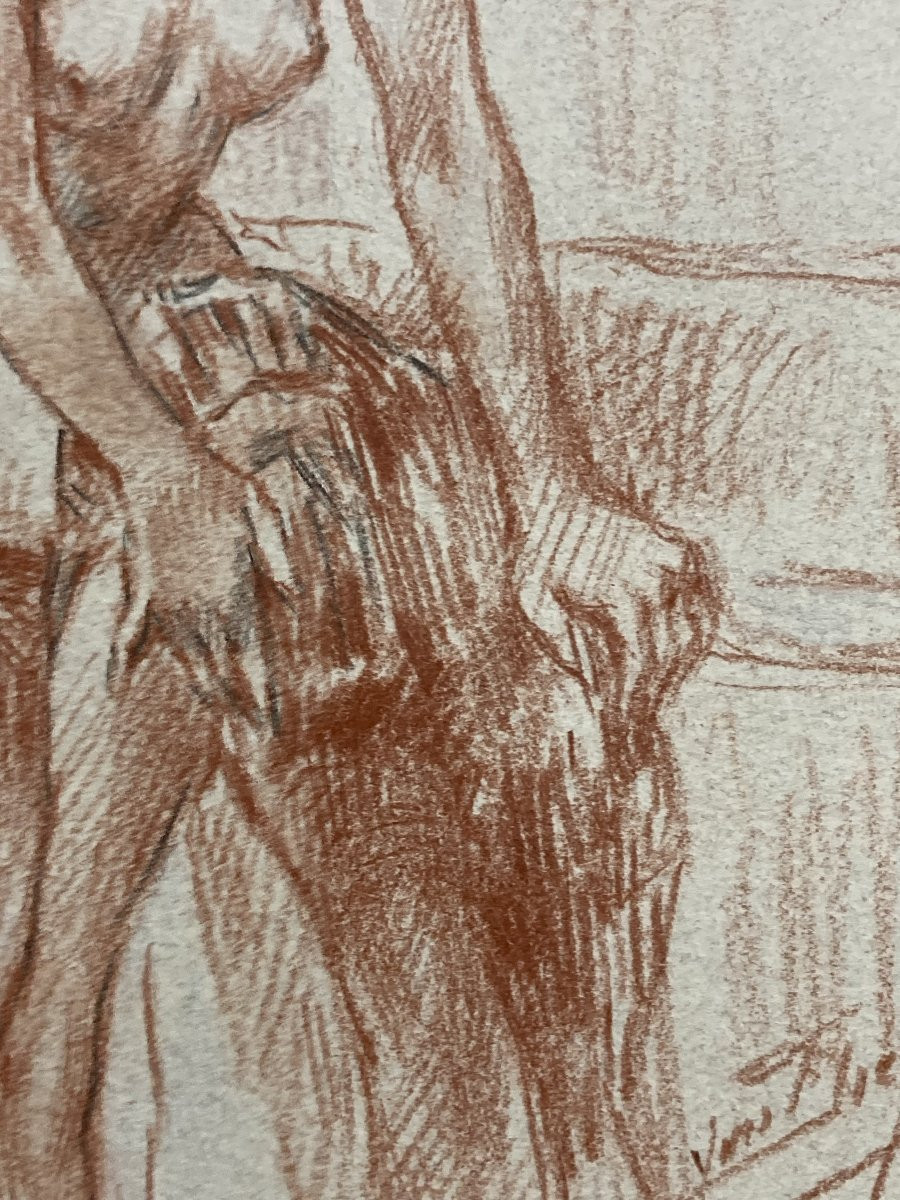
Red chalk and black pencil drawing on paper
1920s
Signed lower right
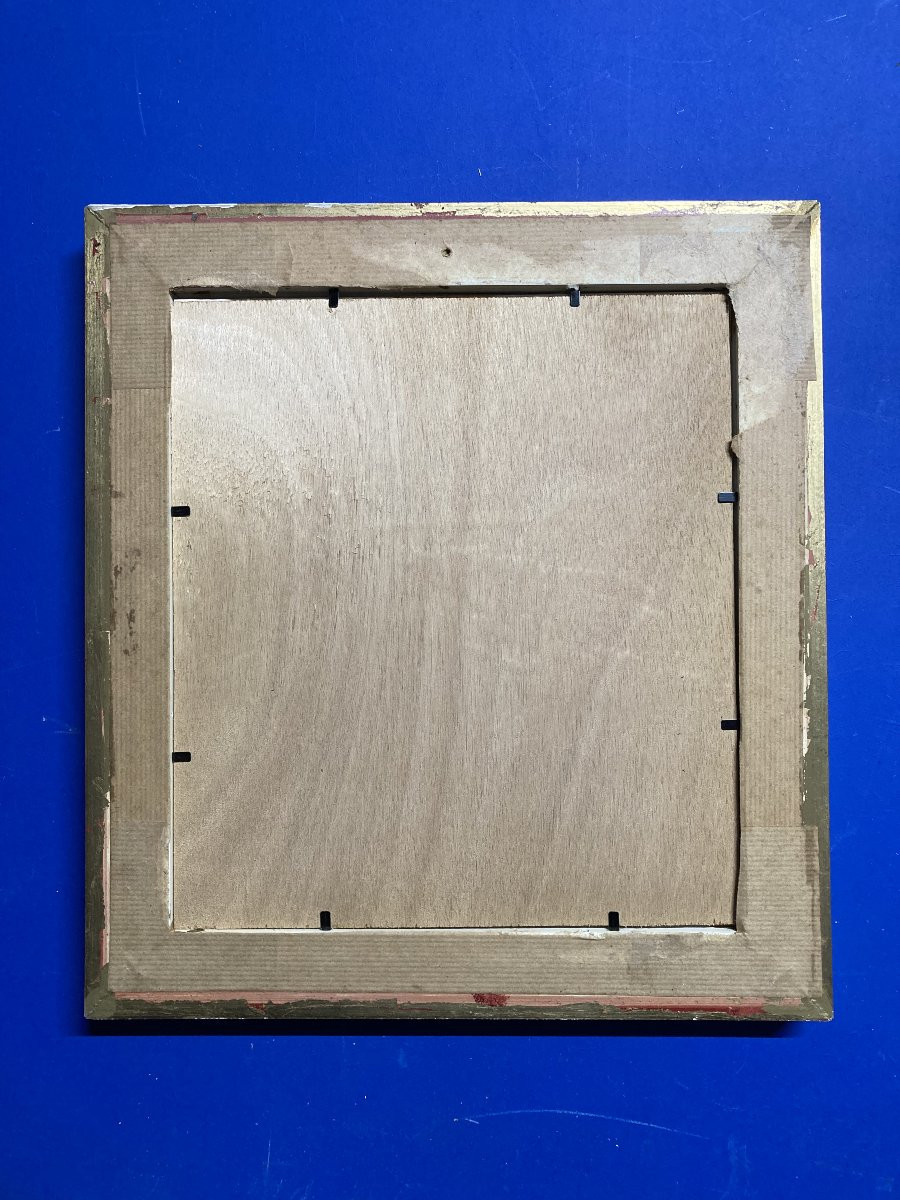
Framed
Framed dimensions: 32 x 35 x 3 cm
Sheet dimensions: 15 x 19 cm
Jacques Yves Paul Dieÿ was a French painter born on June 28th, 1892, in the 8th arrondissement of Paris and died on July 22th, 1984, in Montluçon.
Yves Dieÿ was mobilized during the First World War in the 8th Train Squadron. Seriously wounded, he was hospitalized at the military hospital in Montpellier. He remained in hospitals from 1914 to 1922.
He married Louise Marie Magdelaine Arias (1902, Saint-Maur-des-Fossés - 1986, Villeneuve-sur-Lot) on June 29th, 1922, in Paris. Of Martinican origin, she served as his model and helped him build his reputation. They had two children, Michelle (born June 15th, 1924) and Guy (born June 20th, 1926). The couple divorced on April 20, 1929.
In Paris, his studio was located at 7 rue du Colonel-Oudot, then at 18 rue Friant. From 1950 onward, he works at 181 rue de Courcelles. He remarried on November 23, 1929, in Châteaudun to Louise Émilie Laporte (1896, Paris – 1984, Paris). She also served as his model.
Regarding his artistic career, Yves Dieÿ trained at the École des Beaux-Arts in Paris, entering the studio of Raphaël Collin (1850-1916) and receiving influences from masters such as Tony Robert-Fleury (1797-1890) and Adolphe Déchenaud (1868-1926). Given his age, he was primarily influenced by two of his teachers: Hans Berger (1882-1977), a painter of Swiss origin, and Louis-François Biloul (1874-1947).
As a member of the Salon des Artistes Français, he painted nudes and "elegant décolletages" popularized by postcards, as well as portraits and still lifes. The subjects of his work are lively scenes of Paris—which, like Eugène Galien-Laloue, he depicts in the "age of horse-drawn omnibuses"—as well as scenes from the Île de Ré, Spain, Morocco, and Algeria. Beyond these themes, his traveler's temperament is evident in the presence of his works in Canadian private collections. Yves Dieÿ received medals and prizes at the Salon des Artistes Français. He was also a member of other painting associations, such as the Salon d'Hiver, the Beaux-Arts de Nice, and the Orientalists of Algiers and Samothrace.
In 1940, Yves Dieÿ organized the Petit Salon de Montparnasse—an association of professional painters—in a studio located at 150 Boulevard du Montparnasse. He worked and exhibited in Belgium during the 1950s and 1960s, notably with Les Arts en Europe.
Yves Dieÿ was primarily a portraitist. He has a special gift for bringing out the soul of models and giving exceptional expression to the eyes and lips. He draws his inspiration primarily from women and shows a predilection for sensual nudes and seductive female figures.
The Journal de l'Amateur d'Art (Art Lover's Journal) said of him: "His talent as a portraitist has won him a wide audience. Several portraits of the Belgian royal family, including that of Leopold III, are currently housed at Laeken Castle. His technique is meticulous, and he loves life, which for him also finds expression in Gypsy and Spanish dances, and in the graceful poses he gives his models. The Camargue, with its bullfights and pink flamingos, is truly, in his eyes, the epitome of Provençal life. But we must also emphasize his interest in Spain, whose unique character is a great source of inspiration for his sense of movement, dance, and the picturesque."
He holds the distinctions of Officer of the Academy, Knight of the Order of the Black Star, and has received the Silver Medal of the City of Paris, as well as the Vermeil Medal of Arts in Europe in Brussels.
Female Nude - Portrait of Louise
Red chalk and black pencil drawing on paper
1920s
Signed lower right
Framed
Framed dimensions: 32 x 35 x 3 cm
Sheet dimensions: 15 x 19 cm
Jacques Yves Paul Dieÿ was a French painter born on June 28th, 1892, in the 8th arrondissement of Paris and died on July 22th, 1984, in Montluçon.
Yves Dieÿ was mobilized during the First World War in the 8th Train Squadron. Seriously wounded, he was hospitalized at the military hospital in Montpellier. He remained in hospitals from 1914 to 1922.
He married Louise Marie Magdelaine Arias (1902, Saint-Maur-des-Fossés - 1986, Villeneuve-sur-Lot) on June 29th, 1922, in Paris. Of Martinican origin, she served as his model and helped him build his reputation. They had two children, Michelle (born June 15th, 1924) and Guy (born June 20th, 1926). The couple divorced on April 20, 1929.
In Paris, his studio was located at 7 rue du Colonel-Oudot, then at 18 rue Friant. From 1950 onward, he works at 181 rue de Courcelles. He remarried on November 23, 1929, in Châteaudun to Louise Émilie Laporte (1896, Paris – 1984, Paris). She also served as his model.
Regarding his artistic career, Yves Dieÿ trained at the École des Beaux-Arts in Paris, entering the studio of Raphaël Collin (1850-1916) and receiving influences from masters such as Tony Robert-Fleury (1797-1890) and Adolphe Déchenaud (1868-1926). Given his age, he was primarily influenced by two of his teachers: Hans Berger (1882-1977), a painter of Swiss origin, and Louis-François Biloul (1874-1947).
As a member of the Salon des Artistes Français, he painted nudes and "elegant décolletages" popularized by postcards, as well as portraits and still lifes. The subjects of his work are lively scenes of Paris—which, like Eugène Galien-Laloue, he depicts in the "age of horse-drawn omnibuses"—as well as scenes from the Île de Ré, Spain, Morocco, and Algeria. Beyond these themes, his traveler's temperament is evident in the presence of his works in Canadian private collections. Yves Dieÿ received medals and prizes at the Salon des Artistes Français. He was also a member of other painting associations, such as the Salon d'Hiver, the Beaux-Arts de Nice, and the Orientalists of Algiers and Samothrace.
In 1940, Yves Dieÿ organized the Petit Salon de Montparnasse—an association of professional painters—in a studio located at 150 Boulevard du Montparnasse. He worked and exhibited in Belgium during the 1950s and 1960s, notably with Les Arts en Europe.
Yves Dieÿ was primarily a portraitist. He has a special gift for bringing out the soul of models and giving exceptional expression to the eyes and lips. He draws his inspiration primarily from women and shows a predilection for sensual nudes and seductive female figures.
The Journal de l'Amateur d'Art (Art Lover's Journal) said of him: "His talent as a portraitist has won him a wide audience. Several portraits of the Belgian royal family, including that of Leopold III, are currently housed at Laeken Castle. His technique is meticulous, and he loves life, which for him also finds expression in Gypsy and Spanish dances, and in the graceful poses he gives his models. The Camargue, with its bullfights and pink flamingos, is truly, in his eyes, the epitome of Provençal life. But we must also emphasize his interest in Spain, whose unique character is a great source of inspiration for his sense of movement, dance, and the picturesque."
He holds the distinctions of Officer of the Academy, Knight of the Order of the Black Star, and has received the Silver Medal of the City of Paris, as well as the Vermeil Medal of Arts in Europe in Brussels.
160 €
Period: 20th century
Style: Modern Art
Condition: Perfect condition
Material: Paper
Width: 32cm
Height: 35cm
Depth: 3cm
Reference (ID): 1670469
Availability: In stock
Print