



Carved Kiseruzutsu, Gold Ring, Japan, Late Edo Period
CARVED KISERUZUTSU GOLD RING Japan, late Edo
early Meiji period, circa 1840–1880.
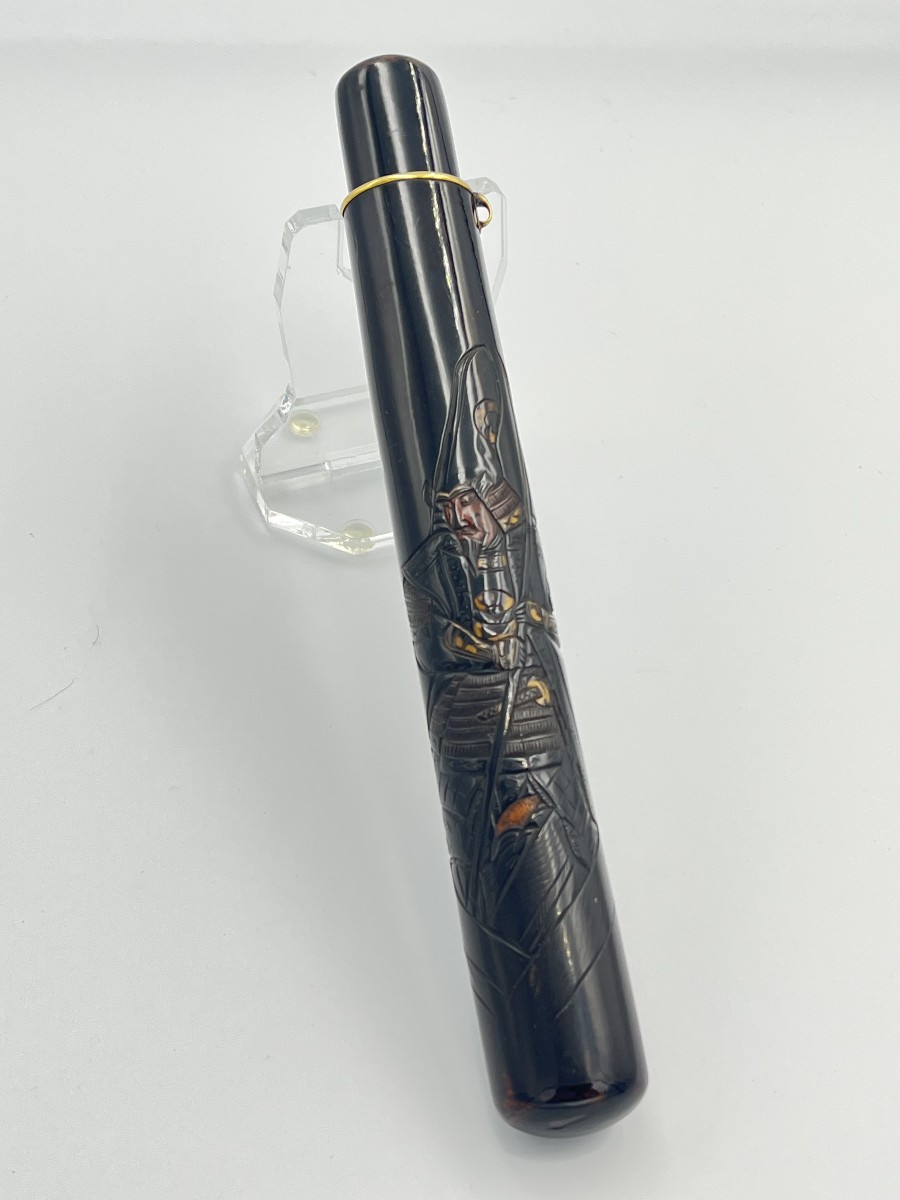
A high-relief carved kiseruzutsu case, adorned with an impressive high-relief carving of a Japanese warrior in armor, in the traditional style of musha.
The figure is rendered with remarkable attention to detail: an expressive face with colored highlights, a helmet with a high eboshi, finely incised lamellar armor, and textile elements and decorative motifs highlighted with inlays.
The upper part is fitted with a hand-formed and fitted yellow gold ring, complete with its original suspension ring. The interior of the tube shows a typical bamboo (or highly fibrous wood) core structure. The honeycomb/tightly crushed fiber texture is exactly what one observes when a craftsman uses a bamboo shaft covered with numerous layers of urushi, following traditional manufacturing techniques.
The deeply engraved decoration and precise modeling indicate superior workmanship, likely intended for an owner of high social standing. The warrior motif, common in objects worn on the obi, alludes to the warrior tales of the Heike Monogatari or the Taiheiki.
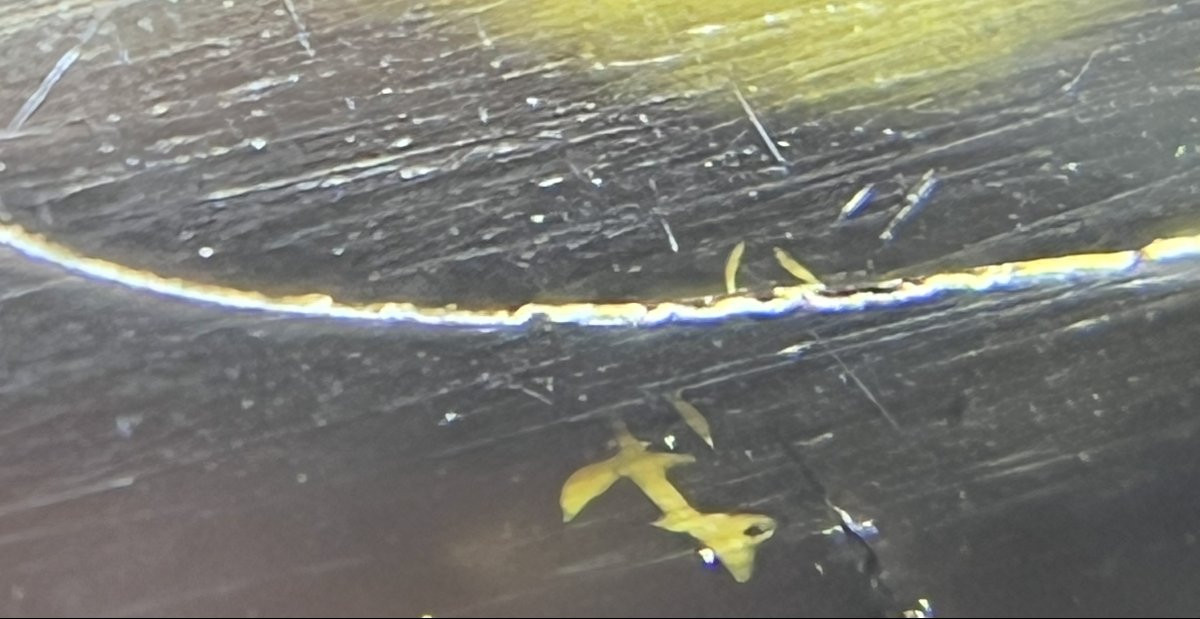
On the back of the sheath, a series of very small gold inlays arranged along a groove appears to be a discreet signature (kakihan), typical of certain artisans from the second half of the 19th century.
A high-quality piece, representative of the prestigious kiseruzutsu of the late Edo period.
A rare testament to the refined craftsmanship of Japanese artisans in tobacco products.
early Meiji period, circa 1840–1880.
A high-relief carved kiseruzutsu case, adorned with an impressive high-relief carving of a Japanese warrior in armor, in the traditional style of musha.
The figure is rendered with remarkable attention to detail: an expressive face with colored highlights, a helmet with a high eboshi, finely incised lamellar armor, and textile elements and decorative motifs highlighted with inlays.
The upper part is fitted with a hand-formed and fitted yellow gold ring, complete with its original suspension ring. The interior of the tube shows a typical bamboo (or highly fibrous wood) core structure. The honeycomb/tightly crushed fiber texture is exactly what one observes when a craftsman uses a bamboo shaft covered with numerous layers of urushi, following traditional manufacturing techniques.
The deeply engraved decoration and precise modeling indicate superior workmanship, likely intended for an owner of high social standing. The warrior motif, common in objects worn on the obi, alludes to the warrior tales of the Heike Monogatari or the Taiheiki.
On the back of the sheath, a series of very small gold inlays arranged along a groove appears to be a discreet signature (kakihan), typical of certain artisans from the second half of the 19th century.
A high-quality piece, representative of the prestigious kiseruzutsu of the late Edo period.
A rare testament to the refined craftsmanship of Japanese artisans in tobacco products.
950 €
Period: 19th century
Style: Asian art
Condition: Good condition
Material: Bamboo
Length: 21,5 cm.
Width: 3 cm
Depth: 2 cm
Reference (ID): 1669802
Availability: In stock
Print