THIS OBJECT WAS SOLD
Paul Madeline (1863-1920) Old Garden At Crozant 1908. Creuse Valley, Guillaumin, Alluaud
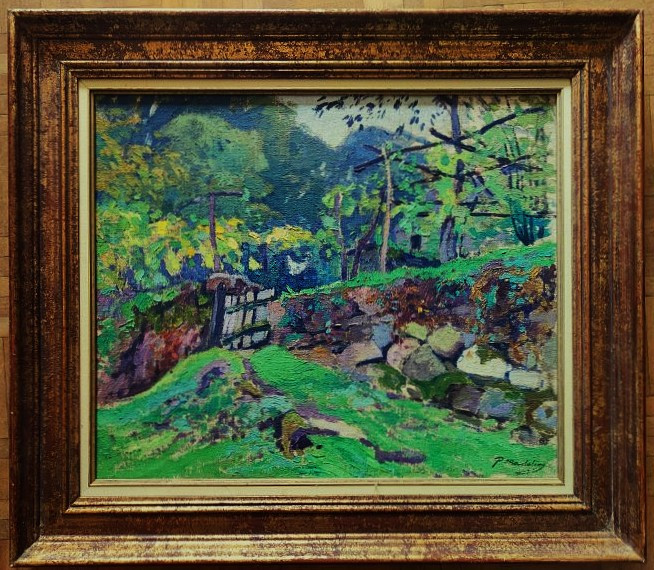
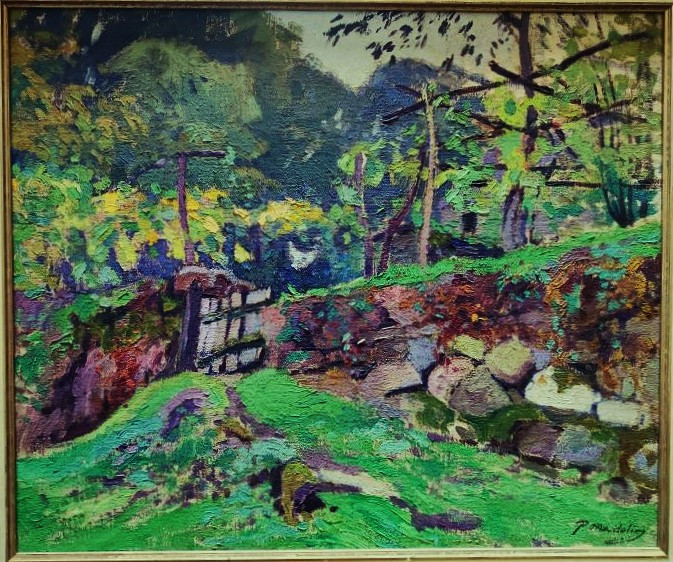
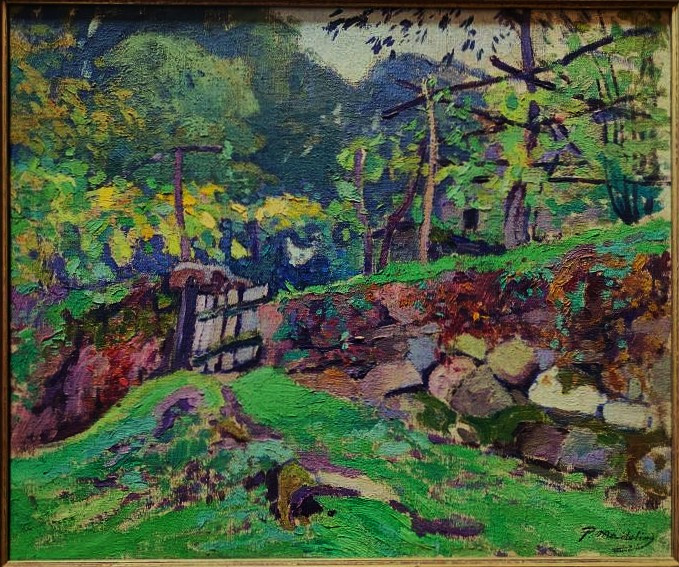
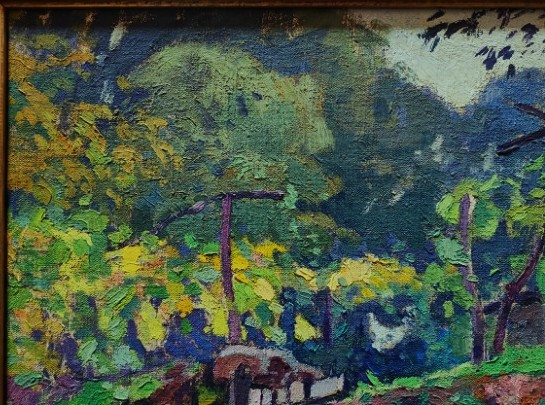


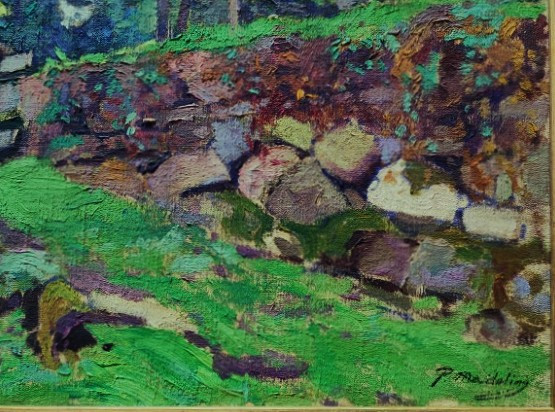
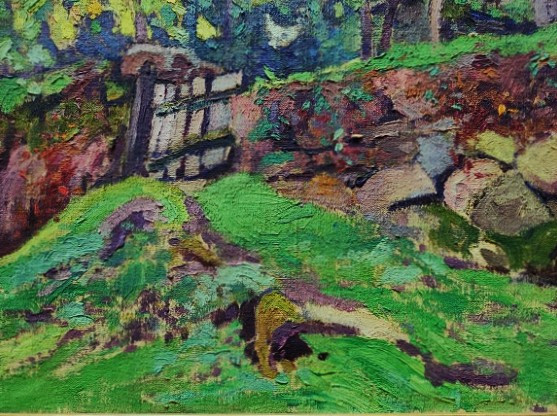
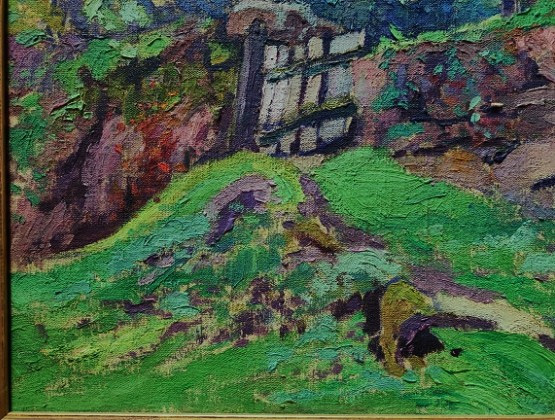

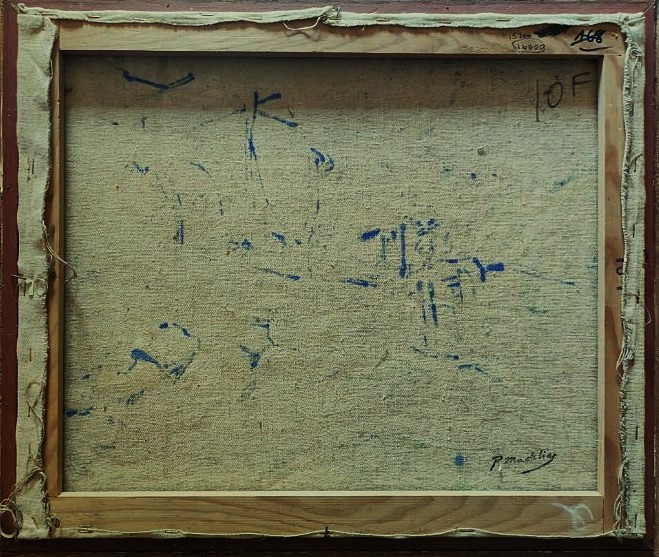
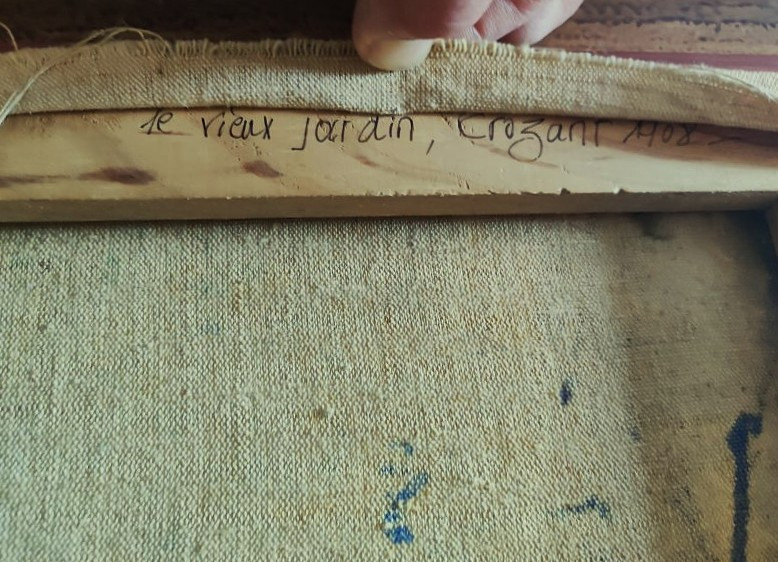


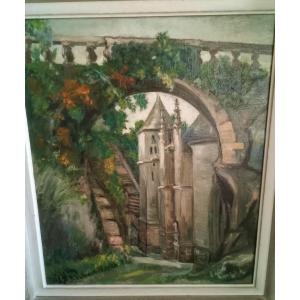
A new work by Paul Madeline, this time depicting the Creuse region. Here he paints an old garden near Crozant, signed with the studio stamp in the lower right corner and countersigned with the same stamp on the back. It is also titled and dated on the stretcher below the canvas: "Old Garden at Crozant 1928." The canvas measures 46x55cm without the frame and 62x71cm including the frame. Following the two other works I am offering—his daughter in the house at Taillebourg from 1900 and the Breton coast from 1907 (please see these two listings)—this time it is a work from the Creuse region where the artist paints an old garden near Crozant. This work is very typical of Madeline's Creuse period, where the artist subtly constructs his composition with an old wall adorned with a very old fence, then above it the garden with its branches arranged by the gardener, and all around, very dense vegetation. And of course, as in most of her paintings of the Creuse region, Madeline showcases the full range of her palette with intense greens, mauves, pinks, yellows, blues, browns—in short, almost her entire palette. You can almost smell the scents and feel the dampness of a little corner of the Creuse! A sublime work by one of the masters of the Creuse Valley. Beautiful work by one of the greatest French Post-Impressionists, who often rivals the likes of Guillaumin, Detroy, Maufra, or Moret. Today, Paul Madeline is considered as much one of the masters of the Breton school, alongside Moret, Maufra, Delavallée, Legoût-Gérard, and others, as he is one of the masters of the Creuse Valley, alongside Guillaumin, Detroy, Alfred Smith, and Alluaud. Paul Madeline was born in Paris on October 7, 1863. A student at the École des Beaux-Arts in Paris, he worked in a publishing house to support himself and painted urban landscapes in his free time. In 1894, he discovered the Creuse—a charming rural area in the Limousin region—following a meeting with Maurice Rollinat and Léon Detroy at the home of a mutual friend. He exhibited at the Salon des Artistes Français in 1894, 1897, and 1899. Later, he was appointed a permanent member of the Salon d'Automne, as well as the Salon de la Nationale des Beaux-Arts. Then came great success for him. He devoted himself entirely to painting and spent several months a year in the Creuse region, usually in the autumn. A major figure among the painters of the Creuse, Paul Madeline, like Alluaud, was one of Armand Guillaumin's followers, drawing inspiration from his palette and technique. But conversely, many other artists were inspired by him, including Clémentine Ballot, perhaps the one who came closest to emulating the master. In 1908, he founded "La Société Moderne" (The Modern Society), which included painters such as Lebasque, Raffaëlli, Aman-Jean, and Maurice Chabas. The Devambez and Durand-Ruel galleries are invited to their annual exhibitions. Madeline traveled extensively in the 1910s, and towards the end of his career, he introduced figures into his landscapes, wearing regional costumes, particularly from Brittany, his second home, where he loved to visit as much as the Creuse region, especially the counties of Douarnenez, Diben, and the Île de Bréhat. He also traveled to Corrèze, Alsace during the First World War, Périgord, and the South of France, notably around Agay. The Salon des Indépendants dedicated a retrospective to him in 1926, six years after his untimely death. Today, his works are highly sought after by collectors worldwide; some sell for over €20,000 and even more! Original canvas in perfect condition, delivered in a modern frame. Artwork guaranteed authentic.
Explore similar pieces and discover your ideal find:
Landscapes