






Plant Pot By André Metthey
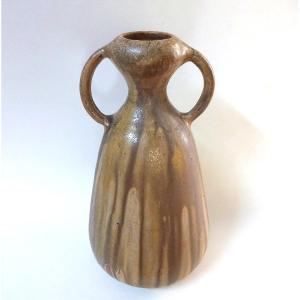
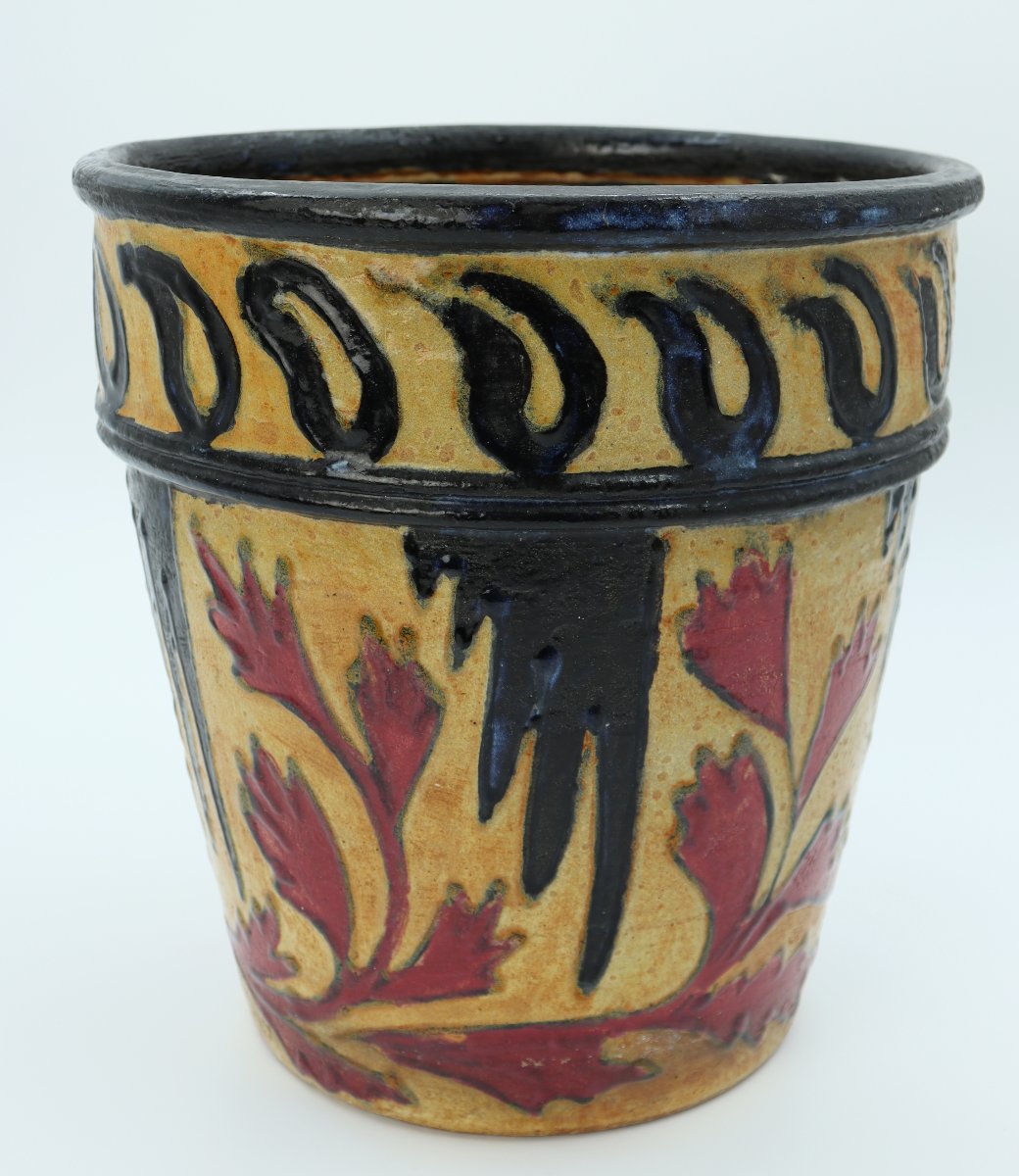
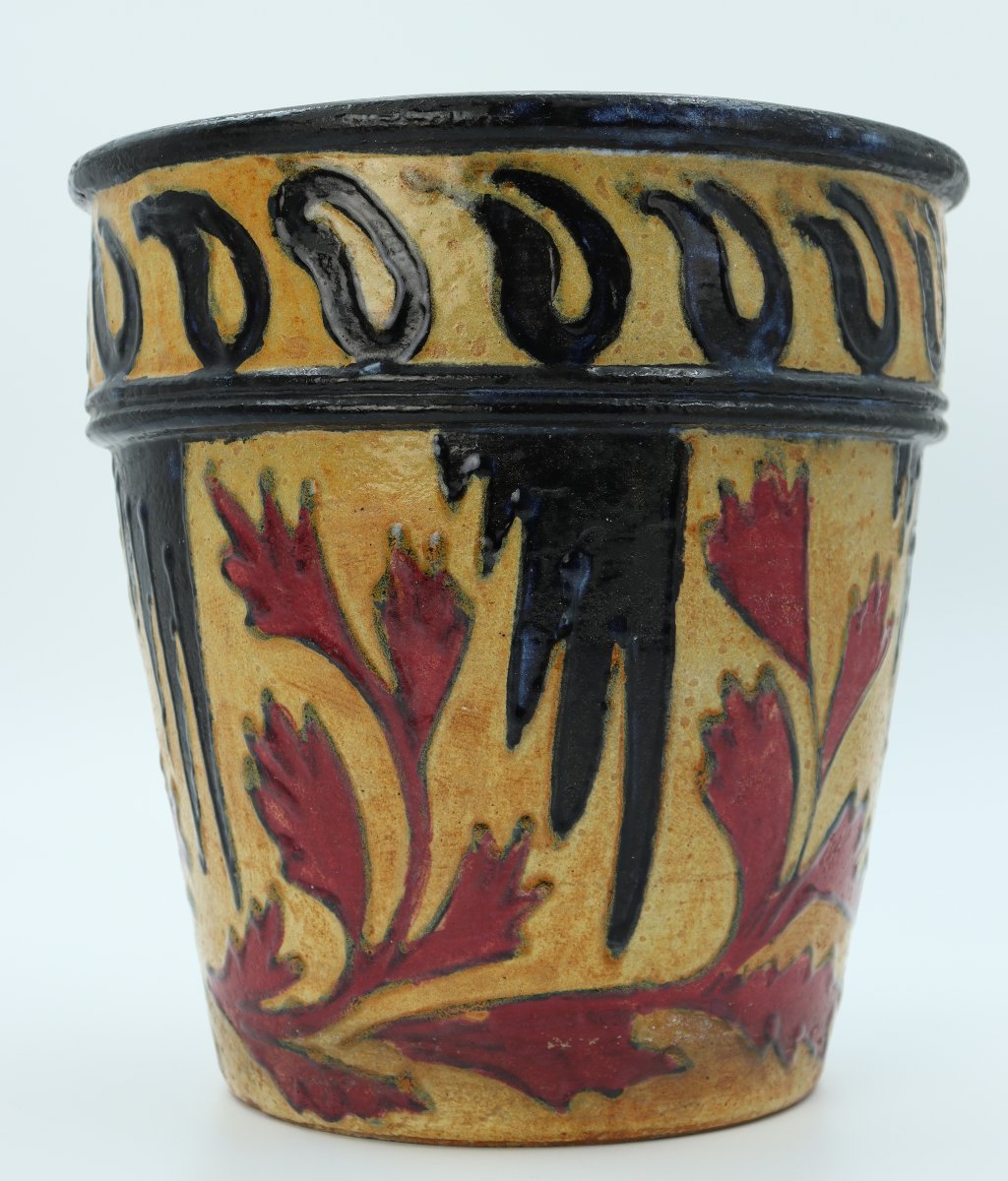
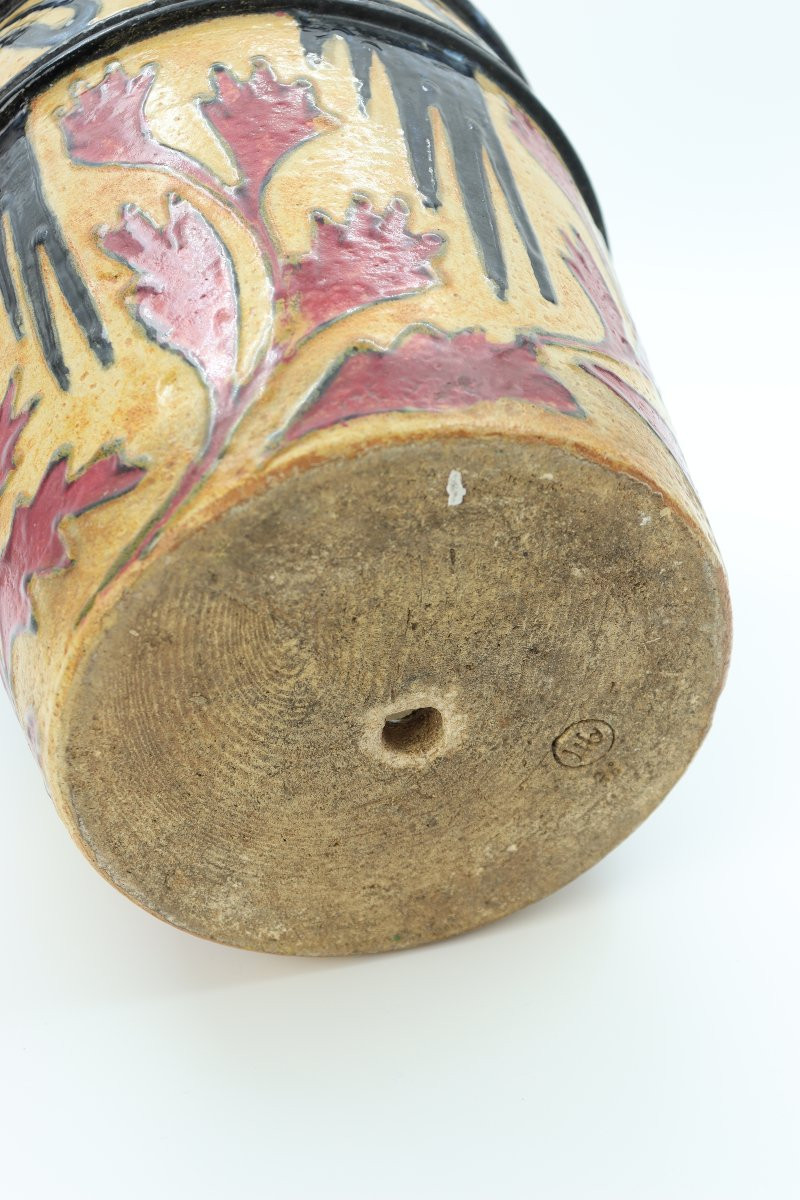
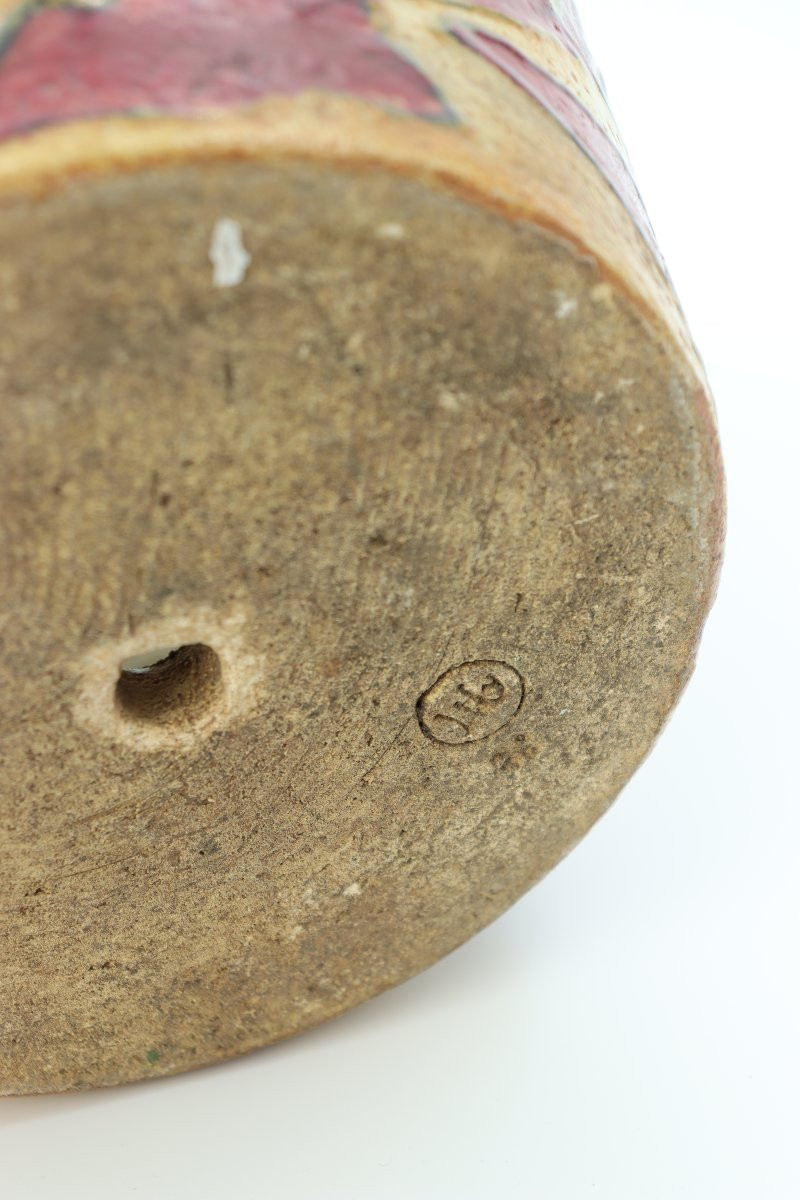
Ochre-colored plant pot by André Metthey
A major figure in the revival of French ceramics at the turn of the 20th century, André Metthey occupies an important place in the history of decorative arts.
He began his career at a young age working for a marble mason and took industrial design classes at the Beaux-Arts in Dijon before moving to Paris with his family. In 1901, he settled in Asnières, where he conducted pioneering research on enamels, color, and glazed terracotta.
Around 1906, encouraged by the art dealer
Ambroise Vollard, he came up with the idea of producing artistic
ceramics in collaboration with a number of Fauvist artists. His studio
welcomed Matisse, Derain, Vlaminck, and Rouault, who produced remarkable
ceramic pieces that responded to the need of the time to blur the
boundary between the major and decorative arts.
In 1909, he achieved recognition with a solo exhibition at the Musée Galliera and a very favorable reception from critics, who encouraged him in his passion for fire.
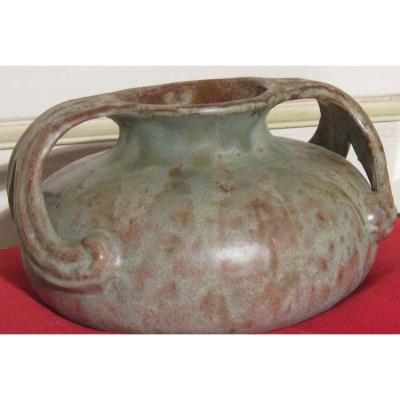
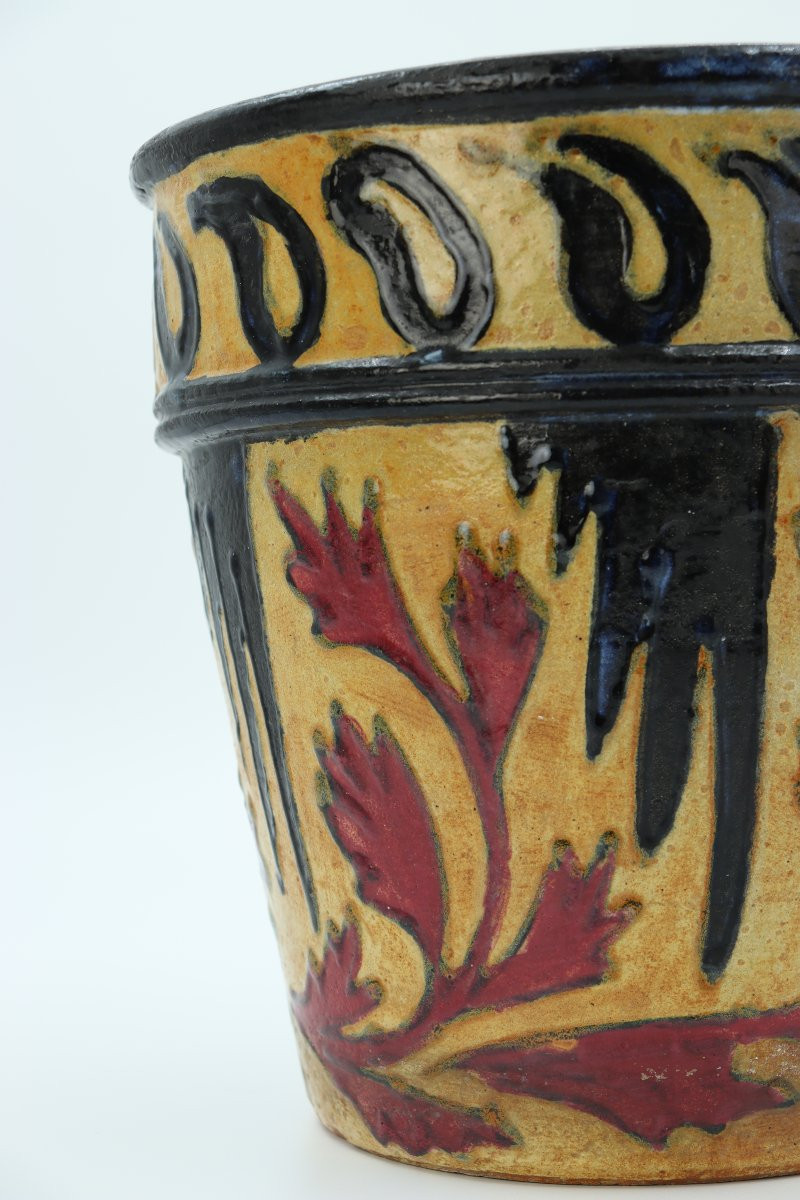
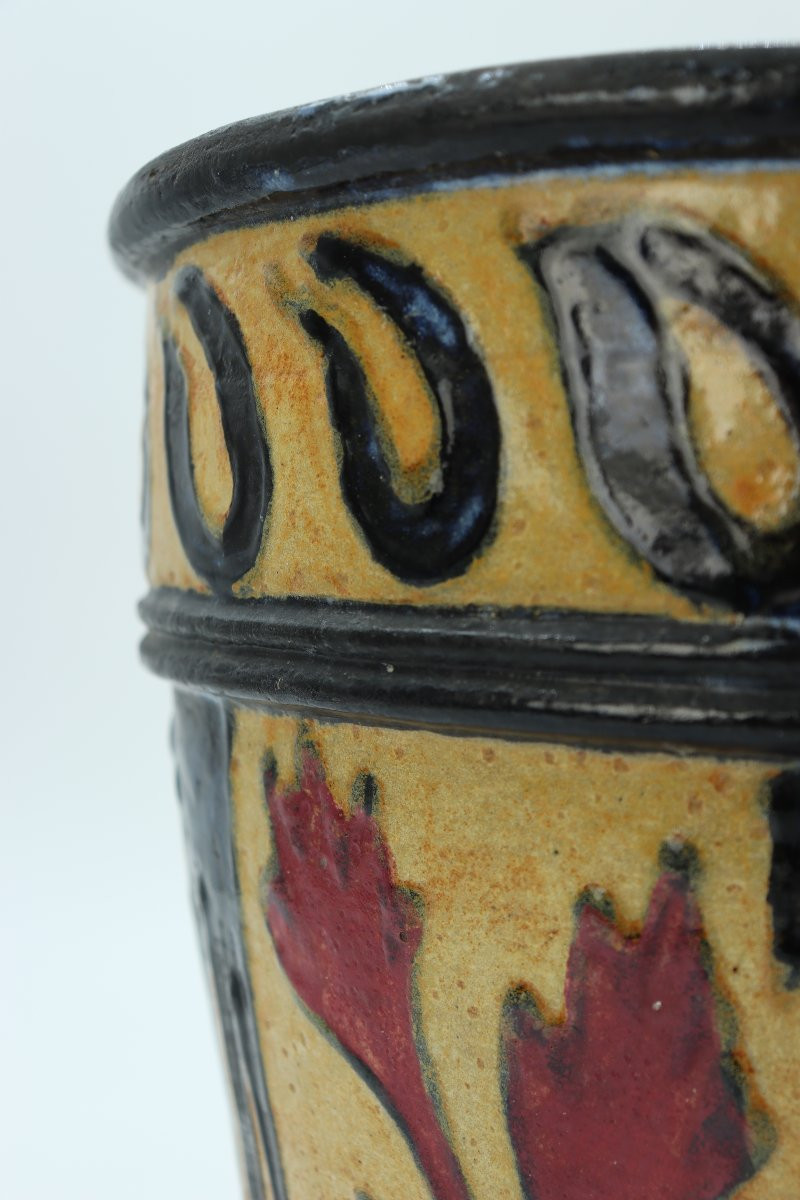
The plant pot we are presenting here is typical of André Metthey's aesthetic explorations between 1909 and 1914, when he perfected his glazed earthenware. Against an ochre background, stylized red foliage unfurls, interspersed with black enamel drips. This decorative style, both free and controlled, attests to Metthey's attention to repetitive ornamentation inspired as much by folk art as by modernist aesthetics.
Our plant pot is similar to the one in the Musée de la Ville de Grenoble, inv. MG2272, from the Aguttes-Sembat bequest in 1923.
Period: 20th century
Style: Art Nouveau
Condition: En l'etat
Material: Ceramic
Diameter: 26
Height: 26.5
Reference (ID): 1667818
Availability: In stock