THIS OBJECT WAS SOLD
Pair Of Vedute, Attributed To The “master Of The Langmatt Foundation Views”
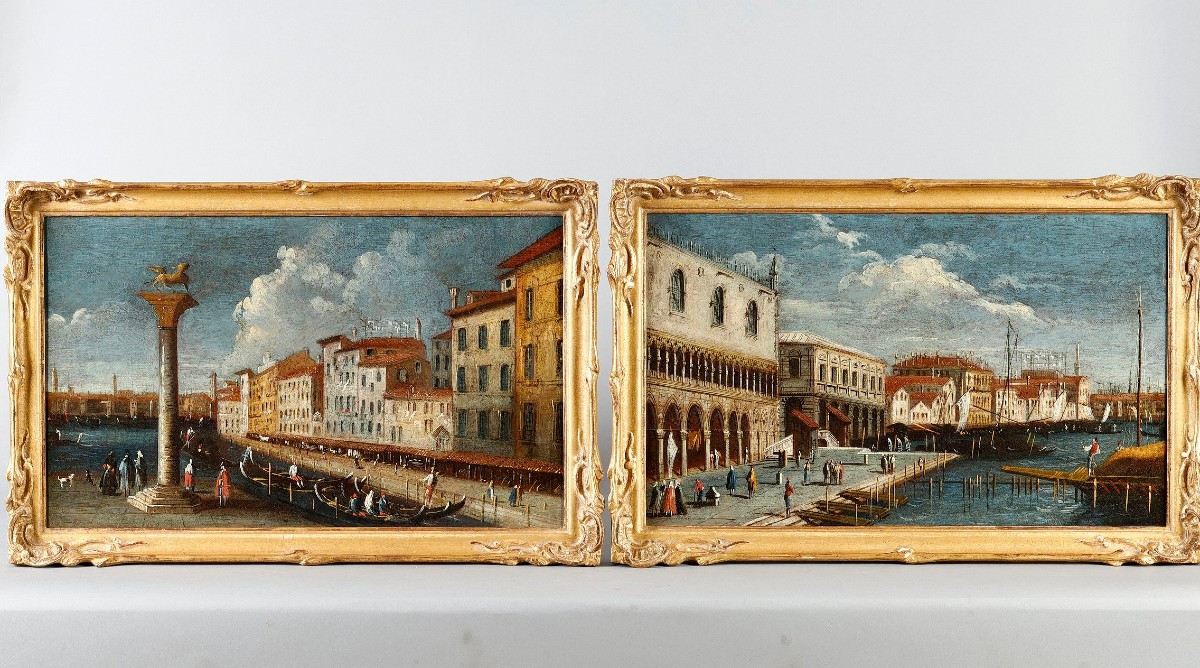
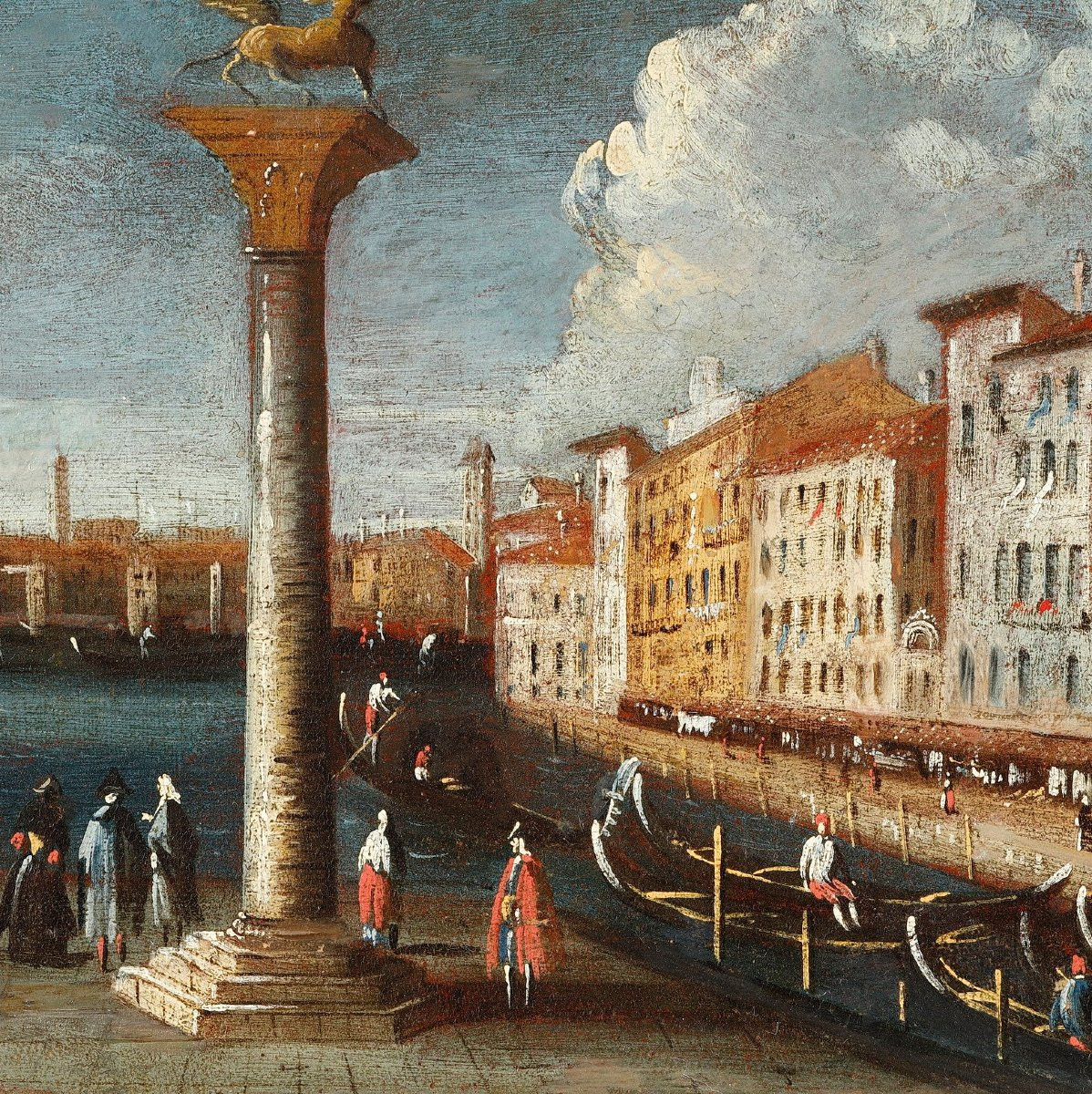
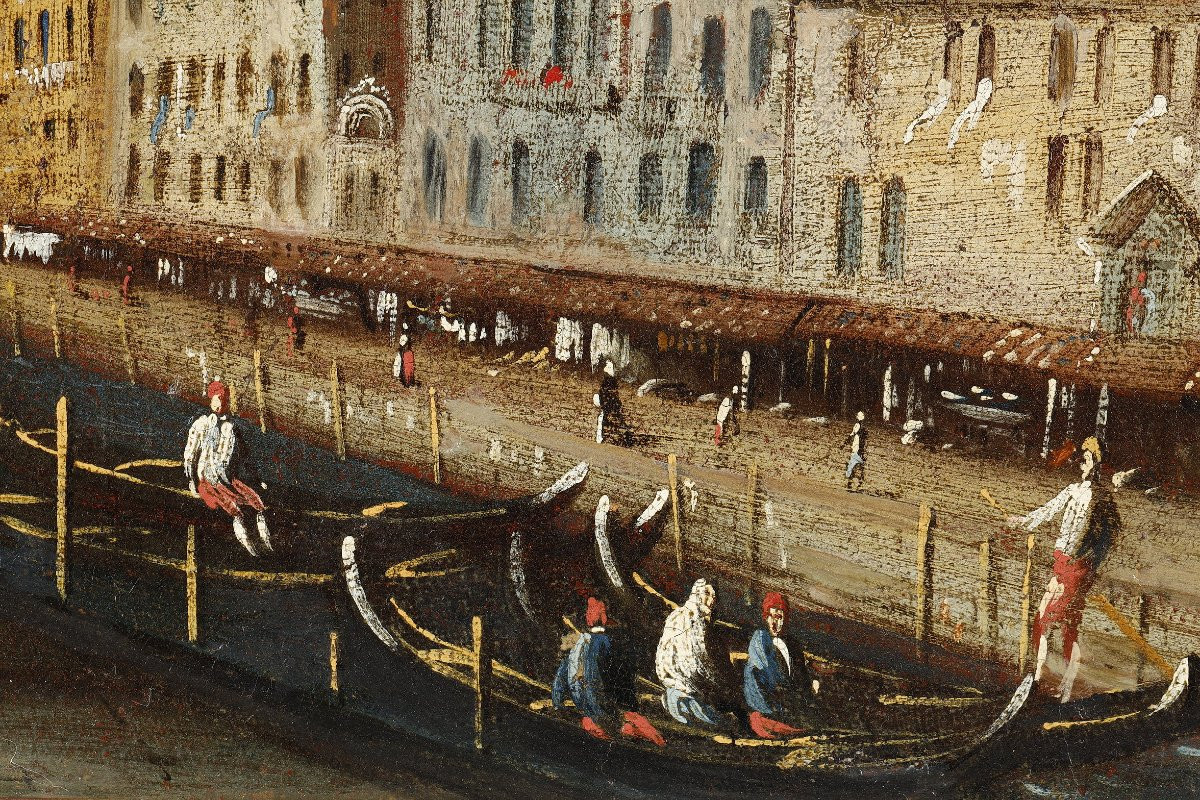
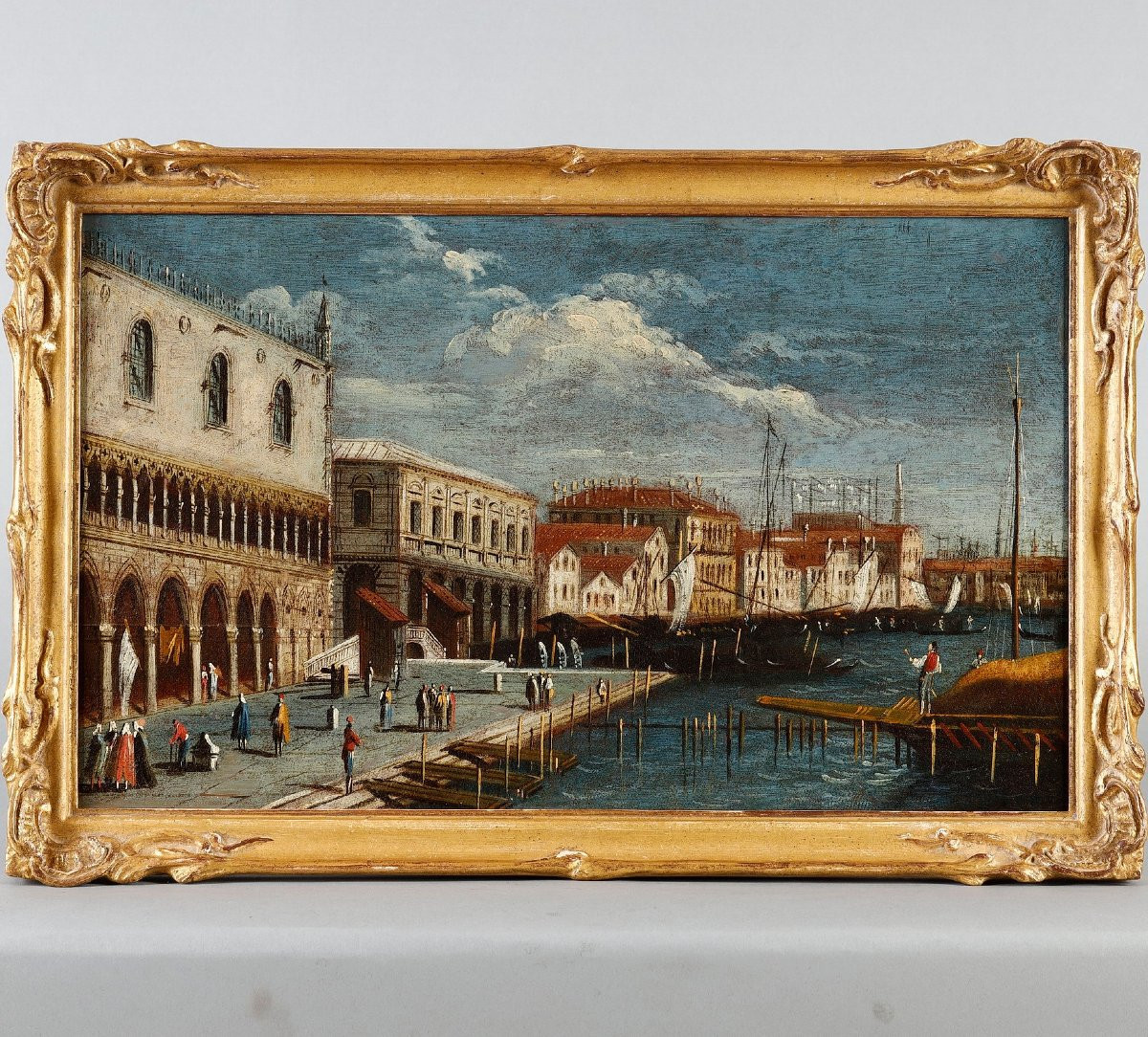
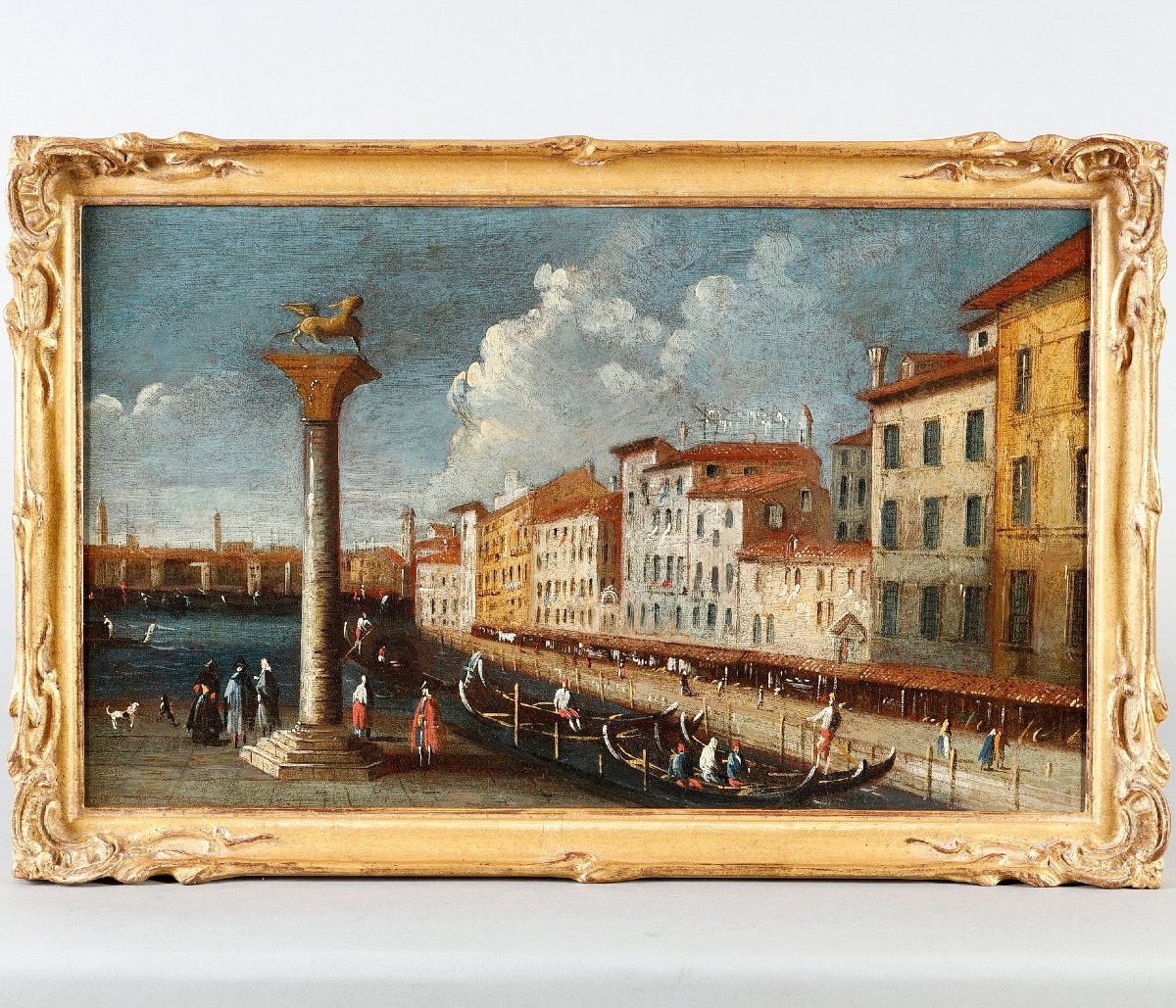


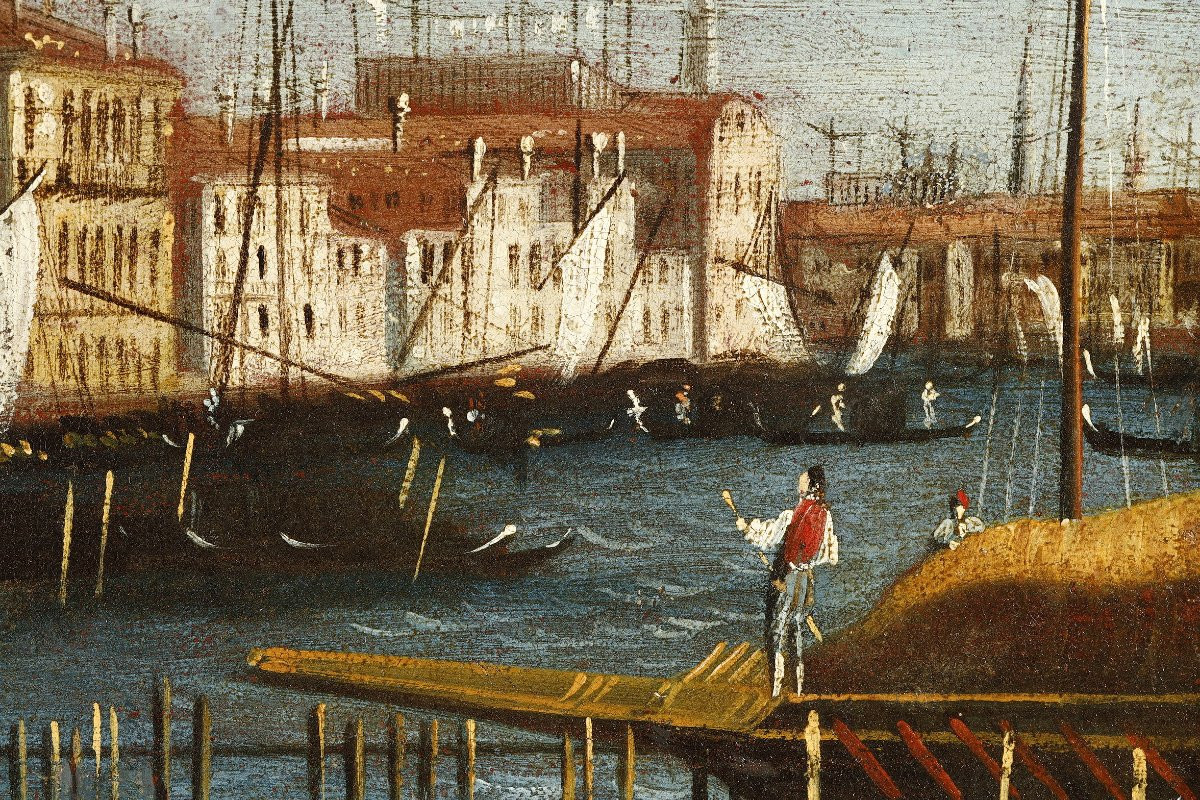


These two small paintings offer a glimpse into 18th-century Venice. Each, in its own way, unfolds a vibrant scene of the Serenissima, showcasing two of Venice's most iconic viewpoints: on the left, St. Mark's Column, rising above the Piazzetta, overlooks a bustling promenade, while the tightly packed facades, bathed in golden light, stretch along the canal where gondolas glide by.
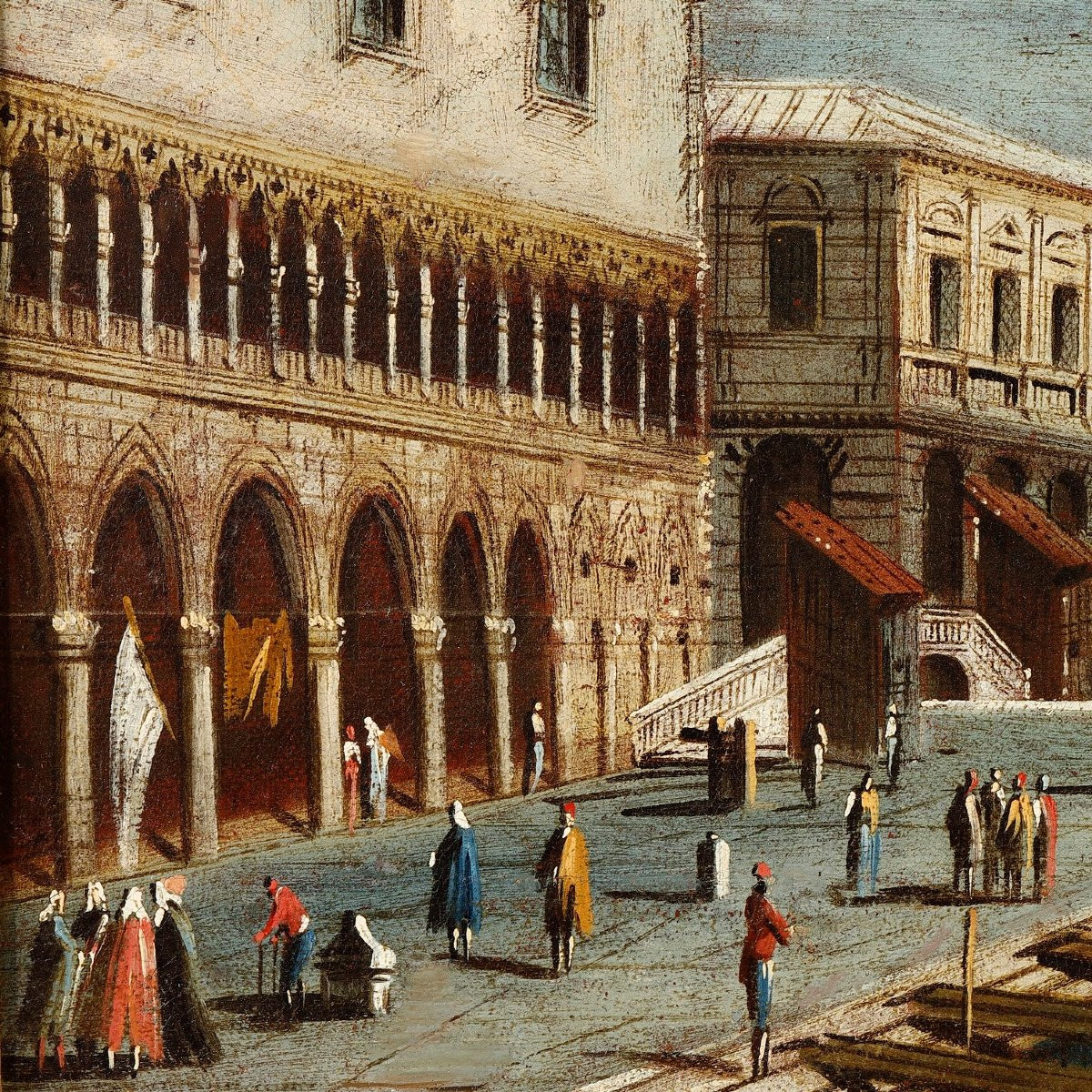
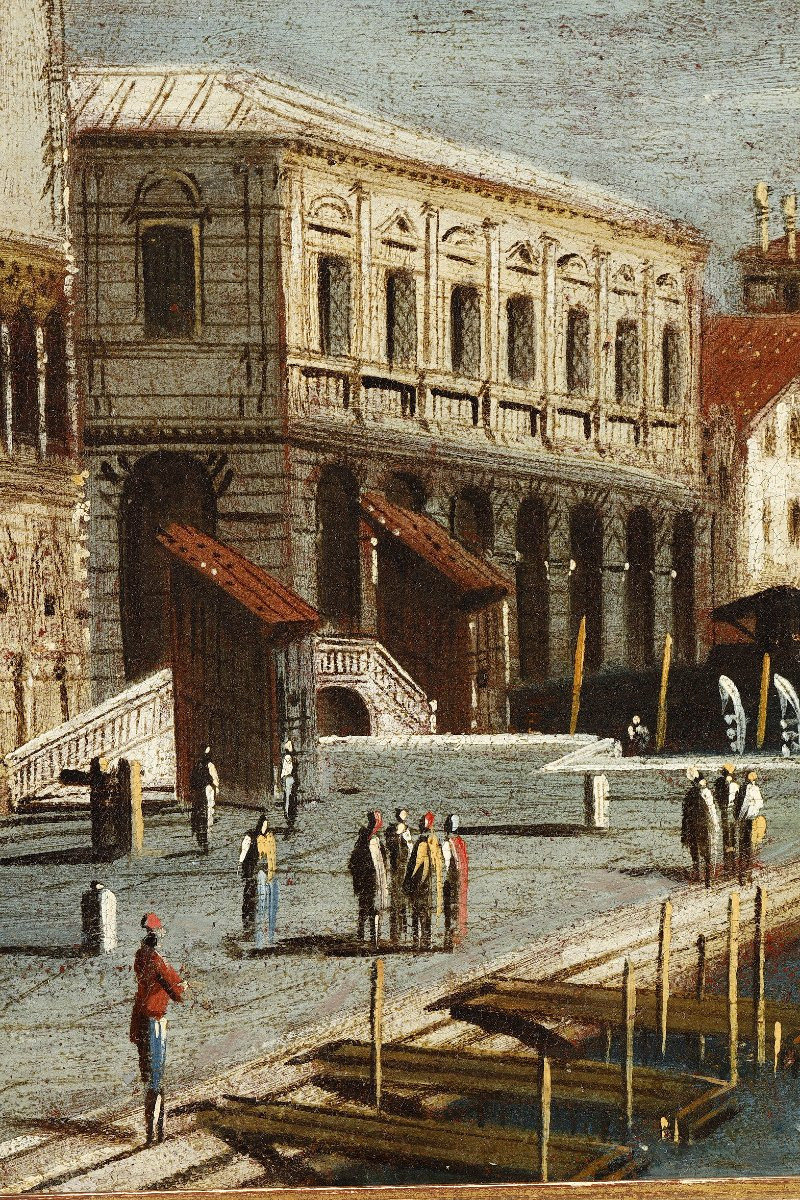
On the right, the composition opens onto the Gothic arcades of the Doge's Palace and the quays teeming with figures and sailors, creating an almost theatrical atmosphere.
These two paintings belong to the Venetian veduta tradition, a tradition firmly established in Venice by masters such as Canaletto, Guardi, and Marieschi. Here we find architectural clarity in the rendering of windows, cornices, and colonnades; a luminous palette dominated by warm ochres and slightly silvery blues; and a depiction of daily life through figures rendered with quick but expressive brushstrokes, enhanced with almost pure touches of white, blue, or red; and often wearing a red hat.
These characteristics are similar to those of the “Master of the Langmatt Foundation Views,” a painter active during the second half of the 18th century—a name given by art historians to identify a coherent group of high-quality vedute, combining Guardi's influence with Marieschi's legacy, some of which are preserved in the Langmatt Foundation (Baden, Switzerland). The beauty and influence of the great Canaletto are also evident in these works.
The artist, sensitive to the rhythm of water, to transparencies, but also to the heaviness of the sky and to Venetian daily life, places his figures in a setting that exudes the clarity and order of 18th-century Italy, known as the Settecento.
The perspective is precise but not rigid; the fluid light models the volumes while retaining a slightly milky softness. The expansive, cloudy skies, rendered through juxtapositions of blues and wiped whites, lend depth and presence to both compositions.
The facades have a slightly square and compact design, without striving for rigorous topographical accuracy. This approach, more solid than Guardi's but less analytical than Canaletto's or Bellotto's, corresponds very precisely to the style of Master Langmatt.
The light is soft and diffused, warmer than that of the Canalesque tradition.
The clouds, grouped into dense yet supple volumes, with broad, characteristic masses, more solid than in Guardi's work and less dramatic than in Marieschi's, constitute a more distinctive and recurring feature in the Master of Views' work, as do the lampposts painted with rapid strokes of light.
The activity around the Molo and the Piazzetta remains measured, without dramatic effect or great agitation. This composed tone corresponds more to the Master Langmatt than to Marieschi, often more theatrical, or to Guardi in his mature period, more ethereal and evocative.
This Master of Views is considered a late veduta painter of solid quality, influenced by the greatest masters: Guardi for his free brushwork and rapid figures, Marieschi and Canaletto for his canonical compositions, and even Tironi for his warm palette and massive skies.
The paintings presented here show a clear affinity with several vedute attributed to the Master Langmatt, notably:
Veduta del Molo (formerly in the Langmatt collection),
Piazzetta con la Colonna di San Marco (attributed, private collection, published in several 20th-century trade catalogues),
as well as several small-format views preserved or traded on the Swiss and German markets between 1950 and 1990.
Each element in this corpus exhibits the same architectural, lighting, and figurative characteristics as those observed in the two paintings.
Pair of vedute: La Piazzetta di San Marco and Le Molo con il Palazzo Ducale
Oil on canvas, similar sizes
Carved and gilded wooden frames
18th-century Venetian work attributed to the Master of the Views in the Langmatt Foundation
Apollonio Domenichini, nicknamed il Meneghetti, was a Venetian painter active in the 18th century. His name is primarily associated with the art historian Rodolfo Pallucchini, who identified him as the Master of the Langmatt Foundation Views thanks to his extensive research on Venetian vedutisti (viewers). In his work *La Pittura Veneziana del Settecento* (1950), Pallucchini attributed several views of Venice to Domenichini, highlighting his talent for capturing urban scenes with precision and sensitivity.
Significant works in museum collections:
View of the Grand Canal with the Church of Salute, Langmatt Foundation, Baden, Switzerland
Piazza San Marco with the Campanile, private collection
View of Venice with the Rialto Bridge, Kunsthaus Zürich, Zurich
Scenes of the Venetian Lagoon, various international collections
These works are characterized by a subtle luminosity and architectural rigor, offering an idealized yet faithful vision of Venetian life.
Museum References
Langmatt Foundation, Baden, Switzerland
Kunsthaus Zürich, Zurich
Thyssen-Bornemisza Museum, Madrid
Bibliography
Pallucchini, R. La Pittura Veneziana del Settecento. Venice: Neri Pozza, 1950.
Constable, J. Canaletto and the Venetian Vedutisti. Oxford: Clarendon Press, 1962.
Links, J.G. Venetian Views, Architectural Fantasies. London: Phaidon, 1998.
Succi, D. Vedutisti Veneziani del Settecento. Milan: Skira, 2001.
On the right, the composition opens onto the Gothic arcades of the Doge's Palace and the quays teeming with figures and sailors, creating an almost theatrical atmosphere.
These two paintings belong to the Venetian veduta tradition, a tradition firmly established in Venice by masters such as Canaletto, Guardi, and Marieschi. Here we find architectural clarity in the rendering of windows, cornices, and colonnades; a luminous palette dominated by warm ochres and slightly silvery blues; and a depiction of daily life through figures rendered with quick but expressive brushstrokes, enhanced with almost pure touches of white, blue, or red; and often wearing a red hat.
These characteristics are similar to those of the “Master of the Langmatt Foundation Views,” a painter active during the second half of the 18th century—a name given by art historians to identify a coherent group of high-quality vedute, combining Guardi's influence with Marieschi's legacy, some of which are preserved in the Langmatt Foundation (Baden, Switzerland). The beauty and influence of the great Canaletto are also evident in these works.
The artist, sensitive to the rhythm of water, to transparencies, but also to the heaviness of the sky and to Venetian daily life, places his figures in a setting that exudes the clarity and order of 18th-century Italy, known as the Settecento.
The perspective is precise but not rigid; the fluid light models the volumes while retaining a slightly milky softness. The expansive, cloudy skies, rendered through juxtapositions of blues and wiped whites, lend depth and presence to both compositions.
The facades have a slightly square and compact design, without striving for rigorous topographical accuracy. This approach, more solid than Guardi's but less analytical than Canaletto's or Bellotto's, corresponds very precisely to the style of Master Langmatt.
The light is soft and diffused, warmer than that of the Canalesque tradition.
The clouds, grouped into dense yet supple volumes, with broad, characteristic masses, more solid than in Guardi's work and less dramatic than in Marieschi's, constitute a more distinctive and recurring feature in the Master of Views' work, as do the lampposts painted with rapid strokes of light.
The activity around the Molo and the Piazzetta remains measured, without dramatic effect or great agitation. This composed tone corresponds more to the Master Langmatt than to Marieschi, often more theatrical, or to Guardi in his mature period, more ethereal and evocative.
This Master of Views is considered a late veduta painter of solid quality, influenced by the greatest masters: Guardi for his free brushwork and rapid figures, Marieschi and Canaletto for his canonical compositions, and even Tironi for his warm palette and massive skies.
The paintings presented here show a clear affinity with several vedute attributed to the Master Langmatt, notably:
Veduta del Molo (formerly in the Langmatt collection),
Piazzetta con la Colonna di San Marco (attributed, private collection, published in several 20th-century trade catalogues),
as well as several small-format views preserved or traded on the Swiss and German markets between 1950 and 1990.
Each element in this corpus exhibits the same architectural, lighting, and figurative characteristics as those observed in the two paintings.
Pair of vedute: La Piazzetta di San Marco and Le Molo con il Palazzo Ducale
Oil on canvas, similar sizes
Carved and gilded wooden frames
18th-century Venetian work attributed to the Master of the Views in the Langmatt Foundation
Apollonio Domenichini, nicknamed il Meneghetti, was a Venetian painter active in the 18th century. His name is primarily associated with the art historian Rodolfo Pallucchini, who identified him as the Master of the Langmatt Foundation Views thanks to his extensive research on Venetian vedutisti (viewers). In his work *La Pittura Veneziana del Settecento* (1950), Pallucchini attributed several views of Venice to Domenichini, highlighting his talent for capturing urban scenes with precision and sensitivity.
Significant works in museum collections:
View of the Grand Canal with the Church of Salute, Langmatt Foundation, Baden, Switzerland
Piazza San Marco with the Campanile, private collection
View of Venice with the Rialto Bridge, Kunsthaus Zürich, Zurich
Scenes of the Venetian Lagoon, various international collections
These works are characterized by a subtle luminosity and architectural rigor, offering an idealized yet faithful vision of Venetian life.
Museum References
Langmatt Foundation, Baden, Switzerland
Kunsthaus Zürich, Zurich
Thyssen-Bornemisza Museum, Madrid
Bibliography
Pallucchini, R. La Pittura Veneziana del Settecento. Venice: Neri Pozza, 1950.
Constable, J. Canaletto and the Venetian Vedutisti. Oxford: Clarendon Press, 1962.
Links, J.G. Venetian Views, Architectural Fantasies. London: Phaidon, 1998.
Succi, D. Vedutisti Veneziani del Settecento. Milan: Skira, 2001.
Explore similar pieces and discover your ideal find:
Landscapes