THIS OBJECT WAS SOLD
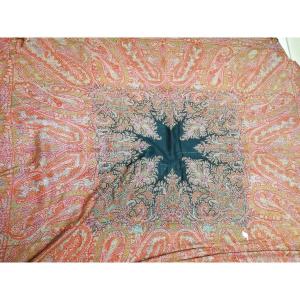
Espoliné Indian Shawl In Tapestry Stitch - East India Company, Late 18th Century
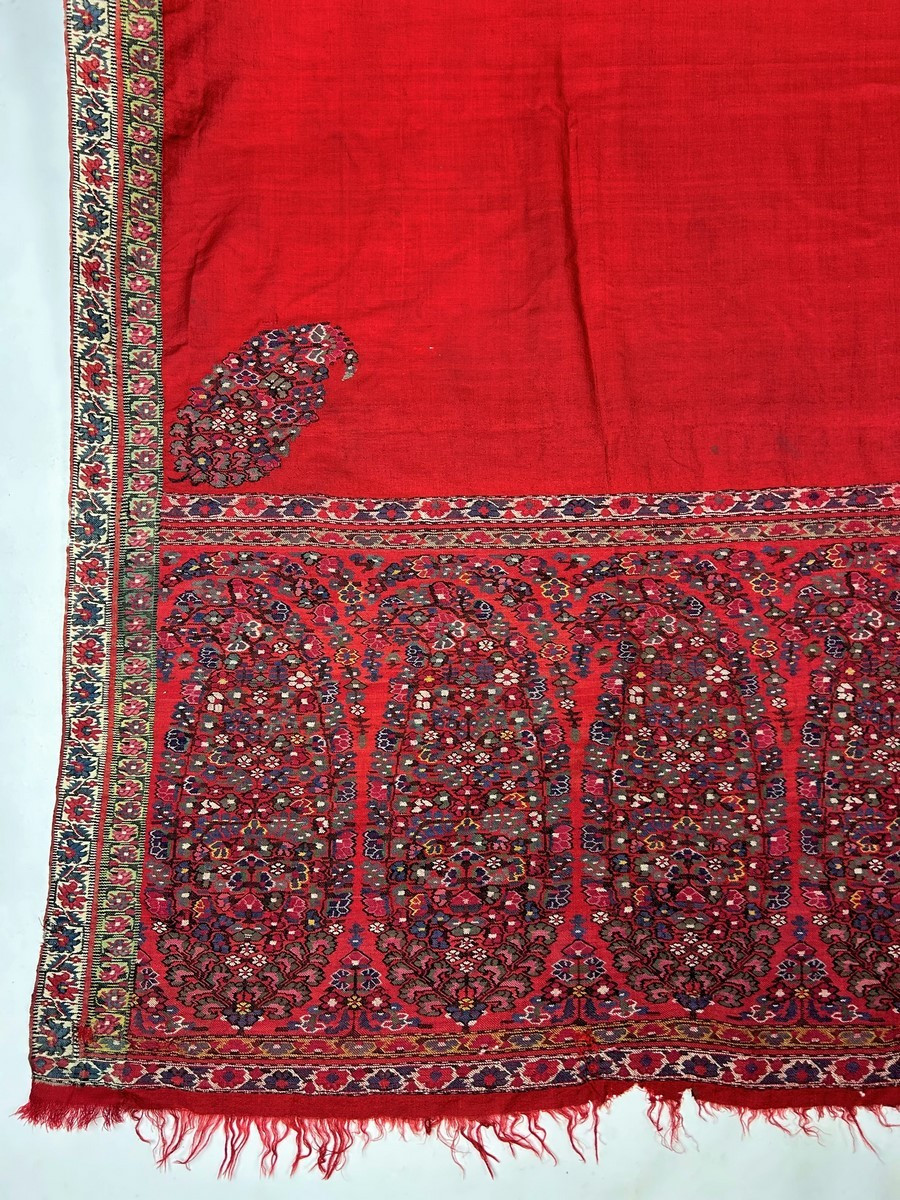
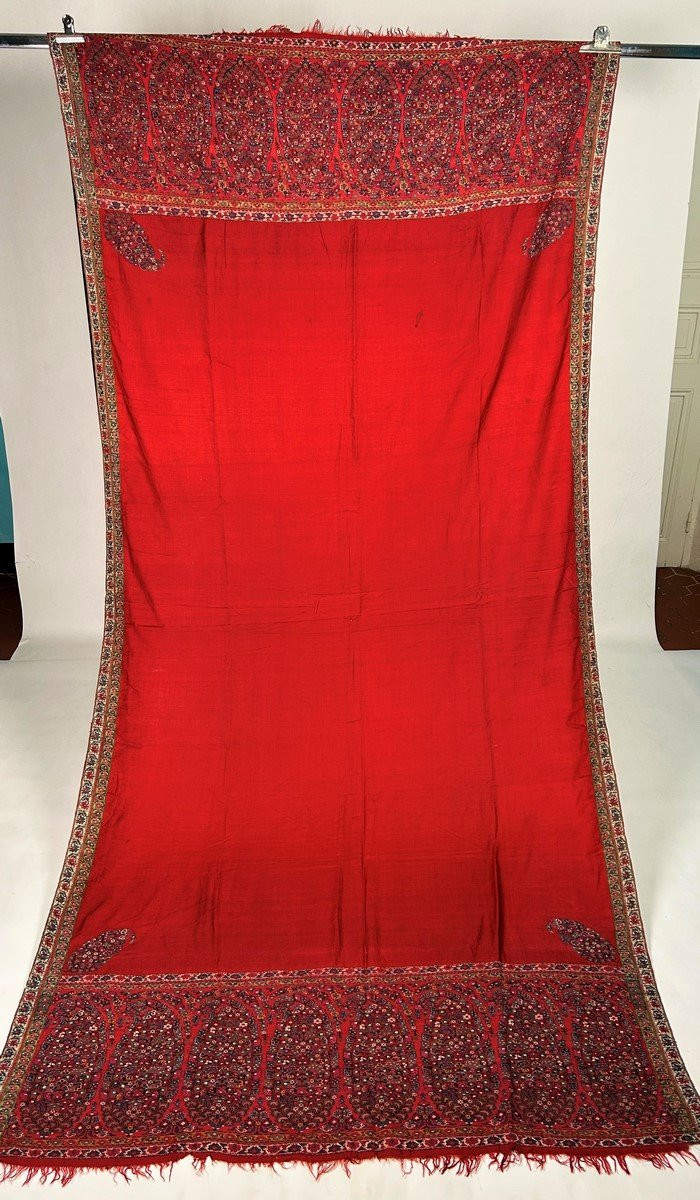
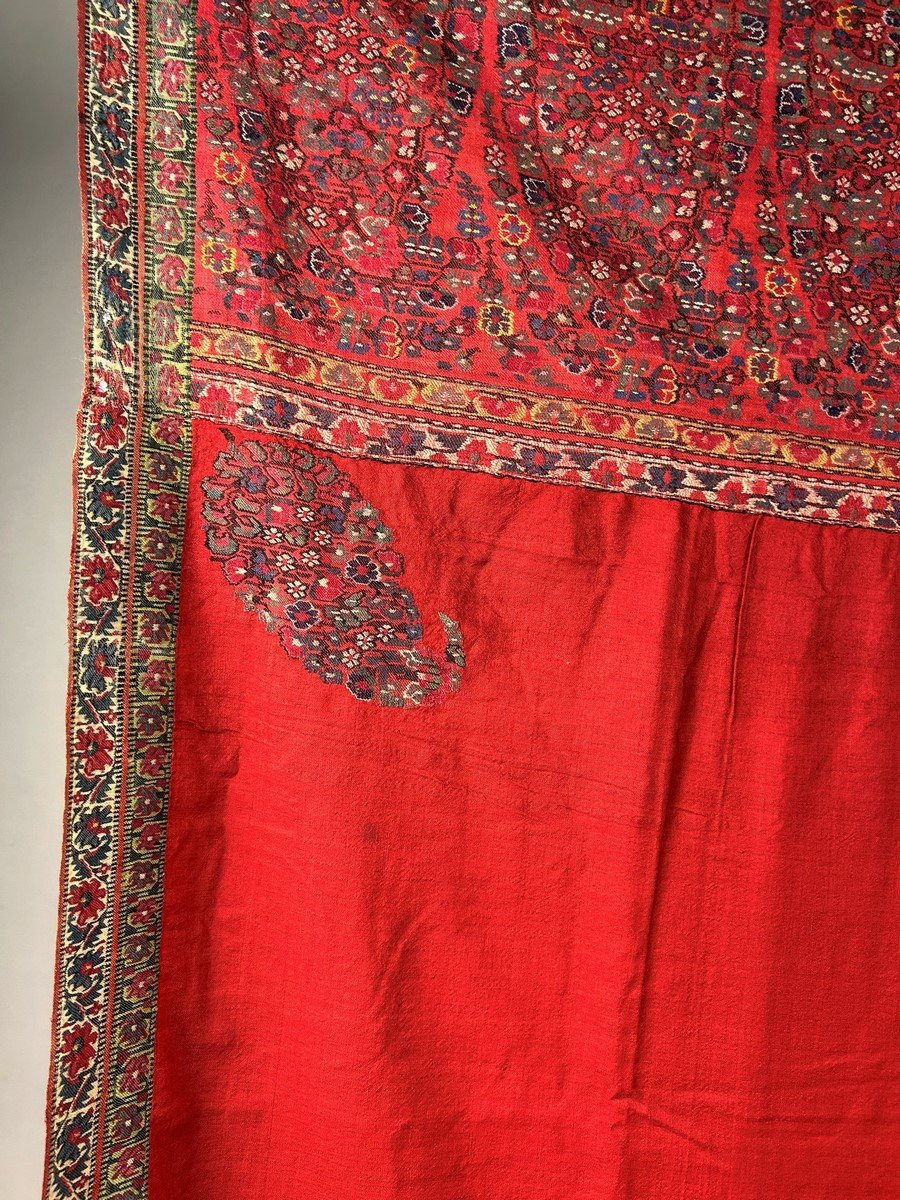
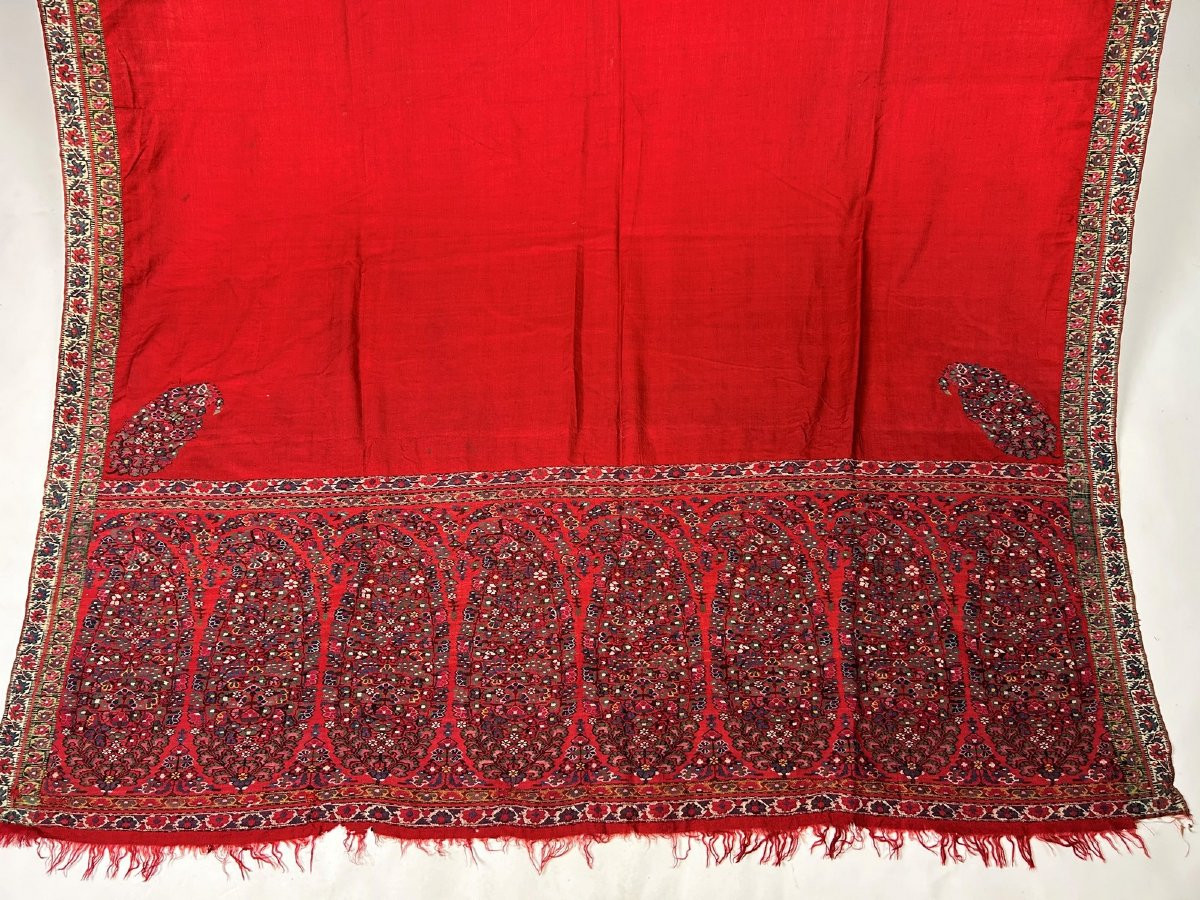
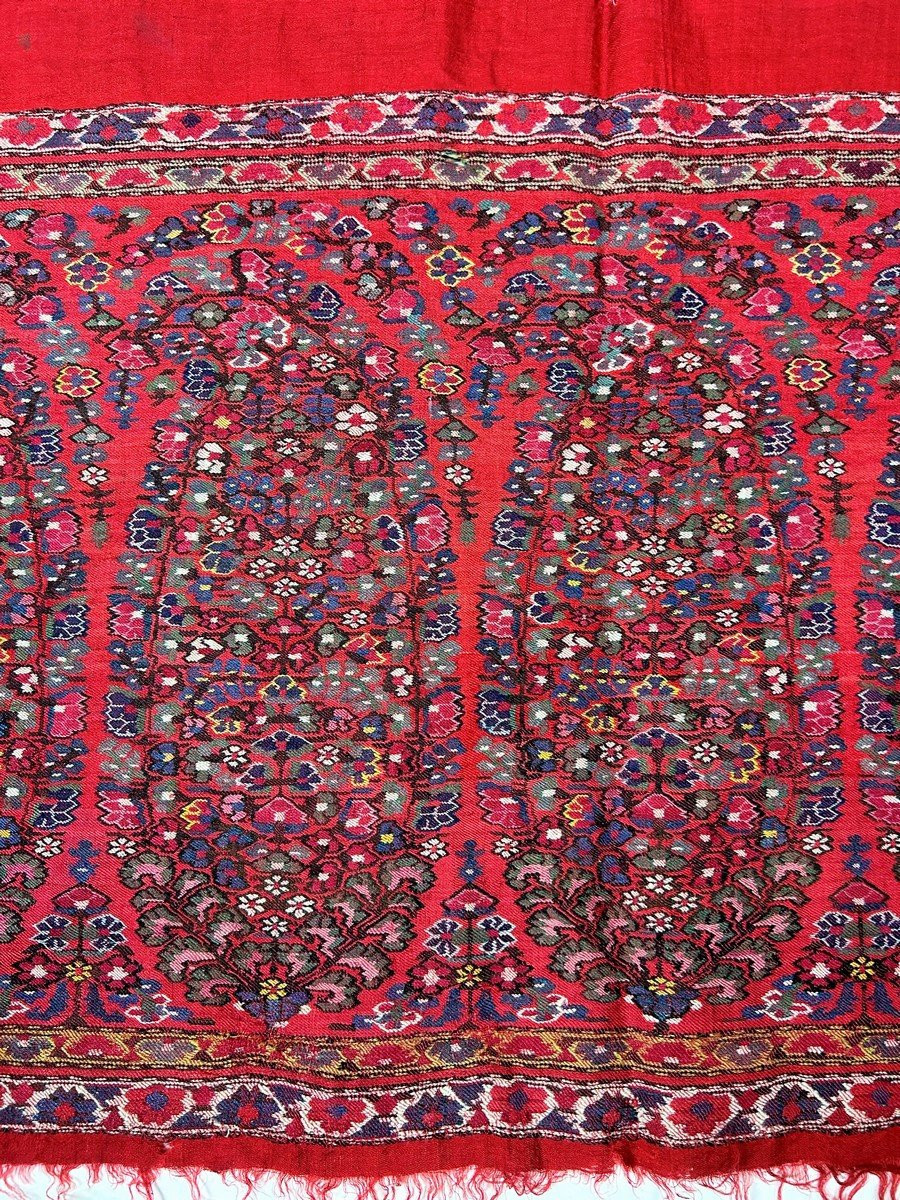
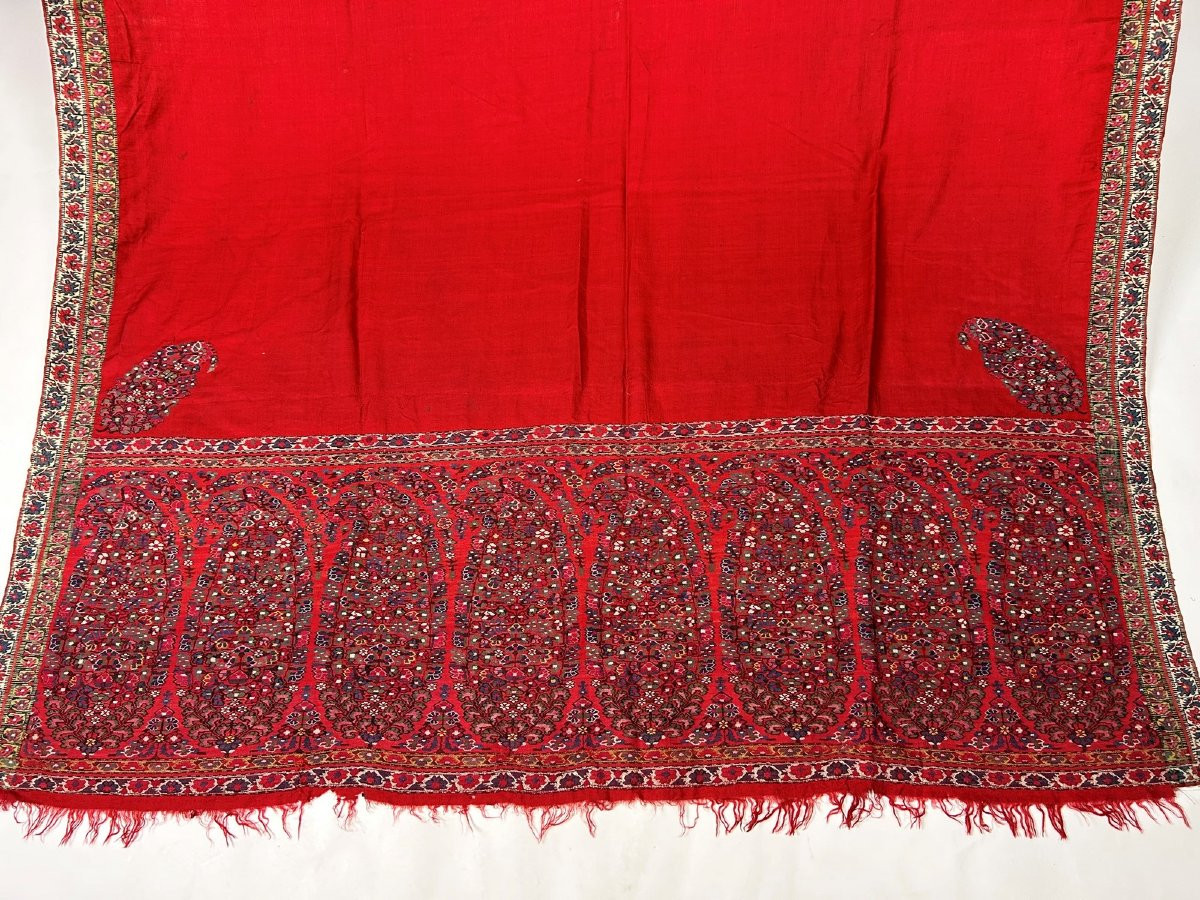
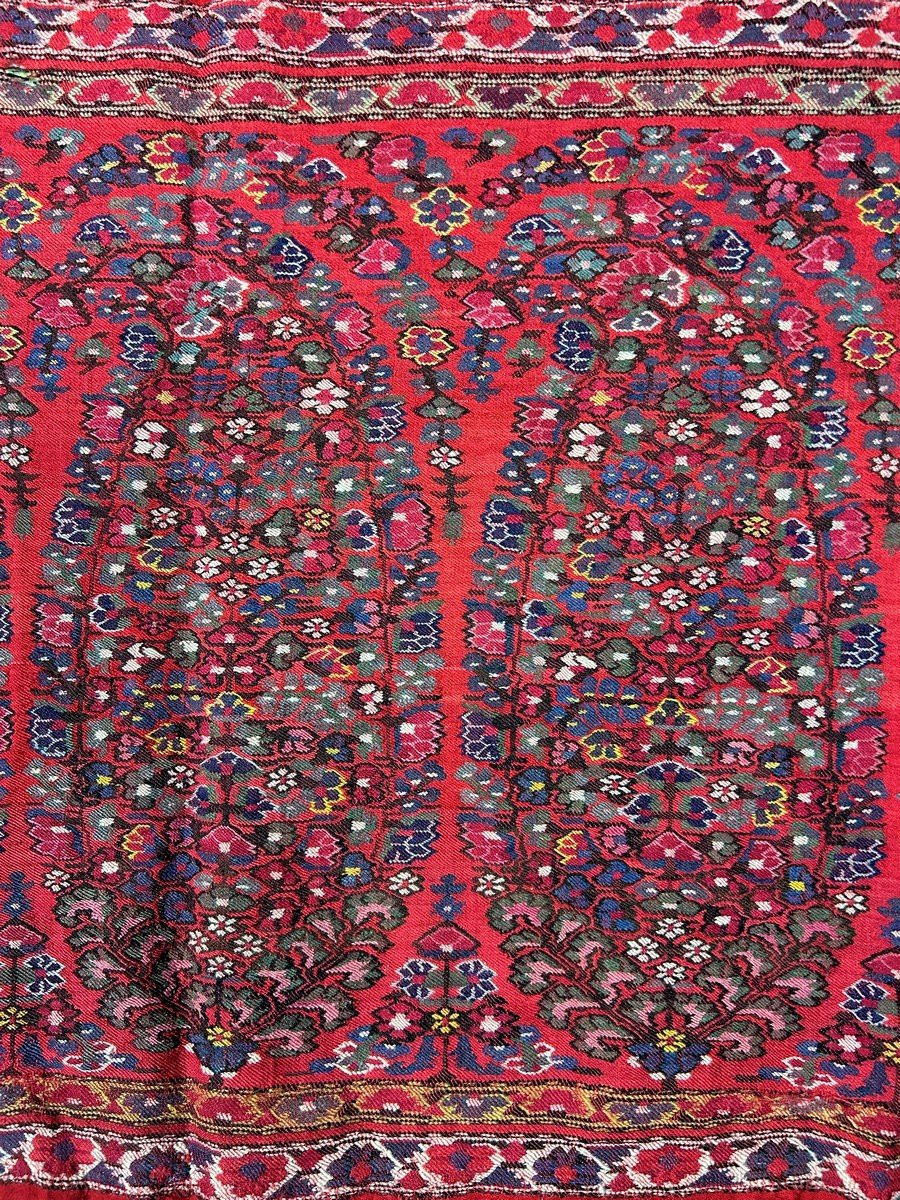
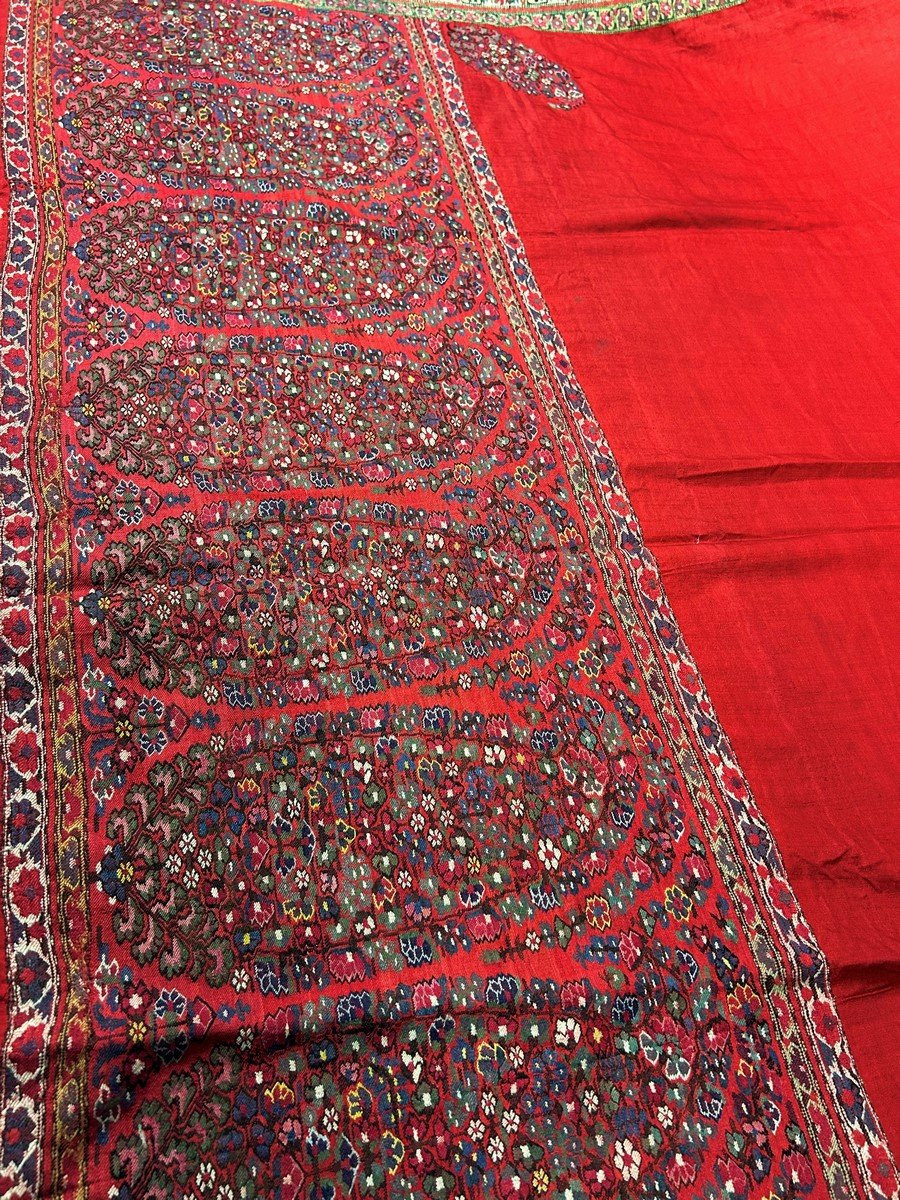
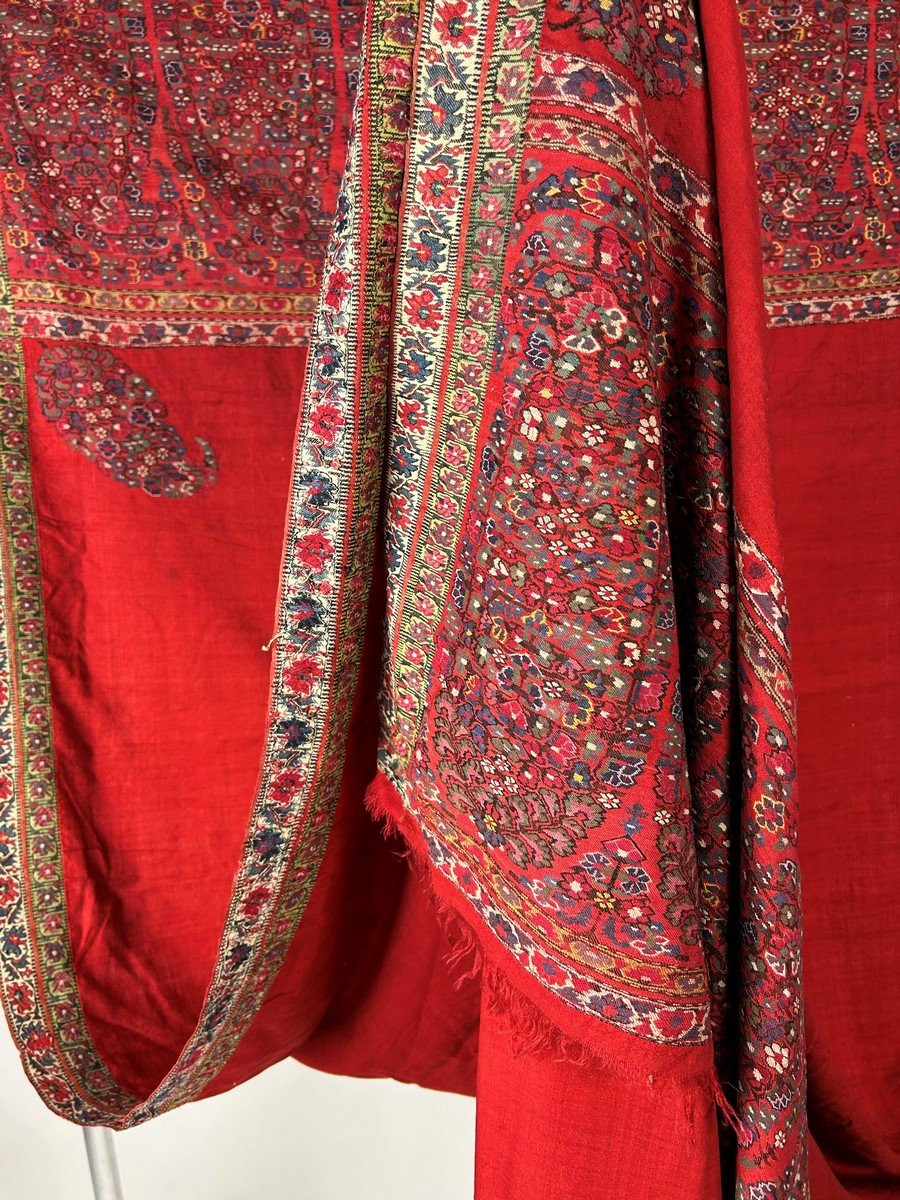
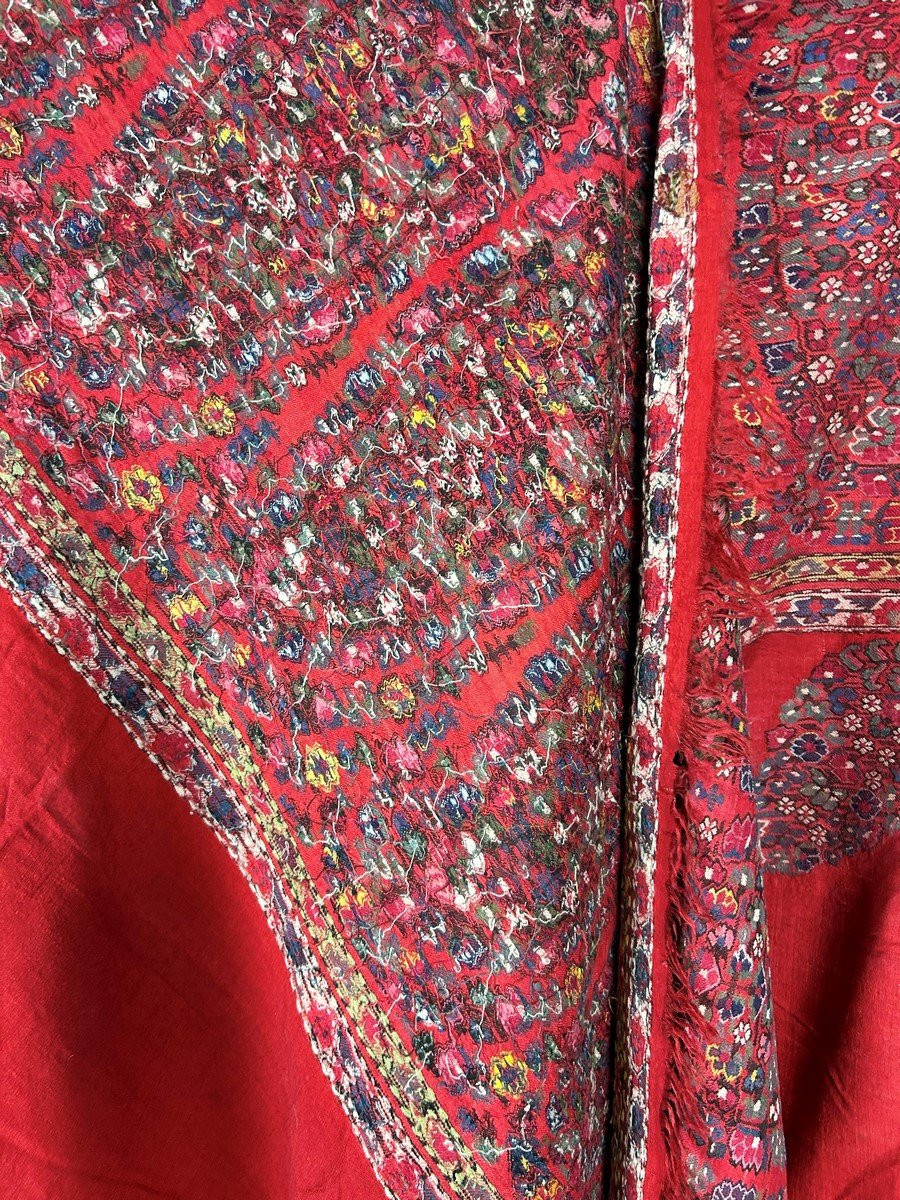
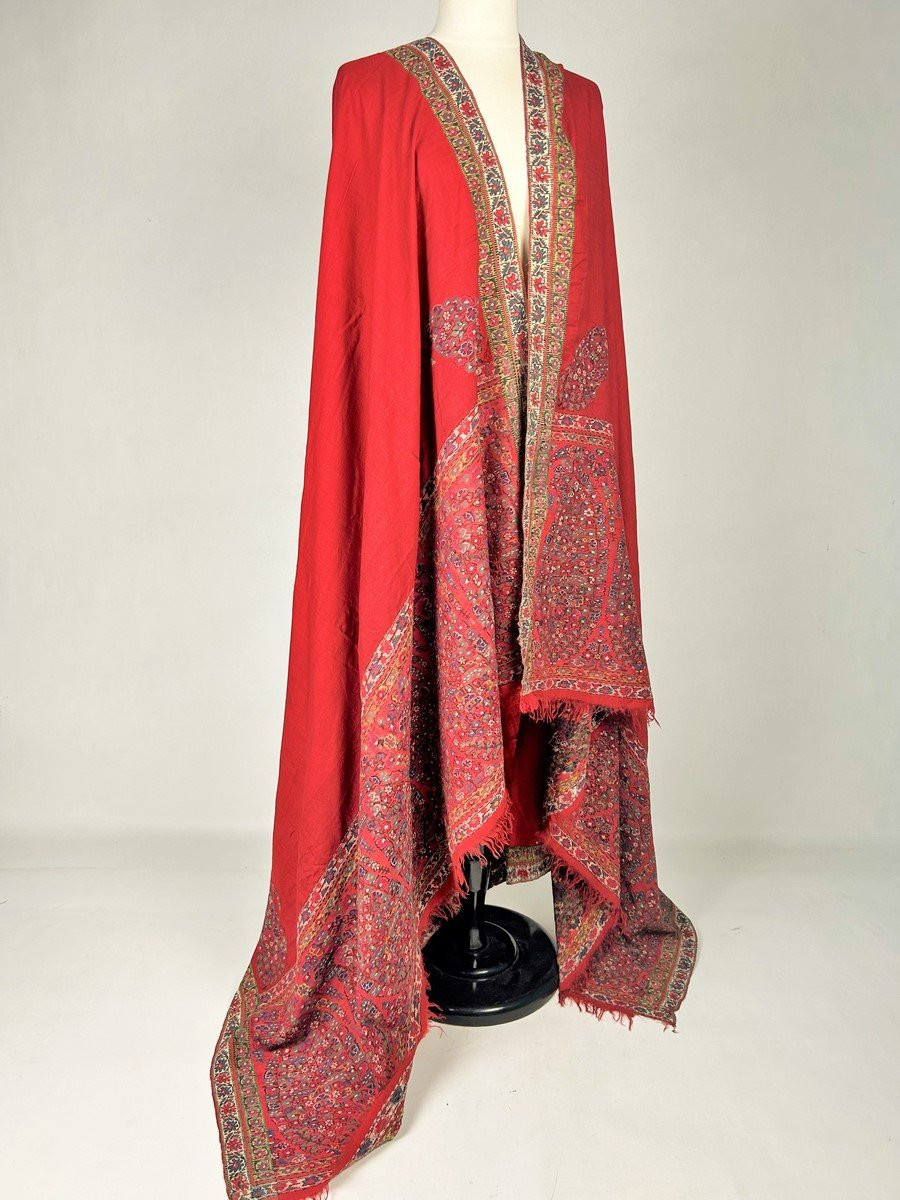
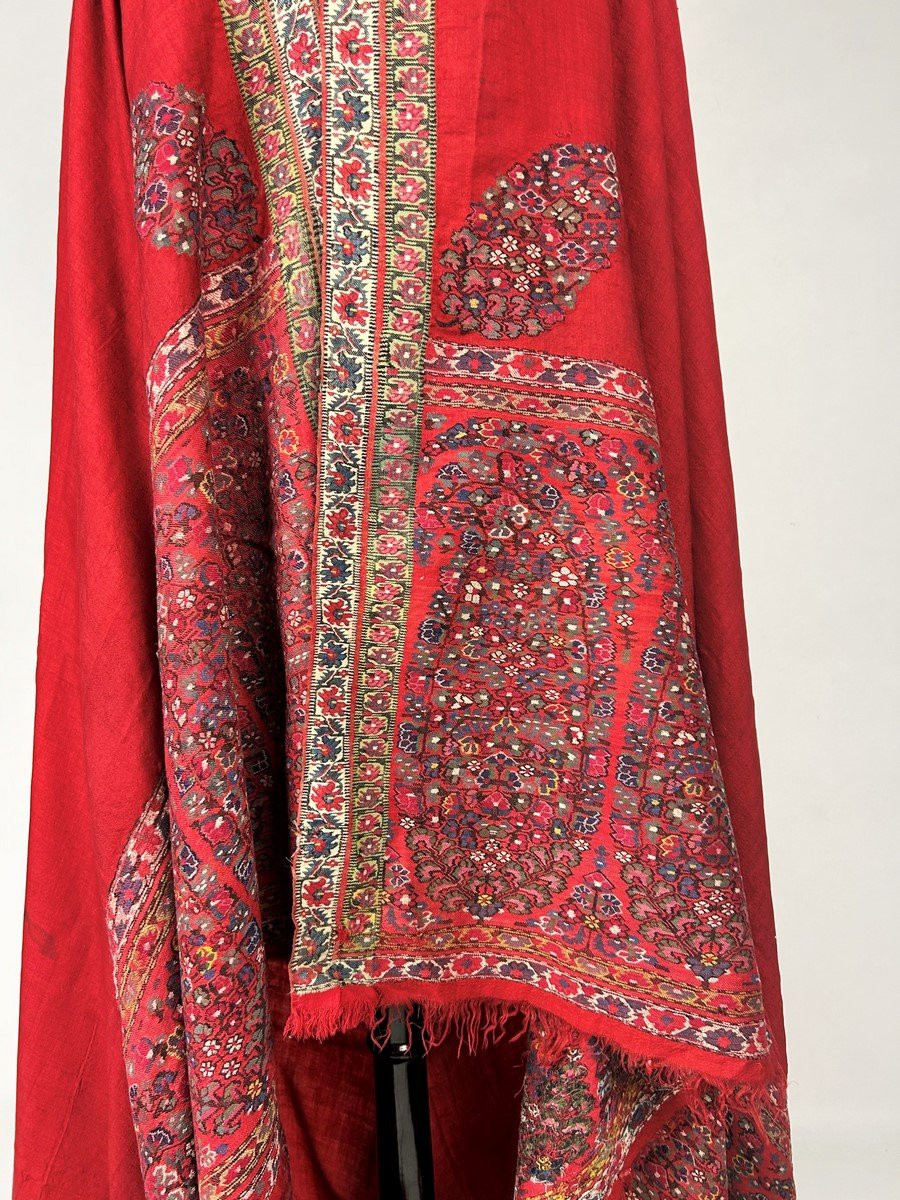


Circa 1780-1800. From India for export to Europe. A very rare Indian cashmere shawl with a spoliné weave from the East India Company, dating from the last quarter of the 18th century. It features a very fine tapestry weave, known as spoliné, and a large reserve of twill twill made from Tibetan goat down, resulting in exceptional softness. Woven in a single piece with double side borders, it represents a technological feat by 18th-century Indian artisans. Each end is composed of eight boteh or palm fronds with a Mille Fleurs design, four boteh spandrels, and tapered fringes in the same color, typical of 18th-century Indian production. These shawls/stoles were worn by the English elite and later by the French elite from the Directory period onward, the most famous of whom was Joséphine de Beauharnais (see last photo from the Musée Masséna in Nice). The Indian shawl reflected the post-revolutionary "uncorseted" fashion of draping oneself in the classical style, like a Greek statue! There are three or four tiny moth holes and one small repair (photo documentation available upon request). No other defects. It is in exceptional condition considering its age and presumed fragility. Dimensions: 265 cm long by 130 cm wide. A similar shawl can be found at the Museum of the East India Company in Port Louis.
Explore similar pieces and discover your ideal find:
Antique Clothing