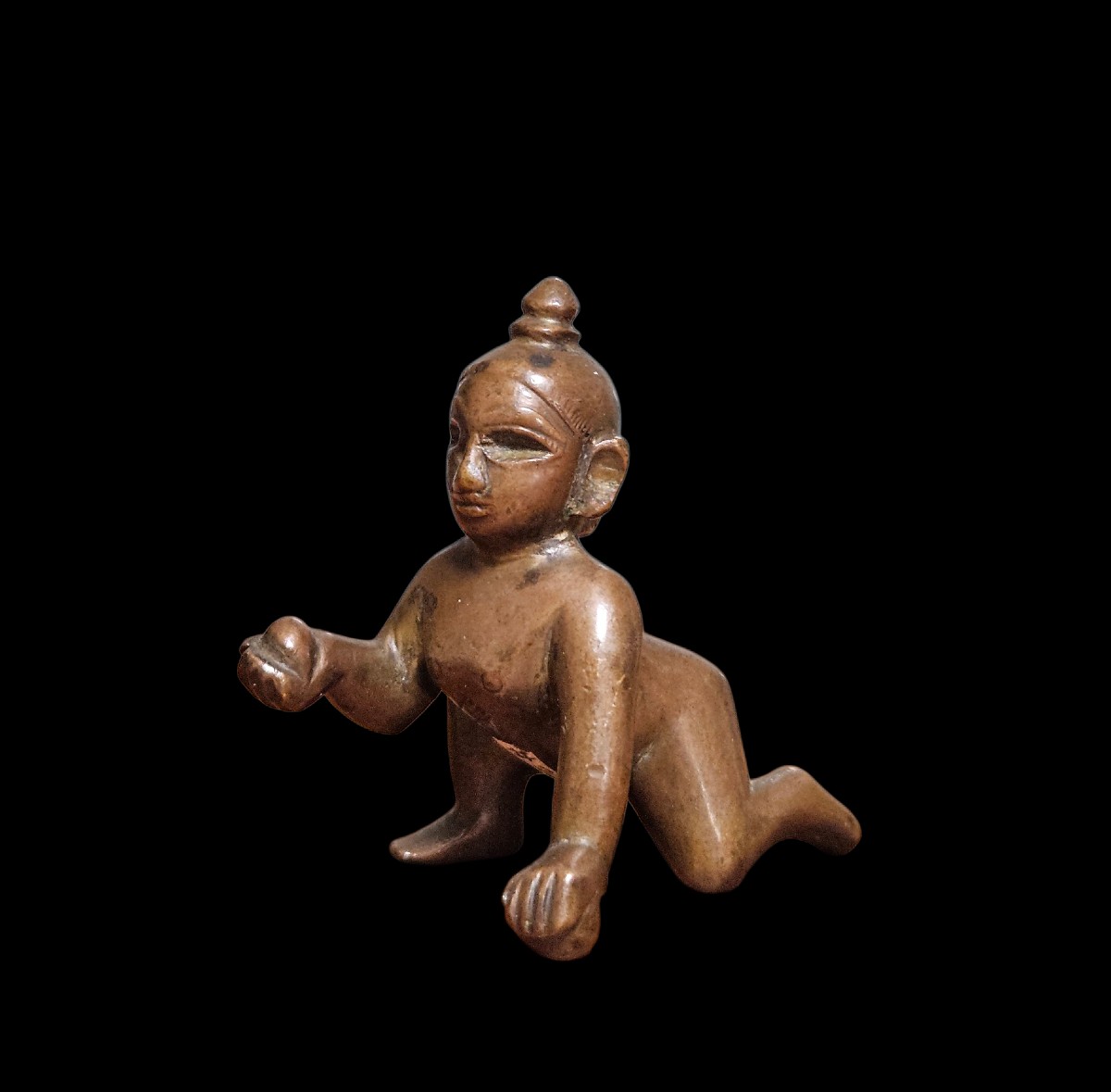
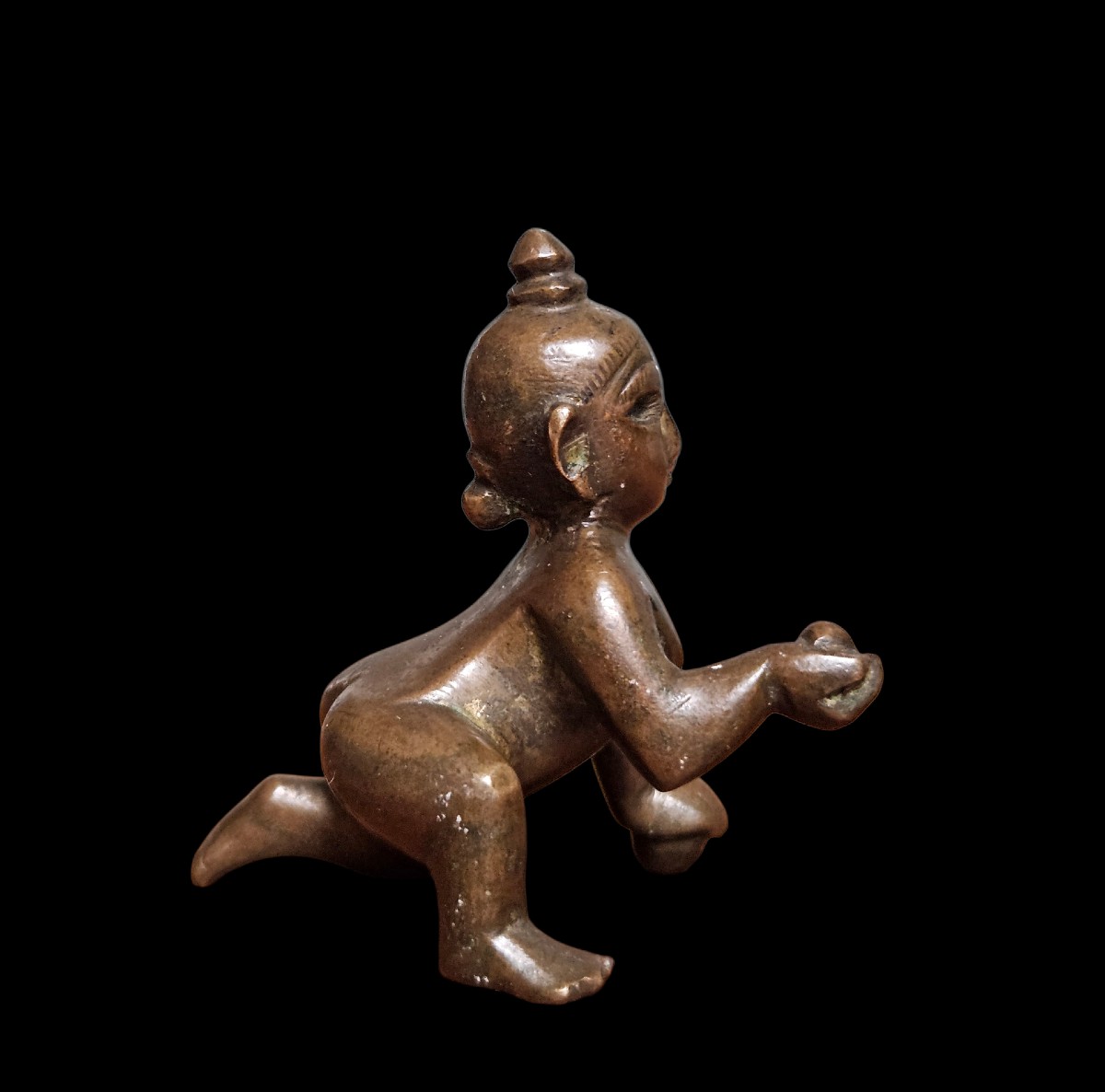
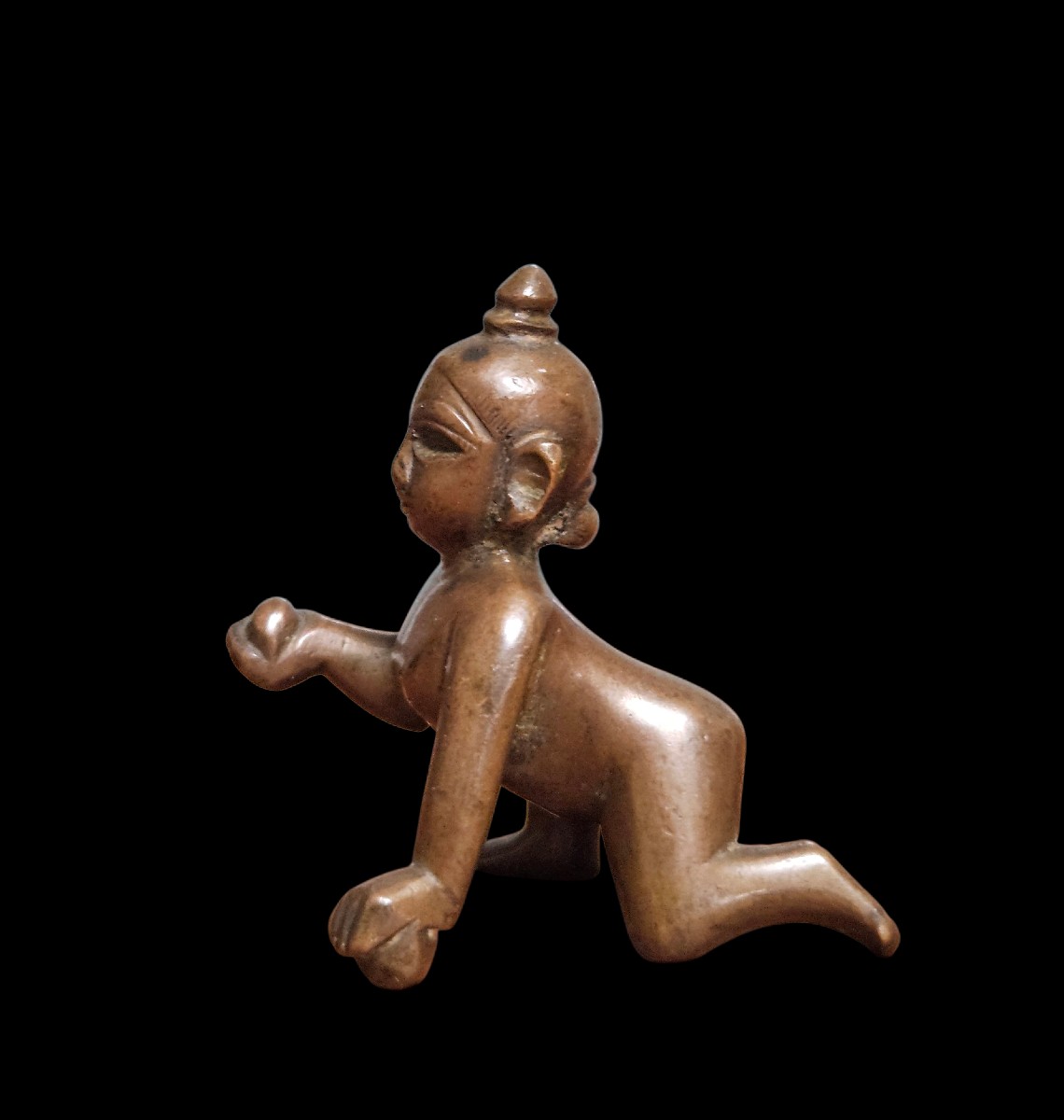
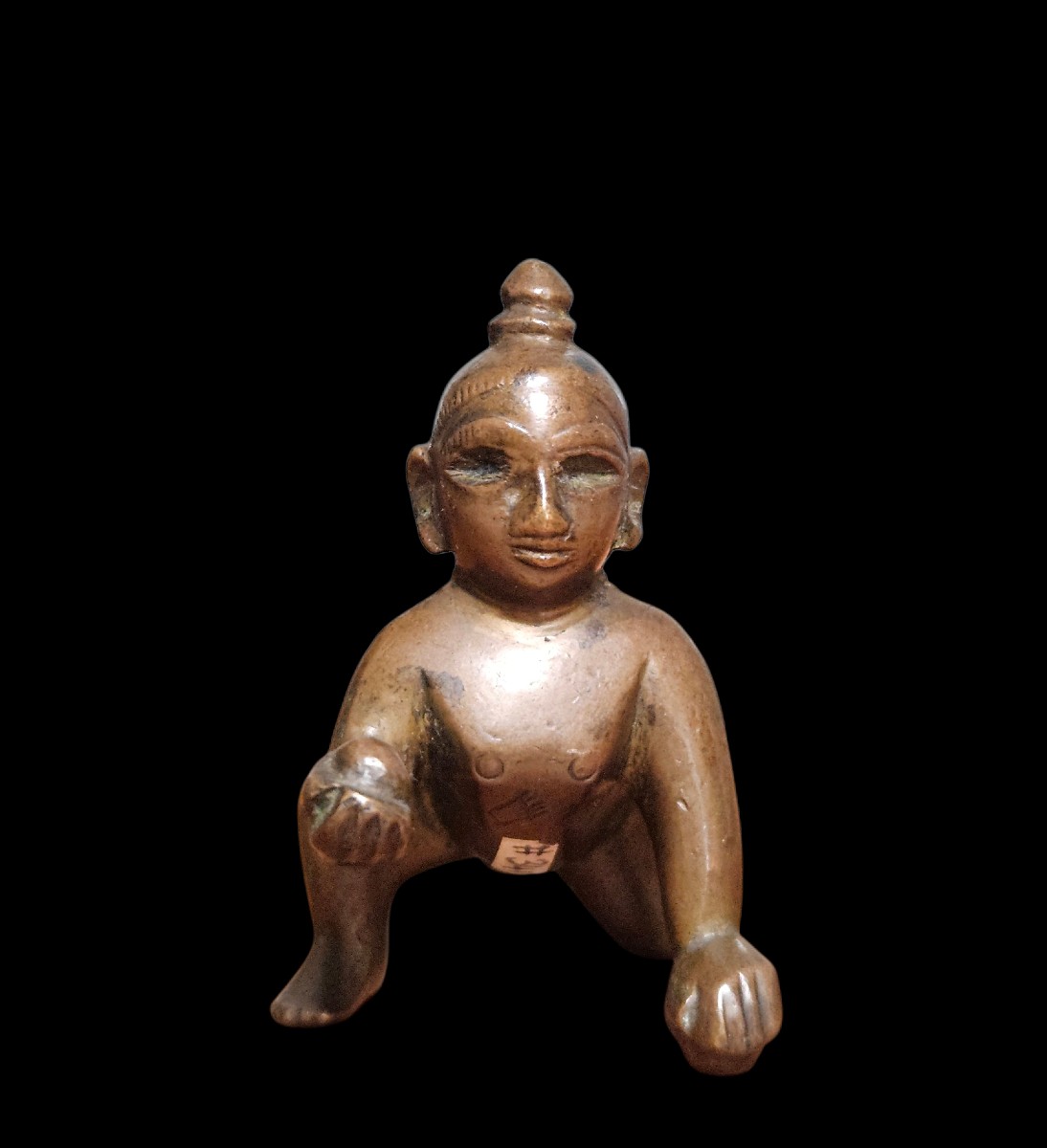
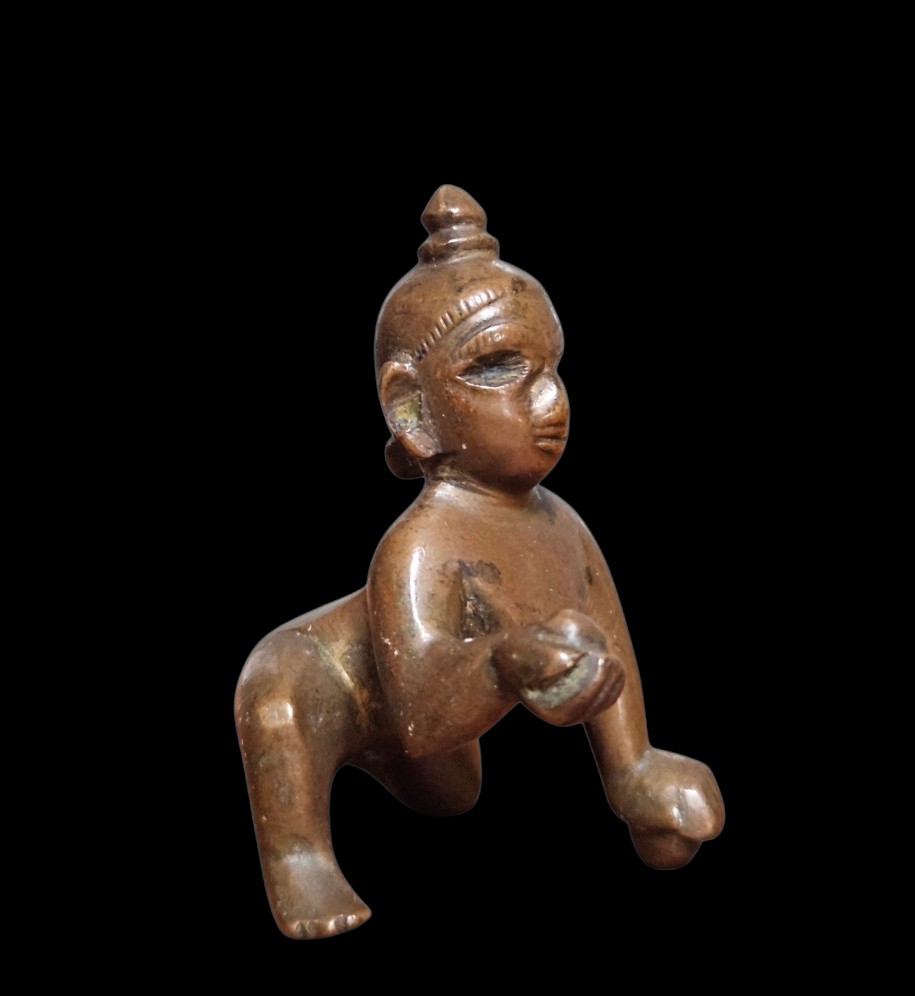
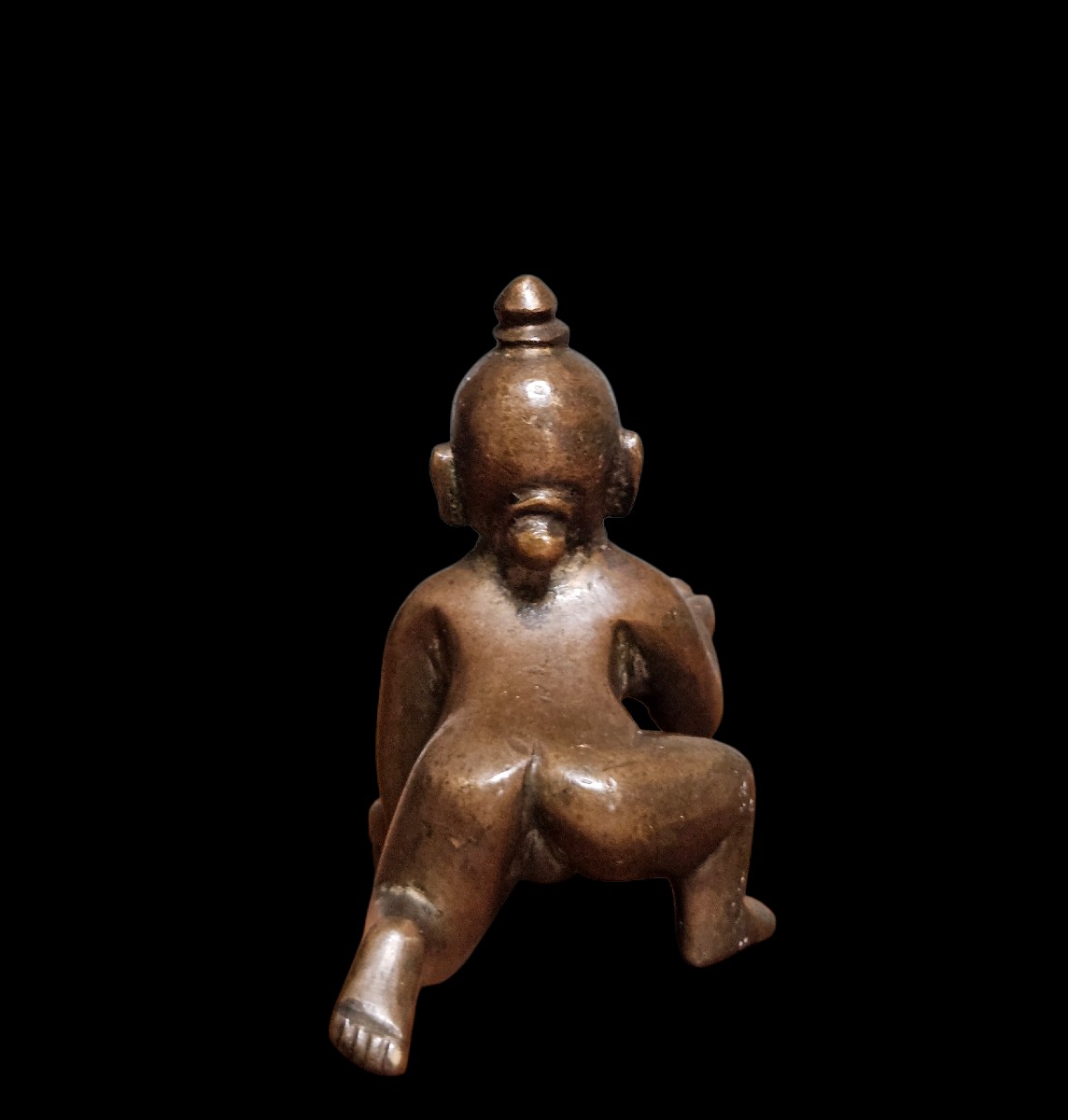


"Figure Of Krishna As A Child, 19th Century India "
Figure of Krishna as a Child, India. Small bronze figure depicting Krishna as a child on all fours, his body thrust forward in a dynamic pose typical of Bāla-Krishna. The head, with its delicately modeled features, wears a tiered headdress in the shape of a small stupa. Each hand holds a ball: one raised forward, the other pointing towards the ground. Beneath the torso, a discreetly engraved geometric shape suggests a workshop mark or a votive symbol. The rounded volumes, the compact posture, and the gentle frontality give the figure a calm and compact presence. Bronze, patina of age and use. India, 19th century. Dimensions: 6 × 7 × 3.2 cm. Provenance: Collection of the artist Geoffrey Kay, Salford (UK). Sold with an invoice from Galerie Ocarina and a certificate of authenticity from the expert Serge Reynes. "In Hindu tradition, this figure of Krishna as a child — Bāla-Krishna or Makhan Chor, "the butter thief" — embodies divine innocence, abundance, and domestic protection. The balls held in his hands refer to the butter stolen by the young god, a gesture that became a symbol of affection and closeness between Krishna and his followers. Such effigies were placed in domestic altars, where they received offerings and anointings to attract prosperity and goodwill." 










 Le Magazine de PROANTIC
 TRÉSORS Magazine
 Rivista Artiquariato