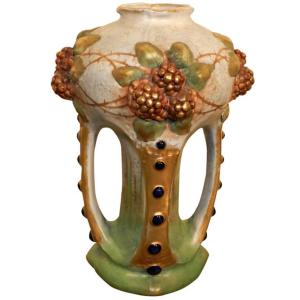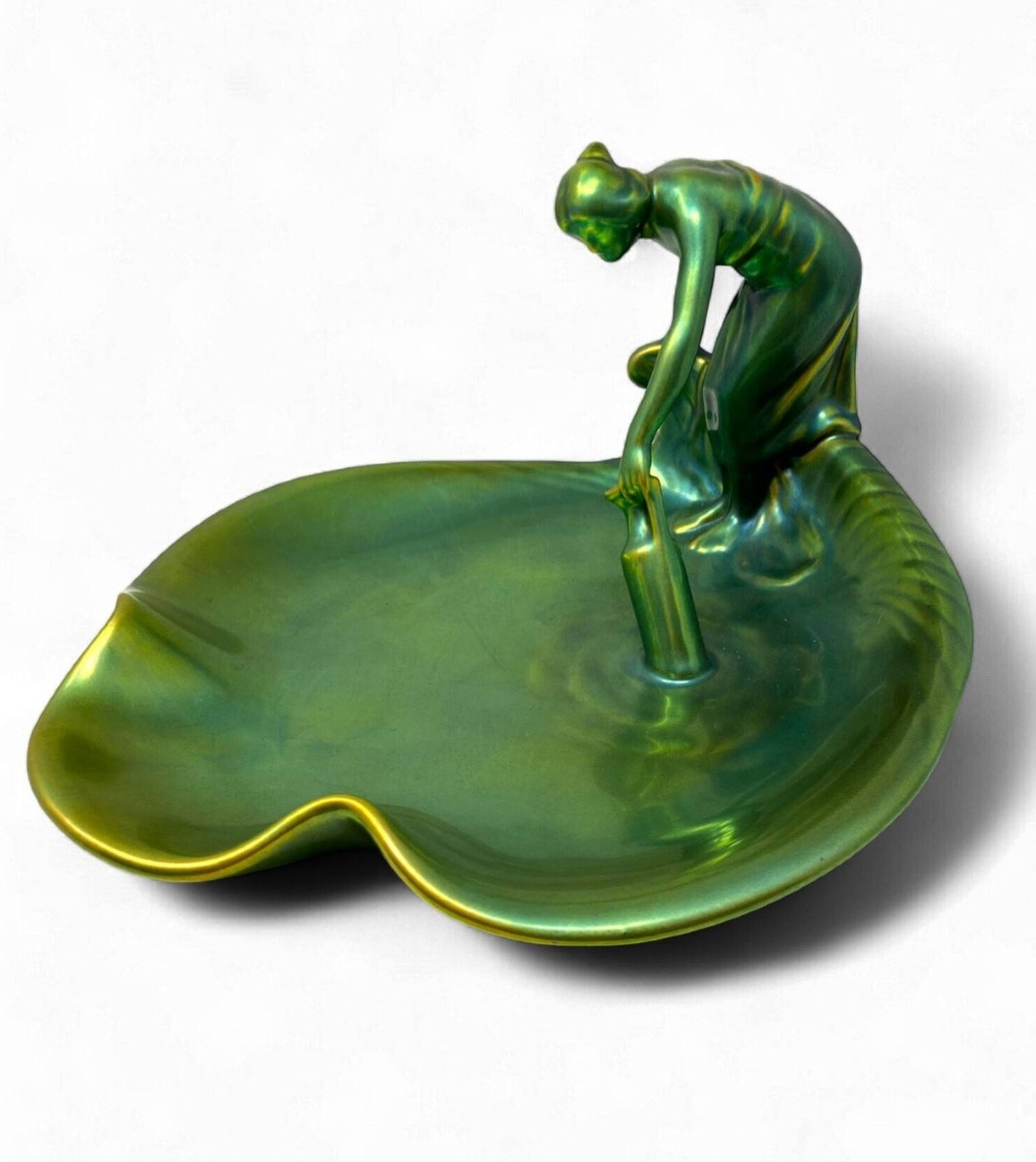
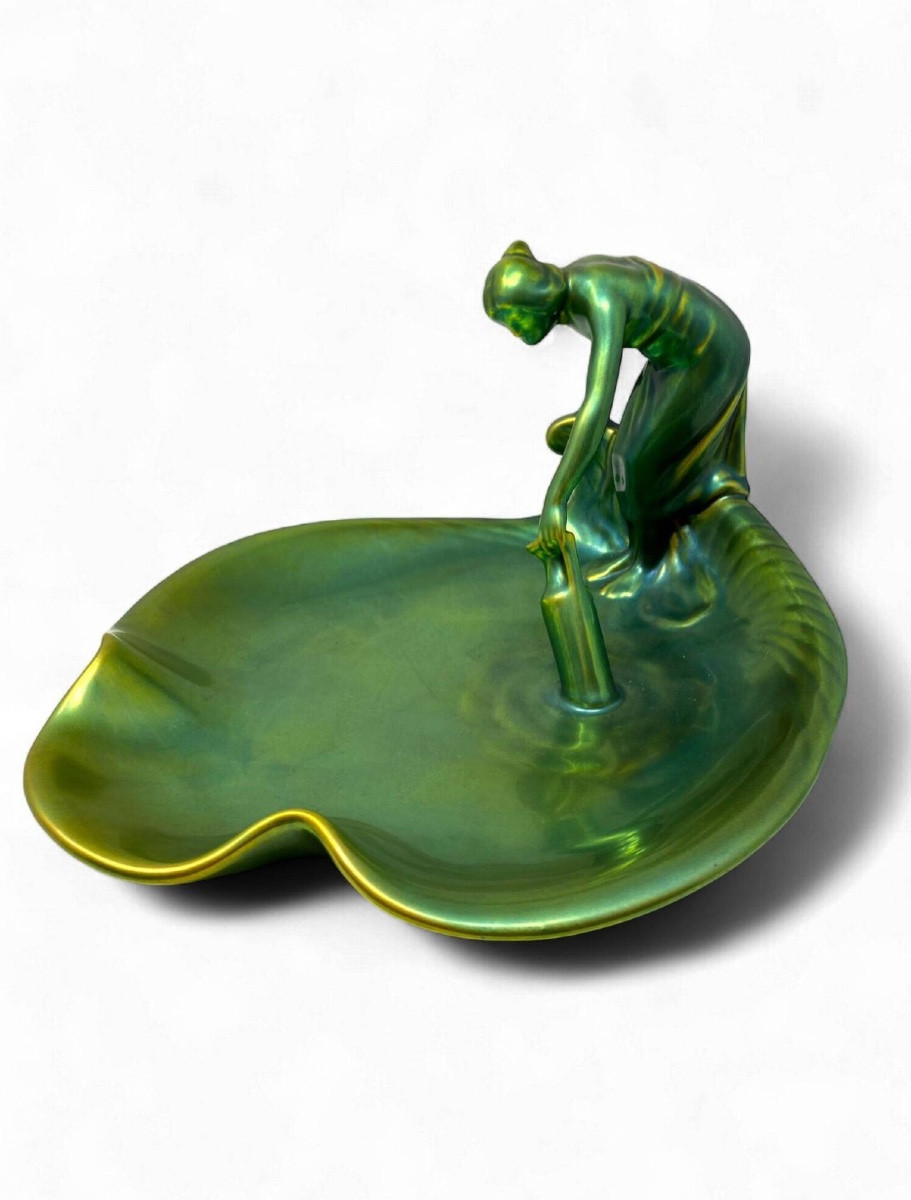
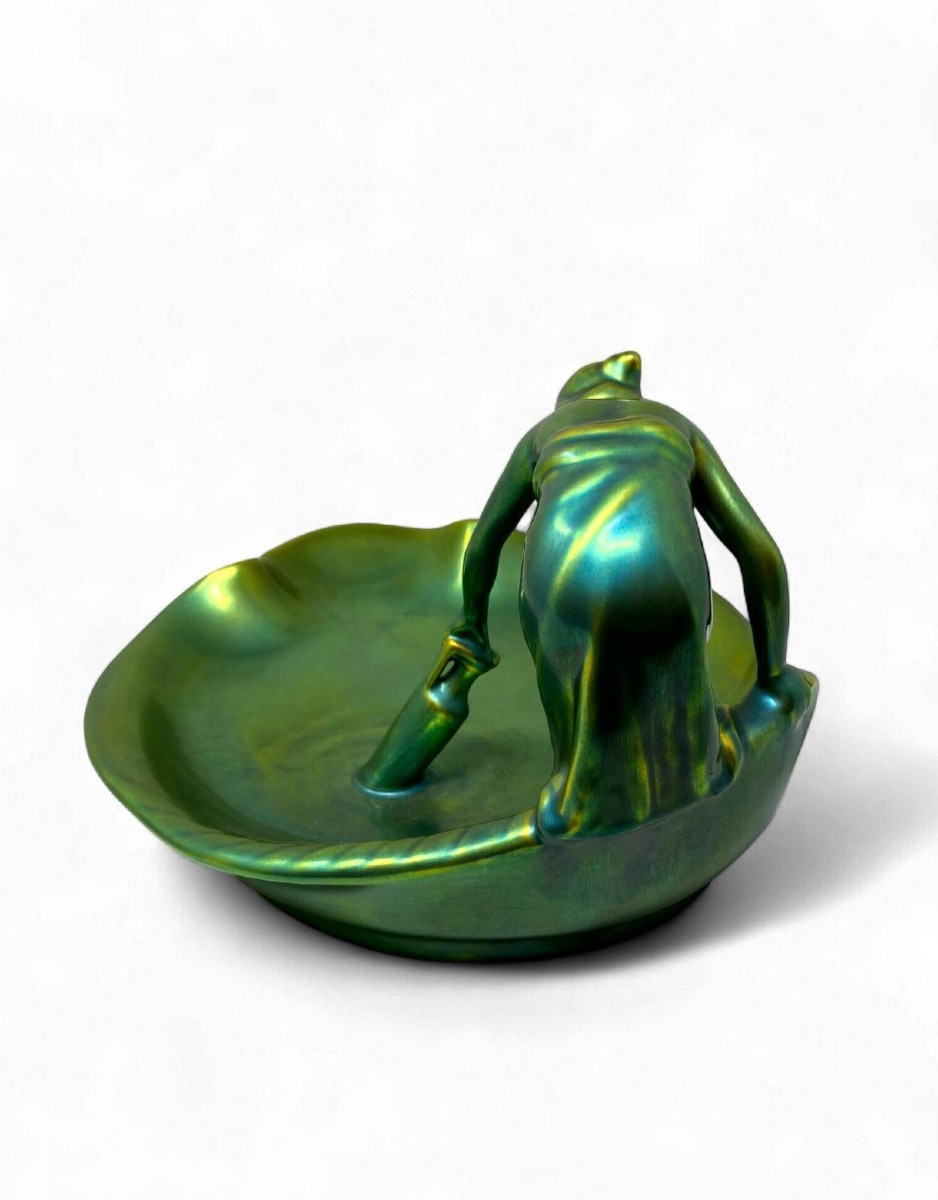
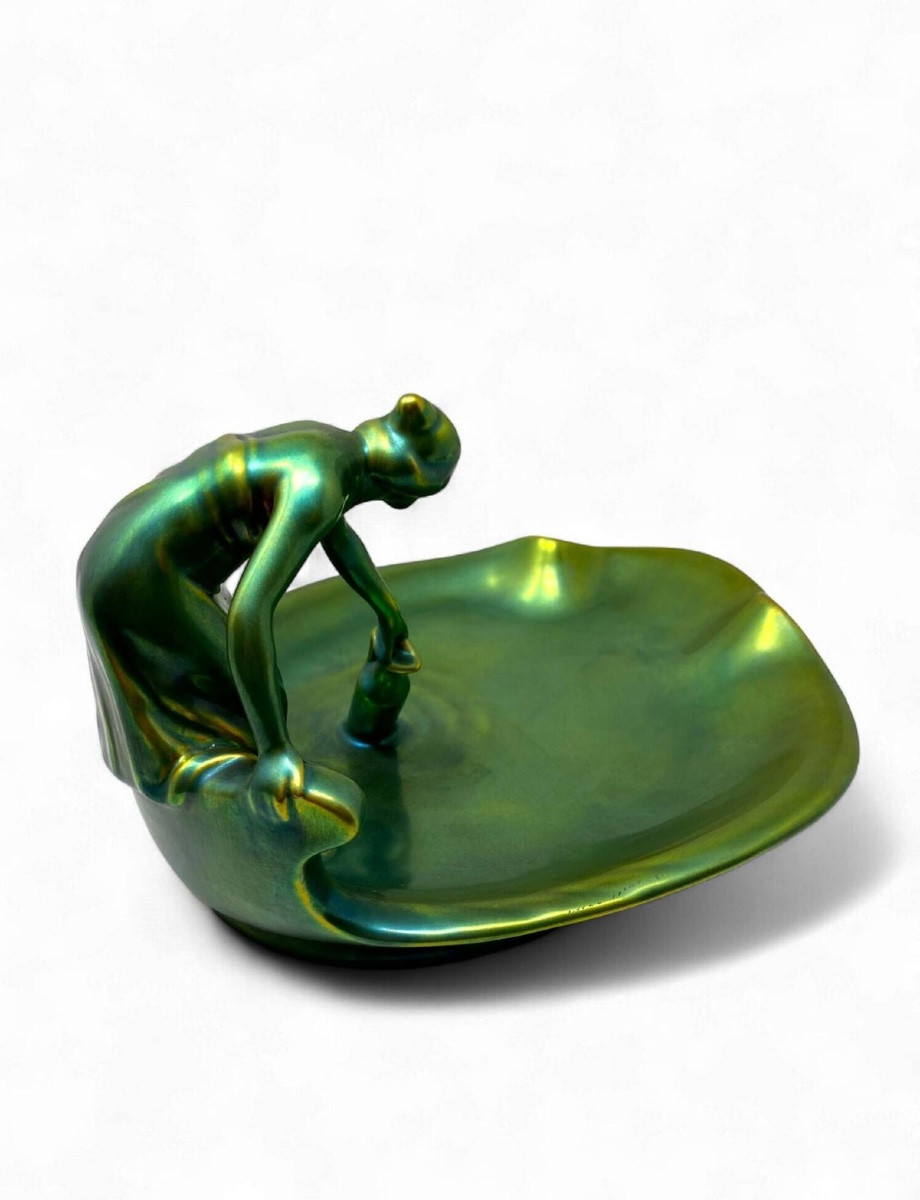
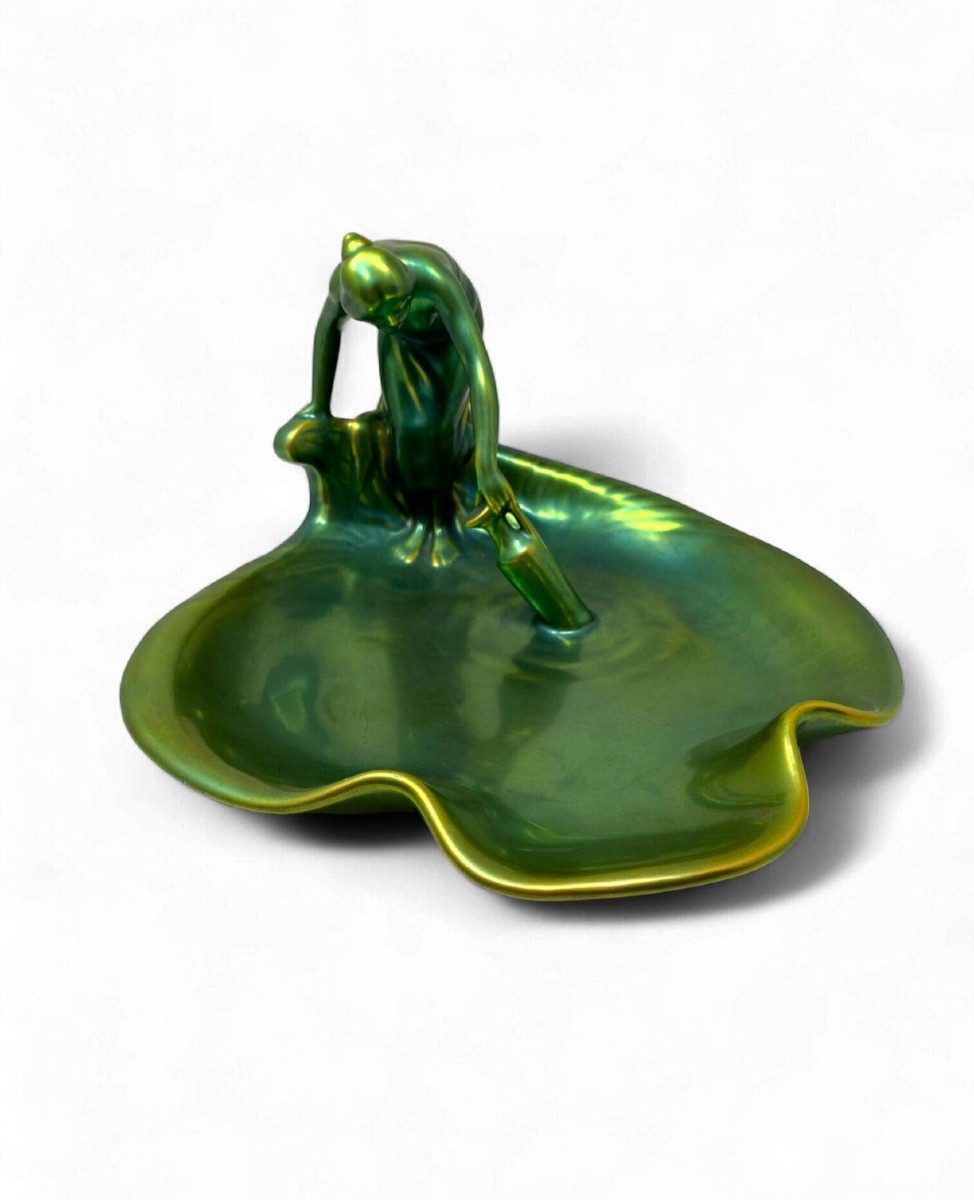
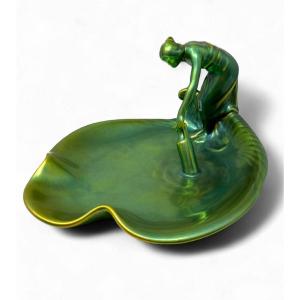


Zsolnay – Pecs (manufacture) Woman With Water Lily
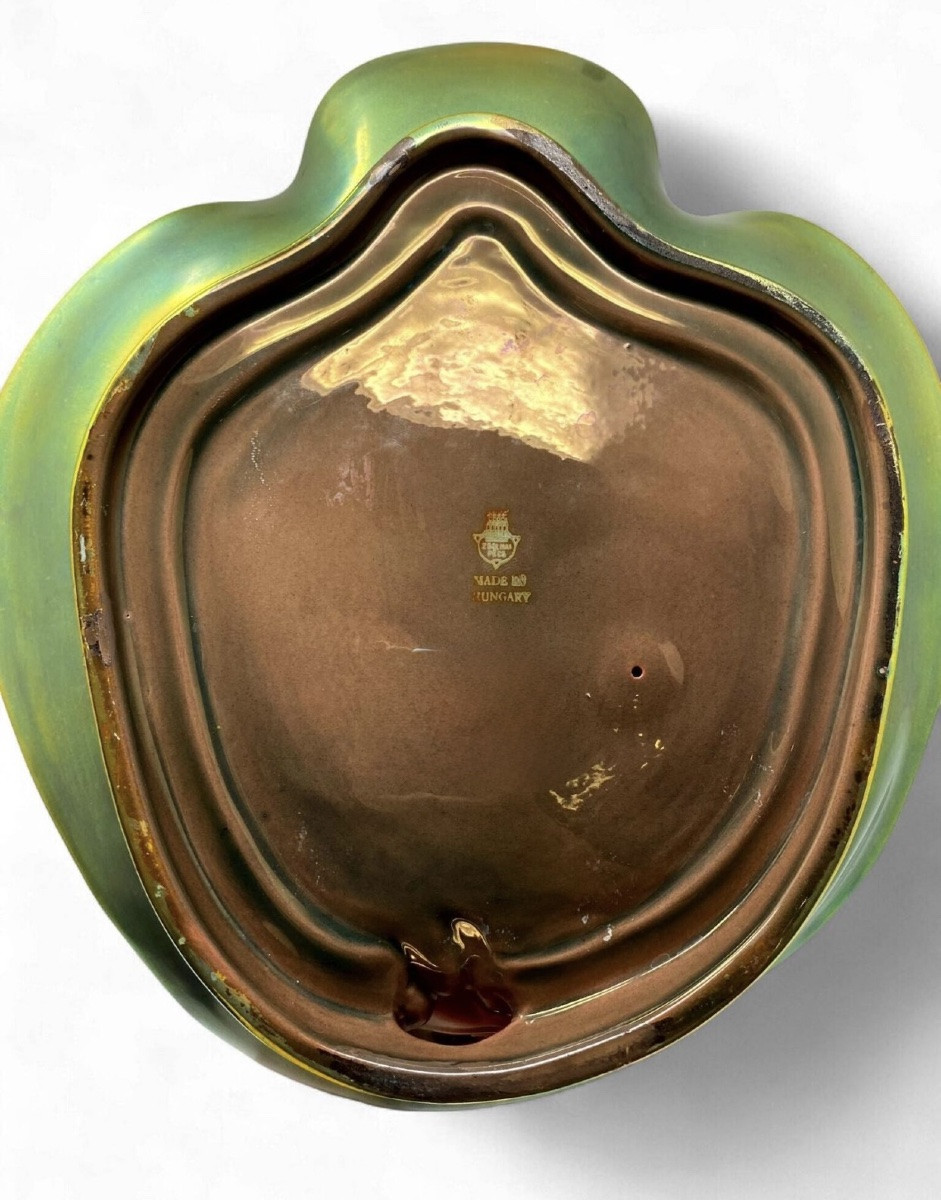
Signed with the hallmark on the reverse and marked Hungary. The Zsolnay factory in Pécs, Hungary, gained its renown for its Art Nouveau (or Hungarian Secession) style primarily thanks to the innovative Eosin glaze technique. Introduced around 1893, it was developed by Vilmos Zsolnay in collaboration with chemists Lajos Petrik and Vince Wartha. The object is covered with a special clay paste containing metallic oxides (such as copper or silver). Eosin offers a unique iridescent metallic glaze that creates shimmering colors (shades of green, red, blue, purple, gold, etc.) that change depending on the angle of the light. The name "Eosin" comes from Eos, the Greek goddess of the dawn, in reference to its radiant appearance. The exact recipe for Eosin remains a closely guarded secret of the factory. Zsolnay artists used this glaze on freestanding sculptural pieces, vases and decorative objects, adopting the fluid organic forms and flamboyant colors of the Art Nouveau style, like our superb bowl of a woman on her water lily.
1 000 €
Period: 20th century
Style: Art Nouveau
Condition: Perfect condition
Length: haut. 17 cm – long. 30 cm – prof. 26 cm
Reference (ID): 1665002
Availability: In stock
Print