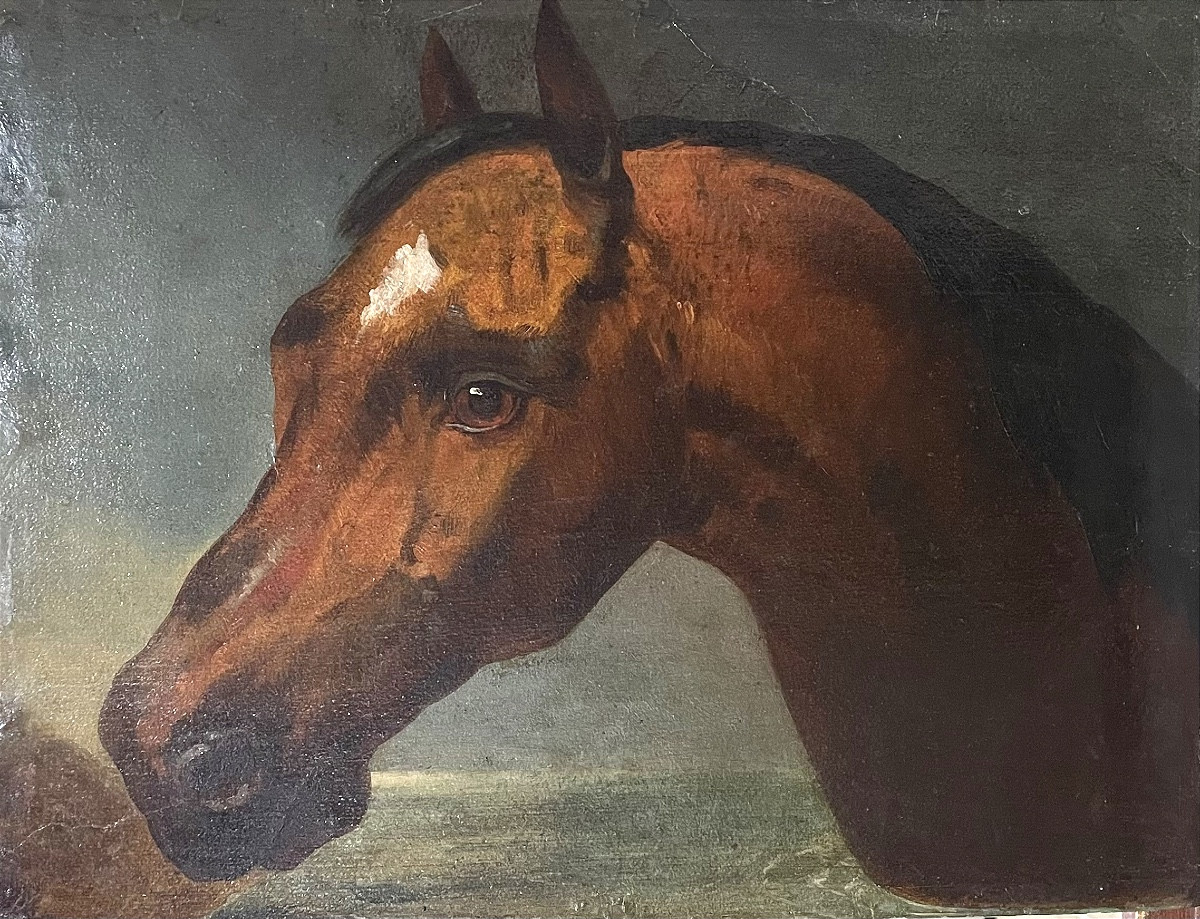
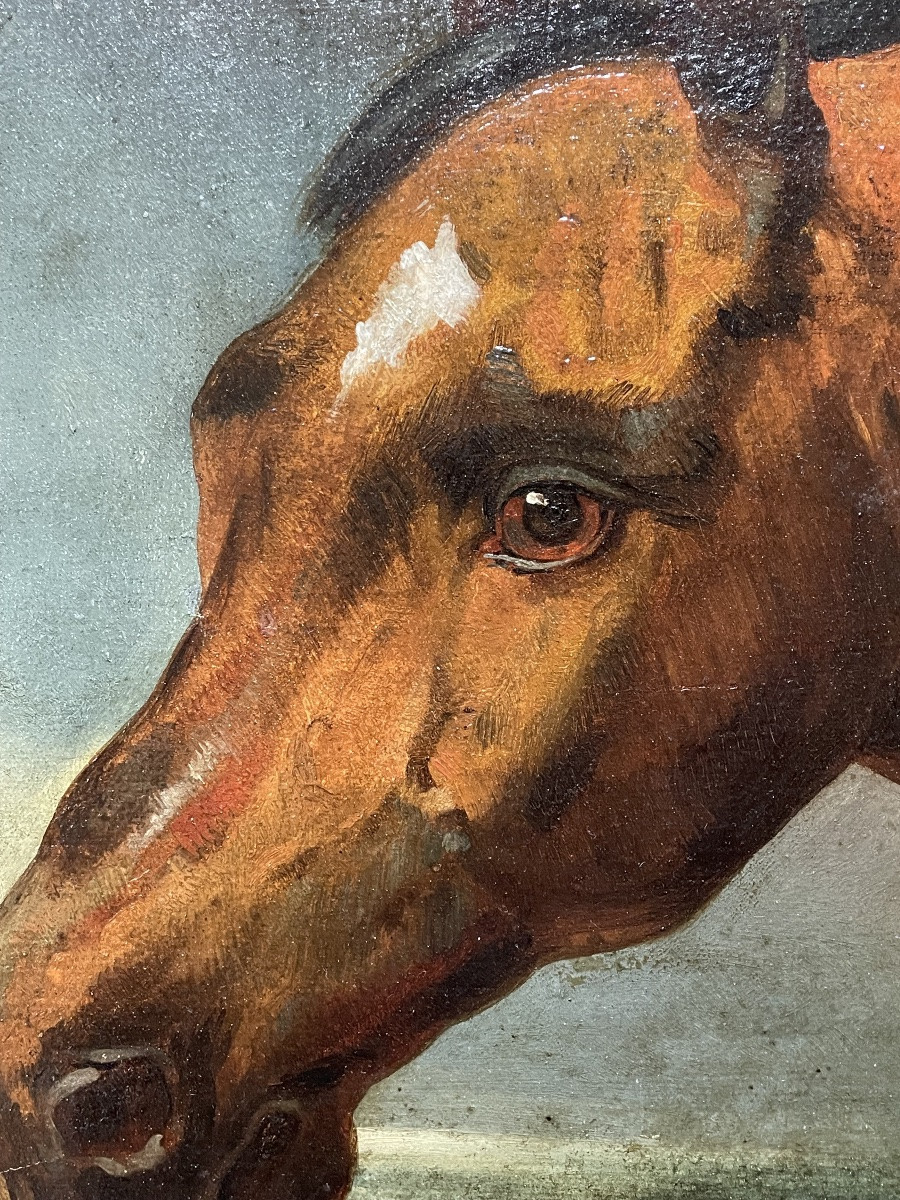
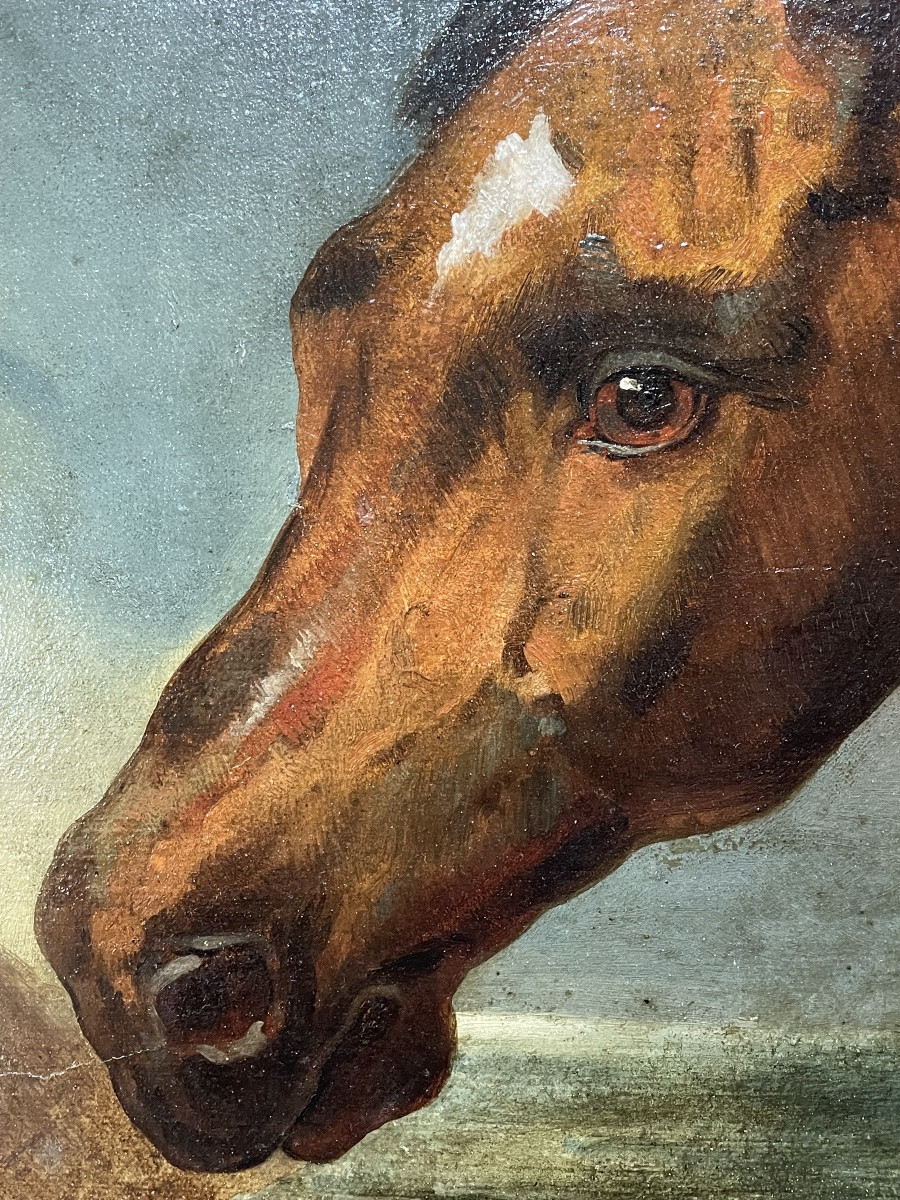
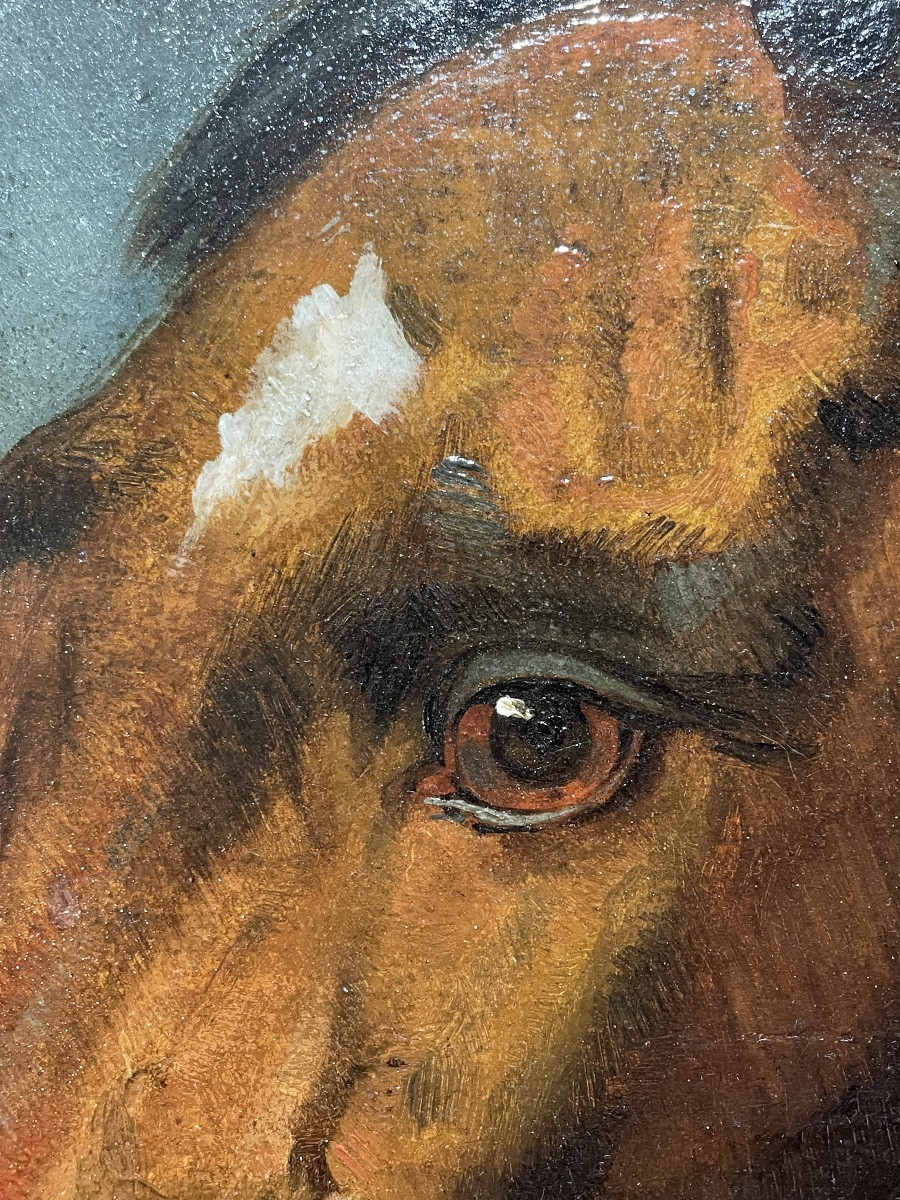
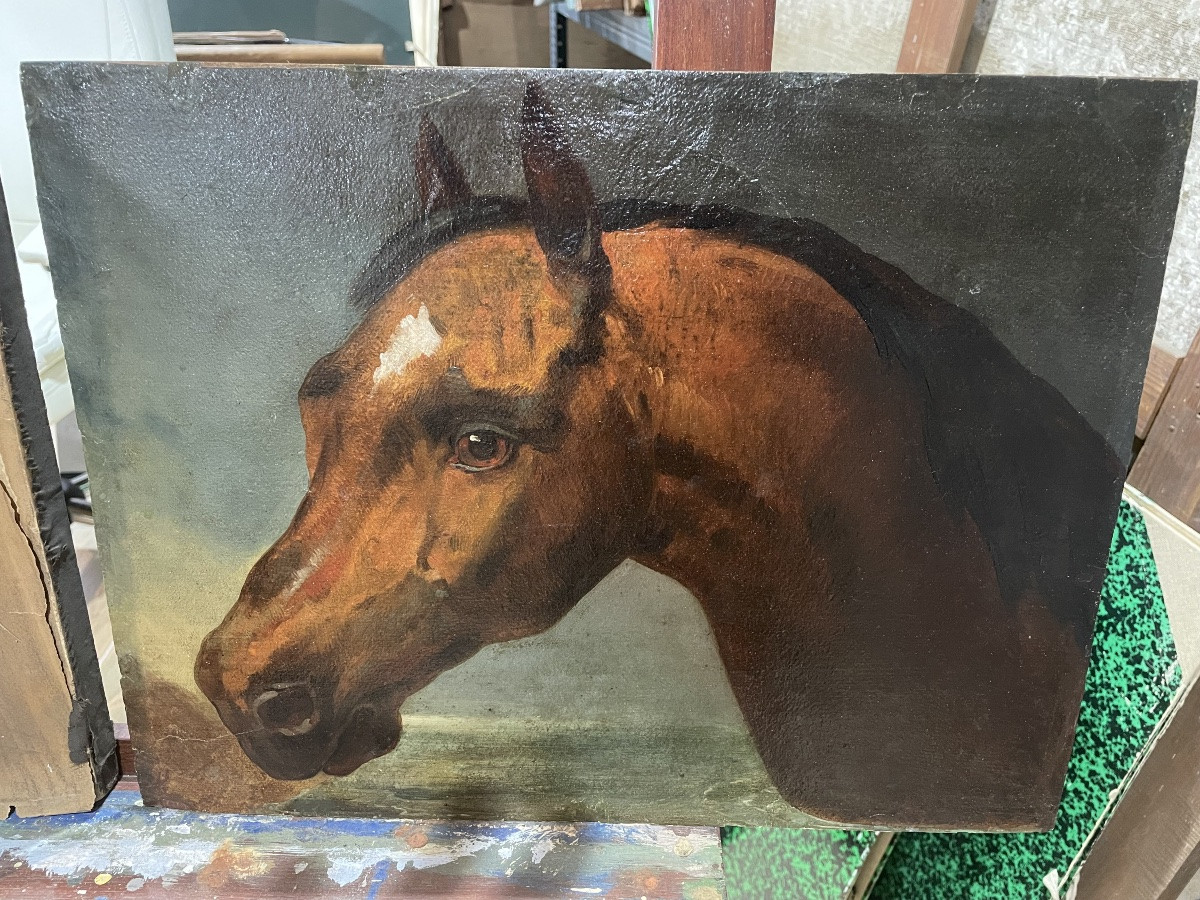
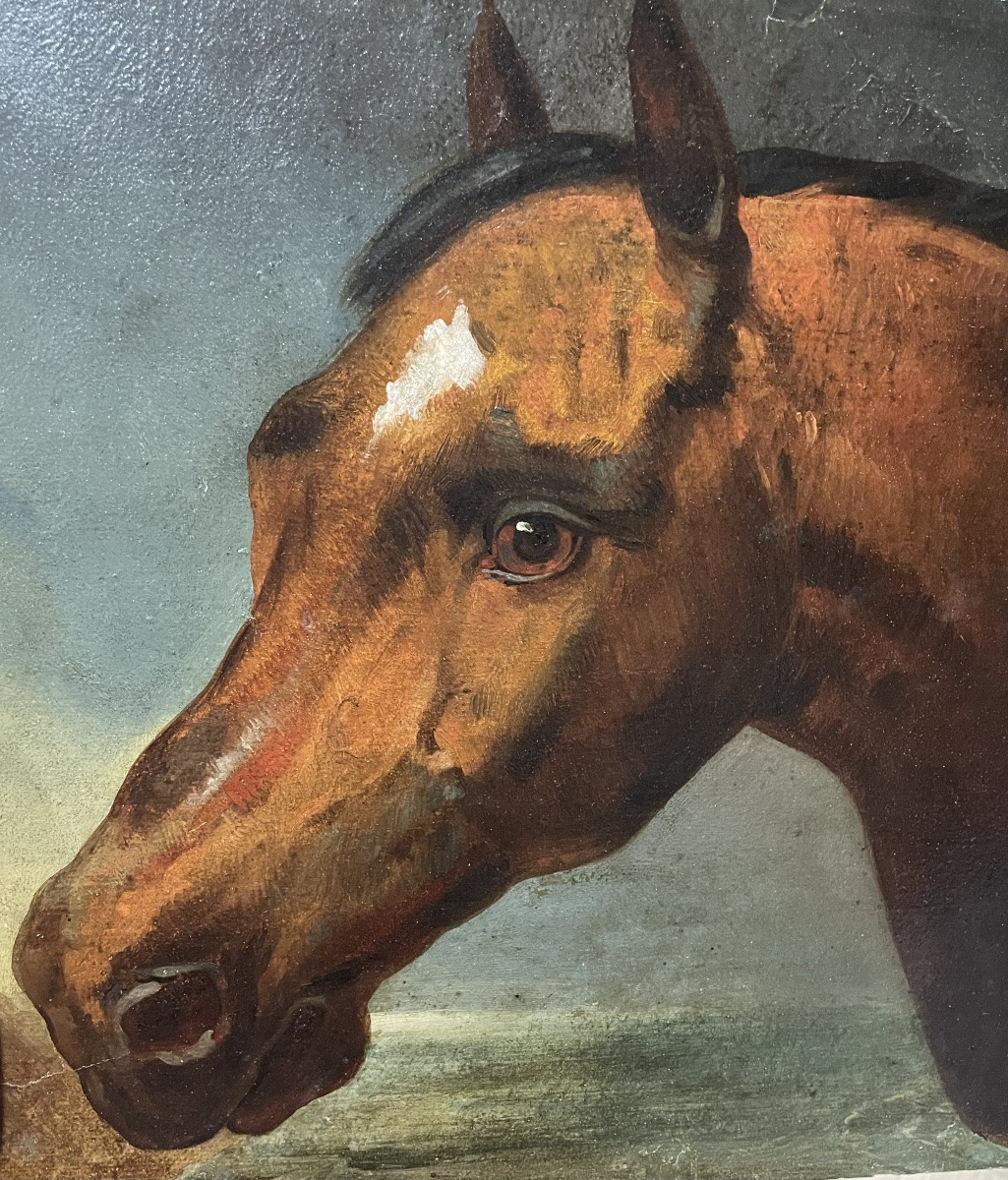
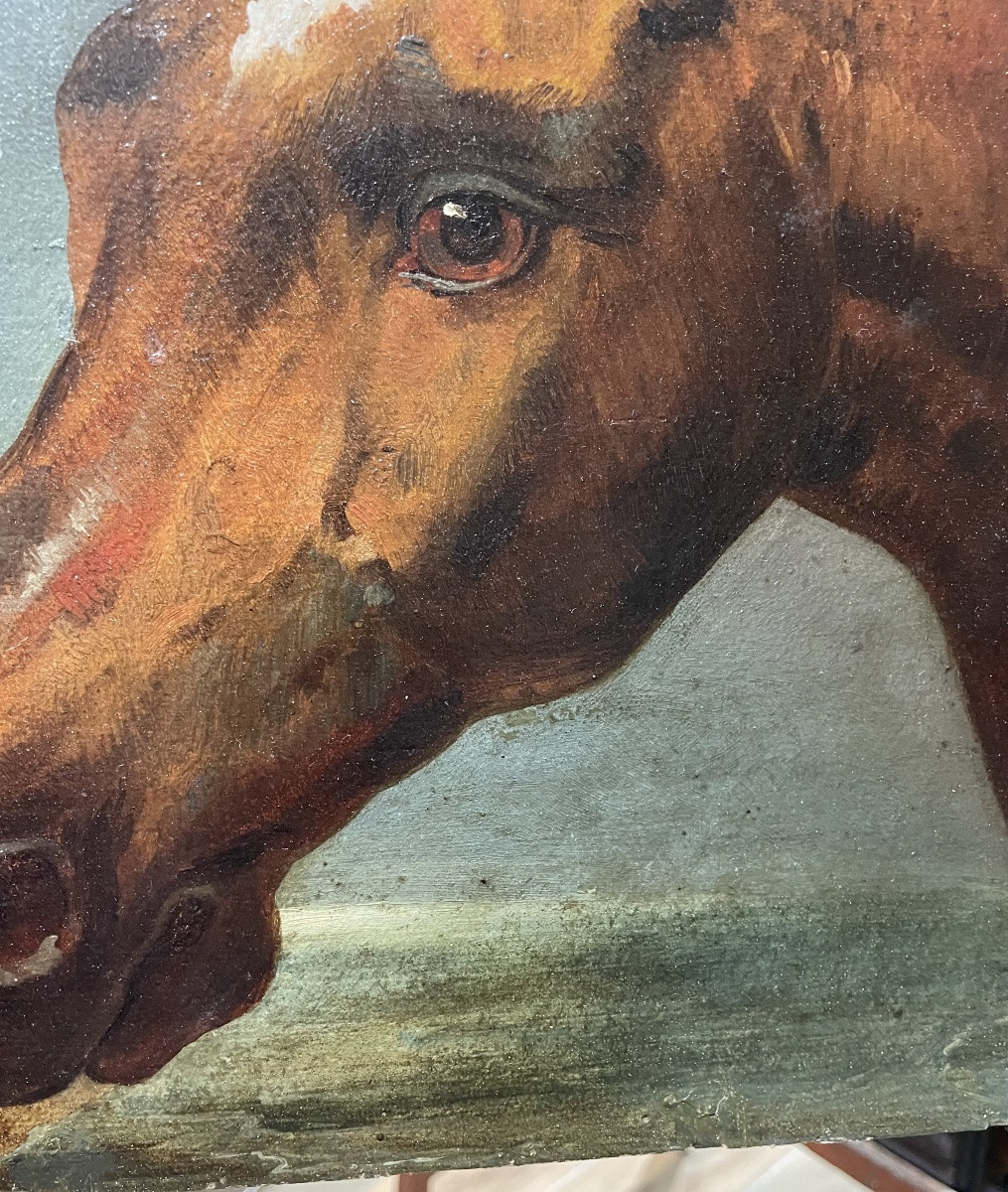
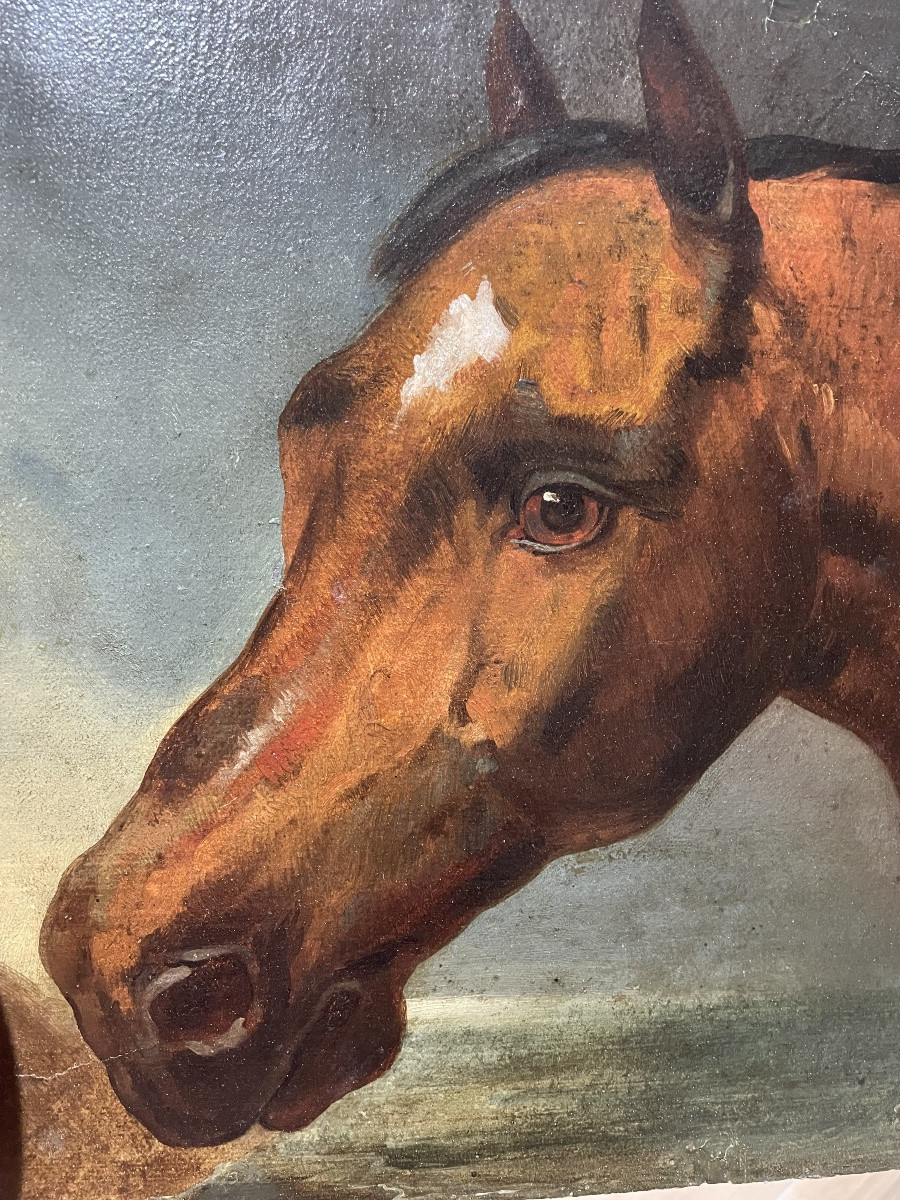
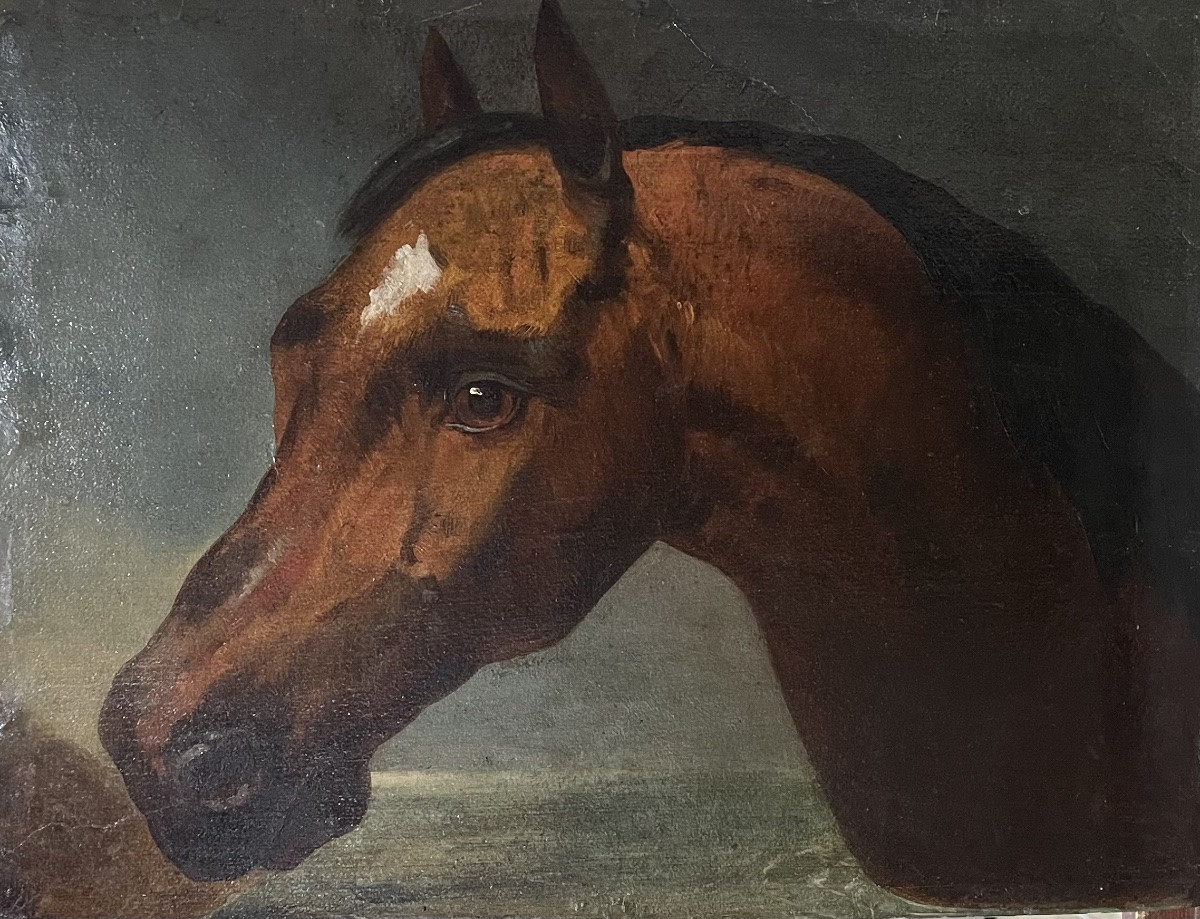


"Nicolas Sverchkov (1817-1888) Great Russian Painter - Horse's Head - Circa 1860/1870"
Nicolas Egorovich Sverchkov (Saint Petersburg 1817 - 1888 Tsarskoye Selo) Head of a Swimming Horse
Oil on paper mounted on wood panel
39.5 x 30 cm
Circa 1860 / 1870
Nicolas Egorovich Sverchkov is one of the greatest Russian masters of the 19th century, specializing in animal painting, and particularly in the depiction of the horse, a subject to which he devoted the majority of his career. Born in Saint Petersburg into a family close to the imperial administration, he revealed from a very young age a keen sense of observation and an exceptional ability to render movement, muscular structure, and animal psychology. Trained at the Imperial Academy of Fine Arts, where he quickly earned distinctions, Sverchkov developed a realistic, energetic style deeply rooted in the Russian pictorial tradition while also drawing on European, particularly French, models. His reputation was established as early as the 1840s thanks to his equestrian scenes, his troikas at full speed, and his animal portraits, which were immensely popular with the Russian aristocracy and the imperial court. In 1852, he stayed in Paris, where he exhibited at the Salon and came into contact with French artists specializing in the same genre, such as Carle Vernet, Rosa Bonheur, and Alfred de Dreux, with whom he shared a naturalist sensibility. This international recognition further enhanced his prestige in Russia: he became the official painter of the imperial stables and created several portraits of horses belonging to the emperor. His works are now held in numerous Russian museums, most notably the Russian Museum in Saint Petersburg, the Hermitage Museum, and the Tretyakov Gallery in Moscow, as well as in various regional collections that include troikas, hunting scenes, military carriages, and animal portraits. These institutions underscore Sverchkov's essential place in the history of Russian art: he embodies one of the last great representatives of the academic equestrian tradition before the aesthetic transformations of the turn of the century.
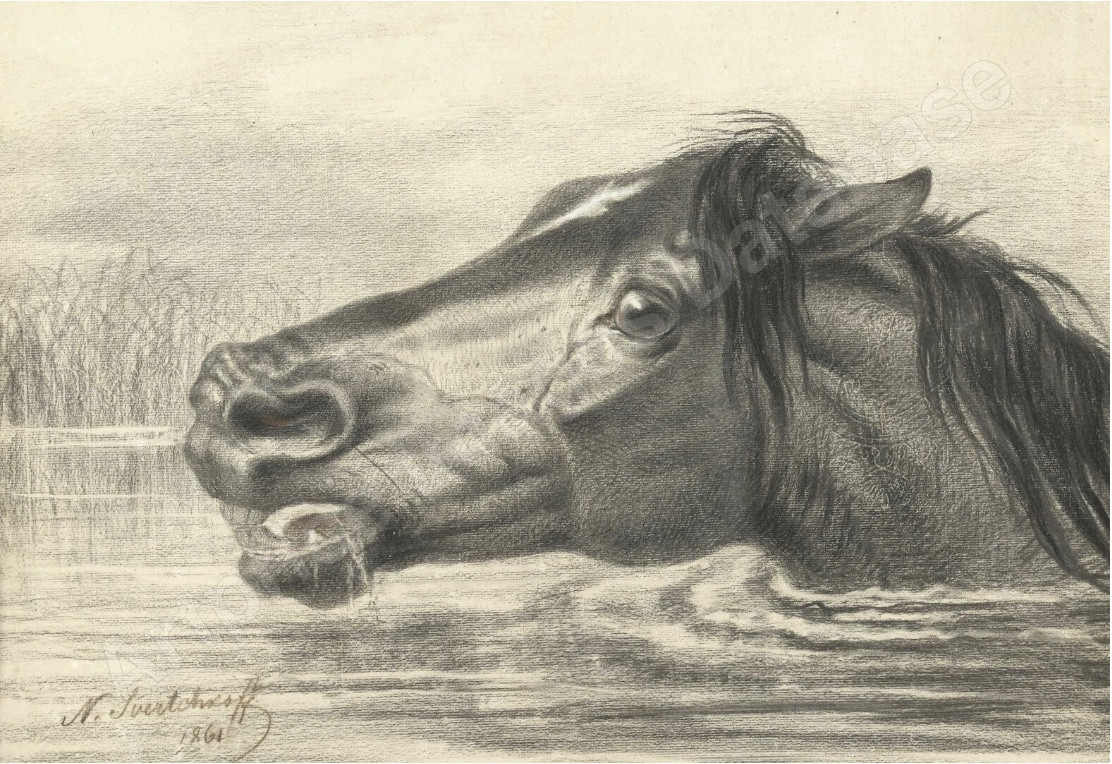
Our painting is particularly relevant in relation to a drawing on a similar subject dated 1864.













 Le Magazine de PROANTIC
 TRÉSORS Magazine
 Rivista Artiquariato