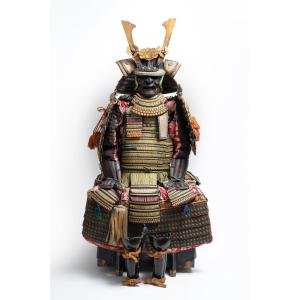


Maru Do Tosei Gusoku , In Revival Style Kabuto Signed Saotome Ietada
Artist: Saotome Ietada
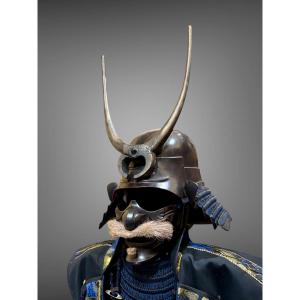
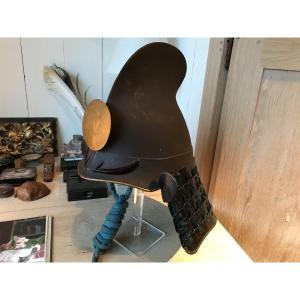
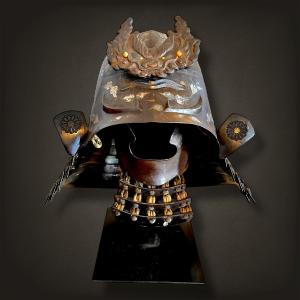
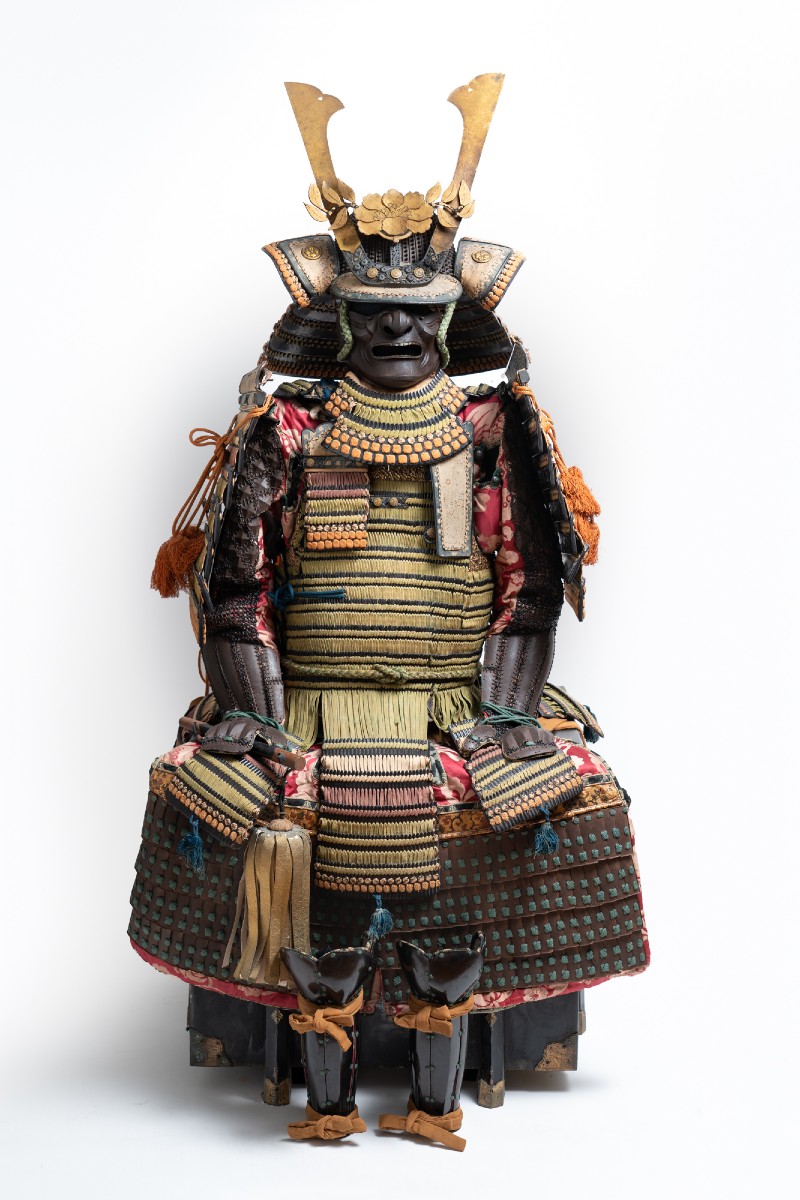
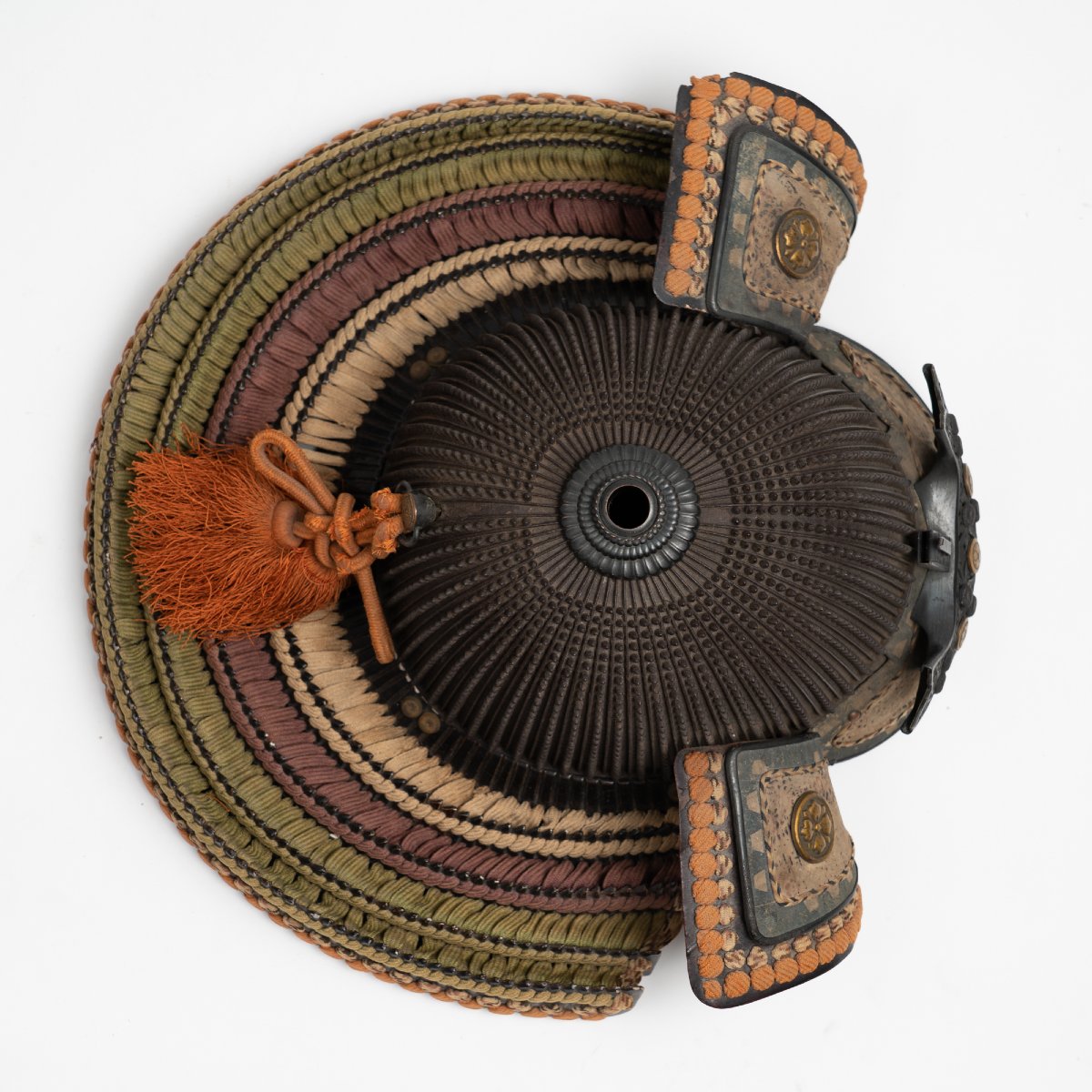
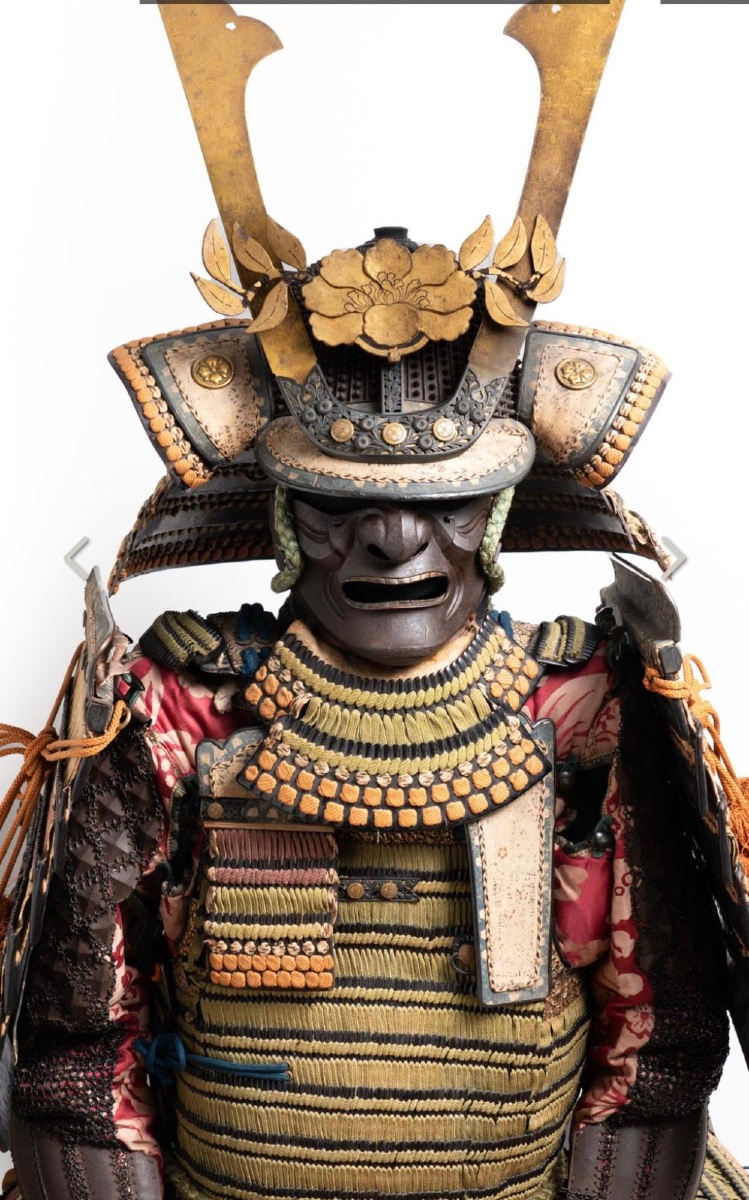
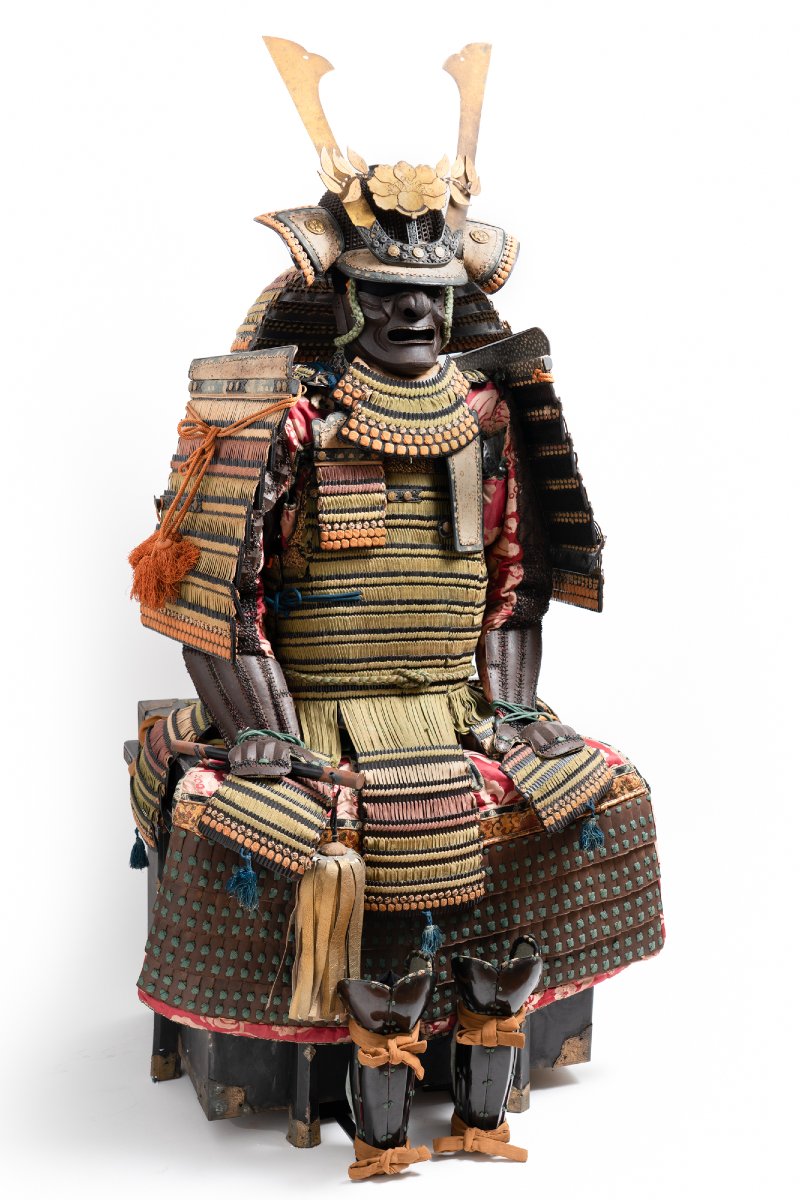
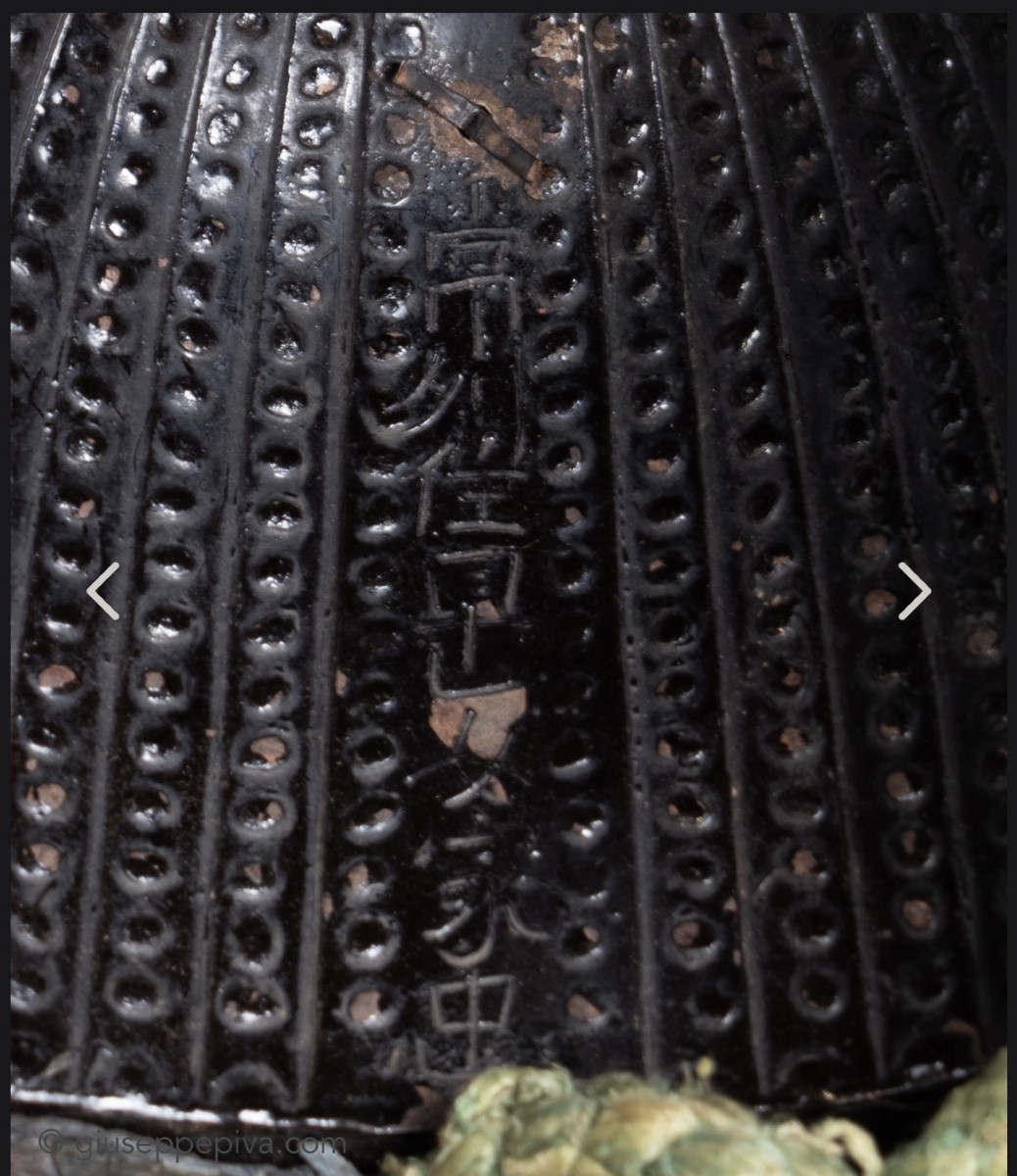
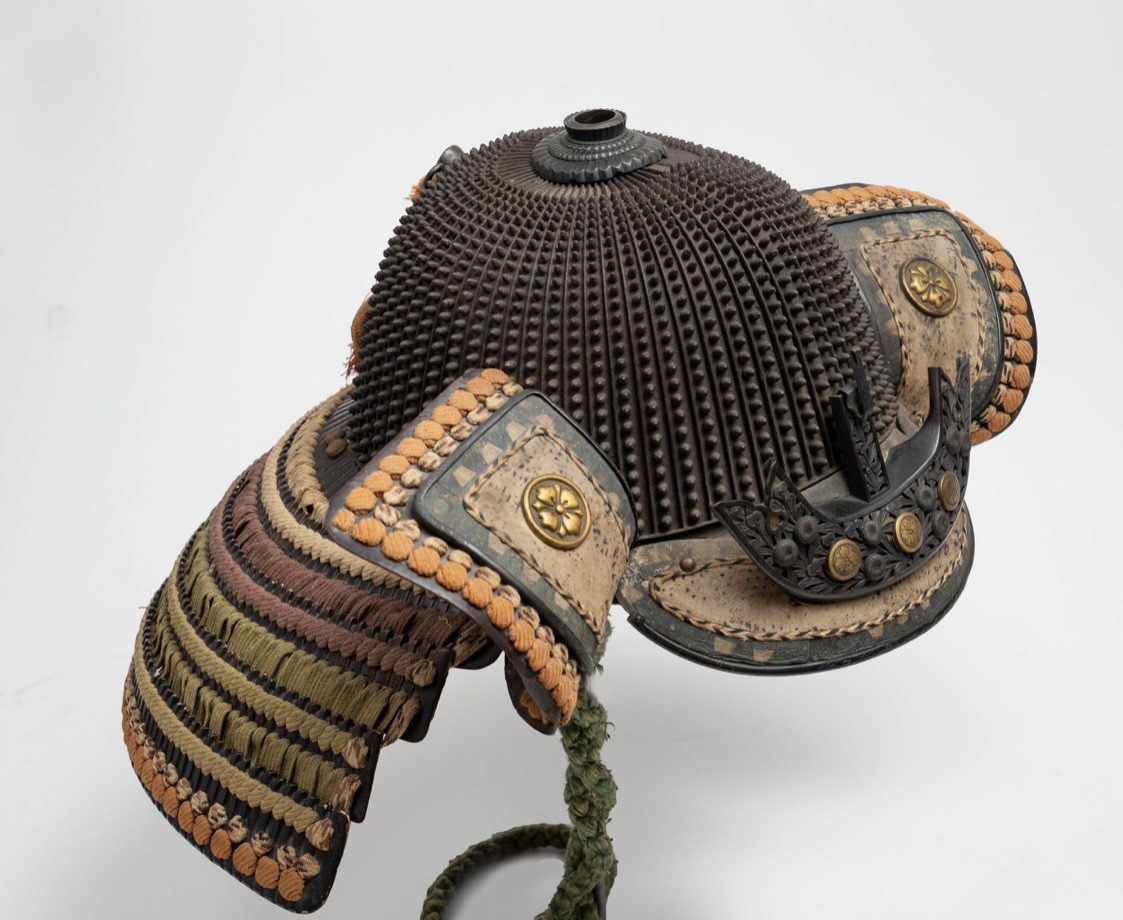
HON-KOZANE MARU DO TOSEI GUSOKU Neoclassical style samurai armor -Edo period, 17th-18th century - Signature on the kabuto: Jōshū jū Saotome IetadaKabuto [helmet]: Red iron kabuto (tetsu sabiji) composed of sixty-two plates, each adorned with twenty-five small conical rivets (ko-boshi) of decreasing size; the front plate, larger than the others, has two rows of rivets, while the rear plate is left blank, for a total of 1,550 rivets. The "Saotome-byo," an additional rivet characteristic of Saotome armorers, is visible on the inside.
Maedate: Kuwagata (stylized horns) with shakudo support. The maedate is in the form of kuwagata in gilded bronze: literally hoe-shaped, these are antennae, curved horns that symbolize power and nobility, one of the most emblematic elements of Japanese armor.
Shakudō is a *traditional Japanese alloy* composed primarily of *copper (≈96%)* and a small amount of *gold (≈4%)*, sometimes with a little silver. Appearance: After treatment (*niiro*), it develops a *very attractive black or blue-black patina*. – *. - The dark patina highlights the gilded or lacquered ornaments on the kabuto and the openwork gilded bronze ledō kuwagata-dai (kuwagata stand) adorned with three hanabishi (family crests in the shape of flowers) and a large gilded wooden peony. The *hanabishi* is a traditional Japanese floral lozenge-shaped motif, often stylized as a four-petaled flower inside a lozenge.
Maedate: Kuwagata (stylized horns) with shakudo support. The maedate is in the shape of kuwagata in gilded bronze: literally hoe-shaped, these are antennae, curved horns symbolizing power and nobility, one of the most emblematic elements of Japanese armor.
Shakudō is a *traditional Japanese alloy* composed mainly of *copper (≈96%)* and a small amount of *gold (≈4%)*, sometimes with a little silver. Appearance: after treatment (*niiro*), it takes on a *very aesthetic black or blue-black patina*. The dark patina highlights the gilded or lacquered ornaments on the kabuto and the openwork gilded bronze ledō kuwagata-dai (kuwagata stand), adorned with three hanabishi (family crests in the shape of flowers) and a large gilded wooden peony.
the hanabishi is a traditional Japanese floral lozenge-shaped motif, often stylized as a four-petaled flower inside a lozenge. In the context of armor and maedate (family crests), the hanabishi can serve as a family or decorative symbol, or as an emblem worn on the helmet or pennons to identify a clan.
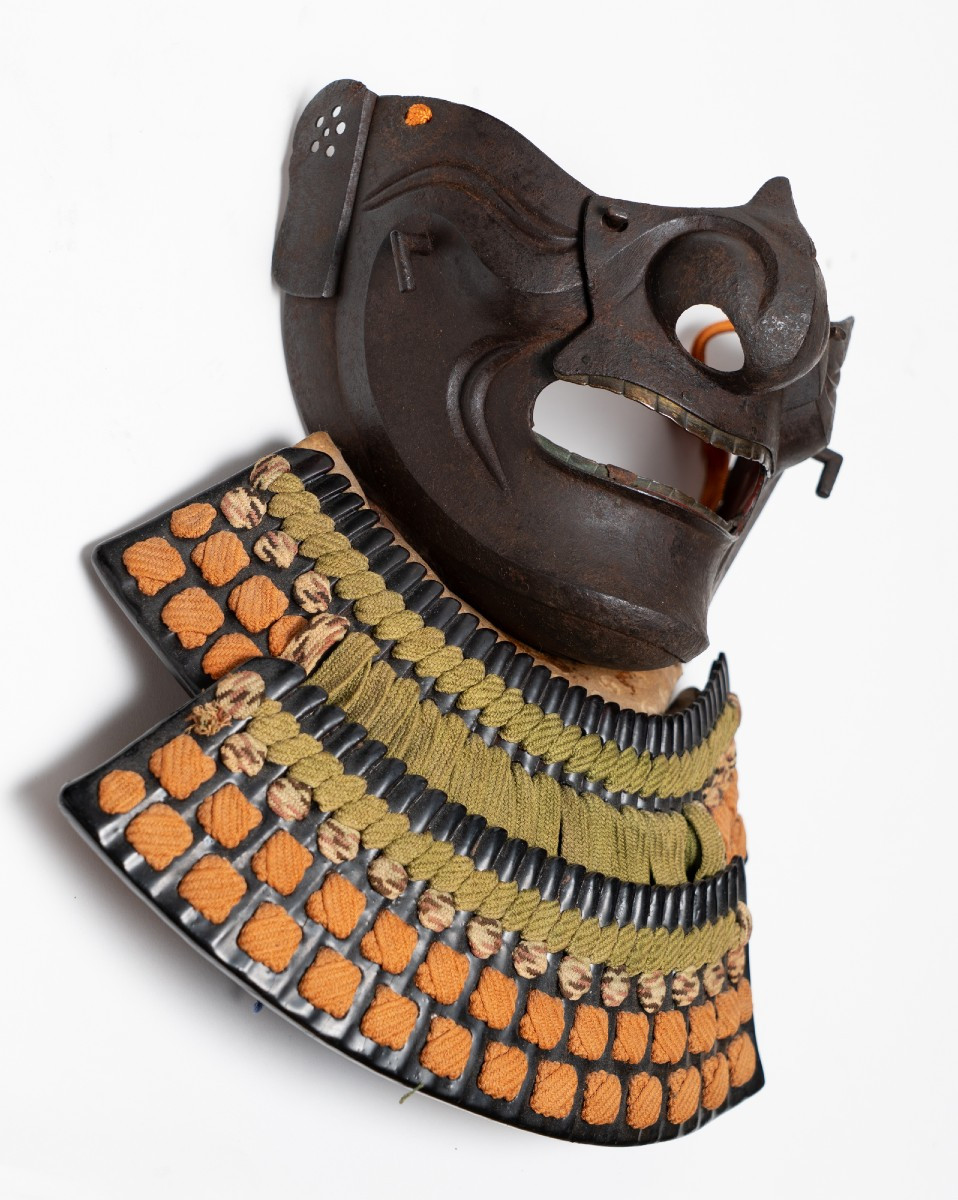
Menpō [mask]: Rust iron mask (tetsu sabiji) ressei-men (fierce expression mask).The term *ressei is often used to describe menpō: Fierce or aggressive expression: curled lips, visible teeth, furrowed brows, intended to intimidate the enemy and protect the face. - Made of *iron or hardened leather*, sometimes with *ornaments in shakudō, brass, or gilded copper*. - Some models feature *openings for breathing and a decorative mustache (kuchihige).
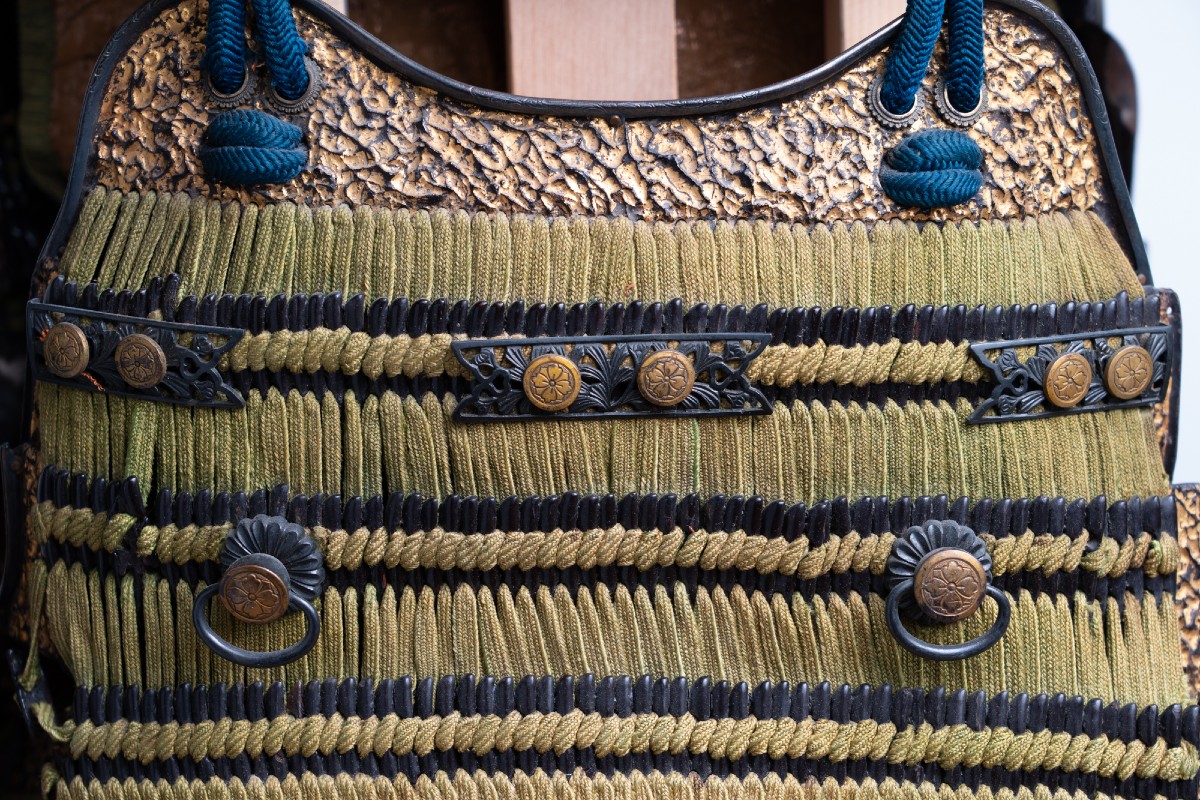
Dō [breastplate]: Maru do tosei gusoku of hon-kozane construction.maru do round cuirass in one or two partstosei gusoku: modern armor, a term designating armor after the introduction of firearms (after 1543)Relief leather plates with engraved shakudo borders and finely openwork kanamono.
Maru do: The term *honkozane* refers to the *genuine small armor plates* used in traditional Japanese armor, as opposed to *kiritsuke kozane*, which are imitations. Hon kozane: each plate is *individual*, mounted separately and laced according to a precise pattern (here knotted in kebiki-odoshi). - Used in *high-ranking armor* or *parade armor Flexibility: each plate can move slightly, offering *greater mobility*; allows for complex patterns thanks to the different colored laces. Hon kozane: authentic and individual plates are more *refined and prestigious
On the back of the do, an openwork shakudo metal plate holds and adorns the *knot*; this is generally called an agemaki-no-
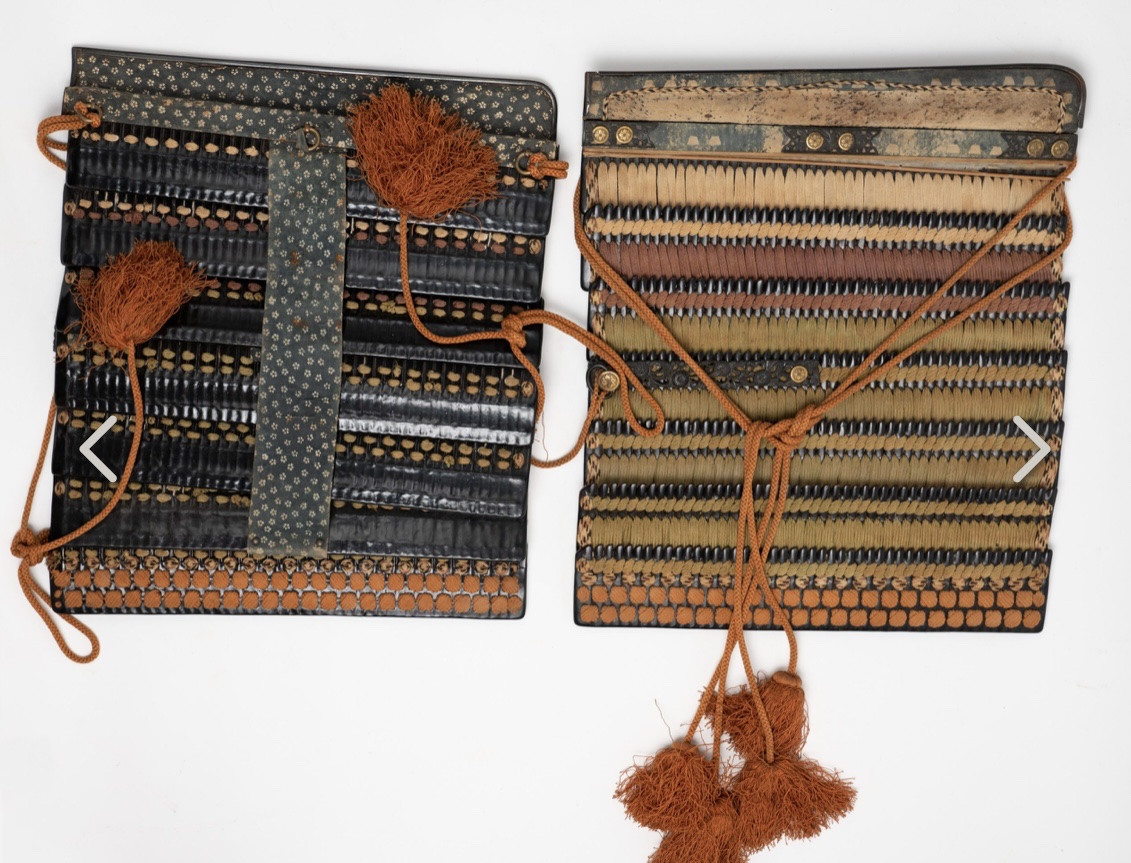
The Osode: The Osode measured approximately 33 cm wide and 39 to 40 cm long. It was designed to serve as a protective shield against arrows in direct combat. Since samurai needed their right hand free to draw the bowstring, it was common to wear the Osode only on the left side. This left-handed Osode was called the shamukō (射向), meaning the side exposed to arrows. However, with the evolution of warfare techniques and the increasing popularity of melee weapons like the yari (spear), the advantages of the Osode turned into disadvantages. The long-range thrusting and swinging movements required in close combat demanded greater arm flexibility. The large Osode swung excessively during these movements, its upper plates often striking the wearer's neck, making it cumbersome and impractical to carry.
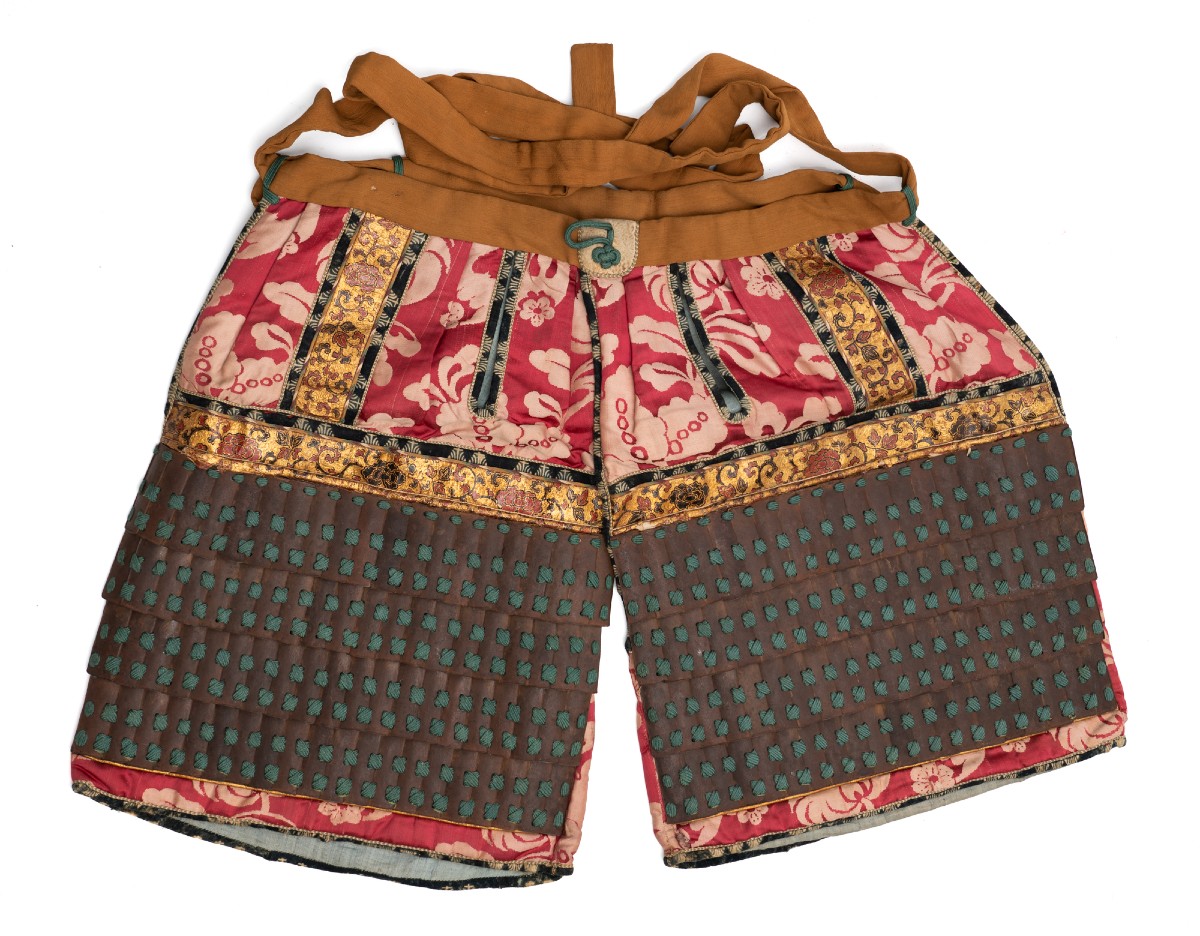
Hakama Haidate leg protection designed like trousers Haidate Protection of the *thighs and hips
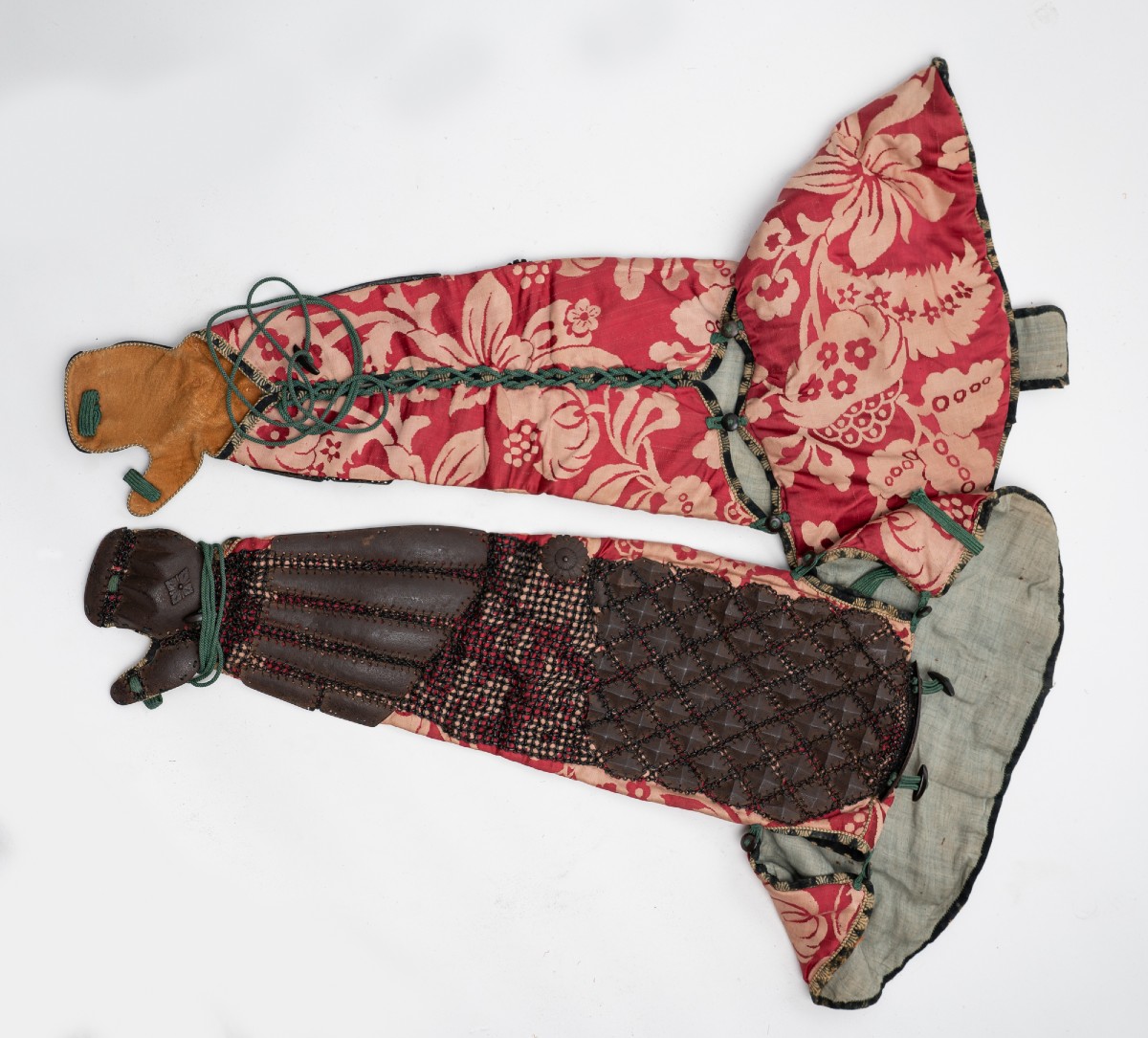
Suneate: Shin guards finished with urushi (Japanese lacquer), the sap of a tree called Rhus vernicifera, resistant to humidity and corrosion. It reinforces metal and leather. The term Ōtateage suneate refers to a *type of shin guard (suneate)* used in traditional Japanese samurai armor. Breakdown: - *Ō large* - Tateage = rising upwards. These are *suneate* with raised side wings or plates*, which *extend up the sides of the calf* for better protection. - They are composed of: - *Vertical metal plates (ita)*, hinged or riveted, *Kusari (chainmail)* between the plates* - *Textile lining* for comfort* - Closure with cords or hooks at the calf*. Usage: - Popular from the *Muromachi period* to the *Edo period
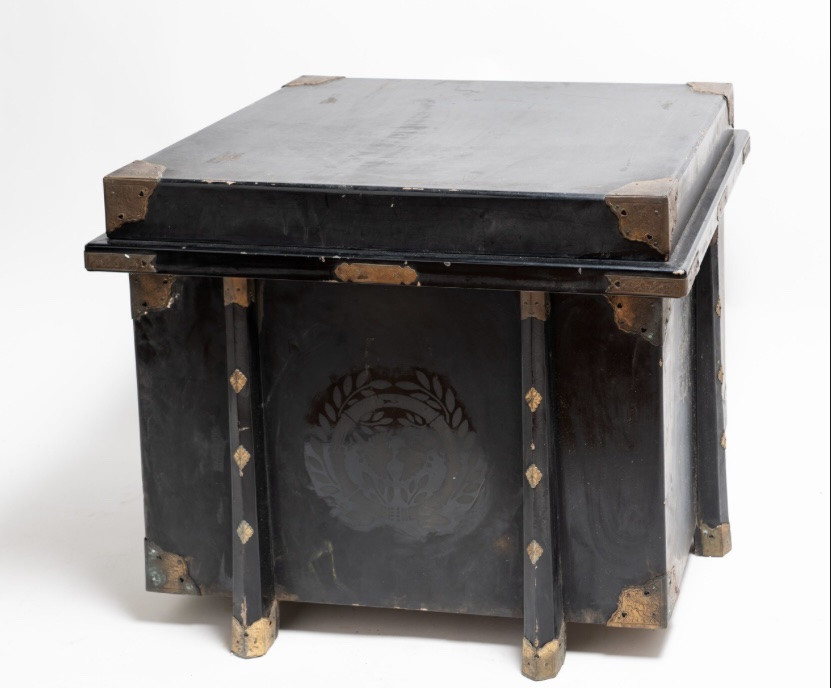
karabitsu is a traditional Japanese chest used to store or transport precious or sacred objects, Storage of religious objects in temples (textiles, sutras, ritual objects) or Transport box for samurai armor (especially complete yoroi) Characteristics: - Shape: rectangular, often with a domed lid - Curved feet (Chinese style, hence the prefix kara = China) - Lacquered wood (often black or red), sometimes decorated with gold leaf or kamon -
Armor accessories, such as sahai(command staff)
Maedate: Kuwagata (stylized horns) with shakudo support. The maedate is in the form of kuwagata in gilded bronze: literally hoe-shaped, these are antennae, curved horns that symbolize power and nobility, one of the most emblematic elements of Japanese armor.
Shakudō is a *traditional Japanese alloy* composed primarily of *copper (≈96%)* and a small amount of *gold (≈4%)*, sometimes with a little silver. Appearance: After treatment (*niiro*), it develops a *very attractive black or blue-black patina*. – *. - The dark patina highlights the gilded or lacquered ornaments on the kabuto and the openwork gilded bronze ledō kuwagata-dai (kuwagata stand) adorned with three hanabishi (family crests in the shape of flowers) and a large gilded wooden peony. The *hanabishi* is a traditional Japanese floral lozenge-shaped motif, often stylized as a four-petaled flower inside a lozenge.
Maedate: Kuwagata (stylized horns) with shakudo support. The maedate is in the shape of kuwagata in gilded bronze: literally hoe-shaped, these are antennae, curved horns symbolizing power and nobility, one of the most emblematic elements of Japanese armor.
Shakudō is a *traditional Japanese alloy* composed mainly of *copper (≈96%)* and a small amount of *gold (≈4%)*, sometimes with a little silver. Appearance: after treatment (*niiro*), it takes on a *very aesthetic black or blue-black patina*. The dark patina highlights the gilded or lacquered ornaments on the kabuto and the openwork gilded bronze ledō kuwagata-dai (kuwagata stand), adorned with three hanabishi (family crests in the shape of flowers) and a large gilded wooden peony.
the hanabishi is a traditional Japanese floral lozenge-shaped motif, often stylized as a four-petaled flower inside a lozenge. In the context of armor and maedate (family crests), the hanabishi can serve as a family or decorative symbol, or as an emblem worn on the helmet or pennons to identify a clan.
Menpō [mask]: Rust iron mask (tetsu sabiji) ressei-men (fierce expression mask).The term *ressei is often used to describe menpō: Fierce or aggressive expression: curled lips, visible teeth, furrowed brows, intended to intimidate the enemy and protect the face. - Made of *iron or hardened leather*, sometimes with *ornaments in shakudō, brass, or gilded copper*. - Some models feature *openings for breathing and a decorative mustache (kuchihige).
Dō [breastplate]: Maru do tosei gusoku of hon-kozane construction.maru do round cuirass in one or two partstosei gusoku: modern armor, a term designating armor after the introduction of firearms (after 1543)Relief leather plates with engraved shakudo borders and finely openwork kanamono.
Maru do: The term *honkozane* refers to the *genuine small armor plates* used in traditional Japanese armor, as opposed to *kiritsuke kozane*, which are imitations. Hon kozane: each plate is *individual*, mounted separately and laced according to a precise pattern (here knotted in kebiki-odoshi). - Used in *high-ranking armor* or *parade armor Flexibility: each plate can move slightly, offering *greater mobility*; allows for complex patterns thanks to the different colored laces. Hon kozane: authentic and individual plates are more *refined and prestigious
On the back of the do, an openwork shakudo metal plate holds and adorns the *knot*; this is generally called an agemaki-no-
The Osode: The Osode measured approximately 33 cm wide and 39 to 40 cm long. It was designed to serve as a protective shield against arrows in direct combat. Since samurai needed their right hand free to draw the bowstring, it was common to wear the Osode only on the left side. This left-handed Osode was called the shamukō (射向), meaning the side exposed to arrows. However, with the evolution of warfare techniques and the increasing popularity of melee weapons like the yari (spear), the advantages of the Osode turned into disadvantages. The long-range thrusting and swinging movements required in close combat demanded greater arm flexibility. The large Osode swung excessively during these movements, its upper plates often striking the wearer's neck, making it cumbersome and impractical to carry.
Hakama Haidate leg protection designed like trousers Haidate Protection of the *thighs and hips
Suneate: Shin guards finished with urushi (Japanese lacquer), the sap of a tree called Rhus vernicifera, resistant to humidity and corrosion. It reinforces metal and leather. The term Ōtateage suneate refers to a *type of shin guard (suneate)* used in traditional Japanese samurai armor. Breakdown: - *Ō large* - Tateage = rising upwards. These are *suneate* with raised side wings or plates*, which *extend up the sides of the calf* for better protection. - They are composed of: - *Vertical metal plates (ita)*, hinged or riveted, *Kusari (chainmail)* between the plates* - *Textile lining* for comfort* - Closure with cords or hooks at the calf*. Usage: - Popular from the *Muromachi period* to the *Edo period
karabitsu is a traditional Japanese chest used to store or transport precious or sacred objects, Storage of religious objects in temples (textiles, sutras, ritual objects) or Transport box for samurai armor (especially complete yoroi) Characteristics: - Shape: rectangular, often with a domed lid - Curved feet (Chinese style, hence the prefix kara = China) - Lacquered wood (often black or red), sometimes decorated with gold leaf or kamon -
Armor accessories, such as sahai(command staff)
65 000 €
Period: 18th century
Style: Asian art
Condition: Condition of use
Material: Wrought iron
Reference (ID): 1663054
Availability: In stock
Print