THIS OBJECT WAS SOLD
Japanese Bronze By ōta Ryohei: Patinated Bronze Sculpture Depicting A Fish (koi/carp)
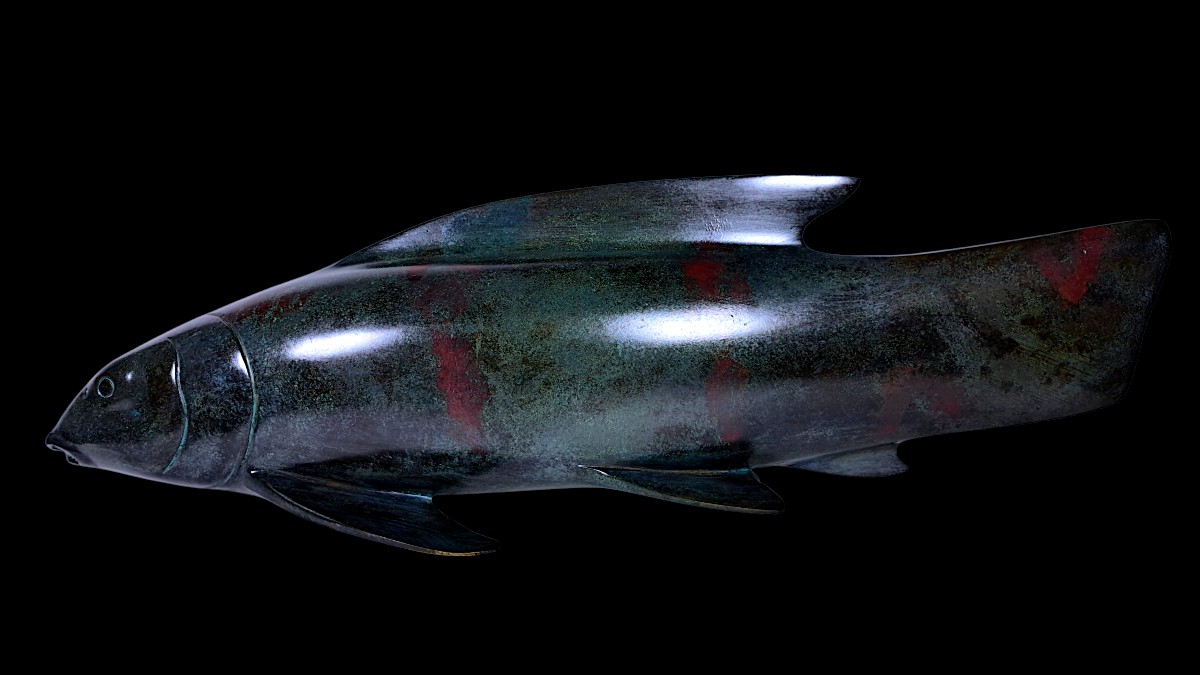
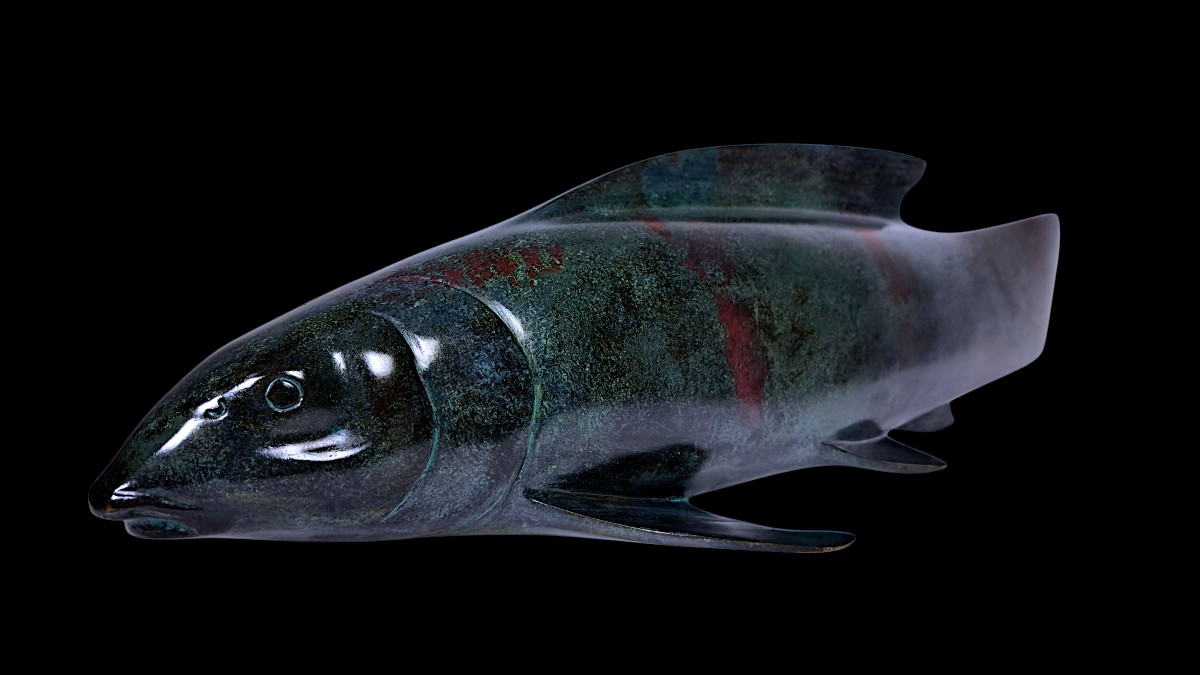
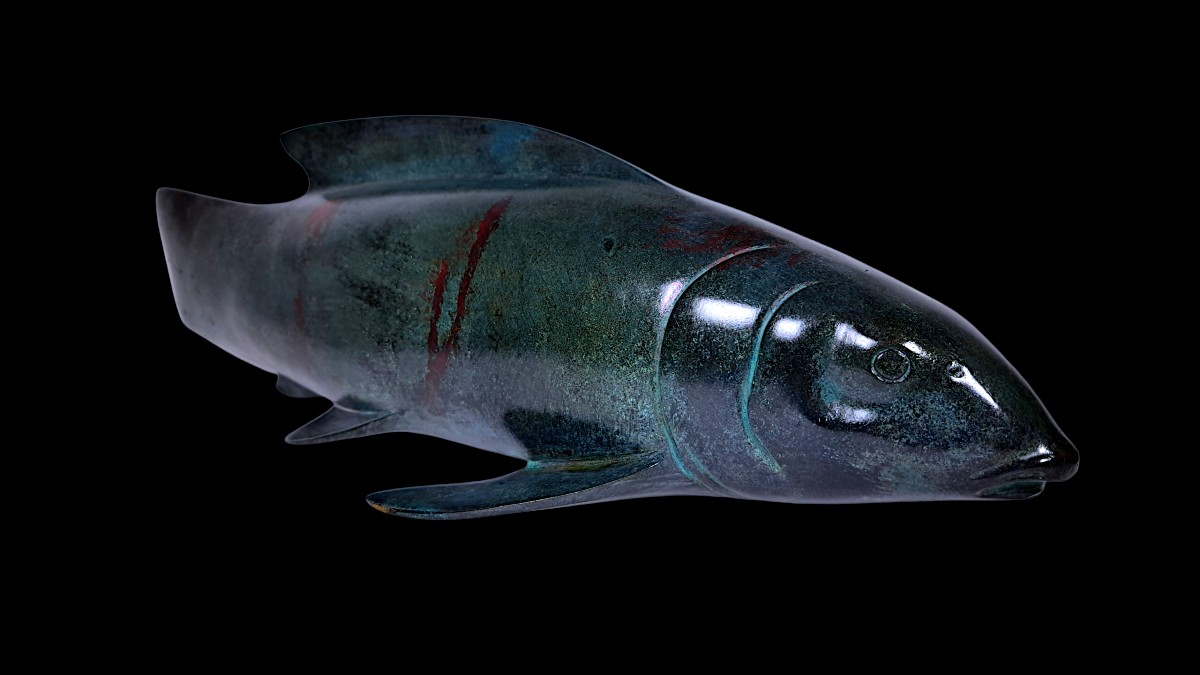
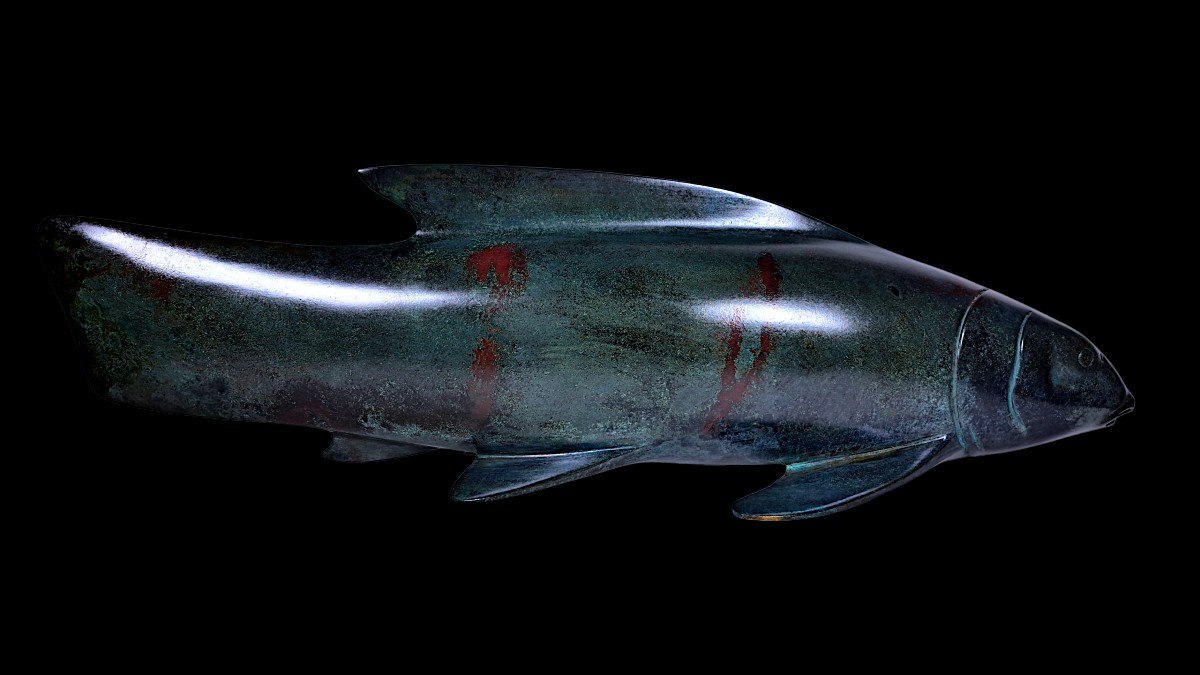
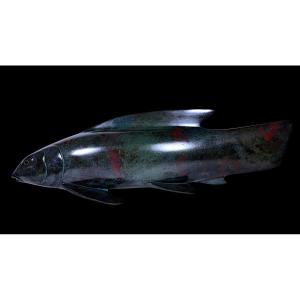


Exquisitely crafted and beautifully patinated, this elegant bronze fish exemplifies the refined sculptural language of Ōta Ryohei, one of the most prominent Japanese sculptors of the Nitten (Japan Fine Arts Exhibition) movement in the mid-20th century. Its elongated form, gently widening towards the midsection and tapering to a finely curved tail fin, creates a striking impression of hydrodynamic movement. The artist's sculptural mastery is evident in the subtle balance between stylized abstraction and observed naturalism: the anatomical lines of the head and gills are rendered with minimal yet assured precision, while the dorsal fin, with its characteristic backward movement, reinforces the sense of motion. The surface is adorned with a rich, mottled patina—deep greens interwoven with subtle reds—evoking the iridescent reflections of a koi carp gliding underwater. This nuanced coloring is a signature of Ryohei's bronzes, achieved through a masterful hot patination and layering techniques traditionally acquired within the Japanese metalworking tradition. An object of sculptural purity and contemplative beauty, this bronze is an excellent example of the artist's mature style and of mid-20th-century Japanese bronze art as a whole.
Ōta Ryohei (1913–1997) was born in Yanagawa (present-day Date), Fukushima Prefecture, and established himself as a talented sculptor within the highly competitive Japanese art world of the Shōwa era. In 1931, he began formal training in sculpture under Miki Sōsaku, which he later continued under two major figures in Japanese sculpture: Kitamura Seibō, famous for his Nagasaki Peace Statue, and Fujino Shunsei, an influential teacher of figurative sculpture. Ōta exhibited for the first time at the prestigious Bunten (Imperial Art Exhibition) in 1936, and then at the Shin-Bunten in 1939. After the war, he became a regular participant in the Nitten, the most important national art exhibition that defined the cultural prestige of modern Japan. Among his accolades was the Asakura Prize at the 9th Nitten (1953)—one of the highest awards a sculptor could receive at the time. Special mention goes to Shūdōni Vincentia (1954), which contributed to his growing national renown. He was subsequently appointed a member of the Nitten (National Council of Artists), a jury member, and later Sanyō (Executive Advisor). Throughout the postwar period, Ōta produced a considerable body of sculptural work—figures, religious subjects, and refined depictions of animals—in wood and bronze. His bronzes, particularly his stylized koi carp and aquatic animals, were admired for their serene elegance and masterful patina.
Today, over 300 of Ōta's works are preserved at the Yanagawa/Date City Museum, which houses a dedicated memorial collection, the "Ōta Ryohei Memorial." Public monuments and bronzes throughout Fukushima Prefecture also attest to his cultural significance. His signed bronze sculptures remain highly sought-after pieces in Japanese and international collections of 20th-century sculpture.
The Japanese carp, or koi, symbolizes a fighting spirit due to its robustness. However, since "koi" is synonymous with the Japanese word for "love," it can also evoke, linguistically, soothing beauty and romance. Many of its attributes symbolize prosperity and success, and echo several life lessons. The koi carp possesses a powerful and energetic life force, illustrated by its ability to swim against the current and even upstream. Characteristics associated with the koi carp include luck, success, prosperity, longevity, courage, ambition, and perseverance.
This sculpture is sold with its original box (tomobako).
Ōta Ryohei (1913–1997) was born in Yanagawa (present-day Date), Fukushima Prefecture, and established himself as a talented sculptor within the highly competitive Japanese art world of the Shōwa era. In 1931, he began formal training in sculpture under Miki Sōsaku, which he later continued under two major figures in Japanese sculpture: Kitamura Seibō, famous for his Nagasaki Peace Statue, and Fujino Shunsei, an influential teacher of figurative sculpture. Ōta exhibited for the first time at the prestigious Bunten (Imperial Art Exhibition) in 1936, and then at the Shin-Bunten in 1939. After the war, he became a regular participant in the Nitten, the most important national art exhibition that defined the cultural prestige of modern Japan. Among his accolades was the Asakura Prize at the 9th Nitten (1953)—one of the highest awards a sculptor could receive at the time. Special mention goes to Shūdōni Vincentia (1954), which contributed to his growing national renown. He was subsequently appointed a member of the Nitten (National Council of Artists), a jury member, and later Sanyō (Executive Advisor). Throughout the postwar period, Ōta produced a considerable body of sculptural work—figures, religious subjects, and refined depictions of animals—in wood and bronze. His bronzes, particularly his stylized koi carp and aquatic animals, were admired for their serene elegance and masterful patina.
Today, over 300 of Ōta's works are preserved at the Yanagawa/Date City Museum, which houses a dedicated memorial collection, the "Ōta Ryohei Memorial." Public monuments and bronzes throughout Fukushima Prefecture also attest to his cultural significance. His signed bronze sculptures remain highly sought-after pieces in Japanese and international collections of 20th-century sculpture.
The Japanese carp, or koi, symbolizes a fighting spirit due to its robustness. However, since "koi" is synonymous with the Japanese word for "love," it can also evoke, linguistically, soothing beauty and romance. Many of its attributes symbolize prosperity and success, and echo several life lessons. The koi carp possesses a powerful and energetic life force, illustrated by its ability to swim against the current and even upstream. Characteristics associated with the koi carp include luck, success, prosperity, longevity, courage, ambition, and perseverance.
This sculpture is sold with its original box (tomobako).
Explore similar pieces and discover your ideal find:
Asian Bronze Sculptures