THIS OBJECT WAS SOLD
Antique Kodak No. 2 Folding Brownie Model A Folding Camera. Usa, Circa 1905
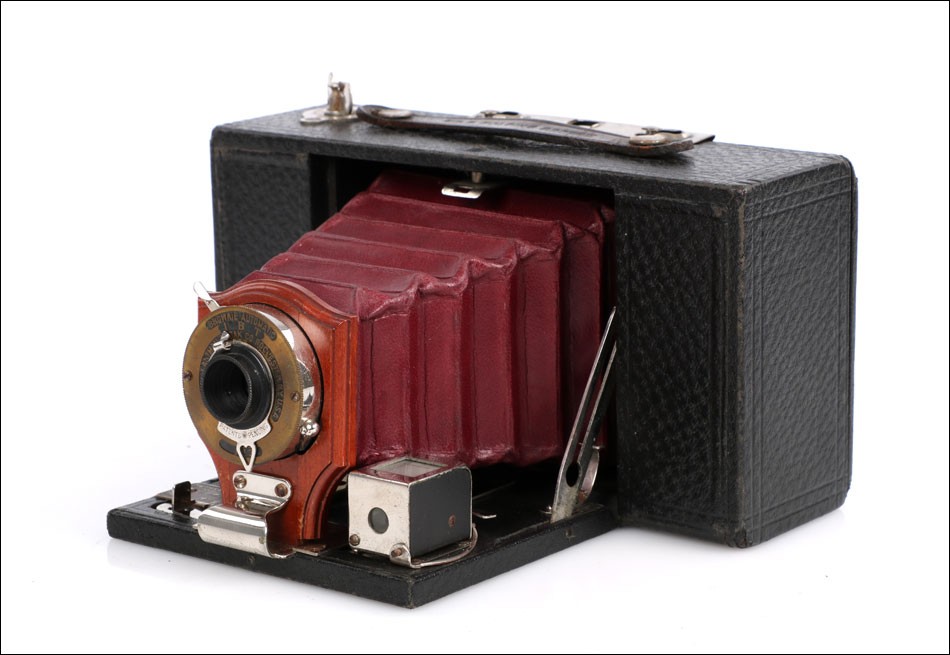
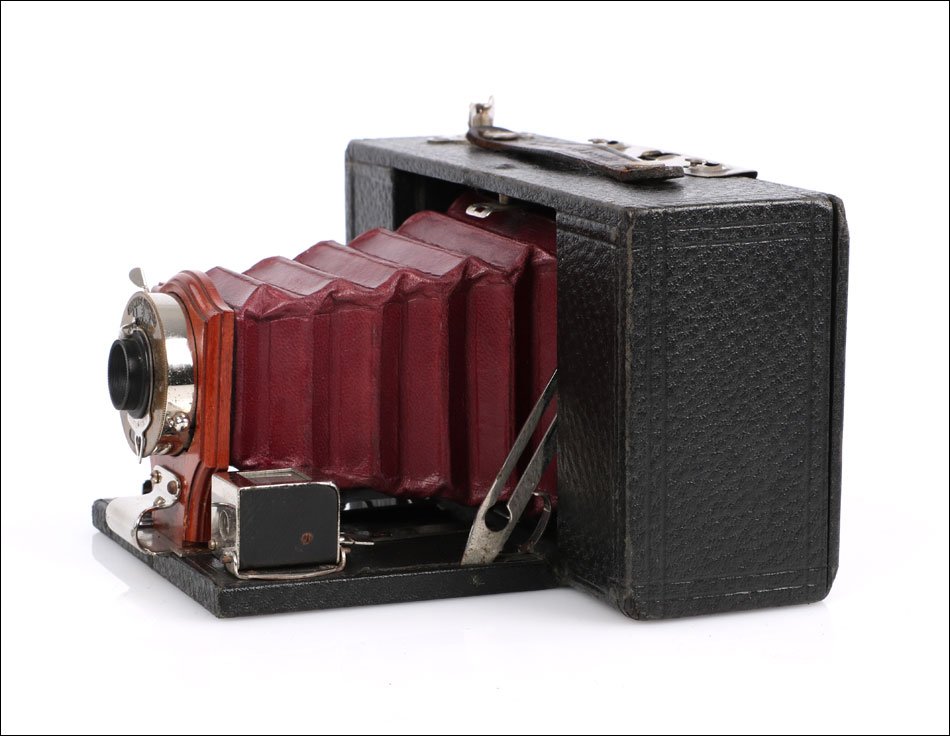
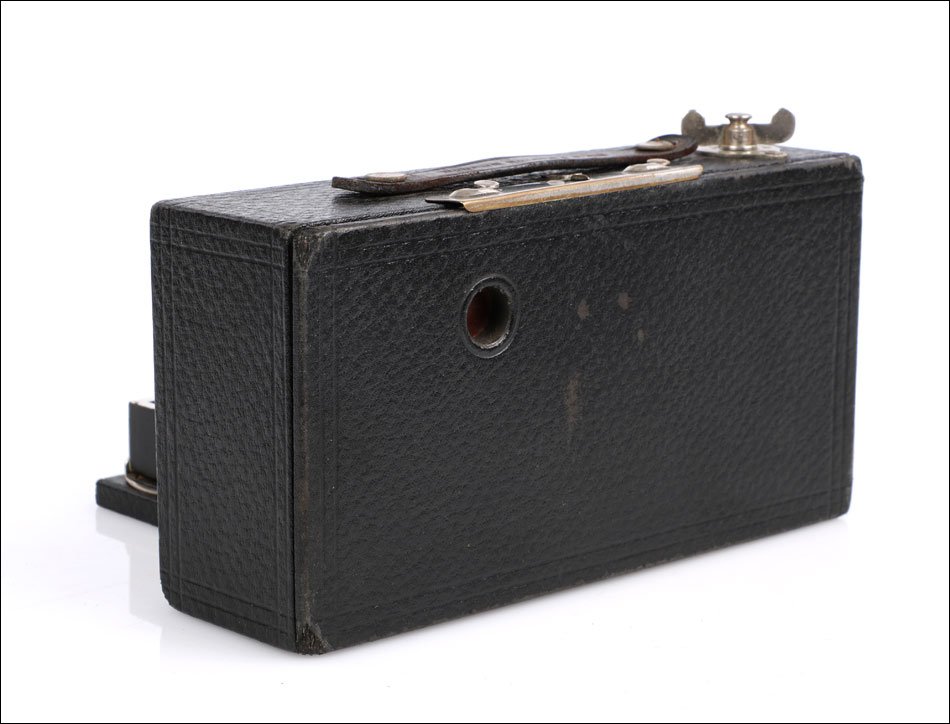
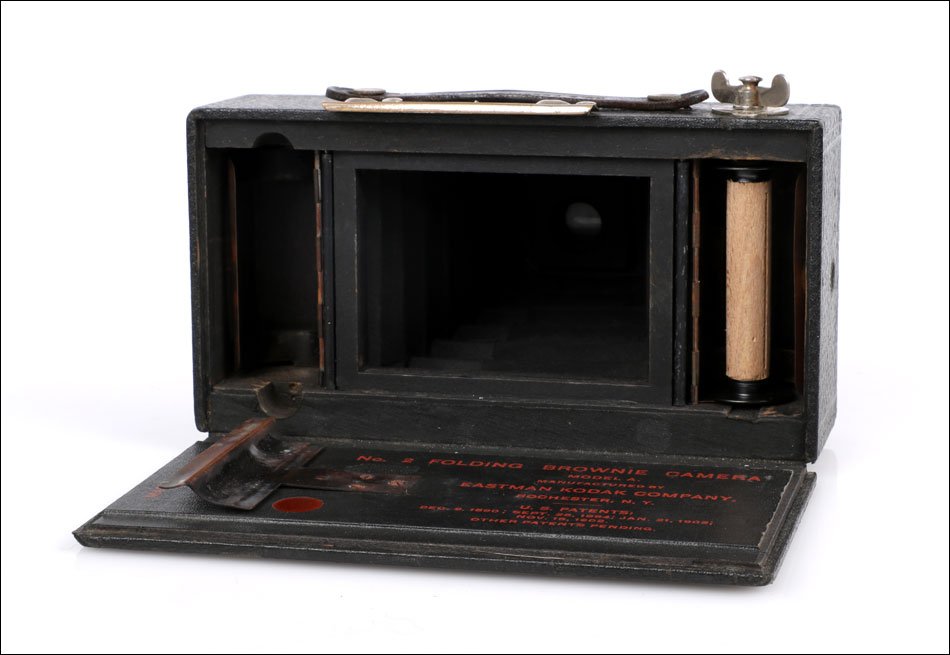
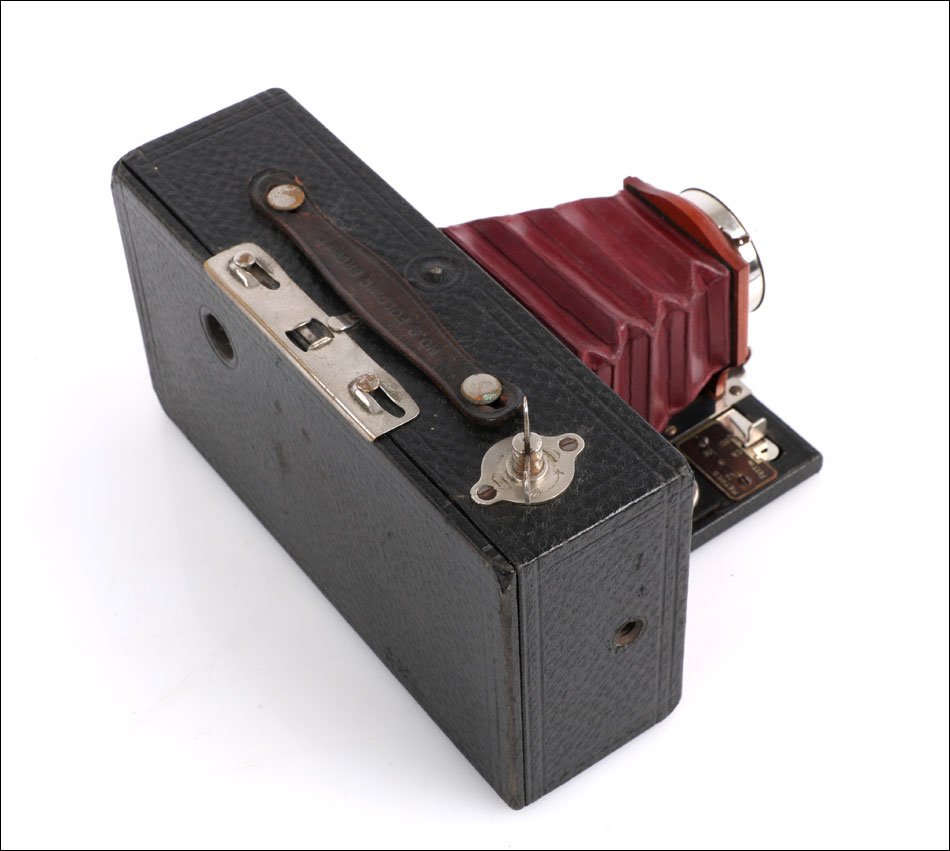
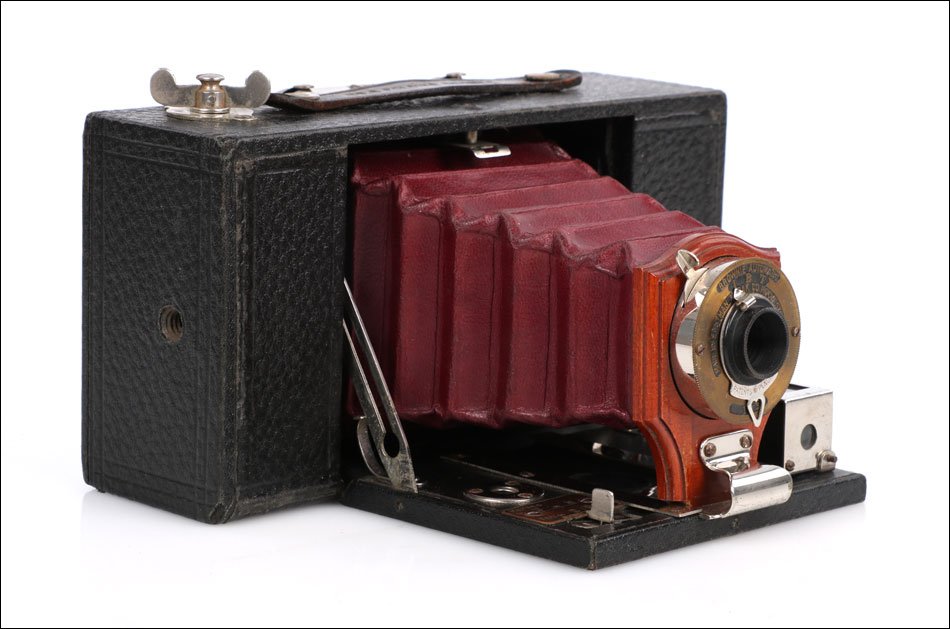
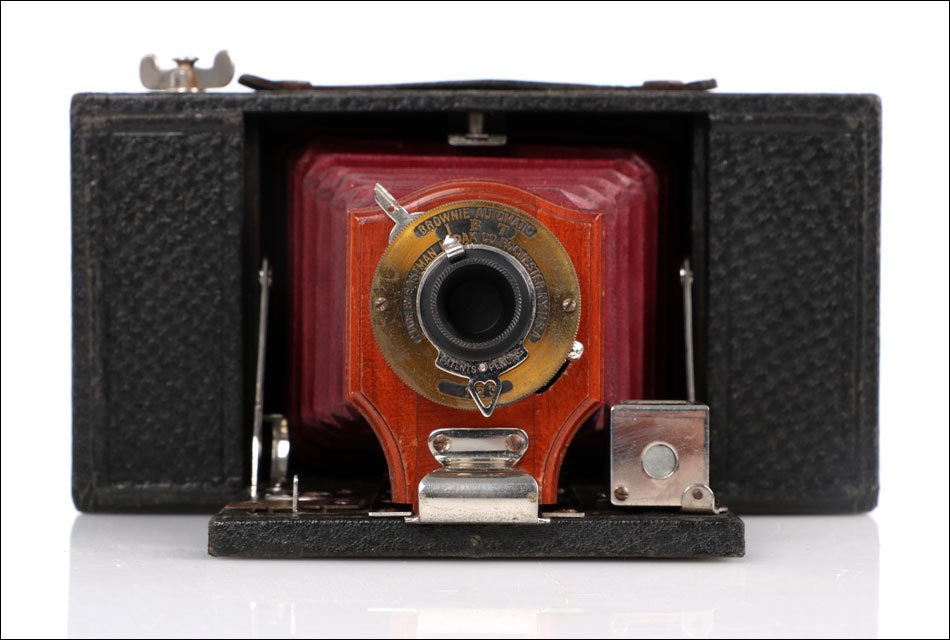
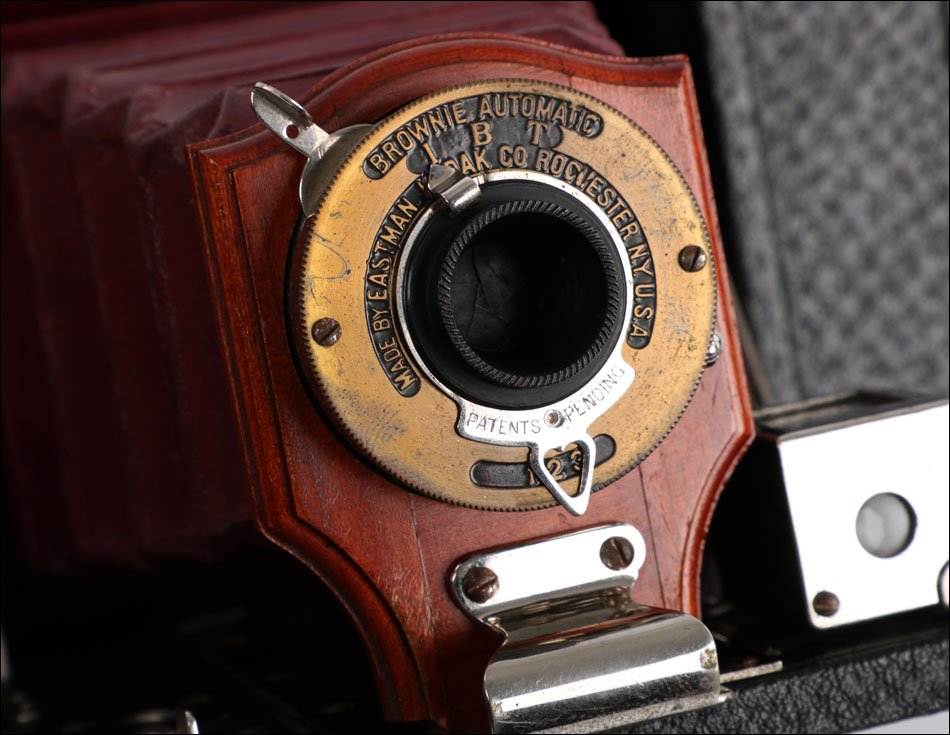
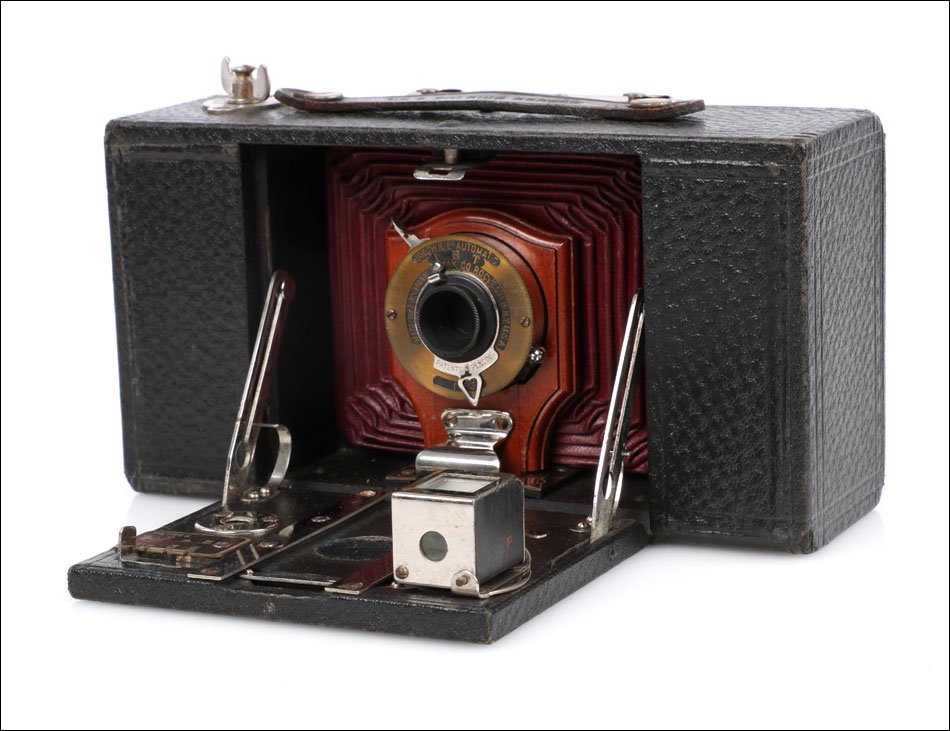
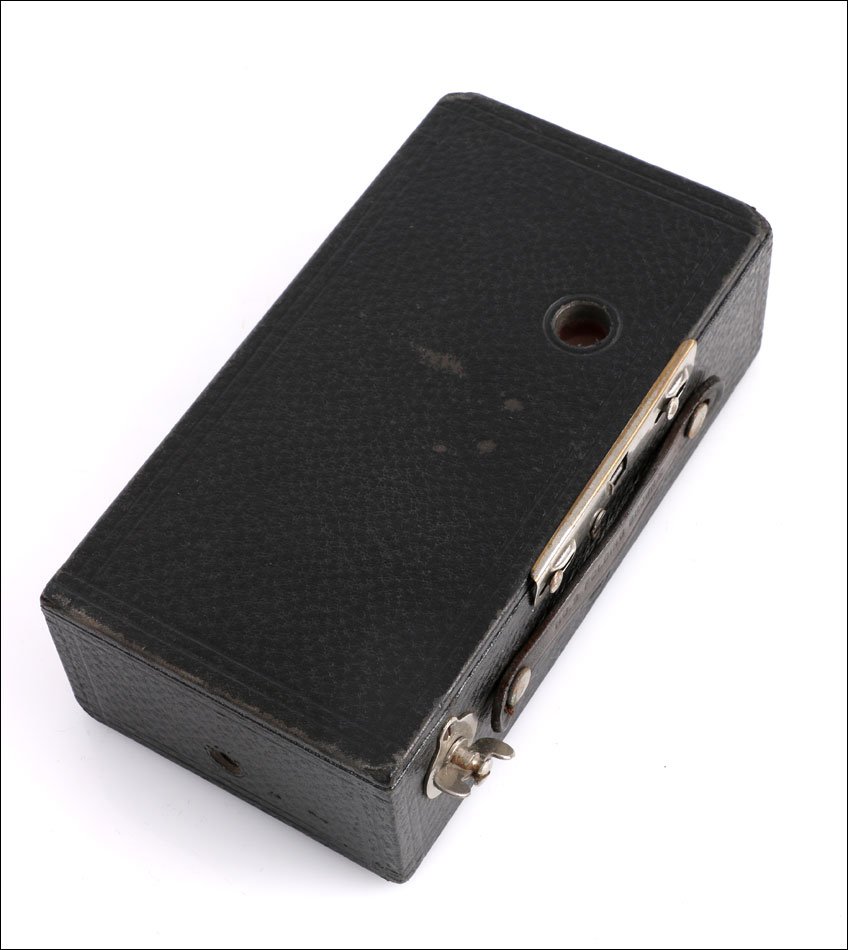


This beautiful Kodak No. 2 Folding Brownie Model A camera, manufactured in the United States around 1905, belongs to the first stage of production of this emblematic model and stands out especially for preserving its characteristic varnished wooden front, an element found only in the earliest series produced between 1904 and approximately 1907–1909. The presence of this wooden standard, later replaced by a metal one in the following years, makes the piece highly desirable among collectors seeking early versions with construction details that later disappeared. The reddish finish of the wood contrasts with the deep burgundy tone of the folding bellows, preserved in magnificent condition and fully functional, which is a highly appreciated feature in cameras more than a century old. The set maintains the solid elegance of early Kodaks, with its body covered in grained leather and well-preserved metal fittings.
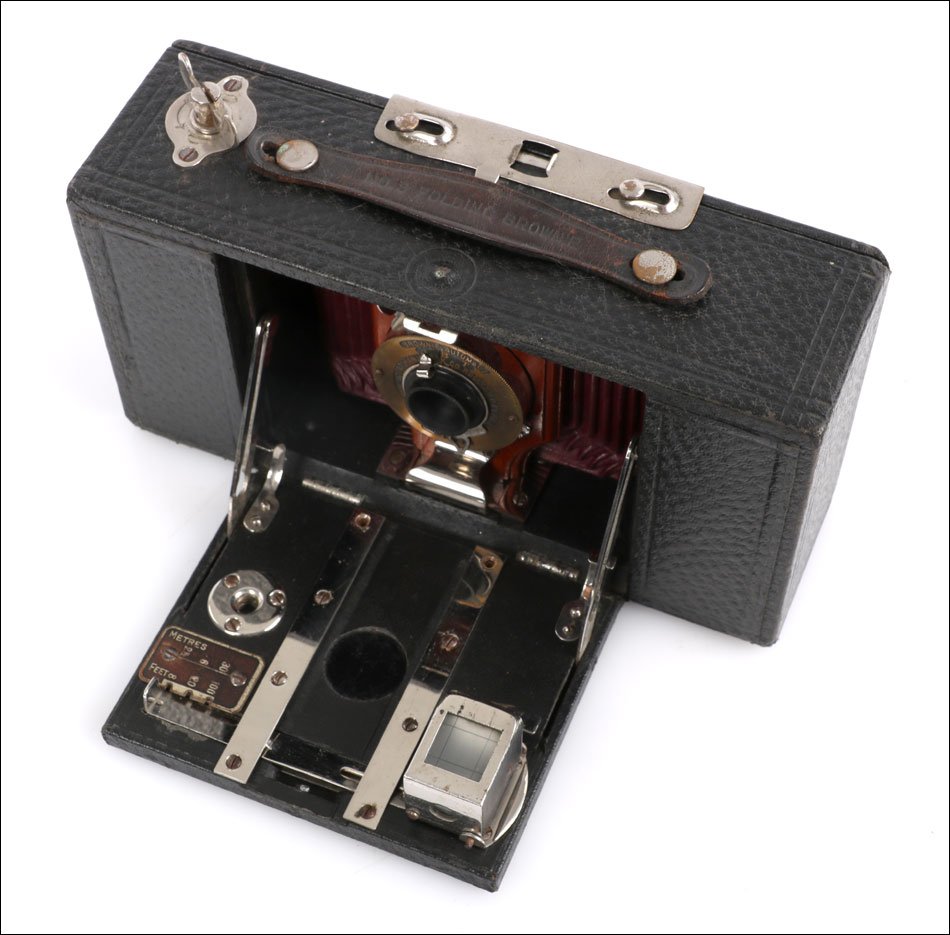
The camera is designed for 124 mm film format, a format now discontinued but very relevant in the history of Eastman Kodak, as it formed part of the global expansion of the concept “You press the button, we do the rest”. Its construction reveals a balanced combination of wood, nickel-plated metal and vulcanized leather surfaces, materials characteristic of the brand during the early years of the twentieth century. The burgundy bellows remains flexible and without signs of deterioration, with the structure perfectly sealed and without light leaks. The cube-type viewfinder, a feature typical of the early Model A versions prior to later simplifications, is also complete and clear. The original upper leather strap retains its integrity, a detail not commonly seen in cameras of this period, as many have lost this piece or present later replacements.
The Brownie Automatic shutter is in working condition. This type of shutter, present in the earliest Folding Brownies, is an important component for understanding the evolution of Kodak’s compact shutter systems. The wooden front, in addition to being a unique aesthetic feature, confirms the early manufacturing stage that preceded the widespread use of metal, a change Kodak introduced progressively between 1907 and 1909. Finding an example with this original finish and with such consistent preservation is particularly valuable for the specialized collector.
The interior of the camera shows an outstanding level of cleanliness and preservation; both the spool guide and the winding mechanism are intact and operational. The structure remains without deformation, the latch works correctly and the hinges move smoothly. The interior flap preserves the original inscriptions in red ink, with the 1890, 1894, 1902 and 1902 patents, all completely legible. These details add authenticity and offer a direct reference to the historical moment in which this camera was conceived.
For its exceptional aesthetics, its importance in the early history of Kodak and its surprising integrity, this camera is a magnificent opportunity for any enthusiast of antique photography. It enhances any display case, shelf or space dedicated to the history of imagery, adding character and technical charm. A piece that is not only contemplated: it is enjoyed knowing that it formed part of the birth of popular photography at the beginning of the twentieth century. Acquiring an early example such as this guarantees stable and increasing value, since versions with wooden fronts are increasingly difficult to find in this level of preservation.
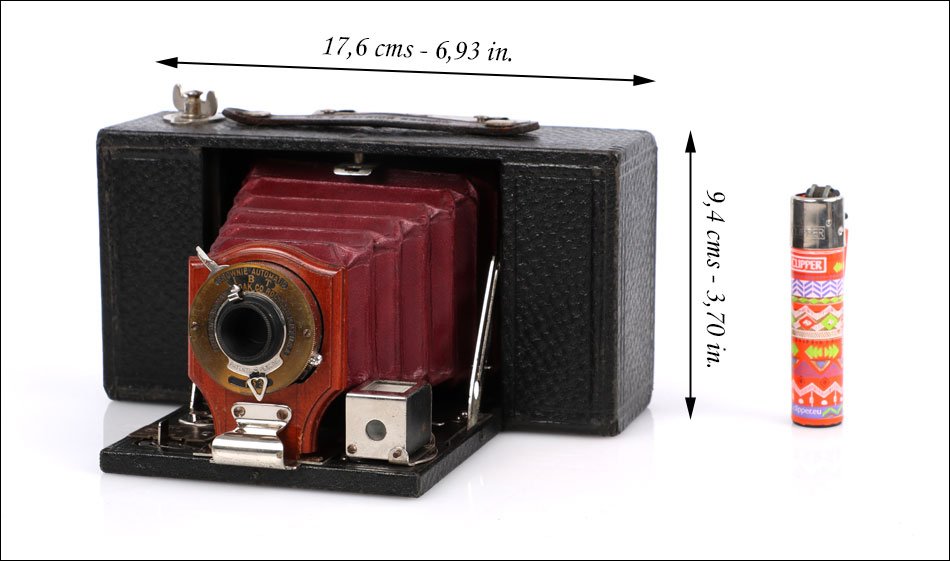
Measurements: 17.6 cm (6.93 in) x 9.4 cm (3.70 in).
History of the Kodak No. 2 Folding Brownie
The Kodak No. 2 Folding Brownie belonged to a generation of cameras that played an essential role in the popularization of domestic photography at the beginning of the twentieth century. Eastman Kodak Company, founded by George Eastman in Rochester, New York, had already transformed the photographic world at the end of the nineteenth century through its simple and affordable camera systems combined with roll film. The company’s philosophy was summed up in its famous phrase: “You press the button, we do the rest”, an idea that revolutionized the way families documented their daily lives.
The Brownie series, launched initially in 1900, marked a turning point in the history of accessible photography. The Brownies allowed virtually anyone to take photographs without the need for technical knowledge. The No. 2 Folding Brownie model appeared in 1904 as a more advanced and elegant evolution of the classic box-type Brownies, incorporating a folding bellows, a wooden or metal front standard and a more refined shutter. This combination offered portability, aesthetics and superior performance, making it one of the most popular folding cameras of the era.
The importance of this model also lies in its role in the refinement of Kodak’s folding camera design, a line that led to the creation of numerous iconic cameras in the decades that followed. The early versions with wooden fronts are particularly appreciated today because they represent the transitional moment between nineteenth-century craftsmanship and the more industrialized production of the twentieth century. The use of 124 mm film, now discontinued, reflects the historical nature of the model and its contribution to the development of standardized formats. In sum, the Folding Brownie cameras represent a key chapter in the democratization of photography and in the evolution of portable camera design. We are professional antique dealers. To see more photos of this item, Please click on this link:
https://www.antiguedades.es/en/antique-cameras/5369-antique-kodak-no-2-folding-brownie-model-a-folding-camera-usa-c-1905.html
The camera is designed for 124 mm film format, a format now discontinued but very relevant in the history of Eastman Kodak, as it formed part of the global expansion of the concept “You press the button, we do the rest”. Its construction reveals a balanced combination of wood, nickel-plated metal and vulcanized leather surfaces, materials characteristic of the brand during the early years of the twentieth century. The burgundy bellows remains flexible and without signs of deterioration, with the structure perfectly sealed and without light leaks. The cube-type viewfinder, a feature typical of the early Model A versions prior to later simplifications, is also complete and clear. The original upper leather strap retains its integrity, a detail not commonly seen in cameras of this period, as many have lost this piece or present later replacements.
The Brownie Automatic shutter is in working condition. This type of shutter, present in the earliest Folding Brownies, is an important component for understanding the evolution of Kodak’s compact shutter systems. The wooden front, in addition to being a unique aesthetic feature, confirms the early manufacturing stage that preceded the widespread use of metal, a change Kodak introduced progressively between 1907 and 1909. Finding an example with this original finish and with such consistent preservation is particularly valuable for the specialized collector.
The interior of the camera shows an outstanding level of cleanliness and preservation; both the spool guide and the winding mechanism are intact and operational. The structure remains without deformation, the latch works correctly and the hinges move smoothly. The interior flap preserves the original inscriptions in red ink, with the 1890, 1894, 1902 and 1902 patents, all completely legible. These details add authenticity and offer a direct reference to the historical moment in which this camera was conceived.
For its exceptional aesthetics, its importance in the early history of Kodak and its surprising integrity, this camera is a magnificent opportunity for any enthusiast of antique photography. It enhances any display case, shelf or space dedicated to the history of imagery, adding character and technical charm. A piece that is not only contemplated: it is enjoyed knowing that it formed part of the birth of popular photography at the beginning of the twentieth century. Acquiring an early example such as this guarantees stable and increasing value, since versions with wooden fronts are increasingly difficult to find in this level of preservation.
Measurements: 17.6 cm (6.93 in) x 9.4 cm (3.70 in).
History of the Kodak No. 2 Folding Brownie
The Kodak No. 2 Folding Brownie belonged to a generation of cameras that played an essential role in the popularization of domestic photography at the beginning of the twentieth century. Eastman Kodak Company, founded by George Eastman in Rochester, New York, had already transformed the photographic world at the end of the nineteenth century through its simple and affordable camera systems combined with roll film. The company’s philosophy was summed up in its famous phrase: “You press the button, we do the rest”, an idea that revolutionized the way families documented their daily lives.
The Brownie series, launched initially in 1900, marked a turning point in the history of accessible photography. The Brownies allowed virtually anyone to take photographs without the need for technical knowledge. The No. 2 Folding Brownie model appeared in 1904 as a more advanced and elegant evolution of the classic box-type Brownies, incorporating a folding bellows, a wooden or metal front standard and a more refined shutter. This combination offered portability, aesthetics and superior performance, making it one of the most popular folding cameras of the era.
The importance of this model also lies in its role in the refinement of Kodak’s folding camera design, a line that led to the creation of numerous iconic cameras in the decades that followed. The early versions with wooden fronts are particularly appreciated today because they represent the transitional moment between nineteenth-century craftsmanship and the more industrialized production of the twentieth century. The use of 124 mm film, now discontinued, reflects the historical nature of the model and its contribution to the development of standardized formats. In sum, the Folding Brownie cameras represent a key chapter in the democratization of photography and in the evolution of portable camera design. We are professional antique dealers. To see more photos of this item, Please click on this link:
https://www.antiguedades.es/en/antique-cameras/5369-antique-kodak-no-2-folding-brownie-model-a-folding-camera-usa-c-1905.html
Explore similar pieces and discover your ideal find:
Photographs