THIS OBJECT WAS SOLD
Japanese Katana Sword - Late Muromachi Period (16th Century) With Nbthk Certificate.


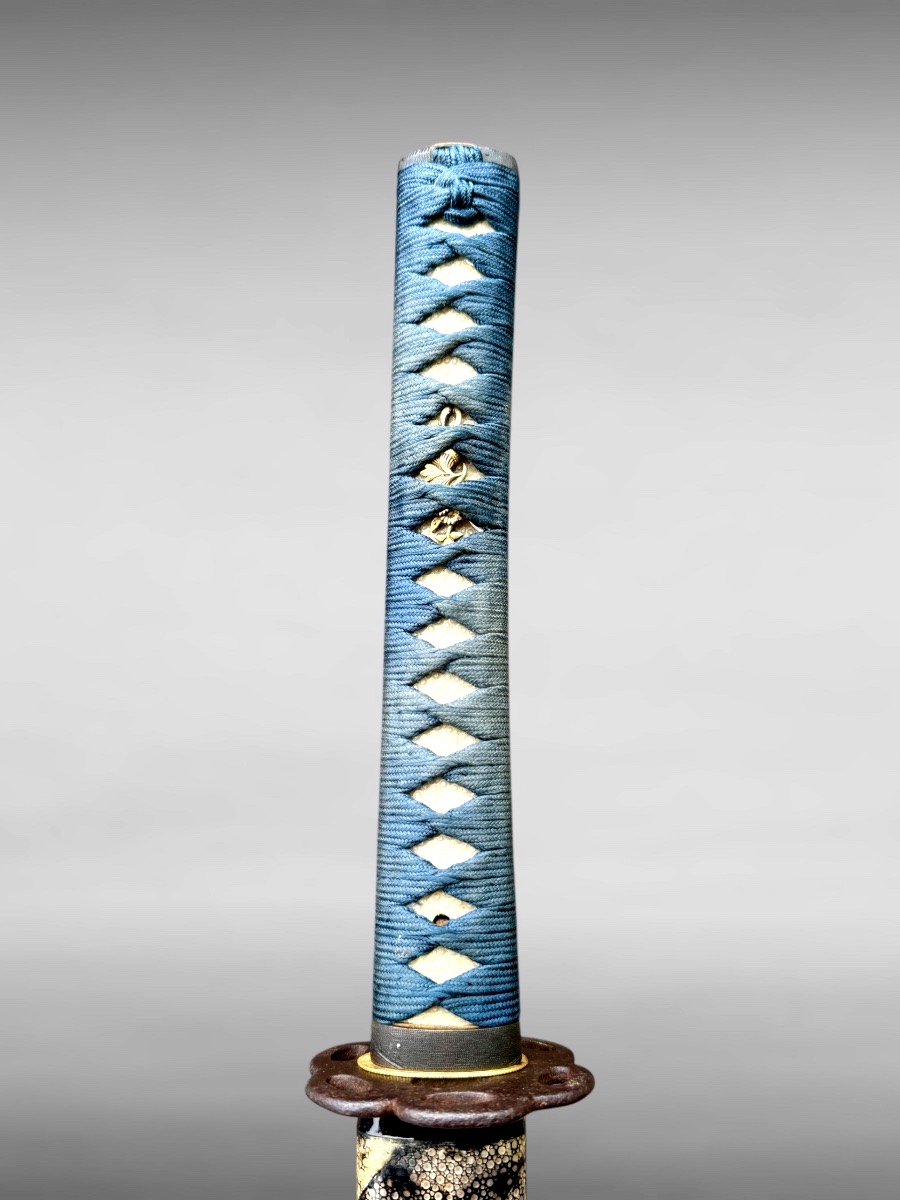
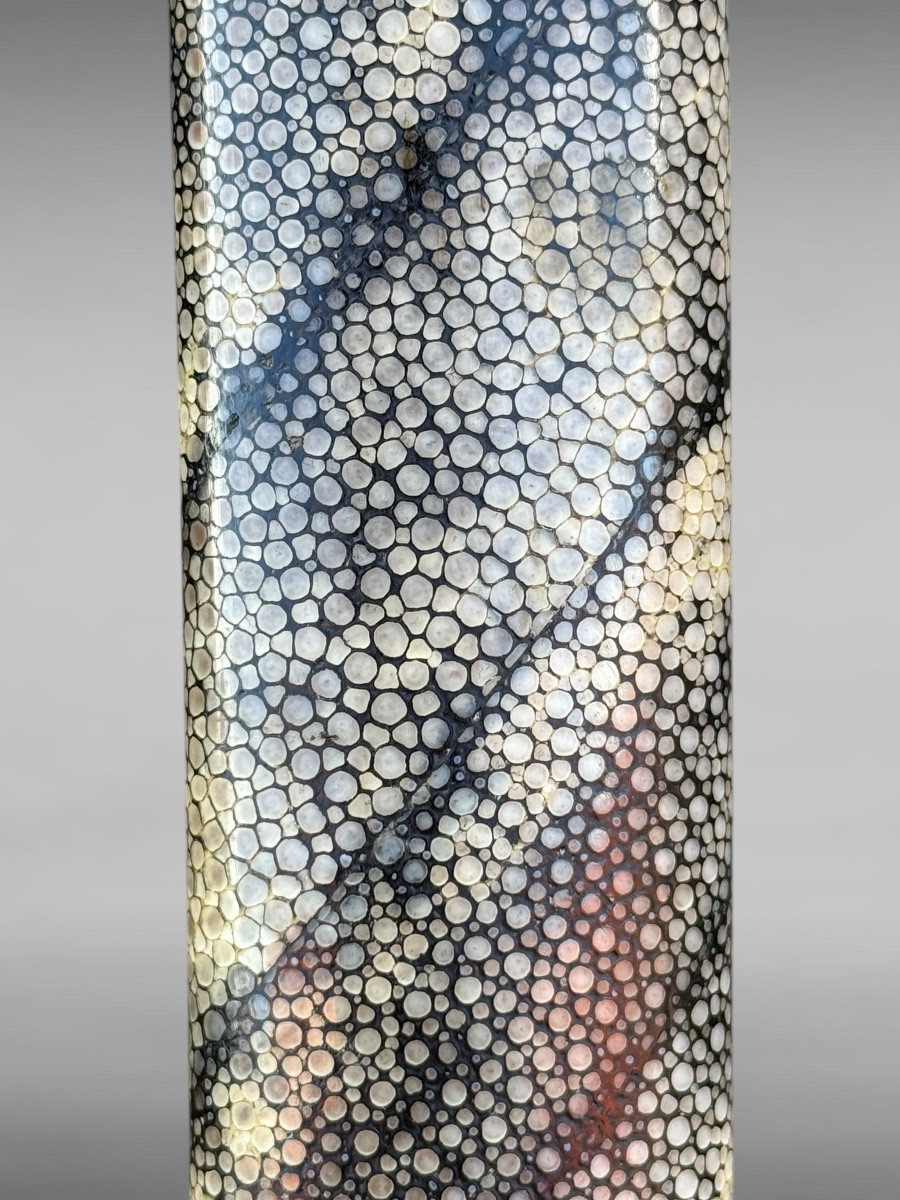

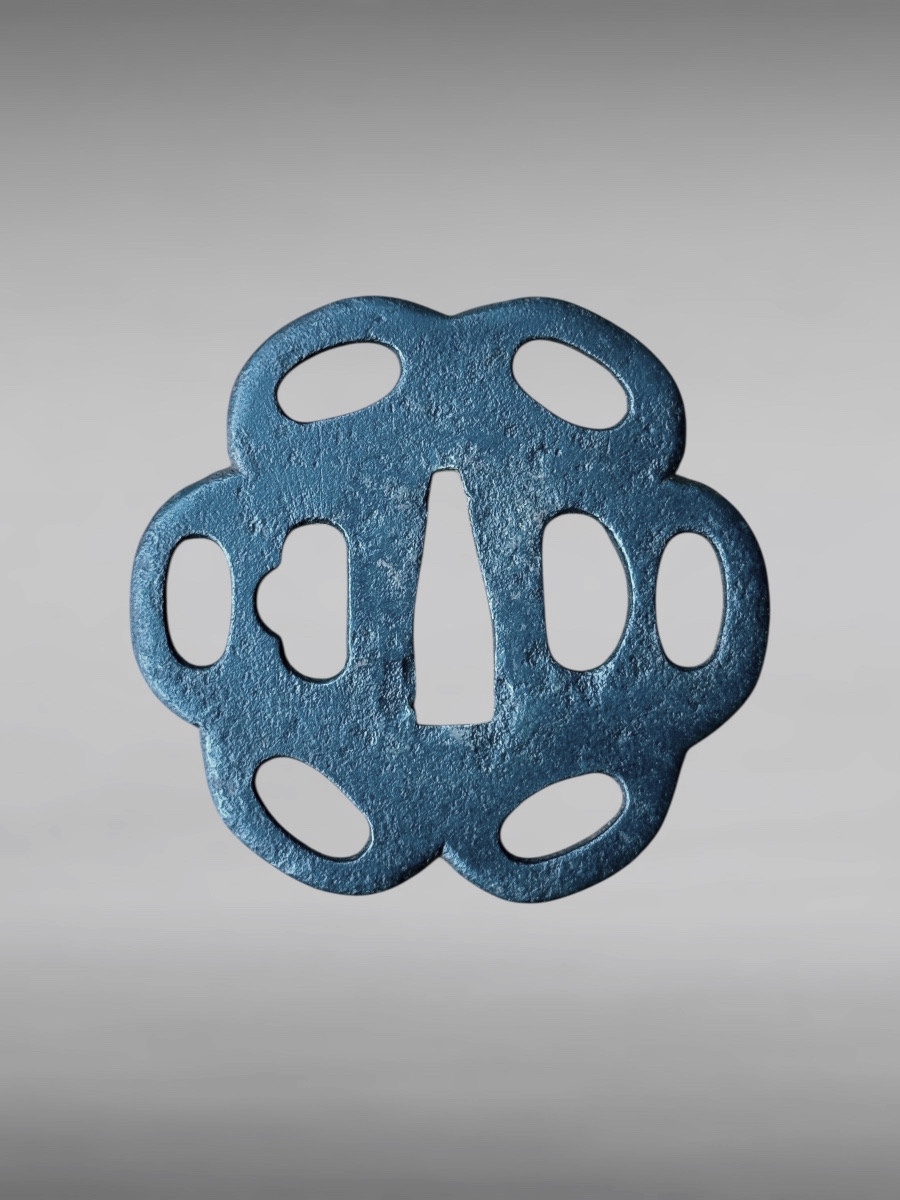
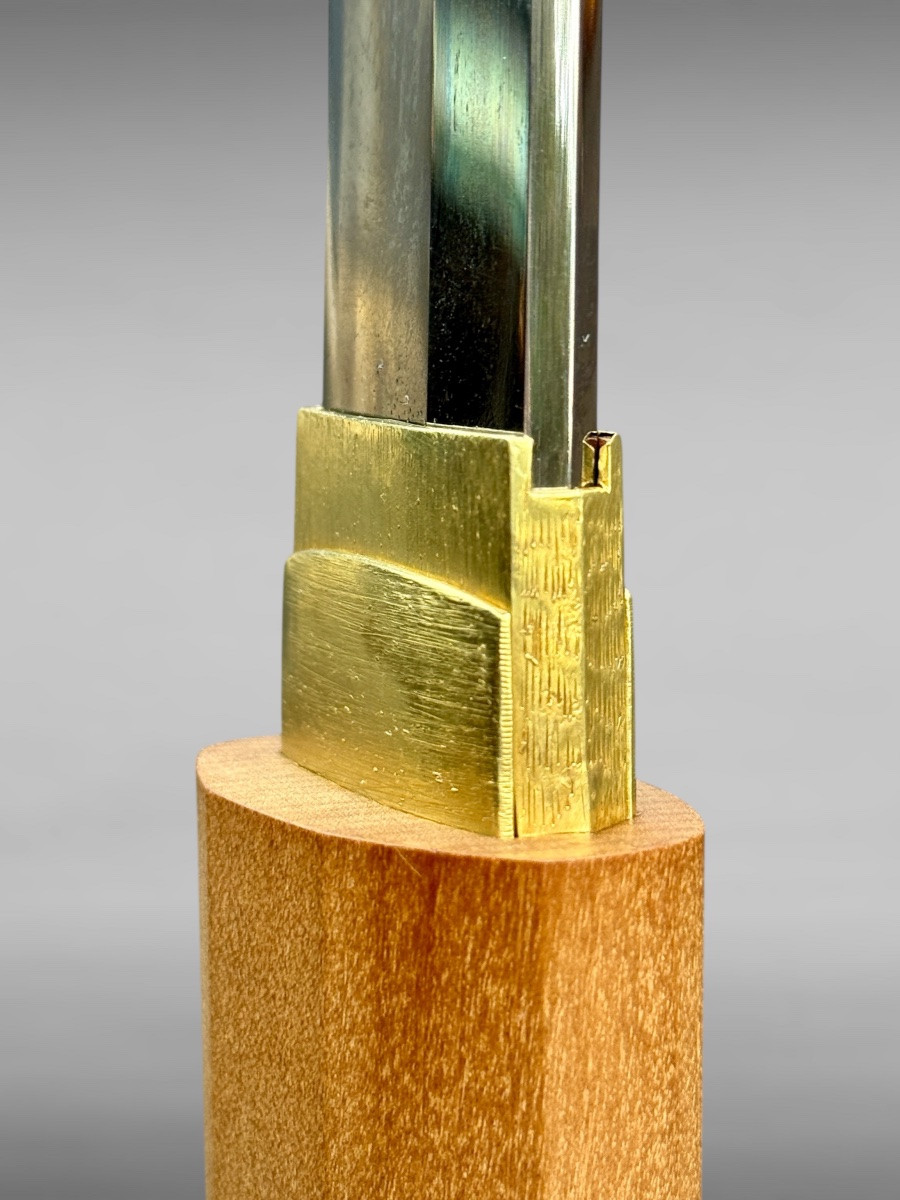


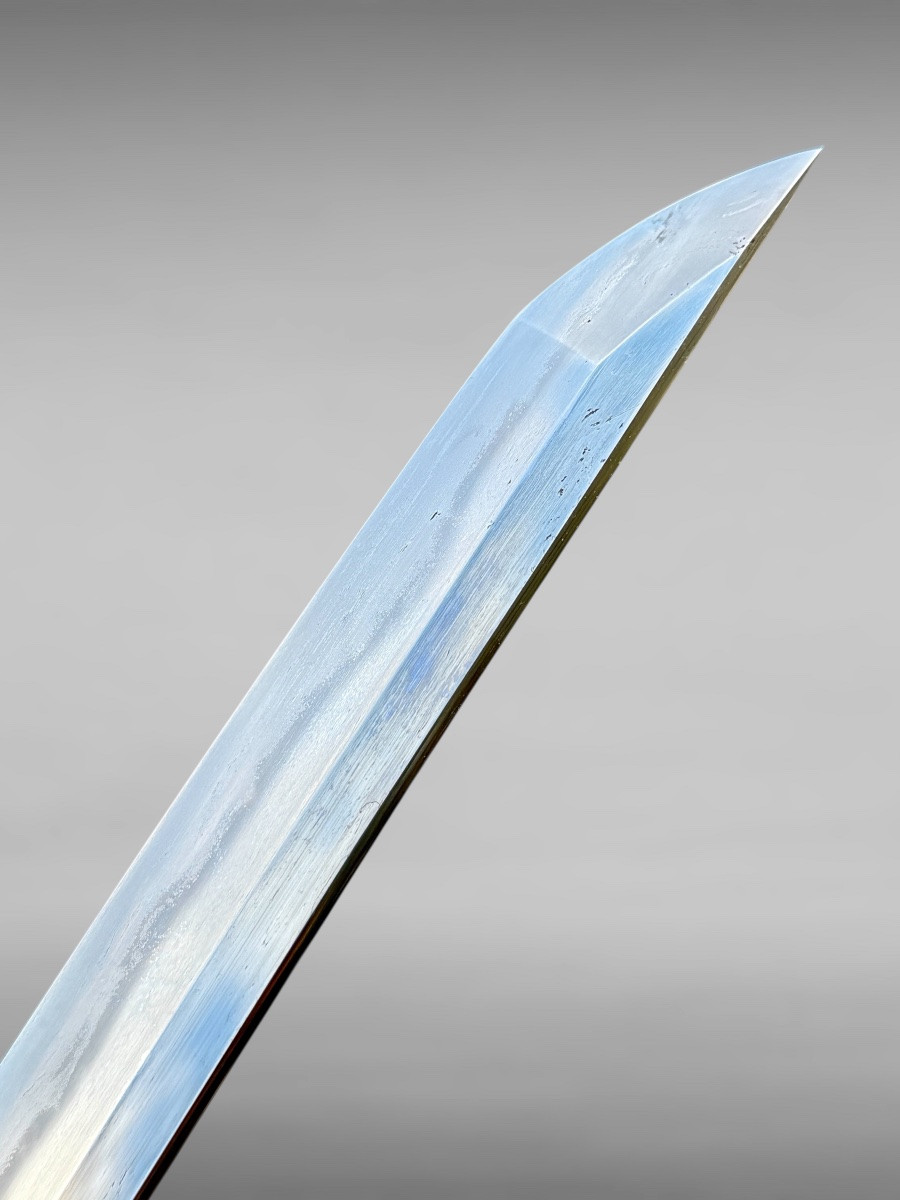

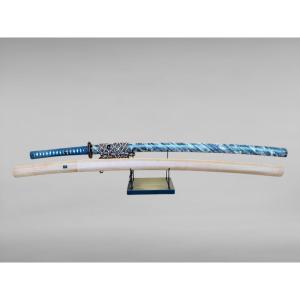


JAPAN - Late Muromachi period (16th century). Samurai katana with shirasaya handle. The patinated copper fushi-kashira depicts a map amidst foaming waves on a nanako background. The wooden tsuka is covered with ray skin and a light blue silk braid. The menuki are made of chased and gilded copper featuring stylized chrysanthemums. The kiku-gata forged iron tsuba has six openwork lobes. The saya is made of wood covered in black and white shagreen. The double habaki is made of gilded metal decorated with vertical and horizontal striations. The blade is straight, with a regular, straight, and well-defined hamon. The tang has one or four holes, and the tang is attributed to the Kanefusa school. Sold with its stand, silk carrying case, and NBTHK Hozon certificate. NBTHK, also known as Nihon Bijutsu Touken Hozon Kyokai (the Society for the Preservation of Japanese Art Swords), is one of the oldest Japanese sword evaluation organizations in modern Japan. Dimensions: 105 x 7 x 8 cm. Blade length: 91 cm. Edge length: 69.8 cm. Curvature (sori): 1.2 cm. Weight: 700 g. Notes: Kanefusa was a group of sword smiths from the Yamato region. Notable smiths such as Nanto-ju Masazane, Masatsugu, and Masasada were particularly active within this school. They were especially skilled in spear making. Many bladed weapons of the Kanebo school resemble the crude style of the Dotanuki school, Nanto-ju Kanefusa Hyobu-no-jo Masatsugu which inherited the Tegai tradition and produced many high-quality swords.
Explore similar pieces and discover your ideal find:
Edged Weapons