THIS OBJECT WAS SOLD
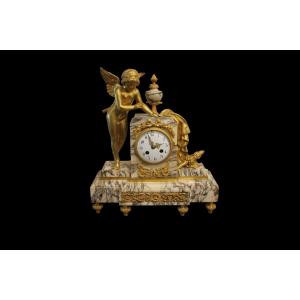
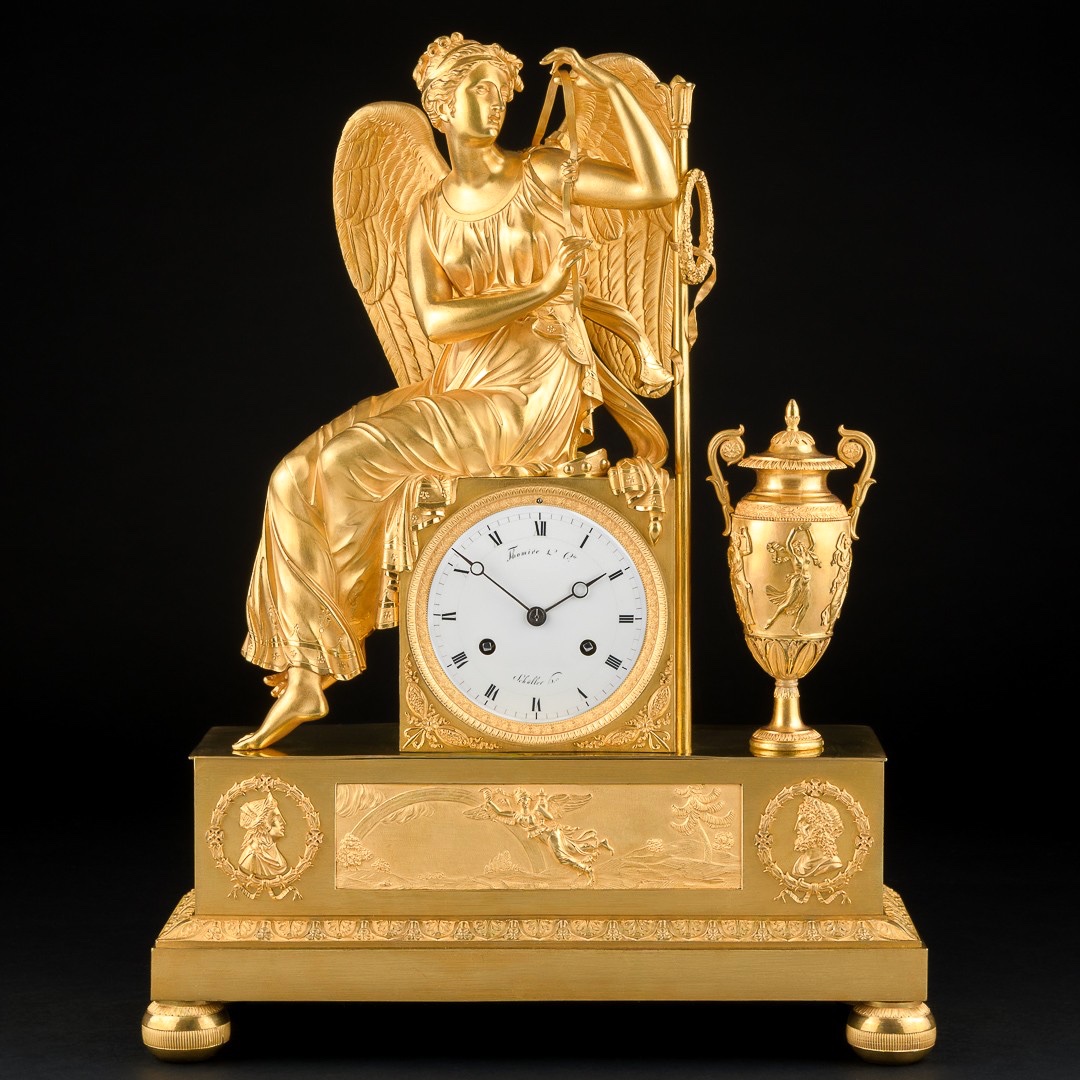
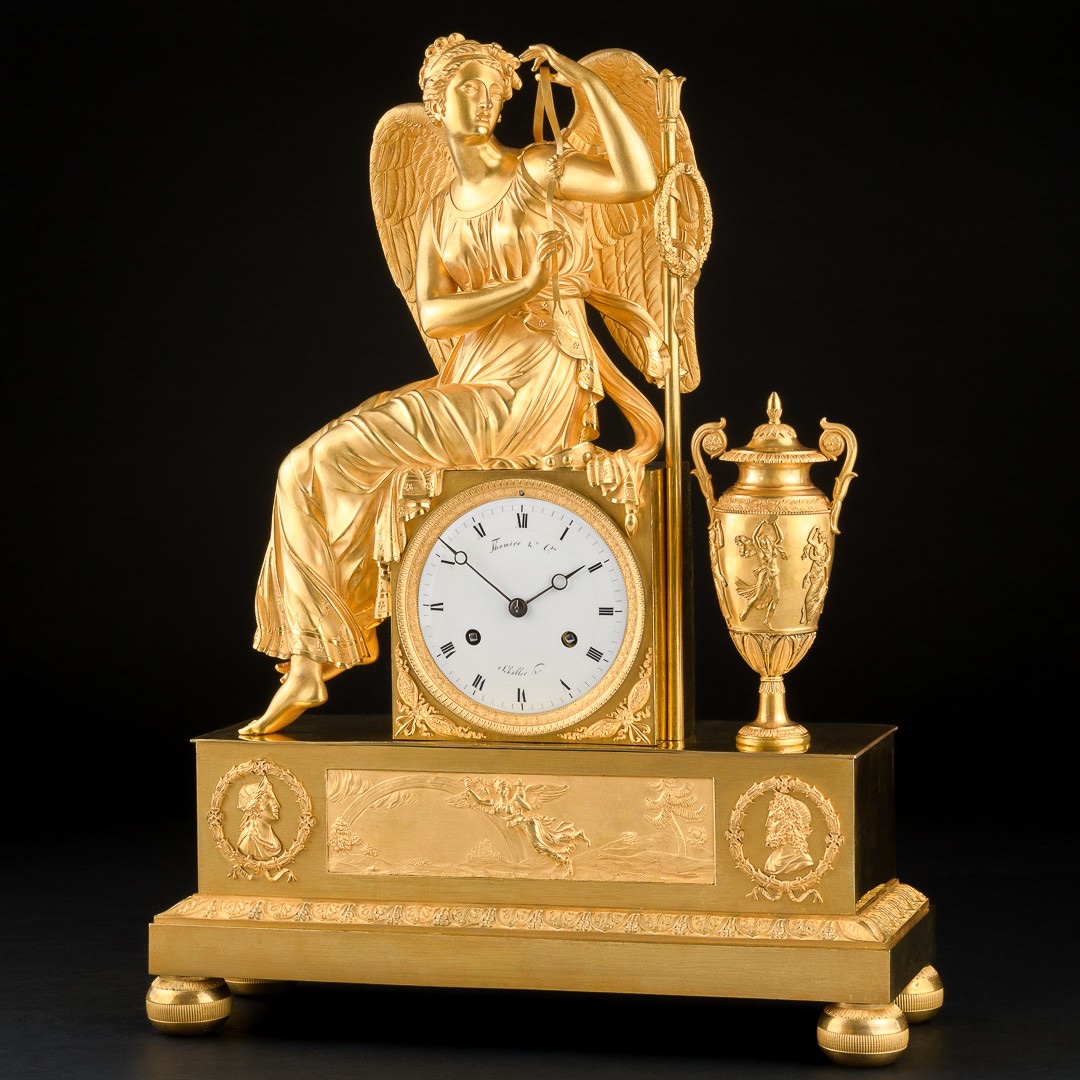
Signed Thomire - Mythological Empire Mantel Clock “ Iris Attaching Her Wings ”




See our website for more detailed photos: LINK
We send this article worldwide, professionally packaged, with registered and fully insured shipping at a fair price.
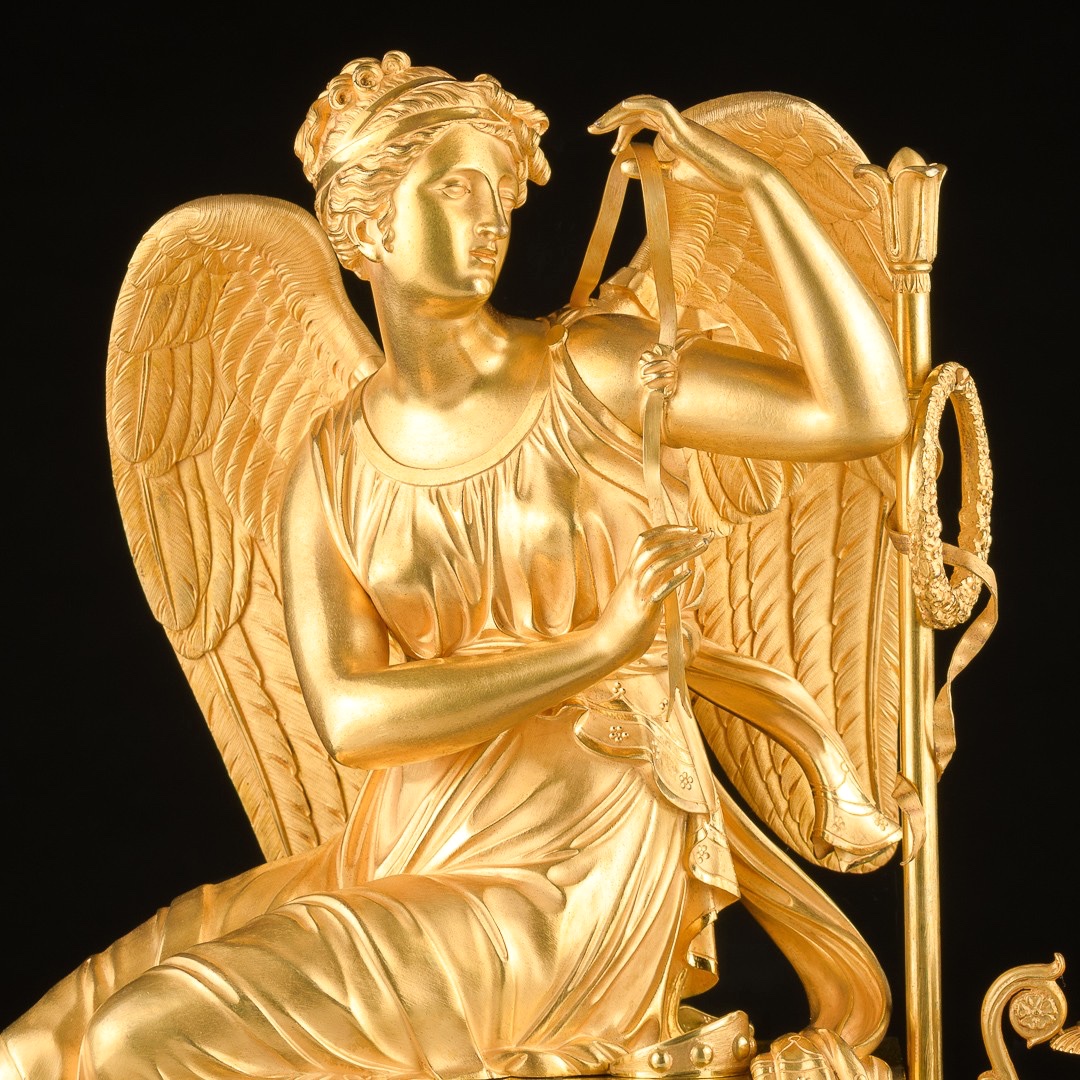
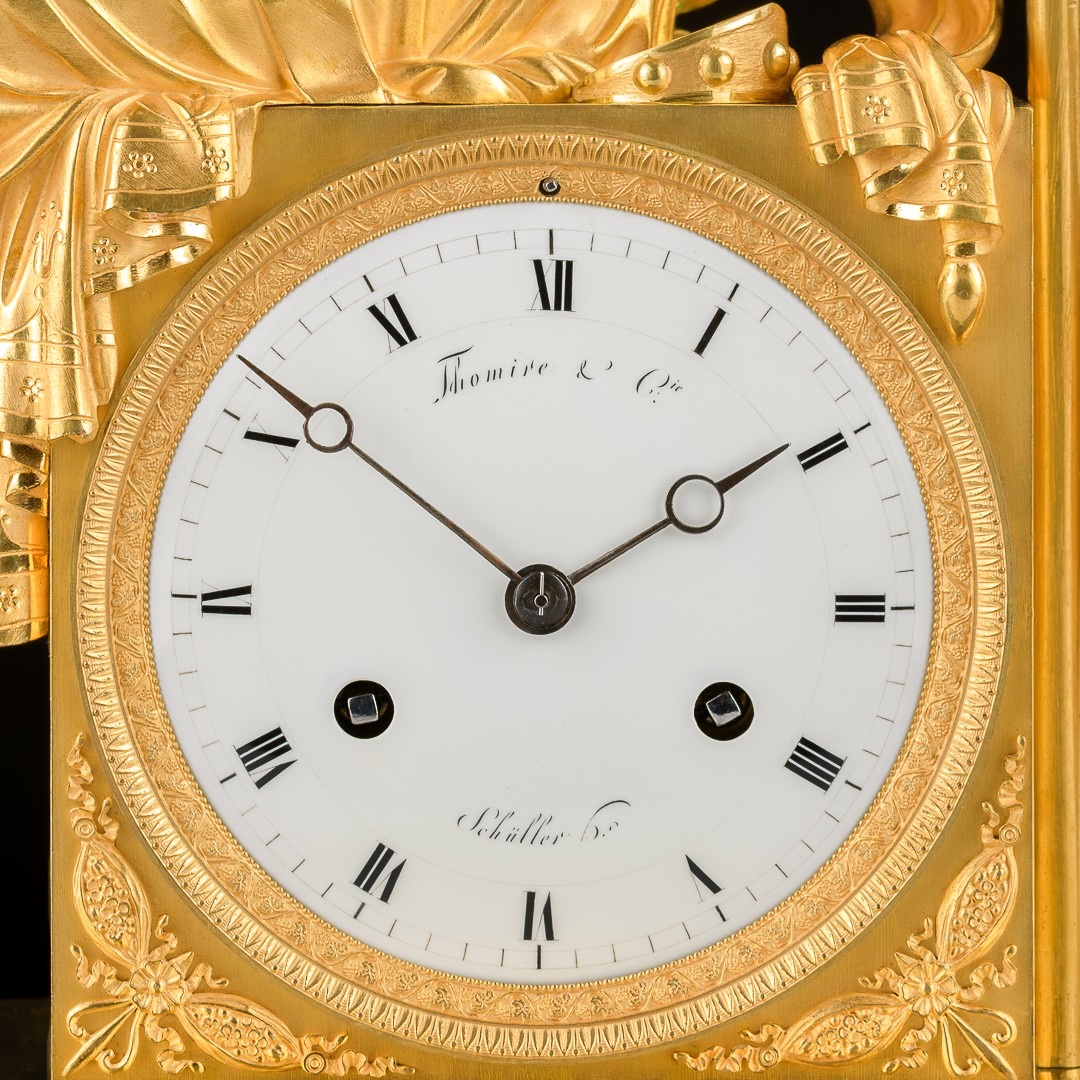
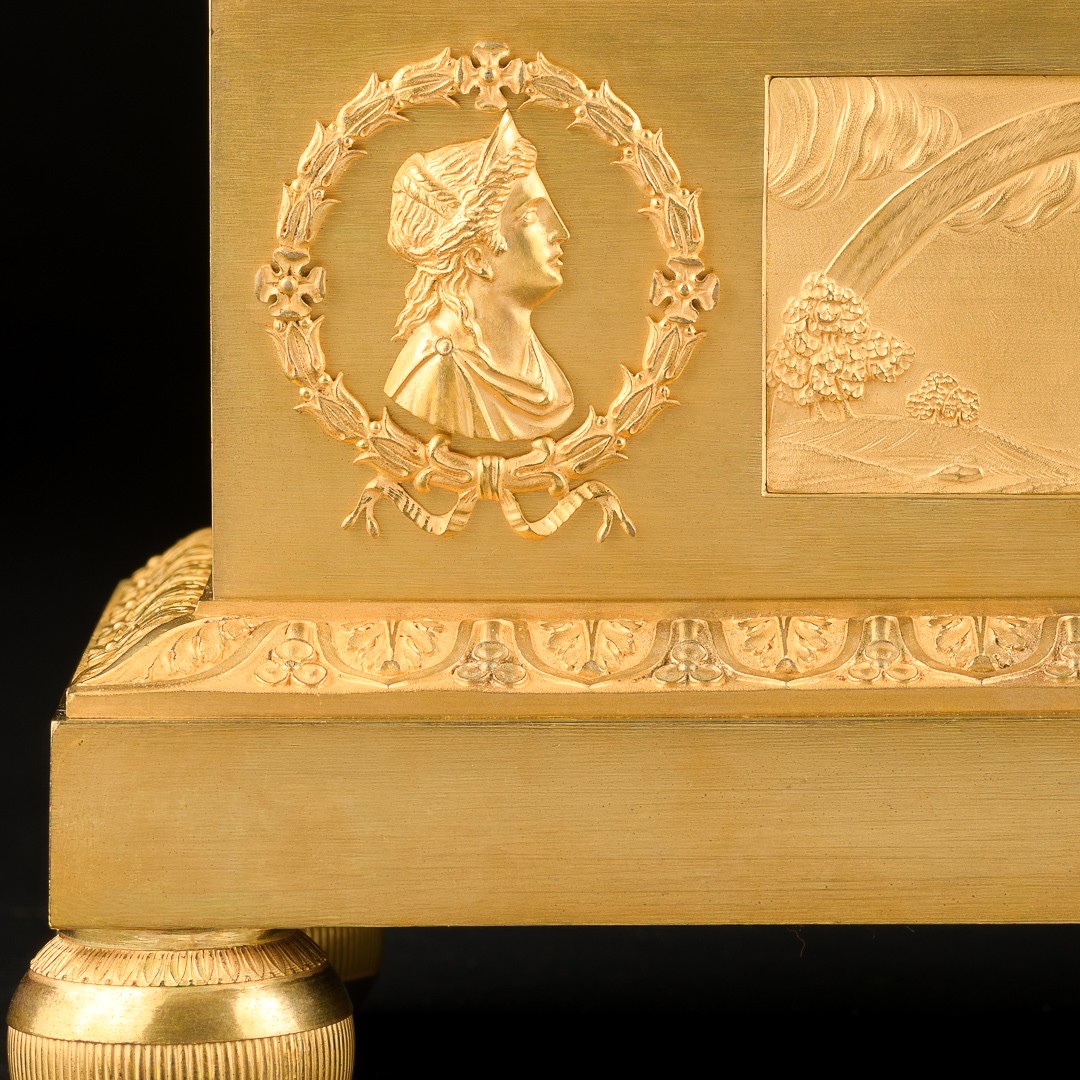
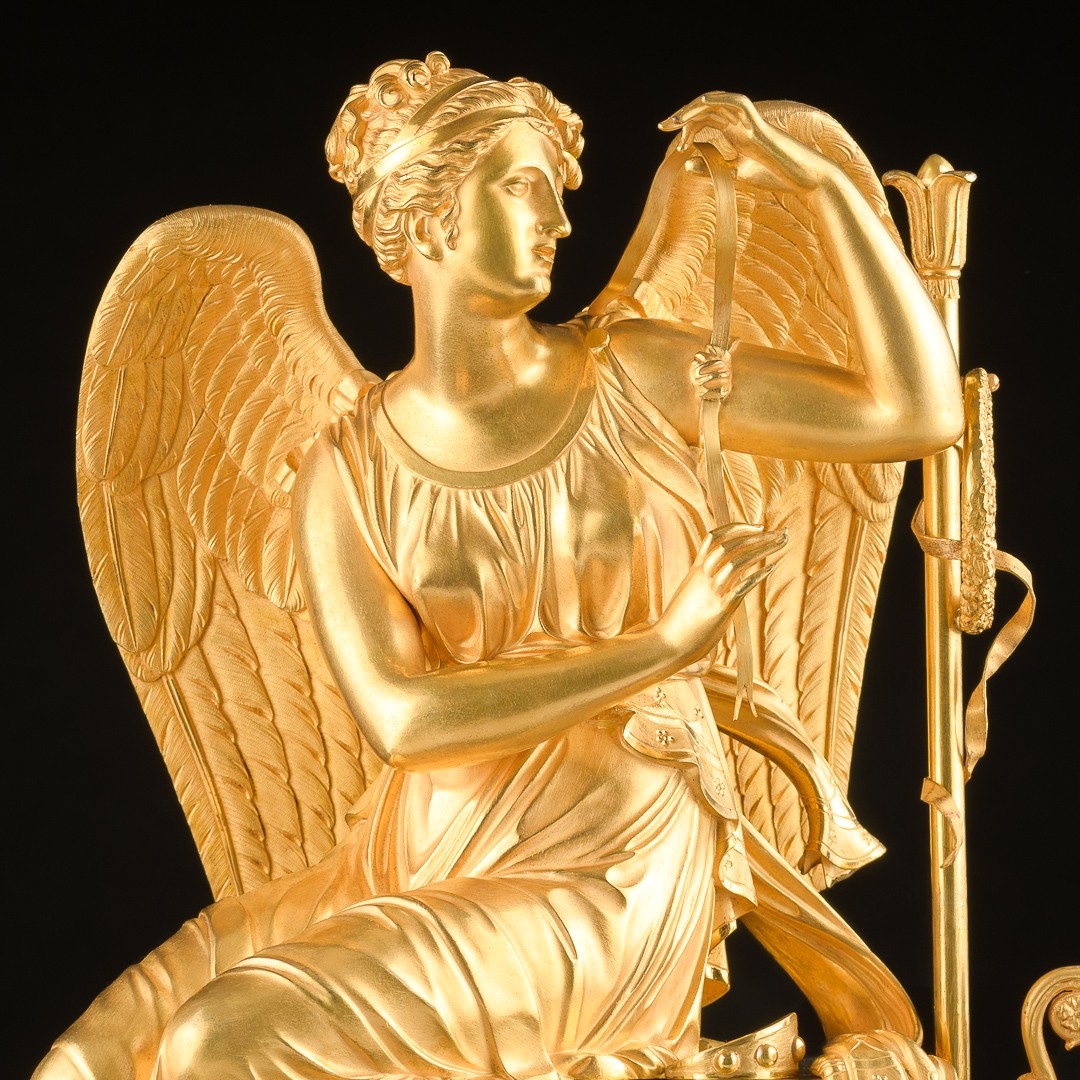
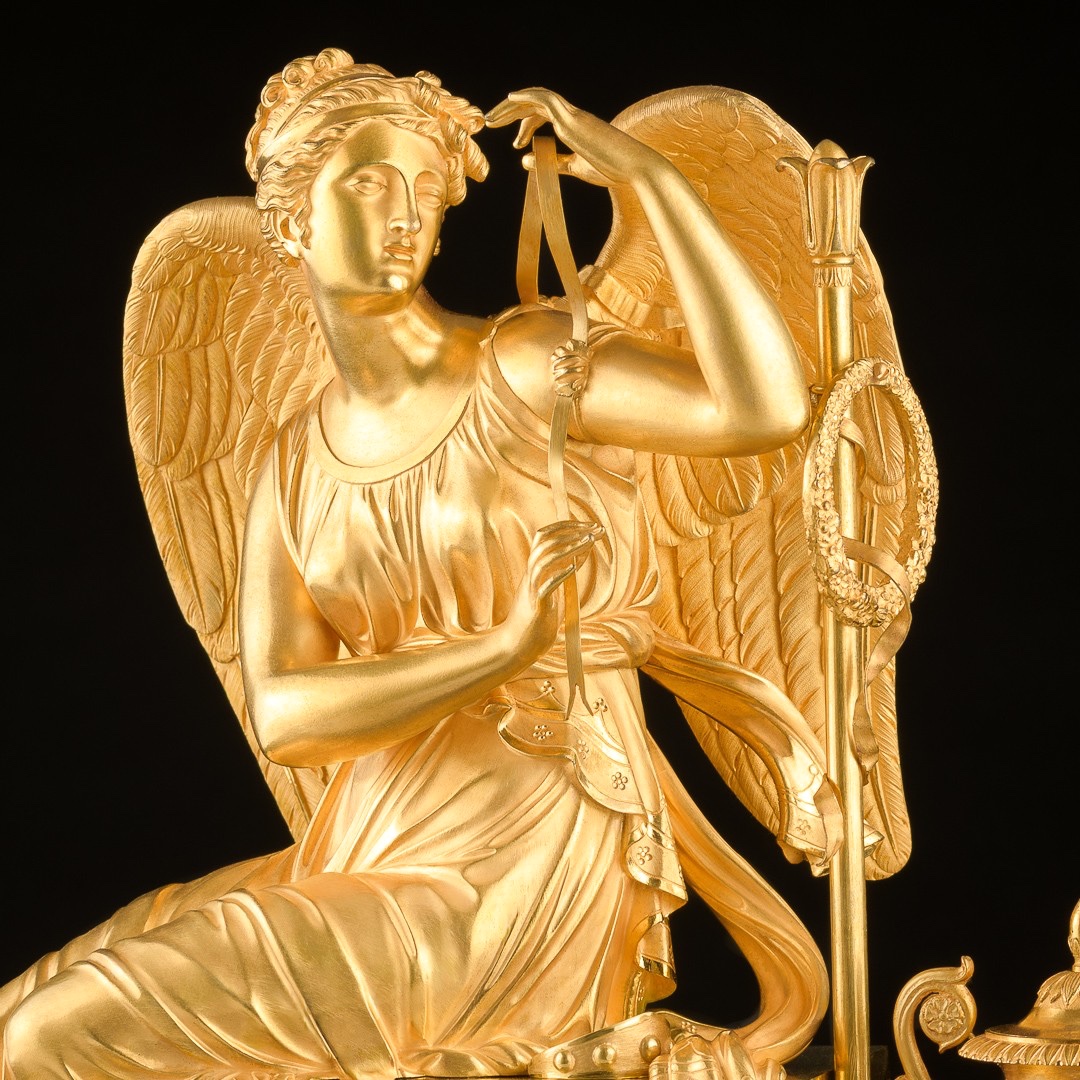
This exceptional French Empire gilt bronze mantel clock, signed on the dial Thomire & Cie, for Pierre-Philippe Thomire, and Schüller Her, for the renowned clockmaker Mathias Schüller, is a masterpiece of early 19th-century decorative art. The clock is graced by the figure of Iris, personification of the rainbow and divine messenger, elegantly seated upon the housing as she attaches her wings with a ribbon. To her side stands a finely crafted urn adorned with a frieze of dancing female muses, accompanied by a staff and a wreath of flowers with flowing ribbons. The rectangular base is further enriched with a superb bas-relief plaque depicting Iris in flight along a rainbow, carrying the urn, flanked by male and female busts within laurel wreaths.
Pierre-Philippe Thomire (1751–1843) was one of the most celebrated French bronziers of the late 18th and early 19th centuries, renowned for his exceptional work in mercury-gilded and patinated bronze. Mathias Schüller (?–1844) was a Parisian clockmaker active from around 1812, with a workshop in the rue Jean Robert, serving a distinguished Parisian clientele.
The design of this Empire mantel clock is not only aesthetically remarkable but also historically significant. An identical example is preserved in the Dutch Royal Collection originally purchased for the Palace of Soestdijk, known as the Iris Clock, while variations are held by the Mobilier National, with documented historical placements in the Théâtre des Italiens, the Carrousel stables, and the Duke of Bordeaux’s bedroom at the Palais de Saint-Cloud.
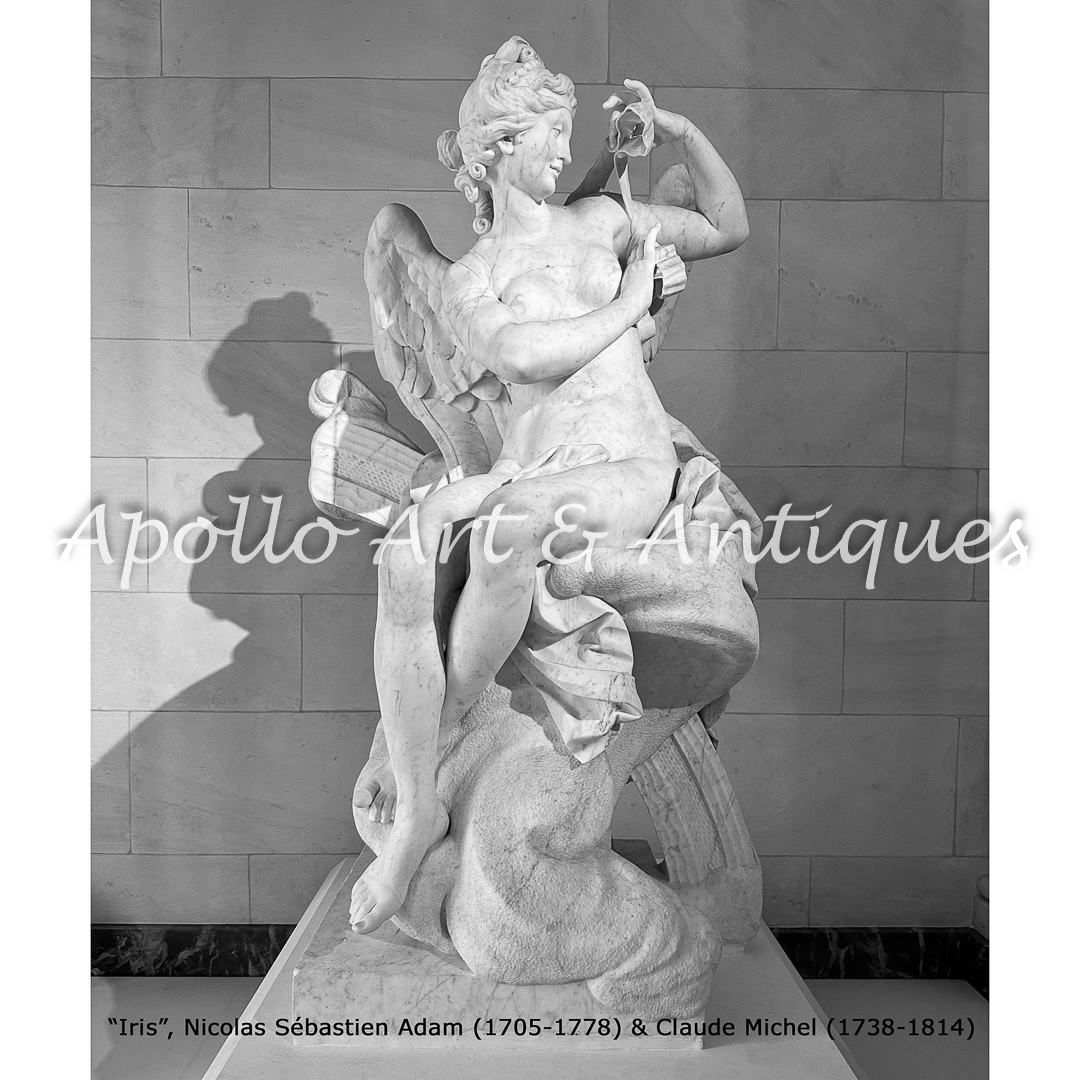
The figure of Iris is inspired by the celebrated sculpture by Nicolas-Sébastien Adam (1705–1778), commissioned by the State in 1743 for the gardens of Versailles. Following Adam’s death, Claude Michel, known as Clodion (1738–1814), was entrusted with completing the rough marble, a task he brought to fruition in 1785.
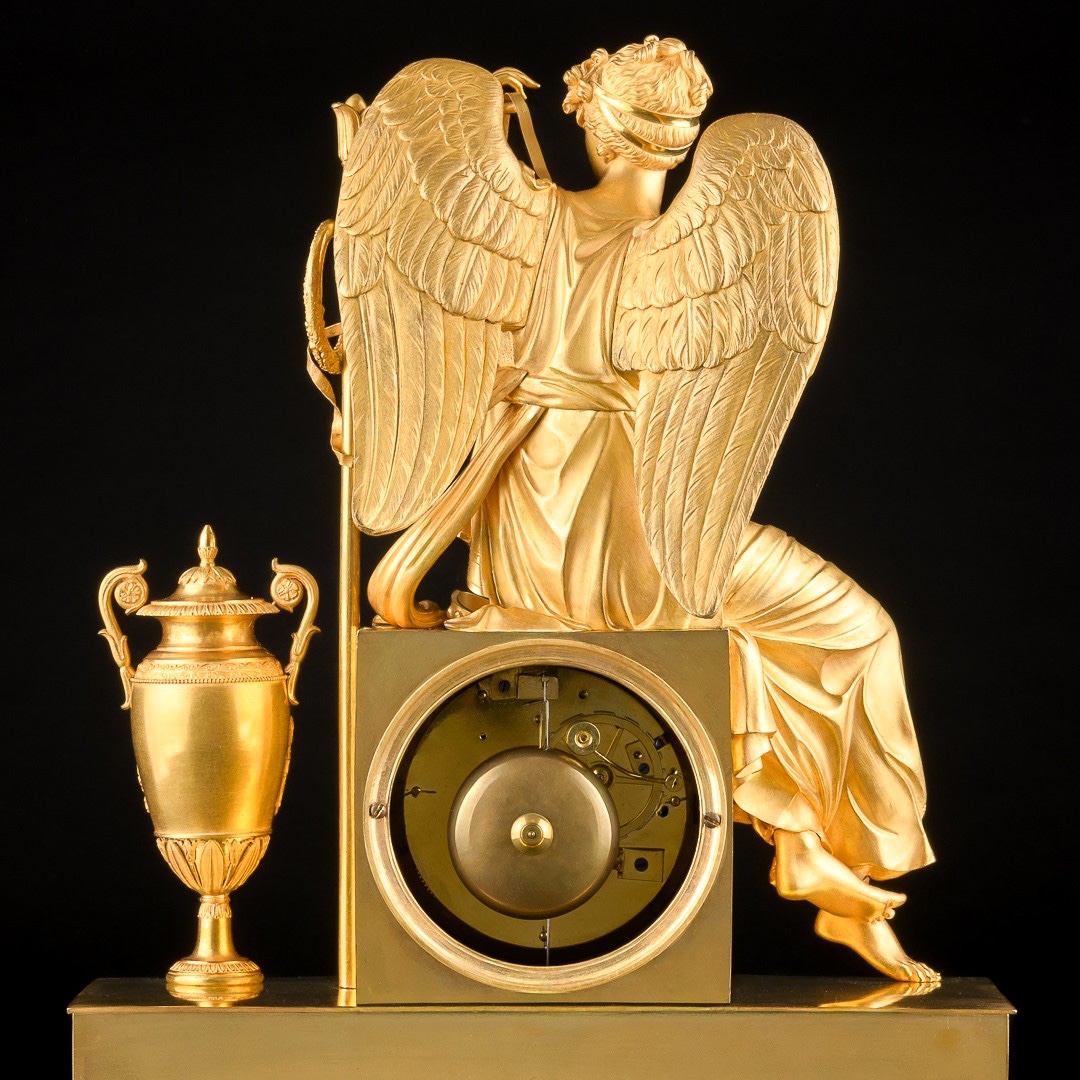
Fitted with a white enamel dial signed Thomire & Cie and Schüller Her, the clock features Roman numerals and fine Breguet-style hands. Its movement strikes the hours on a bell via a rack wheel and is regulated by a silk-suspended pendulum. Supplied complete with pendulum and winding keys.
Executed in finely cast mercury-gilded bronze of outstanding quality, this clock remains in excellent condition. A rare and superb example from one of the finest bronziers of the Empire period, it exemplifies the elegance, refinement, and artistic ambition of its era.
Origin: France, Empire period circa 1812.
Dimensions: Height 53 cm (20.9″), Width 41 cm (16.1″), Depth 17 cm (6.7″).
In Greek mythology, Iris is the radiant personification of the rainbow and one of the most graceful messengers of the gods. Daughter of the Titan Thaumas and the ocean nymph Electra, she dwells on Mount Olympus and traverses the space between heaven and earth along the shimmering arc of the rainbow. Both Homer and Hesiod describe her as a divine envoy entrusted with bearing messages between gods and mortals, while Hesiod further relates her solemn duty of carrying water from the River Styx in a ewer whenever the gods were called upon to swear an oath, a water said to cast any deity who lied into a year-long stupor. In art, Iris typically appears as a winged figure holding the herald’s staff and a vase.
Literature
- Elke Niehüser, “French Bronze Clocks”, 1997, p.221 #518.
- Dutch Royal collection, “Royal clocks in Paleis het Loo”, 2003, p.43.
- Marie-France Dupuy-Baylet, “Pendules du Mobilier National 1800-1870”, p.159.
- Marie-France Dupuy-Baylet, “De bronze et de cristal”, Éditions Faton, Dijon, 2020, p.87.
- Tardy, “Dictionnaire des horlogers français”, p. 589.
We remain at your disposal via our website and WhatsApp. Fluent in French, English, German and Dutch, we will be delighted to assist with any enquiries or to arrange an appointment.
Explore similar pieces and discover your ideal find:
Mantel Clocks