

Mid-century French Square Chrome-plated Brass Mirror By Maison Jansen, 1970s
Artist: Maison Jansen
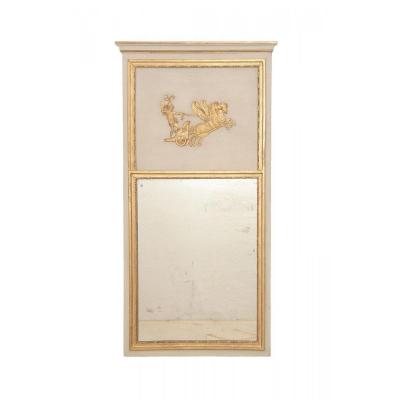
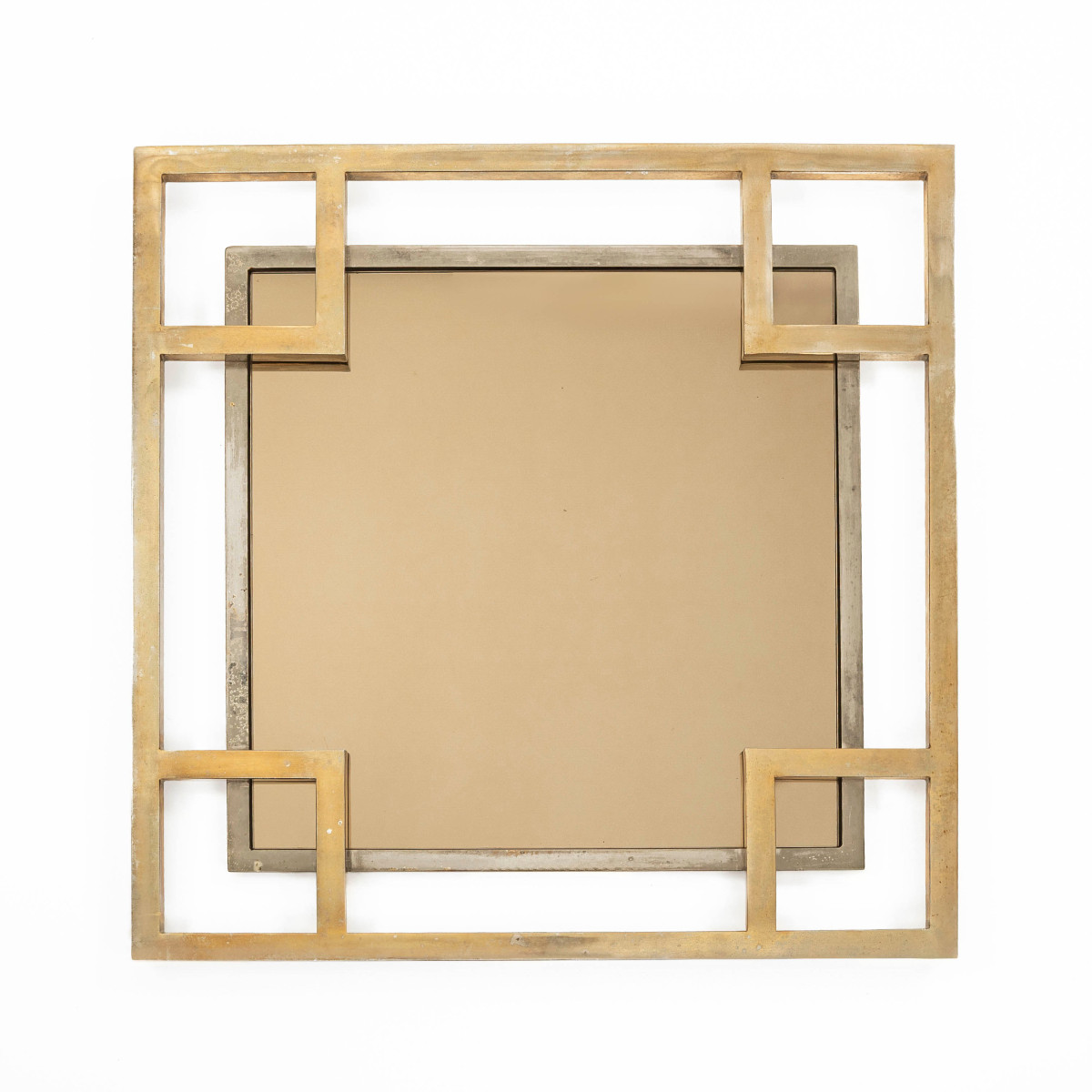
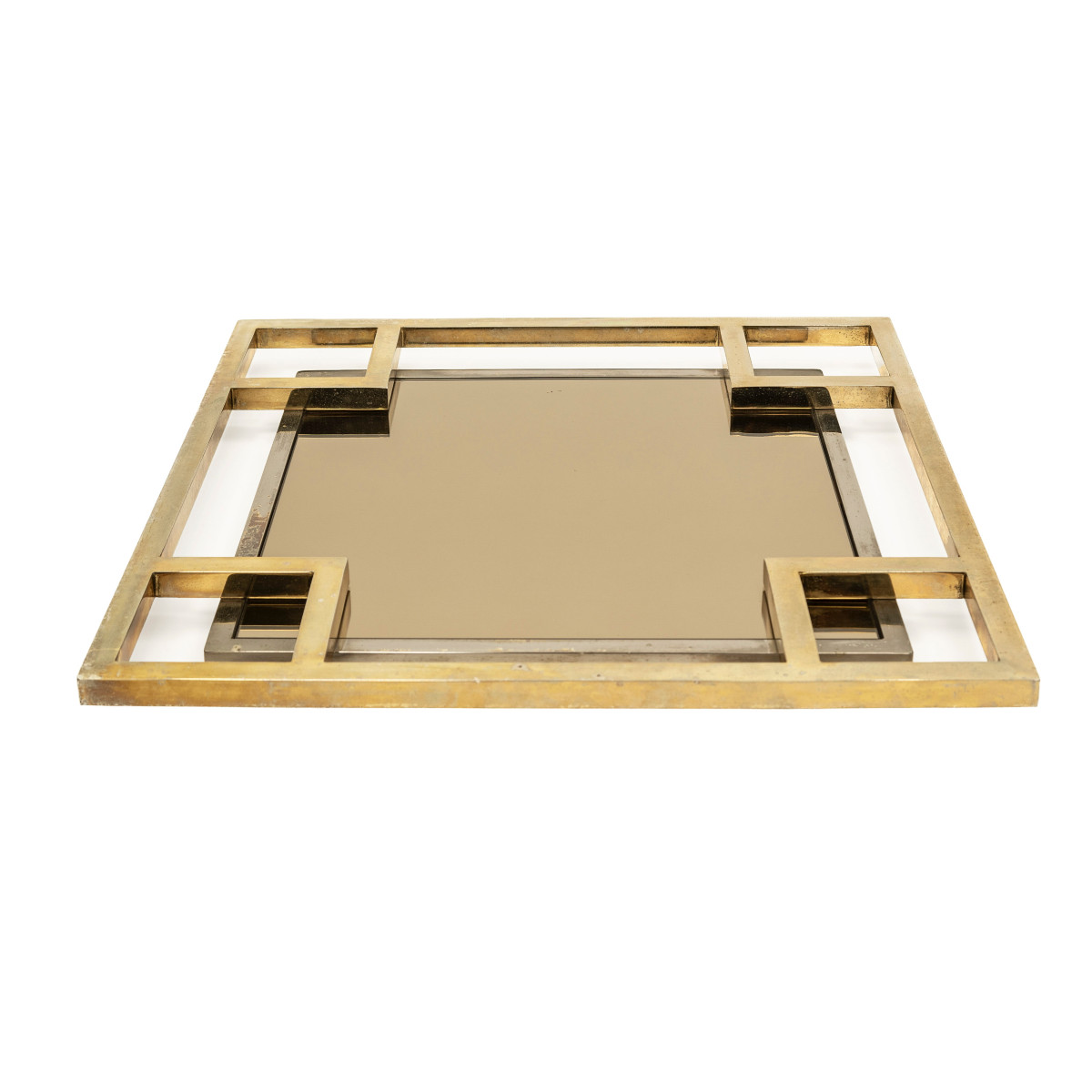
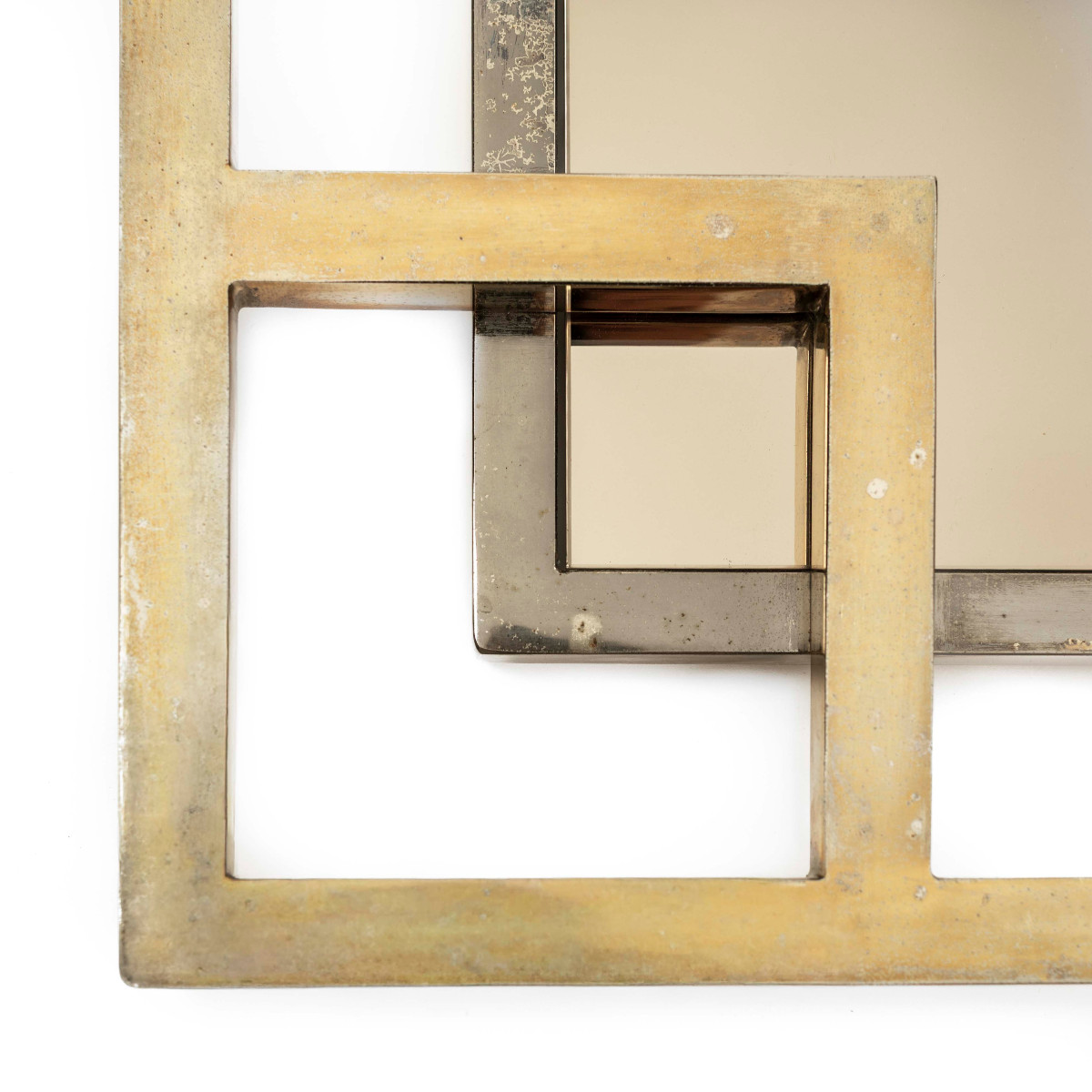
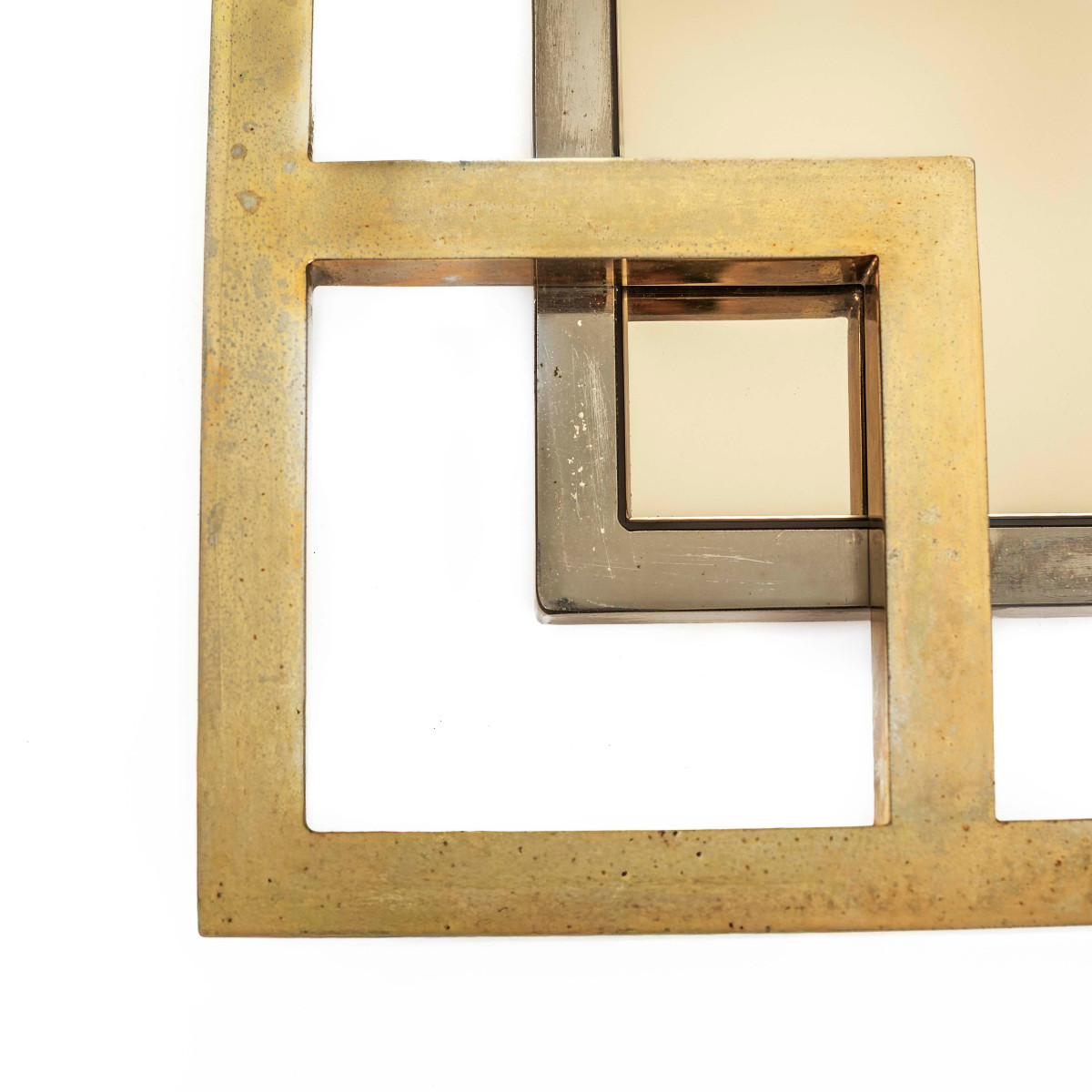
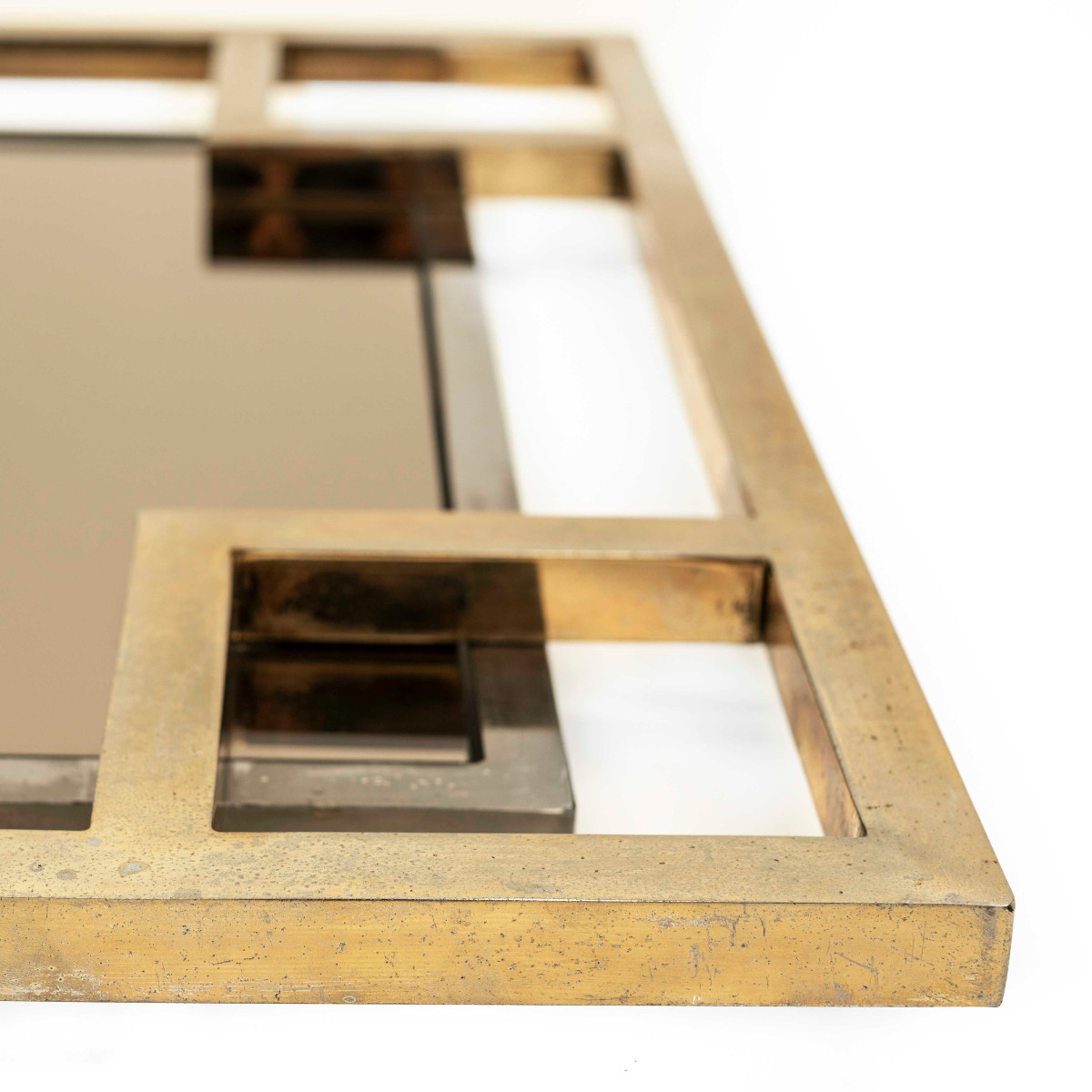
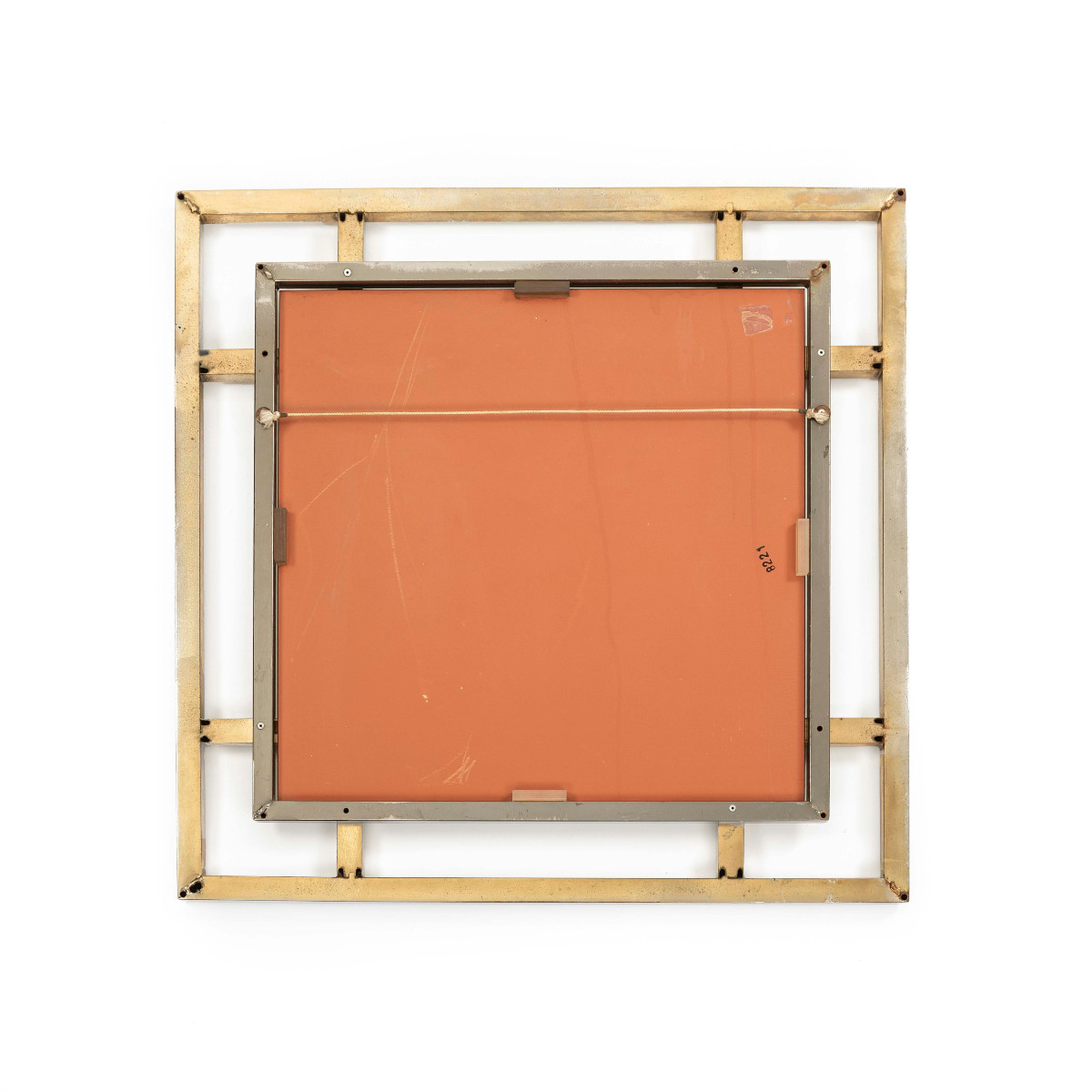
A square mirror with a double brass and chrome frame from the 1970s by Maison Jansen.
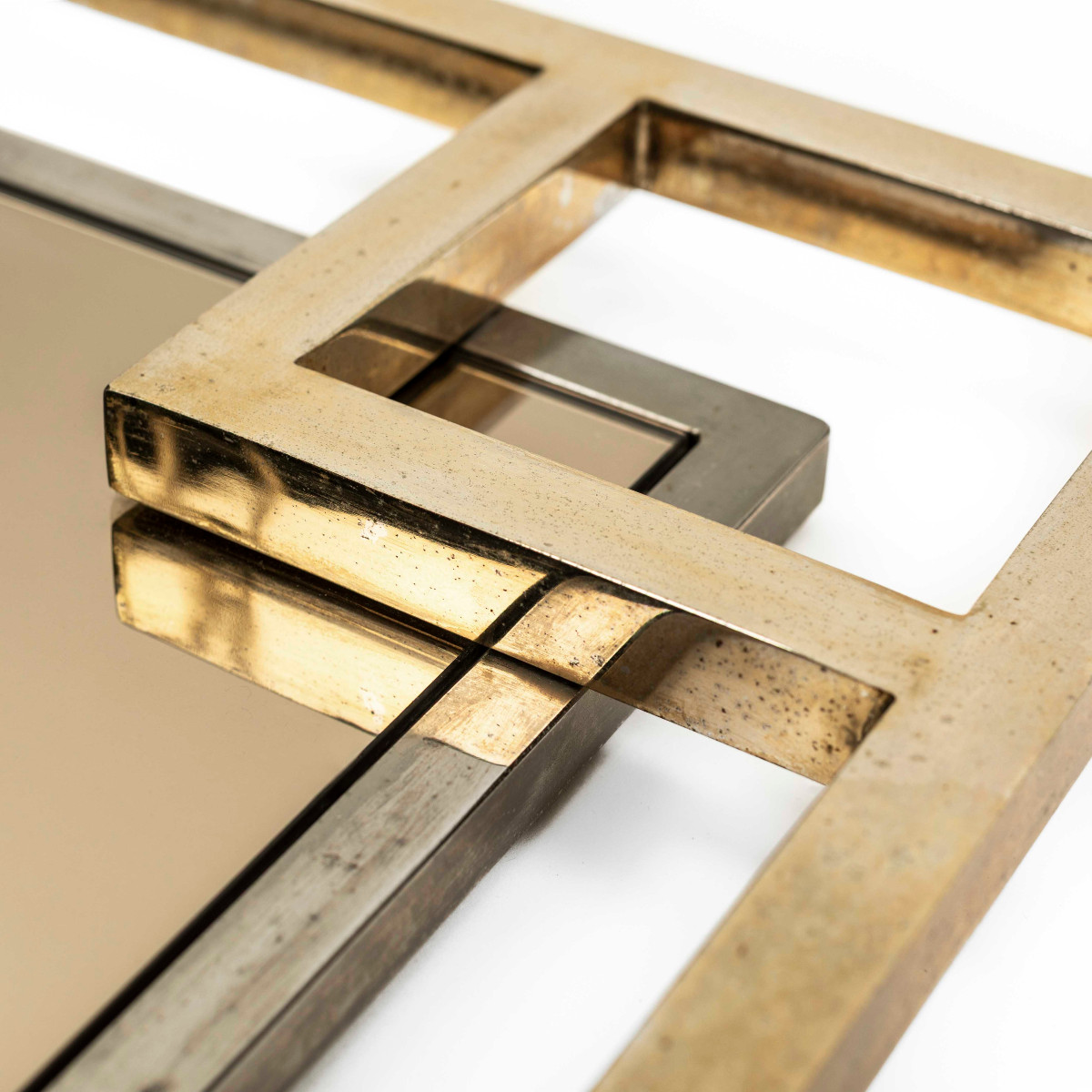
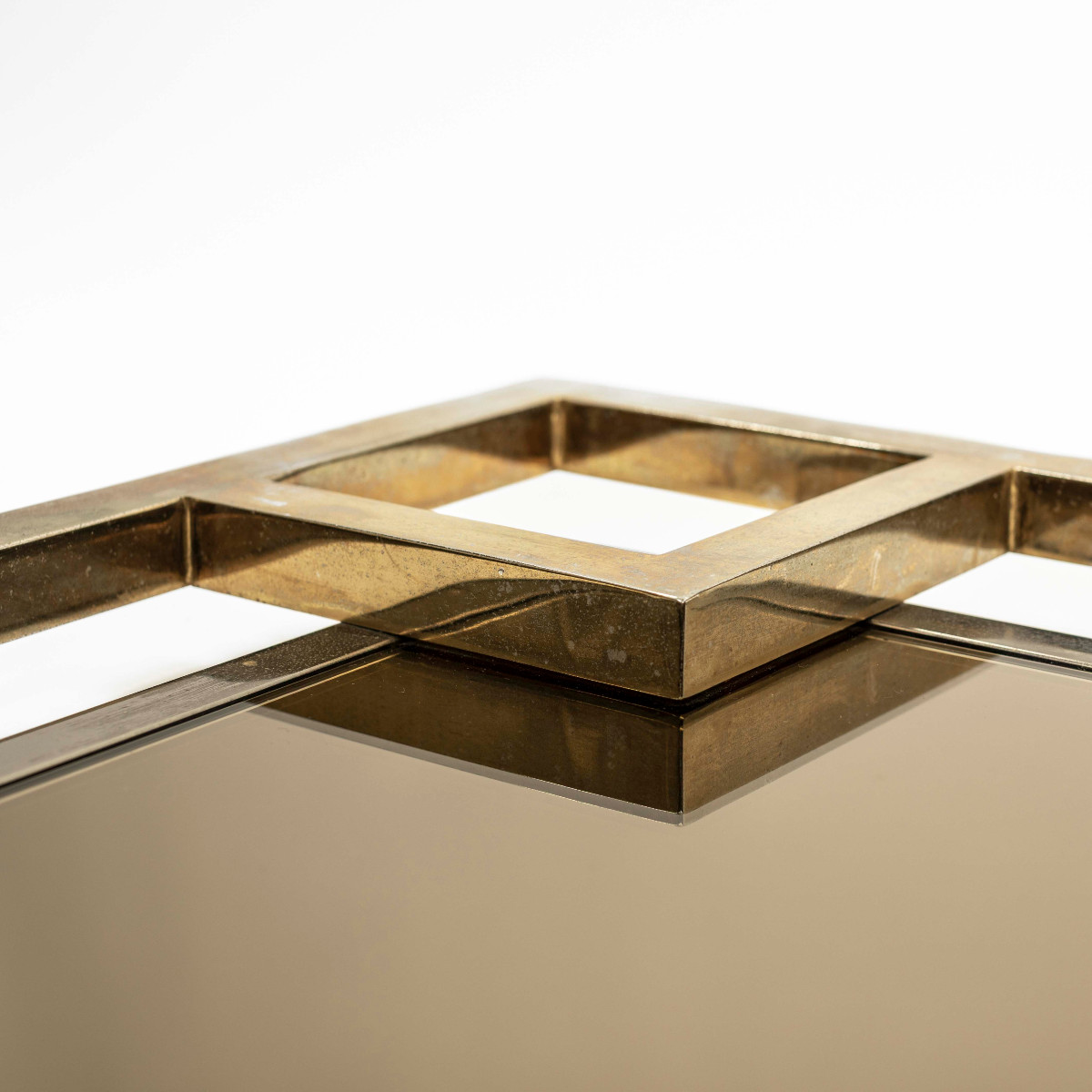
The 2.5 cm wide brass frame forms four additional squares in the corners, with the chrome frame underneath. The strictly geometric format combined with the two metals makes the mirror particularly decorative. The brass and chrome have already aged and display a beautiful patina that complements its austere expression. The mirror glass has a brown tint and appears soft against the metal frame.
An extremely decorative object that finds its origins in the relaxed lifestyle of the 1970s:
cognac, rust, and chocolate tones; fabrics that evoke opulence and abundance; polished stainless steel; mosaics; and smoked glass
Maison Jansen was an interior design firm based in Paris, founded in 1880 by Jean-Henri Jansen, of Dutch origin.
Jansen is considered the first truly global design firm, serving clients in Europe, Latin America, North America, and the Middle East. This house was located at 23 rue de l'Annonciation in Paris and closed its doors in 1989.
From its inception, Maison Jansen combined traditional furnishings with influences from new trends, including Anglo-Japanese, Arts and Crafts, and Turkish styles. The company placed great importance on historical research, through which it sought to reconcile its clients' desires for livable, functional, and often spectacular spaces. Within ten years, the company had become a major buyer of European antiques, and in 1890, it established an antiques gallery as a separate company that bought and sold antiques to Jansen's clients as well as its competitors. In the early 1920s, Jean-Henri Jansen approached Stéphane Boudin, who was then working in the textile trimmings business owned by his father, Alexandre Boudin, and brought him into the company. Accounts of this agreement vary. Some believe that Boudin was able to bring financial stability to the renowned but undercapitalized workshop. Boudin's attention to detail, his commitment to historical accuracy, and his ability to create spectacular and memorable spaces brought new contracts to the company. Boudin was appointed director and oversaw the expansion of the company's offices and revenue.
The 2.5 cm wide brass frame forms four additional squares in the corners, with the chrome frame underneath. The strictly geometric format combined with the two metals makes the mirror particularly decorative. The brass and chrome have already aged and display a beautiful patina that complements its austere expression. The mirror glass has a brown tint and appears soft against the metal frame.
An extremely decorative object that finds its origins in the relaxed lifestyle of the 1970s:
cognac, rust, and chocolate tones; fabrics that evoke opulence and abundance; polished stainless steel; mosaics; and smoked glass
Maison Jansen was an interior design firm based in Paris, founded in 1880 by Jean-Henri Jansen, of Dutch origin.
Jansen is considered the first truly global design firm, serving clients in Europe, Latin America, North America, and the Middle East. This house was located at 23 rue de l'Annonciation in Paris and closed its doors in 1989.
From its inception, Maison Jansen combined traditional furnishings with influences from new trends, including Anglo-Japanese, Arts and Crafts, and Turkish styles. The company placed great importance on historical research, through which it sought to reconcile its clients' desires for livable, functional, and often spectacular spaces. Within ten years, the company had become a major buyer of European antiques, and in 1890, it established an antiques gallery as a separate company that bought and sold antiques to Jansen's clients as well as its competitors. In the early 1920s, Jean-Henri Jansen approached Stéphane Boudin, who was then working in the textile trimmings business owned by his father, Alexandre Boudin, and brought him into the company. Accounts of this agreement vary. Some believe that Boudin was able to bring financial stability to the renowned but undercapitalized workshop. Boudin's attention to detail, his commitment to historical accuracy, and his ability to create spectacular and memorable spaces brought new contracts to the company. Boudin was appointed director and oversaw the expansion of the company's offices and revenue.
2 600 €
Period: 20th century
Style: Design 50's and 60's
Condition: Good condition
Material: Metal
Width: 70
Height: 70
Depth: 5
Reference (ID): 1650422
Availability: In stock
Print