THIS OBJECT WAS SOLD
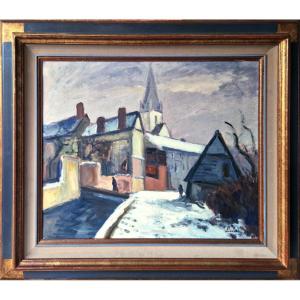
Painting Of A View Of Paris At Night, Ménilmontant. Expressionist Painting Signed Léon Schwartz Abrys.
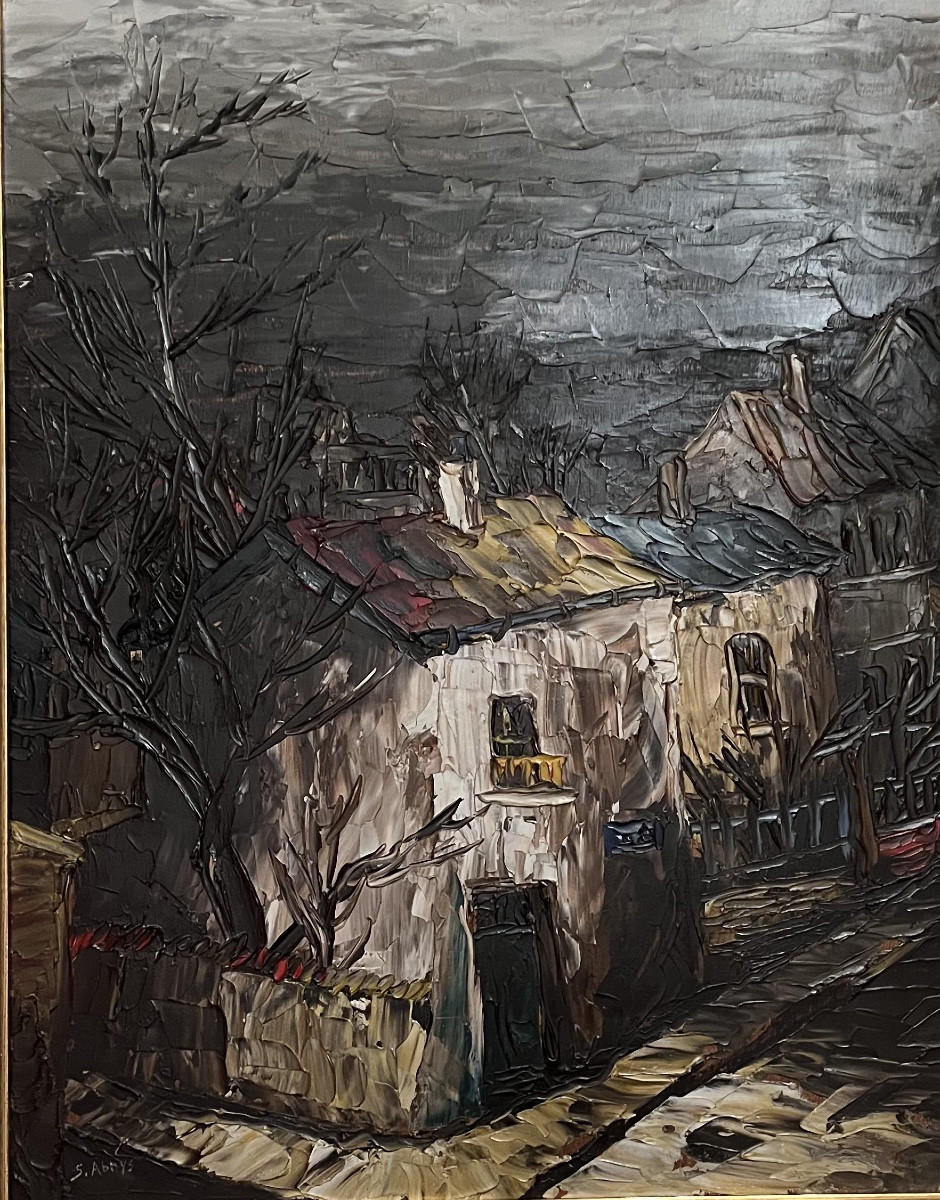
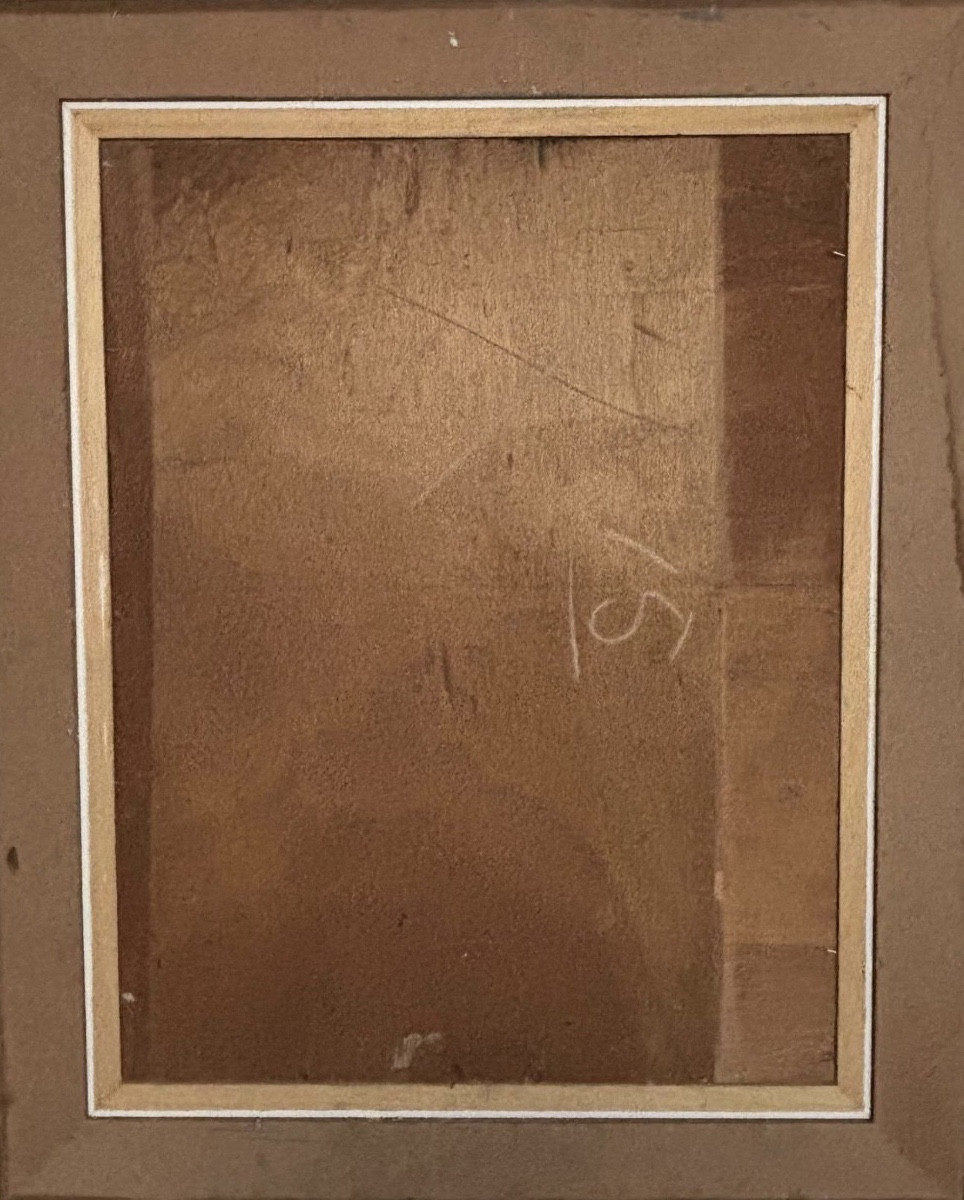
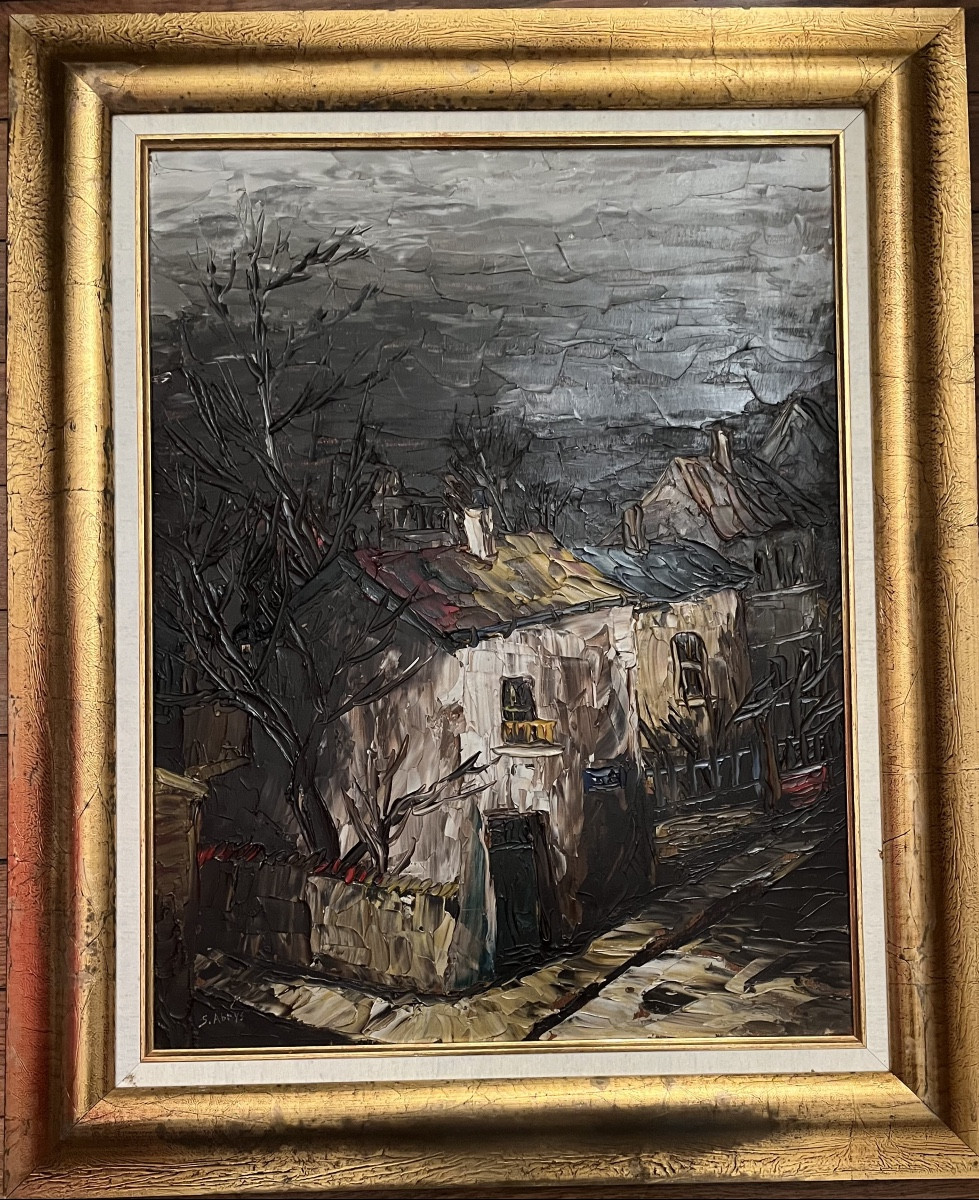
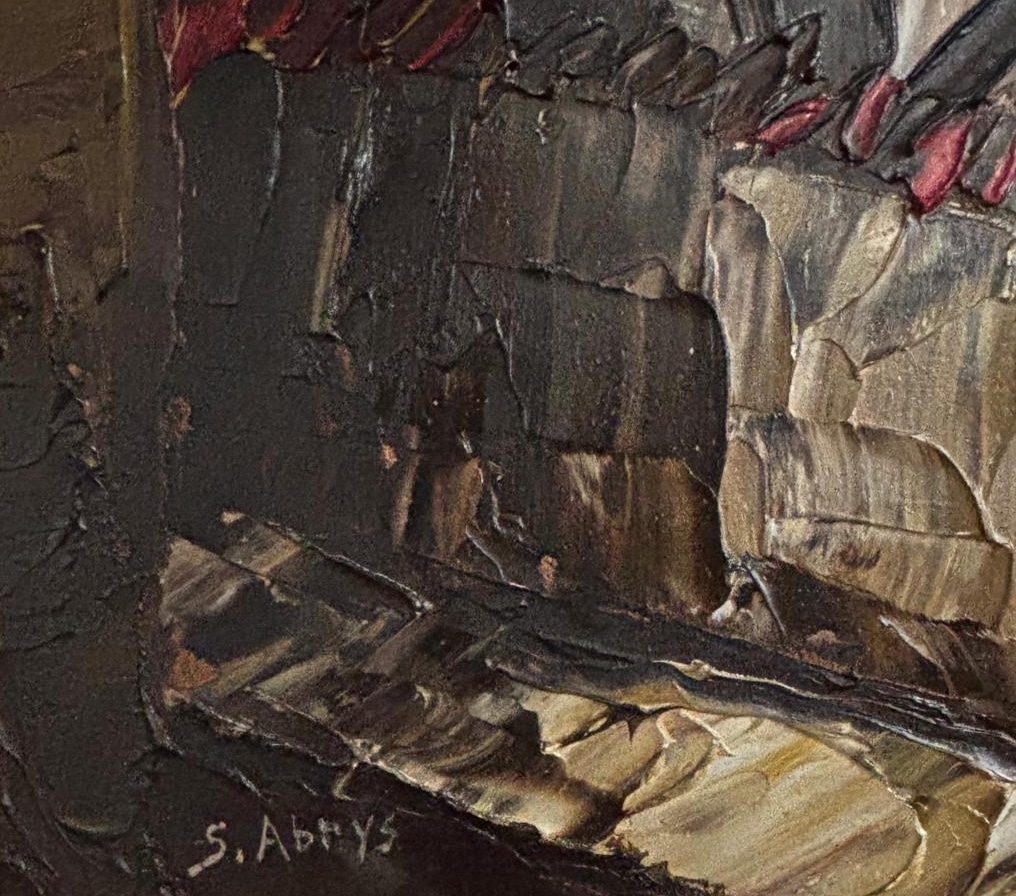
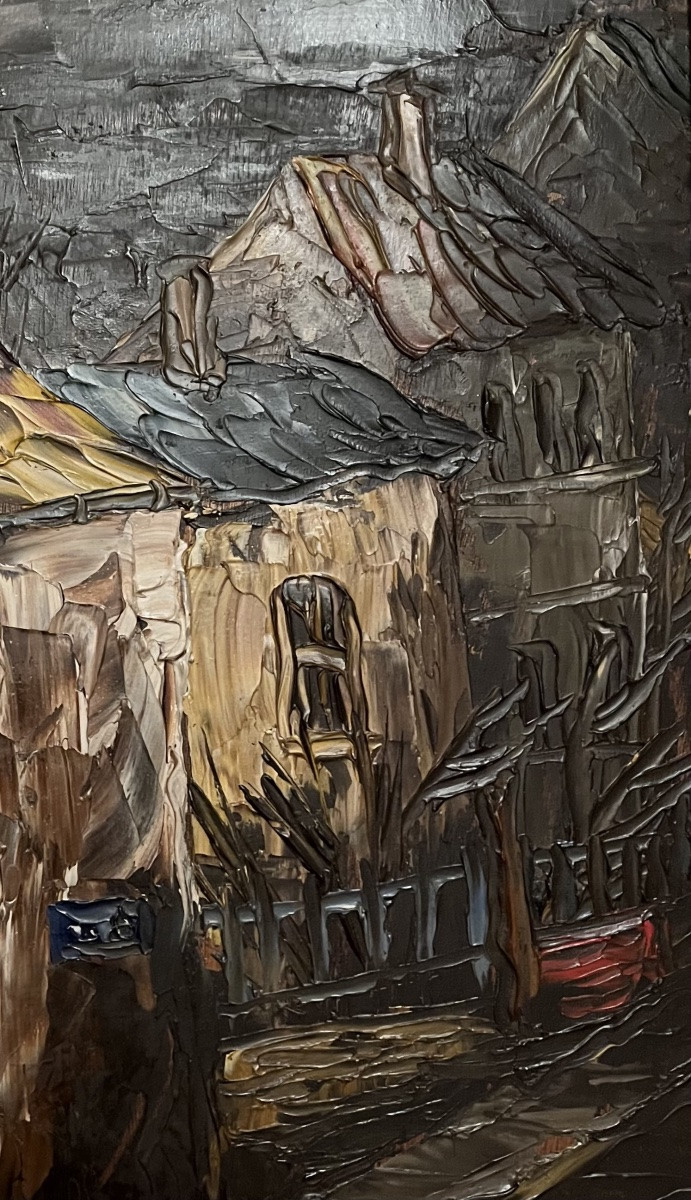
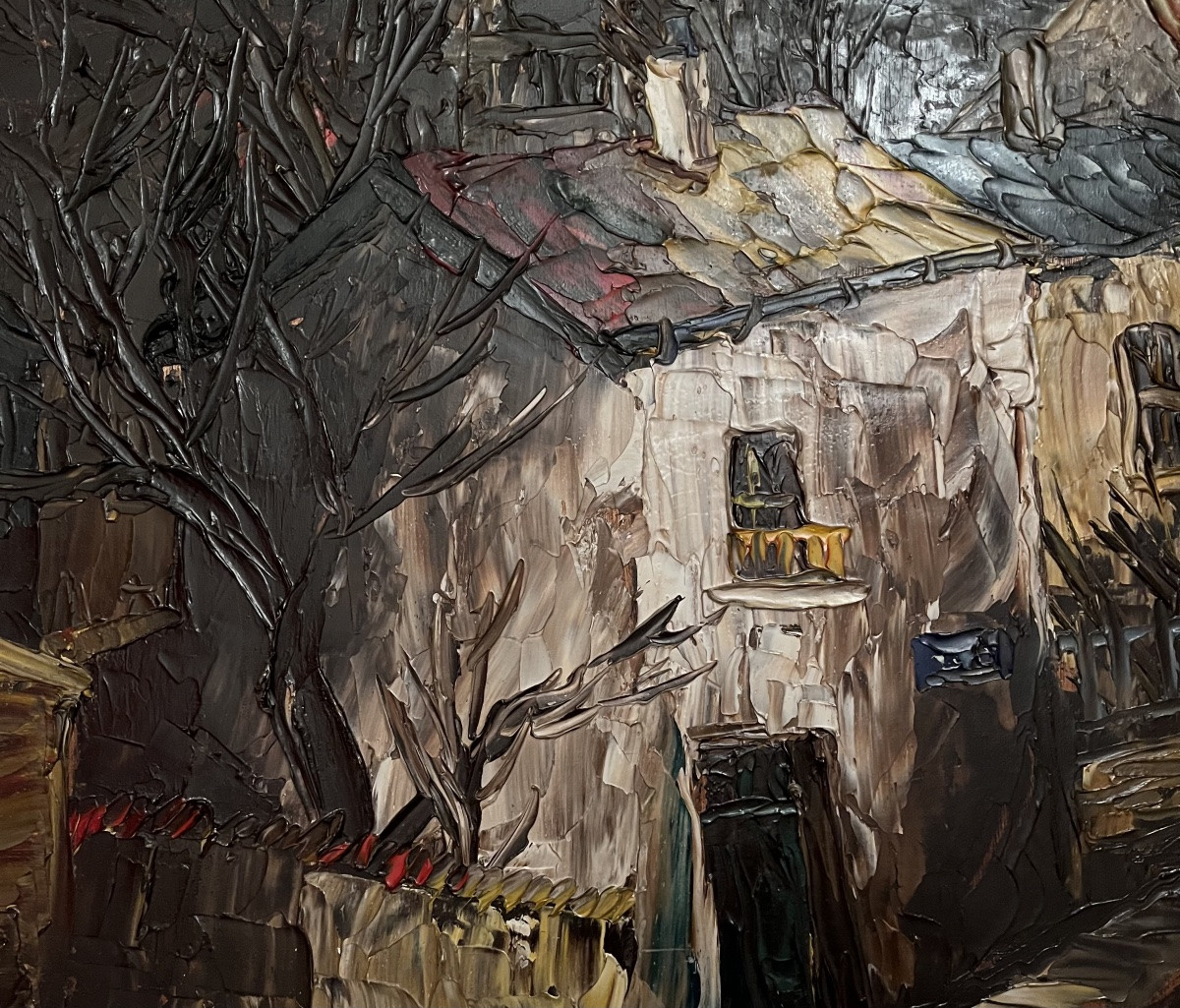
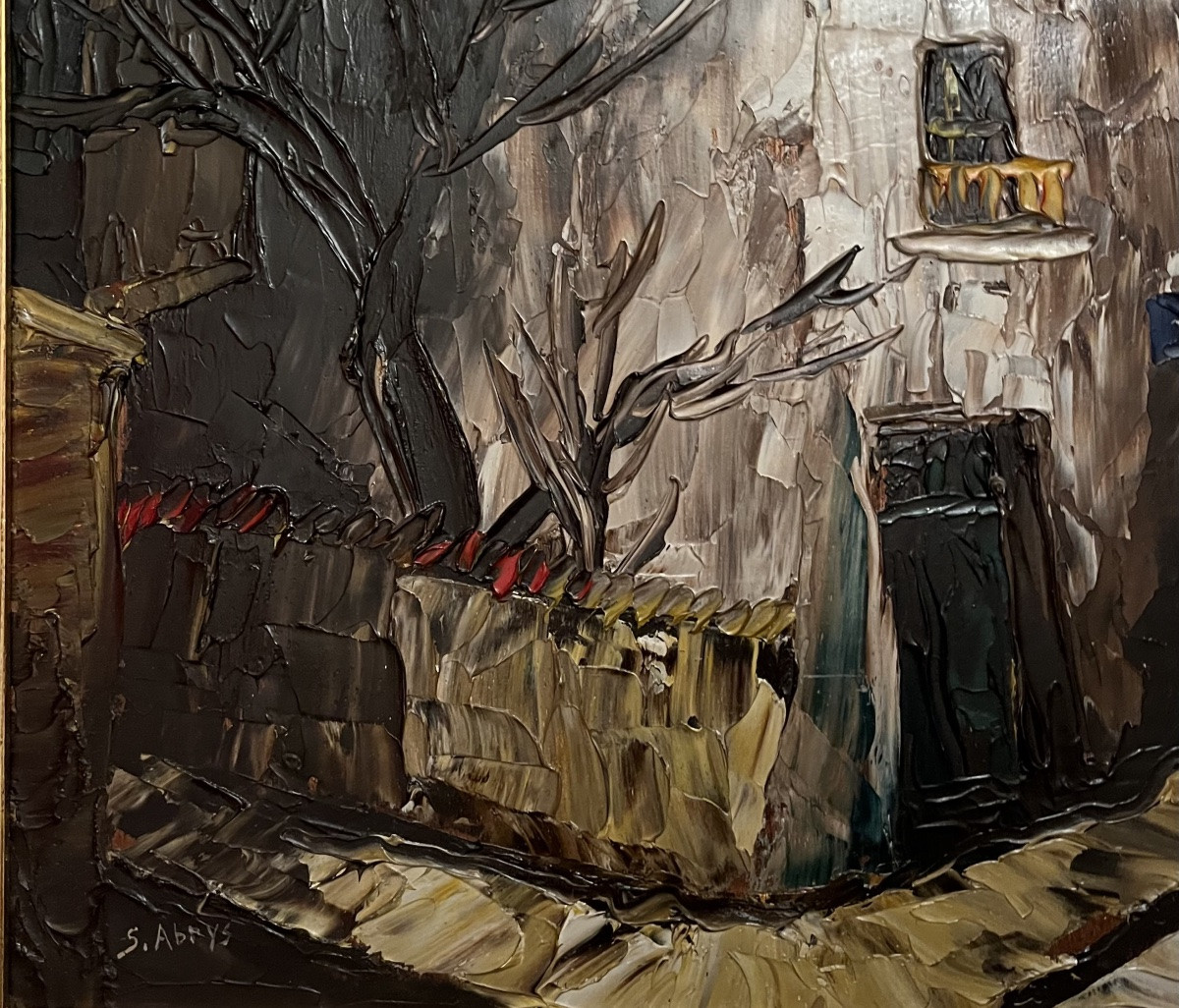
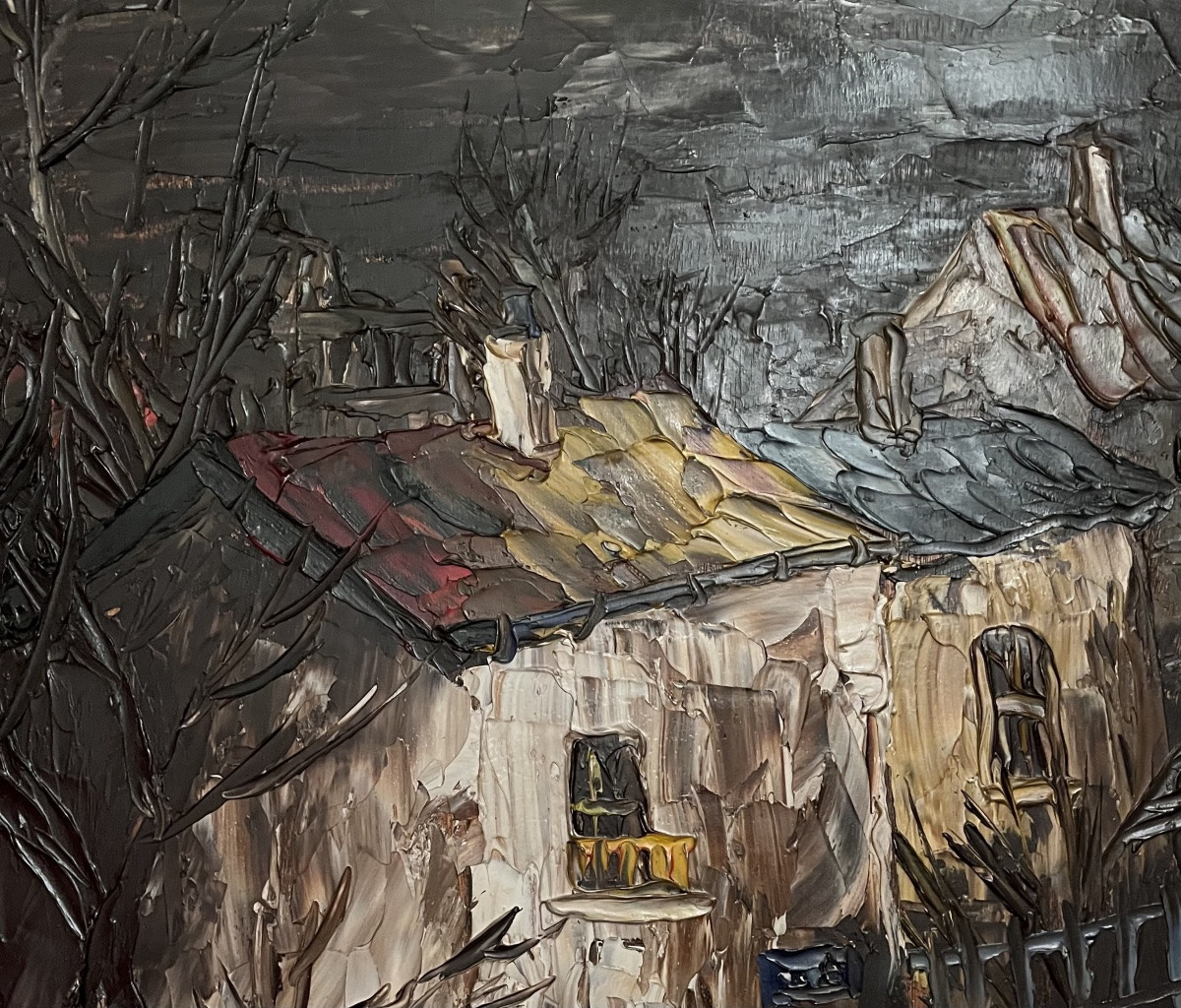

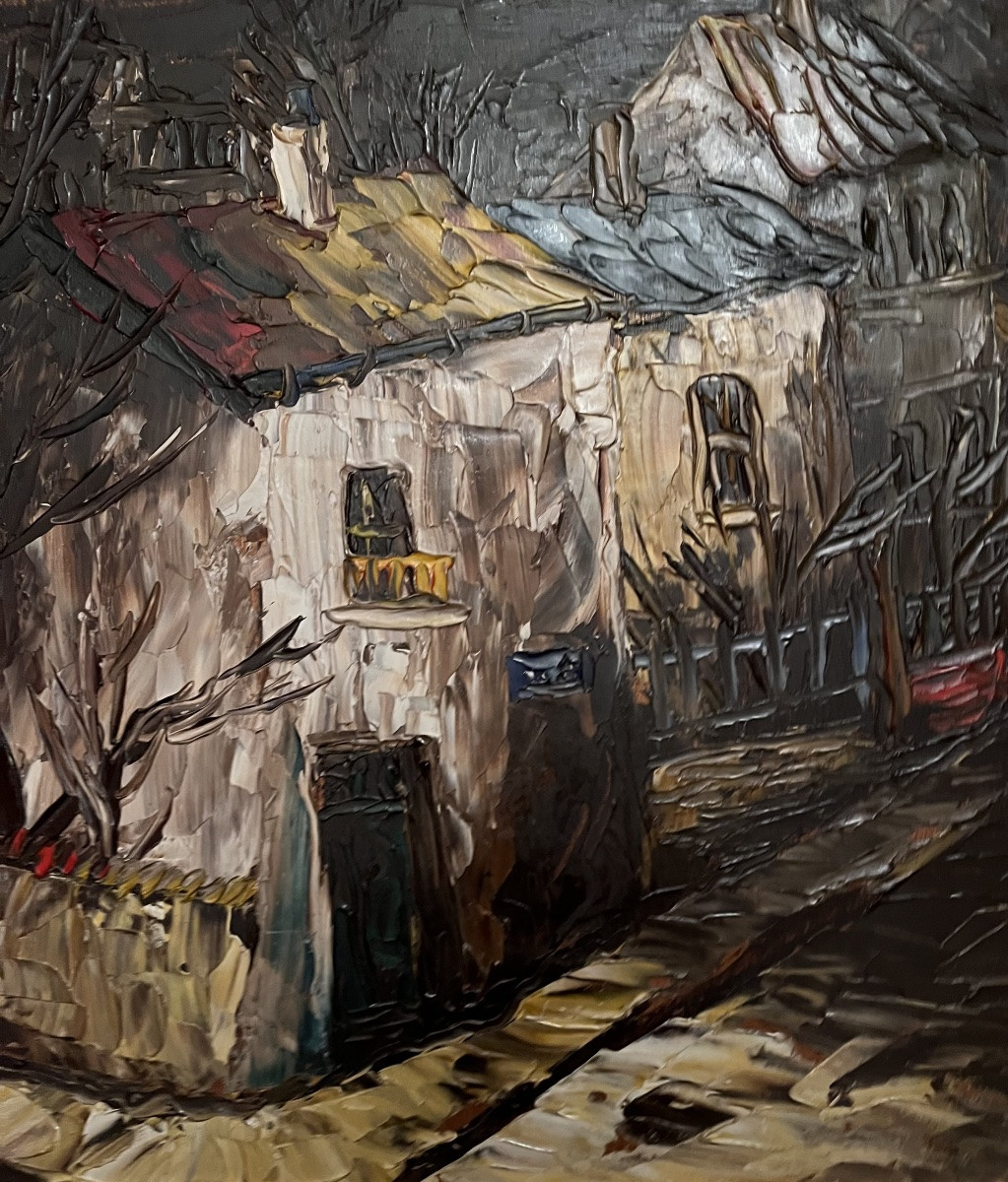
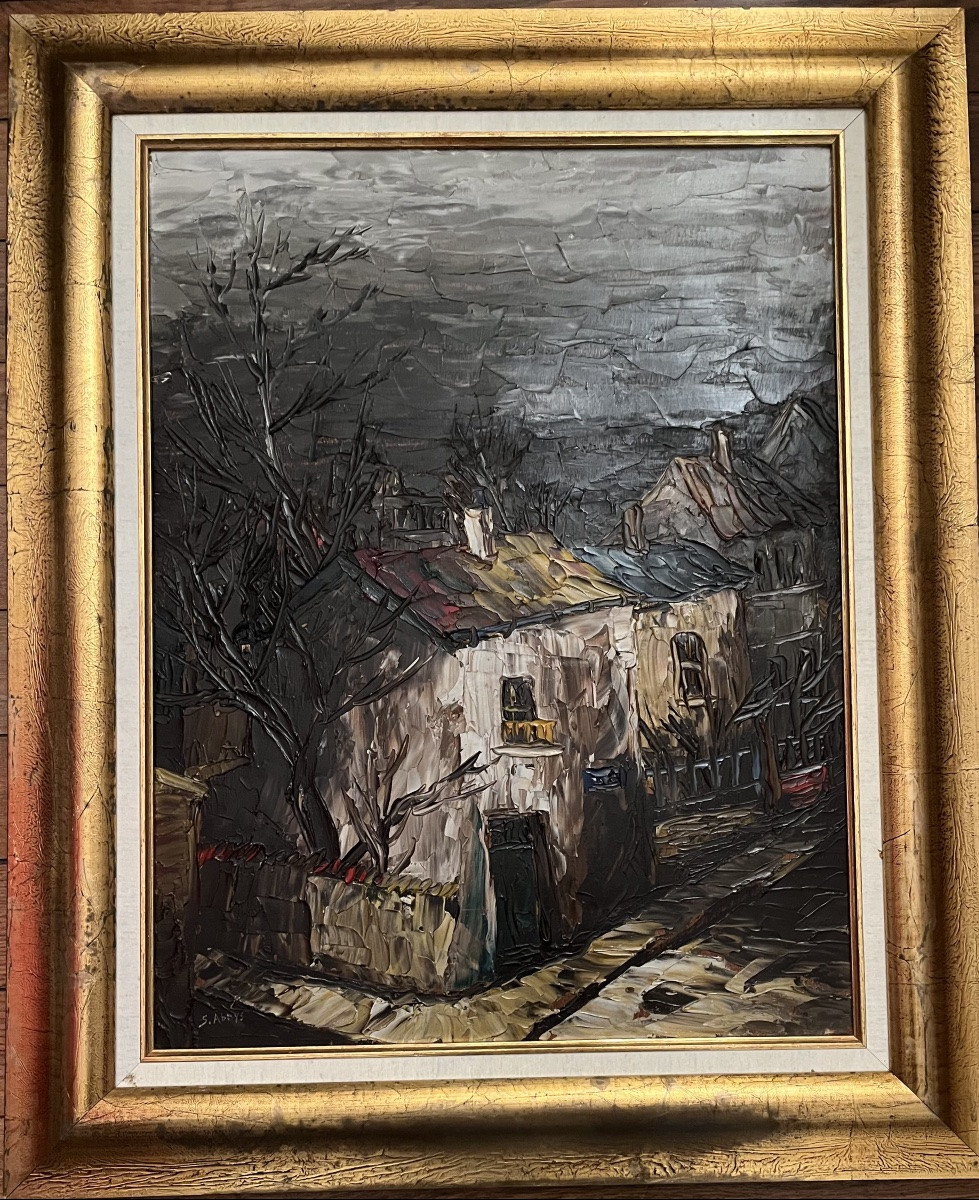
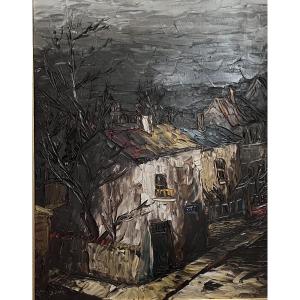


Oil on wood panel, 65 cm x 50 cm, sold with its original gilt frame, 83 cm x 68 cm, signed lower left Léon Schwartz Abrys. In this thick and vibrant painting, Schwartz Abrys depicts a silent street at nightfall, likely a street in Ménilmontant just after the war. A favorite subject of the artist, the brushstrokes, applied in generous impasto, literally sculpt the scene: uneven roofs, worn walls, bare trees. The light seems to filter faintly from behind the clouds, revealing the texture of the facades and the deep shadows of the alley. The work combines both the raw texture of the paint and an intimate atmosphere. The scene is not empty: it is inhabited by a discreet presence, a memory of the place. The somber palette, punctuated with touches of ochre and red on the rooftops, offers a subtle contrast between melancholy and warmth. Here, one finds the spirit of old working-class neighborhoods, imbued with poetry, a sense of bygone life, and a suspended silence. Léon Schwarz-Abrys (1910–1990) Born into extreme poverty, Léon Schwarz-Abrys experienced a childhood marked by misery and confinement. It was in a reformatory and then in a psychiatric hospital that he learned to read, write, and draw. Arriving in France in 1930, he led a life of hard work—factory worker, dishwasher, house painter—while also painting. In 1939, he exhibited for the first time at the Salon des Indépendants, where his paintings covered with nails and matches attracted attention and earned him the nickname "the nail painter." During the war, to escape anti-Semitic persecution, he took refuge in Sainte-Anne Hospital, where he created poignant portraits of asylum patients, capturing the depths of human suffering. In the 1950s, he published three novels inspired by his confinement, which have been compared to those of Céline and Artaud. His painting, initially focused on madness and marginality, later expanded to include landscapes of Ménilmontant, Brittany, Corsica, and then Ireland. His expressionist vision, his tender yet troubled gaze upon ordinary people, working-class streets, and urban solitude, was then highlighted. A painter of the School of Paris, long associated with the figure of the "possessed" artist, Schwarz-Abrys remains today a singular voice: that of a creator who made human fragility the very substance of his art.
Explore similar pieces and discover your ideal find:
modern paintings