THIS OBJECT WAS SOLD
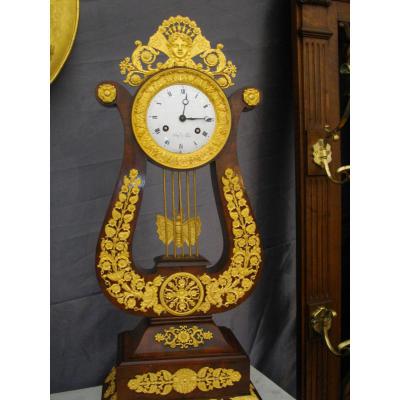
Kinable Clockmaker Royal Palace Empire Clock With Sphinxes In Mahogany Early 19th Century
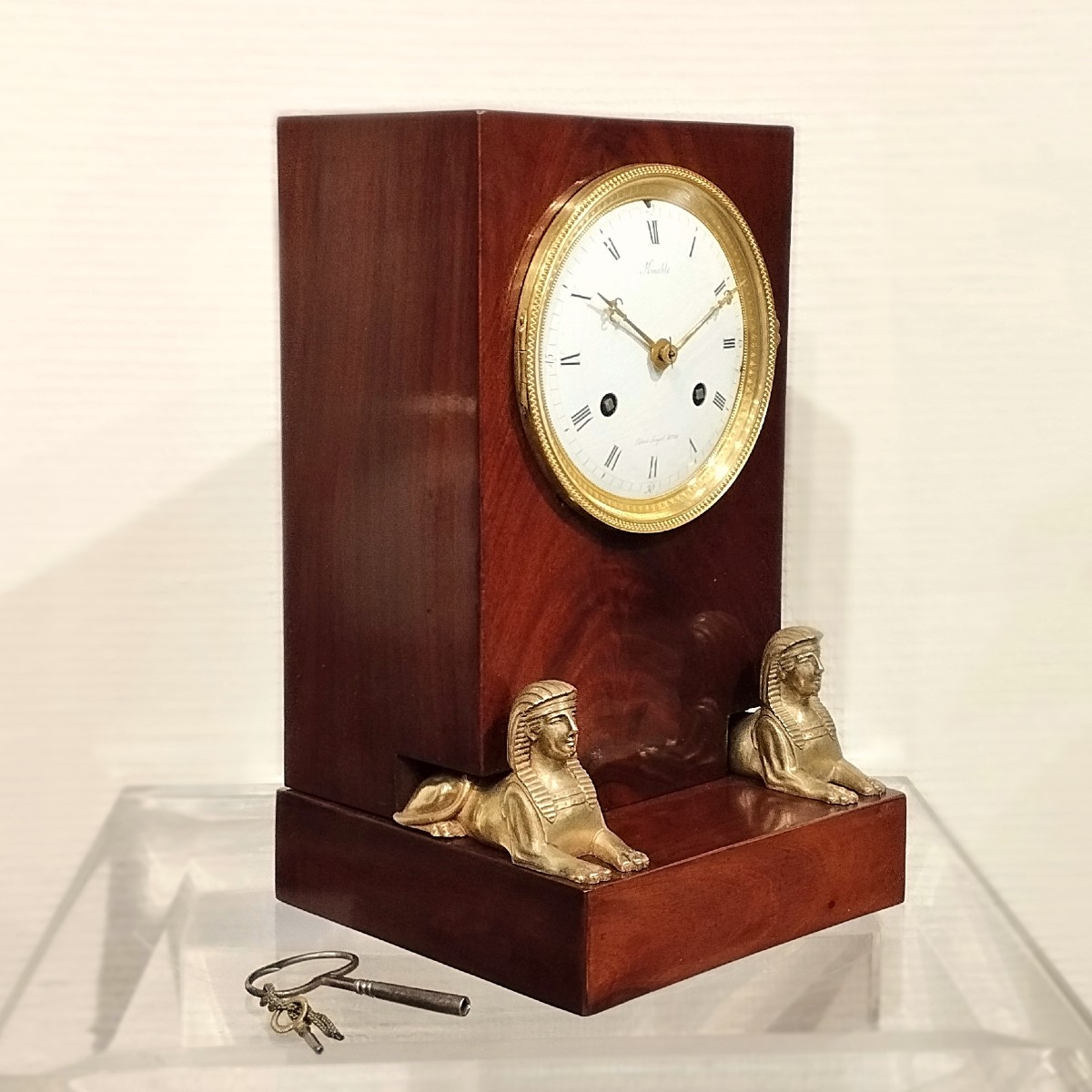
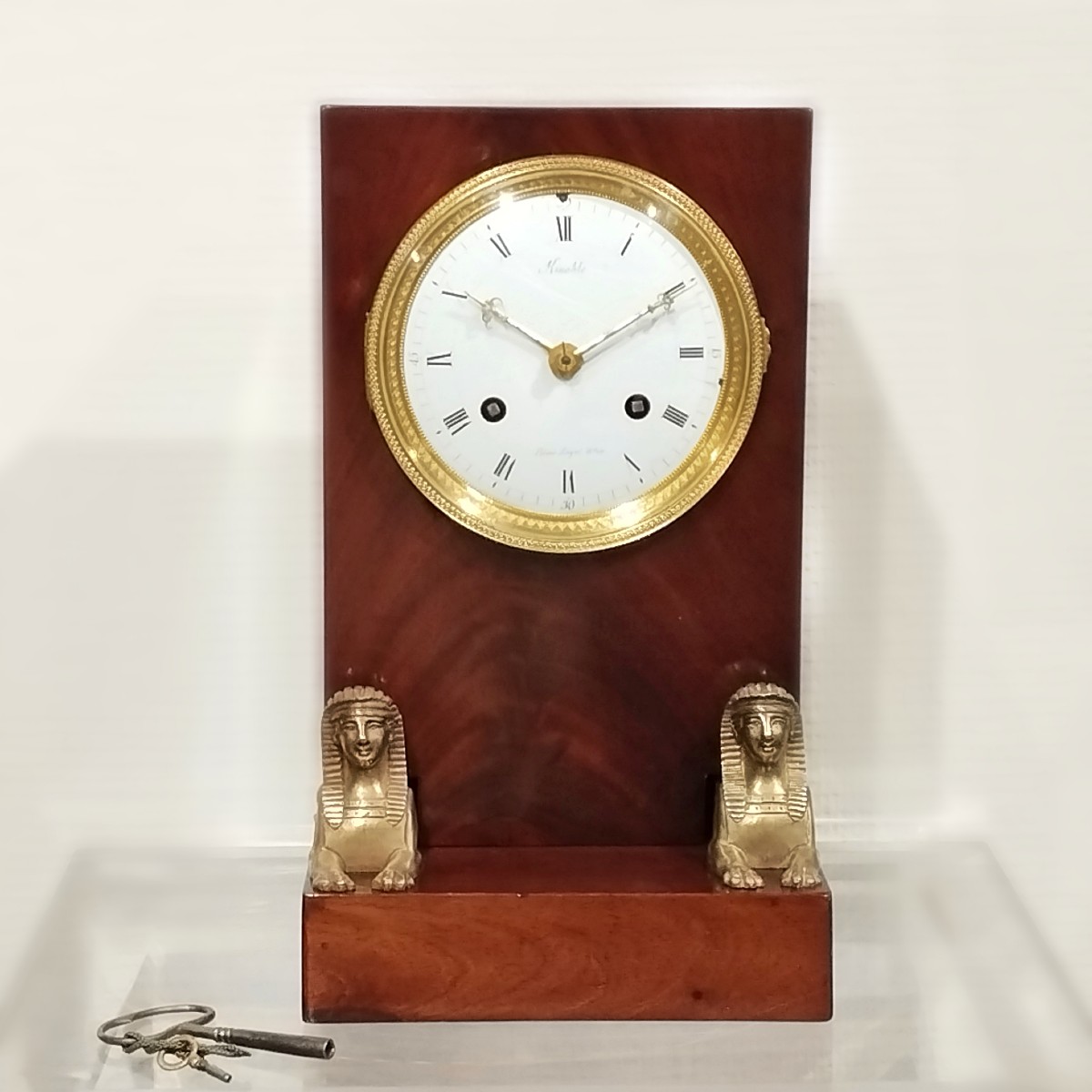

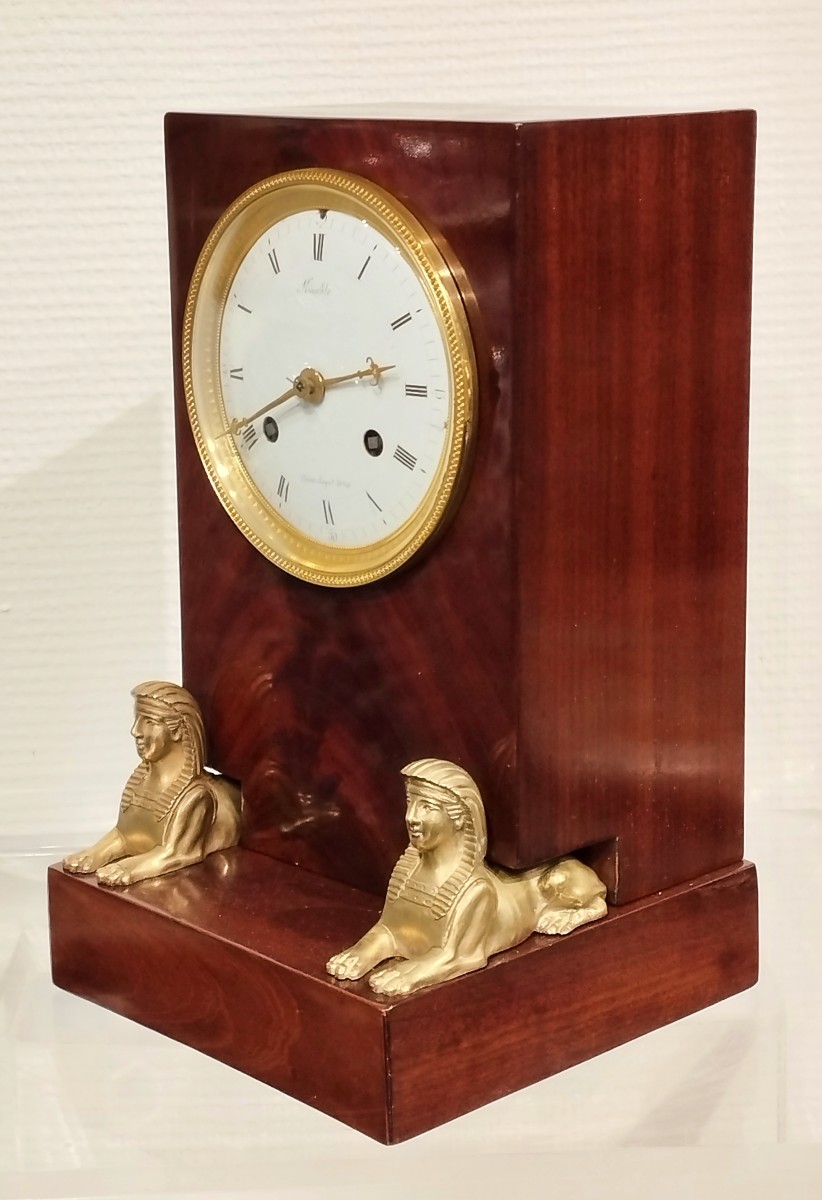

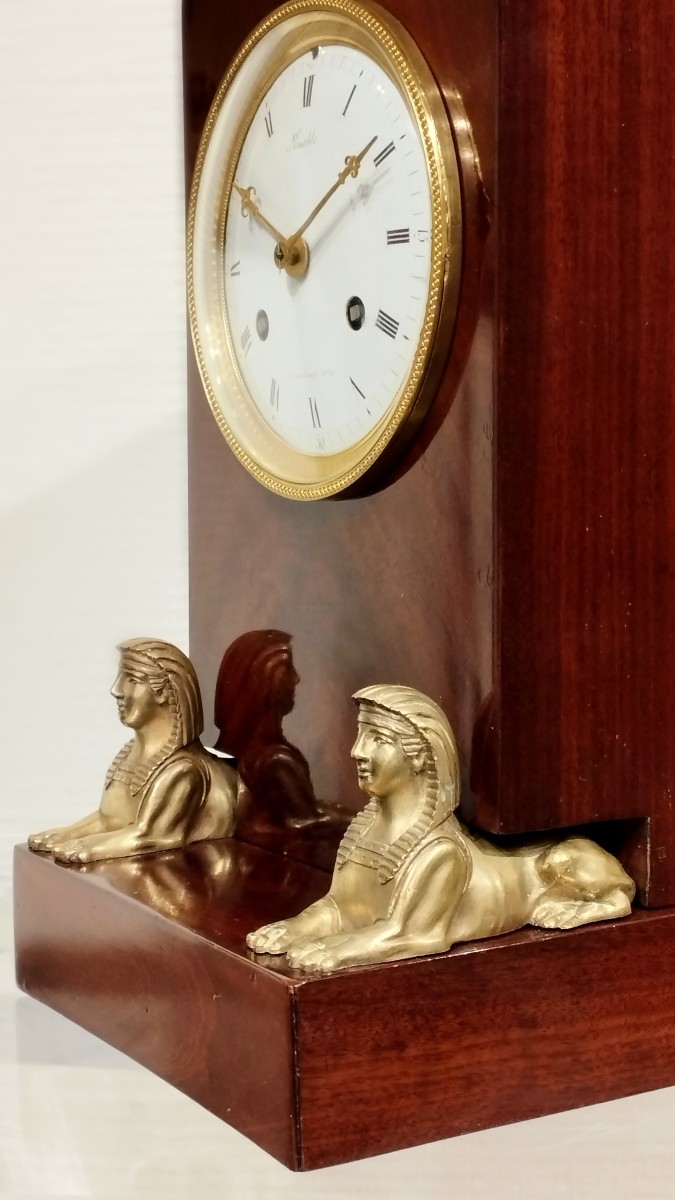
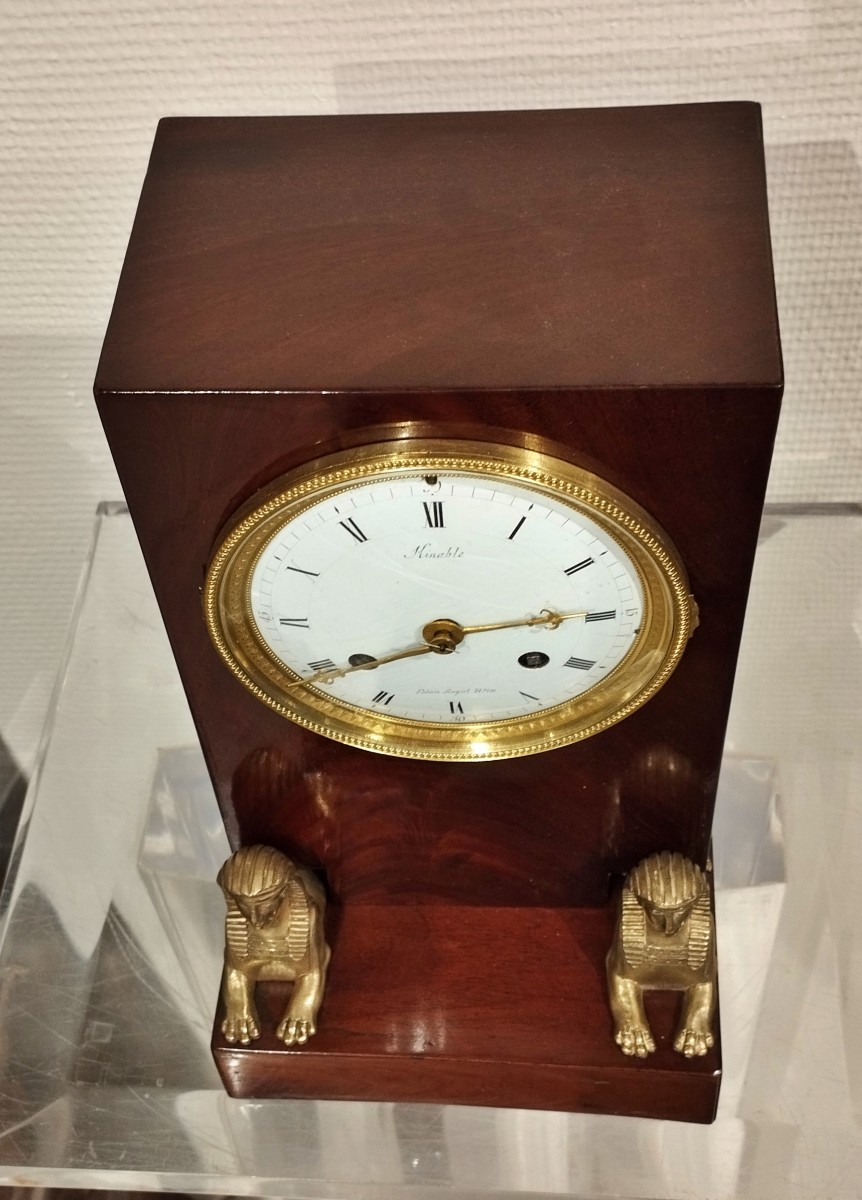
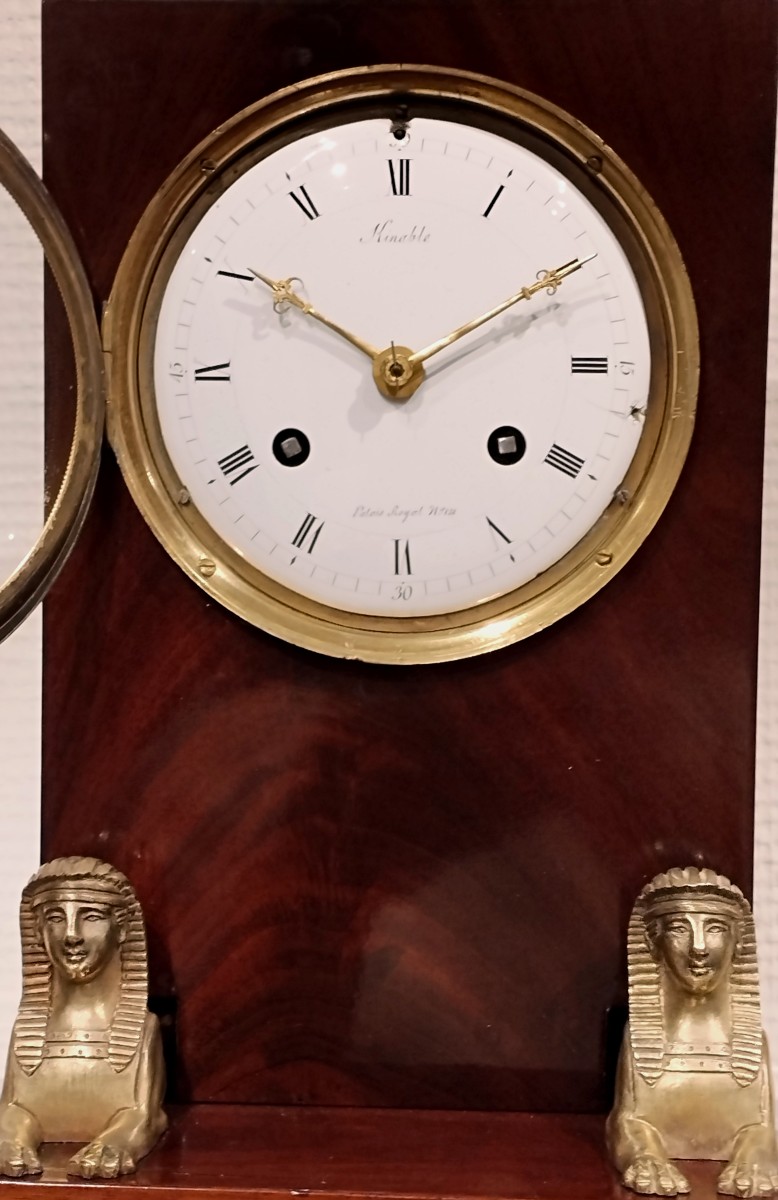
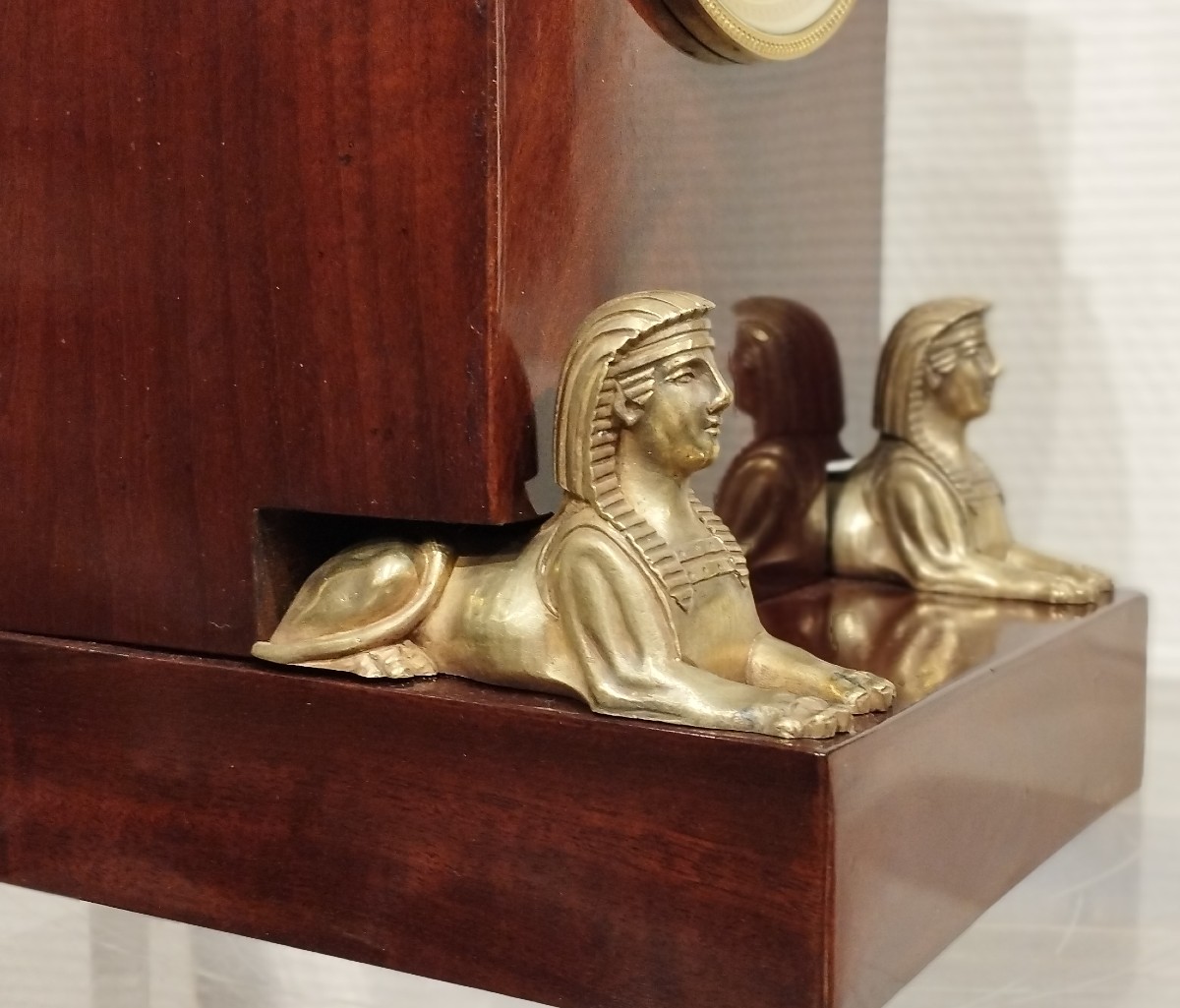
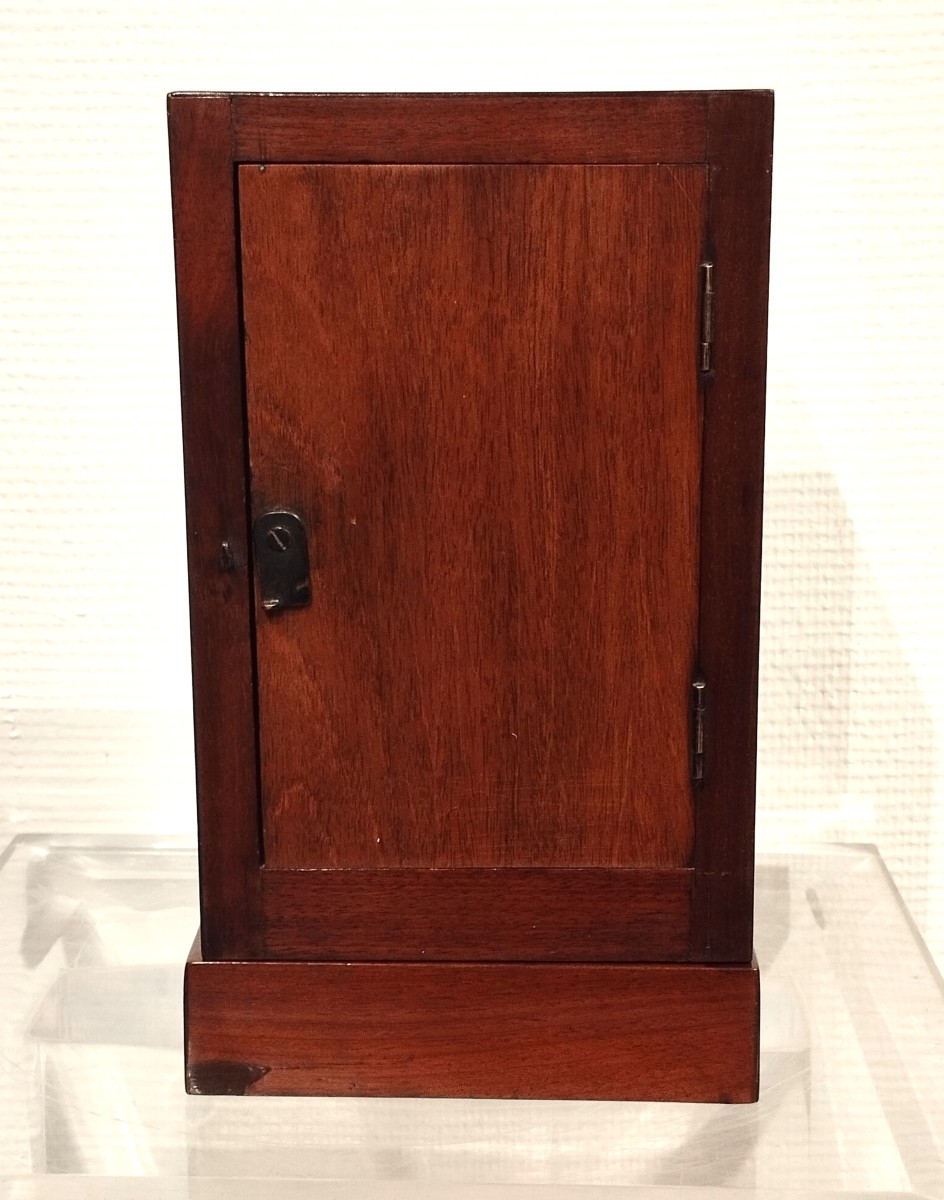
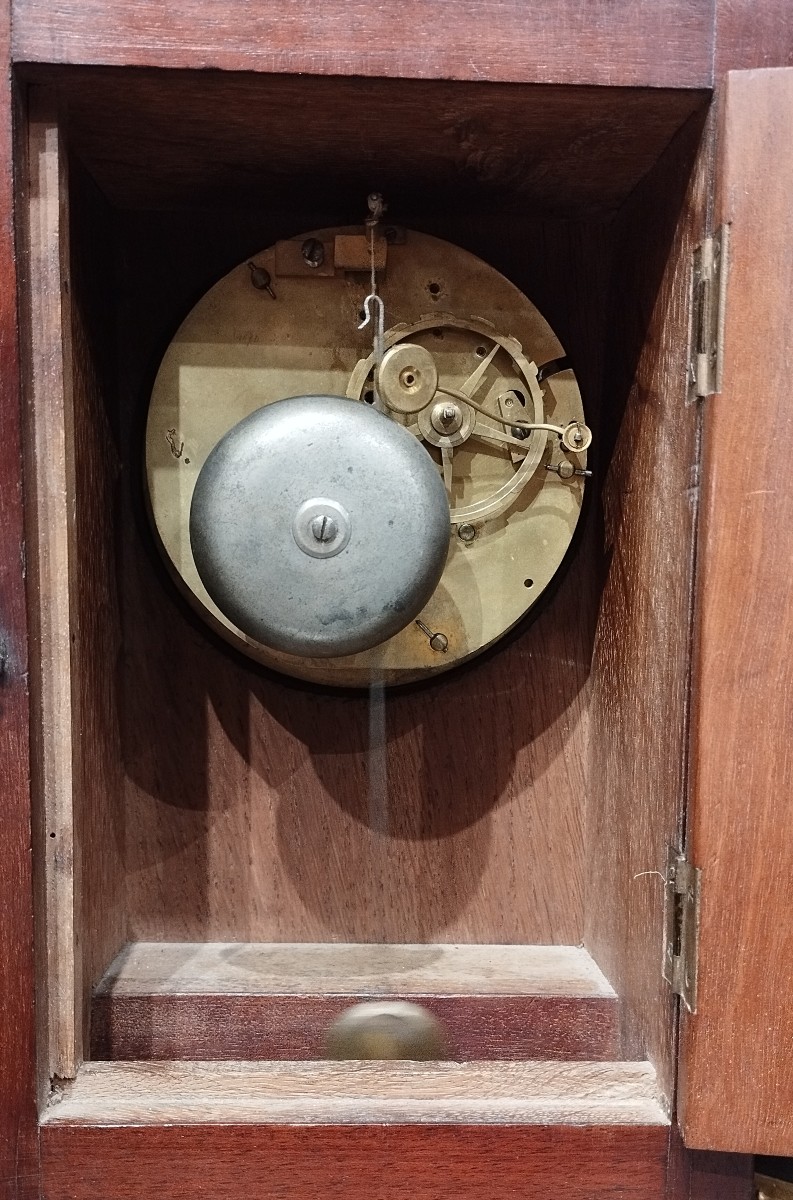
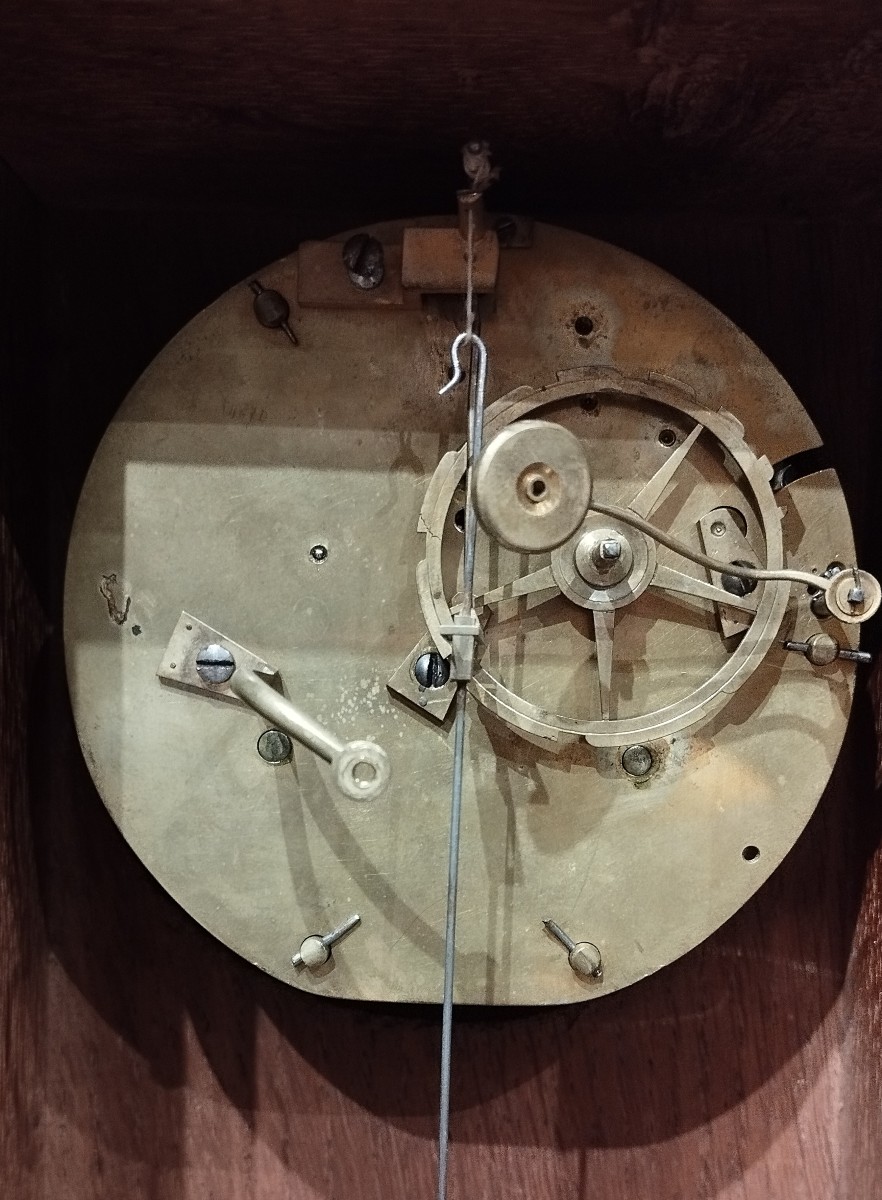


An Empire-style clock in French-varnished mahogany veneer, resting on two gilt-bronze sphinxes, with a white enamel dial marked "Kinable Palais Royal n° 131," Roman numerals with a minute track, protected by a domed glass door framed in chased gilt-brass. The clock features a wire-driven movement with its original hands and key. It strikes the hours and half-hours. The time is adjusted by a silk thread at twelve o'clock with its key. The clock is in very good original condition and in perfect working order. Height 28 cm, width 16.5 cm, depth 16 cm. Dieudonné Kinable, active between 1780 and 1825, was among the most important Parisian clockmakers of the late 18th century. Located at number 131 Palais Royal, he was notably one of the most important purchasers of lyre-shaped porcelain clock cases from the Sèvres porcelain factory, acquiring twenty-one cases of this model in various colors. His reputation subsequently allowed him to work alongside renowned bronze casters, cabinetmakers, and enamelers, such as the celebrated enamelers Joseph Coteau (1740-1801) and Etienne Gobin, known as Dubuisson (1731-1815). During the Empire, some of his creations were recorded in the collections of leading collectors, notably the Duchess of Fitz-James and André Masséna, Prince of Essling, Duke of Rivoli, a former Marshal of Napoleon. Dieudonné Kinable is referenced in: Tardy's Dictionnaire des Horlogers français (Dictionary of French Clockmakers), Pierre Kjellberg's Encyclopédie de la Pendule française (Encyclopedia of French Clocks). Museums holding clocks by Kinable: [list of museums]. Baltimore: the Walters Art Gallery. London: Royal collections
Explore similar pieces and discover your ideal find:
Mantel Clocks