


Christ Holding The Cross, Patinated Oak Sculpture, Baroque Period 17th Century
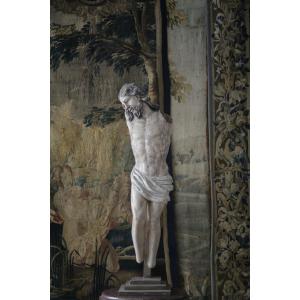
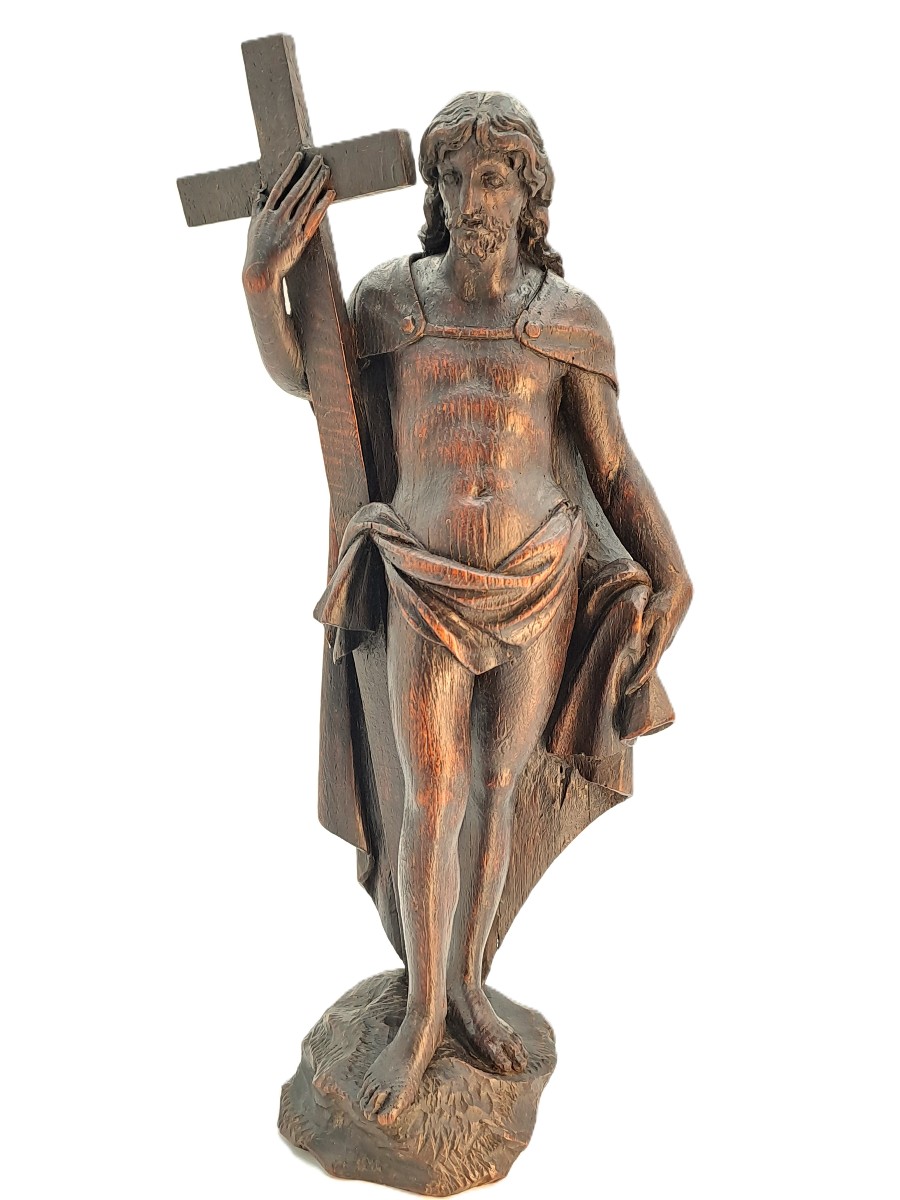
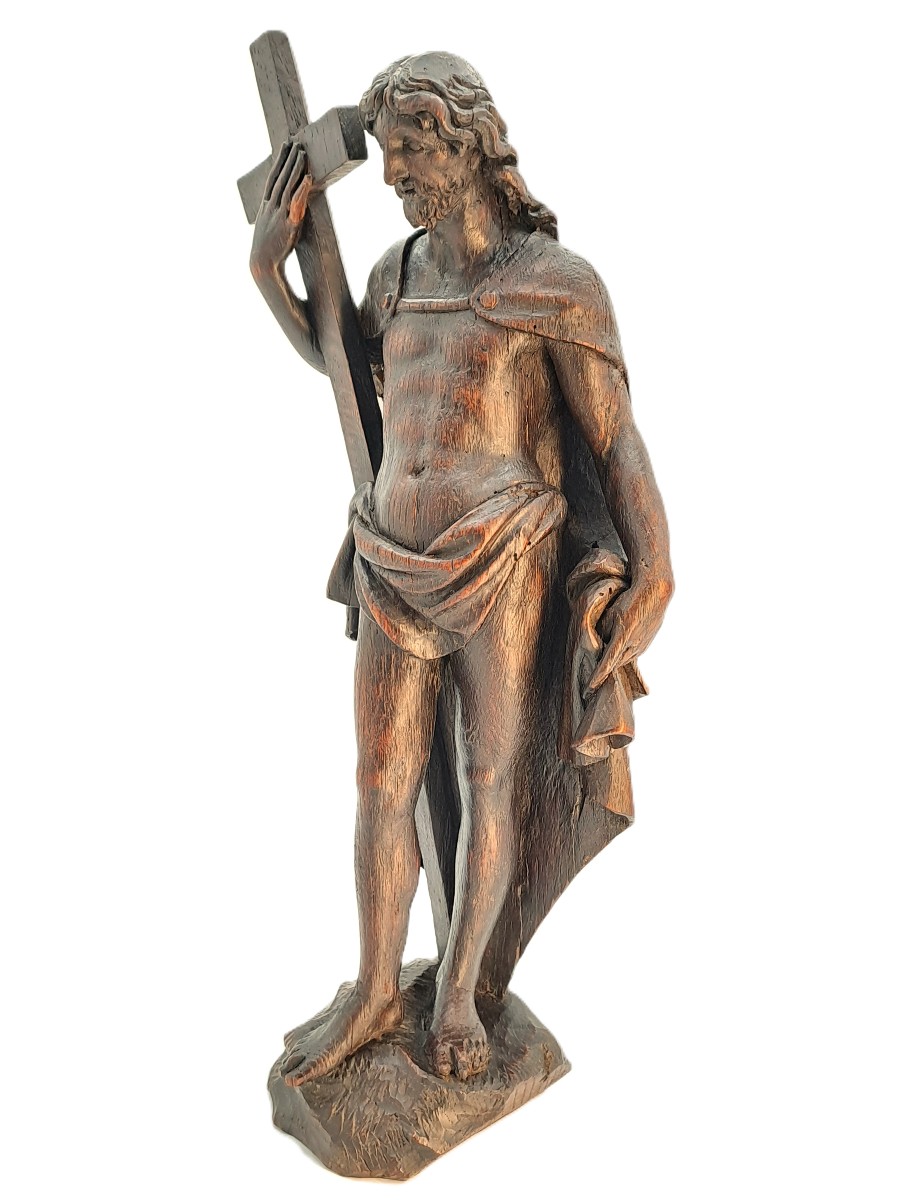
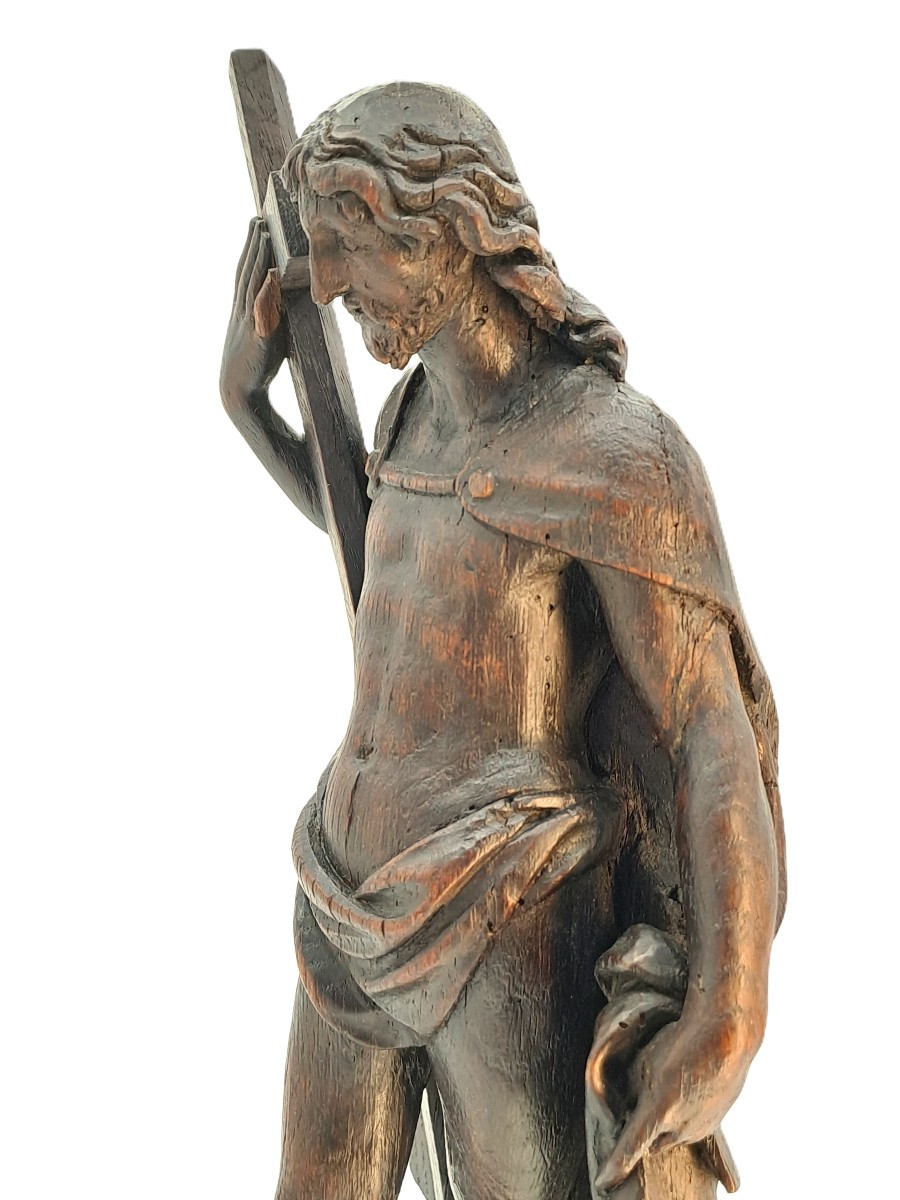
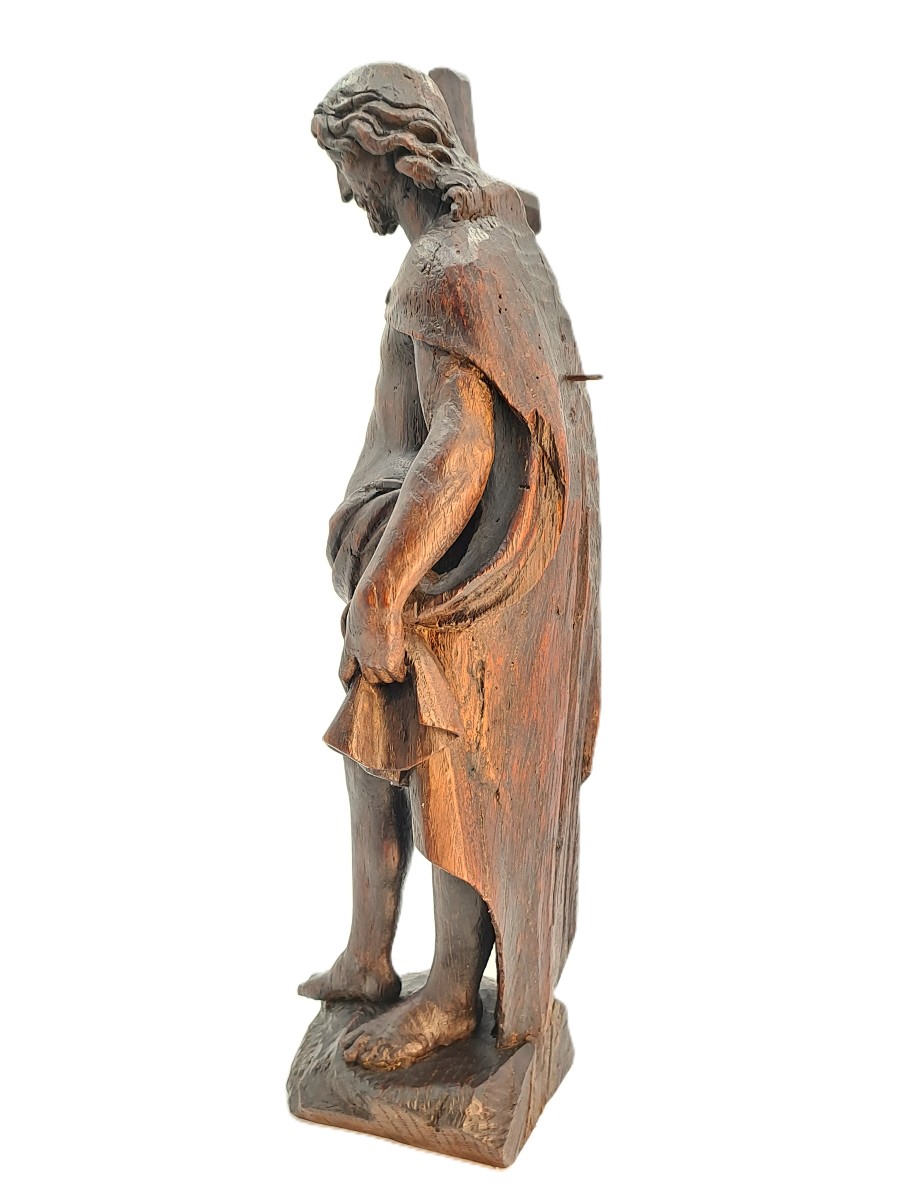
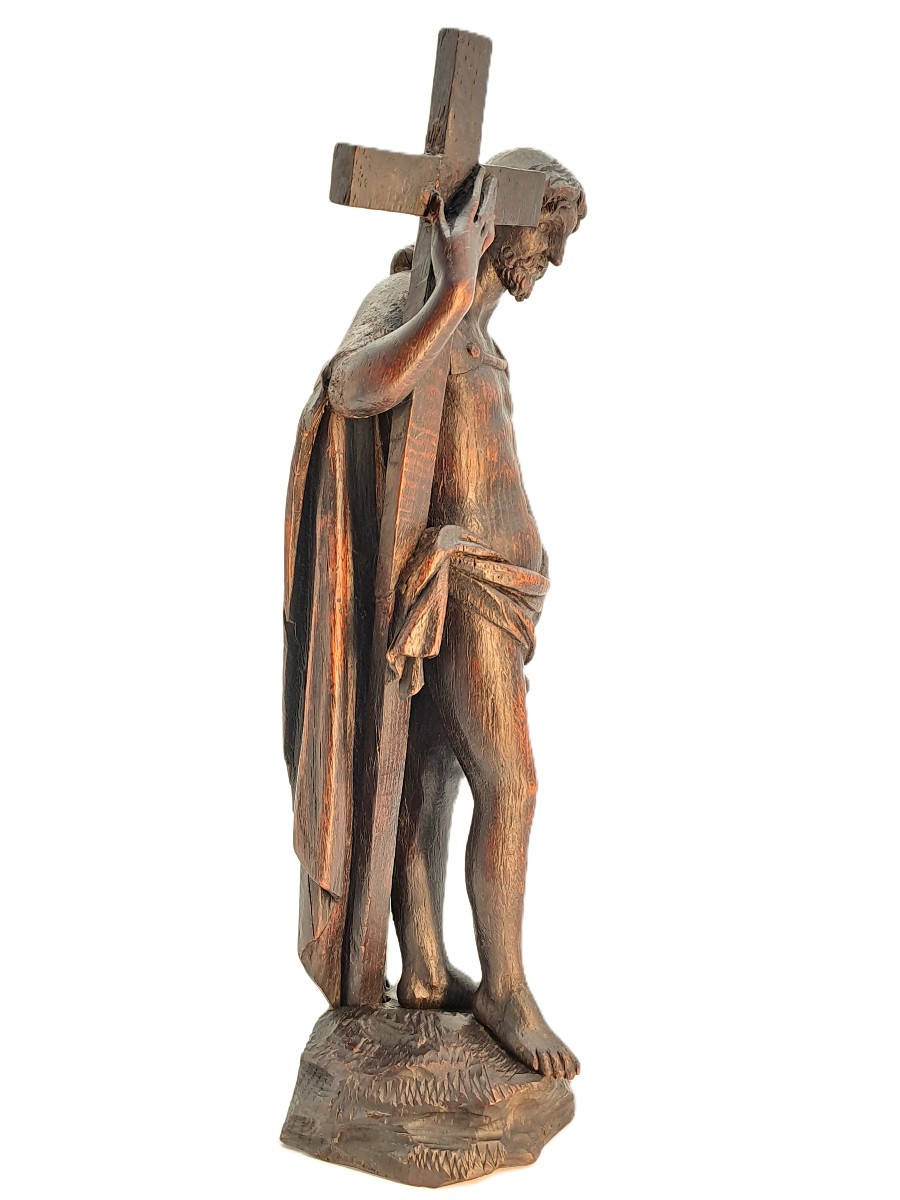
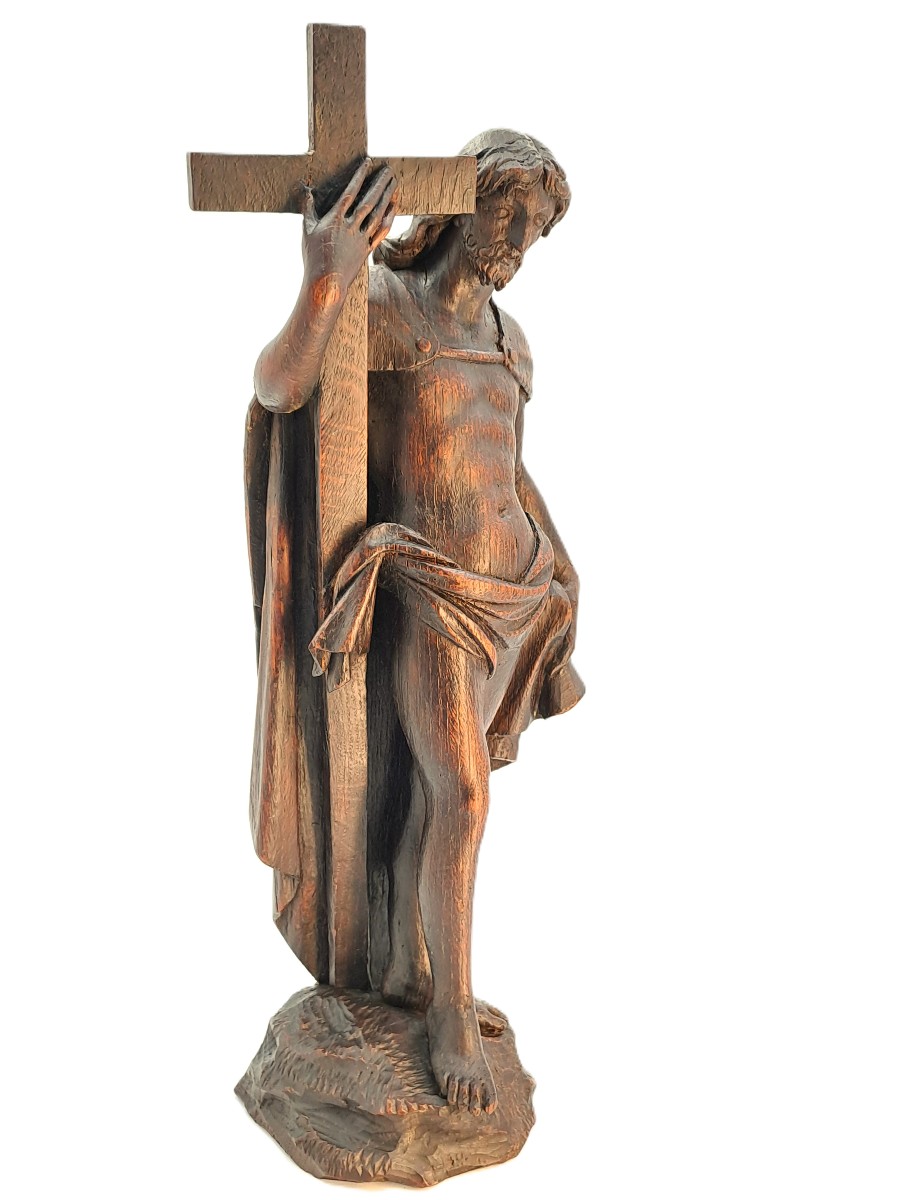
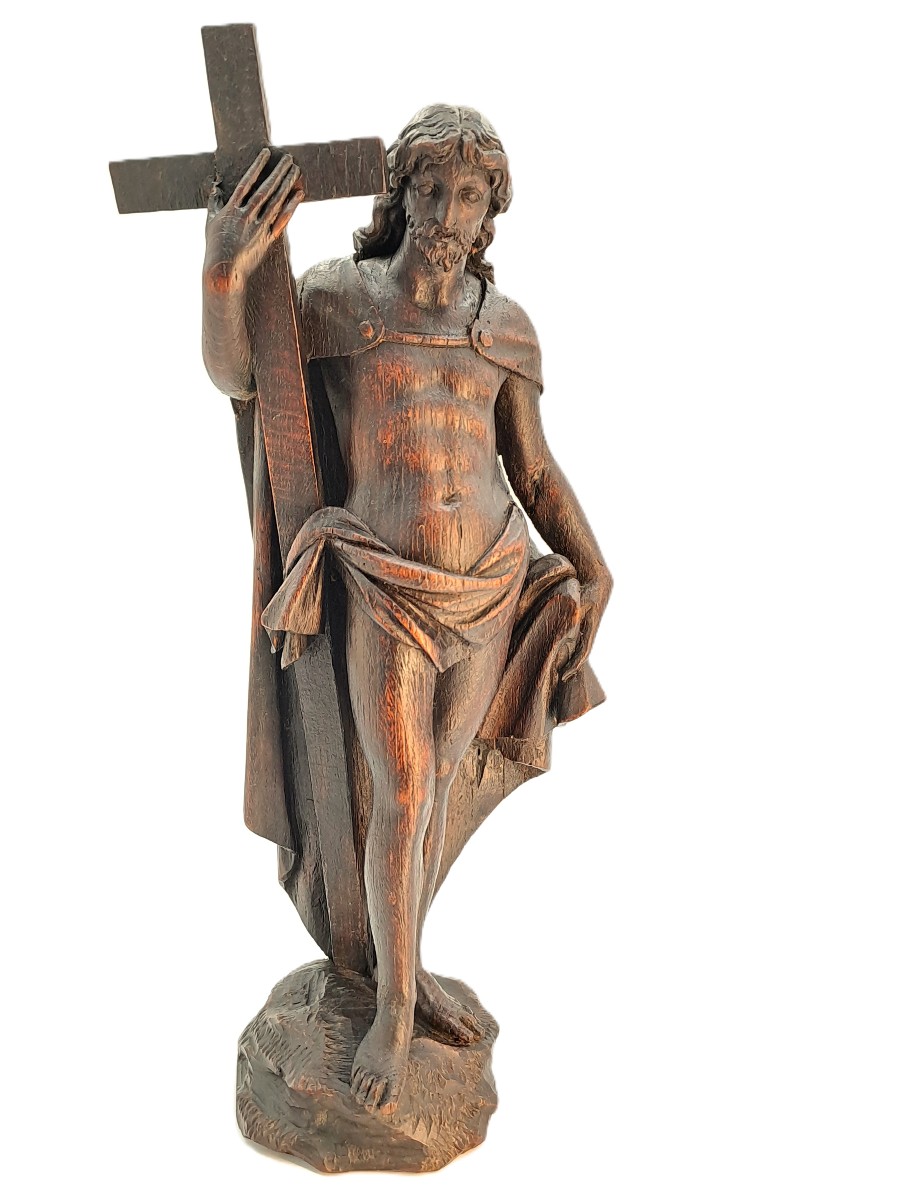
A sculpture in the round, carved in oak with a brown patina. A remarkable example of 17th-century Baroque, in the wake of the Counter-Reformation, it depicts Christ standing upright, holding the Cross, in a contrapposto pose, also known as a hip pose, where the weight of the body rests primarily on the leg firmly planted on the ground, while the other is extended and slightly bent.
This pose lends both a dynamic asymmetry and a supple, elegant silhouette to the composition, highlighting the musculature of the body and creating a more lifelike impression than a completely frontal posture would have conveyed.
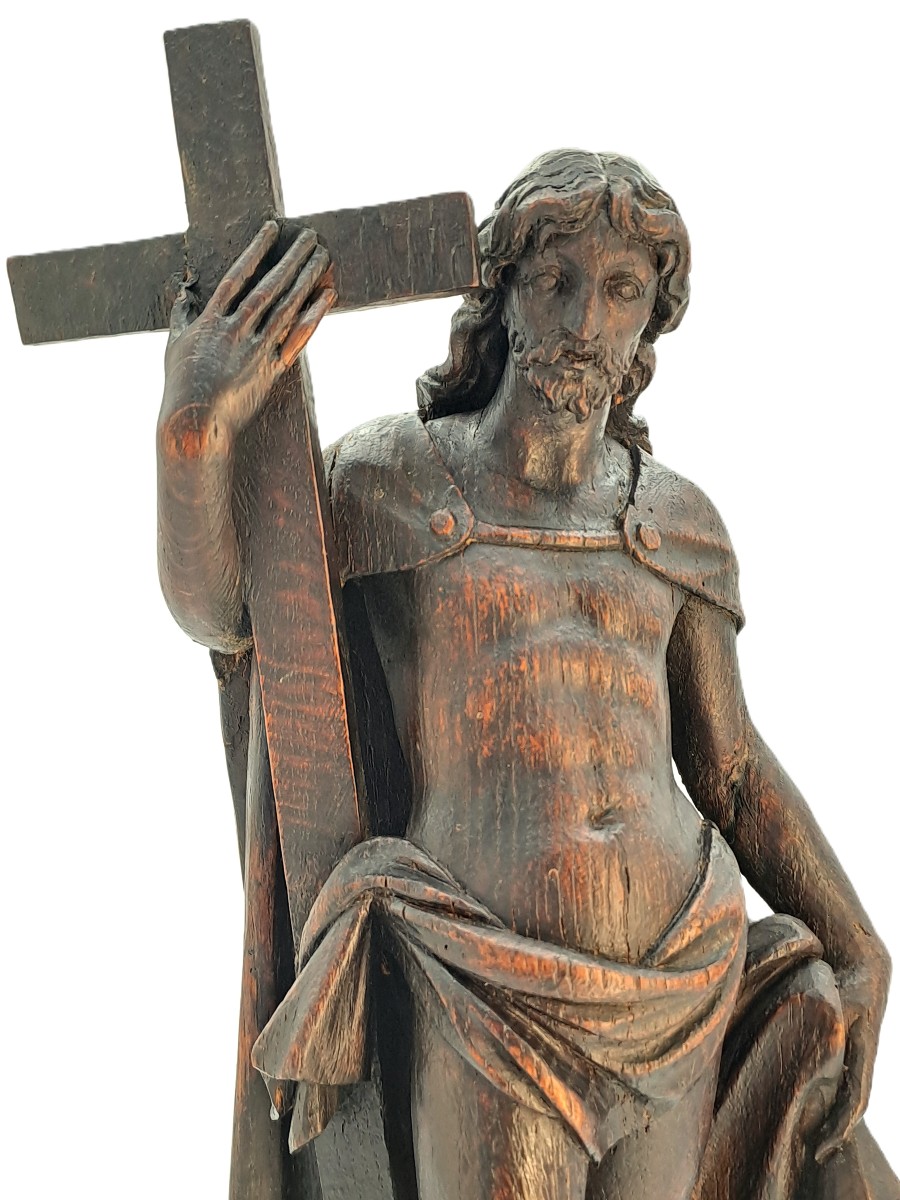
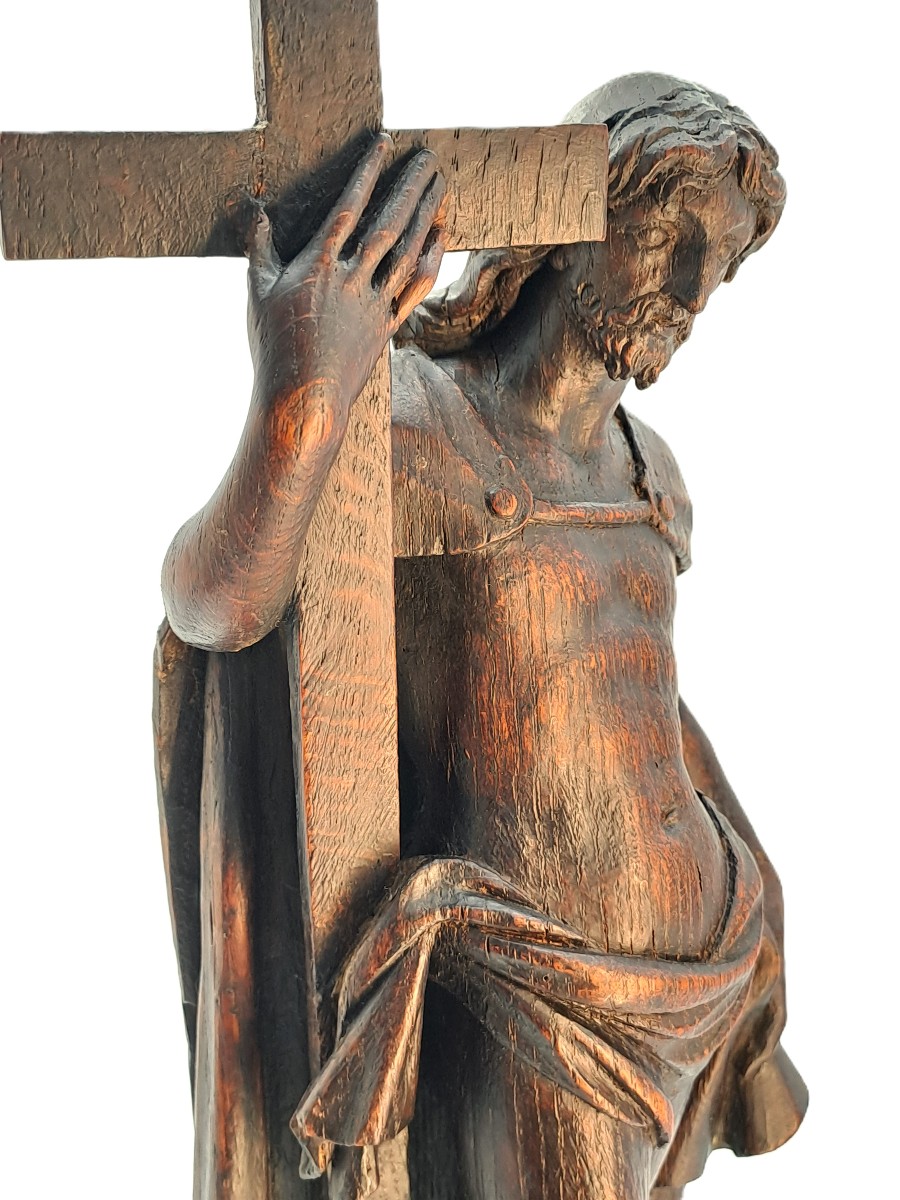
Christ is clothed in a loincloth draped around his hips in numerous folds, his shoulders covered by the cloak of mockery, or purple mantle, a color reserved for royalty, as he was accused of presenting himself as the "King of the Jews."
This episode from the Passion of Christ, preceding his death, has been the subject of numerous depictions, primarily in painting, known as Christ Mocked or Christ in Disgrace.
The moment represented is one of the most intense of the Passion, when Christ, after enduring the mockery and torture of his executioners, is given the Cross before setting out to ascend Calvary where he will meet his death.
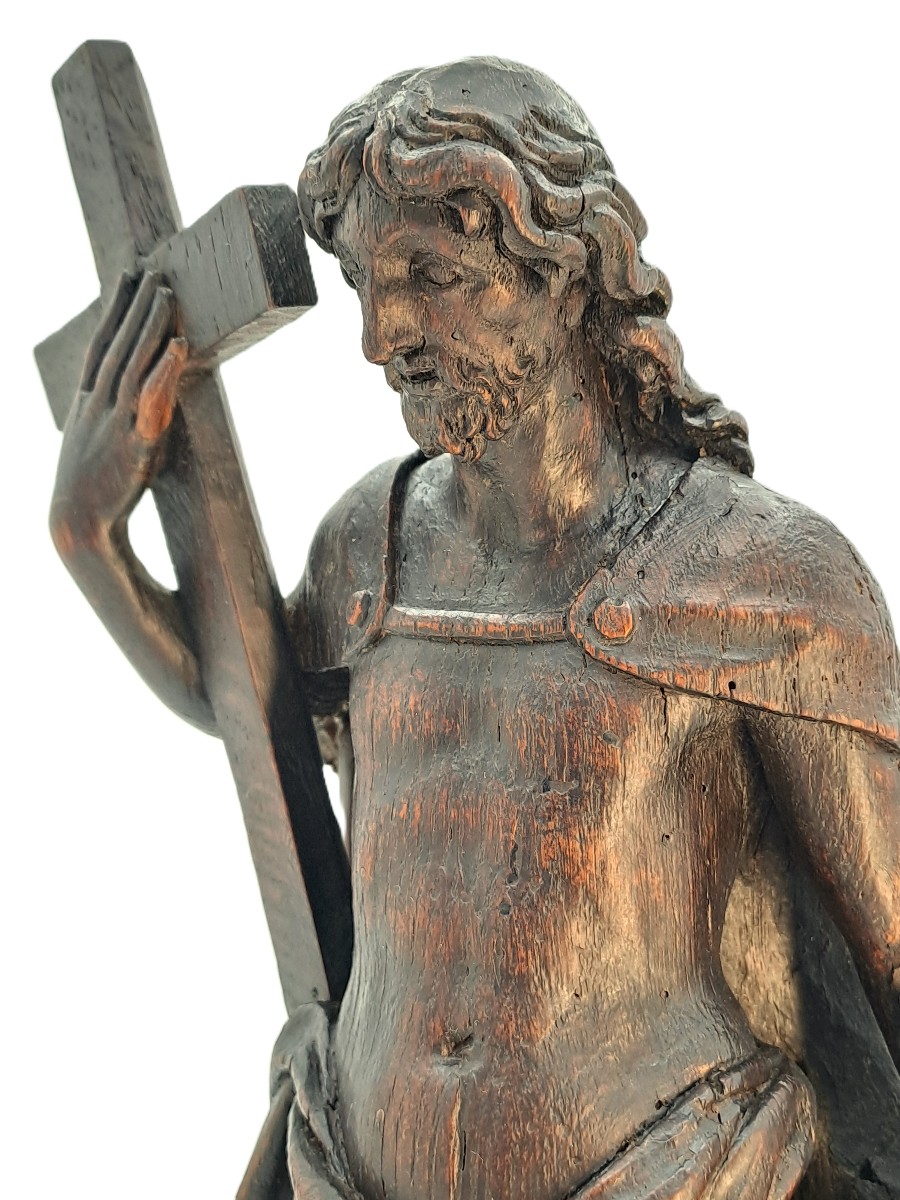
In contrast to traditional iconography, which focuses on Christ's suffering, he is depicted here without the slightest sign of the tortures he endured and without the crown of thorns on his head. His perfectly formed body appears strong and healthy, unyielding under the weight of the Cross, and his face reveals a pensive expression imbued with great serenity. The subject as a whole embodies a form of majesty that commands respect.
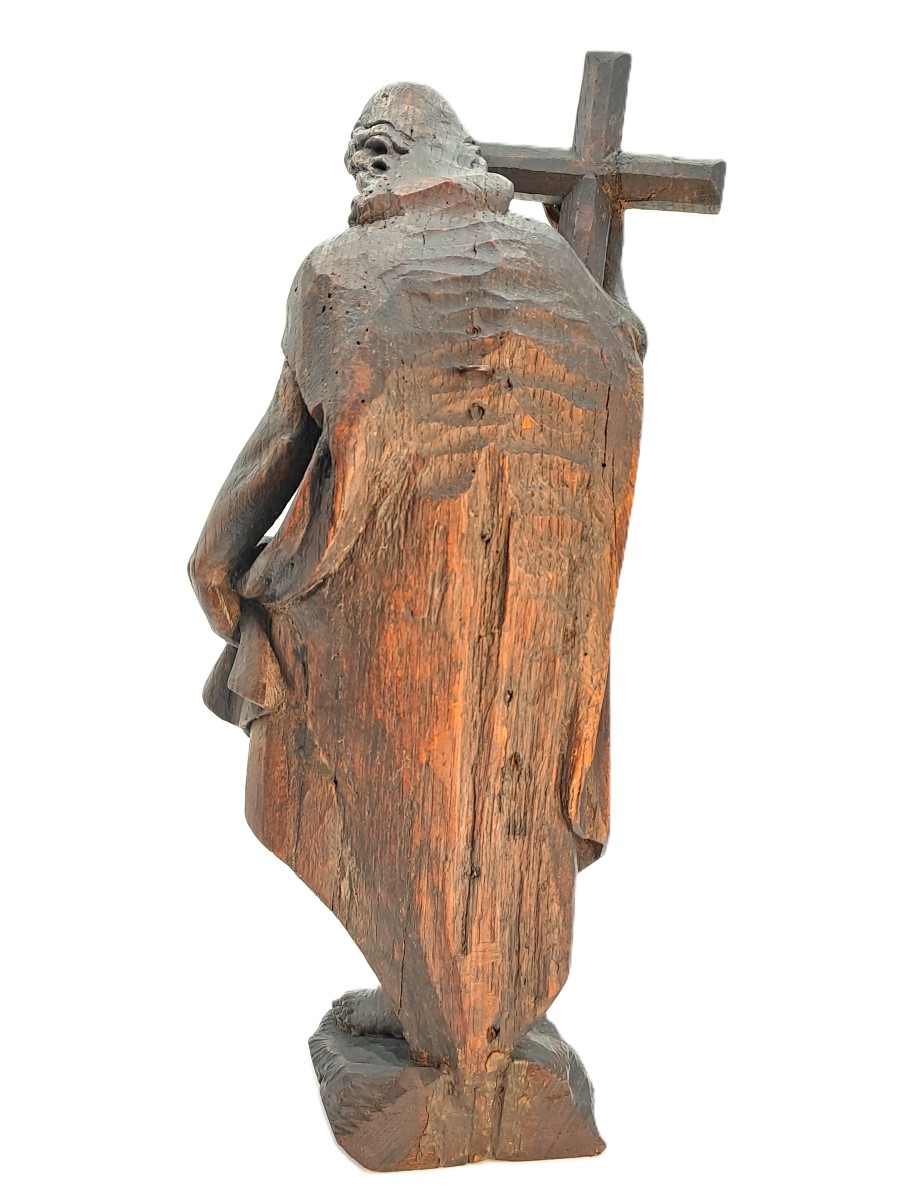
This period sculpture is in good overall condition. Note a few exit holes from wood-boring insects, slight cracks, and old restorations. There is a small chip at the tip of the big toe on the right foot.
In sculpture, representations of Christ standing on the Cross are rare, but among the most iconic is Michelangelo's Christ the Redeemer, completed in 1521, which can be admired in the Church of Santa Maria sopra Minerva in Rome. Antoine Guépin's Christ Holding His Cross, dated 1660 and now in the Musée des Augustins in Toulouse, adopts similar conventions.
This pose lends both a dynamic asymmetry and a supple, elegant silhouette to the composition, highlighting the musculature of the body and creating a more lifelike impression than a completely frontal posture would have conveyed.
Christ is clothed in a loincloth draped around his hips in numerous folds, his shoulders covered by the cloak of mockery, or purple mantle, a color reserved for royalty, as he was accused of presenting himself as the "King of the Jews."
This episode from the Passion of Christ, preceding his death, has been the subject of numerous depictions, primarily in painting, known as Christ Mocked or Christ in Disgrace.
The moment represented is one of the most intense of the Passion, when Christ, after enduring the mockery and torture of his executioners, is given the Cross before setting out to ascend Calvary where he will meet his death.
In contrast to traditional iconography, which focuses on Christ's suffering, he is depicted here without the slightest sign of the tortures he endured and without the crown of thorns on his head. His perfectly formed body appears strong and healthy, unyielding under the weight of the Cross, and his face reveals a pensive expression imbued with great serenity. The subject as a whole embodies a form of majesty that commands respect.
This period sculpture is in good overall condition. Note a few exit holes from wood-boring insects, slight cracks, and old restorations. There is a small chip at the tip of the big toe on the right foot.
In sculpture, representations of Christ standing on the Cross are rare, but among the most iconic is Michelangelo's Christ the Redeemer, completed in 1521, which can be admired in the Church of Santa Maria sopra Minerva in Rome. Antoine Guépin's Christ Holding His Cross, dated 1660 and now in the Musée des Augustins in Toulouse, adopts similar conventions.
1 850 €
Period: 17th century
Style: Renaissance, Louis 13th
Condition: Good condition
Material: Oak
Width: 20 cm
Height: 38 cm
Depth: 10 cm
Reference (ID): 1644816
Availability: In stock
Print