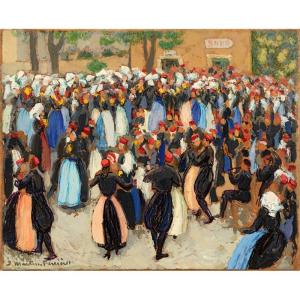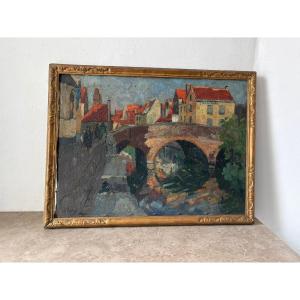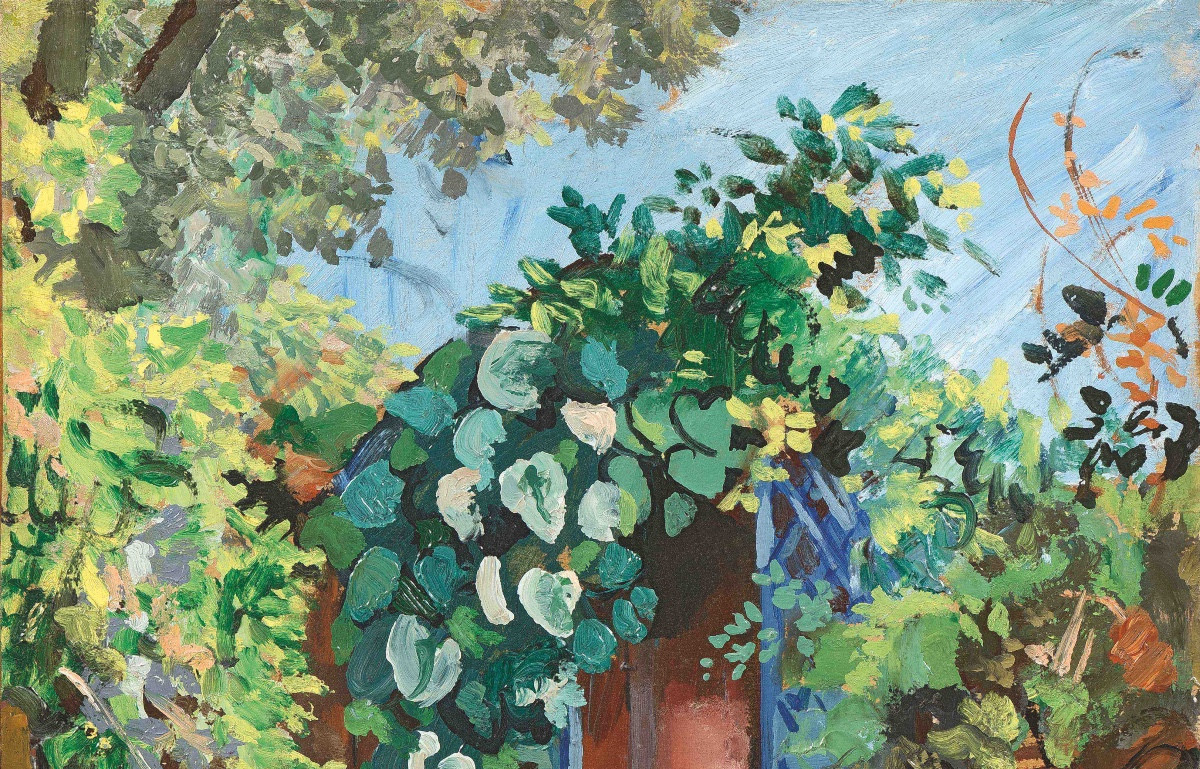


Alfred Lombard (1884 - 1973) — The Arbor In Autun, C. 1924
Artist: Alfred Lombard
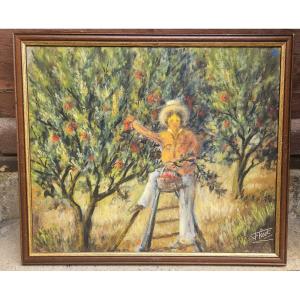
The arbor in Autun, c. 1924
Oil on paper mounted on canvas, stamp lower left.
48 x 39 cm
Exhibitions:
Alfred Lombard Exhibition, Galerie Druet, Paris, 9-20 February 1925, no. 27.
Alfred Lombard, Musée de la Vieille Charité, Marseille, 17 October - 28 November 1987, reproduced in the exhibition catalogue under no. 31, p. 57.
Alfred Lombard, Galerie Stammegna, Marseille, 16-30 September 2011, under the title Autun, no. 24.
Alfred Lombard, Colour and Intimacy, Musée Regards de Provence, Marseille, 13 March - 23 August 2015, reproduced in the exhibition catalogue on p. 75.
Bibliography:
Giulia Pentcheff, Alfred Lombard, Galerie Alexis Pentcheff, Marseille, 2019, reproduced under no. 132 on p. 199.
Alfred Lombard: A Free Spirit and Pioneer of Modernity in Provence
Born in Marseille in 1884 into a bourgeois family, Alfred Lombard was an artist with a unique trajectory, deeply rooted in Provence yet open to the avant-garde movements of his time. Initially pursuing studies in history and literature to meet family expectations, he quickly abandoned this path to follow his true calling: painting. From the outset, he rejected rigid academicism and sought to learn through direct contact with artworks, artists, and nature. His artistic journey began in the studio of Alphonse Moutte, before developing into a fully independent style. Driven by an ideal of creative freedom, Lombard connected with a generation of Provençal artists—Camoin, Verdilhan, Chabaud, Seyssaud—with whom he shared a common desire to revitalize local art and break the region's cultural isolation. Together, they initiated a "Provençal renaissance" aimed at bringing Marseille and its surroundings to the forefront of the national art scene. This movement was embodied in particular by the creation of the Salon de Provence in 1906 and, a few years later, by the Salons de Mai. Simultaneously, Lombard quickly established himself in the Parisian Salons, where he was recognized as one of the most promising young Fauvist painters. Two solo exhibitions were dedicated to him at the prestigious Rosenberg (1914) and Druet (1925) galleries. However, the artist rejected the commercial interests of the art world and chose to distance himself from it. His financial independence allowed him to pursue an experimental and free body of work, outside of official channels. In the 1920s, his style evolved: less flamboyant, more introspective, he explored still lifes and nudes in refined compositions, where color remained central to his artistic exploration. Then, in the 1930s, he turned to monumental decorative art, notably through his collaboration with the architect Pierre Patout. Together, they created prestigious decorations such as those for the ocean liners Atlantique (1931) and Normandie (1934). Lombard then sought to adapt the achievements of modern painting to the mural scale, in a demanding reflection on the relationships between the artwork, space, and architecture. His approach continued until the 1970s, marked by an openness to abstraction and a constant questioning of the role of the artist and the creative act. Alfred Lombard died in Toulon in 1973. Long overlooked, his work was rediscovered in the 1980s thanks to the efforts of his daughter, Claude Féral, and institutions such as the Musée de l'Annonciade and the Alexis Pentcheff Gallery, which dedicated a major retrospective to him in 2014. The 2019 publication of a monograph and an essay for a catalogue raisonné by Giulia Pentcheff further cemented this belated rediscovery. Today, Lombard stands as an essential, though long forgotten, figure of artistic modernity in Provence—a free, audacious, and unclassifiable painter who masterfully combined tradition, rebellion, and invention.
Discover more of this artist's works on the gallery's website: https://www.galeriepentcheff.fr/fr/peintre-alfred-lombard#Oeuvres
Oil on paper mounted on canvas, stamp lower left.
48 x 39 cm
Exhibitions:
Alfred Lombard Exhibition, Galerie Druet, Paris, 9-20 February 1925, no. 27.
Alfred Lombard, Musée de la Vieille Charité, Marseille, 17 October - 28 November 1987, reproduced in the exhibition catalogue under no. 31, p. 57.
Alfred Lombard, Galerie Stammegna, Marseille, 16-30 September 2011, under the title Autun, no. 24.
Alfred Lombard, Colour and Intimacy, Musée Regards de Provence, Marseille, 13 March - 23 August 2015, reproduced in the exhibition catalogue on p. 75.
Bibliography:
Giulia Pentcheff, Alfred Lombard, Galerie Alexis Pentcheff, Marseille, 2019, reproduced under no. 132 on p. 199.
Alfred Lombard: A Free Spirit and Pioneer of Modernity in Provence
Born in Marseille in 1884 into a bourgeois family, Alfred Lombard was an artist with a unique trajectory, deeply rooted in Provence yet open to the avant-garde movements of his time. Initially pursuing studies in history and literature to meet family expectations, he quickly abandoned this path to follow his true calling: painting. From the outset, he rejected rigid academicism and sought to learn through direct contact with artworks, artists, and nature. His artistic journey began in the studio of Alphonse Moutte, before developing into a fully independent style. Driven by an ideal of creative freedom, Lombard connected with a generation of Provençal artists—Camoin, Verdilhan, Chabaud, Seyssaud—with whom he shared a common desire to revitalize local art and break the region's cultural isolation. Together, they initiated a "Provençal renaissance" aimed at bringing Marseille and its surroundings to the forefront of the national art scene. This movement was embodied in particular by the creation of the Salon de Provence in 1906 and, a few years later, by the Salons de Mai. Simultaneously, Lombard quickly established himself in the Parisian Salons, where he was recognized as one of the most promising young Fauvist painters. Two solo exhibitions were dedicated to him at the prestigious Rosenberg (1914) and Druet (1925) galleries. However, the artist rejected the commercial interests of the art world and chose to distance himself from it. His financial independence allowed him to pursue an experimental and free body of work, outside of official channels. In the 1920s, his style evolved: less flamboyant, more introspective, he explored still lifes and nudes in refined compositions, where color remained central to his artistic exploration. Then, in the 1930s, he turned to monumental decorative art, notably through his collaboration with the architect Pierre Patout. Together, they created prestigious decorations such as those for the ocean liners Atlantique (1931) and Normandie (1934). Lombard then sought to adapt the achievements of modern painting to the mural scale, in a demanding reflection on the relationships between the artwork, space, and architecture. His approach continued until the 1970s, marked by an openness to abstraction and a constant questioning of the role of the artist and the creative act. Alfred Lombard died in Toulon in 1973. Long overlooked, his work was rediscovered in the 1980s thanks to the efforts of his daughter, Claude Féral, and institutions such as the Musée de l'Annonciade and the Alexis Pentcheff Gallery, which dedicated a major retrospective to him in 2014. The 2019 publication of a monograph and an essay for a catalogue raisonné by Giulia Pentcheff further cemented this belated rediscovery. Today, Lombard stands as an essential, though long forgotten, figure of artistic modernity in Provence—a free, audacious, and unclassifiable painter who masterfully combined tradition, rebellion, and invention.
Discover more of this artist's works on the gallery's website: https://www.galeriepentcheff.fr/fr/peintre-alfred-lombard#Oeuvres
2 500 €
Period: 20th century
Style: Modern Art
Condition: Good condition
Material: Oil painting on paper
Reference (ID): 1642555
Availability: In stock
Print