THIS OBJECT WAS SOLD
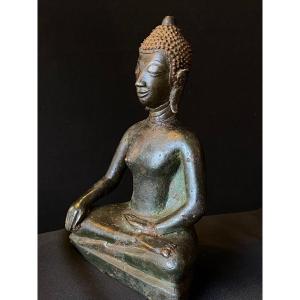
Buddha Mucalinda, Khmer
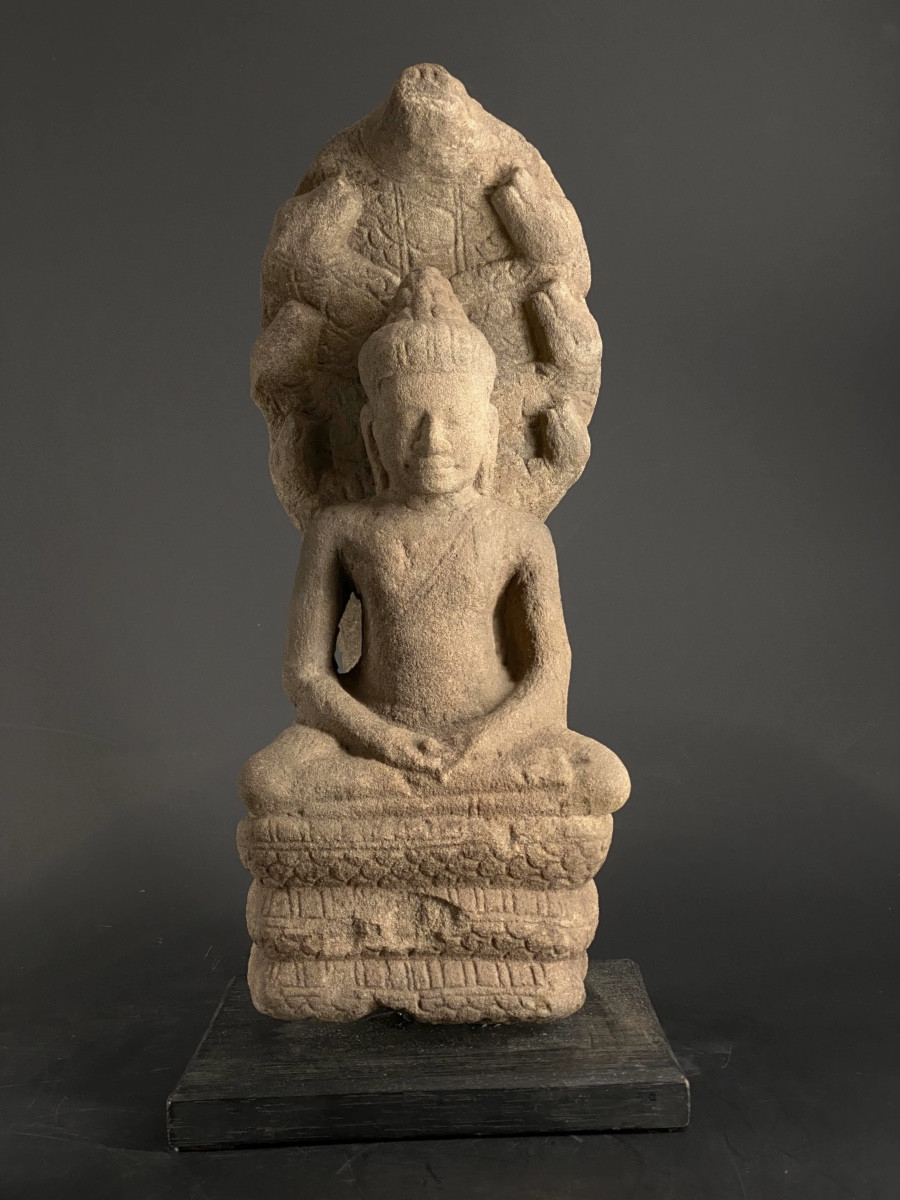
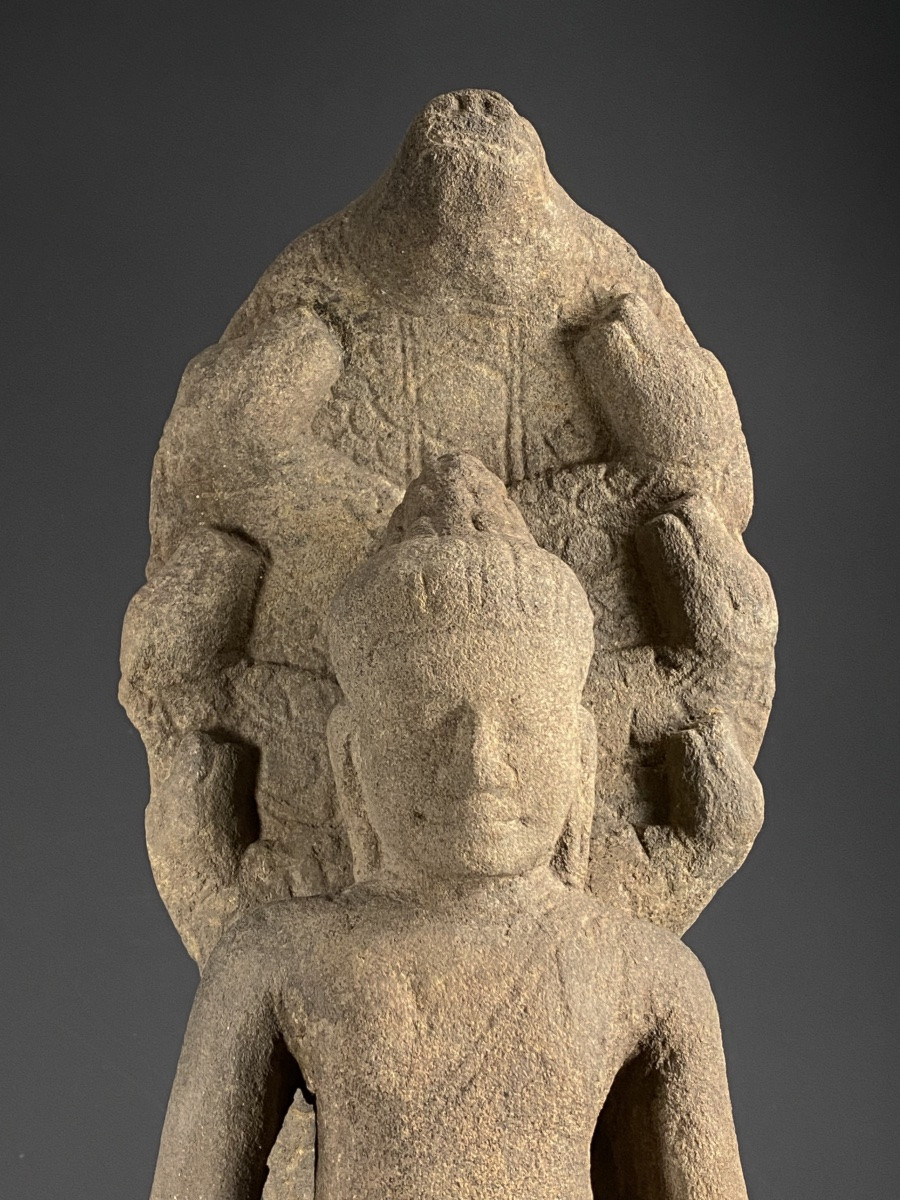
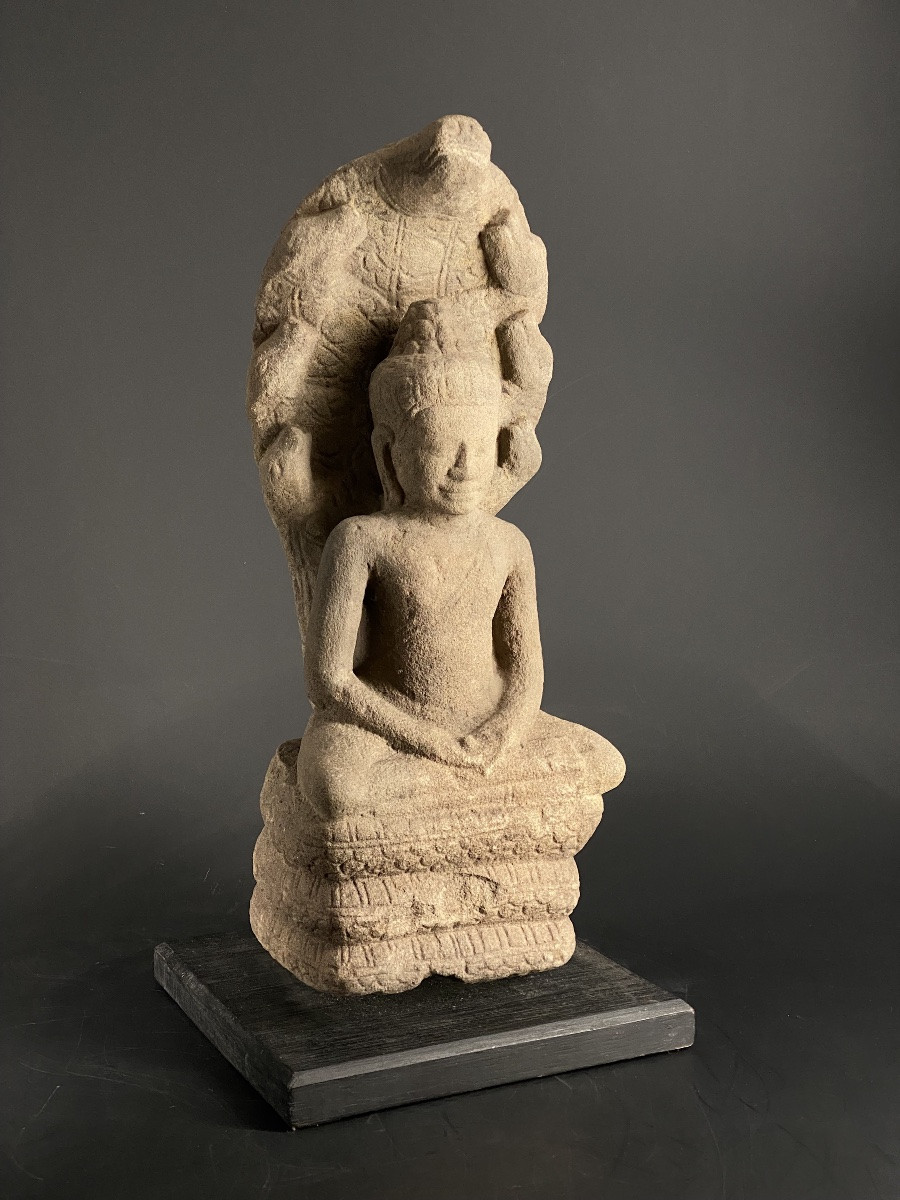
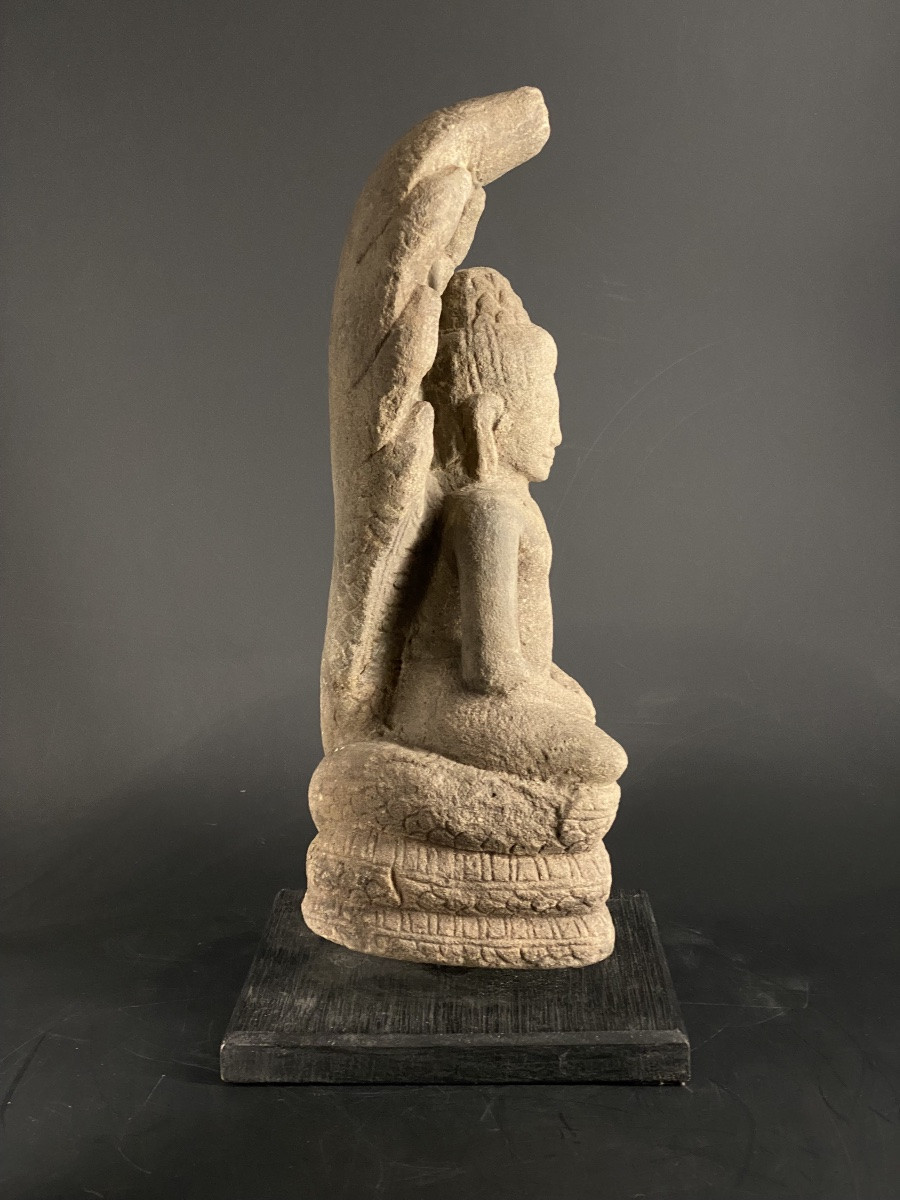
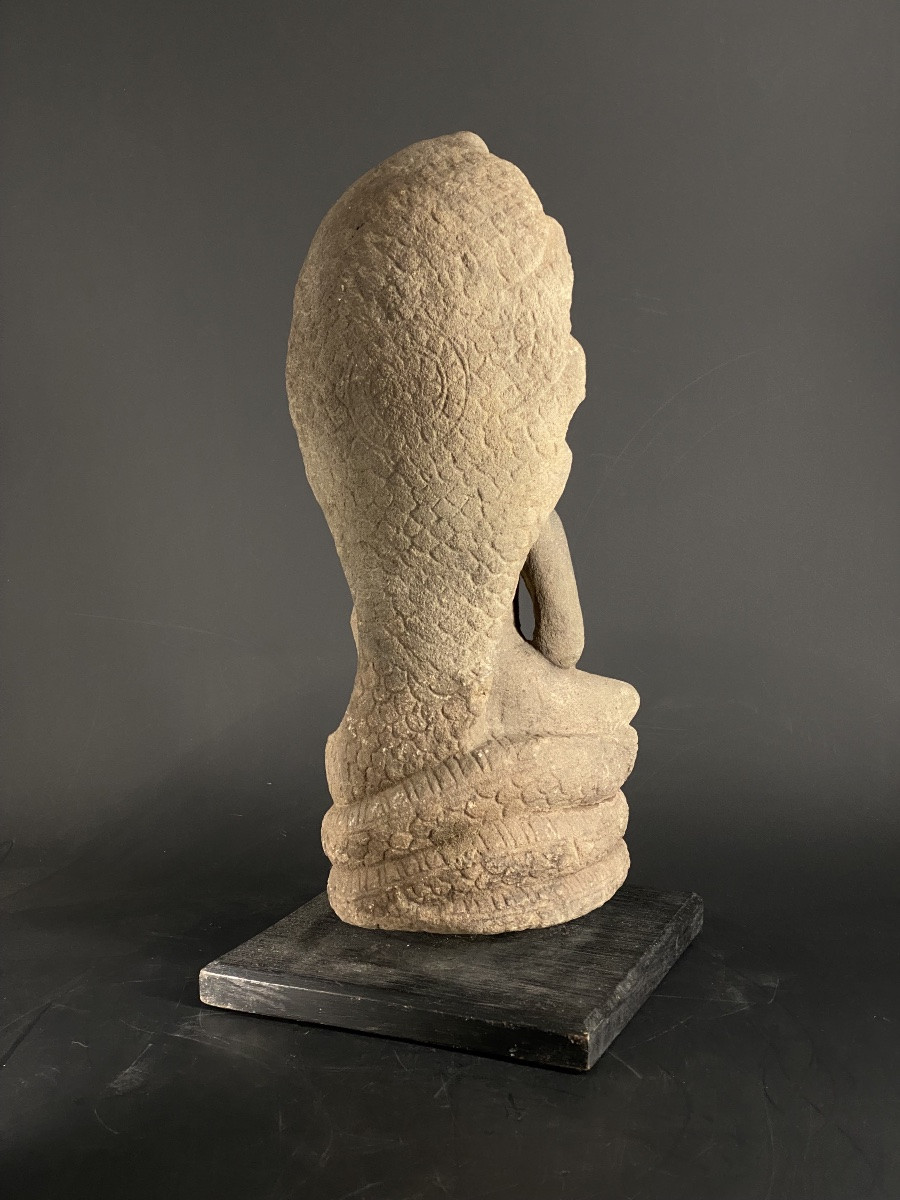


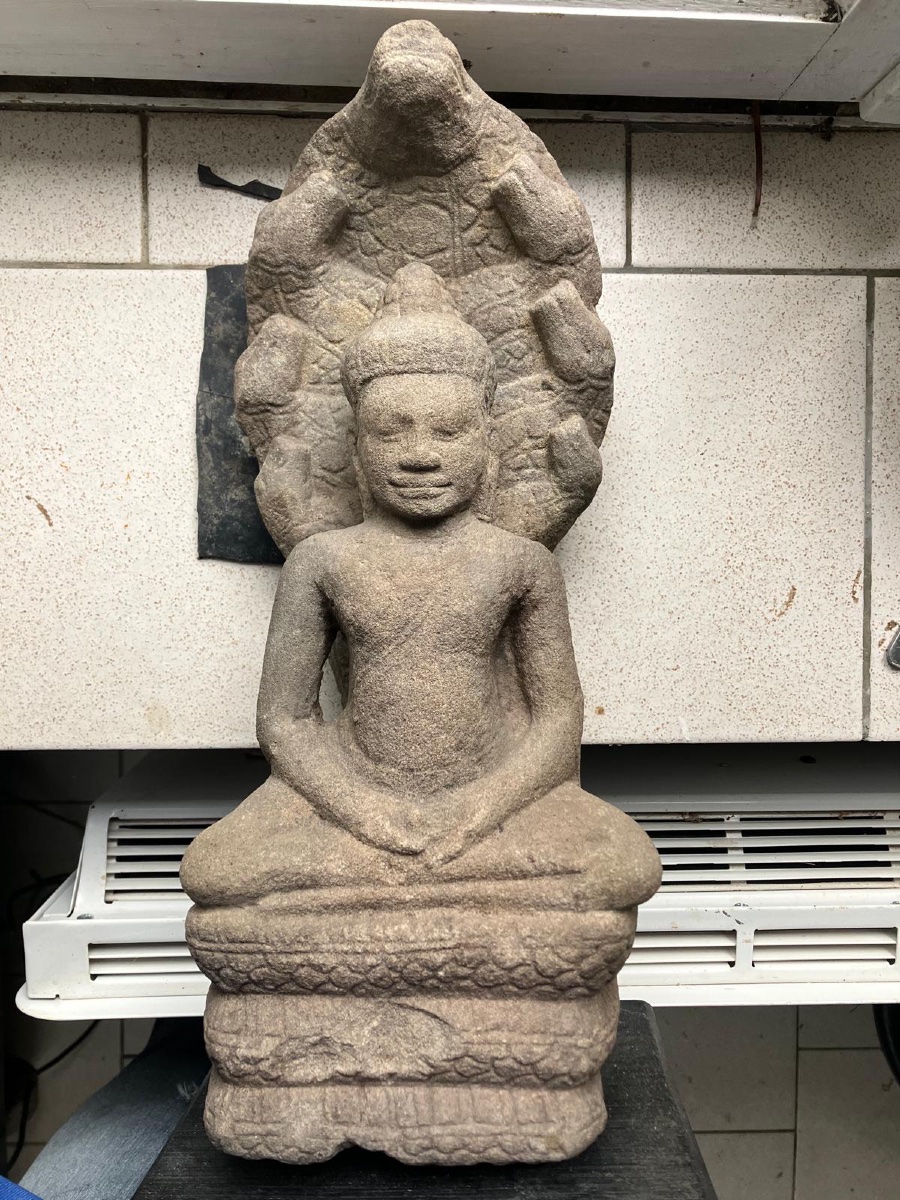


The sculpture depicts the Buddha sitting in meditation (dhyāna mudrā) on the coiled body of the serpent Mucalinda. The serene and internalized facial expression reflects the spiritual peace attained during Awakening. The body is modeled simply, without any research into detailed anatomy, which accentuates the symbolic dimension of the figure. The naga, whose several overlapping hoods can be seen, forms a protective halo. The whole rests on a stepped base, evoking the layers of coils of the serpent or a stylized throne. The style evokes the sober and powerful forms of the Baphuon (11th century): elongated but full face, thick lips forming a slight smile, half-closed almond-shaped eyes, marked conical hairstyle (ushnisha), broad and straight shoulders, arms close to the torso, simple drapery close to the body. These characteristics are part of the transition between the Baphuon style and the beginning of the Angkor Wat style (11th-12th century), a period of great aesthetic and religious synthesis in Khmer art. The sandstone shows a natural erosion characteristic of ancient Khmer sculptures exposed outdoors for a long time. Despite this, the general silhouette, the meditative pose and the structure of the naga remain legible, giving the whole a great spiritual and archaeological force.Khmer Empire, Baphuon style ‒ early Angkor Wat styleCambodia or northeastern Thailand (probably Angkor region), 11th‒12th century ADSandstone, height 36 cmBibliography- Philippe Stern, The Art of Champa and Pre-Angkorian and Angkorian Cambodia, Paris, 1954.- Jean Boisselier, Khmer Statuary and its Evolution, Presses Universitaires de France, 1963.- Emma C. Bunker, Khmer Sculpture and the Angkor Civilization, National Gallery of Art, Washington,
Explore similar pieces and discover your ideal find:
Marble & Stone Sculptures