"Louis XVI Period Cube Marquetry Perfume And Ointment Box. "
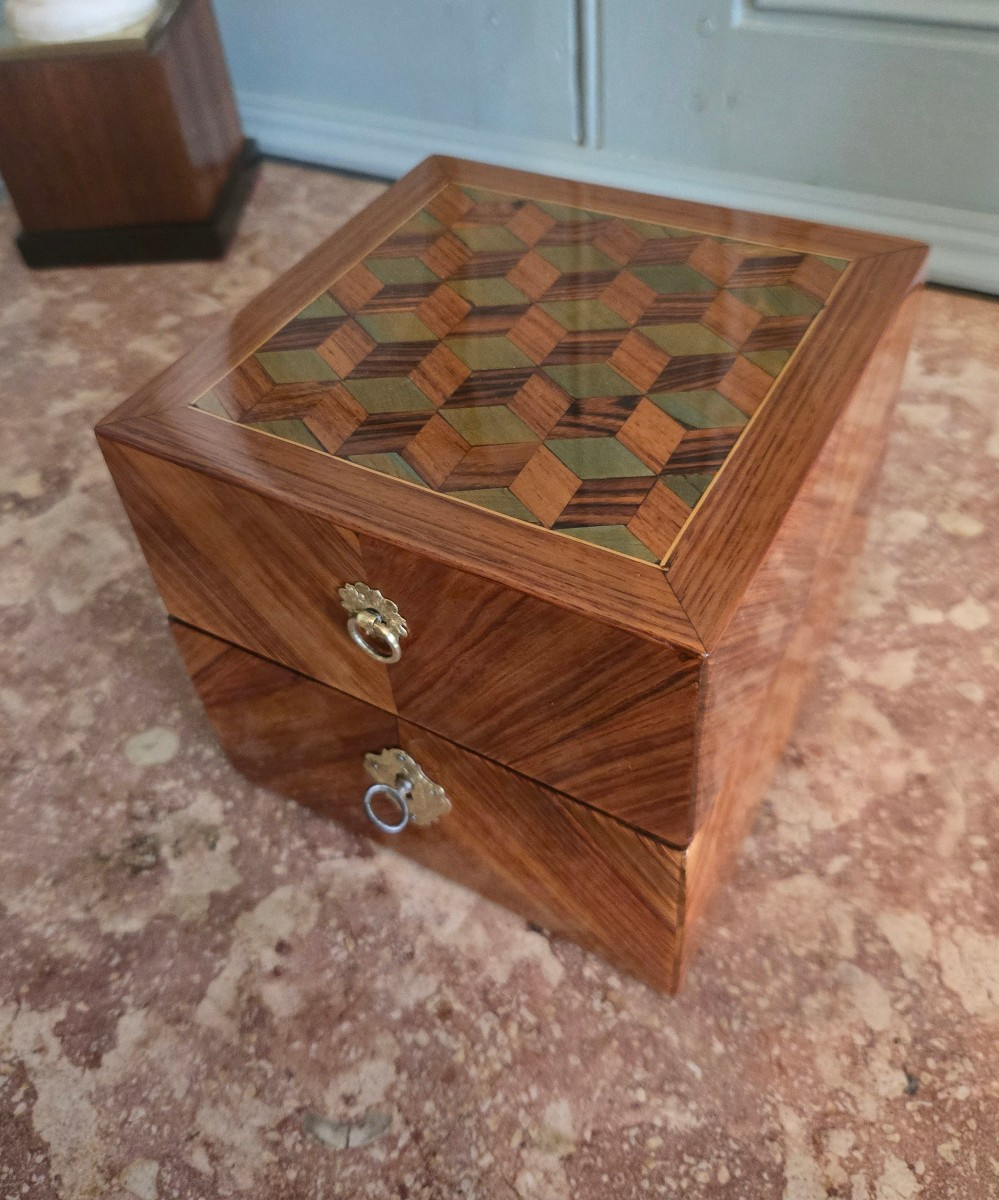
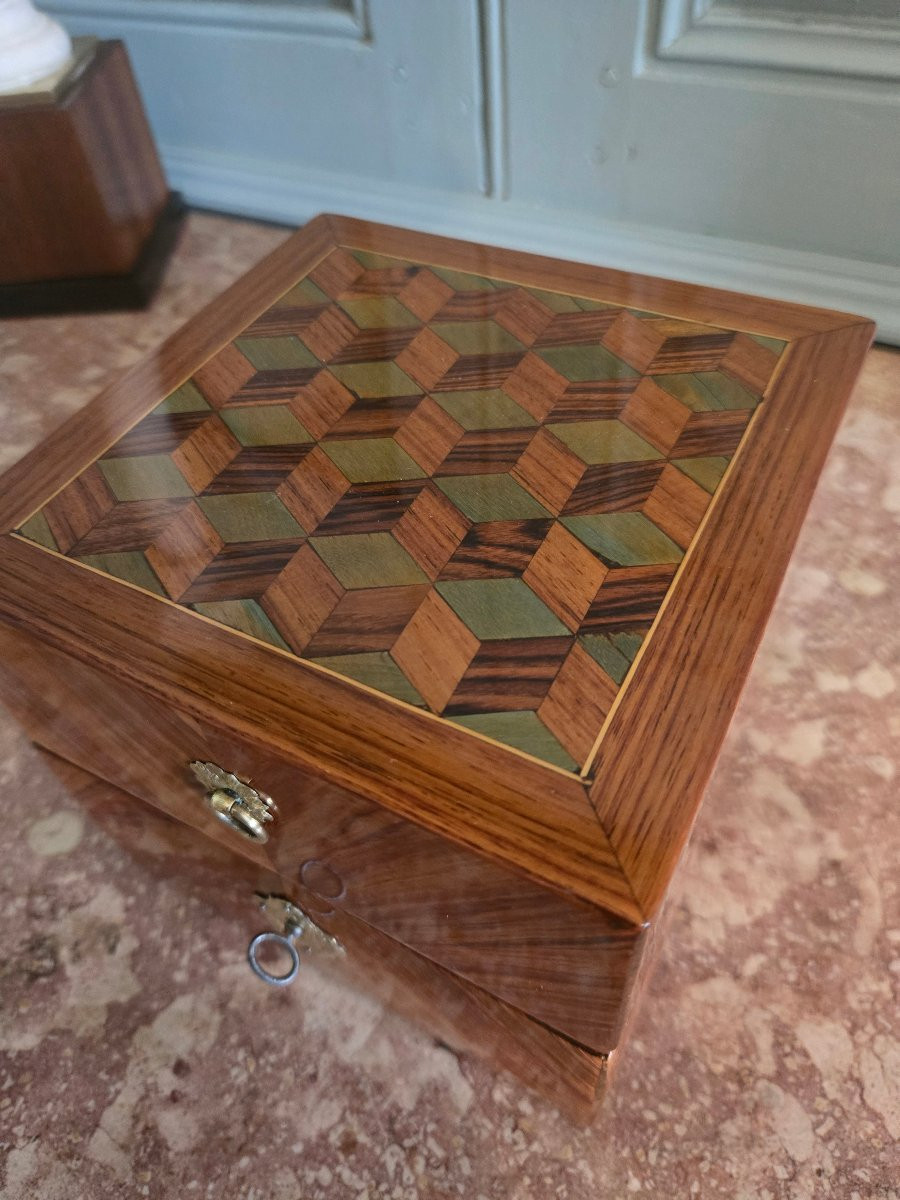
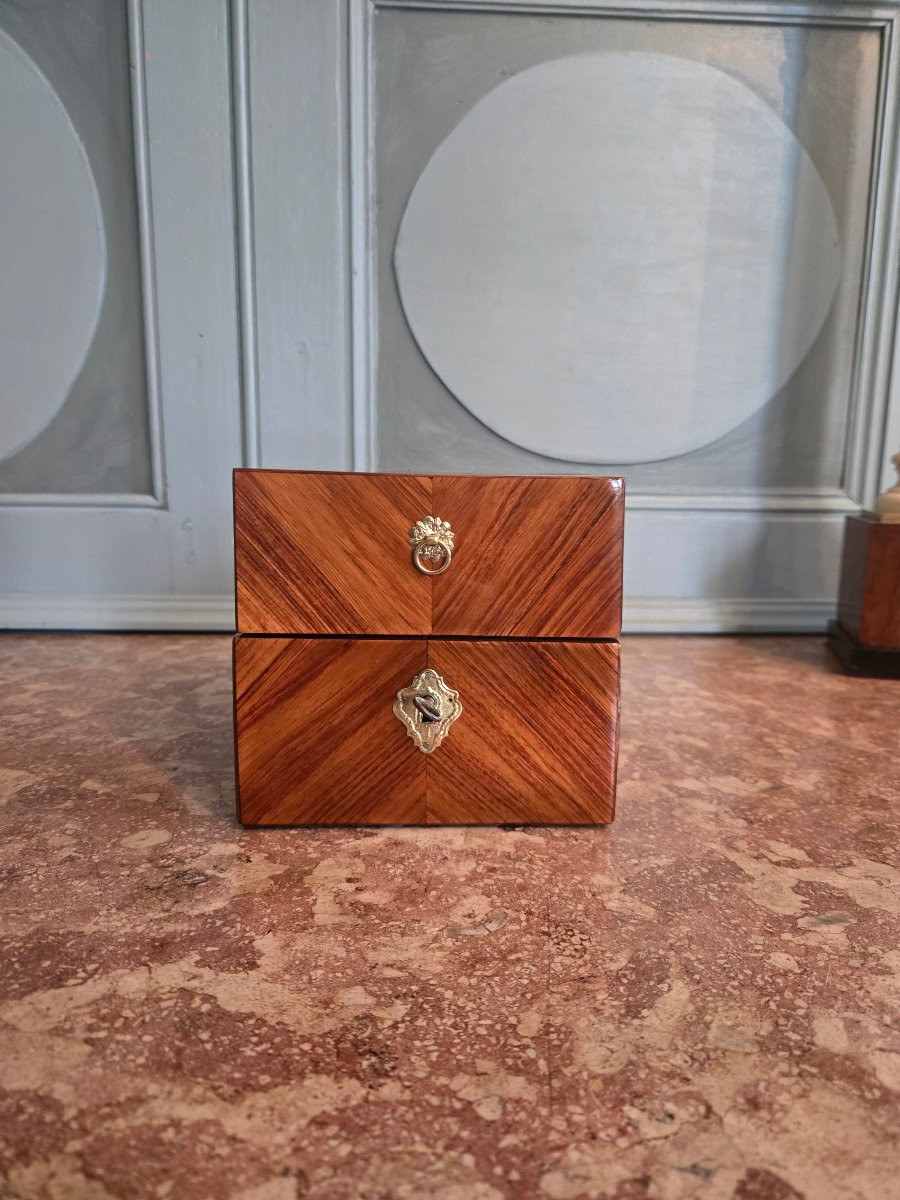
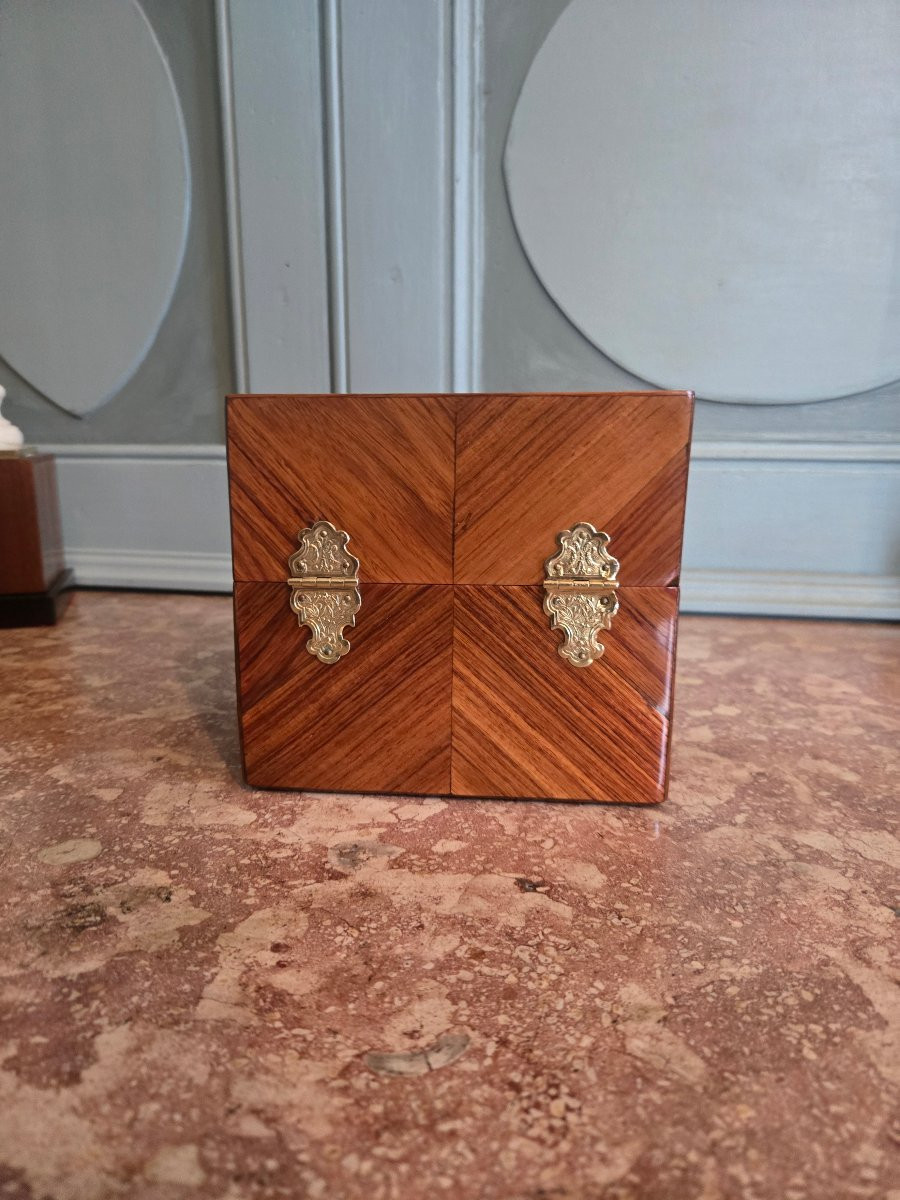
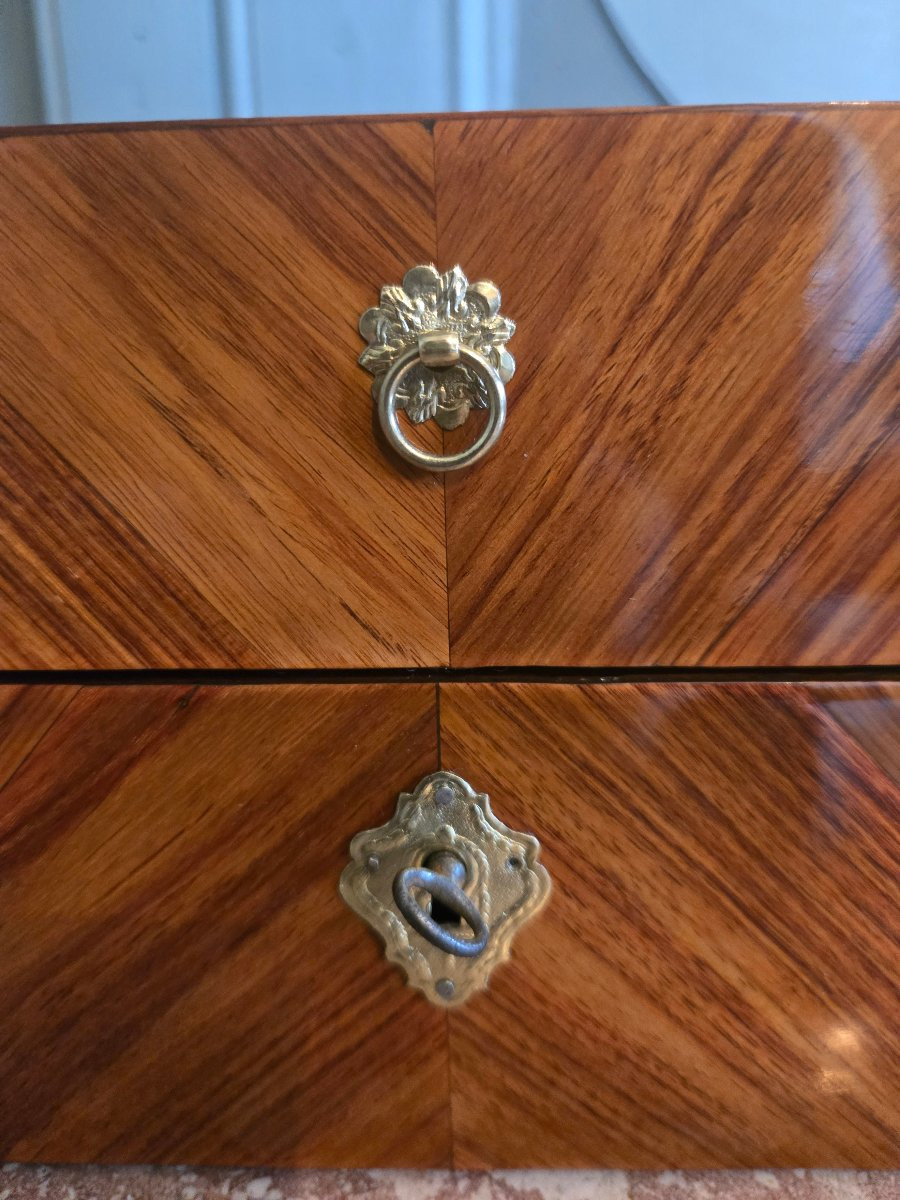
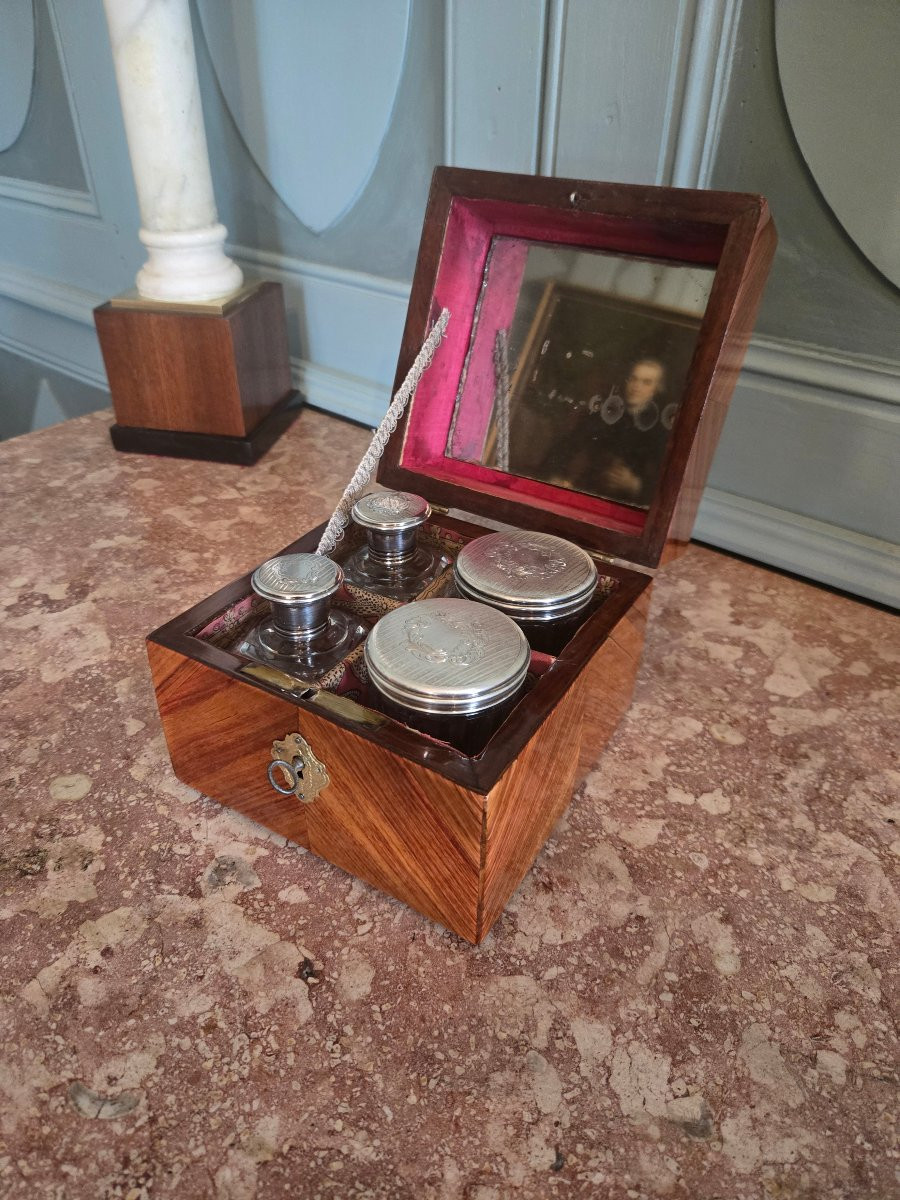
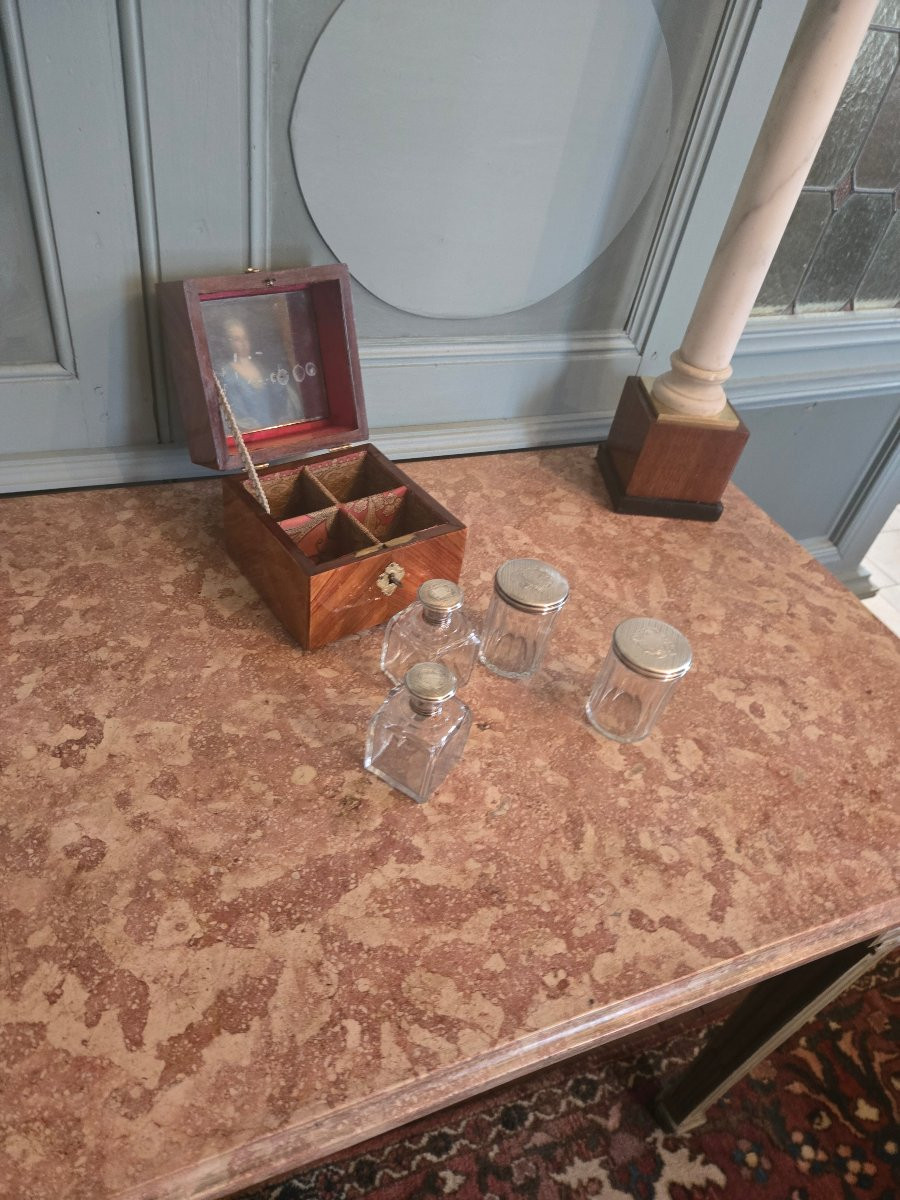
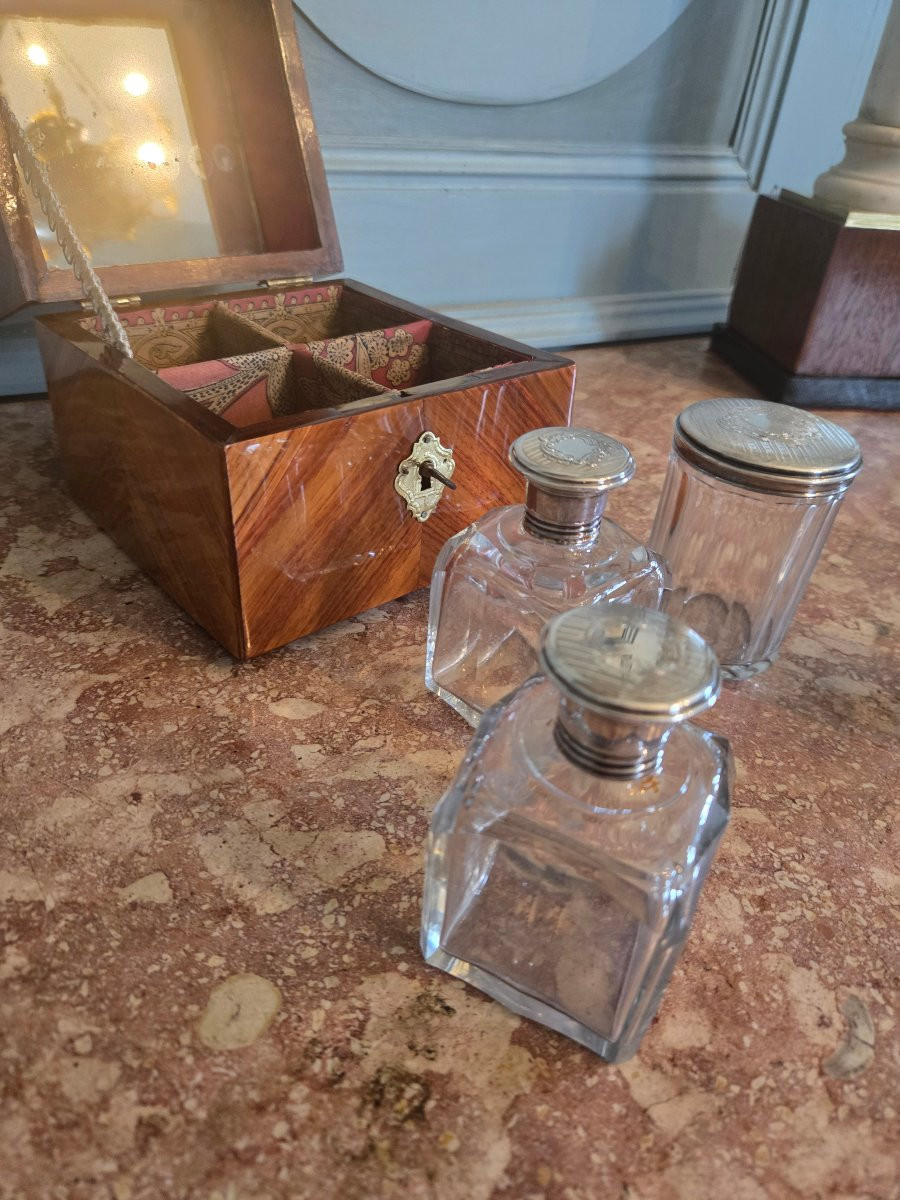
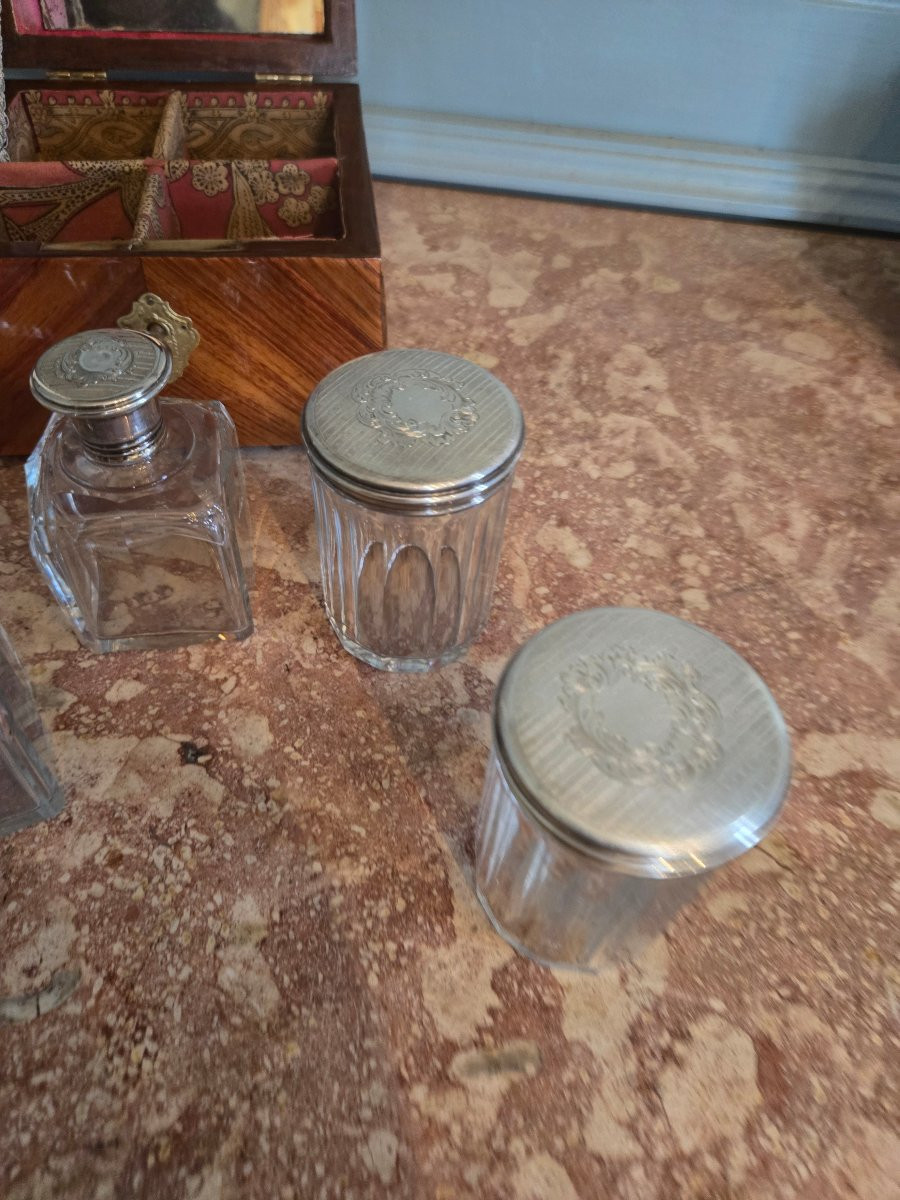
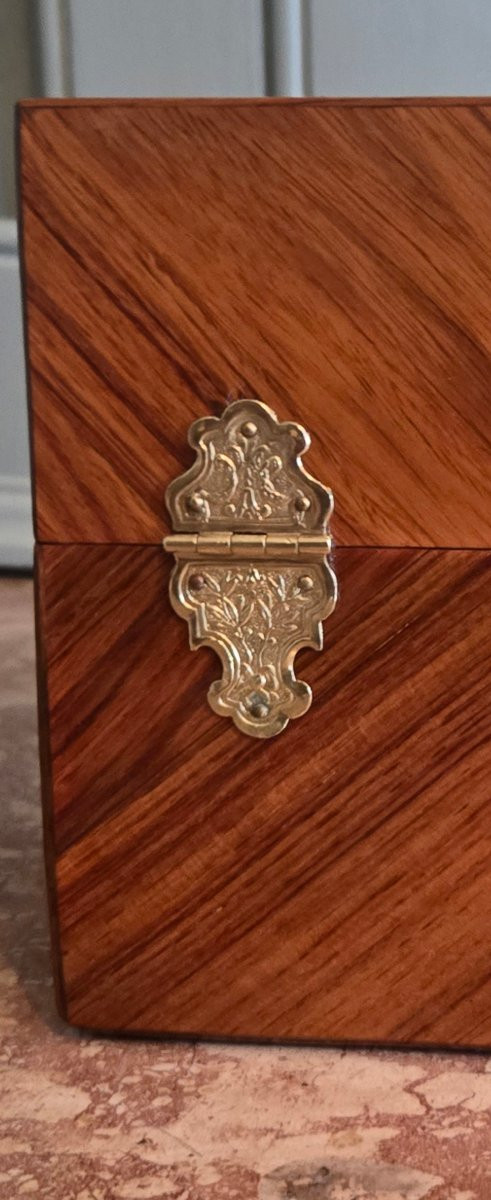
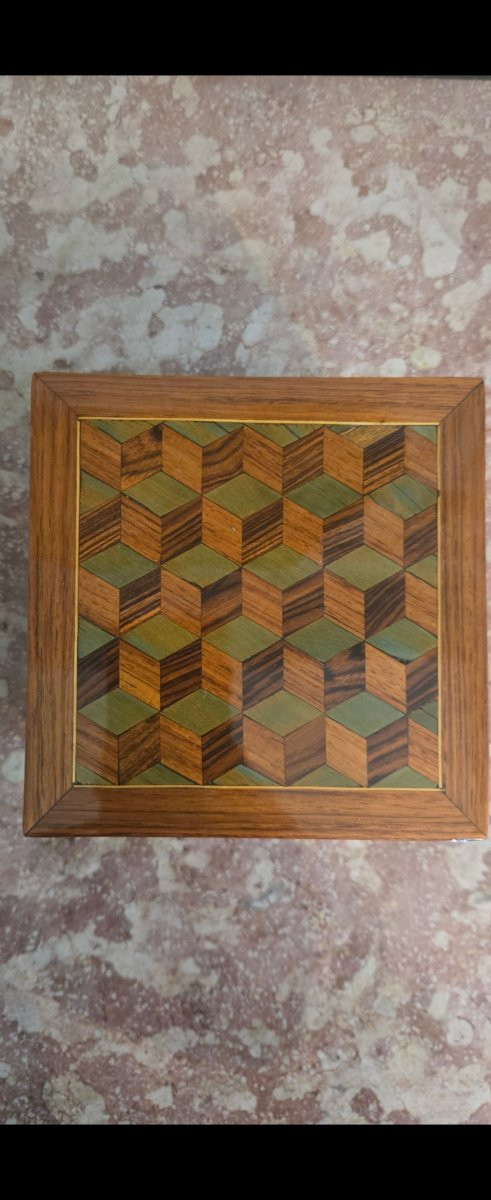
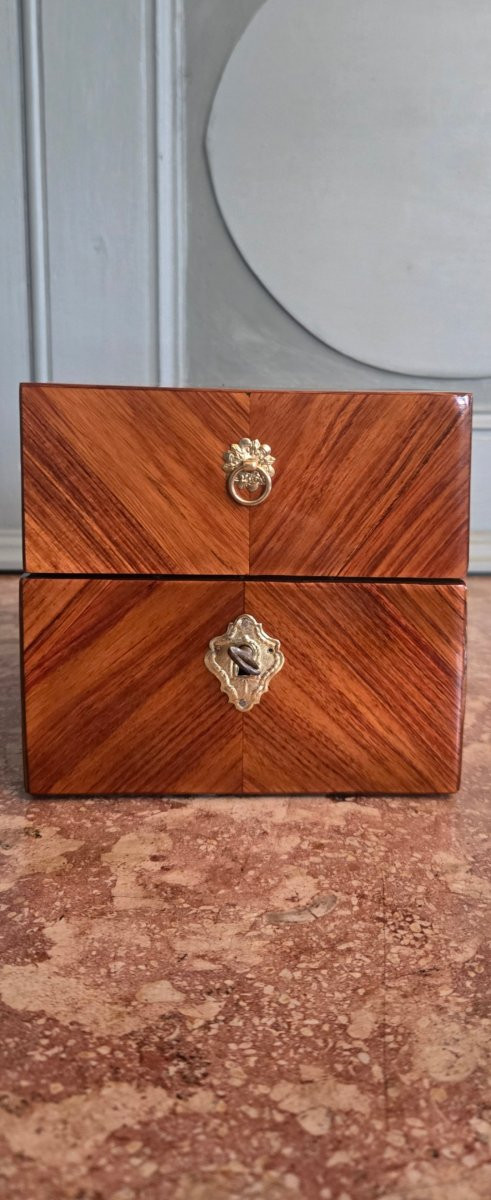
Elegant small Louis XVI period casket, veneered with rosewood and decorated on the lid with a marquetry decoration of bottomless cubes. This geometric motif, playing on optical and perspective effects, belongs to the decorative repertoire of the second half of the 18th century, at the transition between the Louis XV and Louis XVI styles. The decoration combines rosewood, palisander and green-stained maple, highlighted with a fine boxwood fillet. The sides are veneered in a herringbone frieze, and the repoussé brass fittings—hinges, pull knob and lock escutcheon—present beautiful ornamental work. The casket is accompanied by its antique key; the lock works perfectly. The interior retains its original mercury mirror, and contains a set of four crystal bottles with silver lids hallmarked with the Minerva (later work). Two are intended for perfumes, and two for creams or ointments. The box has benefited from careful restoration: some veneer collages have been carried out, and the whole has been varnished with a French polish according to tradition. A fine example of the refinement of small cabinetmaking works from the second half of the 18th century. Documentary reference: The marquetry decoration of bottomless cubes appeared in Paris around 1755–1760 and became, under the influence of Jean-François Oeben, a typical ornament of the Transition style and neoclassical taste. Oeben played on the contrasts of wood species — rosewood, palisander, stained maple — to create effects of perspective and volume. (Rosemarie Stratmann-Döhler, Jean-François Oeben, Les Cahiers du Mobilier, Perrin & Fils – Les Éditions de l'Amateur, p. 120–122.) Dimensions: H. 13.5 cm × W. 14.5 cm × D. 14.5 cm 







 Le Magazine de PROANTIC
 TRÉSORS Magazine
 Rivista Artiquariato