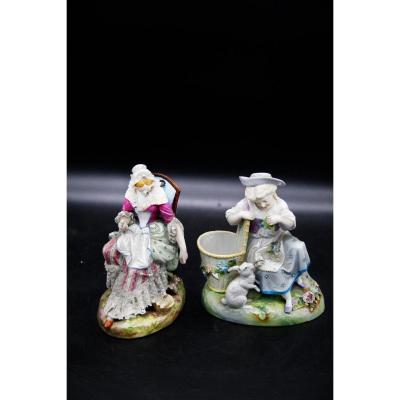
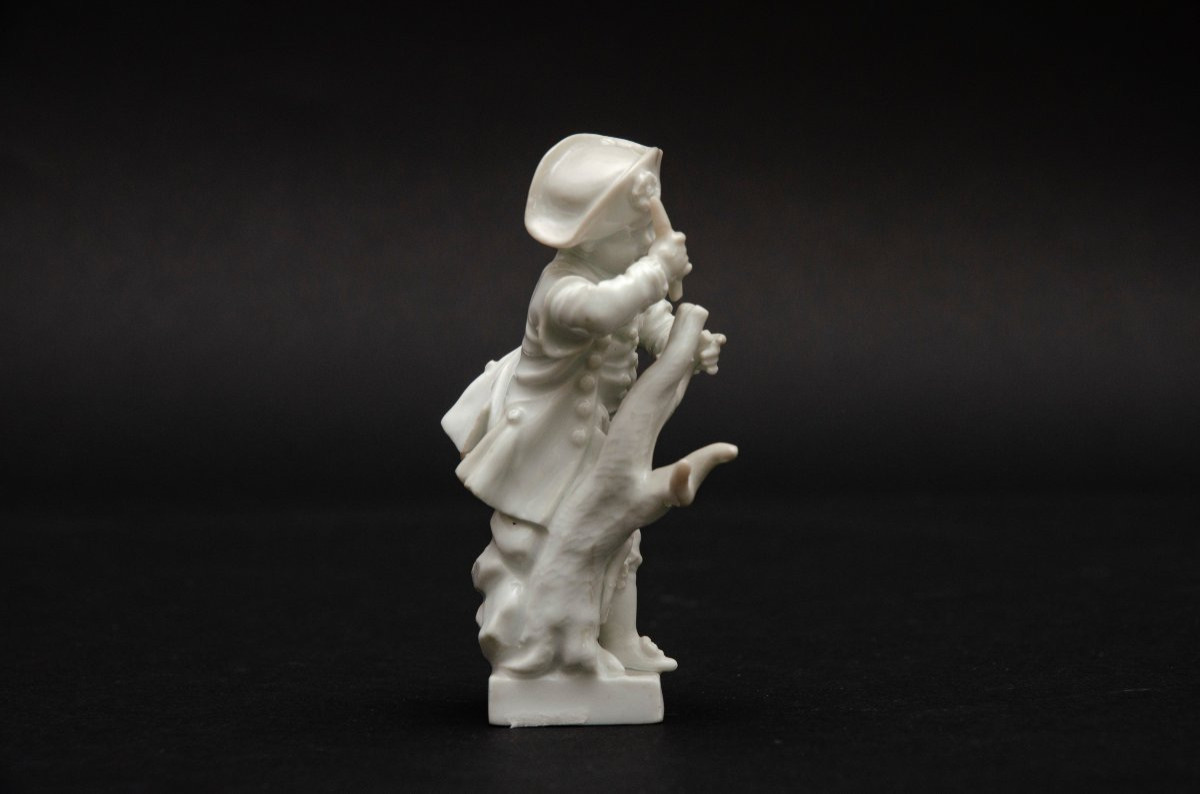
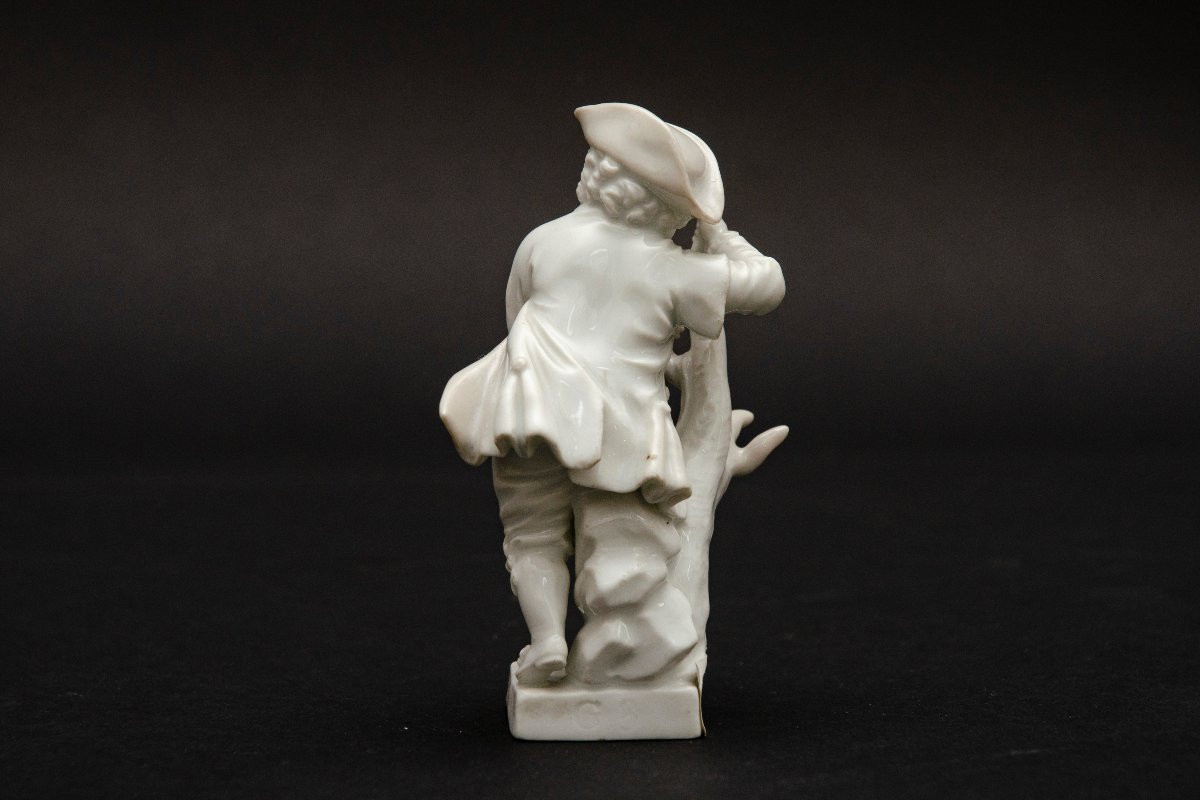
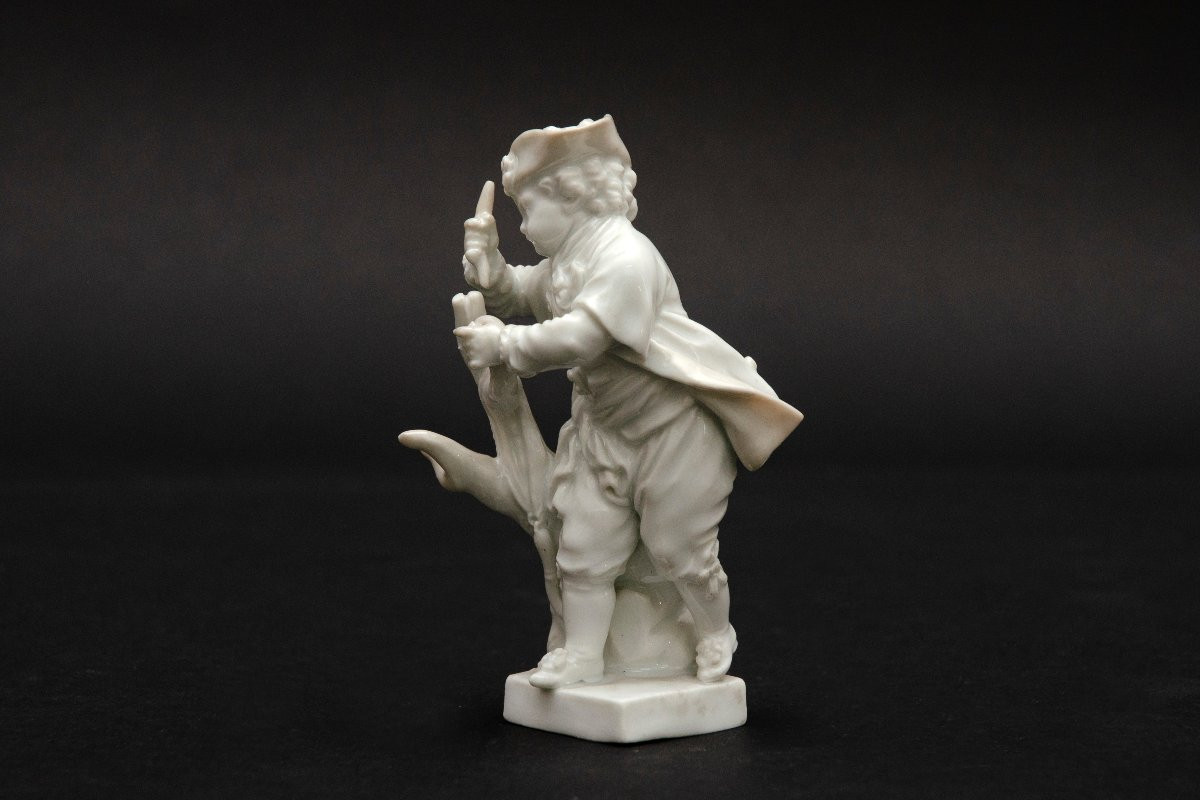
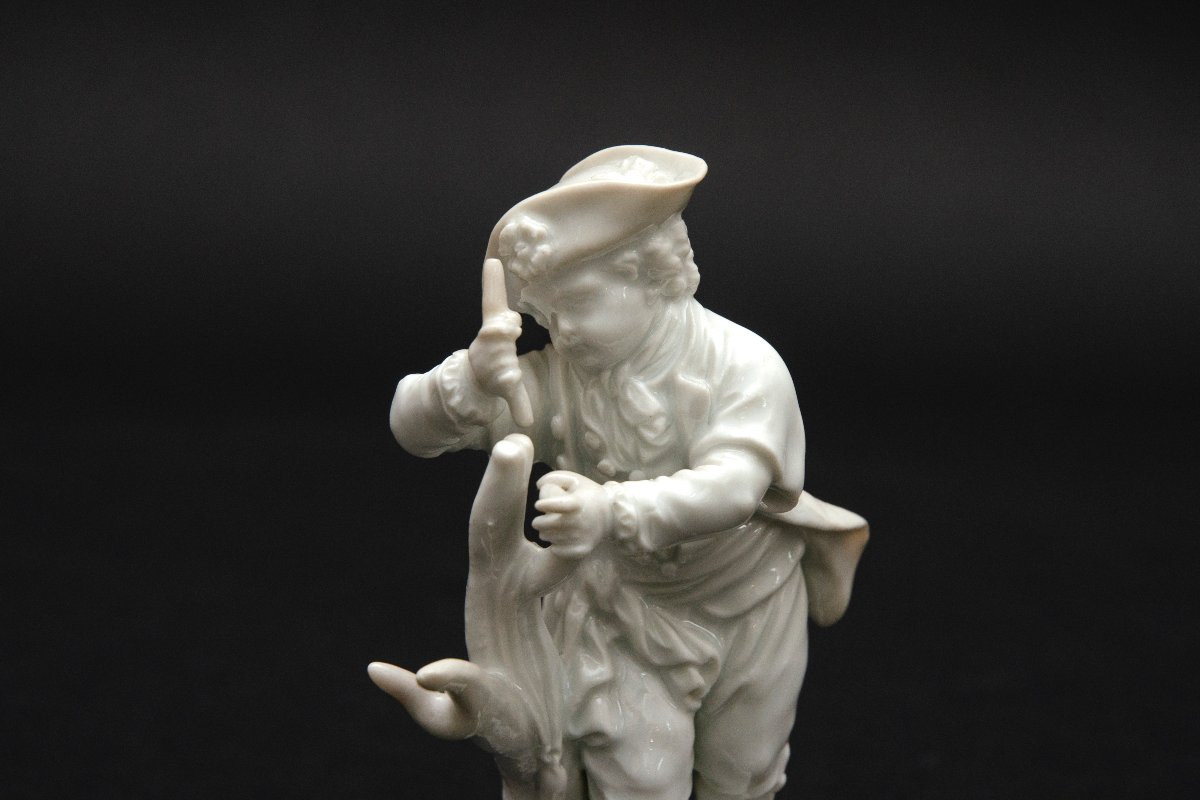


Gardener In White Porcelain Of Meissen, Marcolini Period, 18th Century
Artist: Meissen Manufacture
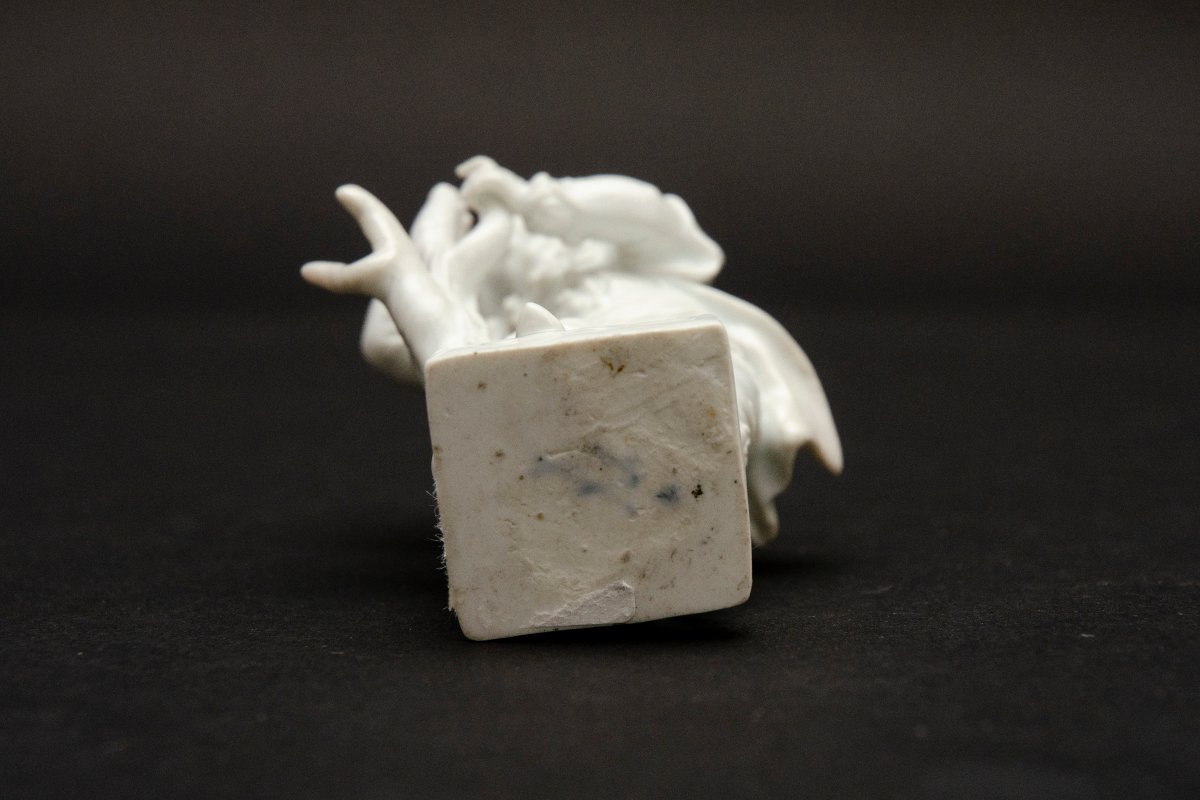
Gorgeous white Meissen porcelain gardener, which is rare on the market. Square base, crossed swords mark with star for the Marcolini period. Created by Kaendler.
H 10 cm
Meissen, Marcolini period.
Lit: Meissen was founded in 1710 in the gothic Albrechtburg castle. It was the first porcelain manufacturer in Europe. The previous year, in German Dresden, the alchemist Johann Friedrich Böttger, “goldmaker” and prisoner of Augustus the Strong (Elector of Saxony and king of Poland) had made the discovery. Initially the factory made fine red Böttger stoneware, with relief and engraved designs. The first true porcelain, put on the market in 1713, was similar in style, in the form of teaware, statuettes and Chinese style figures. From 1720, the porcelain became brilliant white, the enamel colours were improved, the designs were fantastic “chinoiseries”; it was the era of the painter-decorators with J. G. Höroldt as a leader. In the 1730s under the Count Brühl’s directorship (until 1752), the sculptors, with J.J. Käendler at their head, became dominant, producing a range of characters, animals and birds, dinner services richly decorated in relief, and sculptural vases and tablewares. From 1756-1773 meissen porcelain was marked with the crossed swords with a dot in between the handles, known as the “dot-period”. This period marked the transition towards the neo-classical style. In 1774 Count Camillo Marcolini became director, he held this position until 1814. The more restrained neoclassical style dominated but the manufactory declined due to economic pressures and the international competition of the French factory Sèvres. In the early 19th century, technical innovations were introduced and the wares were made in the popular taste which improved the situation again. In 1830 the name of the factory was changed from Königliche Manufaktur to Staatliche Porzellan Manufaktur. Superb modelling and painting were characteristic of Meissen porcelain, and for the next 50 years its products were unsurpassed, widely exported and much imitated. Throughout the 19thC, Meissen quality remained unchanged and there were few innovations, although the late 1890s and early 1900s saw the start of a more inventive approach in the Art Nouveau manner. The Meissen factory is still operational today.
Purchase online on ourwebsite: https://legide.be/product/gardner-white-meissen-porcelain/
H 10 cm
Meissen, Marcolini period.
Lit: Meissen was founded in 1710 in the gothic Albrechtburg castle. It was the first porcelain manufacturer in Europe. The previous year, in German Dresden, the alchemist Johann Friedrich Böttger, “goldmaker” and prisoner of Augustus the Strong (Elector of Saxony and king of Poland) had made the discovery. Initially the factory made fine red Böttger stoneware, with relief and engraved designs. The first true porcelain, put on the market in 1713, was similar in style, in the form of teaware, statuettes and Chinese style figures. From 1720, the porcelain became brilliant white, the enamel colours were improved, the designs were fantastic “chinoiseries”; it was the era of the painter-decorators with J. G. Höroldt as a leader. In the 1730s under the Count Brühl’s directorship (until 1752), the sculptors, with J.J. Käendler at their head, became dominant, producing a range of characters, animals and birds, dinner services richly decorated in relief, and sculptural vases and tablewares. From 1756-1773 meissen porcelain was marked with the crossed swords with a dot in between the handles, known as the “dot-period”. This period marked the transition towards the neo-classical style. In 1774 Count Camillo Marcolini became director, he held this position until 1814. The more restrained neoclassical style dominated but the manufactory declined due to economic pressures and the international competition of the French factory Sèvres. In the early 19th century, technical innovations were introduced and the wares were made in the popular taste which improved the situation again. In 1830 the name of the factory was changed from Königliche Manufaktur to Staatliche Porzellan Manufaktur. Superb modelling and painting were characteristic of Meissen porcelain, and for the next 50 years its products were unsurpassed, widely exported and much imitated. Throughout the 19thC, Meissen quality remained unchanged and there were few innovations, although the late 1890s and early 1900s saw the start of a more inventive approach in the Art Nouveau manner. The Meissen factory is still operational today.
Purchase online on ourwebsite: https://legide.be/product/gardner-white-meissen-porcelain/
750 €
Period: 18th century
Style: Louis 16th, Directory
Condition: Excellent condition
Material: Porcelain
Height: 10cm
Reference (ID): 1632551
Availability: In stock
Print