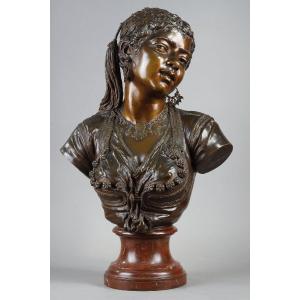
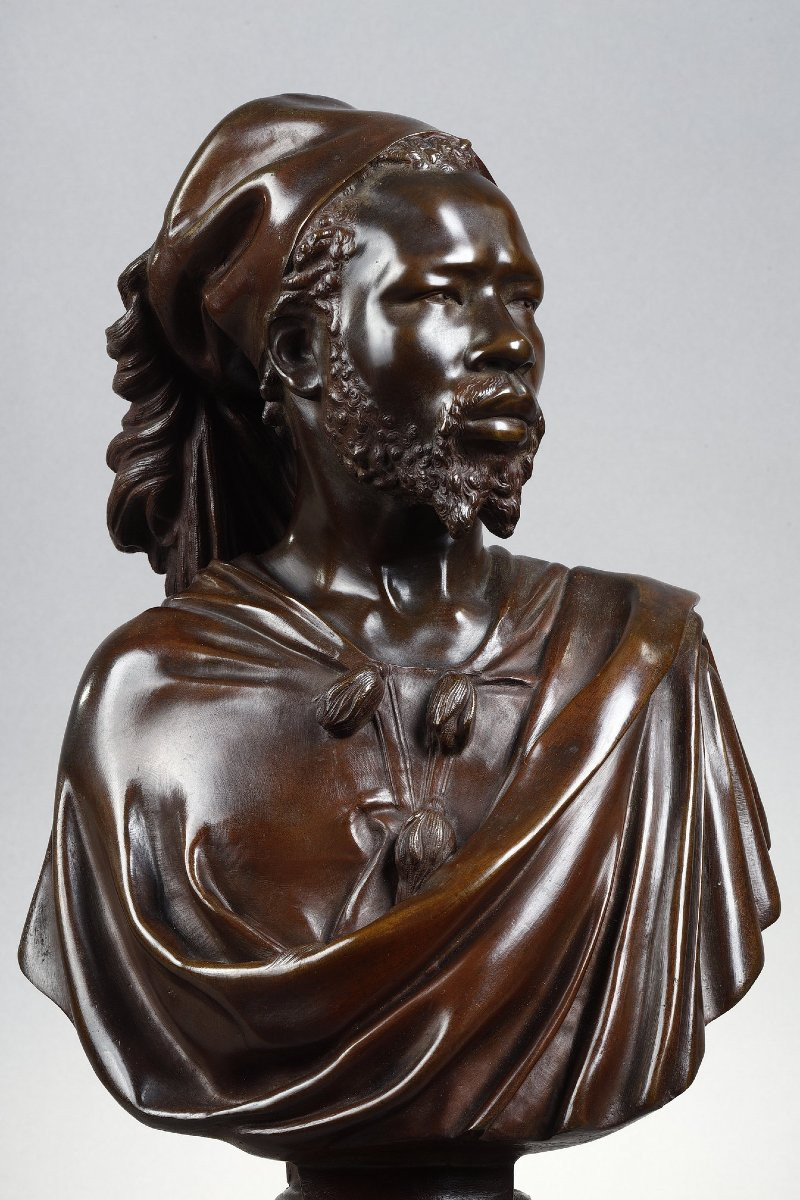
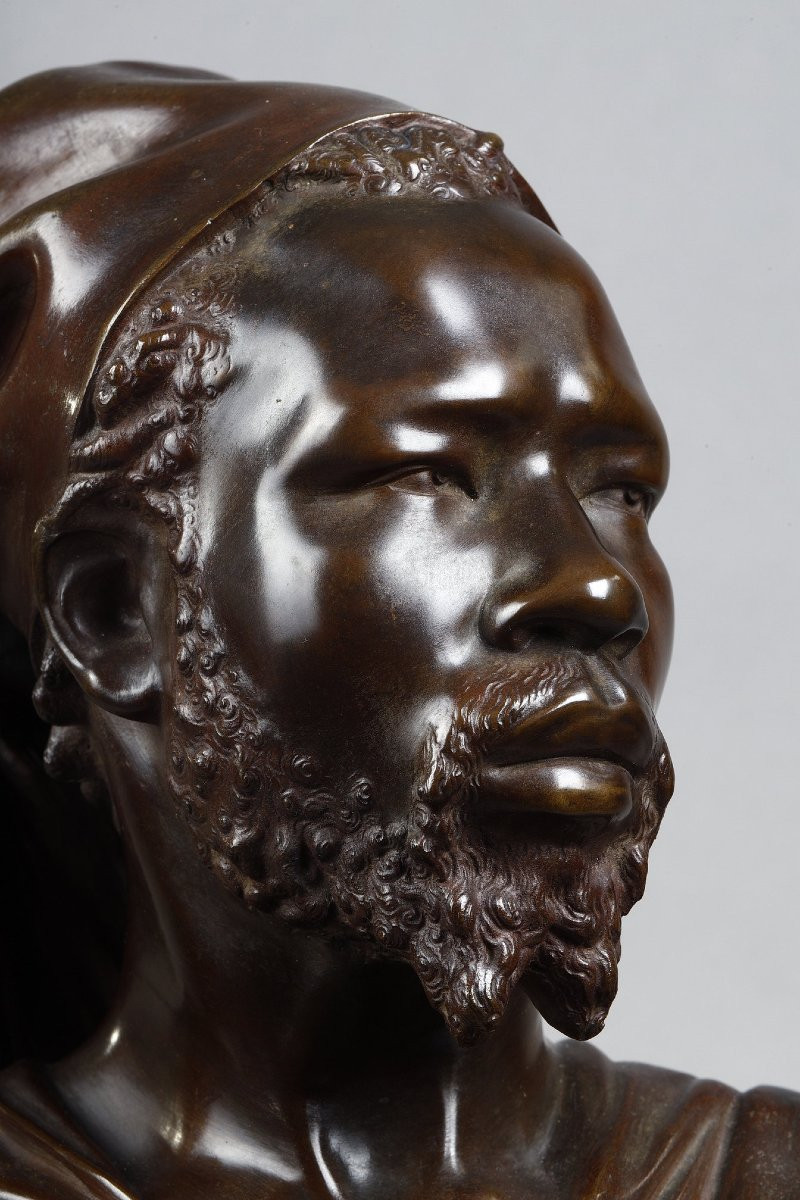
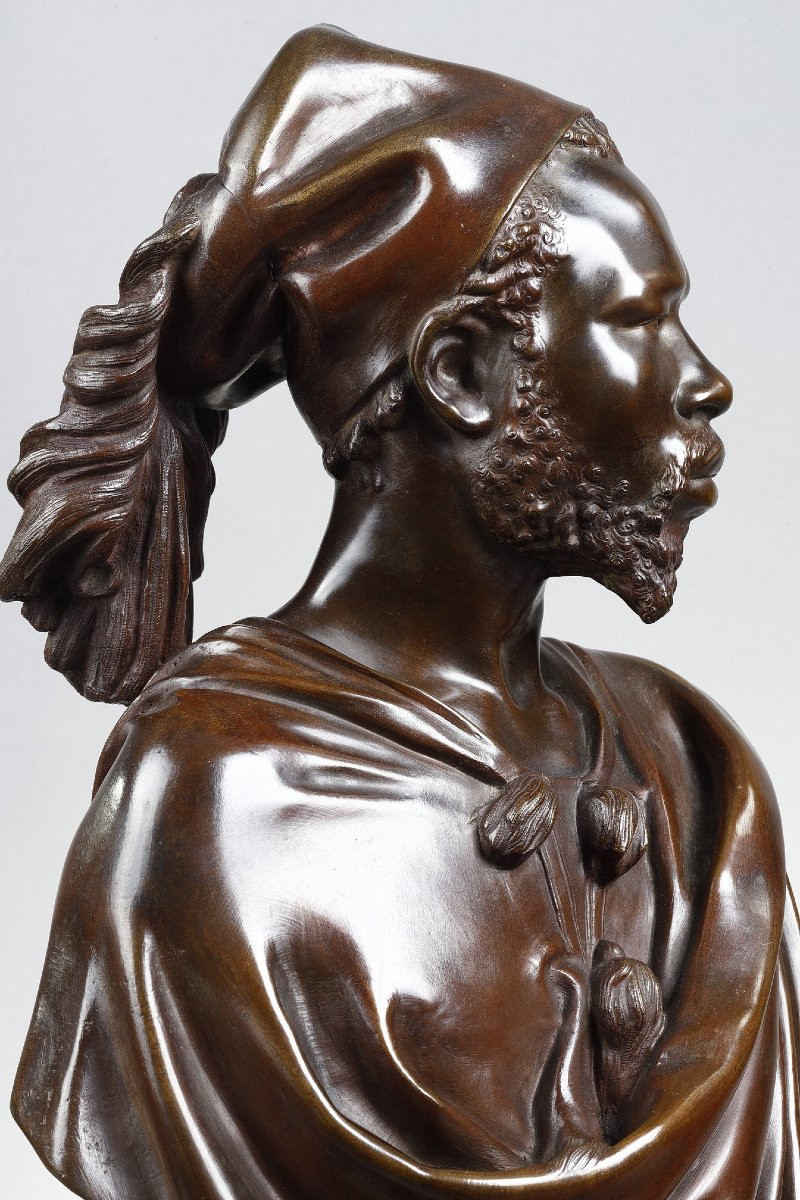
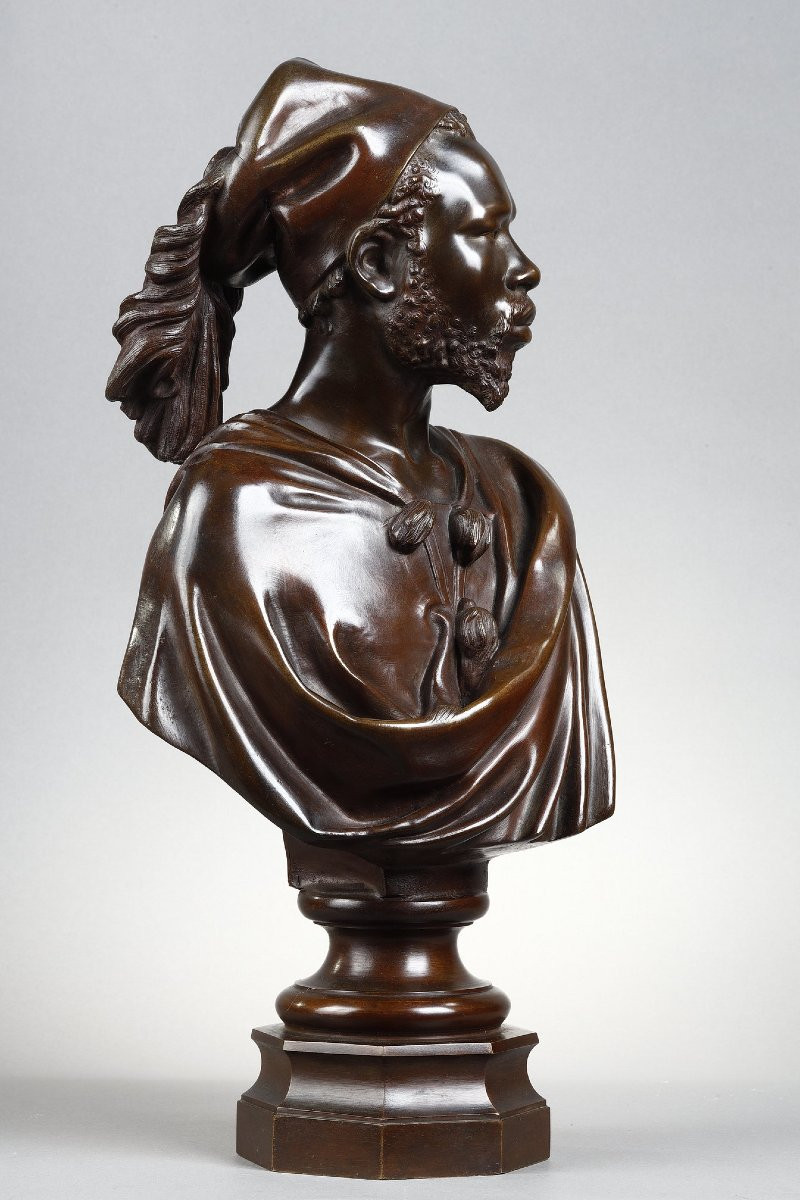


The Nubian, Saïd Abdallah - Charles Cordier (1827-1905)
Artist: Cordier
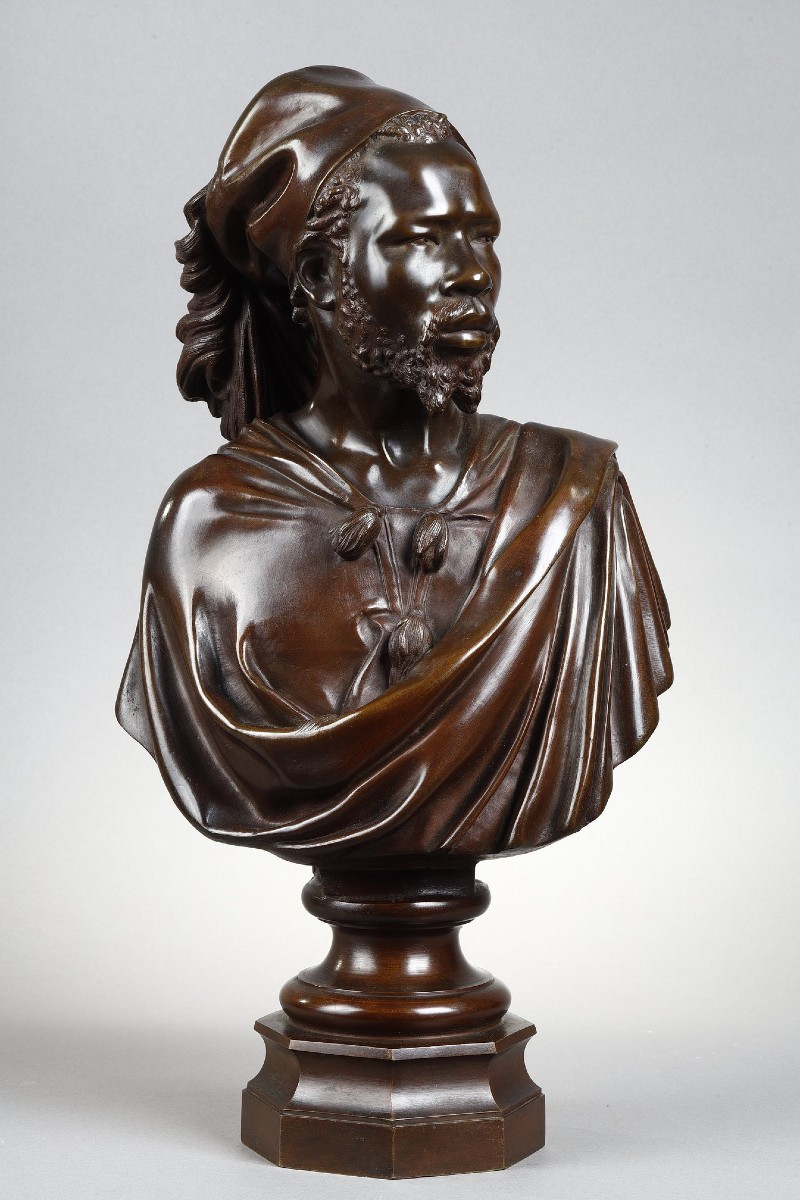
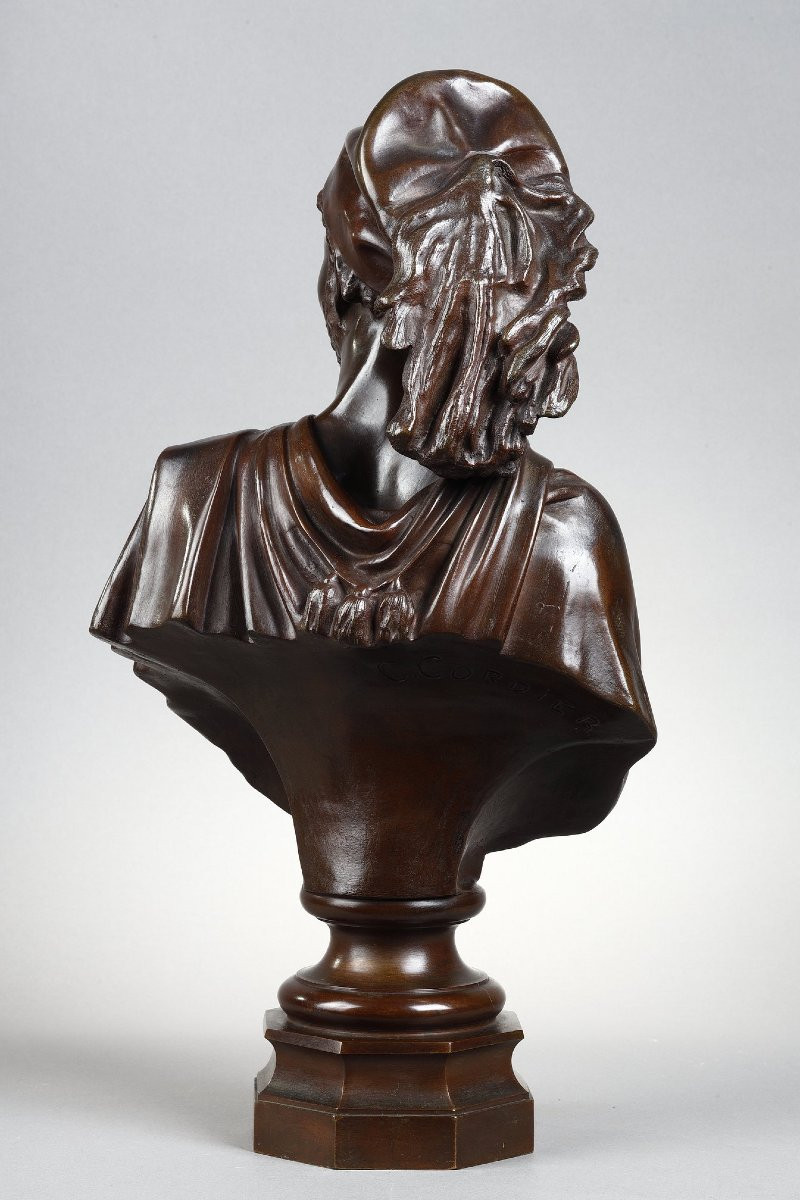
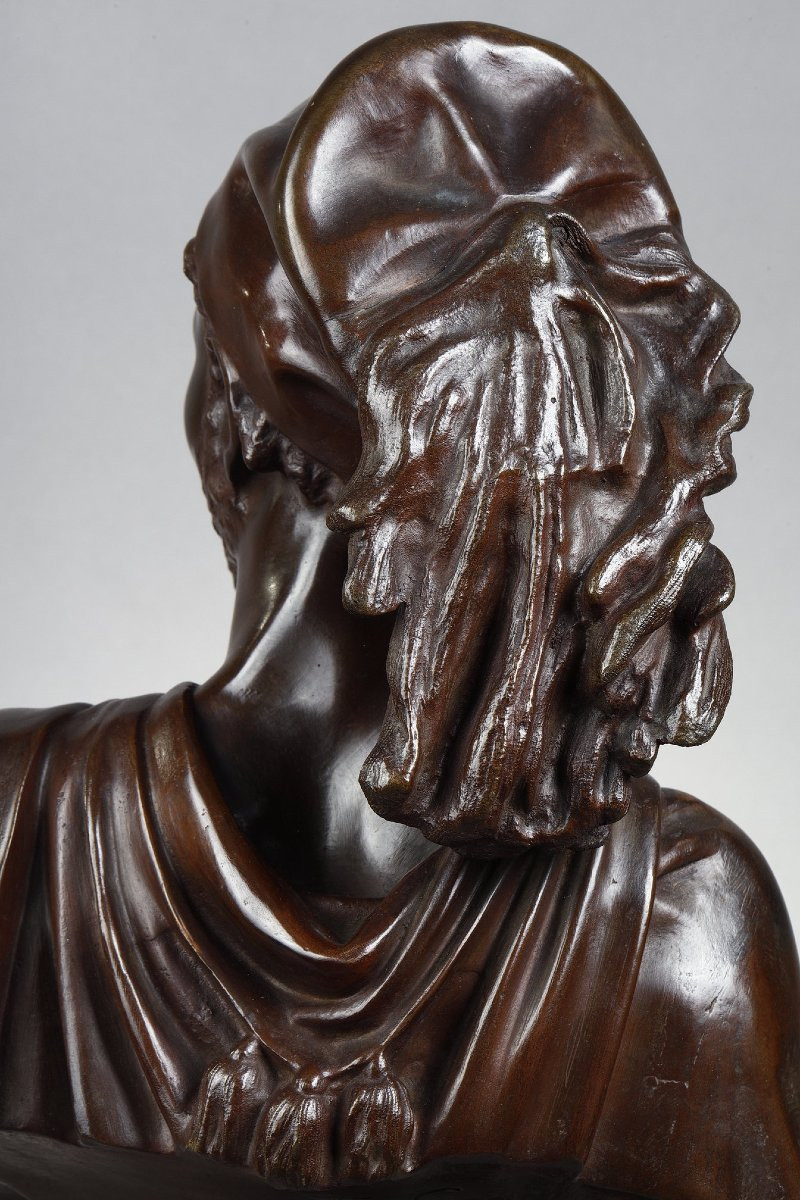
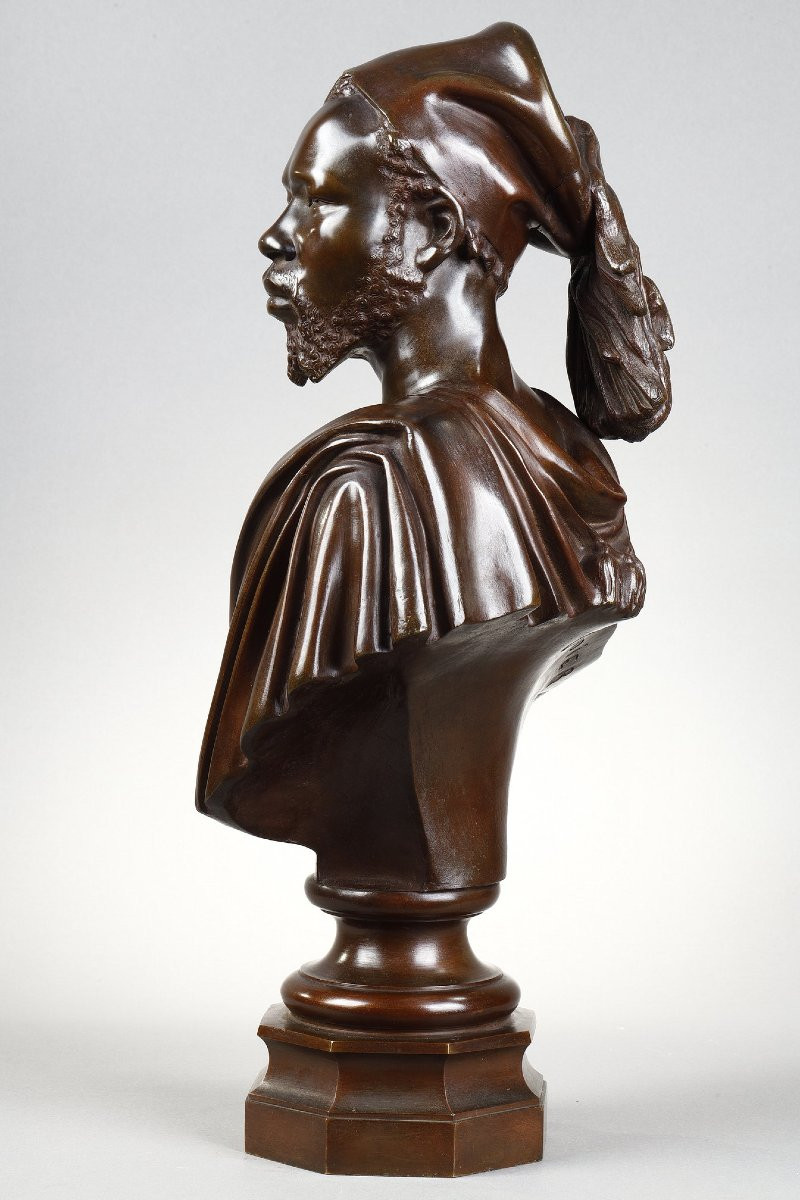
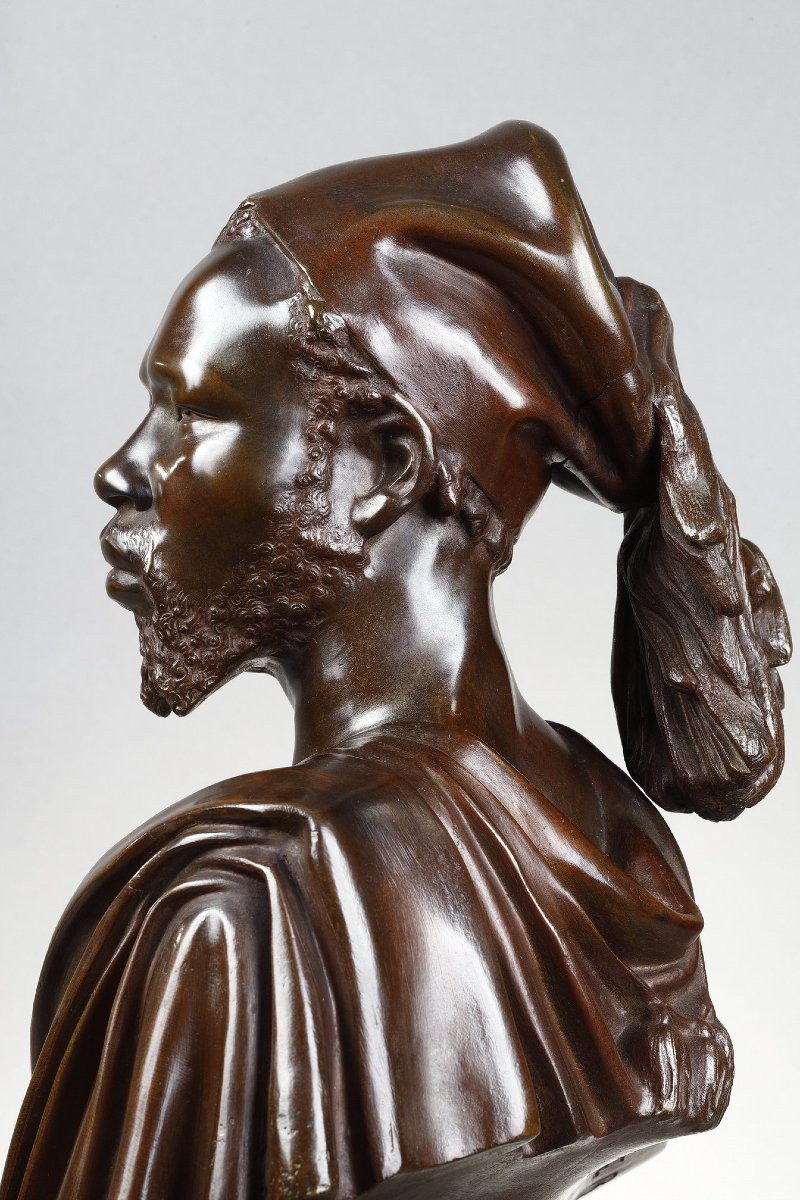
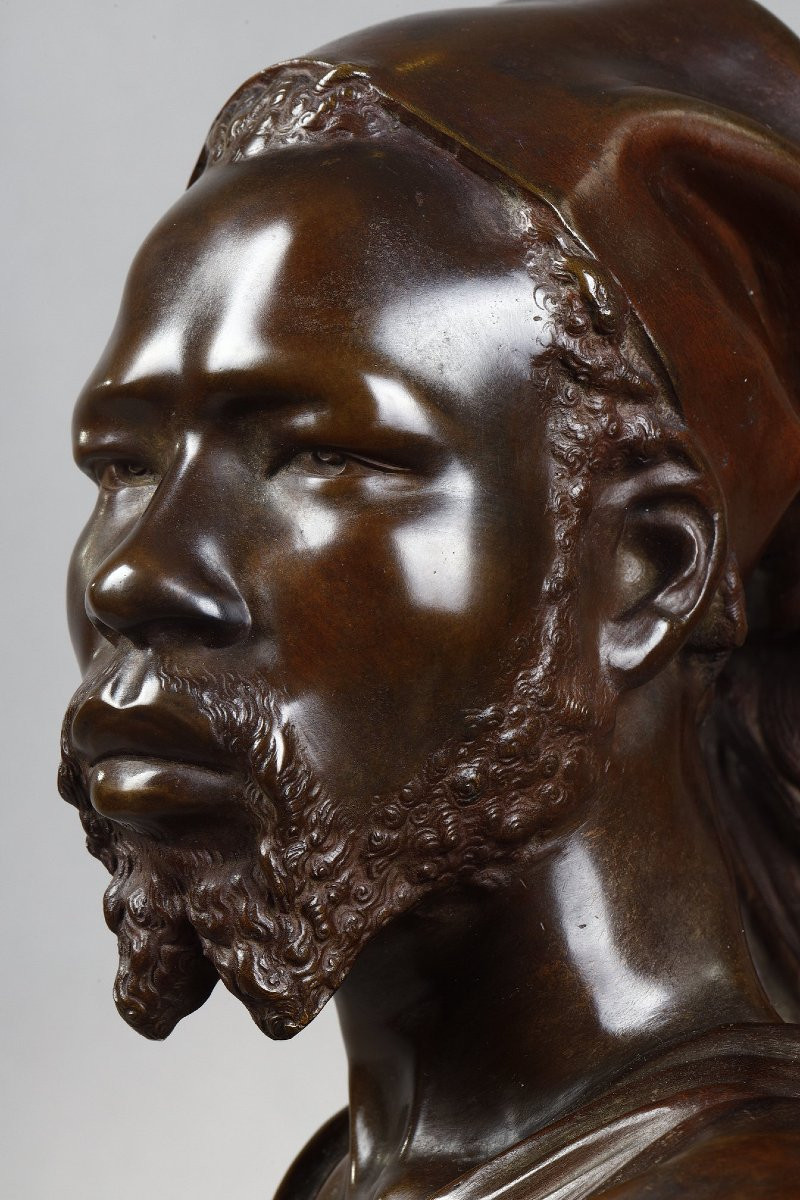
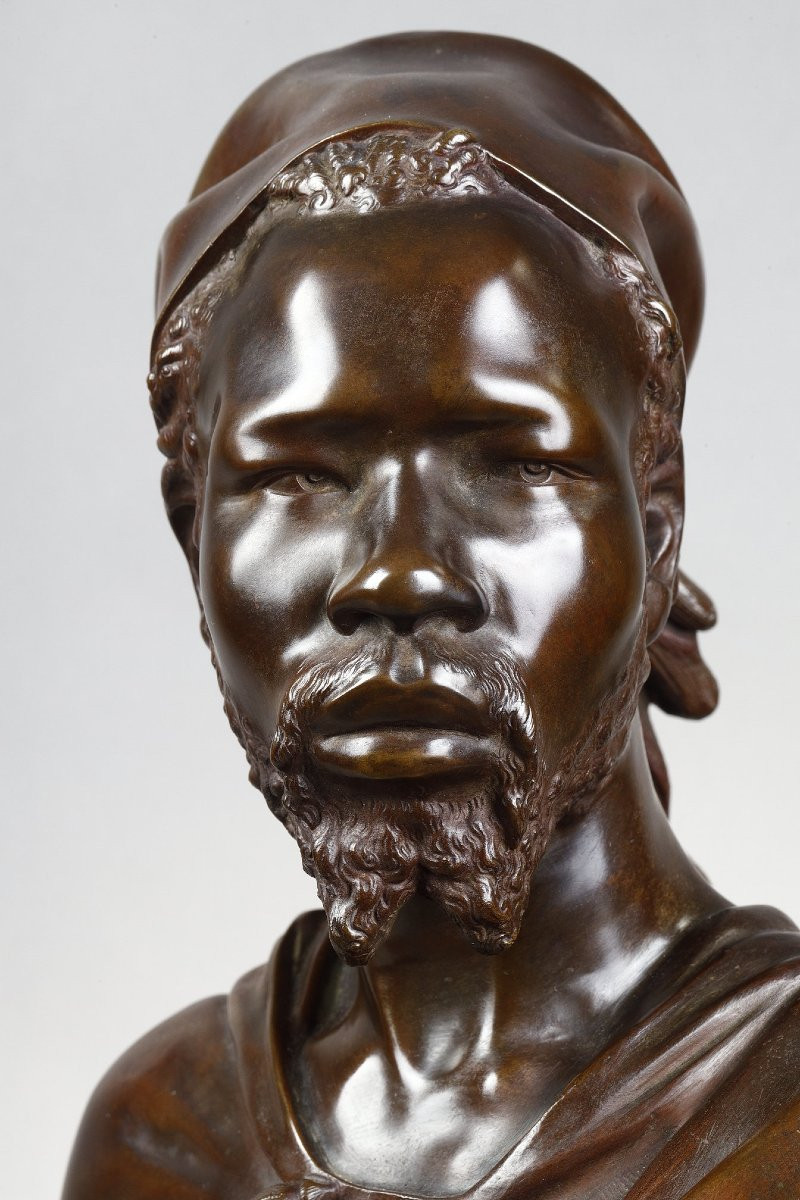
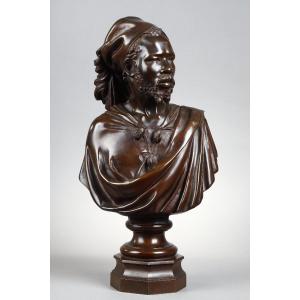
Nubian Man, Saïd Abdullah of the Mayac tribe, Kingdom of the Darfur
Bust cast in bronze with a dark brown patina
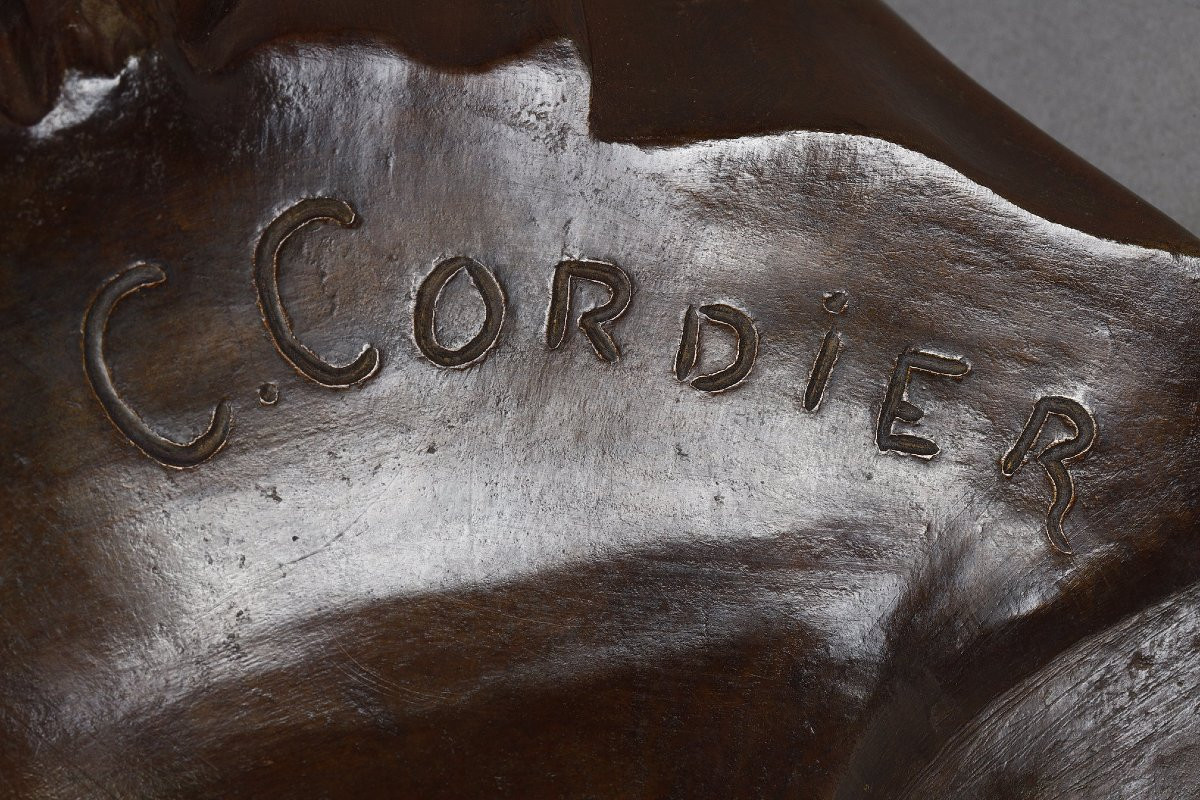
Signed to the rear " C.Cordier "
Old edition cast
Presented on its original bronze base
France
circa 1855
height 48,5 cm
width 26 cm
depth 17 cm
A similar model (33 in. high) is exhibited at the André Malraux Modern Art Museum at Le Havre (inv. 70).
In 1847, the encounter with Seid Enkess, a former black slave who became a model, determined the direction of Charles Cordier's career. Exhibited at the Salon of 1848 under the title of Saïd Abdallah of the tribe of Mayac, kingdom of Darfur, the bust attracted much attention and Queen Victoria purchased a bronze bust at the International Exhibition of London of 1851.
Charles Cordier related this encounter in his Memoirs: "A superb Sudanese appears in the workshop. In a fortnight I made this bust. [...] It was a revelation for the whole artistic world. [...] My genre had the news of a new subject, the revolt against slavery, anthropology at its birth ... "
our web catalog link :
https://galerietourbillon.com/cordier-charles-said-abdallah/
Galerie Tourbillon : Free valuation - Buy and Sell at best prices
Biography :
Henri Joseph Charles Cordier, known as Charles Cordier (1827-1905) was a French sculptor whose subjects are representative of the orientalist style and eclecticism specific to the Second Empire. Son of a pharmacist, Charles Cordier entered the Paris School of Fine Arts in 1846. But he did not stay there long, because the same year he entered the workshop of his master François Rude. There he then made the decisive encounter with a former freed Sudanese slave who had become a professional model, Seïd Enkess, whose bust he created in two weeks. This was the start of his ethnographic work. His genre had the relevance of a new subject, the revolt against slavery, anthropology at its birth. From then on, he produced a large quantity of orientalist statues, particularly busts. From the year of the abolition of slavery in 1848, Charles Cordier produced several series of portraits of Saïd Abdallah, from the Mayac tribe, Kingdom of Darfur or "Negro of Timbuktu" or "Nubian Negro". Queen Victoria acquired this bronze during the Universal Exhibition of 1851. From 1851, he sculpted a series of busts of an African Venus. His submissions to the Salon of 1853 caused a sensation. With his bronze busts of a Mongolian or Chinese man and woman (1853), he sought to obtain richer polychrome effects, a trend to which he remained faithful from then on, hence new colored African busts such as the famous "Negro of the Sudan" (between 1856 and 1857), acquired by Napoleon III in 1857, preserved in Paris at the Musée d'Orsay. In 1855, his sending of two Chinese in gilded, silvered and enameled bronze to the Universal Exhibition in Paris was very noted. He used marble from Paros, onyx cut for draperies, enamels on copper, silver, gold. Charles Cordier dyed Carrara marble using different processes and used semi-precious stones, while modeling in a classic style. Thanks to grants awarded by the government, the artist could study in situ to “fix the different human types which are at the moment of blending into one and the same people”. He traveled to Italy, Algeria (1856), Greece (1858) in the Cyclades archipelago and Egypt (1866 and 1868). At the Salon of 1857, Charles Cordier exhibited 18 busts, twelve of which were studies of Algerians, most of them in bronze. He perfected the polychromy of his works by sending to the Salon of 1863 the bust of an "Algerian Jewish Woman" in enameled bronze, onyx and porphyry; in 1864 a “Young Mulatto” in bronze, enamel and onyx; in 1866 a life-size statue of an "Arab Woman" in bronze, enamel and onyx, acquired by Empress Eugénie for her Chinese museum in Fontainebleau; and in 1867 the bust of a "Fellah" in bronze, gold, silver, turquoise and porphyry. In 1860, refused by an indignant sculpture jury, he appealed to the superintendent Émilien de Nieuwerkerke, to Princess Mathilde and to Napoleon III himself. The emperor, to temporize, decorated him. However, his abundant work was not limited to ethnological representations. Charles Cordier more classically created busts of personalities such as those of Admiral Courbet (1885 and 1886), General Fleury (1863), or his relatives, as well as religious sculptures such as a 12th century Virgin (1889), or of Venus and other Priestess. For the major Parisian projects of the Second Empire, Cordier participated in those of the Louvre Palace, the Garnier Opera and the town hall. Charles Cordier also created, among others, the Monument to Marshal Gérard (1856, Verdun), the Triumph of Amphitrite (1861), the statue of Jean-Baptiste for the Saint-Jacques tower in Paris (around 1854), or the caryatids of Harmony and Poetry of the west chimney of the grand foyer of the Palais Garnier in Paris (1872). The city of Cairo retains its Monument to Ibrahim Pasha, an equestrian statue that he created in 1872. For Mexico, Charles Cordier created a Monument to Christopher Columbus around 1872, flanked at the corners by four statues of Dominicans and Franciscans who had helped in his divine mission, the bas-reliefs adorning the pedestal representing virgin forests and the construction of a cathedral. Charles Cordier was the author of 617 listed works, including 365 ethnographic busts and 103 bourgeois portraits. He obtained a third class medal at the Salon of 1851, a second class in 1853, with recall in 1857. He was named knight of the Legion of Honor on August 6, 1860.
Bust cast in bronze with a dark brown patina
Signed to the rear " C.Cordier "
Old edition cast
Presented on its original bronze base
France
circa 1855
height 48,5 cm
width 26 cm
depth 17 cm
A similar model (33 in. high) is exhibited at the André Malraux Modern Art Museum at Le Havre (inv. 70).
In 1847, the encounter with Seid Enkess, a former black slave who became a model, determined the direction of Charles Cordier's career. Exhibited at the Salon of 1848 under the title of Saïd Abdallah of the tribe of Mayac, kingdom of Darfur, the bust attracted much attention and Queen Victoria purchased a bronze bust at the International Exhibition of London of 1851.
Charles Cordier related this encounter in his Memoirs: "A superb Sudanese appears in the workshop. In a fortnight I made this bust. [...] It was a revelation for the whole artistic world. [...] My genre had the news of a new subject, the revolt against slavery, anthropology at its birth ... "
our web catalog link :
https://galerietourbillon.com/cordier-charles-said-abdallah/
Galerie Tourbillon : Free valuation - Buy and Sell at best prices
Biography :
Henri Joseph Charles Cordier, known as Charles Cordier (1827-1905) was a French sculptor whose subjects are representative of the orientalist style and eclecticism specific to the Second Empire. Son of a pharmacist, Charles Cordier entered the Paris School of Fine Arts in 1846. But he did not stay there long, because the same year he entered the workshop of his master François Rude. There he then made the decisive encounter with a former freed Sudanese slave who had become a professional model, Seïd Enkess, whose bust he created in two weeks. This was the start of his ethnographic work. His genre had the relevance of a new subject, the revolt against slavery, anthropology at its birth. From then on, he produced a large quantity of orientalist statues, particularly busts. From the year of the abolition of slavery in 1848, Charles Cordier produced several series of portraits of Saïd Abdallah, from the Mayac tribe, Kingdom of Darfur or "Negro of Timbuktu" or "Nubian Negro". Queen Victoria acquired this bronze during the Universal Exhibition of 1851. From 1851, he sculpted a series of busts of an African Venus. His submissions to the Salon of 1853 caused a sensation. With his bronze busts of a Mongolian or Chinese man and woman (1853), he sought to obtain richer polychrome effects, a trend to which he remained faithful from then on, hence new colored African busts such as the famous "Negro of the Sudan" (between 1856 and 1857), acquired by Napoleon III in 1857, preserved in Paris at the Musée d'Orsay. In 1855, his sending of two Chinese in gilded, silvered and enameled bronze to the Universal Exhibition in Paris was very noted. He used marble from Paros, onyx cut for draperies, enamels on copper, silver, gold. Charles Cordier dyed Carrara marble using different processes and used semi-precious stones, while modeling in a classic style. Thanks to grants awarded by the government, the artist could study in situ to “fix the different human types which are at the moment of blending into one and the same people”. He traveled to Italy, Algeria (1856), Greece (1858) in the Cyclades archipelago and Egypt (1866 and 1868). At the Salon of 1857, Charles Cordier exhibited 18 busts, twelve of which were studies of Algerians, most of them in bronze. He perfected the polychromy of his works by sending to the Salon of 1863 the bust of an "Algerian Jewish Woman" in enameled bronze, onyx and porphyry; in 1864 a “Young Mulatto” in bronze, enamel and onyx; in 1866 a life-size statue of an "Arab Woman" in bronze, enamel and onyx, acquired by Empress Eugénie for her Chinese museum in Fontainebleau; and in 1867 the bust of a "Fellah" in bronze, gold, silver, turquoise and porphyry. In 1860, refused by an indignant sculpture jury, he appealed to the superintendent Émilien de Nieuwerkerke, to Princess Mathilde and to Napoleon III himself. The emperor, to temporize, decorated him. However, his abundant work was not limited to ethnological representations. Charles Cordier more classically created busts of personalities such as those of Admiral Courbet (1885 and 1886), General Fleury (1863), or his relatives, as well as religious sculptures such as a 12th century Virgin (1889), or of Venus and other Priestess. For the major Parisian projects of the Second Empire, Cordier participated in those of the Louvre Palace, the Garnier Opera and the town hall. Charles Cordier also created, among others, the Monument to Marshal Gérard (1856, Verdun), the Triumph of Amphitrite (1861), the statue of Jean-Baptiste for the Saint-Jacques tower in Paris (around 1854), or the caryatids of Harmony and Poetry of the west chimney of the grand foyer of the Palais Garnier in Paris (1872). The city of Cairo retains its Monument to Ibrahim Pasha, an equestrian statue that he created in 1872. For Mexico, Charles Cordier created a Monument to Christopher Columbus around 1872, flanked at the corners by four statues of Dominicans and Franciscans who had helped in his divine mission, the bas-reliefs adorning the pedestal representing virgin forests and the construction of a cathedral. Charles Cordier was the author of 617 listed works, including 365 ethnographic busts and 103 bourgeois portraits. He obtained a third class medal at the Salon of 1851, a second class in 1853, with recall in 1857. He was named knight of the Legion of Honor on August 6, 1860.
20 000 €
Period: 19th century
Style: Napoleon 3rd
Condition: Excellent condition
Material: Bronze
Height: 48,5 cm
Reference (ID): 1622485
Availability: In stock
Print