THIS OBJECT WAS SOLD
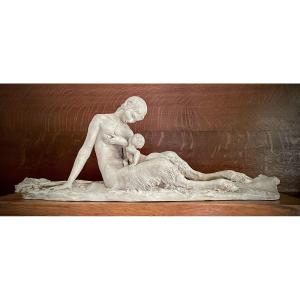
Lucienne Heuvelmans - The Virgin With The Kiss
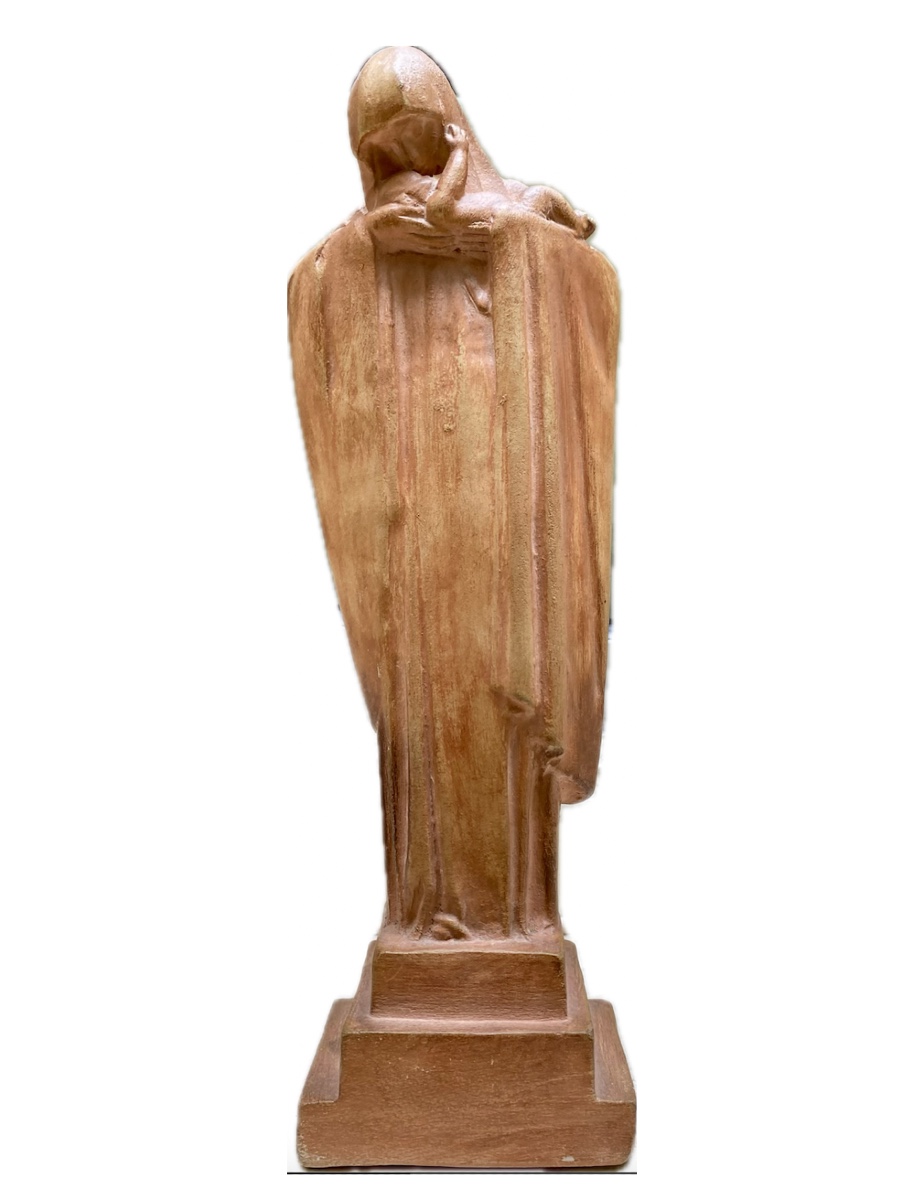
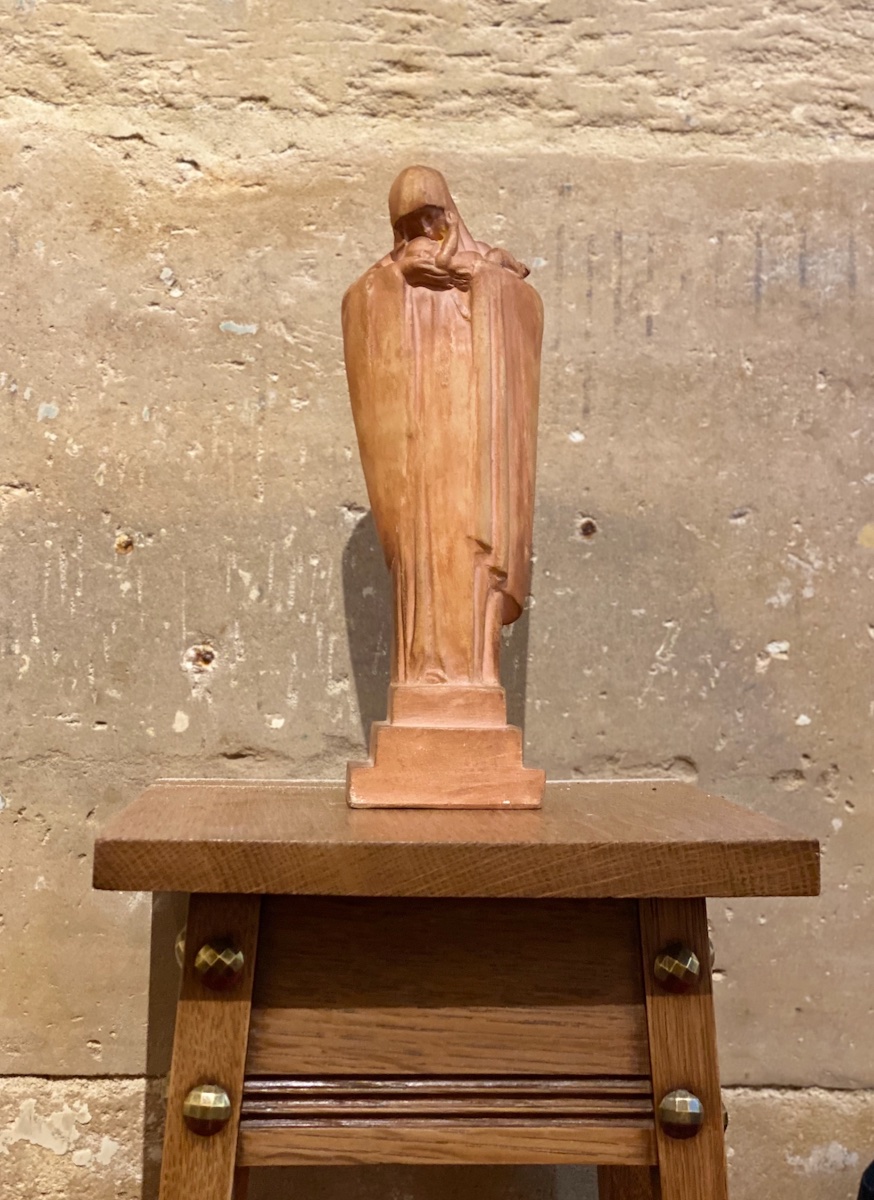
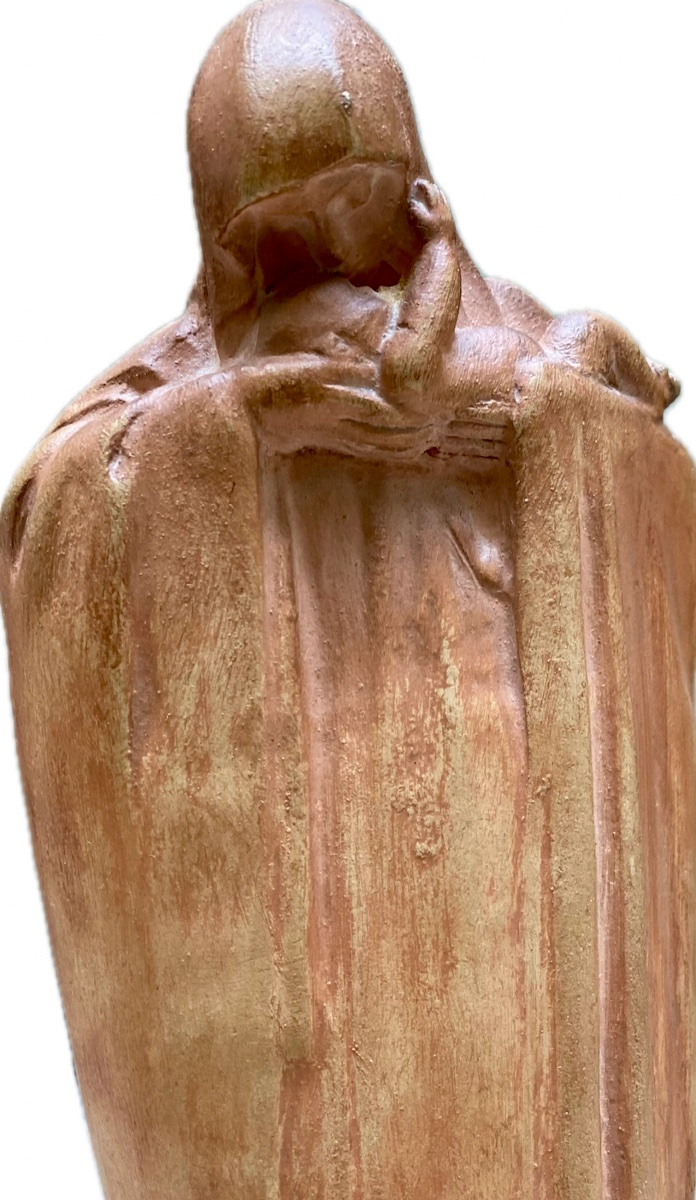
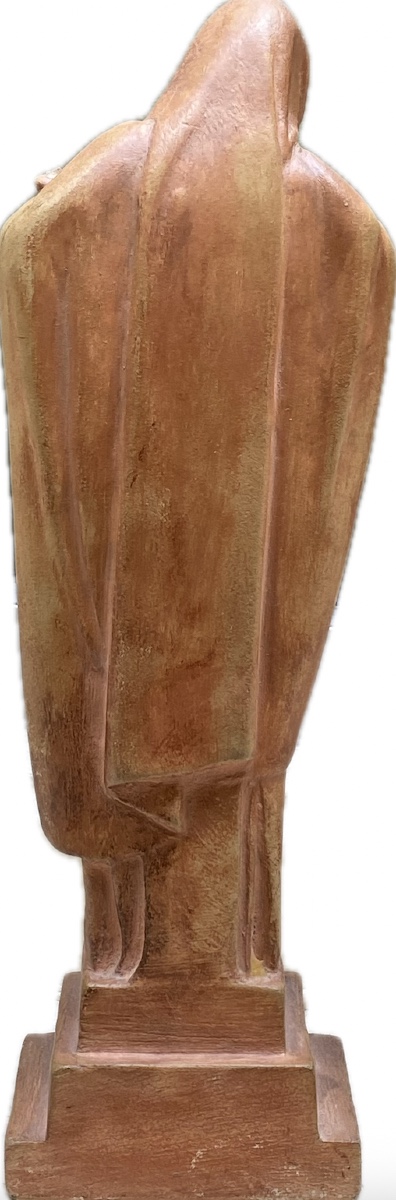
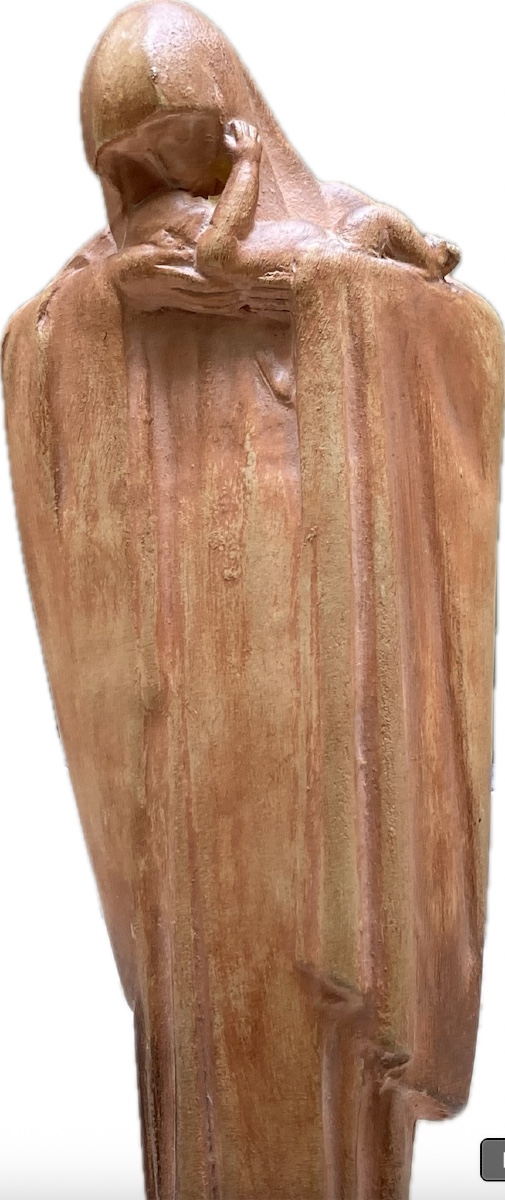
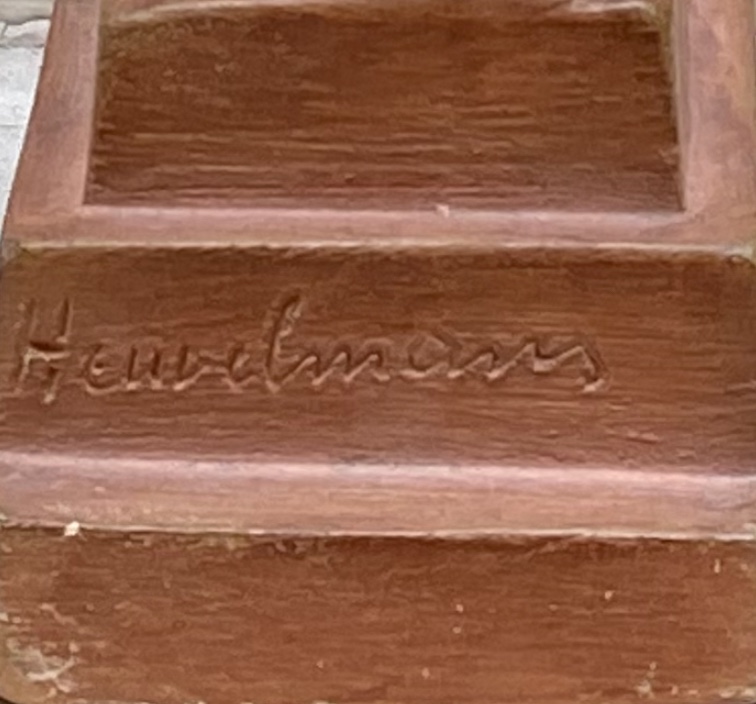


The daughter of a Belgian draftsman and cabinetmaker, Lucienne Heuvelmans made her mark in the art world. It was in her father's studio, in the heart of the Faubourg Saint-Antoine in Paris, that she began her training, determined to fulfill herself as a woman and sculptor. Born on December 25, 1881, in Paris, she developed a passion for sculpture, attended evening classes, and enrolled in the girls' section of the École nationale des arts décoratifs. At just twenty-three years old, she was admitted to the Beaux-Arts de Paris, where she perfected her technique with masters Laurent Marquette (1848-1920), Emmanuel Hannaux (1855-1934), and Denys Puech (1854-1942). After six attempts, she became the first woman to win the Grand Prix de Rome for sculpture in 1911, and this caused a stir in the journalistic world, who considered it "a resounding victory for feminism," the competition having only been open to women since 1903. She was admitted to the Villa Medici, where she stayed for two years, working with Albert Besnard. She received a number of commissions in Italy and specialized in ancient mythology and religious art. Upon her return to France, she settled in the Marais, behind the Hôtel de Rohan-Guémené, and became a drawing teacher in the schools of Paris. Her activity was intense: she participated in exhibitions, notably at the Salon des Artistes Français, where she received a bronze medal in 1921, and at the Salon des Artistes Décorateurs at the Grand Palais. Her fame was at its peak: she received the insignia of Chevalier of the Legion of Honor in 1926, on behalf of the Ministry of Fine Arts. She even honored commissions placed by the Manufacture de Sèvres. In the early 1930s, she settled in Saint-Cast, in the Côtes d'Armor, having fallen under the spell of the region, following an invitation from one of her friends. She decided to build a house there, La Clarté, opposite the Pen-Guen beach. Lucienne appreciated the nature there and mingled easily with the local population. Victim of a bad flu, she died on February 26, 1944, in Saint-Cast. Formed of rigorous and harmonious volumes, the work of Lucienne Heuvelmans responds to the dynamic of simplification and formal geometrization characterizing the renewal of sacred art in the 1930s. Her Virgin of the Kiss presents a rigorous composition, doubly pyramidal, underlined by a sober line enclosing her body hidden under a mass of opaque and thick fabrics whose fluted folds reflect the light. The intimate emotional exchange of the two faces filled with love for each other, transmits life and naturalness to the work. The singular bearing of the very small symbolizes the desire of the artist and the commissioner to represent a mother contemplating her child, in order to echo the gaze of the faithful who came to adore her. This statuette is not exclusively religious, but also the universal representation of maternal tenderness, symbolic of maternal embrace. The monumental version of The Virgin of the Kiss was created in 1928 for the church of Notre-Dame d'Espérance in the Roquette district of the 11th arrondissement of Paris, where it is still preserved.
Explore similar pieces and discover your ideal find:
Terracotta Sculptures