





Rare Qajar Lacquered Qalamdan With Figural Scenes, Iran, Late 18th Century
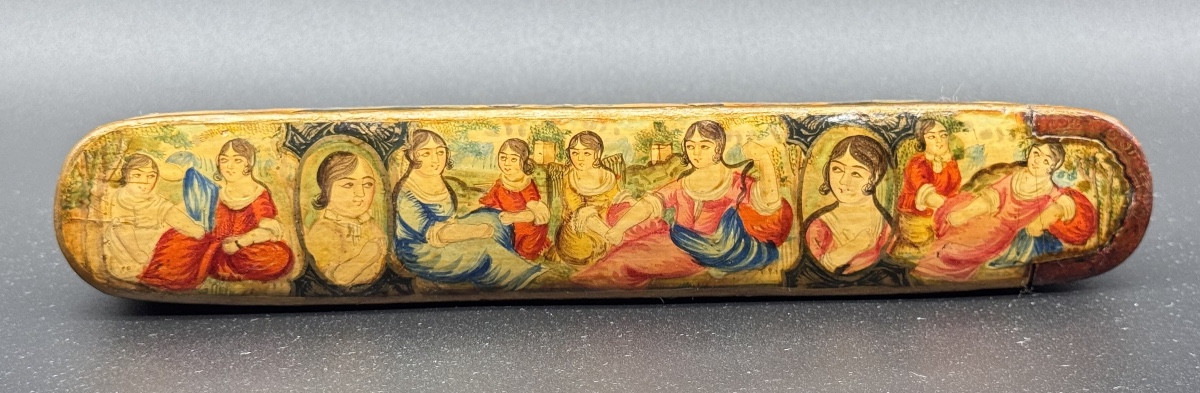
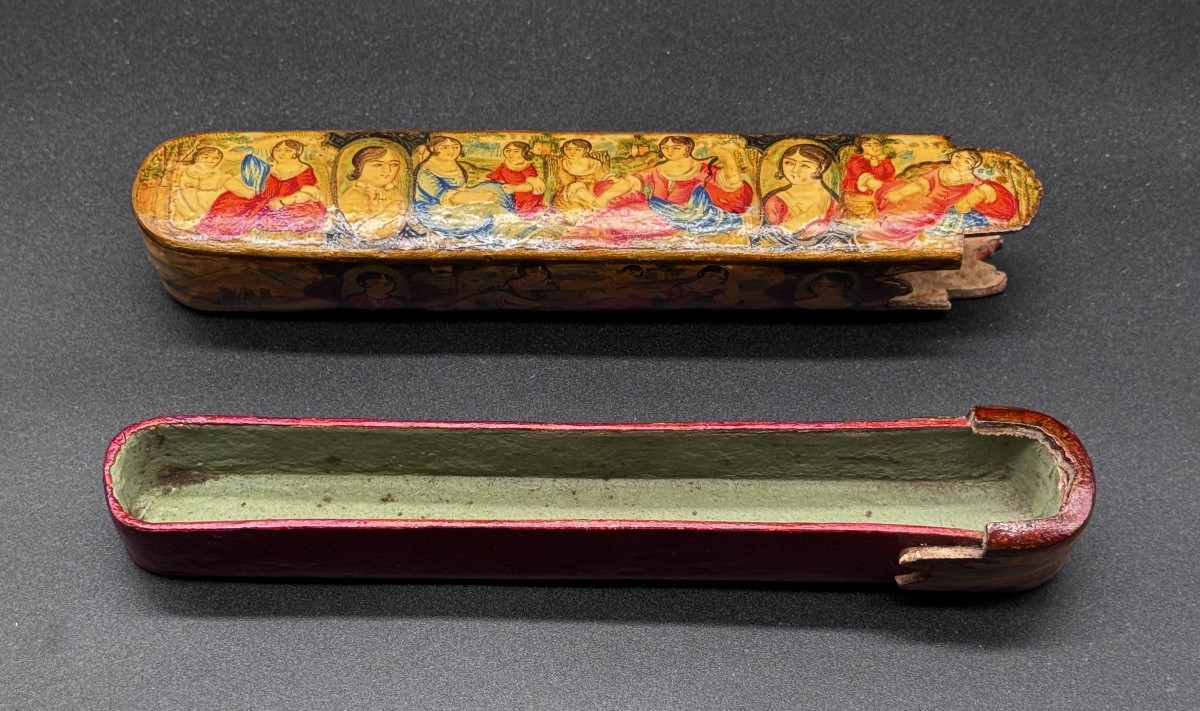
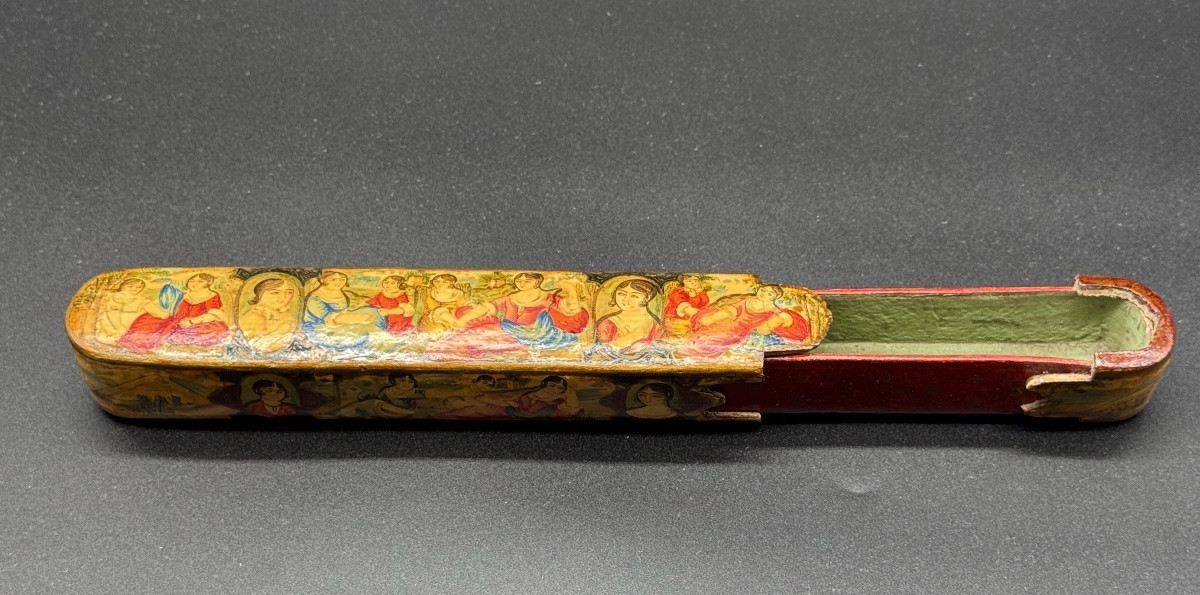
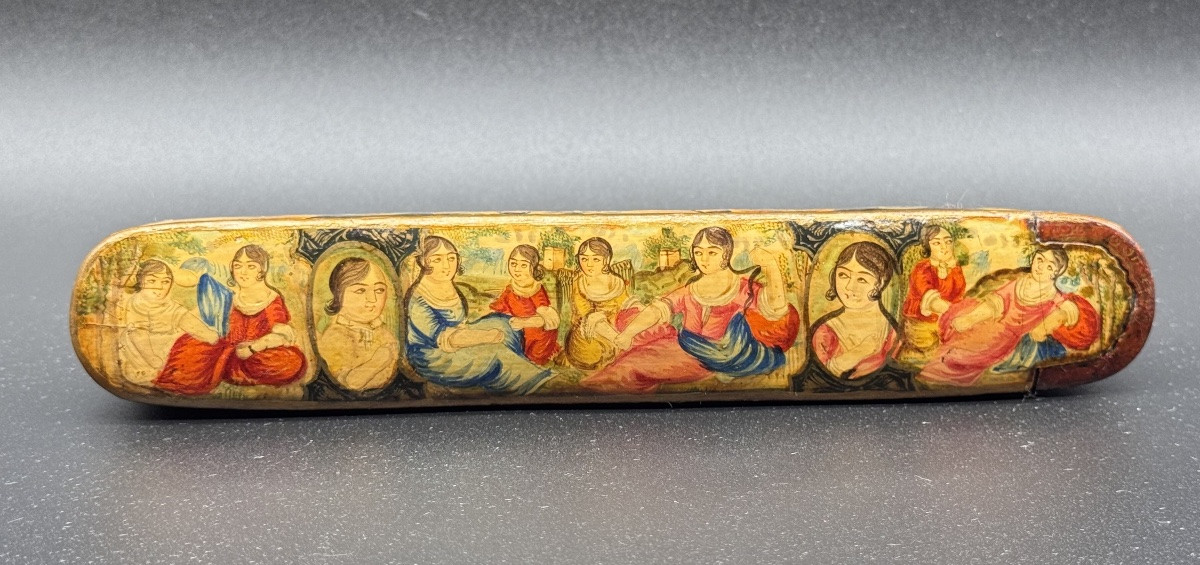
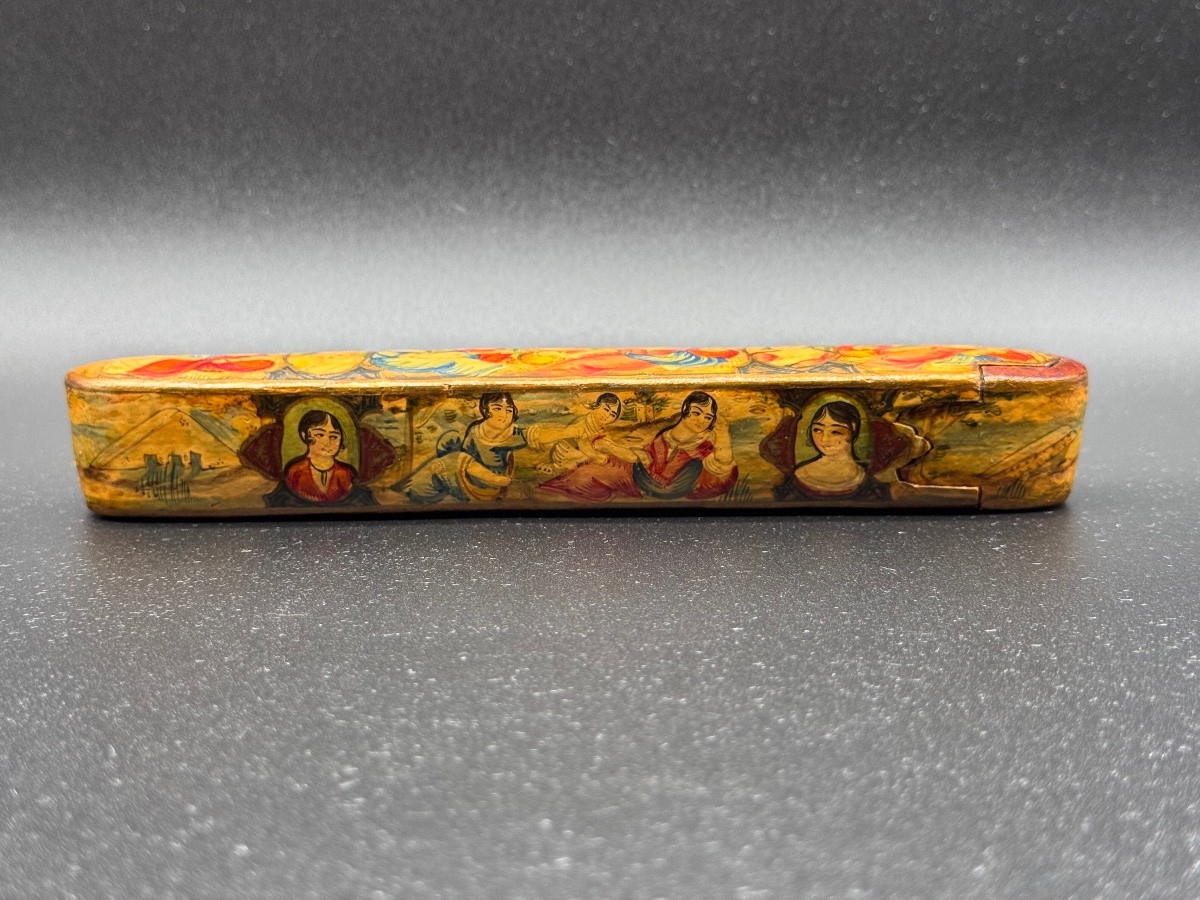
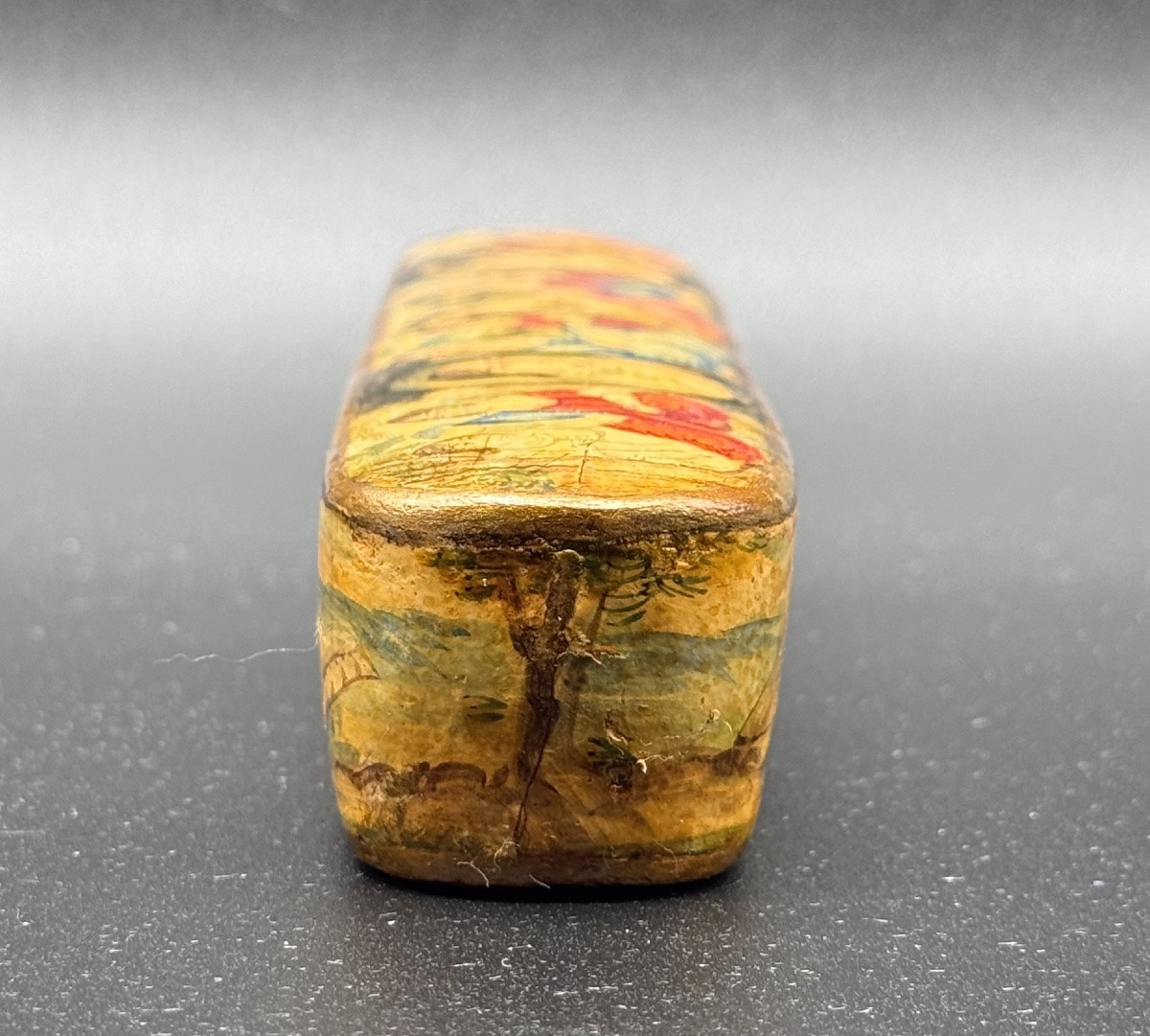
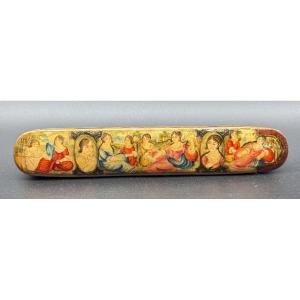
An oblong-shaped pen box (or sliding pen case, known as a ‘qalamdan’) with rounded ends, made of papier-mâché and painted with a lacquered finish. The top of the lid features a rich, polychrome figurative decoration of European inspiration, depicting a series of female figures (probably allegories or courtesans) draped in brightly coloured gowns (blue, red, pink) set against wooded landscapes, alternating with two oval cartouche medallions containing bust portraits. The sides of the box are also adorned with small animated scenes and medallion portraits against a dark background, whilst the interior of the sliding drawer is lacquered in plain red and green.
Iran. Qajar art, late 18th century or very early 19th century (c. 1799)
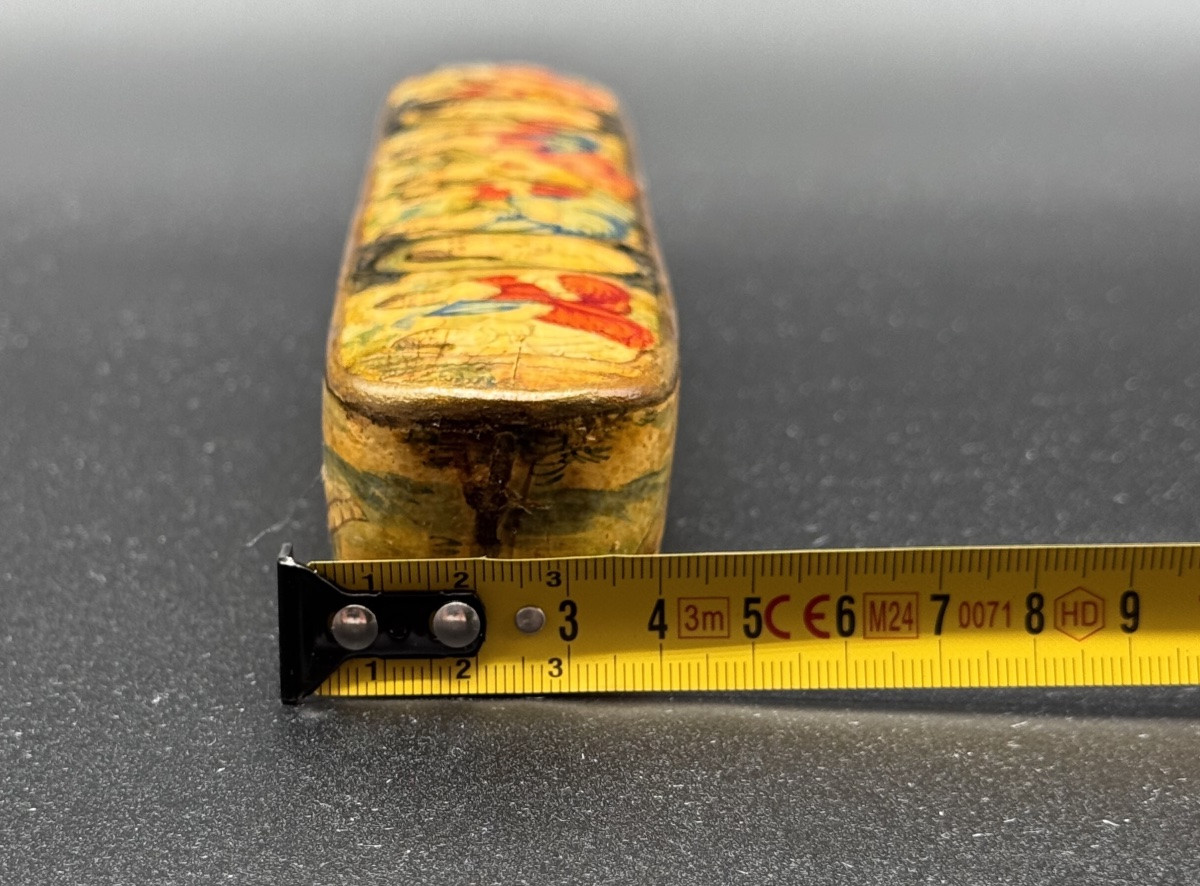
L_23.5 cm
Signs of wear due to age.
The qalamdan is an essential accessory for the literati and scribes (mirza) in Persia, designed to hold quills (reeds for writing), a penknife, a scraper and an inkwell. During the Qajar dynasty, the art of lacquerwork reached new heights of technical refinement through the use of papier-mâché covered with thin layers of protective varnish made from sandarac resin. This period was characterised by a strong influence from Western iconography (the Farangi-sazi style): persian artists reinterpreted imported European engravings and paintings, introducing round faces with softened features, Western-style drapery and landscape perspectives that coexist in a fascinating way with traditional Islamic techniques and formats.
Our object follows in the tradition of Islamic art and masterpieces from Qajar Iran, offering a captivating example of the aesthetic dialogue between East and West at the turn of the 19th century
Iran. Qajar art, late 18th century or very early 19th century (c. 1799)
L_23.5 cm
Signs of wear due to age.
The qalamdan is an essential accessory for the literati and scribes (mirza) in Persia, designed to hold quills (reeds for writing), a penknife, a scraper and an inkwell. During the Qajar dynasty, the art of lacquerwork reached new heights of technical refinement through the use of papier-mâché covered with thin layers of protective varnish made from sandarac resin. This period was characterised by a strong influence from Western iconography (the Farangi-sazi style): persian artists reinterpreted imported European engravings and paintings, introducing round faces with softened features, Western-style drapery and landscape perspectives that coexist in a fascinating way with traditional Islamic techniques and formats.
Our object follows in the tradition of Islamic art and masterpieces from Qajar Iran, offering a captivating example of the aesthetic dialogue between East and West at the turn of the 19th century
1 800 €
Period: 18th century
Style: Orientalism
Condition: Good condition
Material: Lacquer
Reference (ID): 1615283
Availability: In stock
Print