THIS OBJECT WAS SOLD
Gérard Edelinck (1640 - 1707), Portrait Of The Theologian Bossuet, Burin Print, 1701
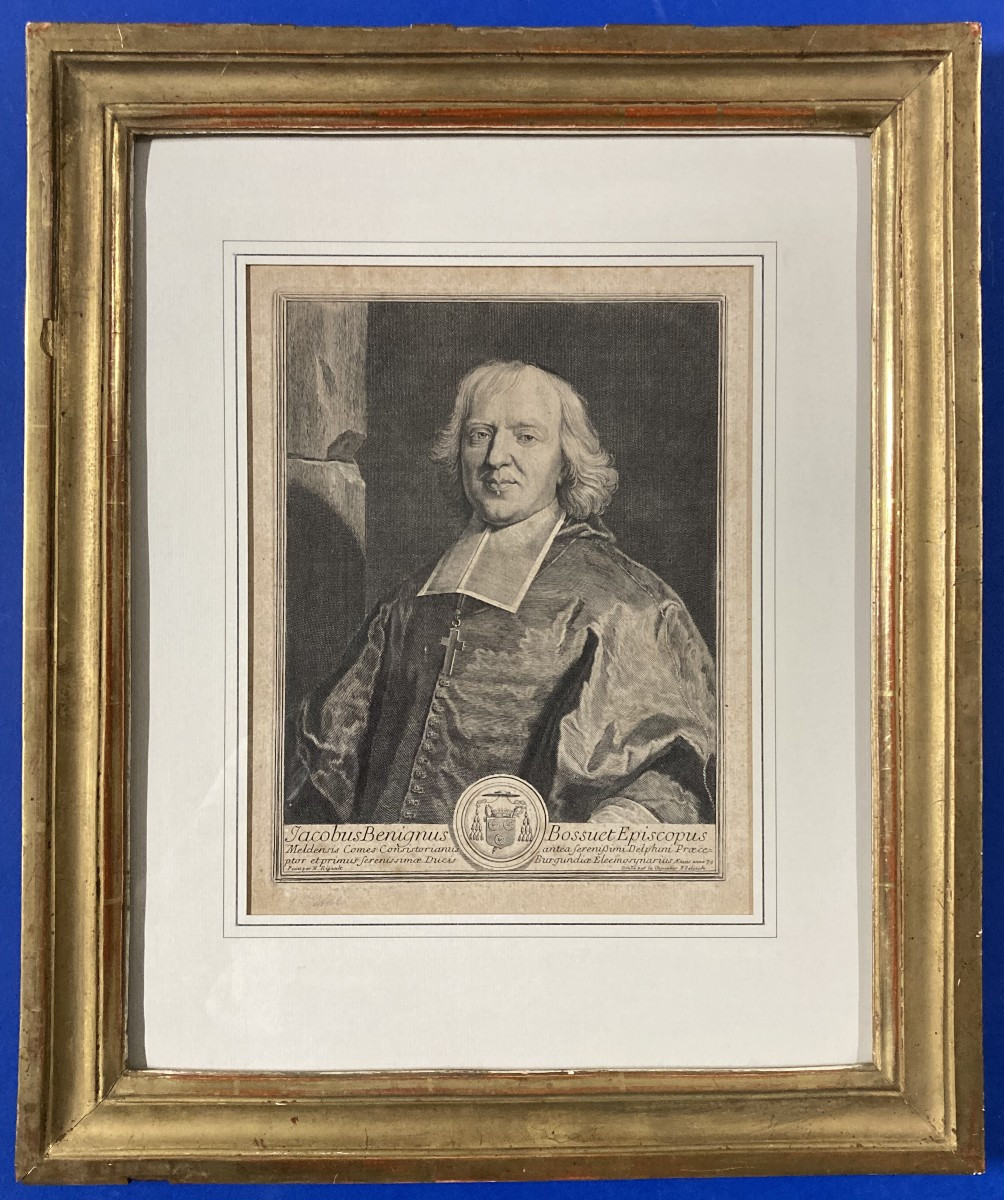
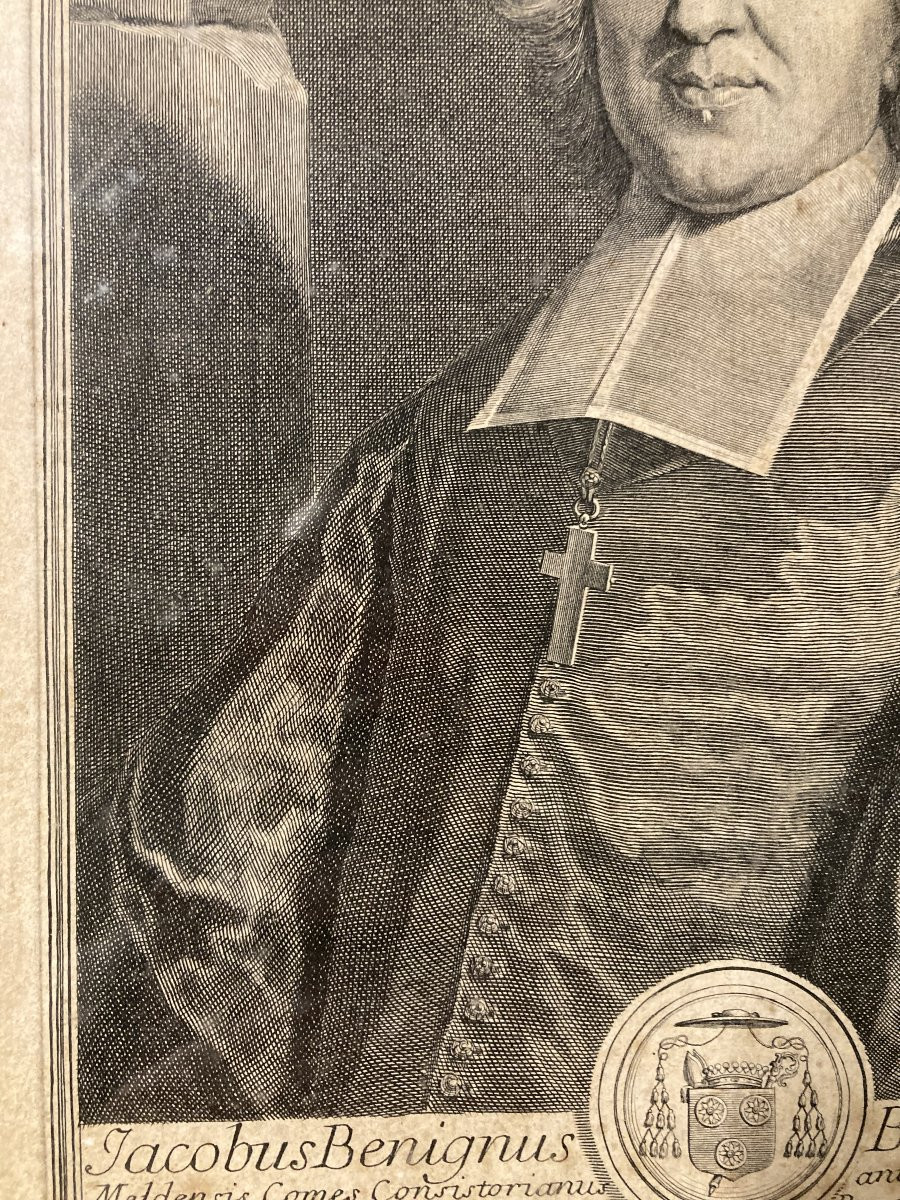

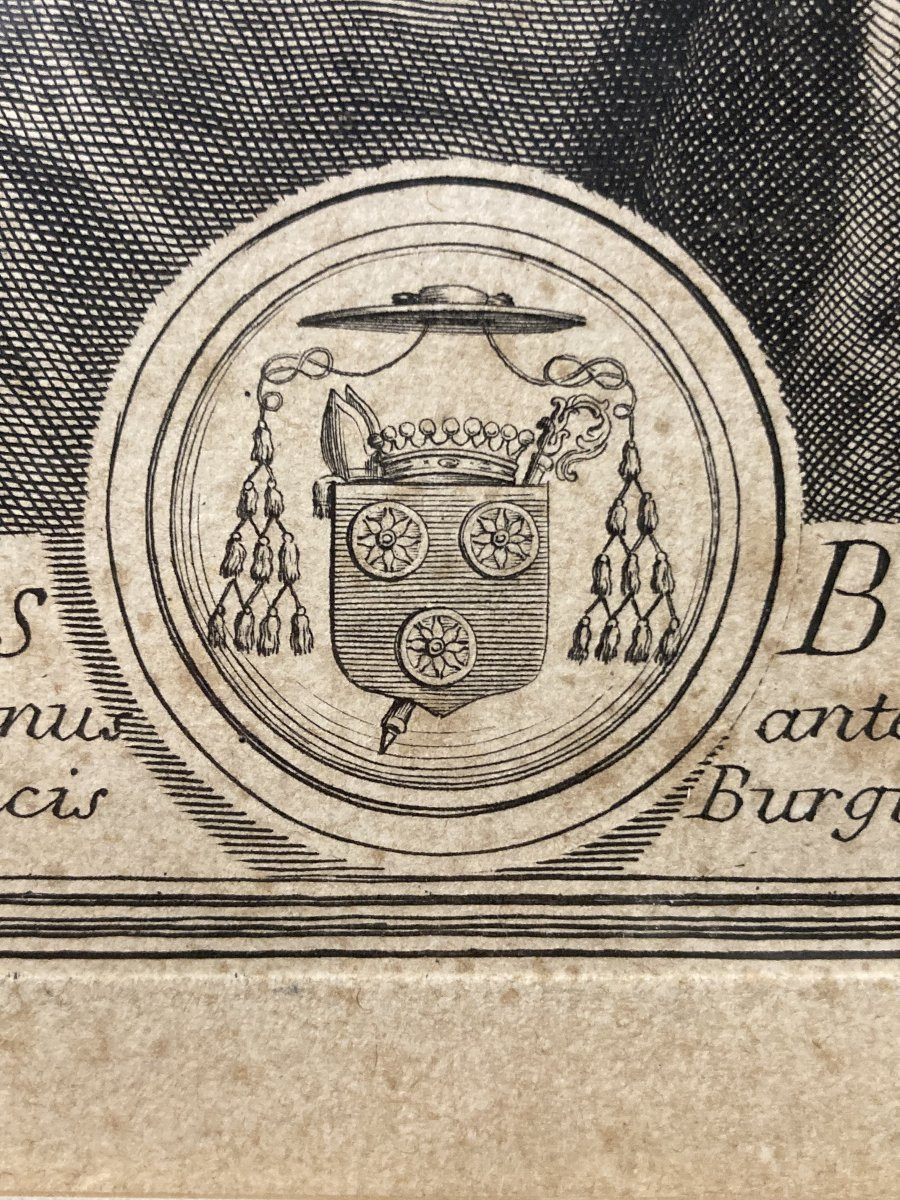
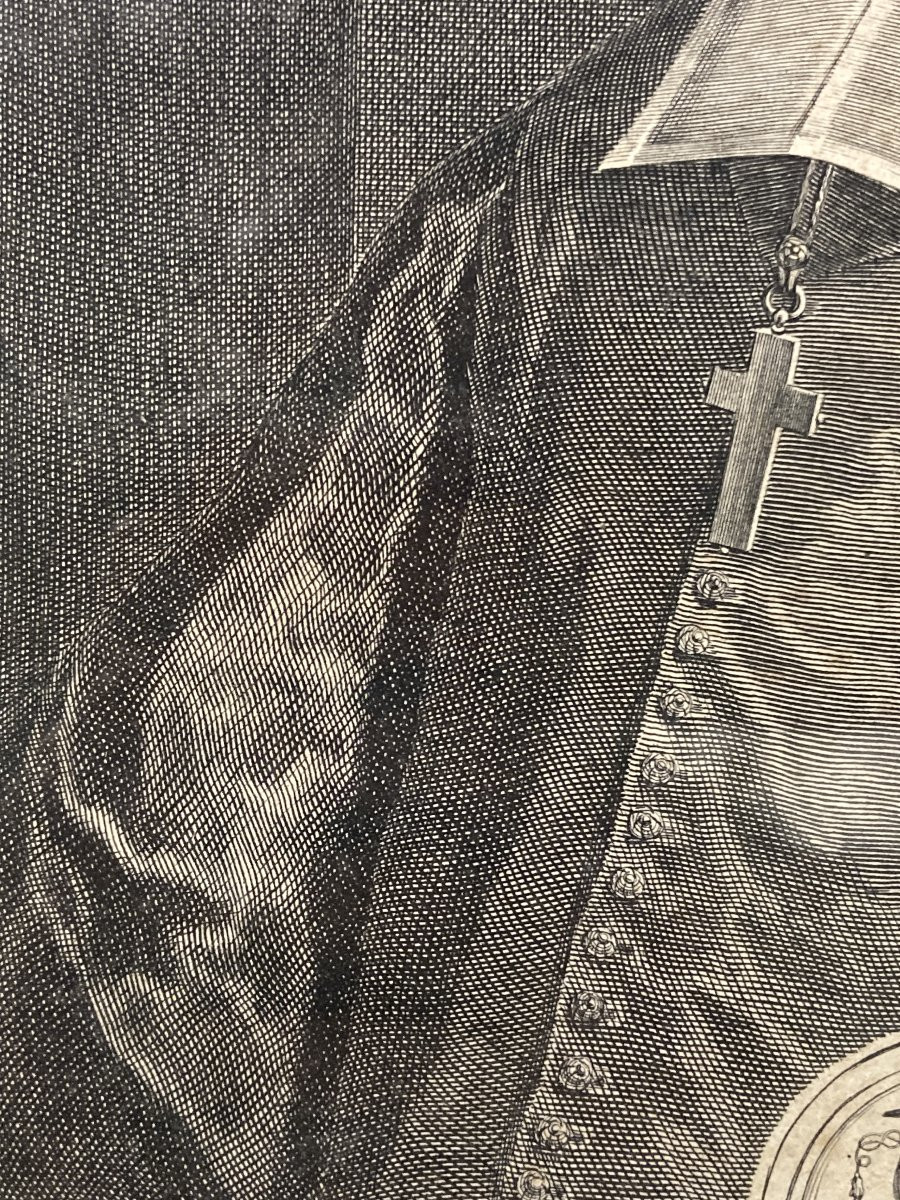



Gérard EDELINCK (Antwerp 1640 - Paris 1707)
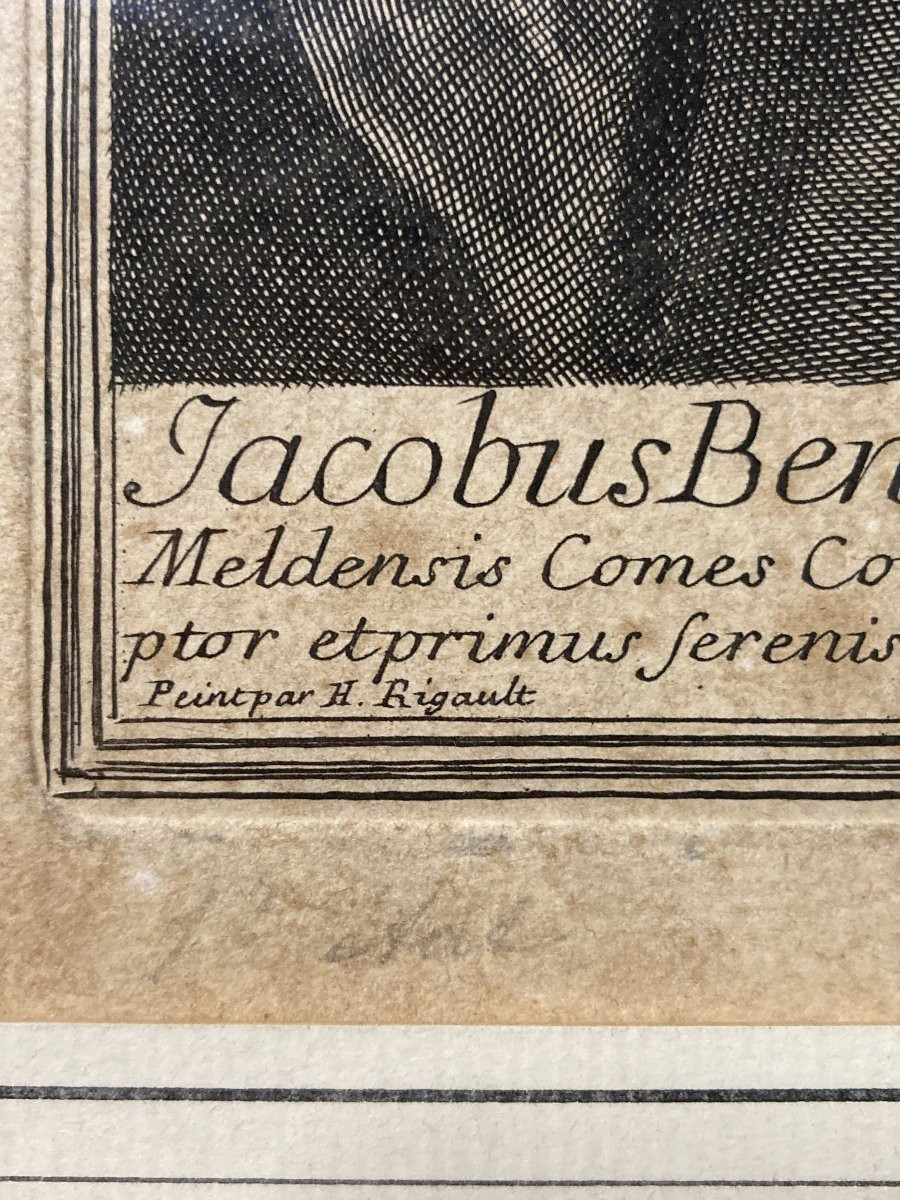
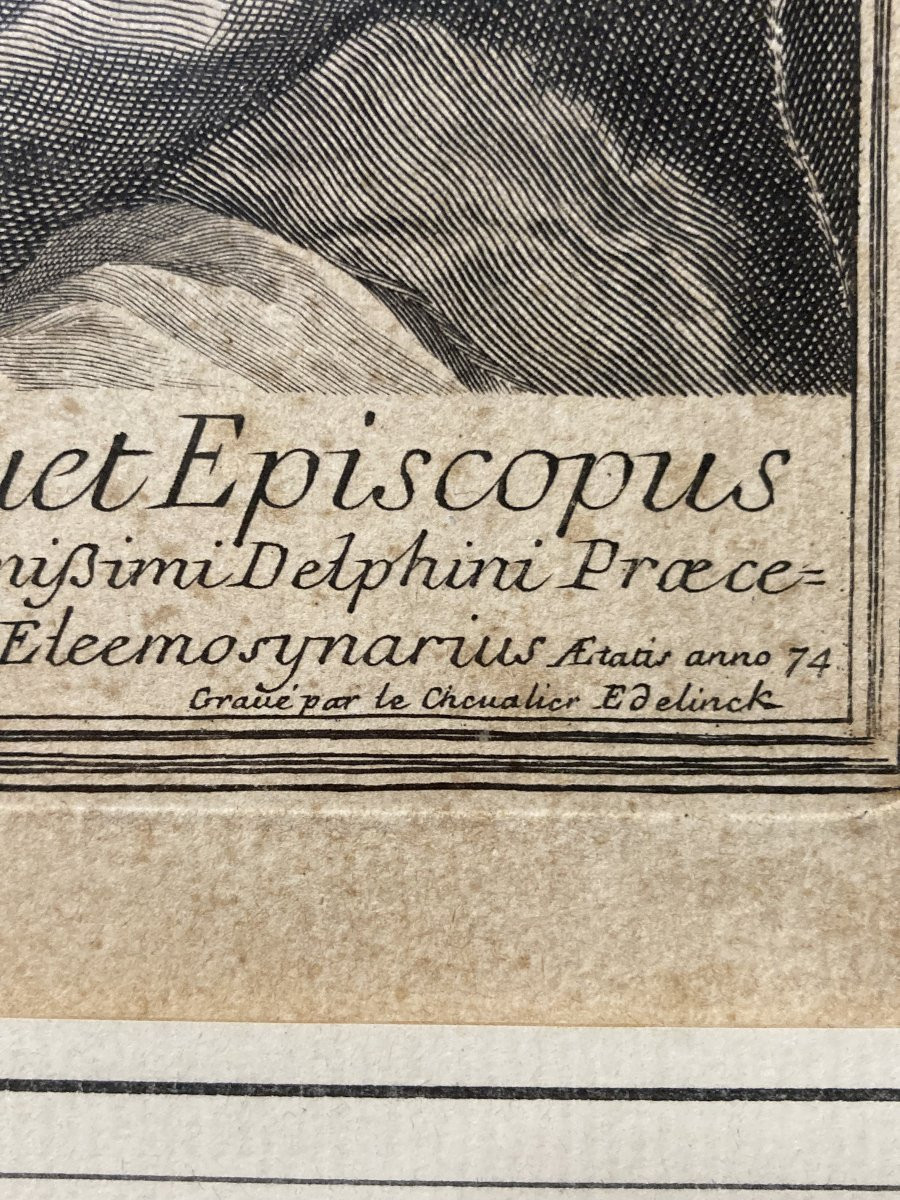
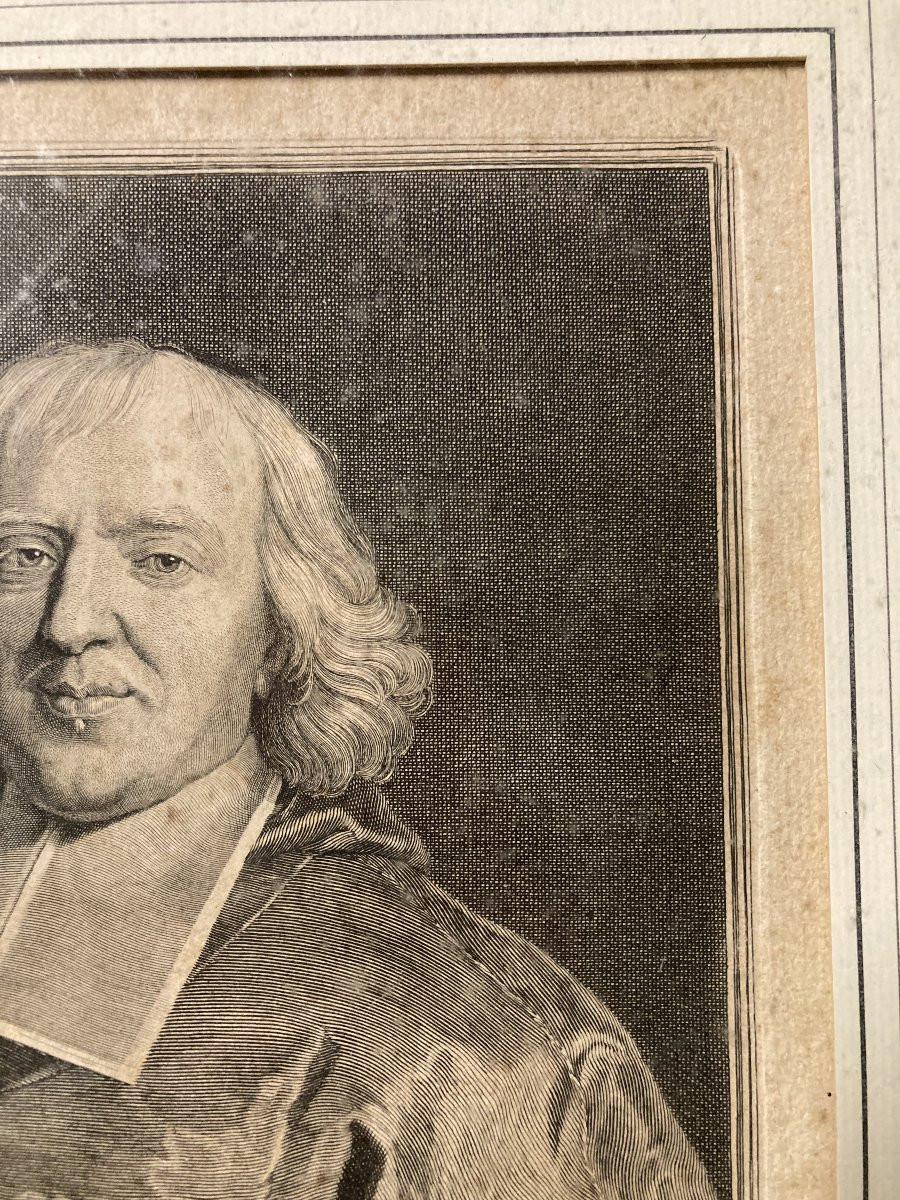
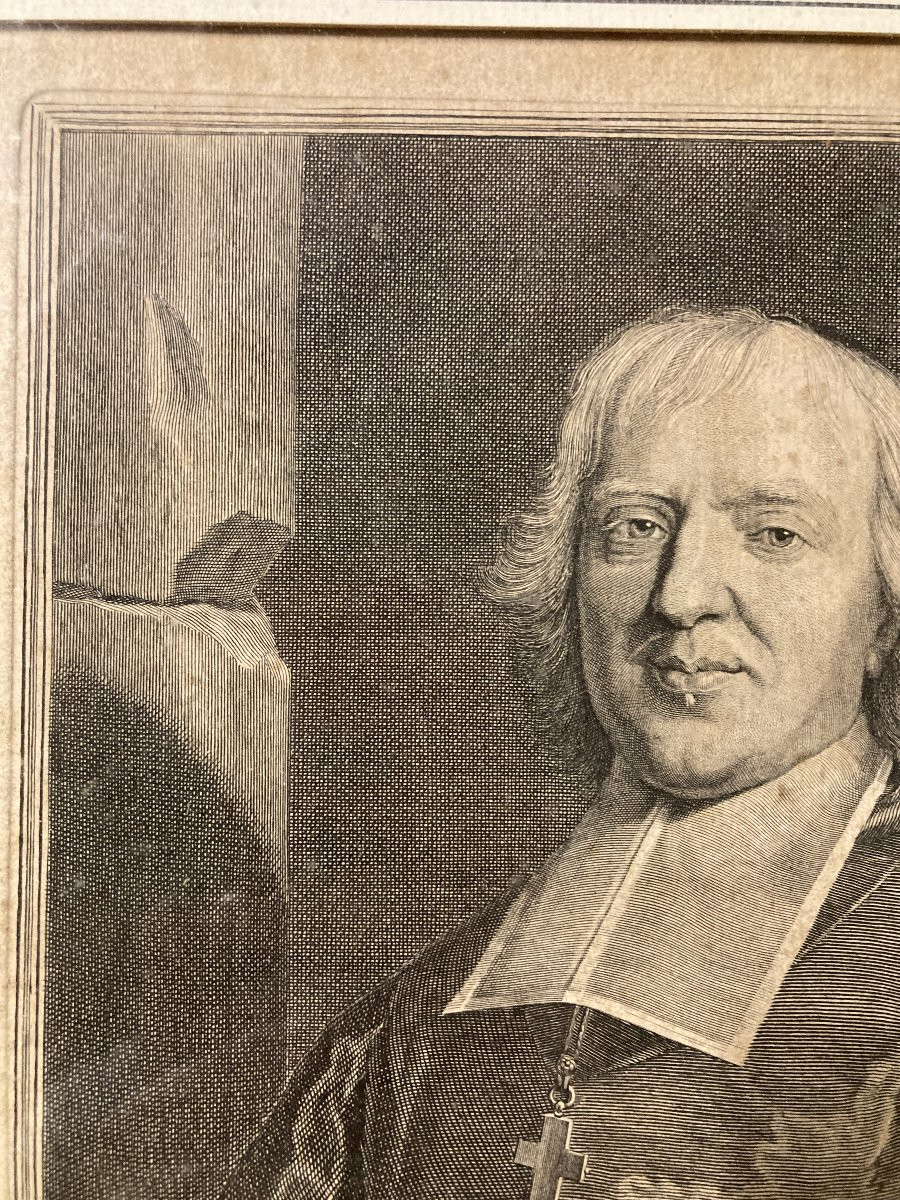
Portrait of the theologian Jacques-Bénigne Bossuet (Dijon 1627 † 1704 Paris), Bishop of Meaux
1701
Etching and burin engraving after a portrait by Hyacinthe Rigaud (Perpignan 1659 † Paris 1743), old gilt frame with keys
Proof of the 1st state of 2 (before the dot after Rigault's name), on laid paper
I.F.F. XVIIIe, n°190. Robert-Dumesnil, n°156
Some foxing and sunned paper
Dimensions of the sheet at sight: 24 x 32cm
Framed dimensions: 40 x 47 x 2cm
Gérard Edelinck, born in Antwerp on October 20, 1640 and died in Paris on April 2, 1707, was a French engraver of Flemish origin.
Gérard Edelinck and his brother Jean apprenticed with Gaspar Huberti (Huybrechts), who was also an engraver. Edelinck was also a student of Cornelius Galle the Younger, a member of the famous Antwerp engraver family.
He joined his brother Jean in Paris, where he worked under the protection of well-known artists such as the painters Philippe de Champaigne, Nicolas Pitau, and Le Brun, as well as the engraver Robert Nanteuil, who became his friends. He was noticed by Colbert, minister of Louis XIV, who granted him the titles of Knight of the Order of Saint Michael, Cabinet Engraver with a pension, and appointed him professor at the Gobelins. In 1672, he married Magdeleine Regnesson, daughter of the engraver Nicolas Regnesson and niece of Nanteuil. He was admitted to the Academy in 1677. Edelinck perfected engraving by inventing diamond-shaped engravings. He succeeded in bringing color to engraved objects.
Edelinck popularized a large number of paintings by famous painters. His prints of The Holy Family, after Raphael ; The Tent of Darius ; Saint Magdalene Repentant ; Christ with Angels ; and Saint Charles Borromeo, after Le Brun ; The Battle of Four Horsemen, after Leonardo da Vinci ; and the Virgin, after Guido Reni, are considered masterpieces.
He also excelled in portraiture. He has produced some very fine portraits of Louis XIV, Descartes, Colbert, Le Brun, Rigaud (with whom he was a close friend), Champaigne, Santeuil, and Nicolas Feuillet.
Among his students, besides his younger brother Gaspard Edelinck, were Jacques Lubin around 1670 and Antoine Trouvain around 1676.
He received the title of Roman Knight from the Pope in 1695, a qualification he attached to his signature. He had two brothers, Jean and Gaspard Edelinck, a son, Nicolas, and a godson, Jean-Baptiste Scotin, who also worked as engravers.
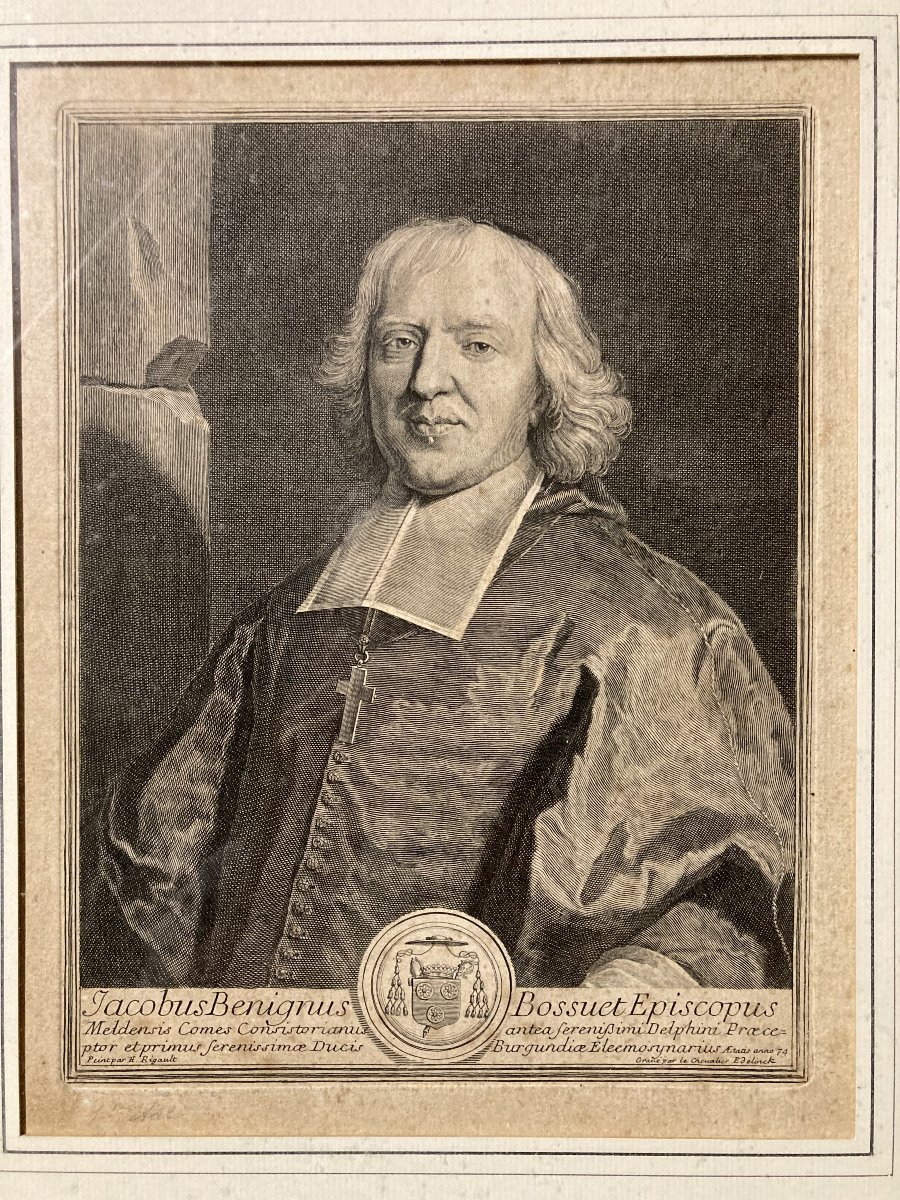
Portrait of the theologian Jacques-Bénigne Bossuet (Dijon 1627 † 1704 Paris), Bishop of Meaux
1701
Etching and burin engraving after a portrait by Hyacinthe Rigaud (Perpignan 1659 † Paris 1743), old gilt frame with keys
Proof of the 1st state of 2 (before the dot after Rigault's name), on laid paper
I.F.F. XVIIIe, n°190. Robert-Dumesnil, n°156
Some foxing and sunned paper
Dimensions of the sheet at sight: 24 x 32cm
Framed dimensions: 40 x 47 x 2cm
Gérard Edelinck, born in Antwerp on October 20, 1640 and died in Paris on April 2, 1707, was a French engraver of Flemish origin.
Gérard Edelinck and his brother Jean apprenticed with Gaspar Huberti (Huybrechts), who was also an engraver. Edelinck was also a student of Cornelius Galle the Younger, a member of the famous Antwerp engraver family.
He joined his brother Jean in Paris, where he worked under the protection of well-known artists such as the painters Philippe de Champaigne, Nicolas Pitau, and Le Brun, as well as the engraver Robert Nanteuil, who became his friends. He was noticed by Colbert, minister of Louis XIV, who granted him the titles of Knight of the Order of Saint Michael, Cabinet Engraver with a pension, and appointed him professor at the Gobelins. In 1672, he married Magdeleine Regnesson, daughter of the engraver Nicolas Regnesson and niece of Nanteuil. He was admitted to the Academy in 1677. Edelinck perfected engraving by inventing diamond-shaped engravings. He succeeded in bringing color to engraved objects.
Edelinck popularized a large number of paintings by famous painters. His prints of The Holy Family, after Raphael ; The Tent of Darius ; Saint Magdalene Repentant ; Christ with Angels ; and Saint Charles Borromeo, after Le Brun ; The Battle of Four Horsemen, after Leonardo da Vinci ; and the Virgin, after Guido Reni, are considered masterpieces.
He also excelled in portraiture. He has produced some very fine portraits of Louis XIV, Descartes, Colbert, Le Brun, Rigaud (with whom he was a close friend), Champaigne, Santeuil, and Nicolas Feuillet.
Among his students, besides his younger brother Gaspard Edelinck, were Jacques Lubin around 1670 and Antoine Trouvain around 1676.
He received the title of Roman Knight from the Pope in 1695, a qualification he attached to his signature. He had two brothers, Jean and Gaspard Edelinck, a son, Nicolas, and a godson, Jean-Baptiste Scotin, who also worked as engravers.
Explore similar pieces and discover your ideal find:
Prints (Relief, Intaglio)