THIS OBJECT WAS SOLD
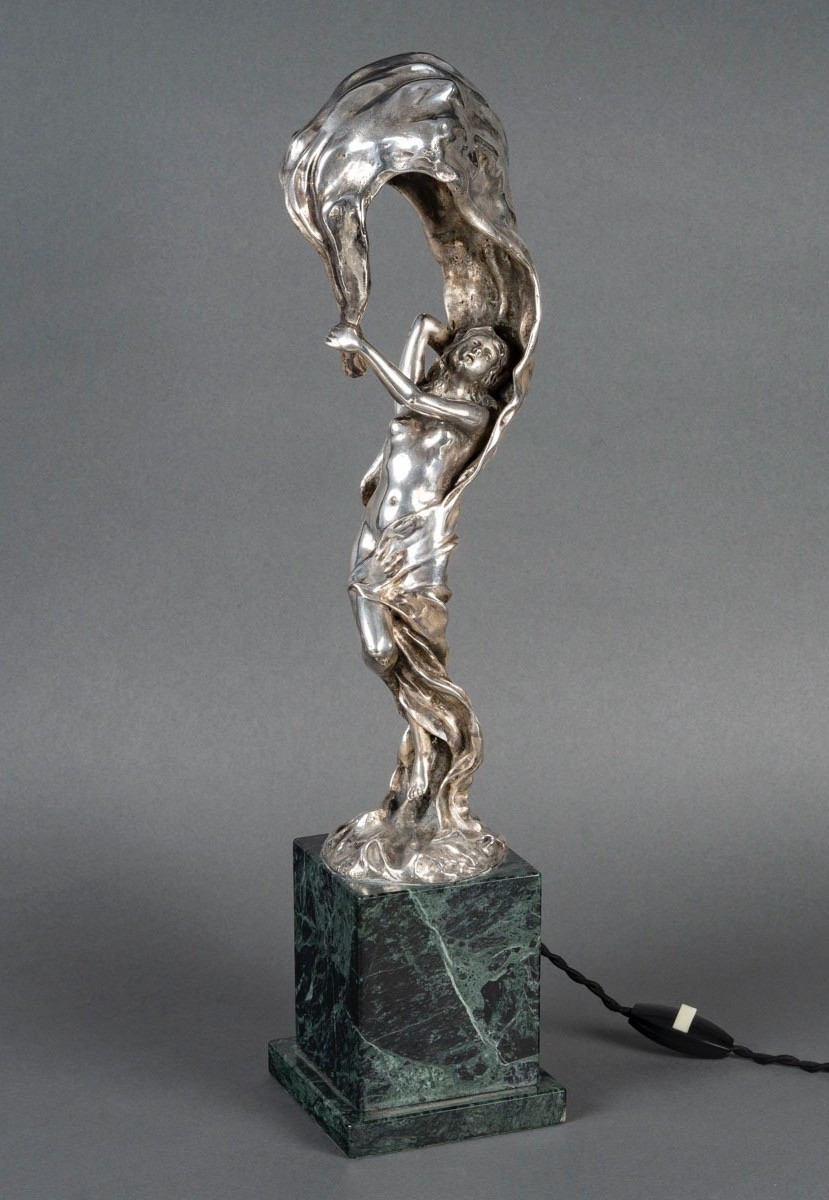
Fernand Ouillon-carrère (1879-1959) Loïe Fuller An Art Nouveau Bronze Veilleuse Lamp Circa 1905
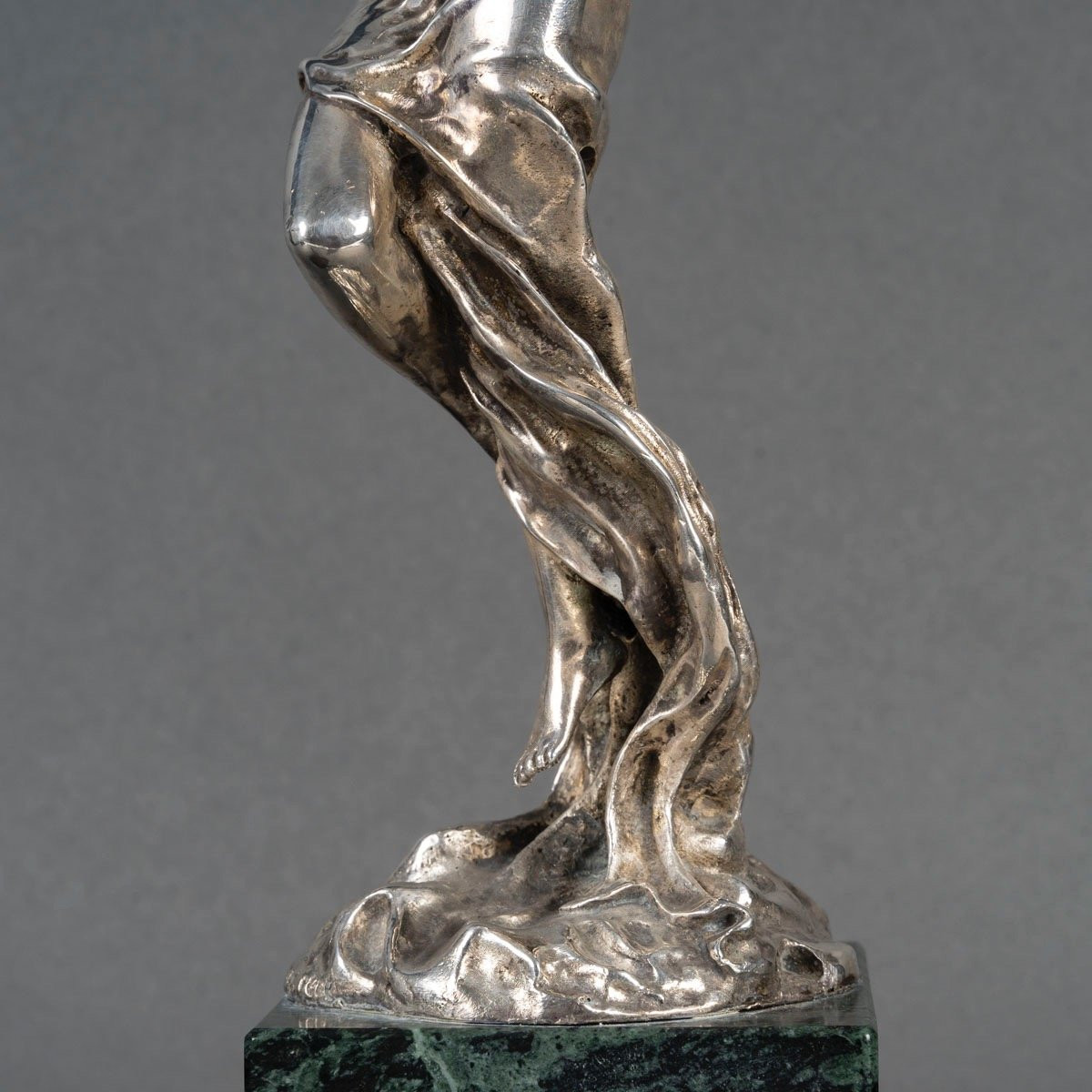


Fernand Ouillon-Carrère (1879-1959)
Loïe Fuller
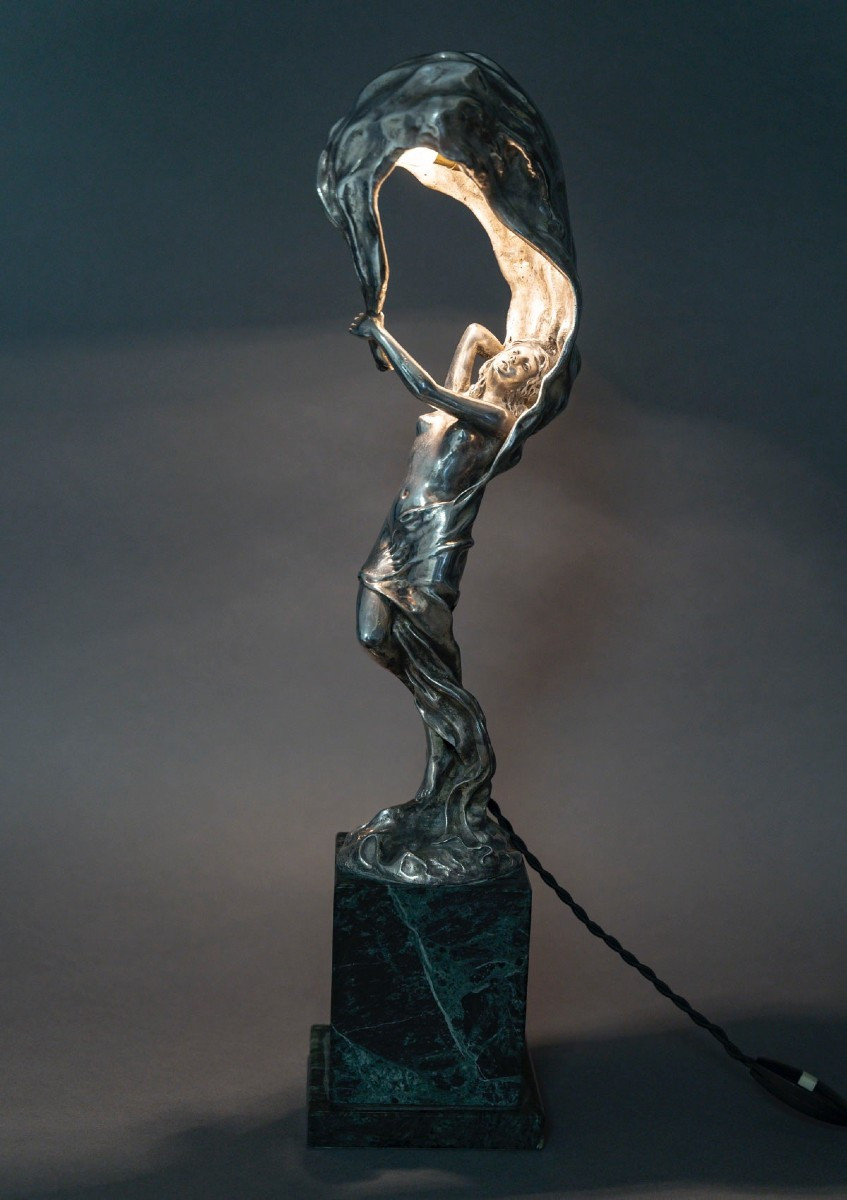
An Art Nouveau Bronze Veilleuse Lamp circa 1905
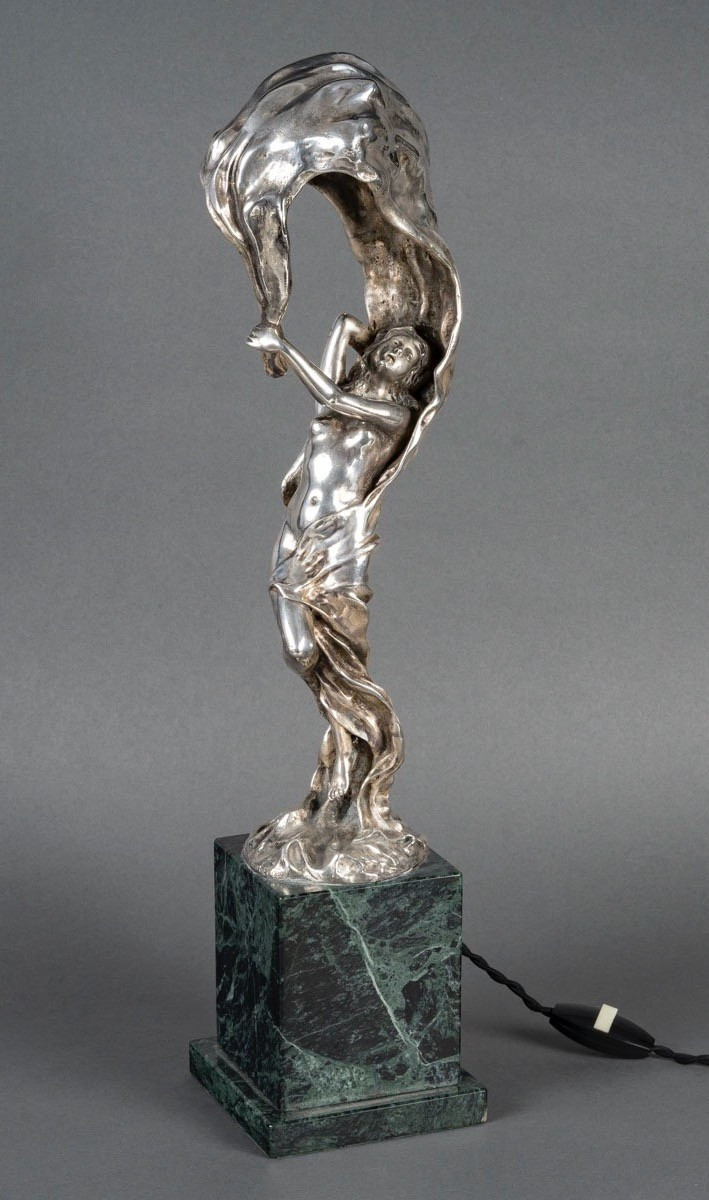
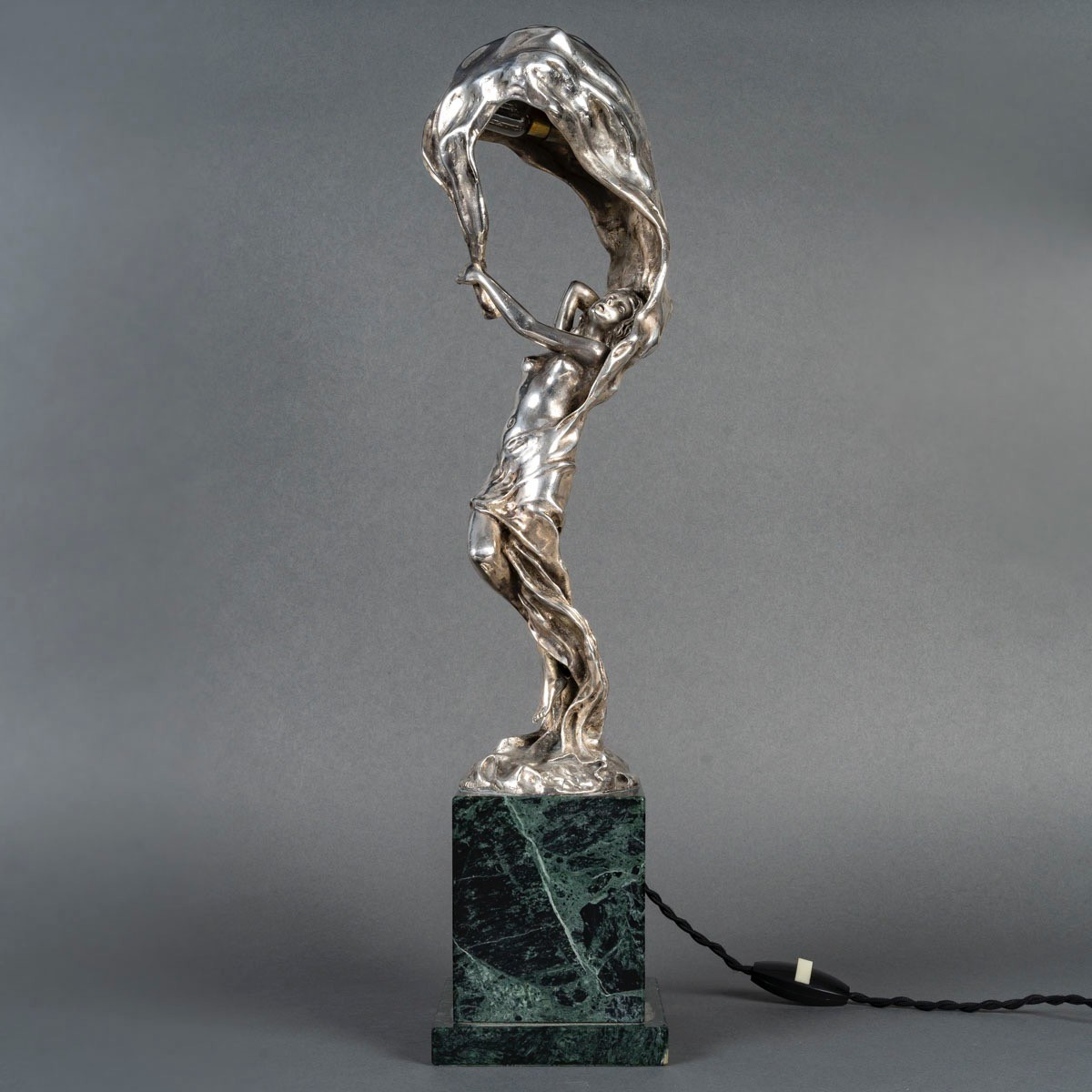
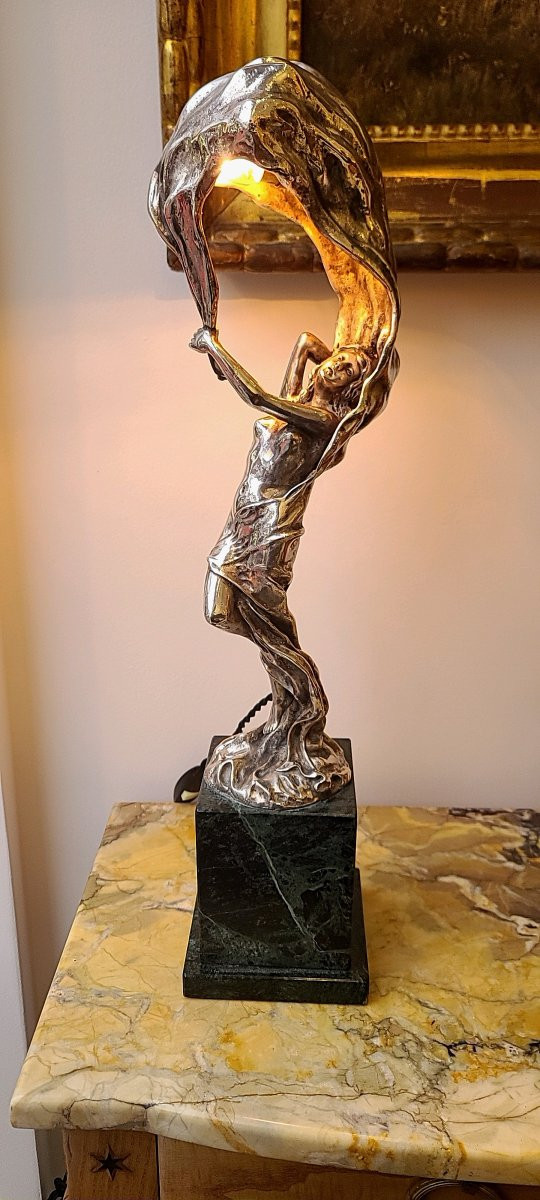
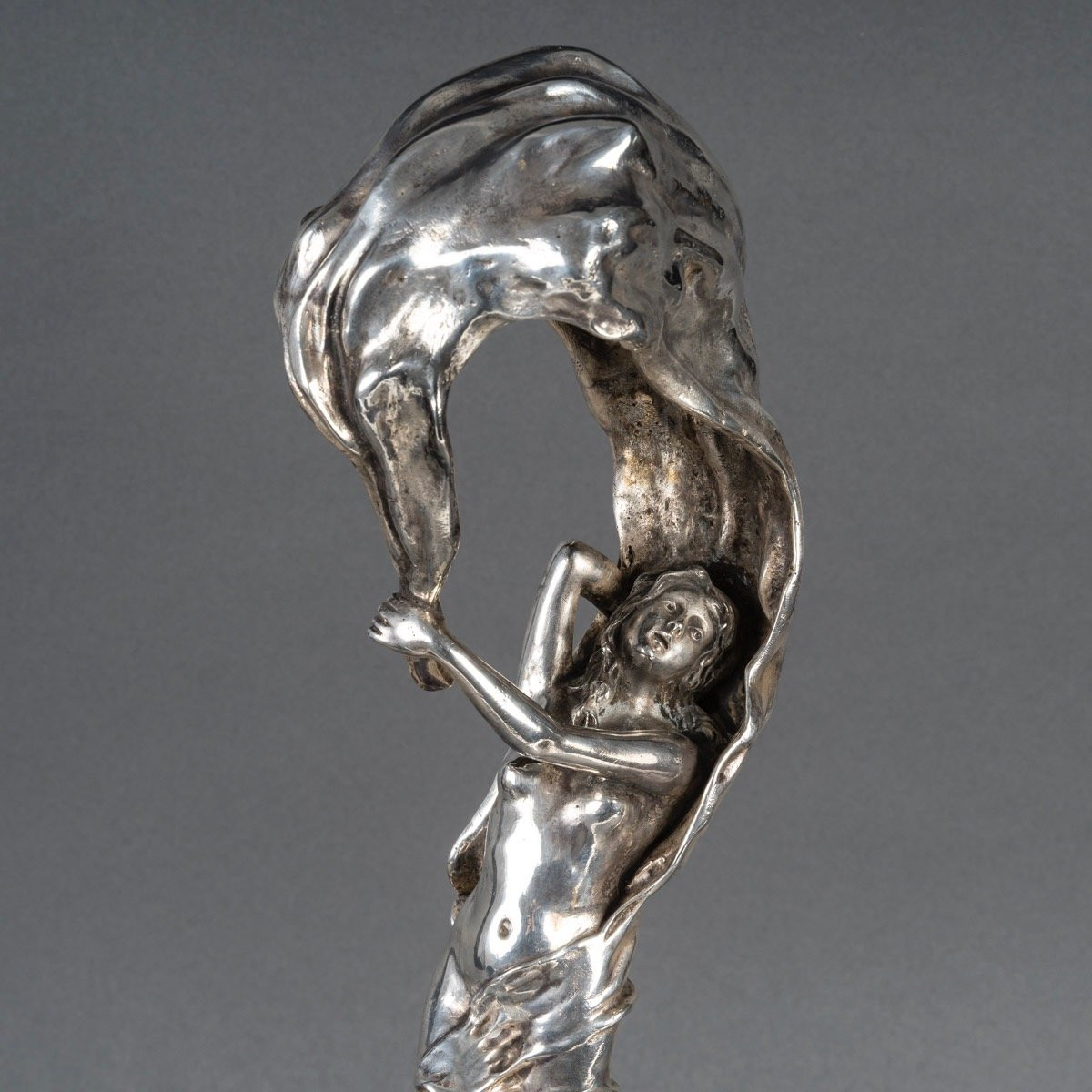
Designed as a Dancing Woman in the wind, inspirated by the famous contemporary dancer L. Fuller
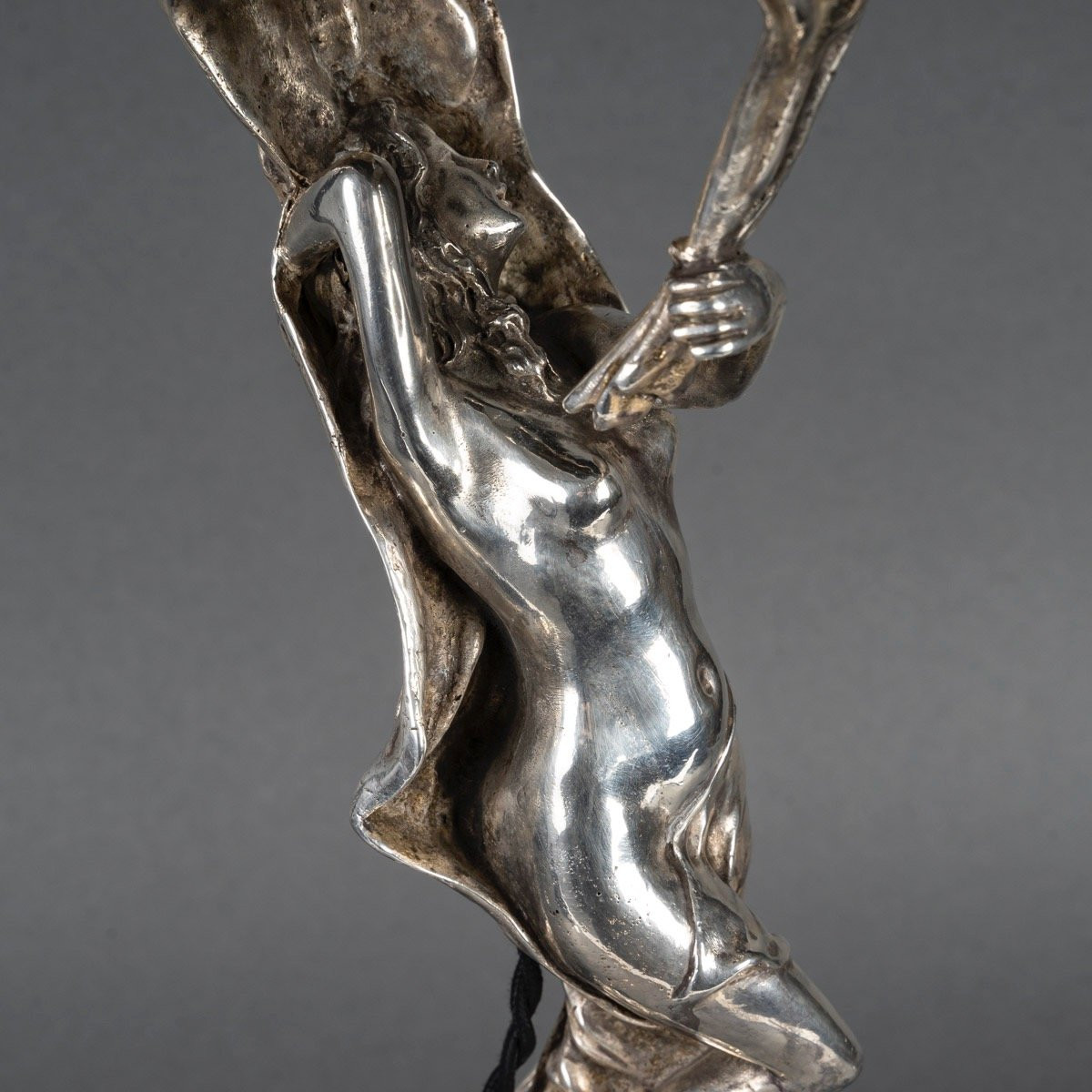
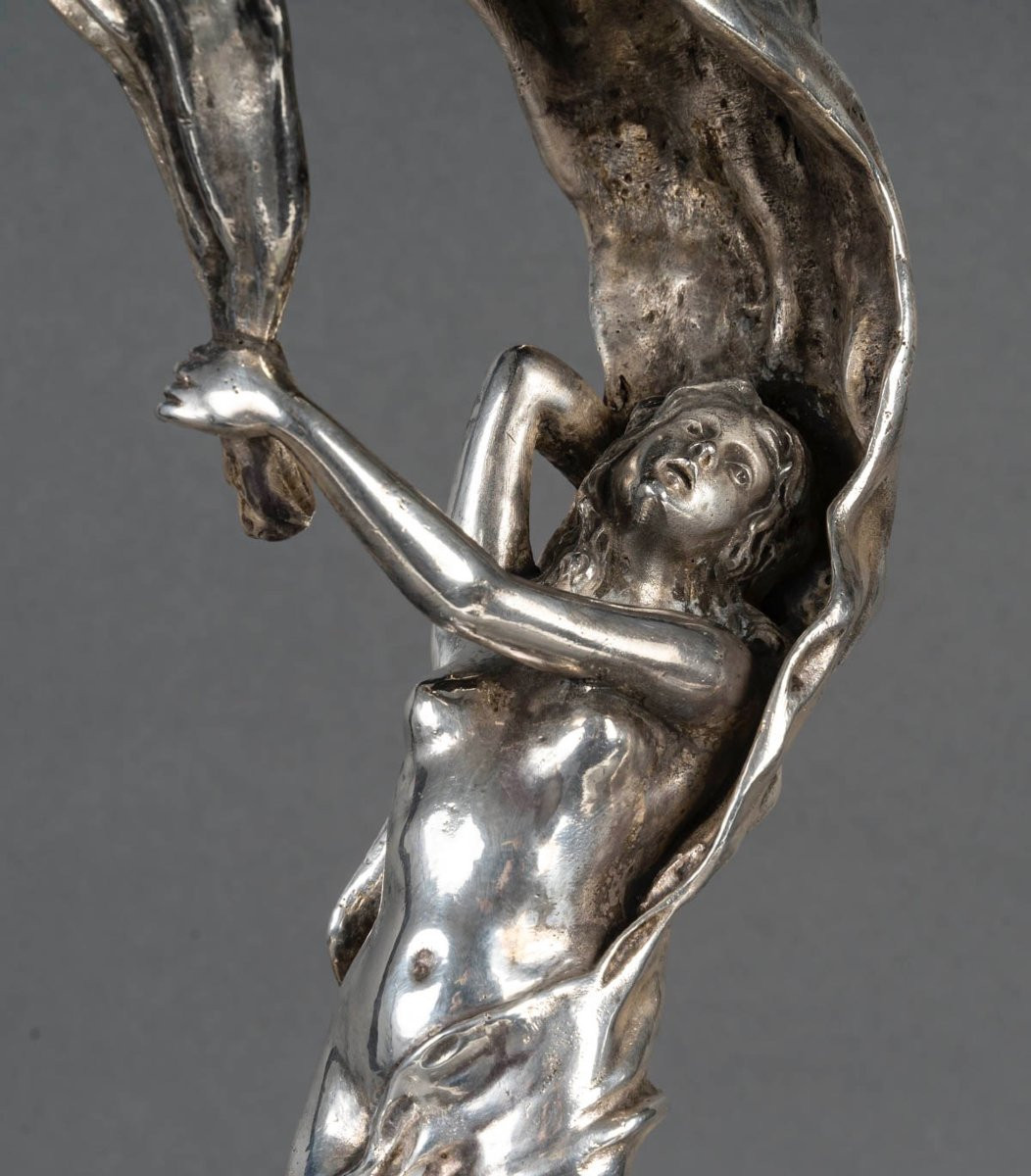
Proof in bronze with silver patina, forming veilleuse lamp
Mounted on a double green marble plinth
Signed
Art Nouveau Period
Circa 1905
Fitted for electricity
American-expatriate Loïe Fuller (1862–1928) danced her way into Parisian hearts in 1892 at the cabaret Folies Bergères and became the muse of many Art Nouveau artists, among them the most famous one Raoul-François Larche (1860–1912).
As many other Art Nouveau artists fascinated and inspired by Loïe Fuller, The Ouillon-Carrère captured the mesmerizing quality of the performer’s dance in this bronze table lamp. Fuller festooned herself with yards and yards of silk, which she would manipulate with wands sewn to the fabric. The organic forms and swirling lines that Fuller created with cloth were enhanced with projected colored lights.
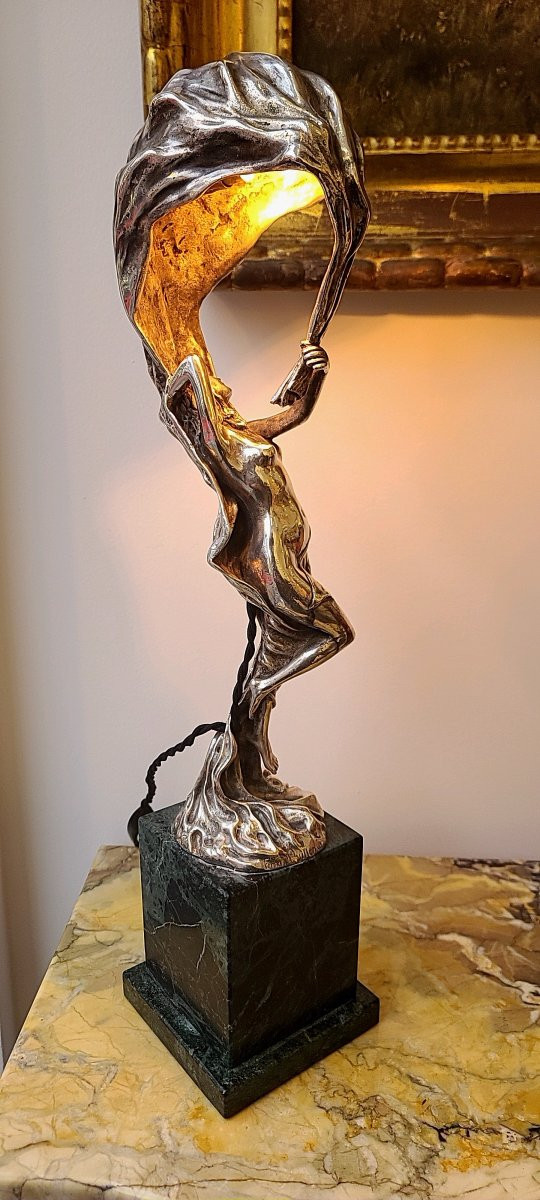
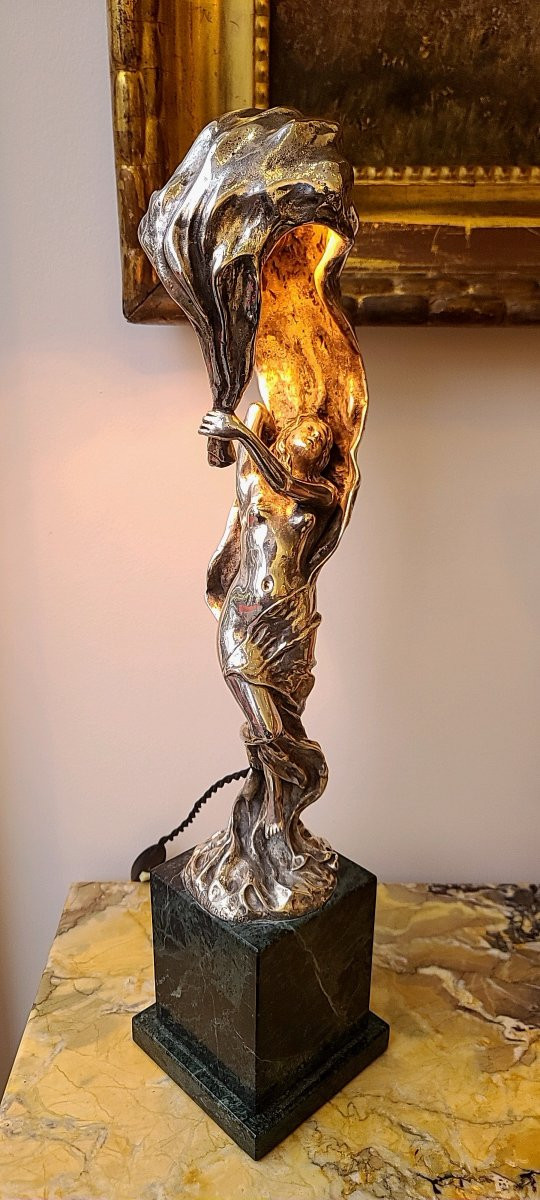
Ouillon-Carrère’s table lamp shows the dancer twisting silk above her head with outstretched arms. Balancing the volumetric drapery overhead is an organic pool of fabric below. Although the amount of fabric may seem overdone, it is an accurate representation of Fuller’s dance attire—one of Fuller’s costumes for an 1895 dance featured 1,500 feet of cloth, with almost 300 feet of that being at the hem.
The artist cleverly manipulated electricity in the Fuller lamp. A light bulb is hidden by the swirling, sculpted fabric above the dancer’s head, while the wiring for the lamp is hidden in the interiorand exterior, running down the length of Fuller’s body.
Electricity and Fuller are fused together here, just as they were in her dramatic performances.
Fernand Ouillon-Carrère created many small figural models in the Art Deco period around 1910-1939 that were highly characteristic of the period, the depiction of the concept of modern life - in particular, that of the modern woman in rhythmic, sensual and aerodynamic poses taken from the new forms of dance, for which there was a lot of enthusiasm at that time.Our piece, an early work of the artist, is typically Art Nouveau, woman idealized and fascinating.
Loïe Fuller
An Art Nouveau Bronze Veilleuse Lamp circa 1905
Designed as a Dancing Woman in the wind, inspirated by the famous contemporary dancer L. Fuller
Proof in bronze with silver patina, forming veilleuse lamp
Mounted on a double green marble plinth
Signed
Art Nouveau Period
Circa 1905
Fitted for electricity
American-expatriate Loïe Fuller (1862–1928) danced her way into Parisian hearts in 1892 at the cabaret Folies Bergères and became the muse of many Art Nouveau artists, among them the most famous one Raoul-François Larche (1860–1912).
As many other Art Nouveau artists fascinated and inspired by Loïe Fuller, The Ouillon-Carrère captured the mesmerizing quality of the performer’s dance in this bronze table lamp. Fuller festooned herself with yards and yards of silk, which she would manipulate with wands sewn to the fabric. The organic forms and swirling lines that Fuller created with cloth were enhanced with projected colored lights.
Ouillon-Carrère’s table lamp shows the dancer twisting silk above her head with outstretched arms. Balancing the volumetric drapery overhead is an organic pool of fabric below. Although the amount of fabric may seem overdone, it is an accurate representation of Fuller’s dance attire—one of Fuller’s costumes for an 1895 dance featured 1,500 feet of cloth, with almost 300 feet of that being at the hem.
The artist cleverly manipulated electricity in the Fuller lamp. A light bulb is hidden by the swirling, sculpted fabric above the dancer’s head, while the wiring for the lamp is hidden in the interiorand exterior, running down the length of Fuller’s body.
Electricity and Fuller are fused together here, just as they were in her dramatic performances.
Fernand Ouillon-Carrère created many small figural models in the Art Deco period around 1910-1939 that were highly characteristic of the period, the depiction of the concept of modern life - in particular, that of the modern woman in rhythmic, sensual and aerodynamic poses taken from the new forms of dance, for which there was a lot of enthusiasm at that time.Our piece, an early work of the artist, is typically Art Nouveau, woman idealized and fascinating.
Explore similar pieces and discover your ideal find:
lamps