



India, Gujarat State, Medieval Period, 15th Century, Representation Of Krishna, Black Marble
Polished black marble representation of Krishna
India, Gujarat State
Medieval period
15th century
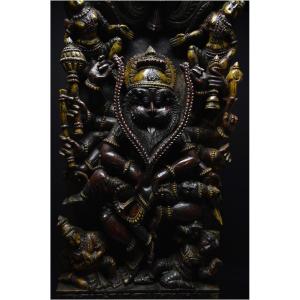
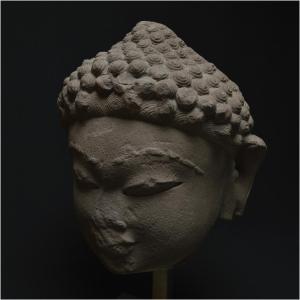
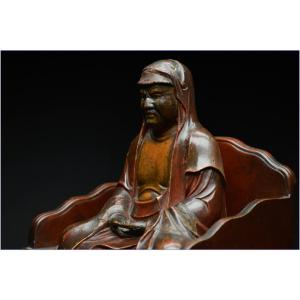
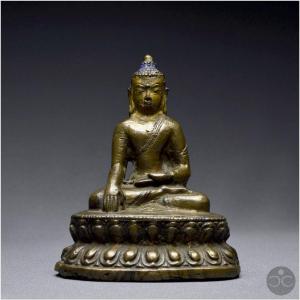
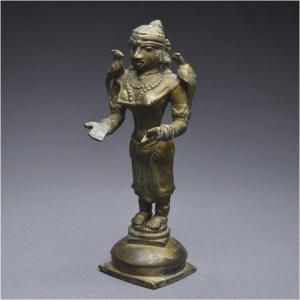
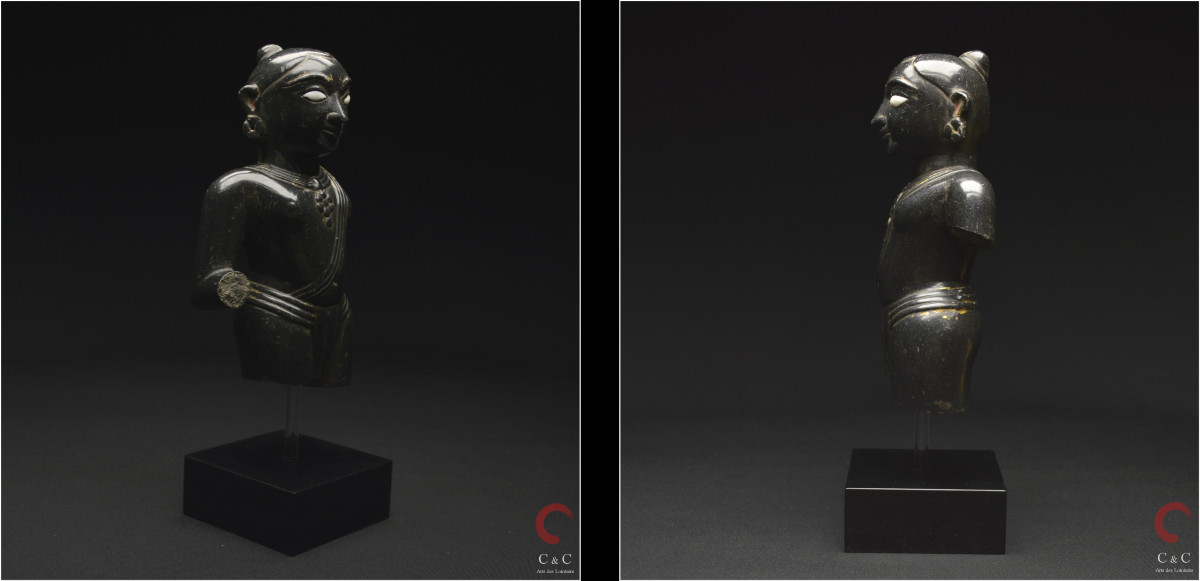
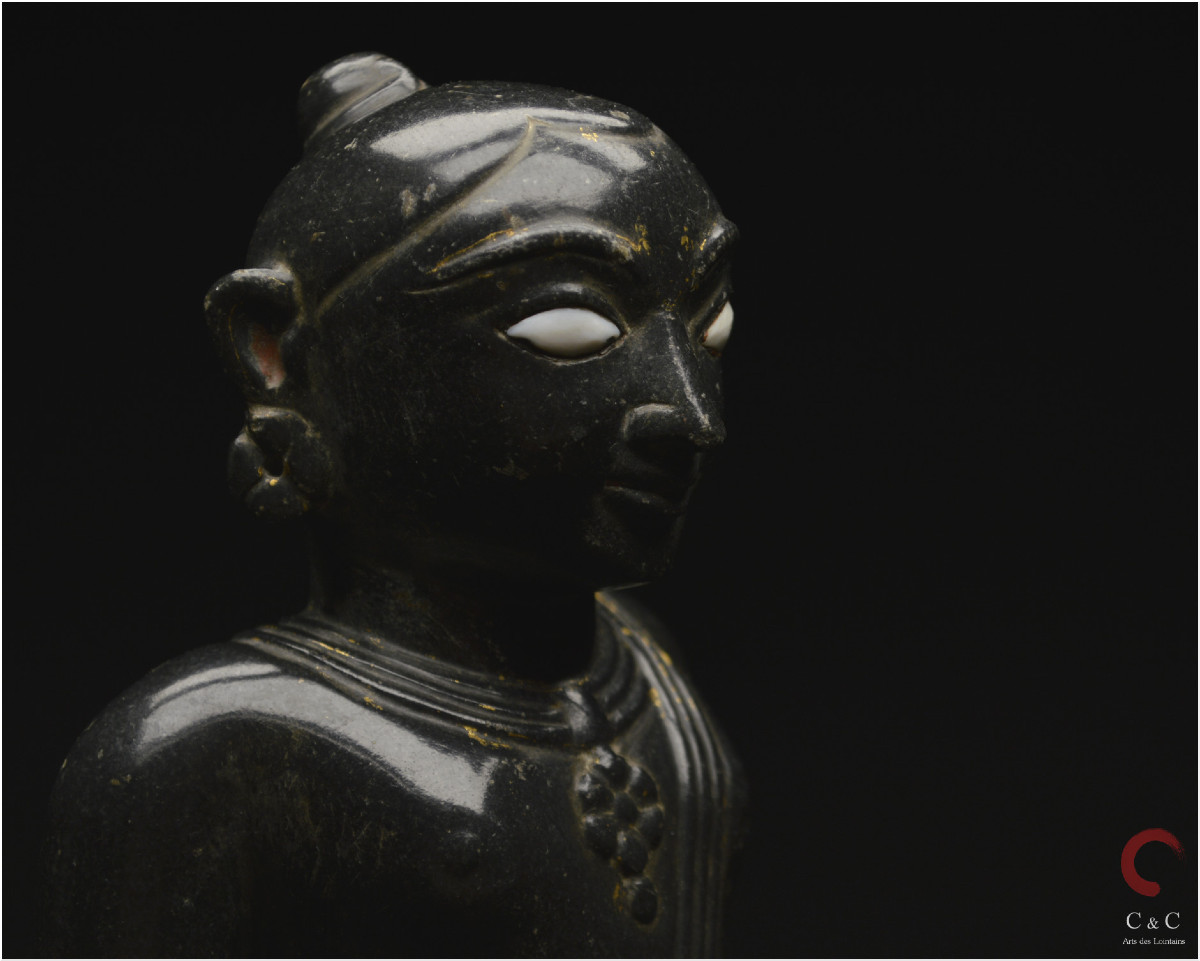
Krishna is represented standing in a hieratic posture, dressed in a simple dothi, his torso adorned with a wide Brahmanic cord, his massive neck supporting a wide necklace decorated with a flower-shaped pendant.
The face is characterized by long comma-shaped eyebrows framing large, wide-open almond-shaped eyes, inlaid with white marble, offering a fixed and intense, almost hypnotic gaze to the divinity. The aquiline nose, the mouth with thin lips sketching a slight smile.
The hairstyle is brought flat on the skull ending in a bun tied at the back of the head, the ears decorated with large circular pendants.
• Krishna, the eighth avatar of Vishnu, is a central figure in the Hindu pantheon, at the crossroads of theology, mythology and philosophy. In the tradition linked to the cult of Vishnu, he is not simply a one-off divine manifestation, but the supreme expression of the divine, embodying cosmic consciousness itself.
He is the model of divine intervention in the world, both intimate and transcendent. Through his actions in the Mahabharata or the Purana, he illustrates the convergence of spiritual paths: devotion, wisdom and right action.
• Our piece bears witness to an artistic syncretism characteristic of Gujarat in the 15th century, a region marked at the time by the close coexistence between Hindu and Jain communities.
This Jain influence is manifested in particular in several distinctive aesthetic elements:
- The hieratic posture as well as the position of the right arm contrast sharply with the more classical Hindu representations of Krishna where he is often depicted in gracefully swaying poses such as the tribhanga, typical of the iconography of Krishna Venugopala.
- The use of black marble combined with the large, fixed, white-encrusted eyes directly recall the conventions of Jain sculpture, particularly those applied to the Tirthankaras, the major spiritual figures of Jainism.
- The pendant worn by the deity also evokes the shrivatsa, the distinctive ornamental symbol of Jain saints.
• The dimensions of our statuette, combined with the presence of scattered gilding and traces of cinnabar visible around the eyes, mouth and ears (in order to awaken the divine presence and attract blessings), testify to sustained ritual use.
These elements therefore lead us towards two hypotheses regarding its cult context: it could have been placed in a secondary niche of a temple, as a figure associated with a principal deity, or used in the context of domestic worship, within a private space.
Black marble
Visible accidents, wear and tear
Localized traces of gilding and cinnabar
19 x 11 cm excluding stand
European private collection
Contact us: culturesetcivilisations@orange.fr
1 990 €
Period: Before 16th century
Style: Asian art
Condition: Good condition
Width: 11 cm hors socle
Height: 19 cm hors socle
Reference (ID): 1591039
Availability: In stock
Print