


Napoleon III Century Clock
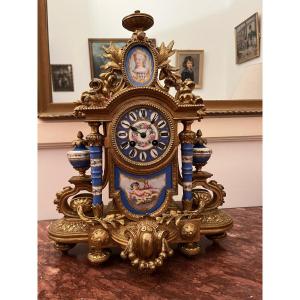
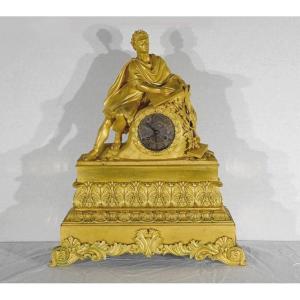
This exceptional 19th-century mantel clock is an exquisite work of art, perfectly embodying the refined elegance and artistic grandeur characteristic of the Napoleon III period (1852-1870). This era, following the Second French Empire, was a golden age for decorative arts in France, marked by a penchant for opulence, historical revivalism, and superb craftsmanship.
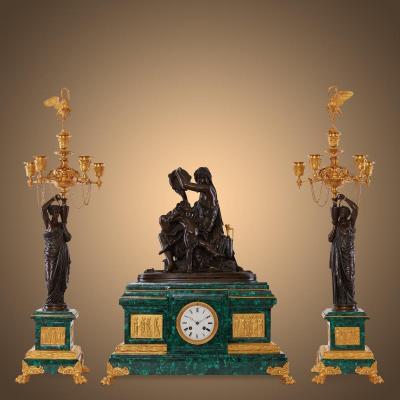
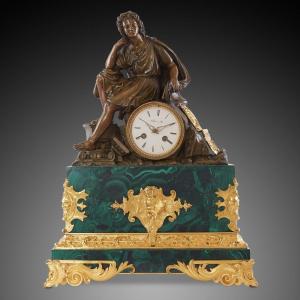
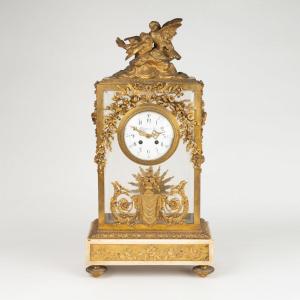
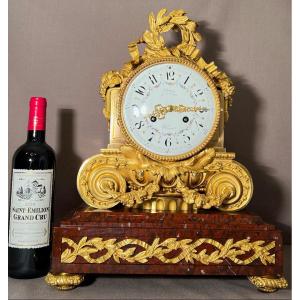
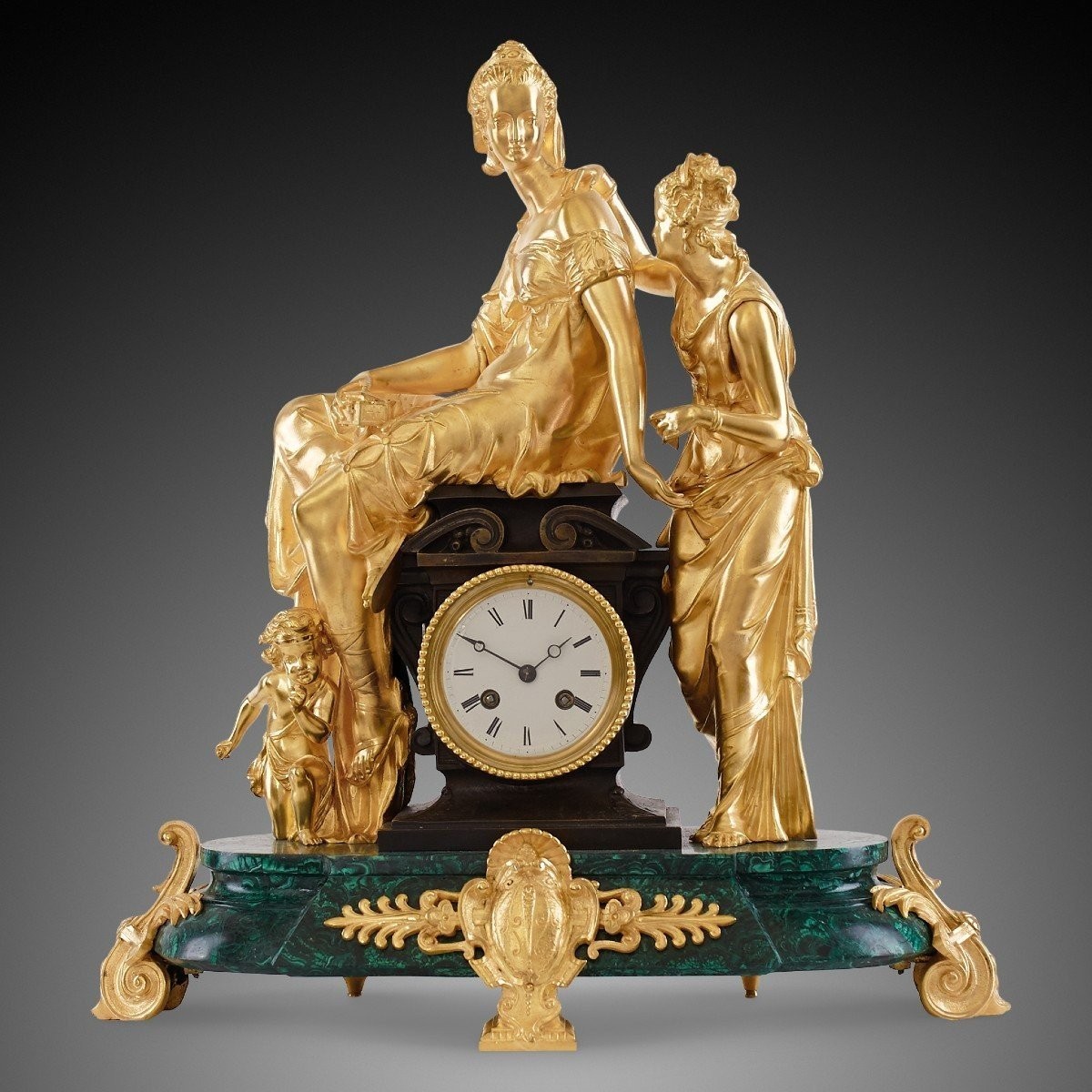
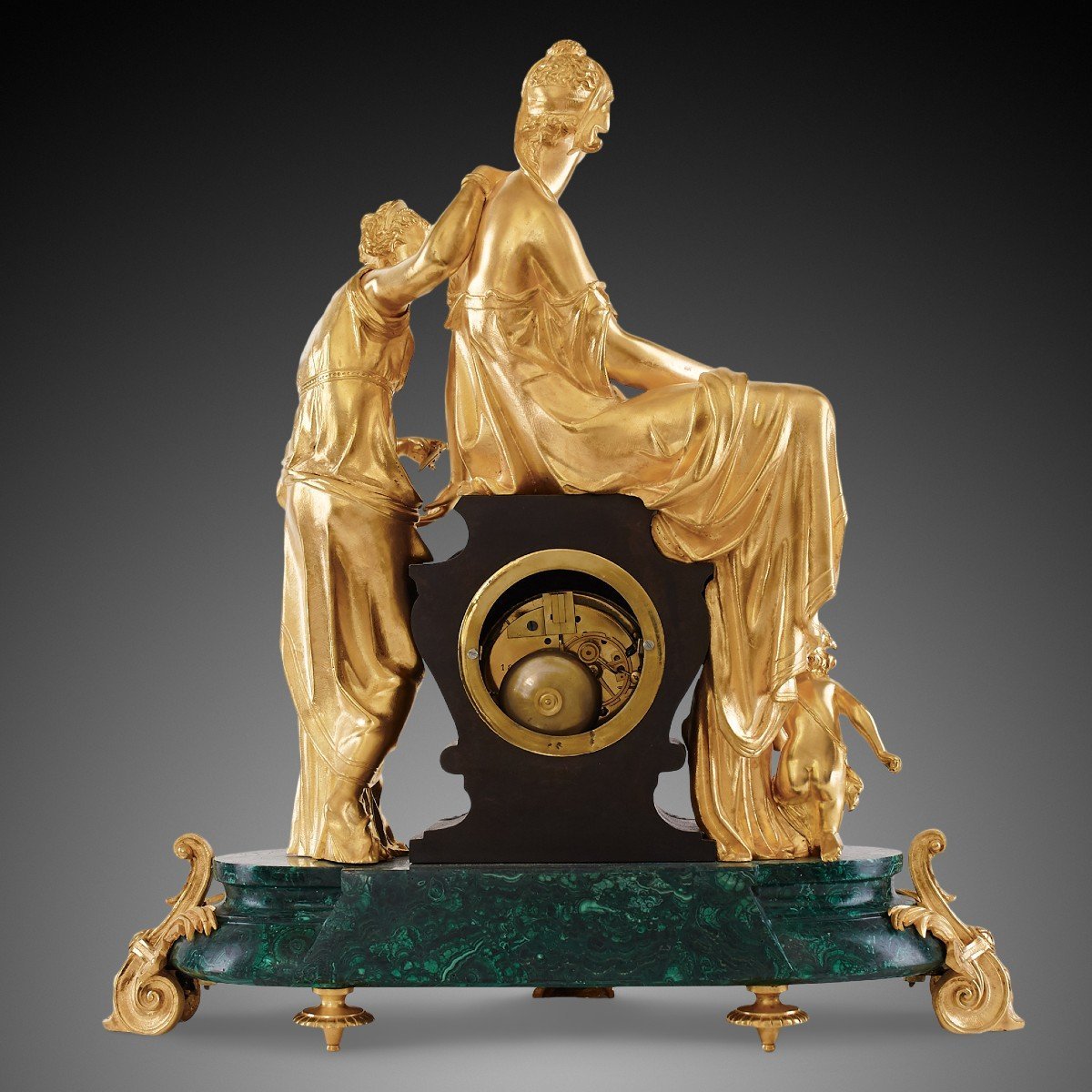
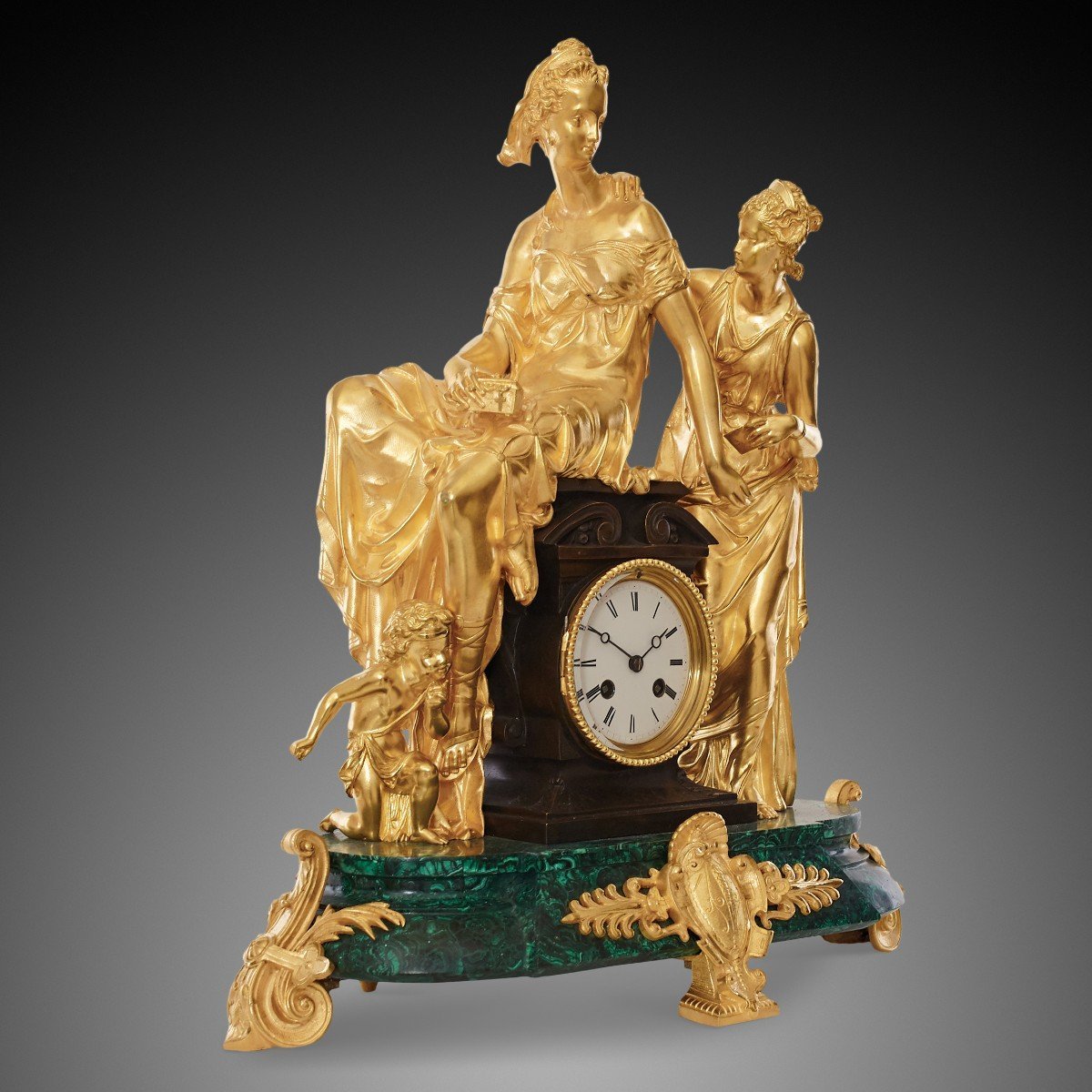
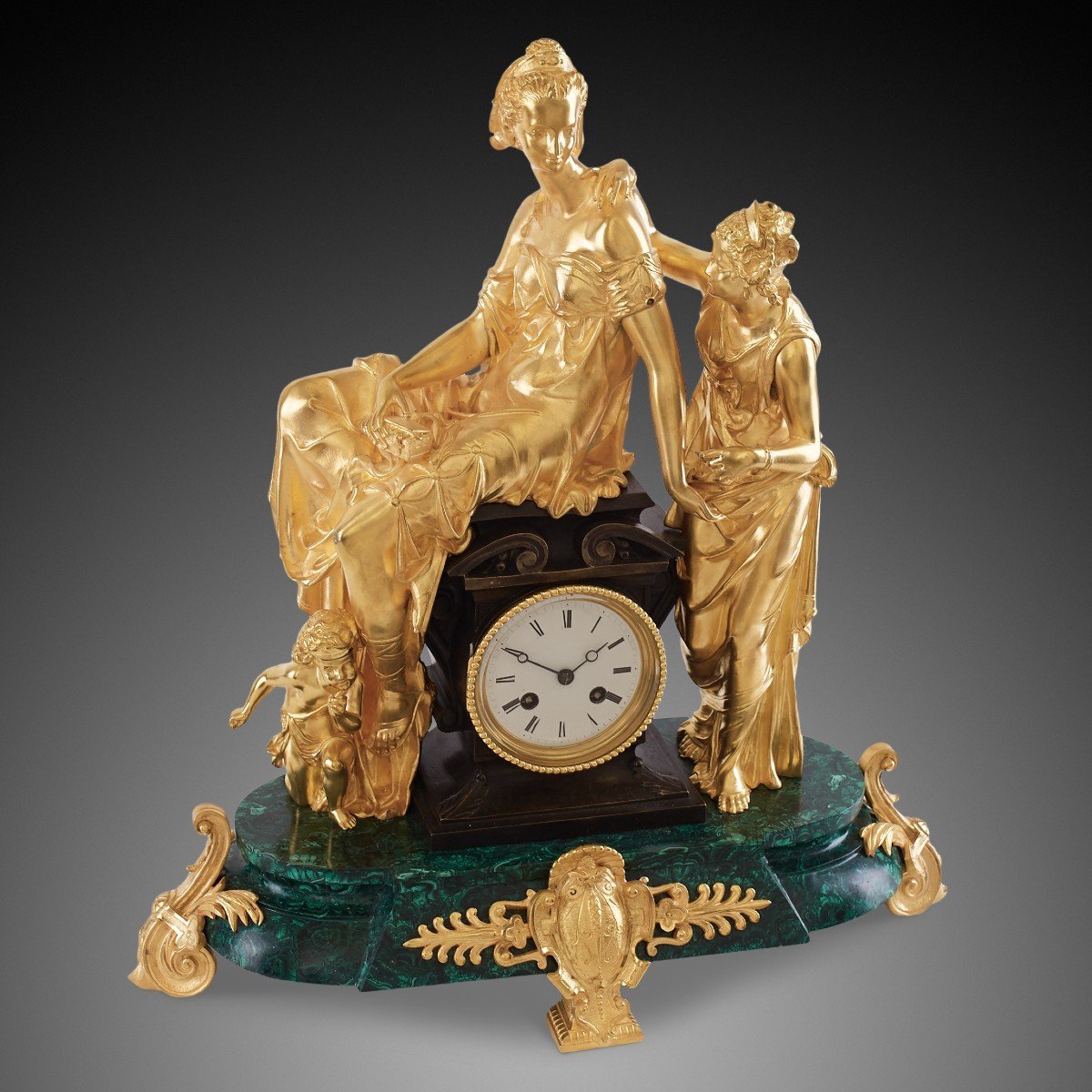
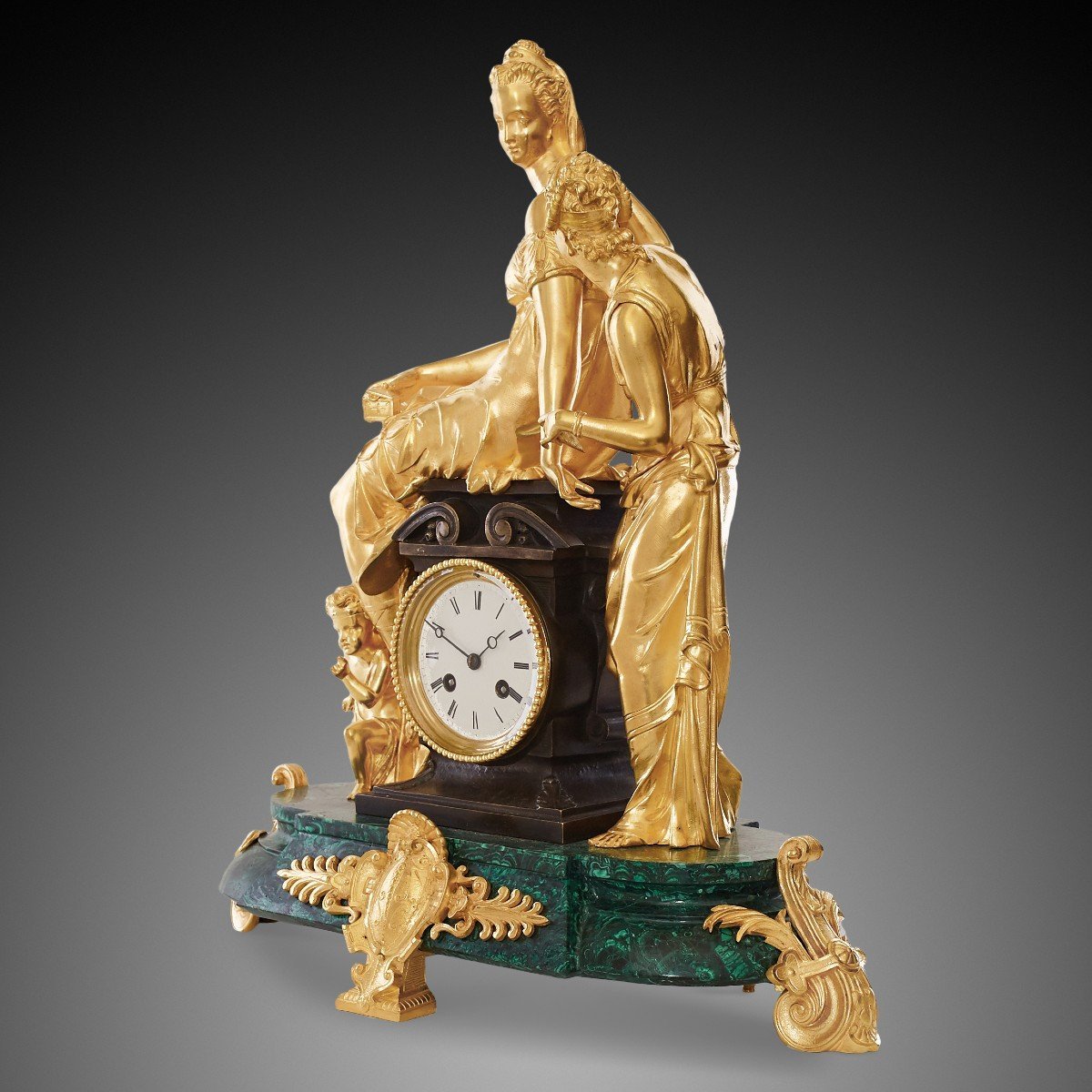
This magnificent timepiece features a remarkable design, harmoniously combining the brilliant luster of expertly gilded bronze with a luxurious dark green marble base, likely "Vert de Mer" or similar, renowned for its rich veining and profound color. The use of such rich materials was a hallmark of the Napoleon III style, reflecting a period of economic prosperity and a desire to showcase national artistic prowess. The sculpted details throughout are of exceptional finesse, showcasing the unparalleled master craftsmanship prevalent during this era, when artisans drew inspiration from a diverse range of historical styles.
The clock face is centrally positioned within a striking architectural structure crafted from patinated bronze, providing a sophisticated contrast to the radiant gold of the surrounding sculptures. The circular dial features a pristine white enamel background, adorned with crisp black Roman numerals, and complemented by elegant, classically styled clock hands. A finely crafted gilded bezel encircles the dial, adding an extra touch of brilliance and refinement, typical of the meticulous attention to detail during this period.
Three masterfully sculpted figures in gilded bronze adorn the top of the clock, rendered in a classical style that evokes allegorical themes. The eclecticism of the Napoleon III period often blended classical motifs with a romantic sensibility, resulting in dynamic and expressive compositions.
A majestic yet graceful seated female figure, possibly an allegorical representation of History, Philosophy, or perhaps even Clio (the Muse of history), commands attention with her noble bearing. The intricate folds of her drapery are sculpted with impressive precision, adding a sense of realism and classical elegance, reminiscent of ancient statuary.
To her right, a second female figure stands, leaning gently and intimately, with her hand delicately resting on the central figure's arm. This gesture conveys a profound sense of connection, narrative, and timeless feminine grace, perhaps symbolizing a muse or a companion in thought, engaged in intellectual discourse or contemplation.
To her left, a charming putto or Cupid, crouched near the base, holding a decorative element (possibly a scroll or a small lyre, though not clearly visible). This figure symbolizes themes of love, innocence, and romantic contemplation, adding a lyrical and playful dimension to the overall composition, a common motif in 19th-century neoclassical and Romantic art.
The substantial base is crafted from a richly veined green marble, providing a luxurious and stable foundation that enhances the overall majesty of the ensemble. Elaborate gilded bronze floral ornaments and scrolling acanthus leaves are meticulously arranged along the front of the base. A prominent central medallion, shaped like a finely sculpted shield or cartouche, reflects the influence of the Baroque and Rococo revival styles popular during Napoleon III's reign, where designers frequently reinterpreted earlier artistic periods. The clock's feet, elegantly curved, feature delicate volutes and classical motifs, perfectly balancing the overall structure and contributing to the piece's opulent aesthetic.
This clock is far more than a time-measuring instrument; it is a true sculptural masterpiece, illustrating the extraordinary refinement, artistic versatility, and technical mastery that defined the Napoleon III era. This period was characterized by a synthesis of various historical styles—including Neoclassicism, Romanticism, and revivals of Rococo and Baroque—resulting in a distinctive, opulent aesthetic. This piece exemplifies the era's appreciation for sumptuous materials, intricate detailing, and allegorical narratives, reflecting the era's taste for grandeur and historical resonance. It symbolizes a harmonious fusion of temporal measurement, classical artistry, and romantic idealization, themes highly cherished in 19th-century European art.
In summary, this clock is a luxurious and finely crafted masterpiece, combining exceptional artistry, rich historical context, and timeless aesthetics. It is a piece worthy of the finest European art collections, destined to be a focal point in any discerning interior, a testament to the artistic heights achieved during the Second Empire.
Period: 19th century
Style: Napoleon 3rd
Condition: Excellent condition
Material: Bronze
Width: 48 cm
Height: 51 cm
Depth: 19 cm
Reference (ID): 1590469
Availability: In stock