


Deposition Of Christ In The Tomb. Lombard Painter (giuseppe Meda?) 1560-1570 Ca.
The large scene recounts the Deposition of Christ from the Cross, condensing two moments of the narration: the Lamentation of the Madonna over the body of Christ and the deposition of the body in the tomb.
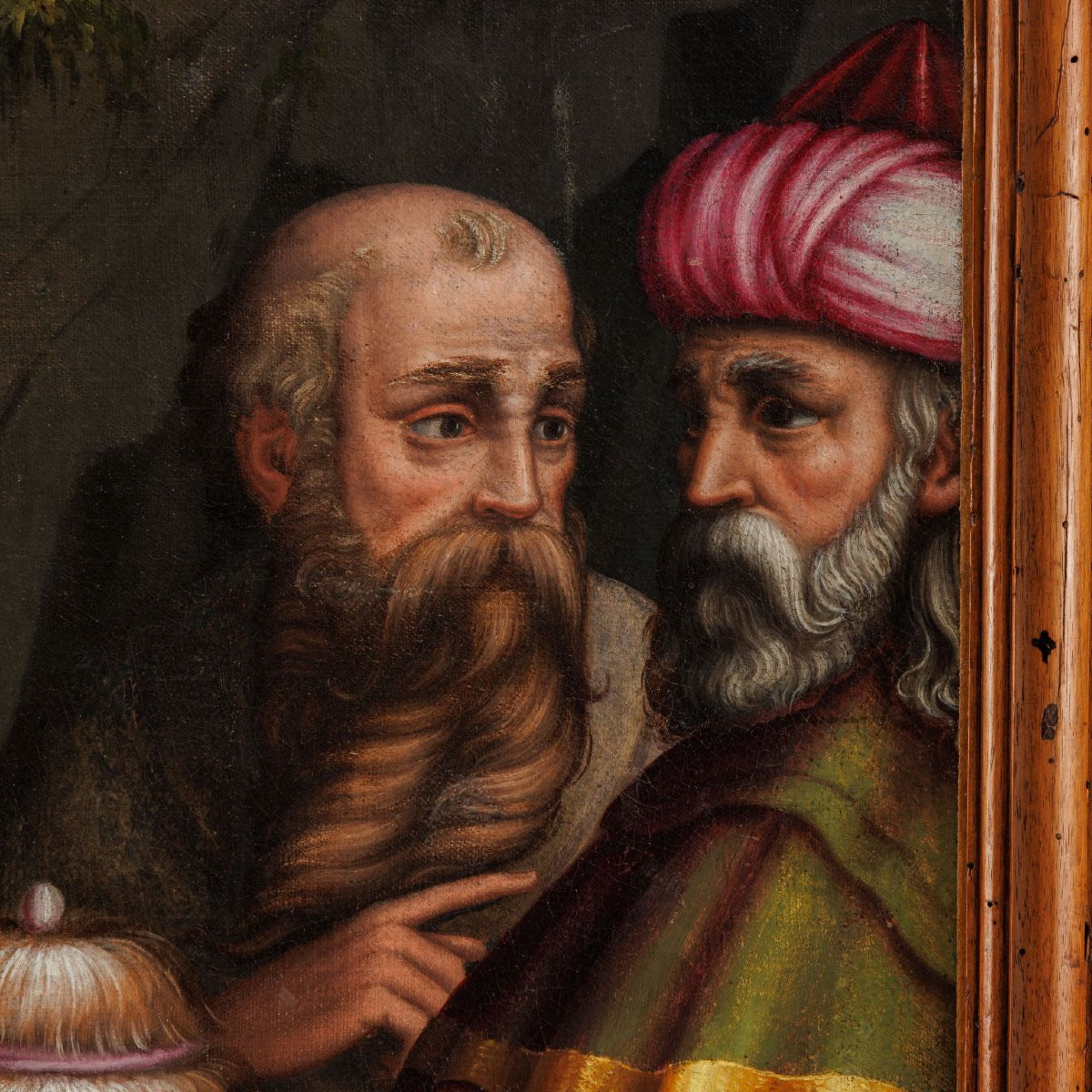
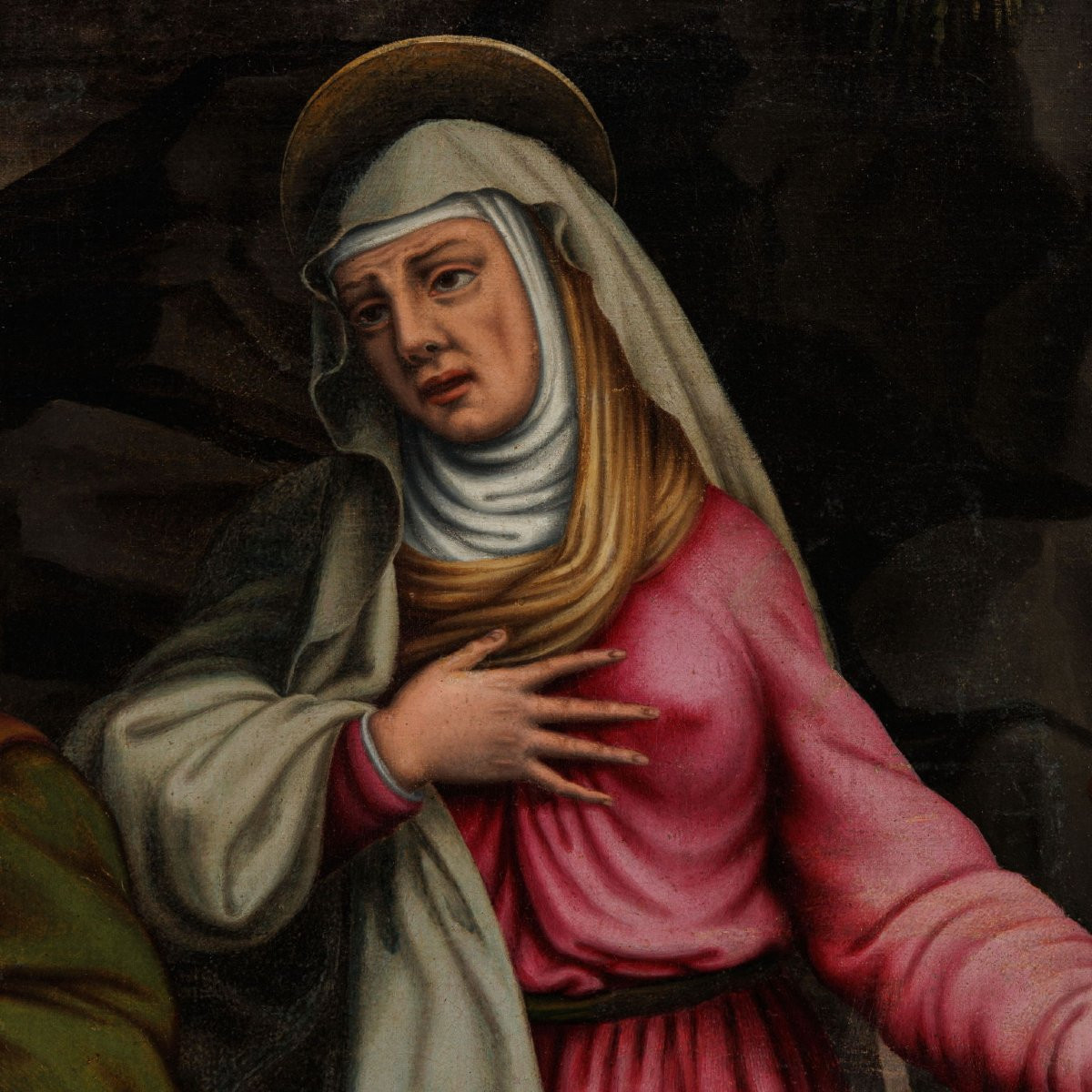
The strongly symmetrical composition is centered on the horizontal figure of the dead Christ, about to be lowered into the sepulcher with a sheet held by two robust men; in the centre, standing behind the sepulchre, is the Madonna, flanked on the right by the Magdalene with a jar of ointment, while various male figures are arranged around her, some of whom are engaged in intense conversations and dressed in “modern” sixteenth-century clothes, already from Renaissance painting they were inserted to allude to the client.
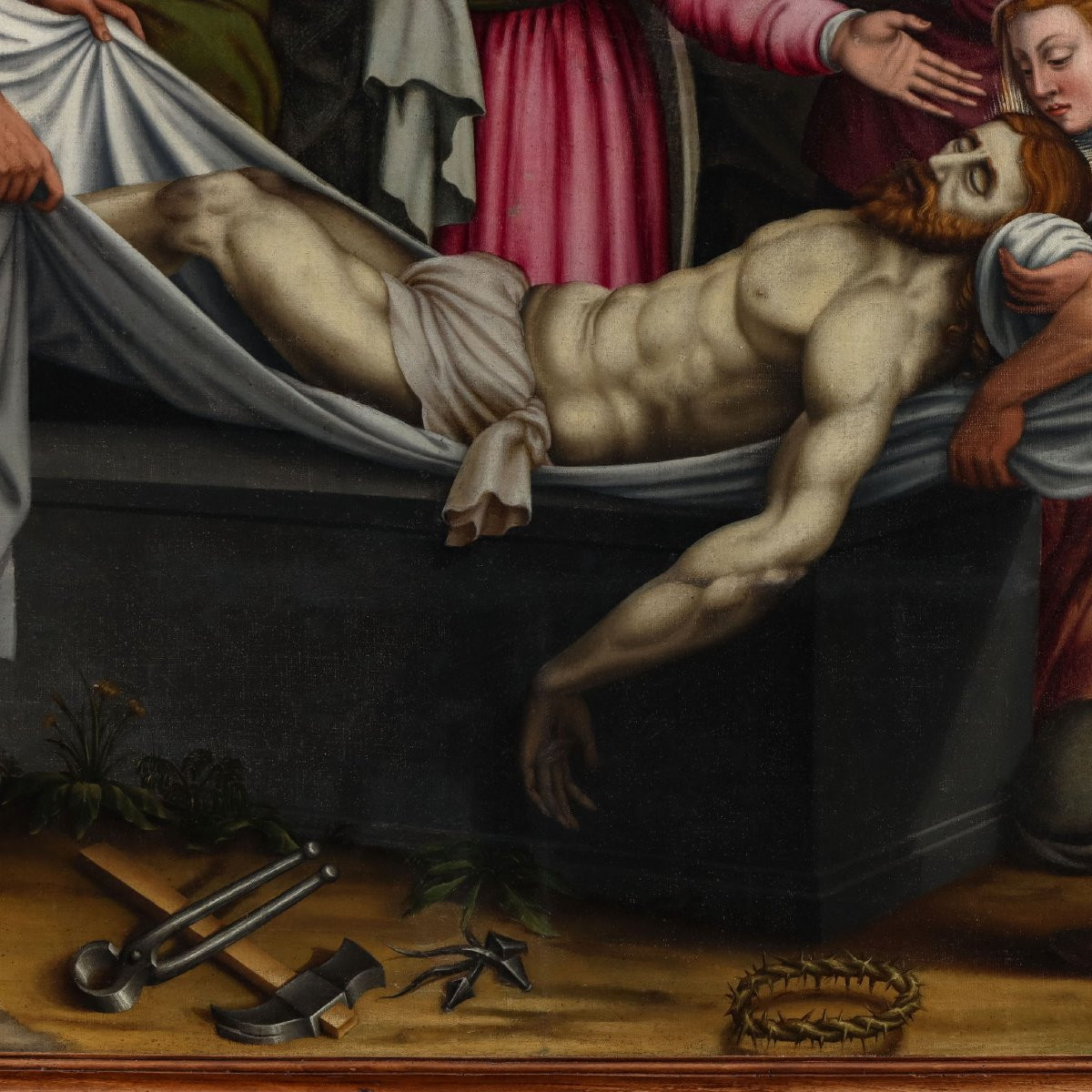
Below, in the foreground, the instruments of the Passion, the crown of thorns, the nails, the hammer and the pincers to extract the nails, all rendered with rigorous precision in executive detail, including color. In the left background, behind a rock, the city of Jerusalem can be glimpsed.
The emaciated and pale figure of Jesus stands out in the midst of the acid, dissonant colors of the other figures, which stand out for their turgid and anatomically perfect anatomies almost to the point of artificiality, or rather mannerism.
The strongly symmetrical composition is centered on the horizontal figure of the dead Christ, about to be lowered into the sepulcher with a sheet held by two robust men; in the centre, standing behind the sepulchre, is the Madonna, flanked on the right by the Magdalene with a jar of ointment, while various male figures are arranged around her, some of whom are engaged in intense conversations and dressed in “modern” sixteenth-century clothes, already from Renaissance painting they were inserted to allude to the client.
Below, in the foreground, the instruments of the Passion, the crown of thorns, the nails, the hammer and the pincers to extract the nails, all rendered with rigorous precision in executive detail, including color. In the left background, behind a rock, the city of Jerusalem can be glimpsed.
The emaciated and pale figure of Jesus stands out in the midst of the acid, dissonant colors of the other figures, which stand out for their turgid and anatomically perfect anatomies almost to the point of artificiality, or rather mannerism.
12 000 €
Period: 16th century
Style: Other Style
Condition: En l'etat
Material: Oil painting
Width: 160
Height: 134
Depth: 10
Reference (ID): 1573934
Availability: In stock
Print