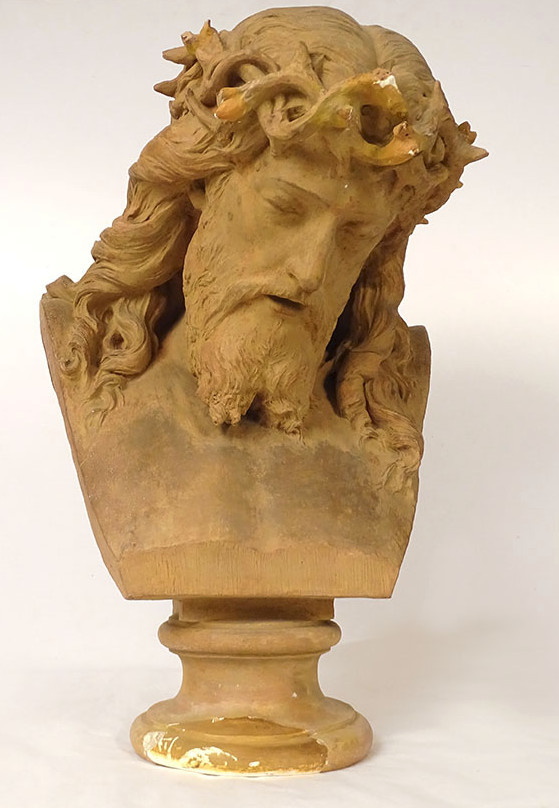






Bust Sculpture Of Christ Crowned With Thorns Jb. Clésinger Terracotta 61cm 19th Century
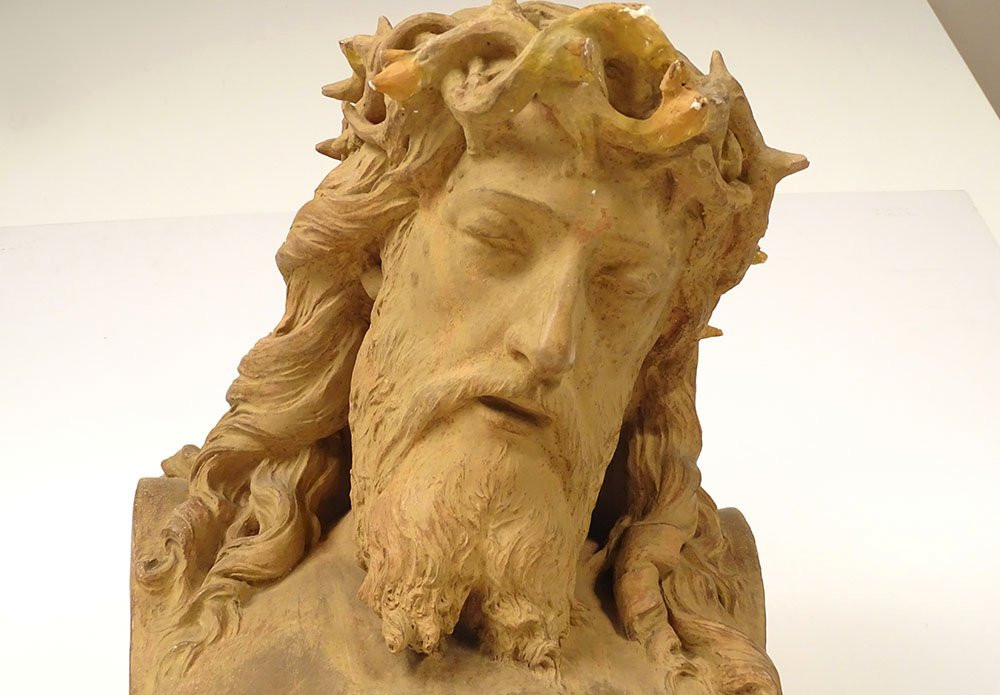
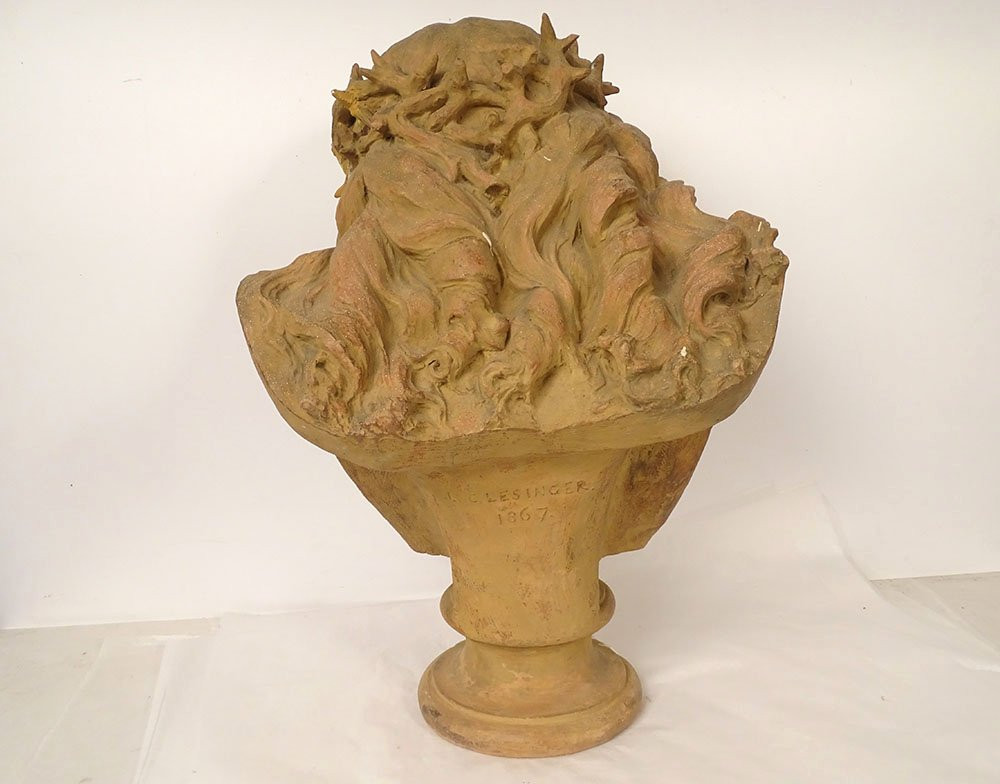
Large terracotta sculpture (61 cm) representing the bust of Christ with the crown of thorns, signed J. Clésinger* and dated 1867, from the 19th century.
This sculpture is in good overall condition, superb quality. Signed in two places see photos.
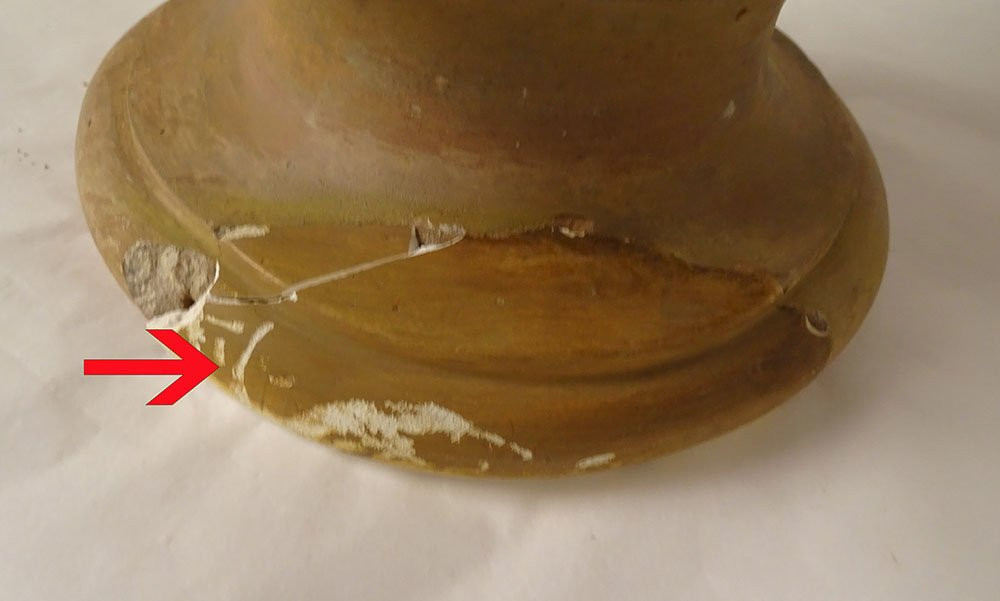
Please note: accidents, some missing parts and restorations on the base and on the crown of thorns and hair (see red arrows), traces of paint, scratches and wear from time, take a good look at the photos.
*Jean-Baptiste ClésingerFrench sculptor and painter (born in Besançon on October 20, 1814,
died in Paris on January 5, 1883), son of the sculptor Georges
Clésinger, Auguste Clésinger studied sculpture with his father, who took
him to Rome at the age of eighteen. In this city, Clésinger was taught
by the sculptor Thorwaldsen. He returned to France and joined Paris in
1838 (after a stay in Switzerland), to enlist in a cuirassier regiment
garrisoned in Melun. He became the secretary of General Bougenel, (whose
bust he had made), who obtained permission for him to reside in Paris
and continue his studies. On the recommendation of the painter Jean
Gigoux, also from Besançon, he entered the studio of David d'Angers in
1839, without staying there for long. Between 1840 and 1841, he worked
in Switzerland, in Lausanne, and produced several busts: Doctor
Sécretan; General Laharpe, … Then, he stayed in Florence, from where he
sent a bust of Jules Valdahon for his first participation in the Salon
(1843). In 1847, he married the daughter of Georges Sand and Baron
Dudevant (a separation followed five years later). Clésinger received
several commissions from the State: the Tragedy (portrait of the actress
Rachel), an equestrian statue of François 1er (erected in the courtyard
of the Louvre and much criticized, this work remained there only a few
months), Louise of Savoy (Luxembourg Gardens), the Fraternity (erected
on the Champ de Mars). Disappointed by the lack of success of his works,
Clésinger went into exile in Italy from 1856 to 1864. From 1859, he
regularly sent his works to the Salon. Late in life, he received a
commission from the École militaire for four equestrian statues for the
facade of the École militaire in Paris. The statues of Marceau, Hoche,
and Kléber were delivered, and the one by Carnot was not completed. He
is the author of several portraits and busts: Frédéric Chopin;
Ledru-Rollin; Théophile Gautier (a great admirer of Clésinger); Achille
Fould; Eugène Scribe; George Sand; Mac-Mahon; Marshal Sébastiani; the
Duke of Nemours; and the Duke of Reichstadt. He worked for the churches
of Saint Sulpice (Two kneeling angels, Pieta), Saint Pierre – Saint Paul
in Villeneuve le Roi (Bust of the Virgin), Saint Pierre in Besançon
(The Virgin and the Child Jesus). Clésinger was also an occasional
animal sculptor: Bull grappling with a wolf; Victorious bull, Roman
bullfight, Buffalo and bison, Victorious bull, Two lions.
As a
painter, he exhibited several paintings at the Salons. He received a
third-class medal in 1846, a second-class medal in 1847 (Woman Stung by a
Snake), and a first-class medal in 1848 (Reclining Bacchante). He was
awarded the Legion of Honour in 1849 and made an officer in 1864.
ATTENTION: FOR A DELIVERY QUOTE PLEASE CONTACT US WITH CITY AND COUNTRY OF DESTINATION.
BE CAREFUL: PLEASE CONTACT US FOR THE DELIVERY PRICE.
Data sheet- Diamètre socle 19,5 cm
- Height 61 cm
- Width épaules 39 cm
Period: 19th century
Style: Other Style
Condition: En l'etat
Material: Terracotta
Width: épaules 39 cm
Diameter: socle 19,5 cm
Height: 61 cm
Reference (ID): 1570343
Availability: In stock