THIS OBJECT WAS SOLD
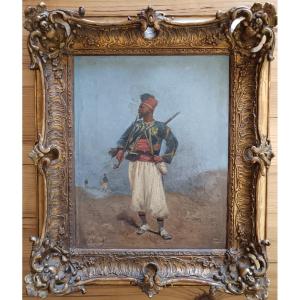
Gaspard De Toursky (1849-1925) Souk Arhas
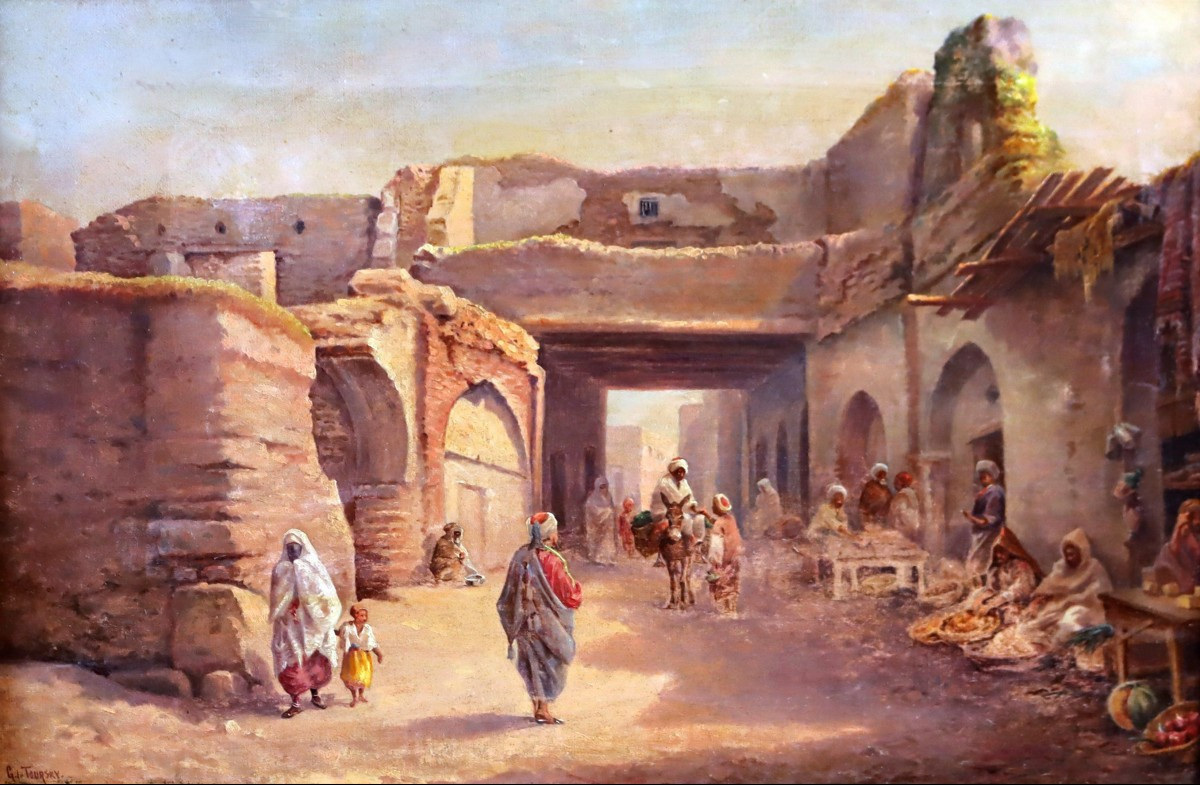
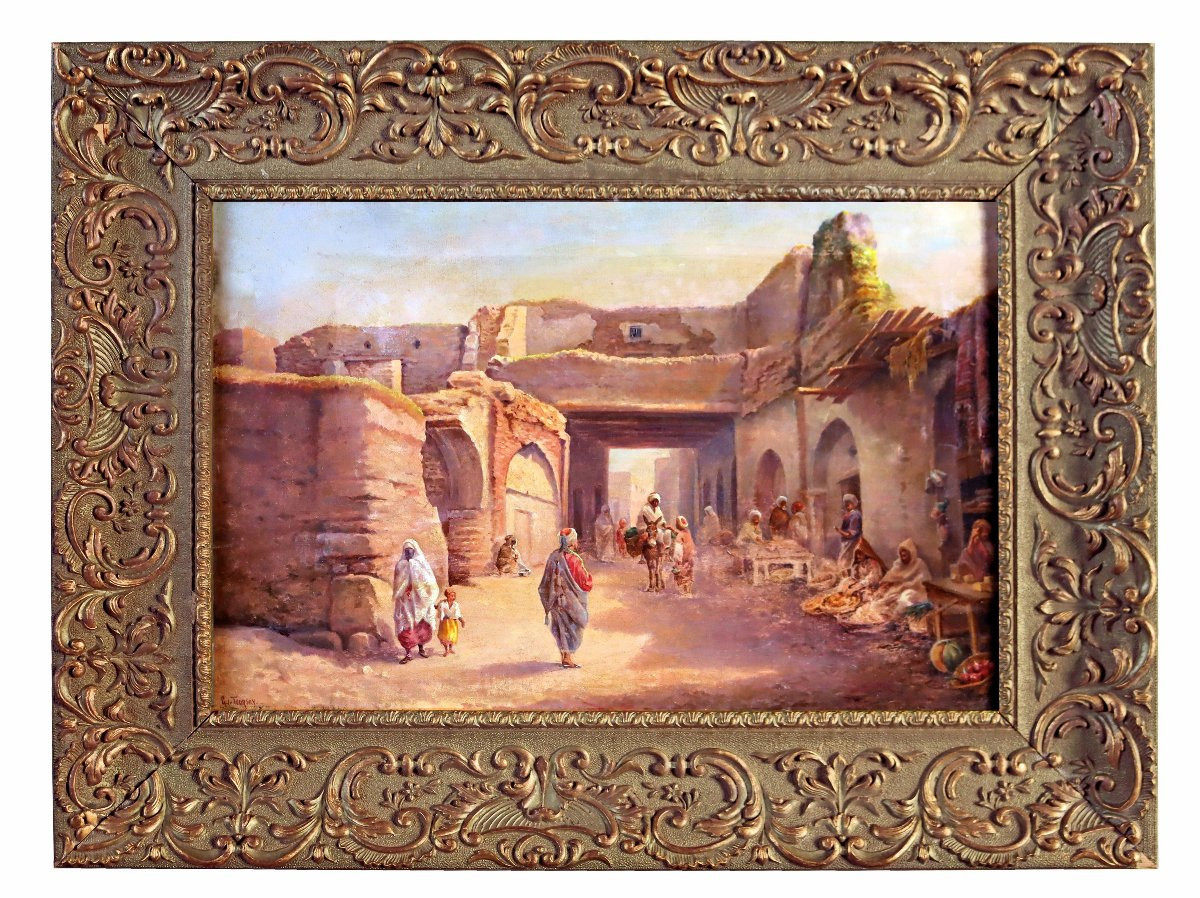
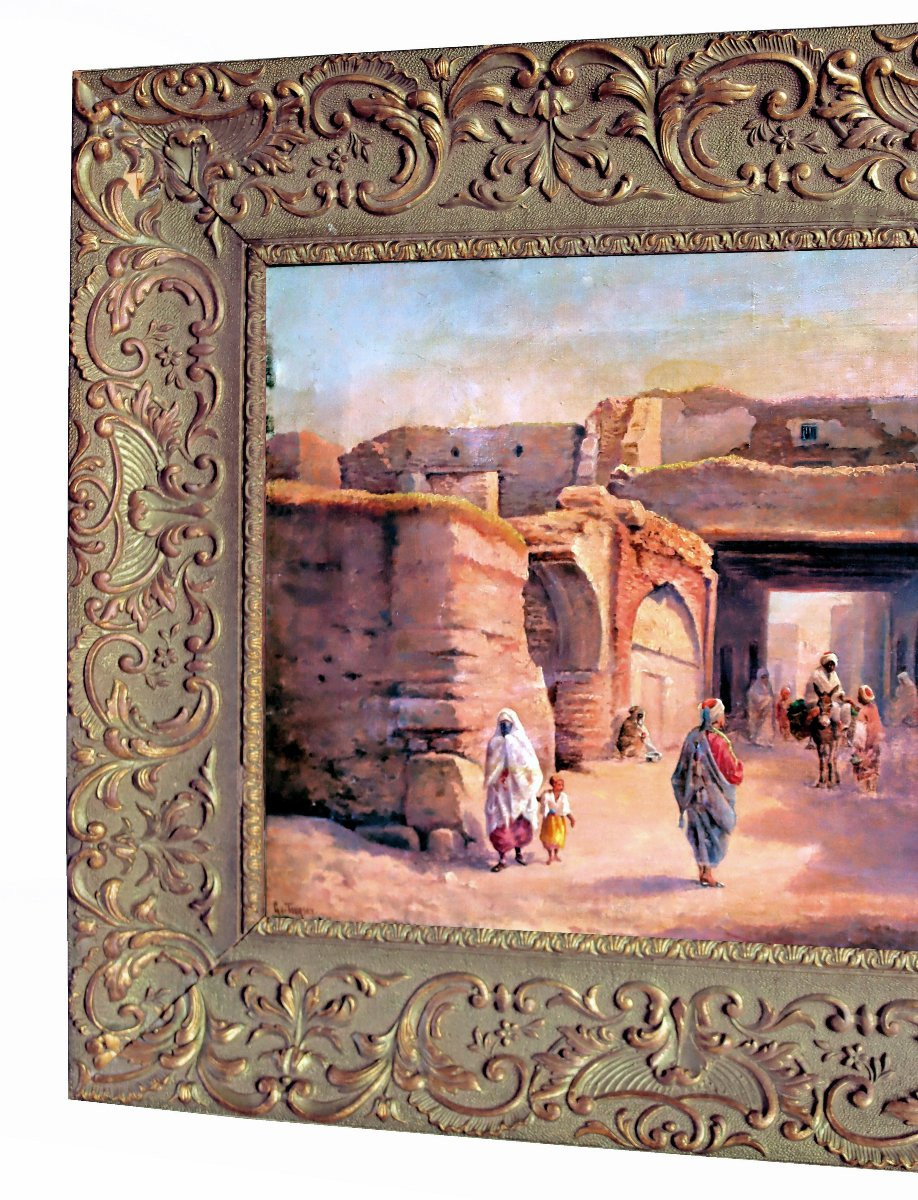
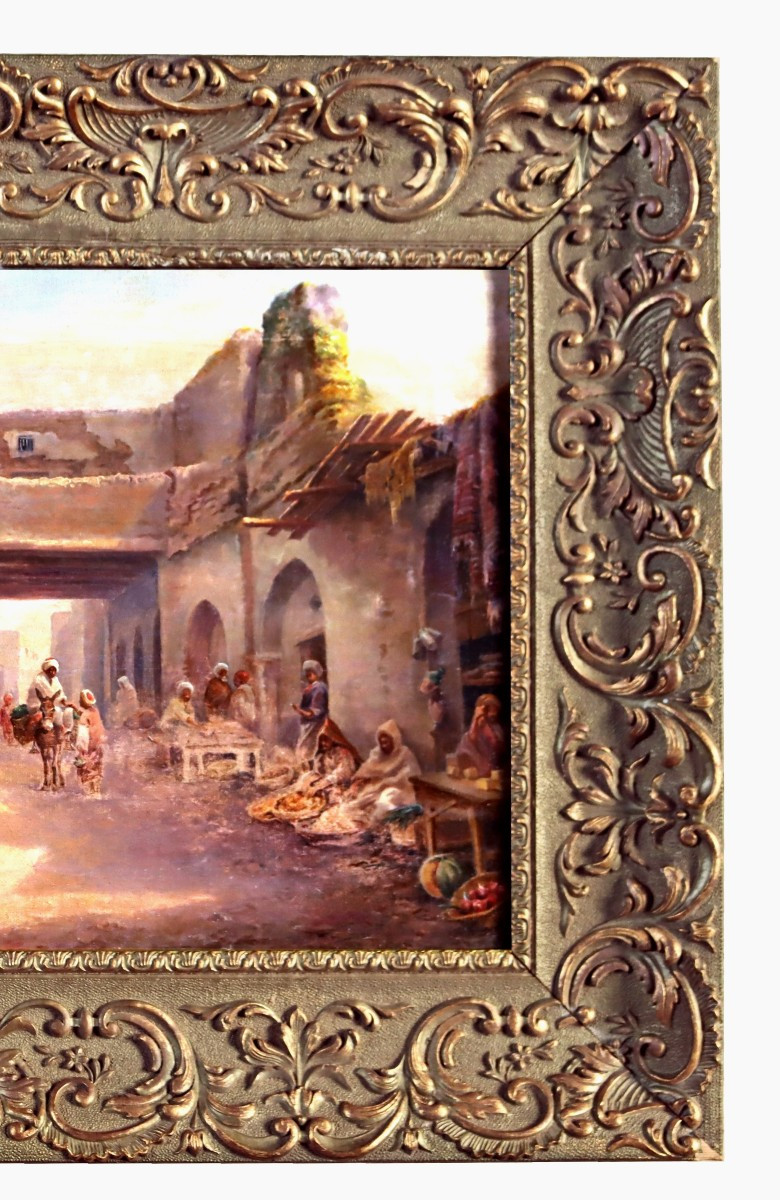
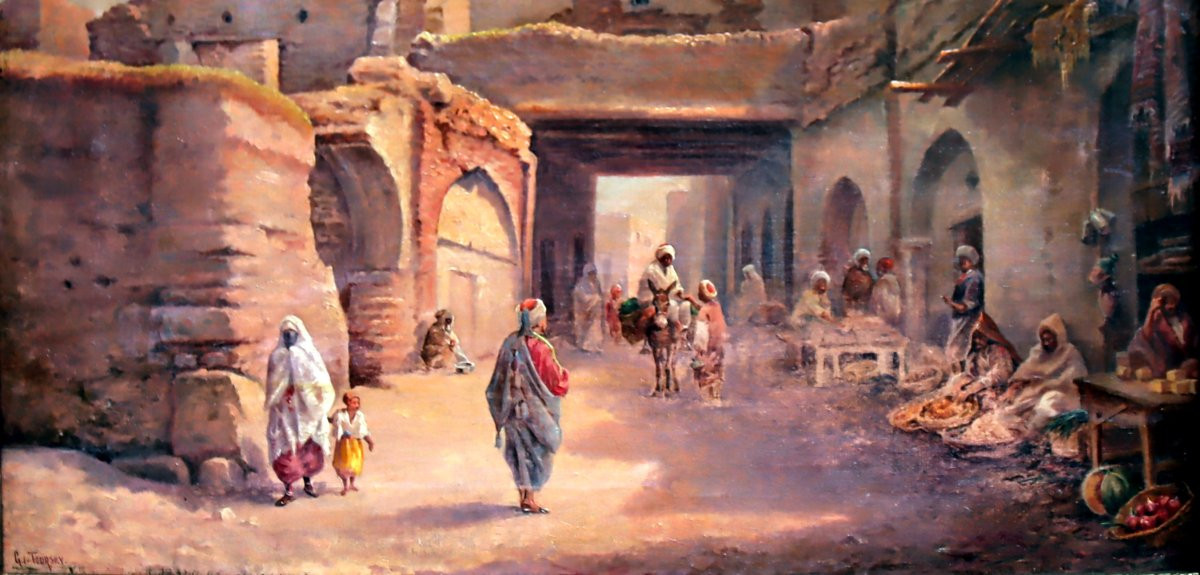


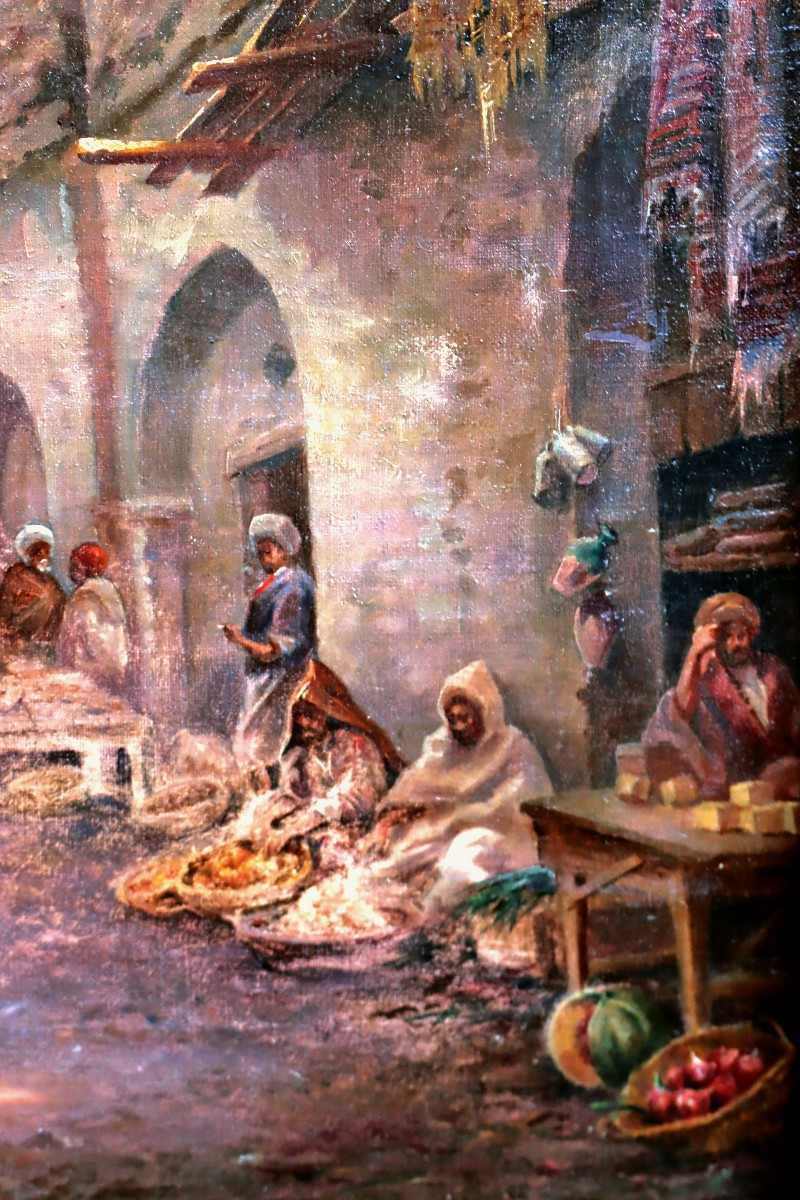
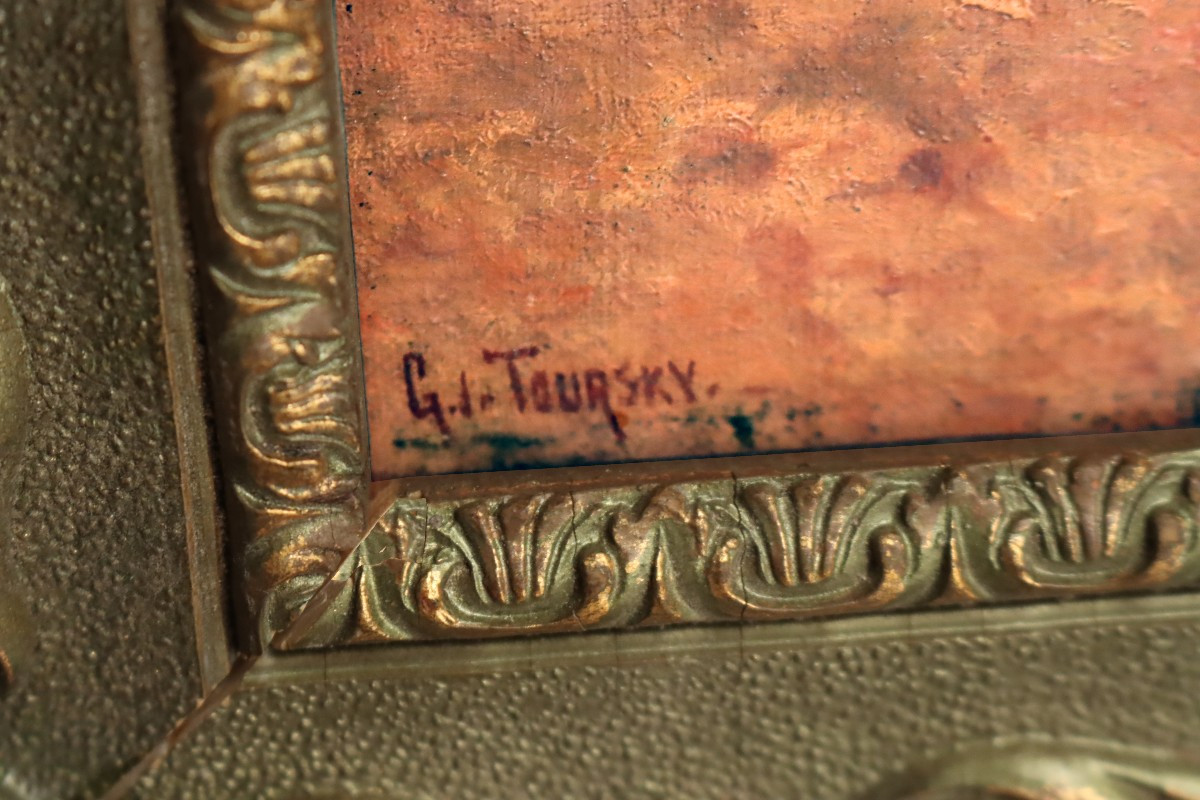



Orientalist painting, oil on canvas, signed lower left by G. De Toursky, Russian Orientalist painter -Gaspard de TOURSKY- born in Saint Petersburg (1849-1925). Scene of a busy street in the presumed town of Souk Arhas or Sidi Okba. The work is presented in its antique patinated giltwood frame with arabesque and foliage motifs. Dimensions: 56 cm x 42 cm / visible 41 cm x 27 cm
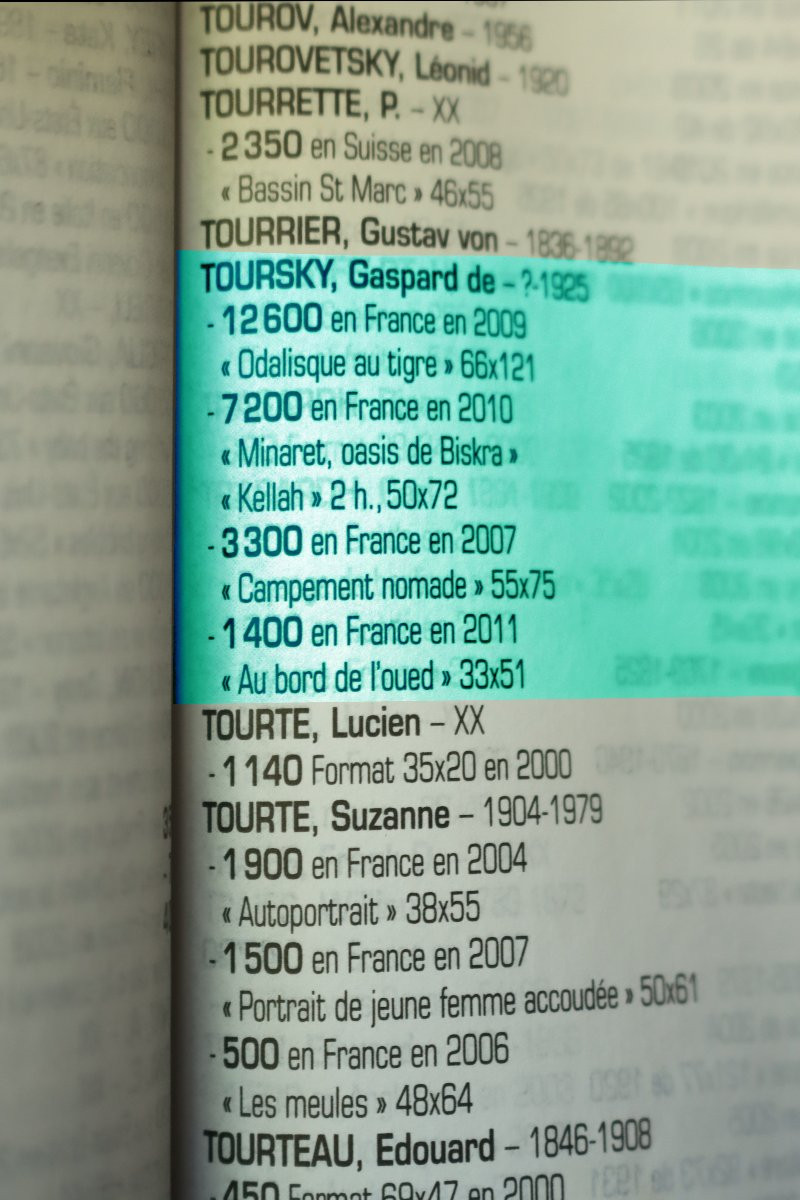
Gaspard de Toursky was born in Saint Petersburg. He trained with Valentin Serov, who specialized in icons, depictions of holy figures in the Christian religion. It was at the age of fifteen that Gaspard began taking traditional painting classes. Passionate about painting, he joined the Saint Petersburg Academy, founded in 1757. Captivated by North Africa, he loved to depict its inhabitants and its light. Most of his work is part of the 19th-century Orientalist movement. In 1908, he exhibited all his works from his travels in North Africa in Paris. He subsequently decided to settle in Souk Ahras, Algeria, to lead a peaceful life, exhibiting his paintings in 1917 and then in Algeria in 1923.
In the great book of Souk Ahras's important personalities lies the captivating tale of the famous painter, Gaspard de Toursky, whose Muslim name was Sidi Labiad El Sayed. Like Etienne Dinet in Boussaada, he embodied a symbiosis between art and the soul of this city. Of Russian descent, Gaspard arrived in Souk Ahras in 1881, accompanied by the renowned French writer Alphonse Daudet, who sought his talent to illustrate the famous novel, Tartarin de Tarascon. Enthralled by the natural splendor and abundant wildlife of Souk Ahras, he made it his permanent home. A passionate lover of hunting, he quickly became a fervent protector of the Ahras countryside, even striving to preserve the region's last remaining lions by building a modest zoo in Ain Tahmamine.
Closely affiliated with the Muslim community of Souk Ahras, Gaspard embraced Islam in 1918, an act that some biographers argue had more of a political than a religious dimension. Gaspard aspired to blend into the Muslim social fabric, firmly disapproving of the abuses of colonial France in Algeria. In 1905, his iconic painting, "The Insurgents of Souk Ahras," awarded a gold medal at the Paris International Fair and later renamed "Fantasia," had to undergo a name change imposed by France at the time in order to be exhibited.
Gaspard's prolific oeuvre included over 350 paintings, many celebrating the life, nature, and wildlife of Souk Ahras. He breathed his last in the city on June 15, 1925, resting forever in the Muslim cemetery under the name Abdelrahman Labied, alias El Sayed.
Gaspard de Toursky was born in Saint Petersburg. He trained with Valentin Serov, who specialized in icons, depictions of holy figures in the Christian religion. It was at the age of fifteen that Gaspard began taking traditional painting classes. Passionate about painting, he joined the Saint Petersburg Academy, founded in 1757. Captivated by North Africa, he loved to depict its inhabitants and its light. Most of his work is part of the 19th-century Orientalist movement. In 1908, he exhibited all his works from his travels in North Africa in Paris. He subsequently decided to settle in Souk Ahras, Algeria, to lead a peaceful life, exhibiting his paintings in 1917 and then in Algeria in 1923.
In the great book of Souk Ahras's important personalities lies the captivating tale of the famous painter, Gaspard de Toursky, whose Muslim name was Sidi Labiad El Sayed. Like Etienne Dinet in Boussaada, he embodied a symbiosis between art and the soul of this city. Of Russian descent, Gaspard arrived in Souk Ahras in 1881, accompanied by the renowned French writer Alphonse Daudet, who sought his talent to illustrate the famous novel, Tartarin de Tarascon. Enthralled by the natural splendor and abundant wildlife of Souk Ahras, he made it his permanent home. A passionate lover of hunting, he quickly became a fervent protector of the Ahras countryside, even striving to preserve the region's last remaining lions by building a modest zoo in Ain Tahmamine.
Closely affiliated with the Muslim community of Souk Ahras, Gaspard embraced Islam in 1918, an act that some biographers argue had more of a political than a religious dimension. Gaspard aspired to blend into the Muslim social fabric, firmly disapproving of the abuses of colonial France in Algeria. In 1905, his iconic painting, "The Insurgents of Souk Ahras," awarded a gold medal at the Paris International Fair and later renamed "Fantasia," had to undergo a name change imposed by France at the time in order to be exhibited.
Gaspard's prolific oeuvre included over 350 paintings, many celebrating the life, nature, and wildlife of Souk Ahras. He breathed his last in the city on June 15, 1925, resting forever in the Muslim cemetery under the name Abdelrahman Labied, alias El Sayed.
Explore similar pieces and discover your ideal find:
Orientalist Paintings