THIS OBJECT WAS SOLD
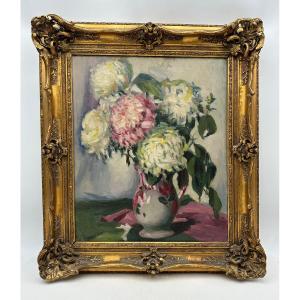
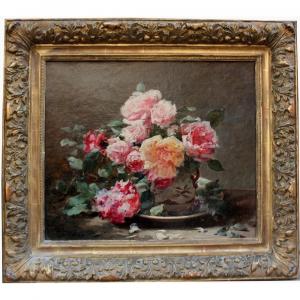
Oil Study Of Roses By Franz Komlósy (hungarian-austrian, 1817-1892)


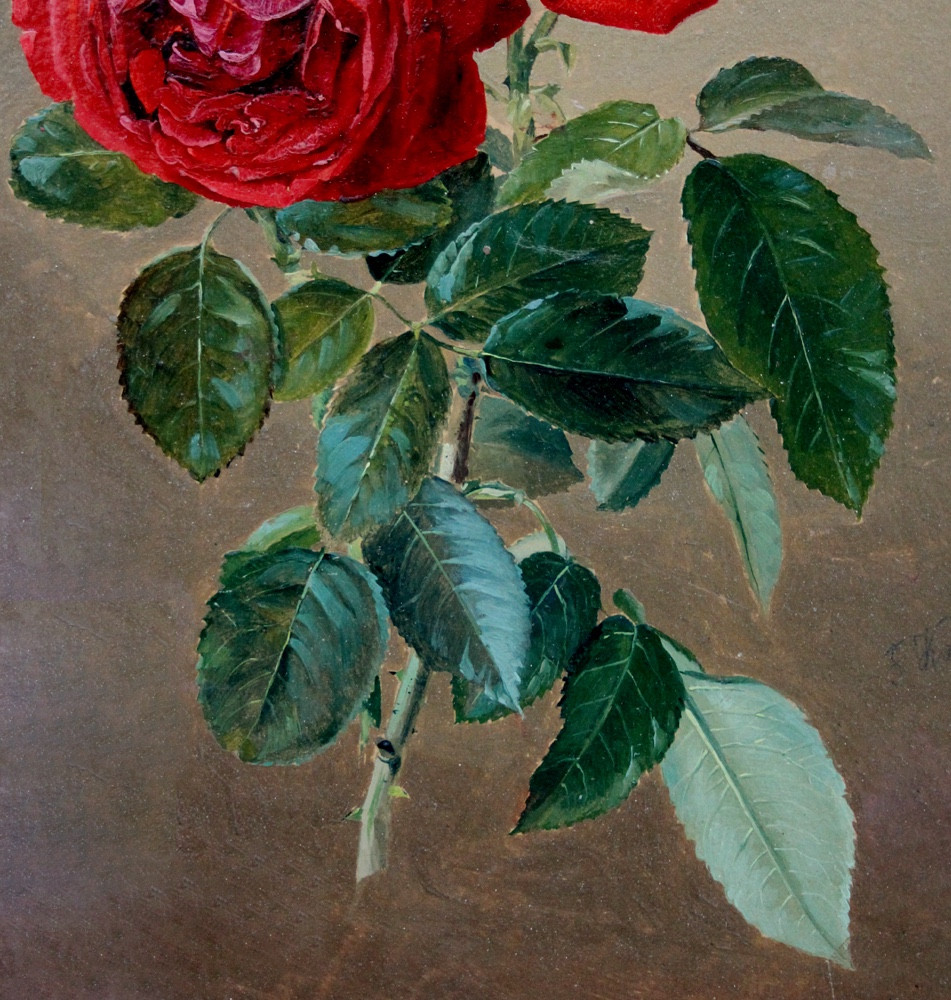


Masterfully Biedermeier painting with roses was created in the first half of the 19th century by Franz Komlósy (Hungarian: Ferenc Komlóssy), a renowned Hungarian-Austrian landscape and flower painter, born in 1817 in Temesvár and died in 1892 in Vienna.
Komlósy was born into an old Hungarian family in the Banat region. In Vienna, he was a private pupil of Waldmüller and, from 1839, studied at the Academy of Fine Arts. From 1848, he was a member of the "Pester Kunstverein" (Pest Art Association). He is said to have invented a precursor to the postcard during a visit to the area around Herkulesbad with Friedrich Uhl. According to his biographer, István Berkeszi, he later published 18 lithographs in Vienna, the result of this trip, the text of which was written by his traveling companion. He lived temporarily in Temesvár and Prague, and later, in the 1850s, in Kanizsa, Turkey. From 1861, he ran a private painting school in Temesvár. He moved to Vienna around 1865. Komlósy was a recognized artist, but lived in difficult financial circumstances. Although he is primarily considered a painter of landscapes and flowers—his paintings of roses in Schönbrunn Park are considered excellent botanical studies—he earned his living primarily by painting images of saints and portraits, some of which have survived to the present day in private collections. From 1889 he suffered from mental disorders; he died in 1892 and was buried in the Central Cemetery in Vienna.
Some of his works are now kept in the Department of Fine Arts of the Banat State Museum.
Literature: Dictionaries of artists: in German: Thieme/Becker Dictionaries; Fuchs; Wikipedia online; in Hungarian: Nagy's Dictionary of Hungarian Artists.
Inscription: signed lower right.
Technique: oil on paper, original period gilt frame.
Dimensions: unframed: W. 22.8 x L. 29.5 cm; framed: W. 46.5 x L. 52 cm.
Condition: very good.
Komlósy was born into an old Hungarian family in the Banat region. In Vienna, he was a private pupil of Waldmüller and, from 1839, studied at the Academy of Fine Arts. From 1848, he was a member of the "Pester Kunstverein" (Pest Art Association). He is said to have invented a precursor to the postcard during a visit to the area around Herkulesbad with Friedrich Uhl. According to his biographer, István Berkeszi, he later published 18 lithographs in Vienna, the result of this trip, the text of which was written by his traveling companion. He lived temporarily in Temesvár and Prague, and later, in the 1850s, in Kanizsa, Turkey. From 1861, he ran a private painting school in Temesvár. He moved to Vienna around 1865. Komlósy was a recognized artist, but lived in difficult financial circumstances. Although he is primarily considered a painter of landscapes and flowers—his paintings of roses in Schönbrunn Park are considered excellent botanical studies—he earned his living primarily by painting images of saints and portraits, some of which have survived to the present day in private collections. From 1889 he suffered from mental disorders; he died in 1892 and was buried in the Central Cemetery in Vienna.
Some of his works are now kept in the Department of Fine Arts of the Banat State Museum.
Literature: Dictionaries of artists: in German: Thieme/Becker Dictionaries; Fuchs; Wikipedia online; in Hungarian: Nagy's Dictionary of Hungarian Artists.
Inscription: signed lower right.
Technique: oil on paper, original period gilt frame.
Dimensions: unframed: W. 22.8 x L. 29.5 cm; framed: W. 46.5 x L. 52 cm.
Condition: very good.
Explore similar pieces and discover your ideal find:
Still Life Paintings