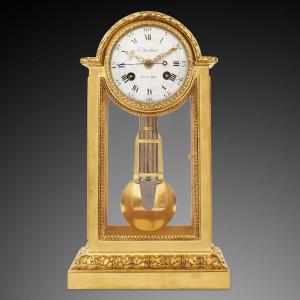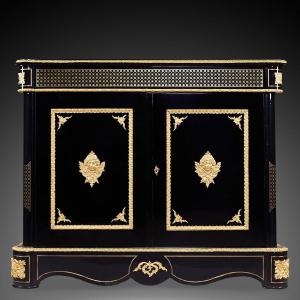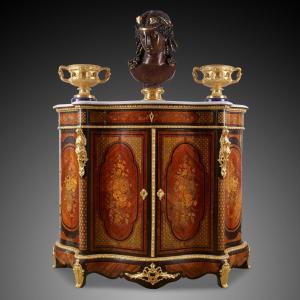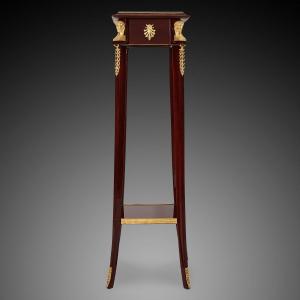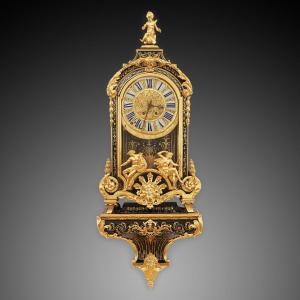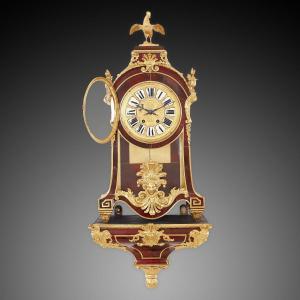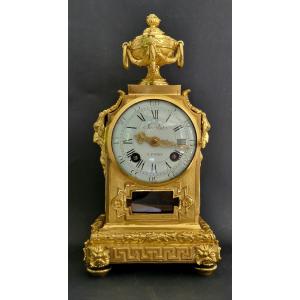




Empire Mantel Clock, Ca. 1790
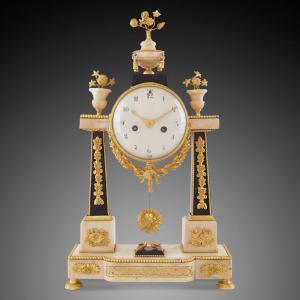
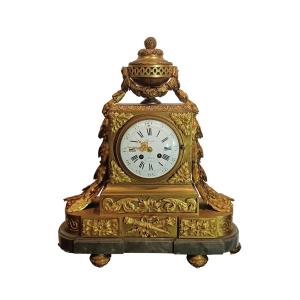
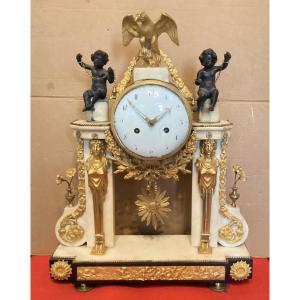
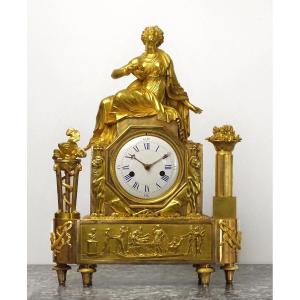
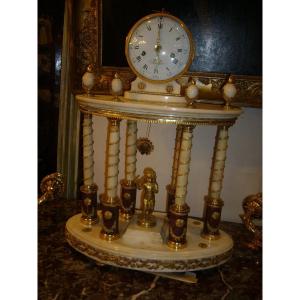
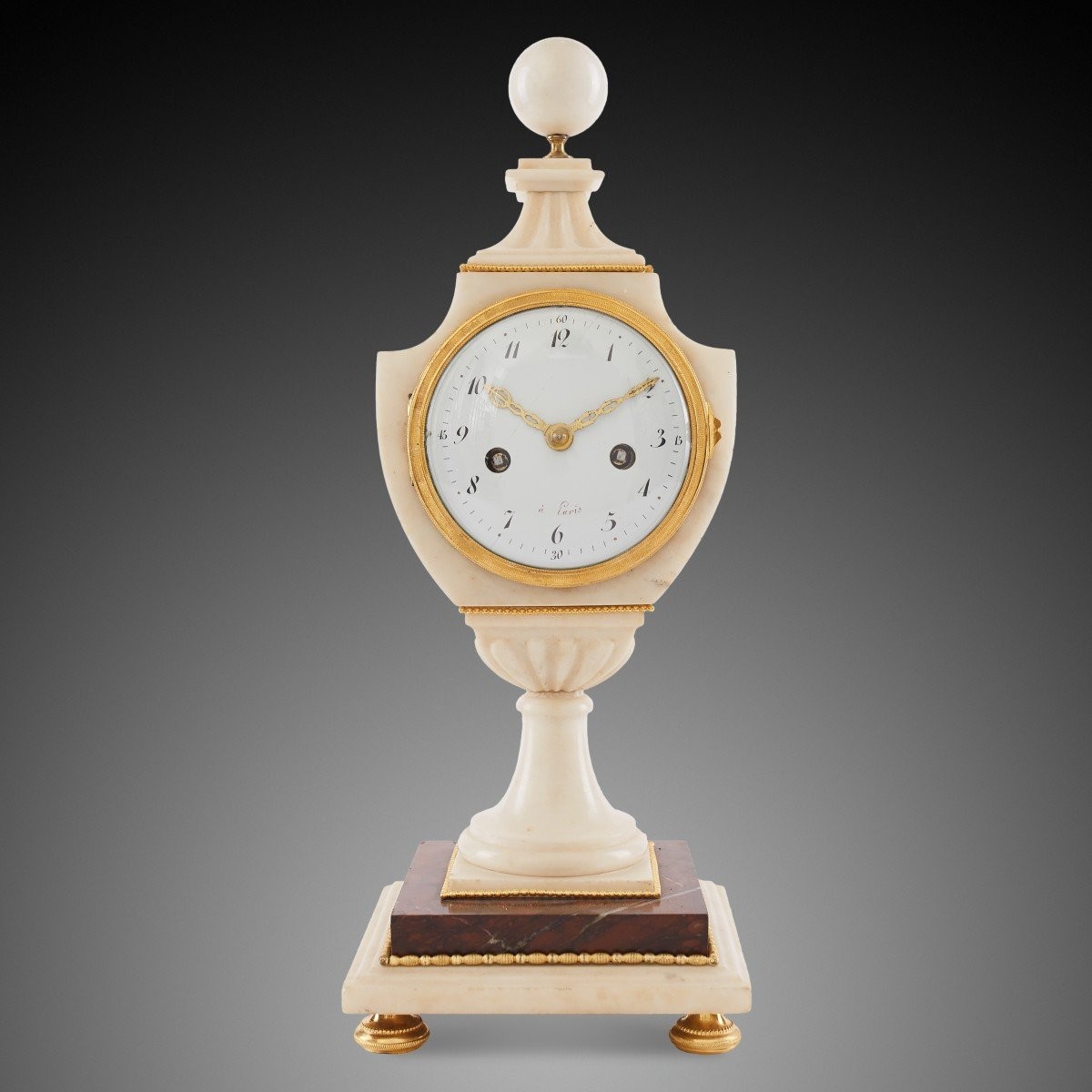
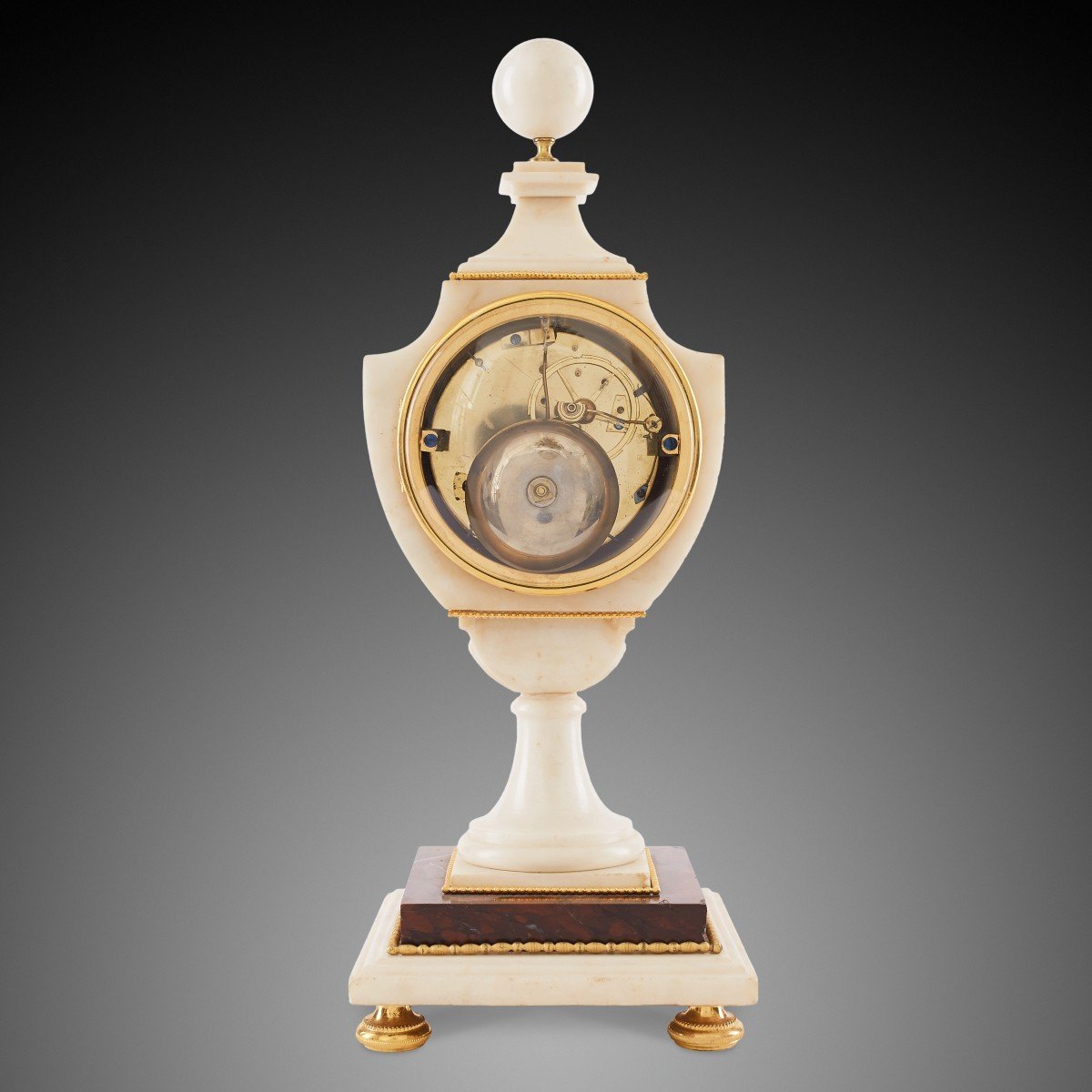
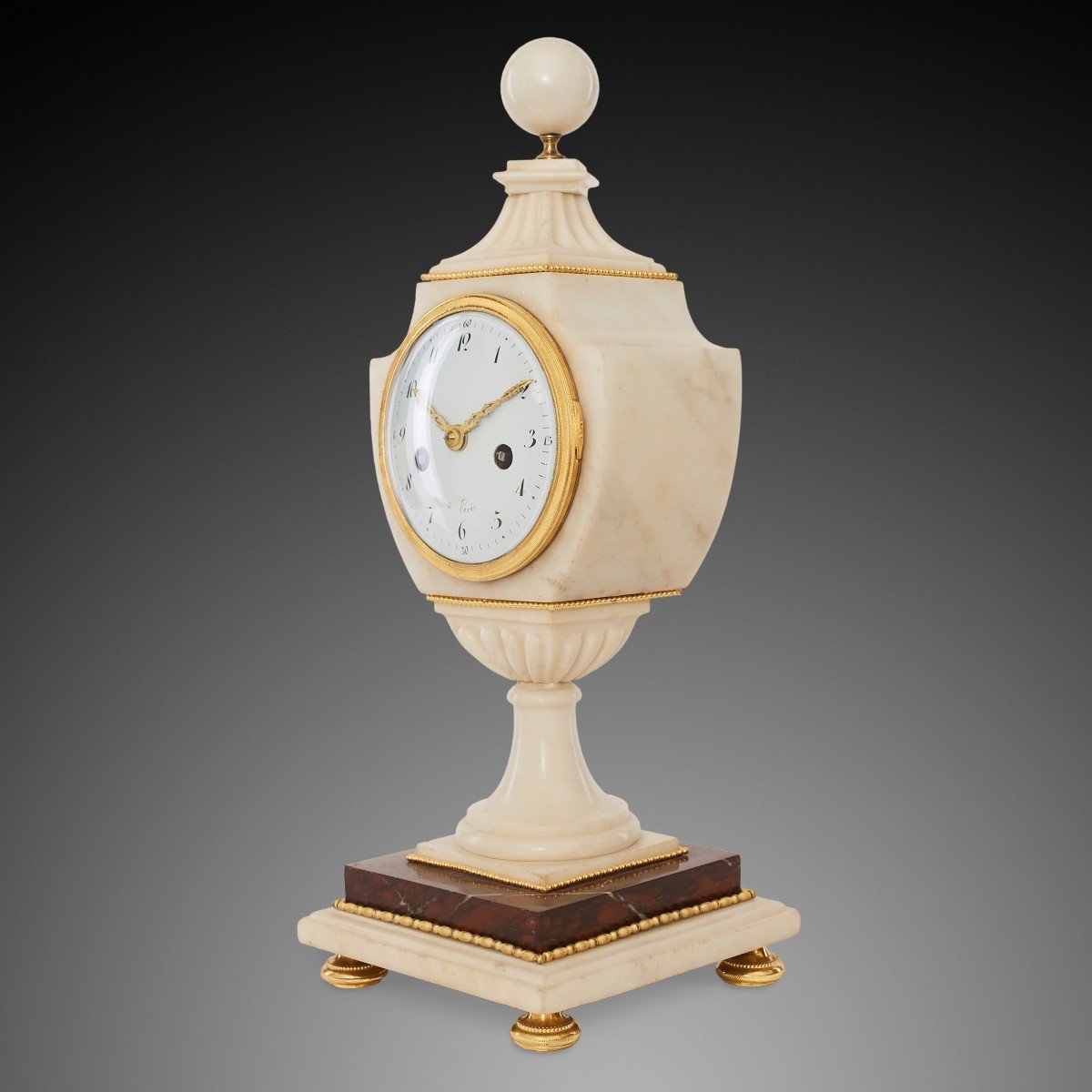
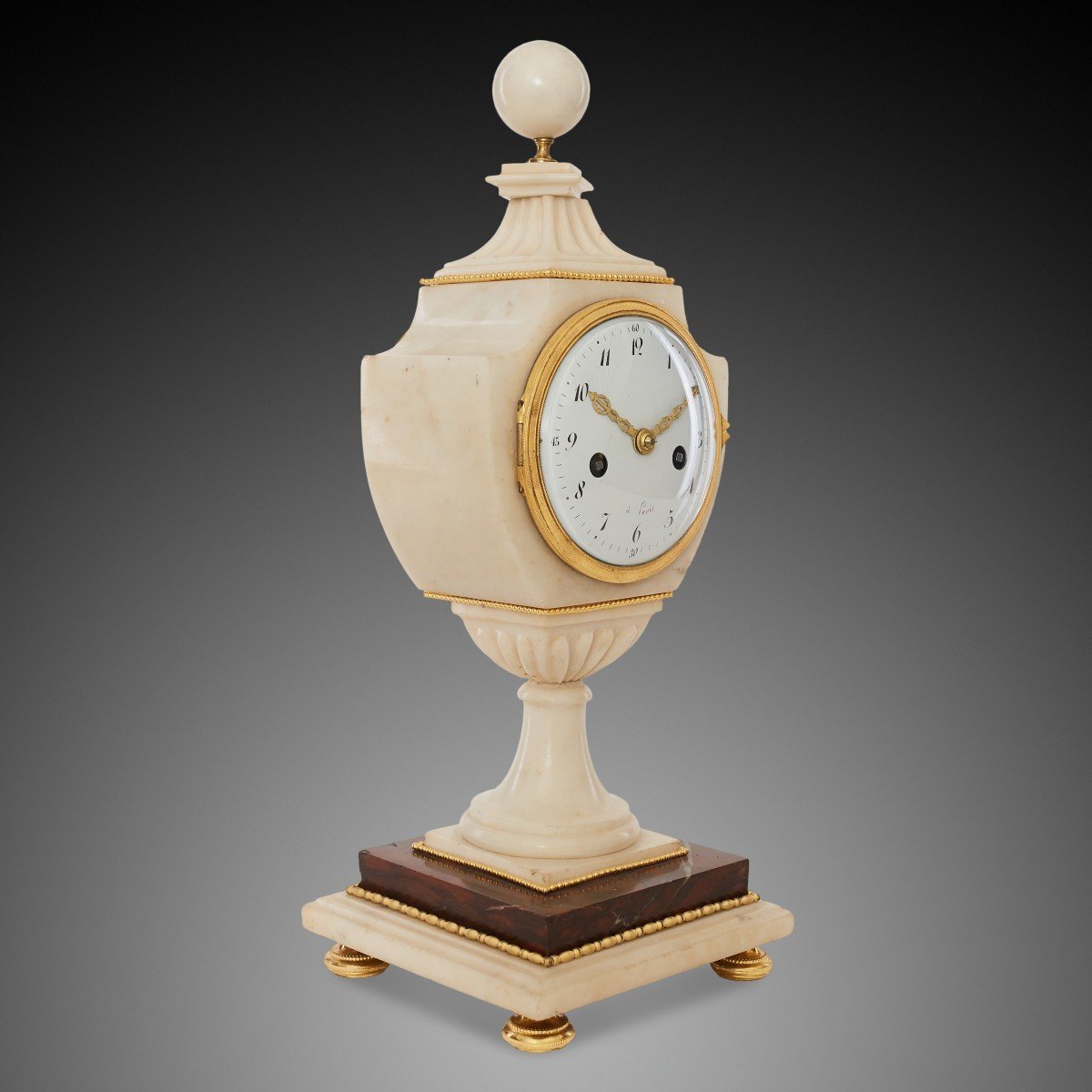
Royal Antique is pleased to offer this exquisite mantel clock, a quintessential example of the refined aesthetics and masterful craftsmanship that define the French Empire period. This piece embodies a harmonious blend of architectural form and horological function, characteristic of the early 19th century.
Design and Materials:
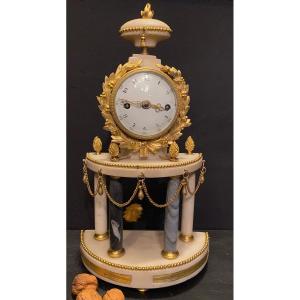
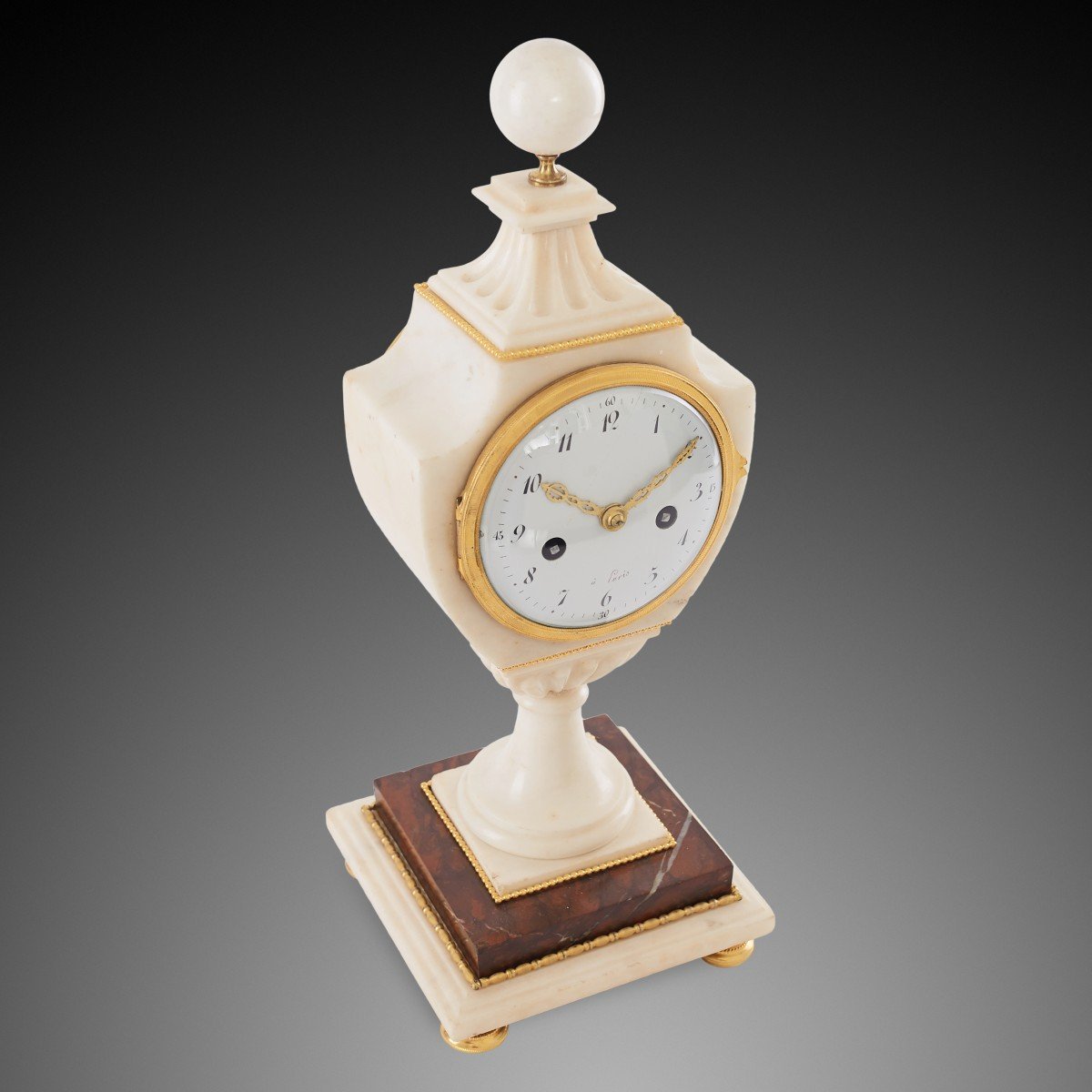
Architectural Form: The clock presents a stately urn-shaped body, meticulously carved from white marble, evoking the grandeur of classical antiquity. The main body is adorned with subtle fluting, leading up to a finely molded pediment that gracefully frames the dial.
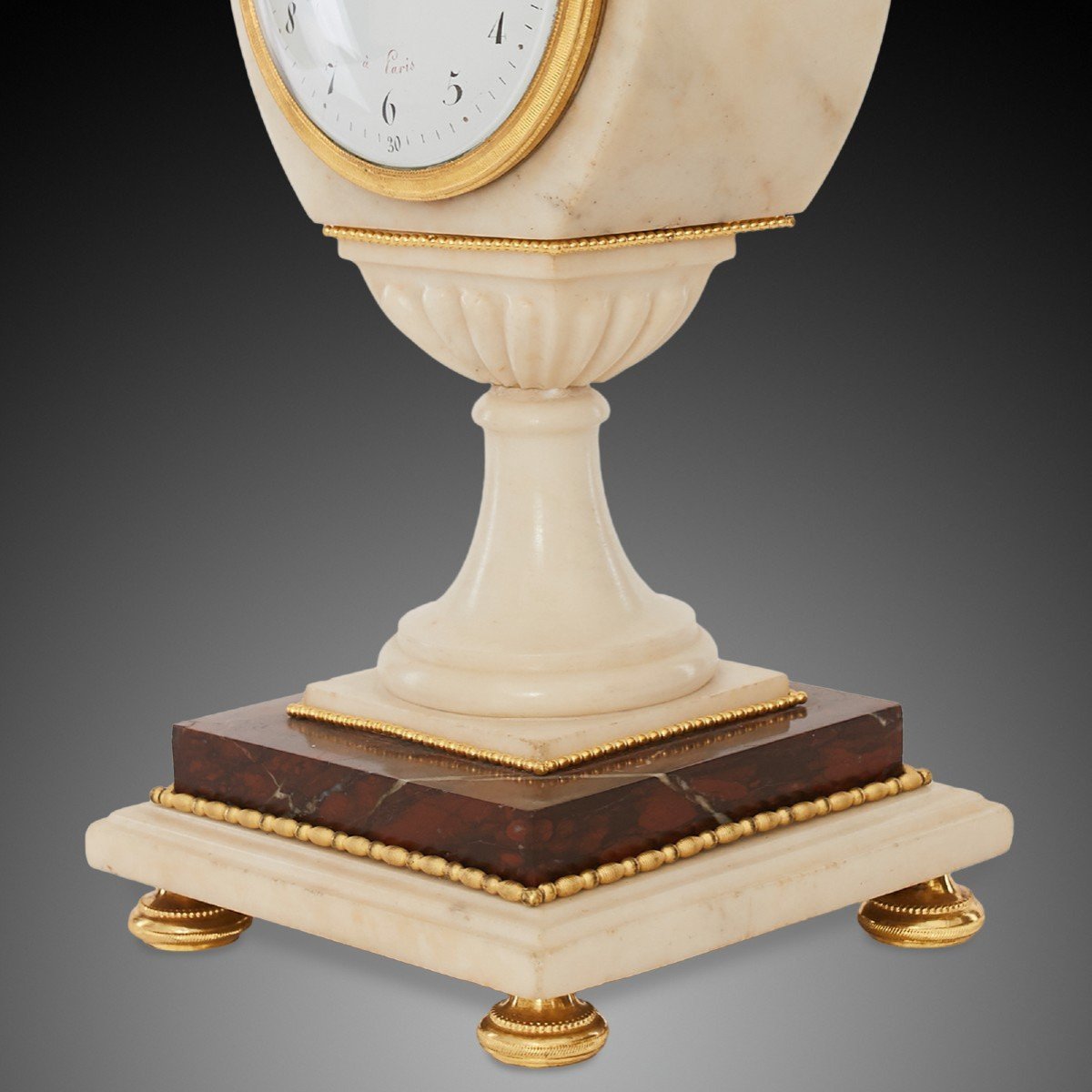
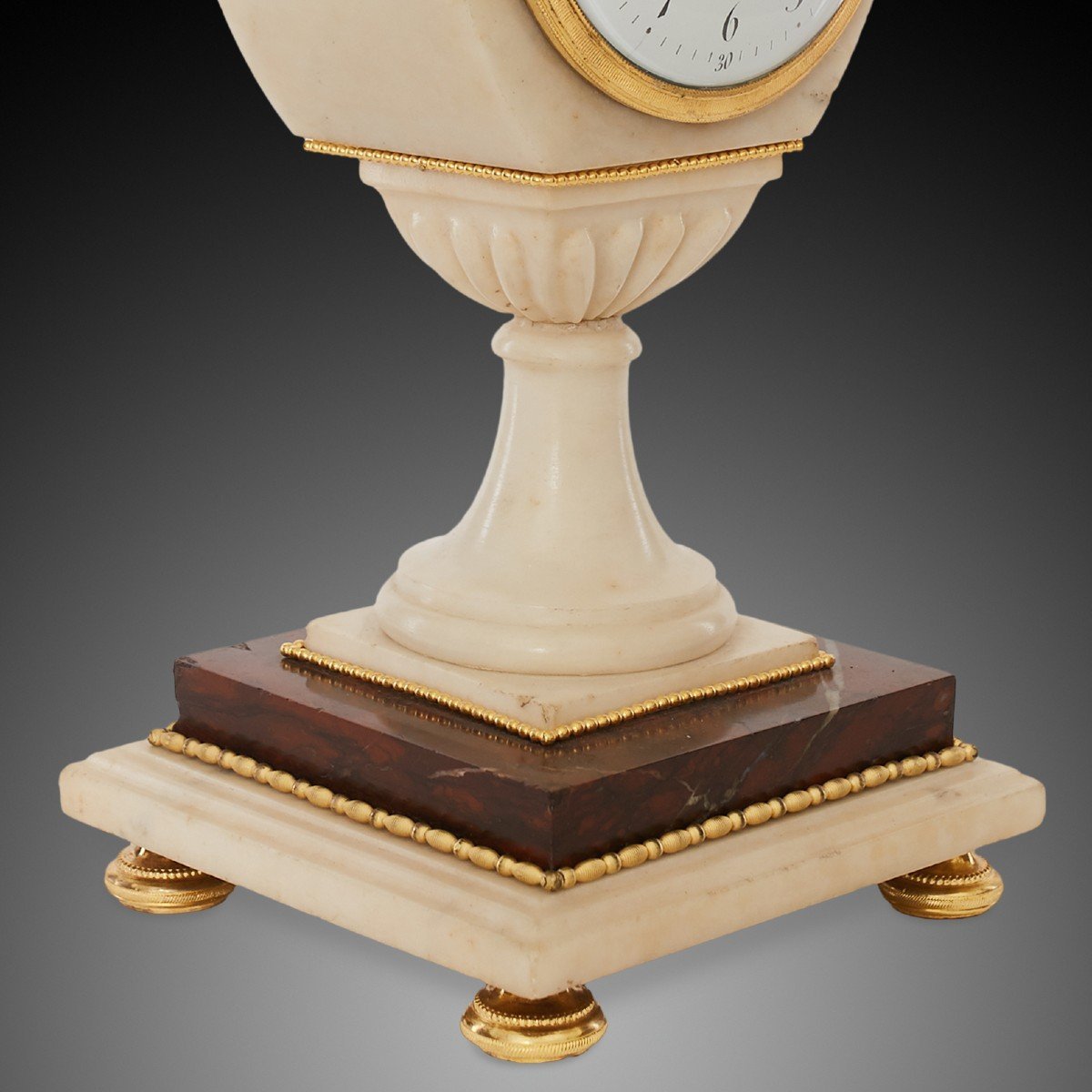
Contrasting Marbles: The clock elegantly combines the pristine white marble of its main structure with a contrasting rectangular plinth of rich griotte marble, providing a striking visual anchor. This two-tone marble construction underscores the Empire style's penchant for sophisticated material contrasts.
Classical Finial: Surmounting the urn, a perfectly spherical white marble finial adds a touch of classical purity and understated elegance, completing the clock's balanced silhouette.
Horological Integration: The circular white enamel dial, pristine and legible, features refined Roman numerals and slender blued steel hands. The dial is set within a finely molded ormolu (gilt bronze) bezel, providing a subtle accent of warmth and luxury. While the maker's signature is not immediately visible, the quality of the movement is implicit in the clock's overall construction.
Supporting Base: The entire ensemble rests upon a stepped rectangular base, composed of the contrasting griotte marble and a larger lower section of white marble, which in turn is supported by four delicate gilt bronze toupie feet, adding stability and a touch of refined ornamentation.
Period Significance and Craftsmanship:
Dating from the early 19th century, this clock perfectly encapsulates the elegance and imperial grandeur of the French Empire style (circa 1800-1815). This period, influenced by Napoleon's campaigns and a renewed fascination with classical antiquity, favored straight lines, architectural forms, and a more restrained yet powerful aesthetic than the preceding Louis XVI era. The predominant use of high-quality marble, combined with meticulous carving and subtle gilt bronze accents, testifies to the exceptional skill of the Parisian artisans of the era.
Key Selling Points:
Authentic Empire Style: A superb example of the Empire period's characteristic neoclassical influences and architectural elegance.
Noble Materials: Crafted from fine white and griotte marbles, showcasing timeless beauty and understated luxury.
Exceptional Craftsmanship: The precise carving of the marble and the harmonious integration of all elements demonstrate superior artistry.
Refined Collectible: A highly desirable piece for collectors of French horology and decorative arts from the Napoleonic era.
This elegant Empire mantel clock is more than a functional timepiece; it is a significant sculptural object that reflects the sophisticated taste and historical currents of early 19th-century France, making it an ideal acquisition for any distinguished collection or interior.
Period: 18th century
Style: Louis 16th, Directory
Condition: Good condition
Material: Marble
Width: 15 cm
Height: 42 cm
Depth: 15 cm
Reference (ID): 1559686
Availability: In stock