



Art Deco Marquetry Furniture Attr. Maurice Pré (1908-1988)
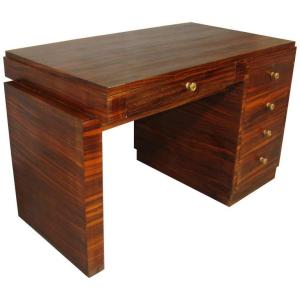
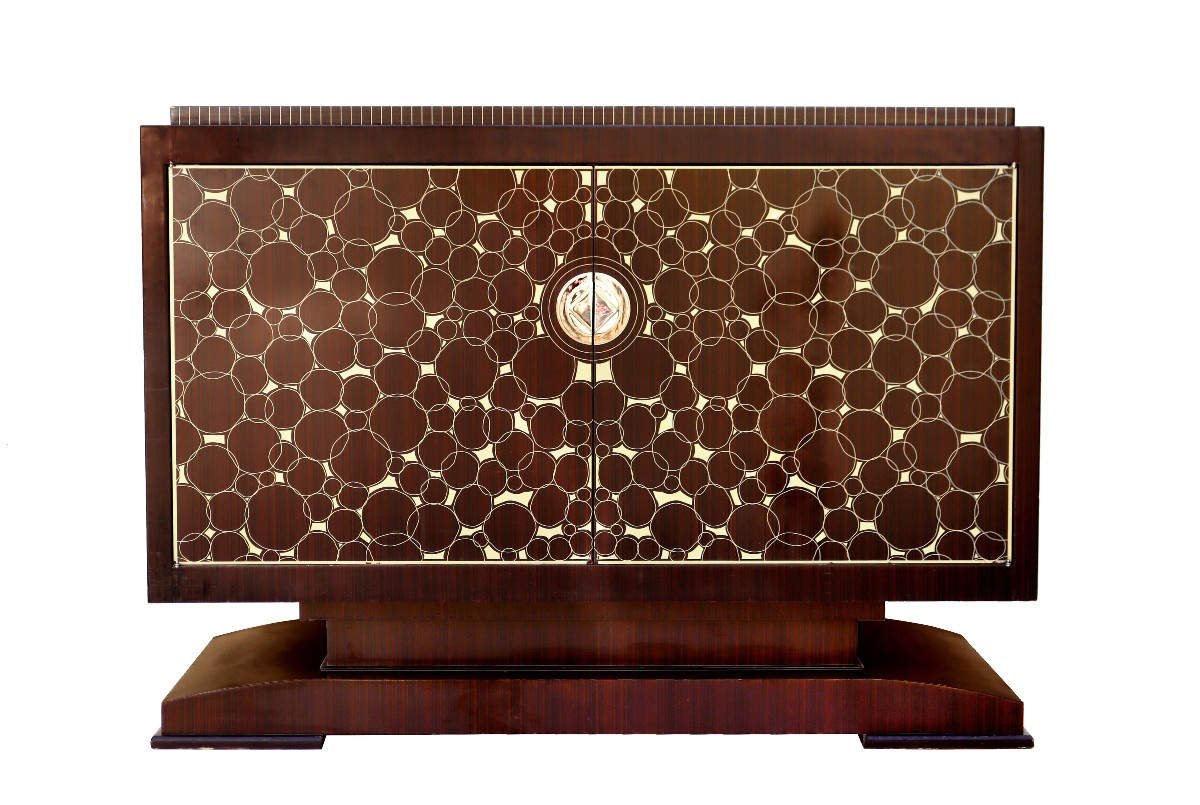
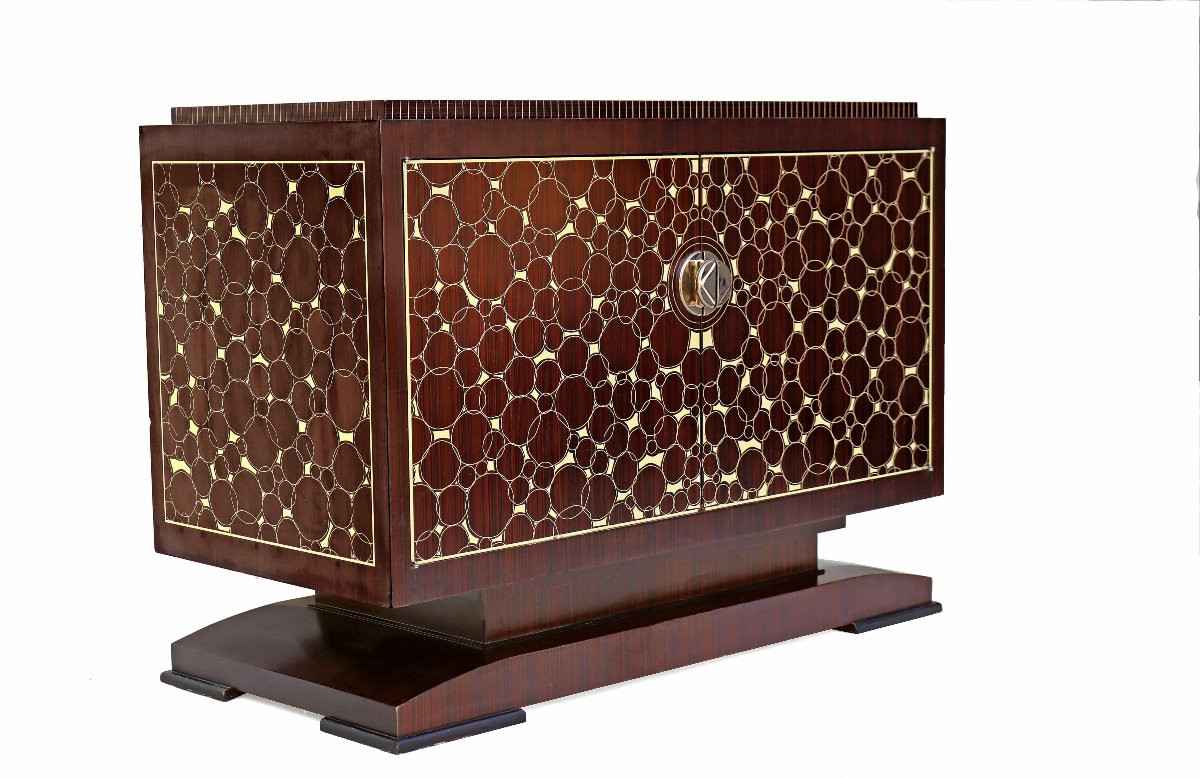
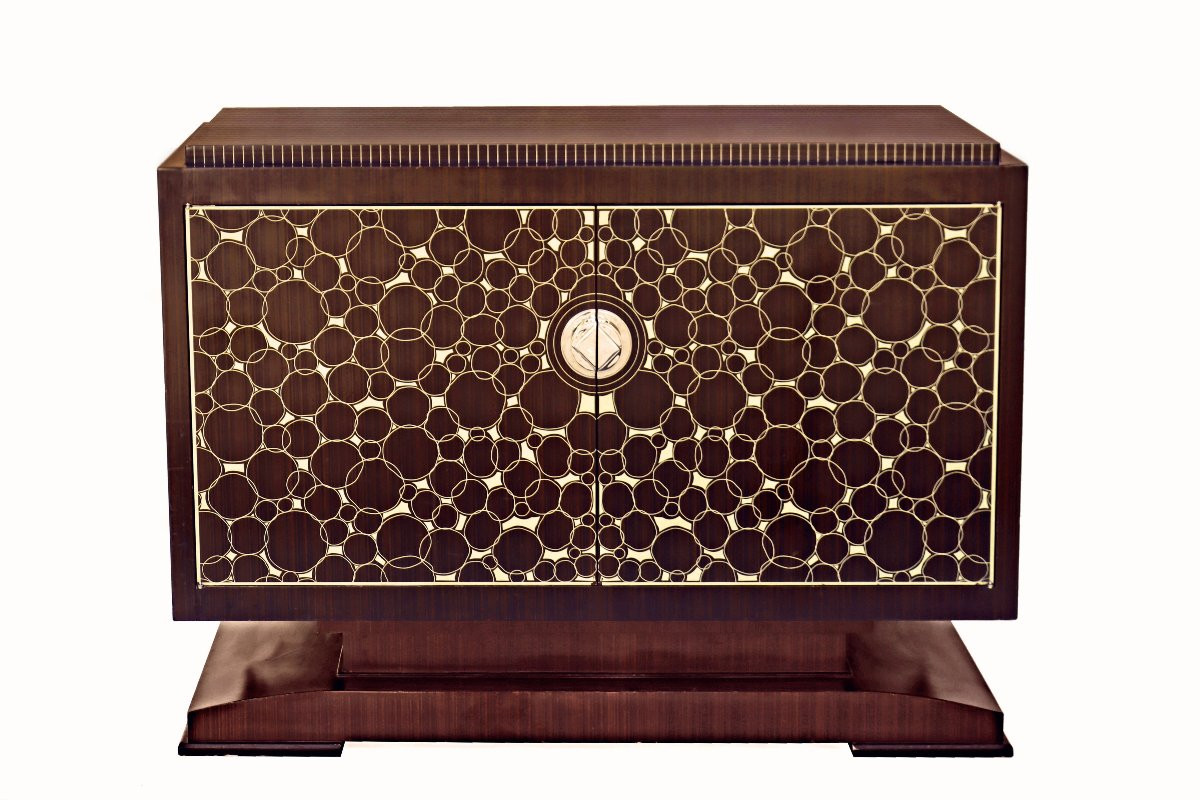
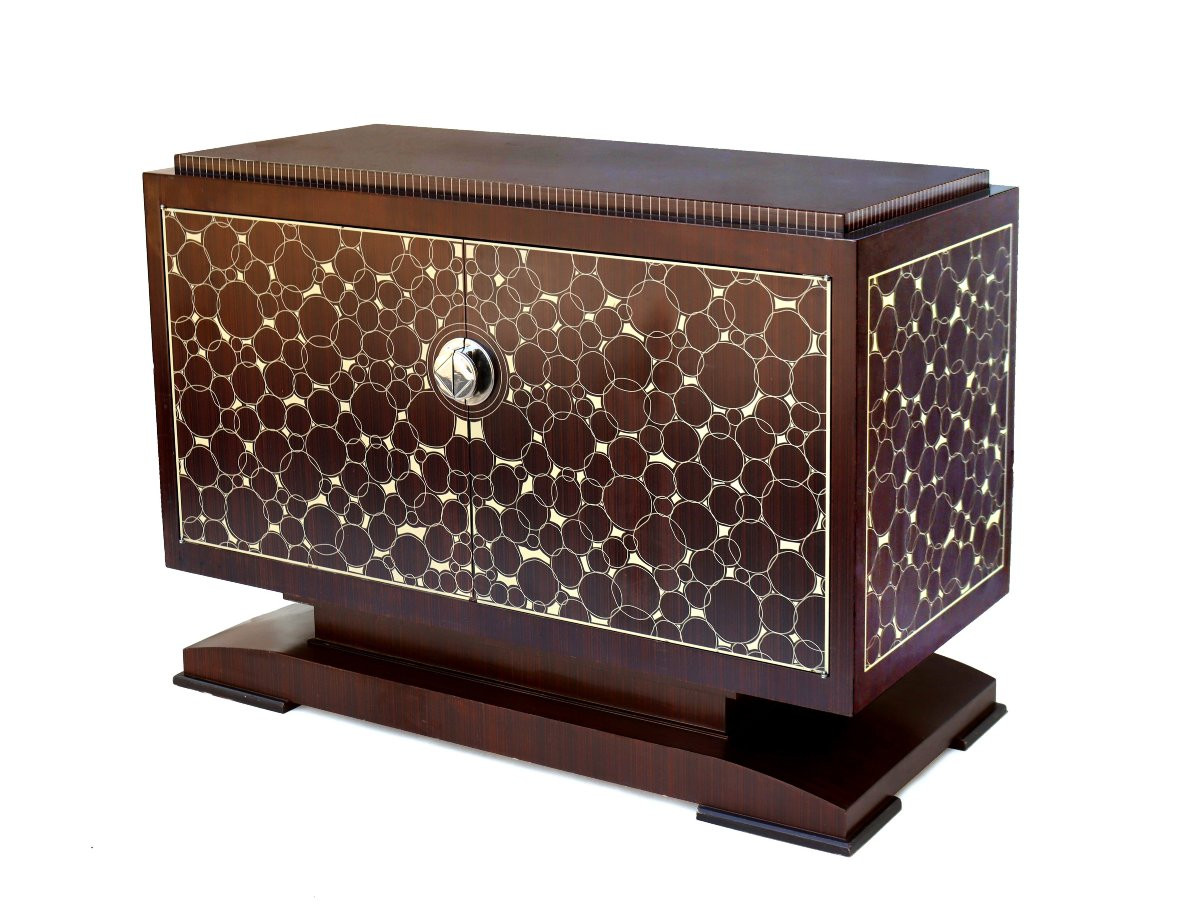
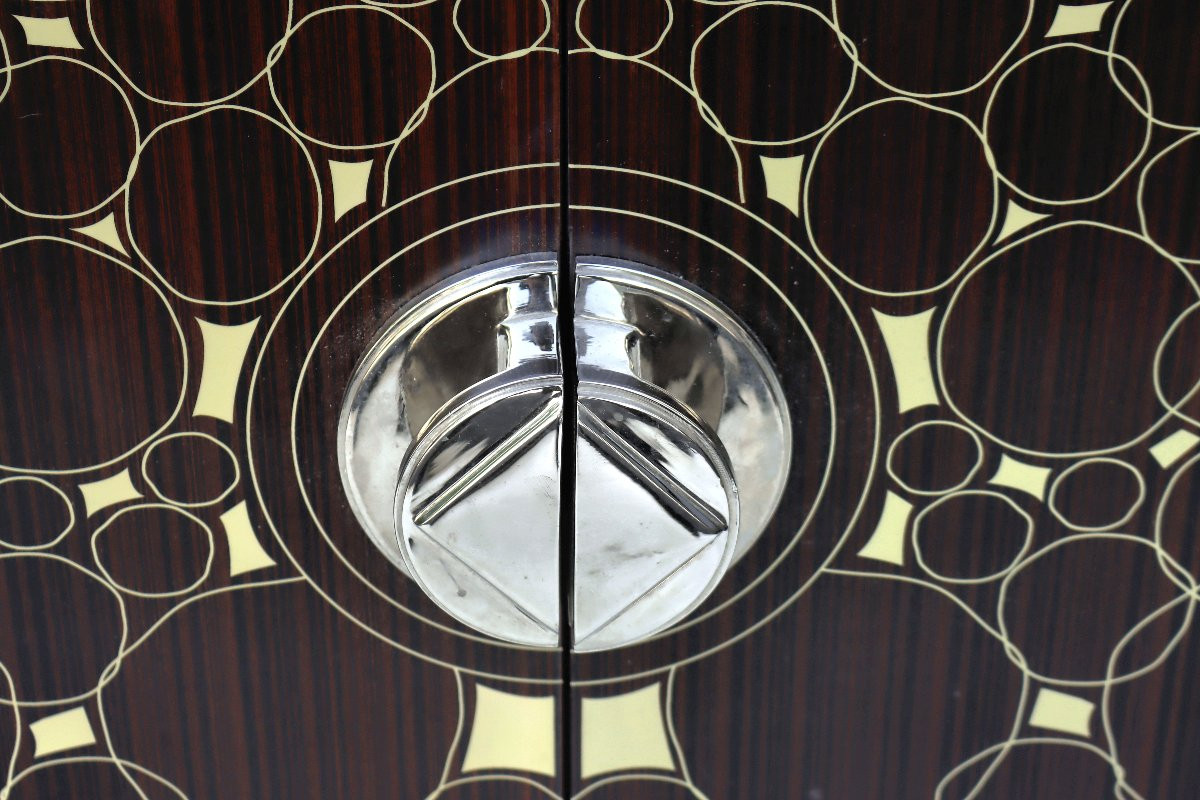
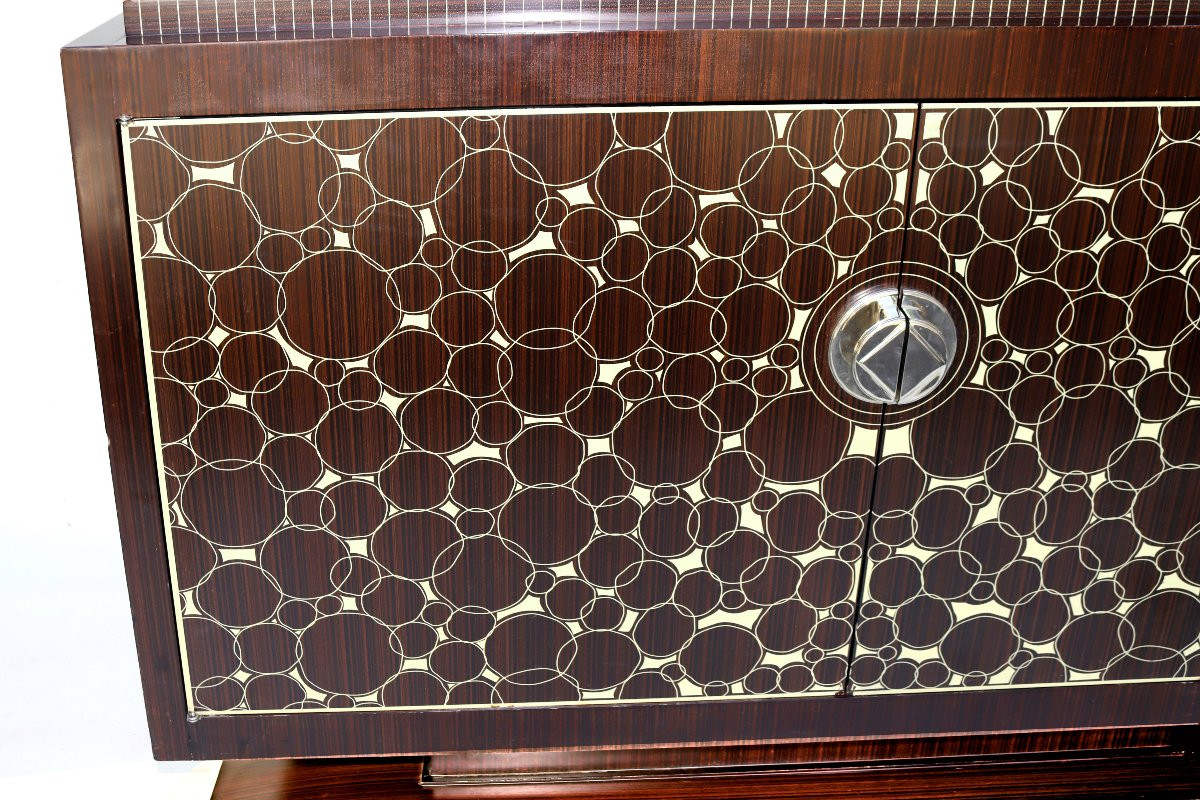
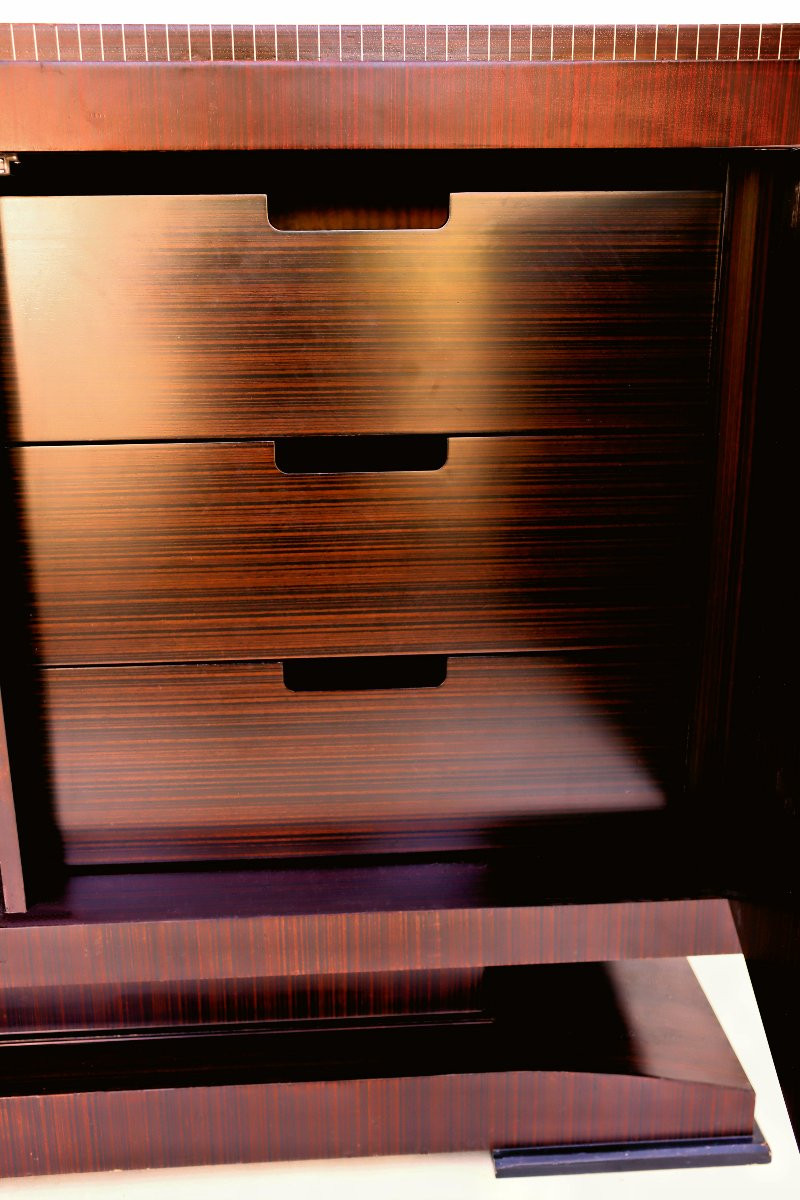
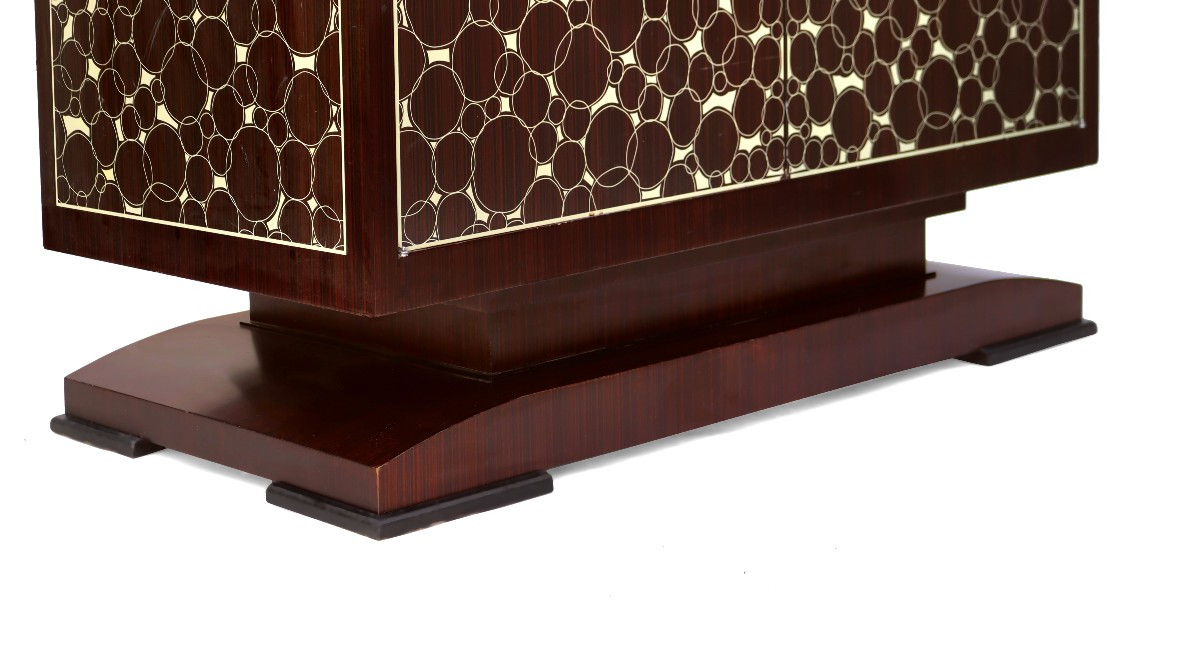
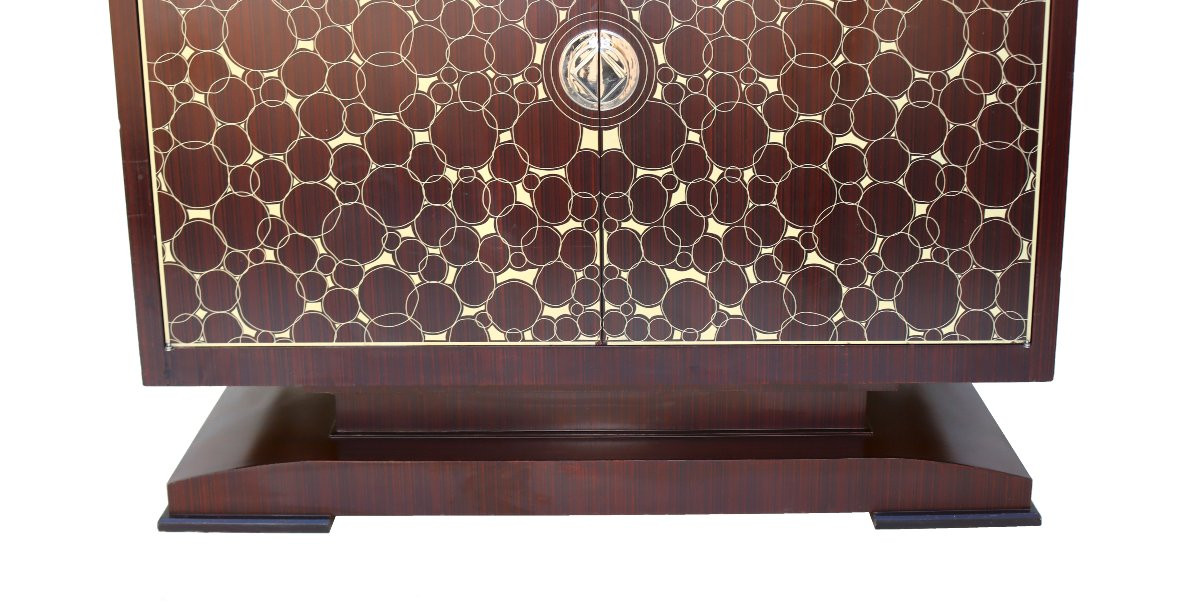
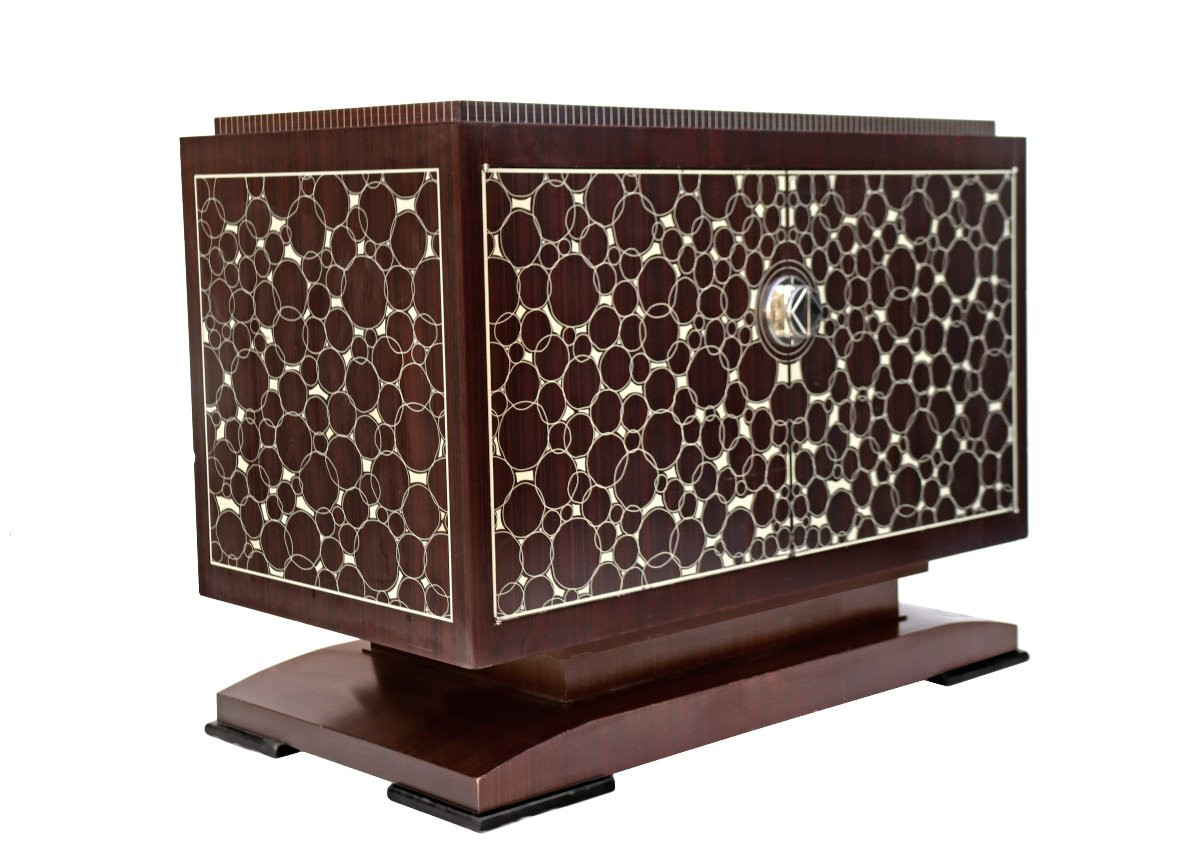
An elegant Art Deco sideboard, second half of the 20th century, of exceptional quality, attributed to Maurice Pré (1908-1988). It features a Macassar ebony veneer overlaid with rich ivory marquetry, forming a large geometric motif that extends along the sides. This motif is reminiscent of the "Elysée" model by Jacques Emile Ruhlmann (1879-1933). The front opens with two doors, each enhanced by a modernist nickel-plated bronze inset. The interior is compartmentalized with English-style drawers and an open niche. The recessed top is highlighted with vertical ivory stringing. The whole rests on a rectangular base with a cyma recta plinth. Dimensions: 1.42 m long x 1.03 m high x 68 cm deep.
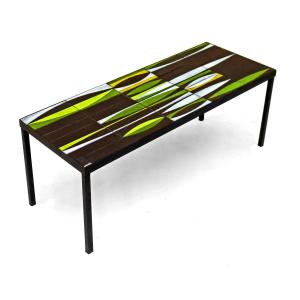
Maurice Pré received training at the École Boulle in Paris before joining Ruhlmann's workshop in 1924, where he worked for eight years. After a stay in Switzerland with the architect Laverrière, he returned to Paris in 1934 and collaborated with architects such as Patout, Démaret, and Porteneuve. From 1935 onwards, he went into business for himself, presenting furniture sets at the 1937 International Exposition and at the Salon des Artistes Décorateurs. A dedicated teacher, he began teaching at the School of Applied Arts in 1946 (succeeding René Gabriel), then at the School of Fine Arts in Nancy in 1947, before returning to the École Boulle in 1955. Simultaneously, he fulfilled prestigious public commissions (including several for the Mobilier National and the Élysée Palace). His style combined the rigor of cabinetmaking, functionality, and sometimes a rustic touch. He was interested in mass production, creating modular furniture in oak, iron, and Formica, produced by Lieuvin, often decorated with ceramics by his wife, Denise Gatard. He remained active in the Society of Decorative Artists and exhibited until 1966, before devoting himself to painting and tapestry.
Maurice Pré received training at the École Boulle in Paris before joining Ruhlmann's workshop in 1924, where he worked for eight years. After a stay in Switzerland with the architect Laverrière, he returned to Paris in 1934 and collaborated with architects such as Patout, Démaret, and Porteneuve. From 1935 onwards, he went into business for himself, presenting furniture sets at the 1937 International Exposition and at the Salon des Artistes Décorateurs. A dedicated teacher, he began teaching at the School of Applied Arts in 1946 (succeeding René Gabriel), then at the School of Fine Arts in Nancy in 1947, before returning to the École Boulle in 1955. Simultaneously, he fulfilled prestigious public commissions (including several for the Mobilier National and the Élysée Palace). His style combined the rigor of cabinetmaking, functionality, and sometimes a rustic touch. He was interested in mass production, creating modular furniture in oak, iron, and Formica, produced by Lieuvin, often decorated with ceramics by his wife, Denise Gatard. He remained active in the Society of Decorative Artists and exhibited until 1966, before devoting himself to painting and tapestry.
6 500 €
Period: 20th century
Style: Art Deco
Condition: Good condition
Material: Marquetry
Reference (ID): 1553574
Availability: In stock
Print