THIS OBJECT WAS SOLD
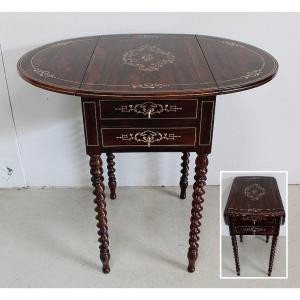
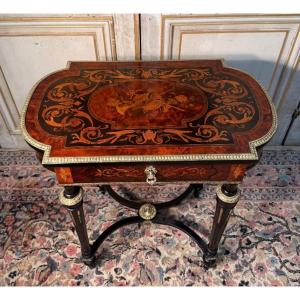
Inlaid Table By Ferdinando Pogliani (milan 1832-1899)


Ferdinando Pogliani (Milan 1832-1899), Inlaid table, second half of the 19th century
Ebonized wood, ivory, cm. 75 x 95 x 58
Refined center table, veneered in ebony wood and inlaid in ivory on the top, sides and legs. The decoration of acanthus leaves and cherubs alternates with four cameos of male figures, dressed in clothes from various periods, perhaps the illustrious figures of the family that commissioned the work. The presence of a coat of arms depicting a lion from which emerge wild beasts, torches and weapons. At the center of the table, a male figure crowned with laurel and equipped with a quiver full of arrows, perhaps the god Apollo, dances with nine girls, the Muses.
BIOGRAPHY
Ferdinando Pogliani was born in Milan in 1832. After a probable apprenticeship with a furniture craftsman, he opened his own workshop as a cabinetmaker and inlayer in the second half of the 19th century.
His workshop was located in Porta Vittoria and later in Via Monte Napoleone; the activity was carried out with the help of his three sons: Giuseppe, an engineer and furniture designer, Paolo, a sculptor and finally Carlo, an inlayer. His furniture is characterized by strong eclecticism, which however flows into its most historical version, as demonstrated by the evident Renaissance inspiration and the decoration with neoclassical subjects taken from prints that were circulating at the time. The wood most used in his workshop was ebony, however at times walnut and ebonized pear wood were also used; his works are embellished with refined details made of ivory, bone, tortoiseshell and sometimes semi-precious stones. With its participation in the National Exhibition of 1871, Pogliani’s workshop was consecrated to success, becoming popular among the Italian and international nobility and bourgeoisie, as demonstrated by its presence at the Vienna Exhibitions in 1873, the Philadelphia Centennial in 1876 and Paris in 1878. Its fame was credited to him with a commission from Napoleon III, a bed and a writing desk for one of his residences. Ferdinando died in 1899; his sons continued the family business, updating it in line with the times to a more essential taste.
Explore similar pieces and discover your ideal find:
tables