this object was sold
line

Nepal, Kathmandu Valley, 14th-15th Century, High Relief Sculpture Representing Vaishnavi

Sold
Nepal, Kathmandu Valley, 14th-15th Century, High Relief Sculpture Representing Vaishnavi
Sold
Nepal, Kathmandu Valley, 14th-15th Century, High Relief Sculpture Representing Vaishnavi-photo-2
Sold
Nepal, Kathmandu Valley, 14th-15th Century, High Relief Sculpture Representing Vaishnavi-photo-3
Sold
Nepal, Kathmandu Valley, 14th-15th Century, High Relief Sculpture Representing Vaishnavi-photo-4
Sold
Nepal, Kathmandu Valley, 14th-15th Century, High Relief Sculpture Representing Vaishnavi-photo-1
Sold
Nepal, Kathmandu Valley, 14th-15th Century, High Relief Sculpture Representing Vaishnavi-photo-2
Sold
Nepal, Kathmandu Valley, 14th-15th Century, High Relief Sculpture Representing Vaishnavi-photo-3
Sold
Nepal, Kathmandu Valley, 14th-15th Century, High Relief Sculpture Representing Vaishnavi-photo-4
Sold
Nepal, Kathmandu Valley, 14th-15th Century, High Relief Sculpture Representing Vaishnavi-photo-5
Sold
Nepal, Kathmandu Valley, 14th-15th Century, High Relief Sculpture Representing Vaishnavi-photo-6
Sold
Nepal, Kathmandu Valley, 14th-15th Century, High Relief Sculpture Representing Vaishnavi-photo-7
Sold
Nepal, Kathmandu Valley, 14th-15th Century, High Relief Sculpture Representing Vaishnavi-photo-8
pictures.

Object description :

"Nepal, Kathmandu Valley, 14th-15th Century, High Relief Sculpture Representing Vaishnavi"

High relief sculpture representing Vaishnavi, the shakti of Vishnu

Nepal, Kathmandu Valley
14th – 15th century


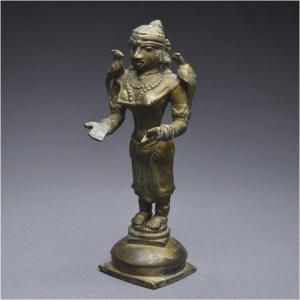
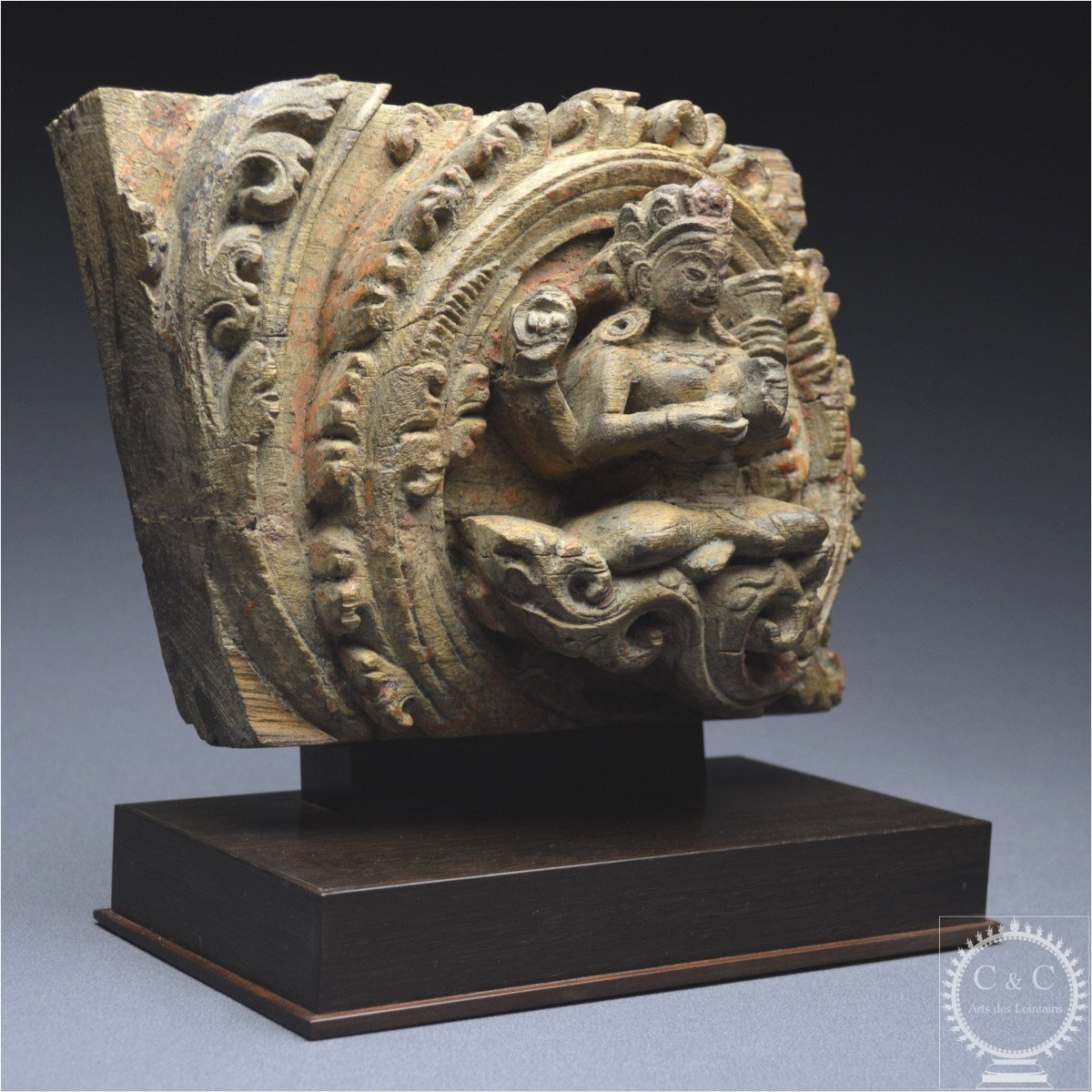
High relief representation of Vaishnavi, a female deity representing the primordial creative energy (shakti) of the Hindu god Vishnu. She is shown seated, legs positioned in sattvaparyanka, in the center of a double circle composed of foliage scrolls blossoming into large volutes providing a seat for the deity.
Dressed in a simple dothi, she sports an opulent chest on which rests a large necklace. She wears a high ornate tiara, large earrings resting on her shoulders. She is adorned with four arms, the upper hands brandishing a wheel (chakra), a mace (gada), classic attributes of Vishnu, the lower right hand holding a conch (shankha), the left hand in the abhayamudra position (absence of fear).

Vaishnavi is one of the seven mother goddesses (Saptamatrika) emerging as shaktis from the bodies of the gods, here Vishnu, the preserver god. The order of the seven mother goddesses generally begins with Brahmi symbolizing the very essence, creation. Vaishnavi, like Vishnu, provides the created world with symmetry, beauty and order. The most important meaning of the symbolism of the Saptamatrika is the implication of cyclical universal time and its cessation. In classical statuary, Vaishnavi occupies the central position flanked by three goddesses on each side.

Solid wood with traces of polychromy
Wear and visible losses
21.8 x 16 cm without stand
European private collection


Contact us: culturesetcivilisations@orange.fr

View more from this dealer

View more - Wood Sculptures

Subscribe to newsletter
line
facebook
pinterest
instagram

Cultures & Civilisations
Arts d'Asie / Arts Précolombiens / Arts Premiers

Nepal, Kathmandu Valley, 14th-15th Century, High Relief Sculpture Representing Vaishnavi
1485392-main-67a4ad8c8af64.jpg

04 74 96 36 93

07 88 06 74 56


*We will send you a confirmation email from info@proantic.com Please check your messages, including the spam folder.

Thank you! Your submission has been received!

Oops! Something went wrong while submitting the form