THIS OBJECT WAS SOLD
Turned Wood Cane Wheelchair From Maison Eugène Vincent

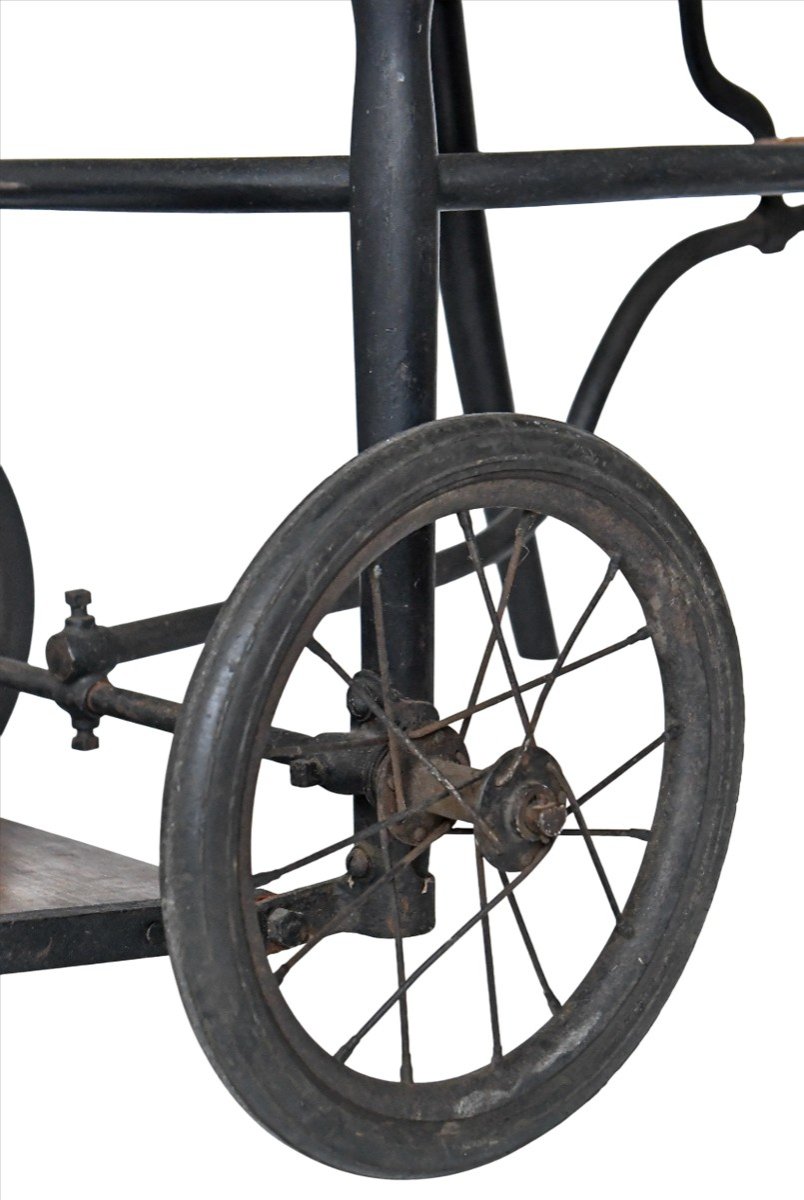


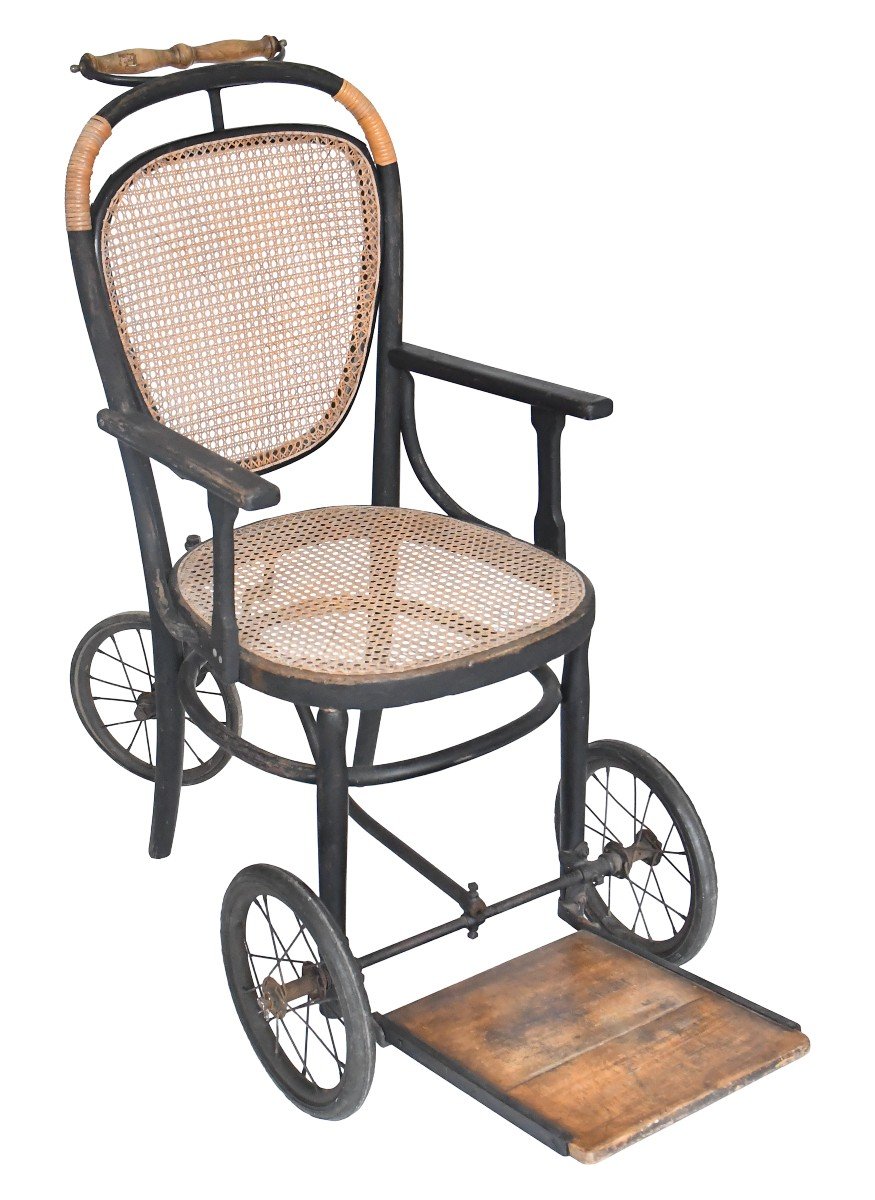
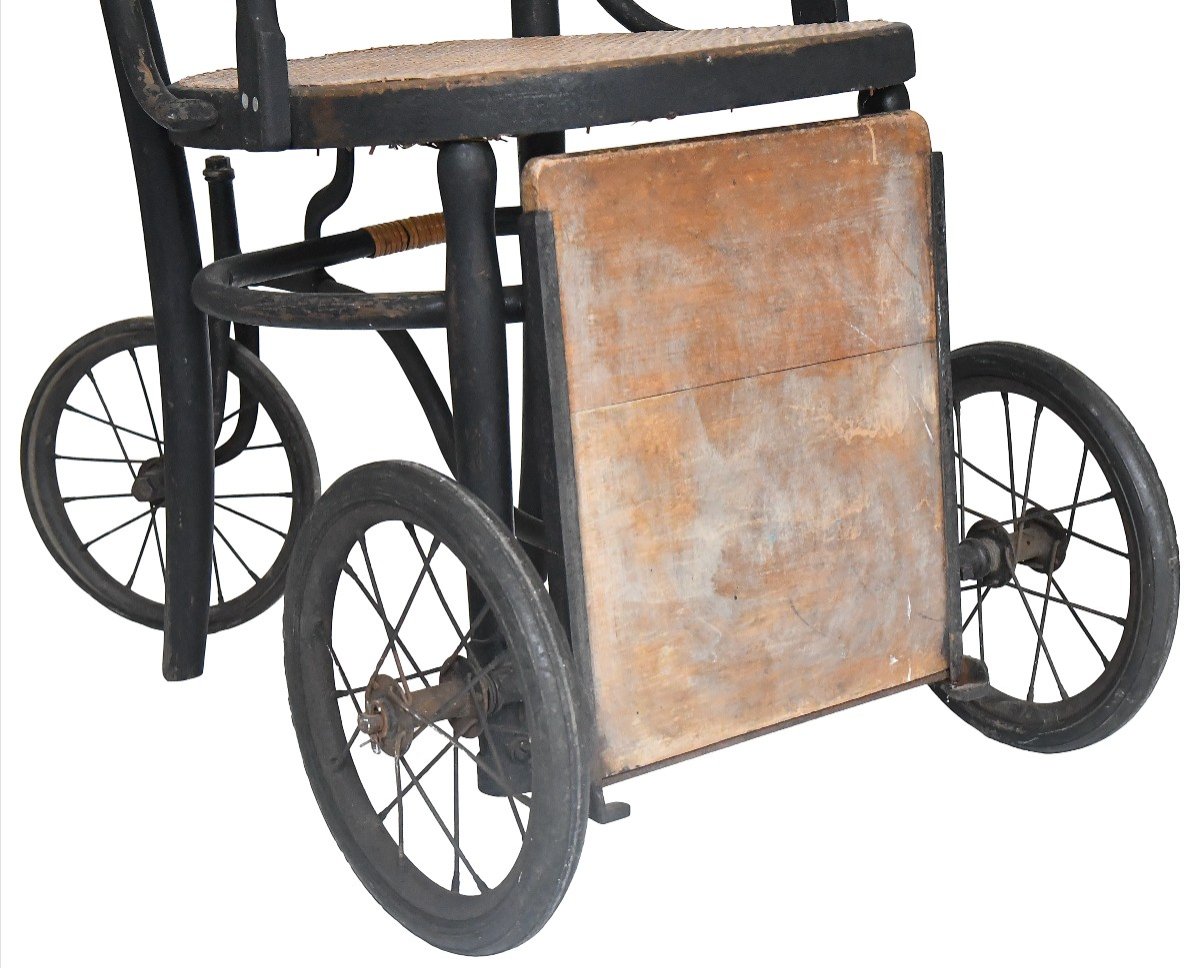
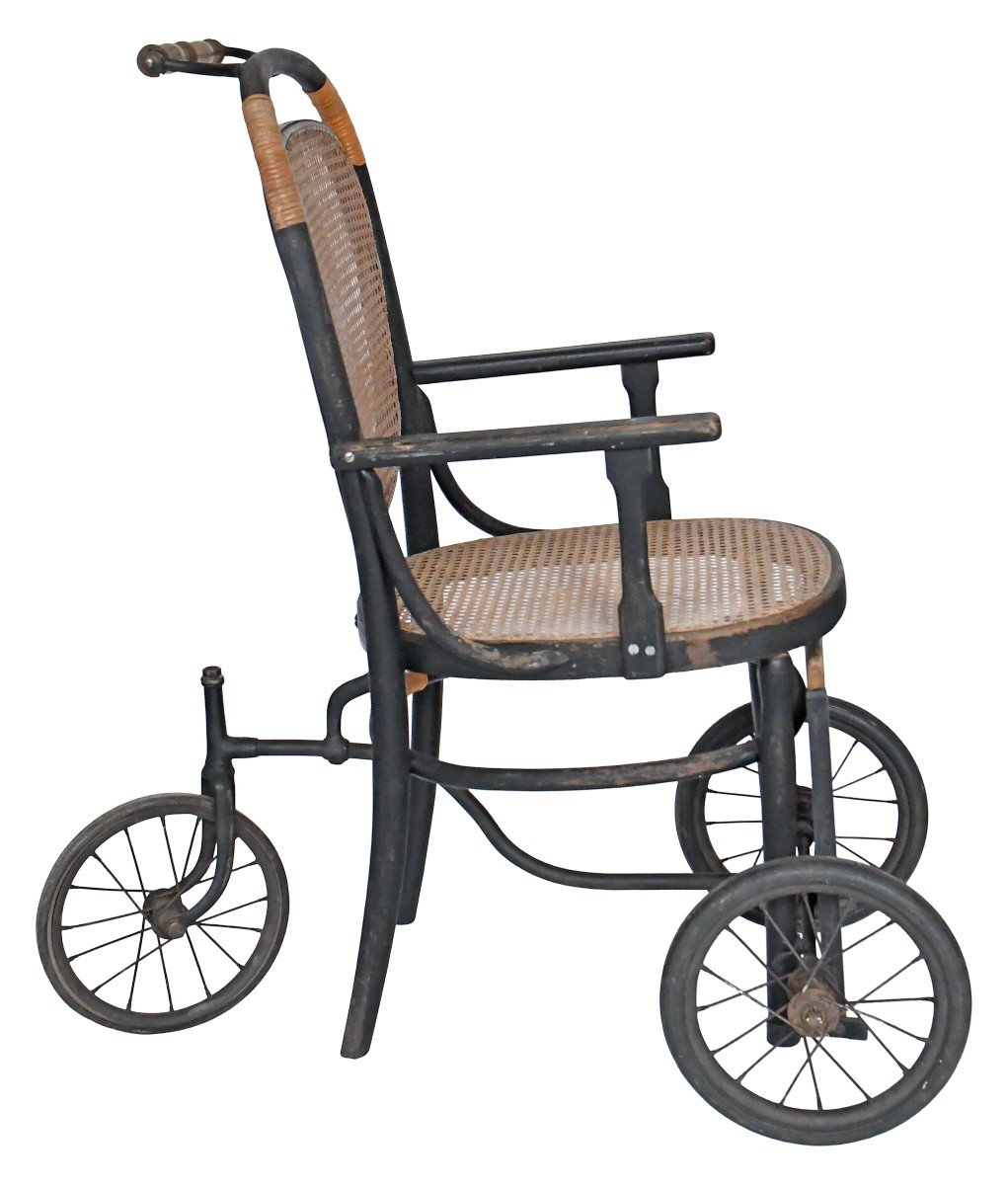


Caned wheelchair in turned wood. Work of the Maison Eugène Vincent. The oval backrest and the seat are caned. On the top and back of the backrest, a metal and wood handle is fixed. The chair has three solid rubber wheels, only the rear wheel is directional. A retractable wooden step in front of the chair. Similar model is exhibited at the Conservatoire du patrimoine hospitalier de Rennes. Dimensions: Height 104 cm Width 58 cm Depth with the step open 121 cm / with the step closed 96 cm Seat height 51.5 cm After the First World War, many men were mutilated and disabled; disabled, they could no longer resume their ordinary lives and their former profession. To allow them to find a place in society thanks to a certain autonomy and after long months of care, furniture manufacturers specialized in the manufacture of wheelchairs. Eugène VINCENT's company, originally a manufacturer of children's cars in 1863, developed its expertise by designing and manufacturing various wheelchairs for the sick and injured. Various models were offered, either for mobility inside the house or apartment, others more specific for walking outdoors. For certain major exhibitions, such as the Franco-British exhibition in London in 1908, the Eugène VINCENT workshops had already offered comfortable modes of transport for the "high society of the time", such as a wheelchair pushed at the back which the Queen of England (Alexandra of Denmark, who became Queen of the United Kingdom and Empress of India by marrying Edward VII in 1863) had been able to enjoy during her visit. Eugène VINCENT's company presented its products in a boutique at 141, boulevard Saint-Germain in Paris VIème and its factory was located at 20-26 rue de Montsouris in the 14th arrondissement of Paris.
Explore similar pieces and discover your ideal find:
vintage