THIS OBJECT WAS SOLD
Japanese Noh Theater Mask Depicting Ko-omote, Japan, 19th Century.

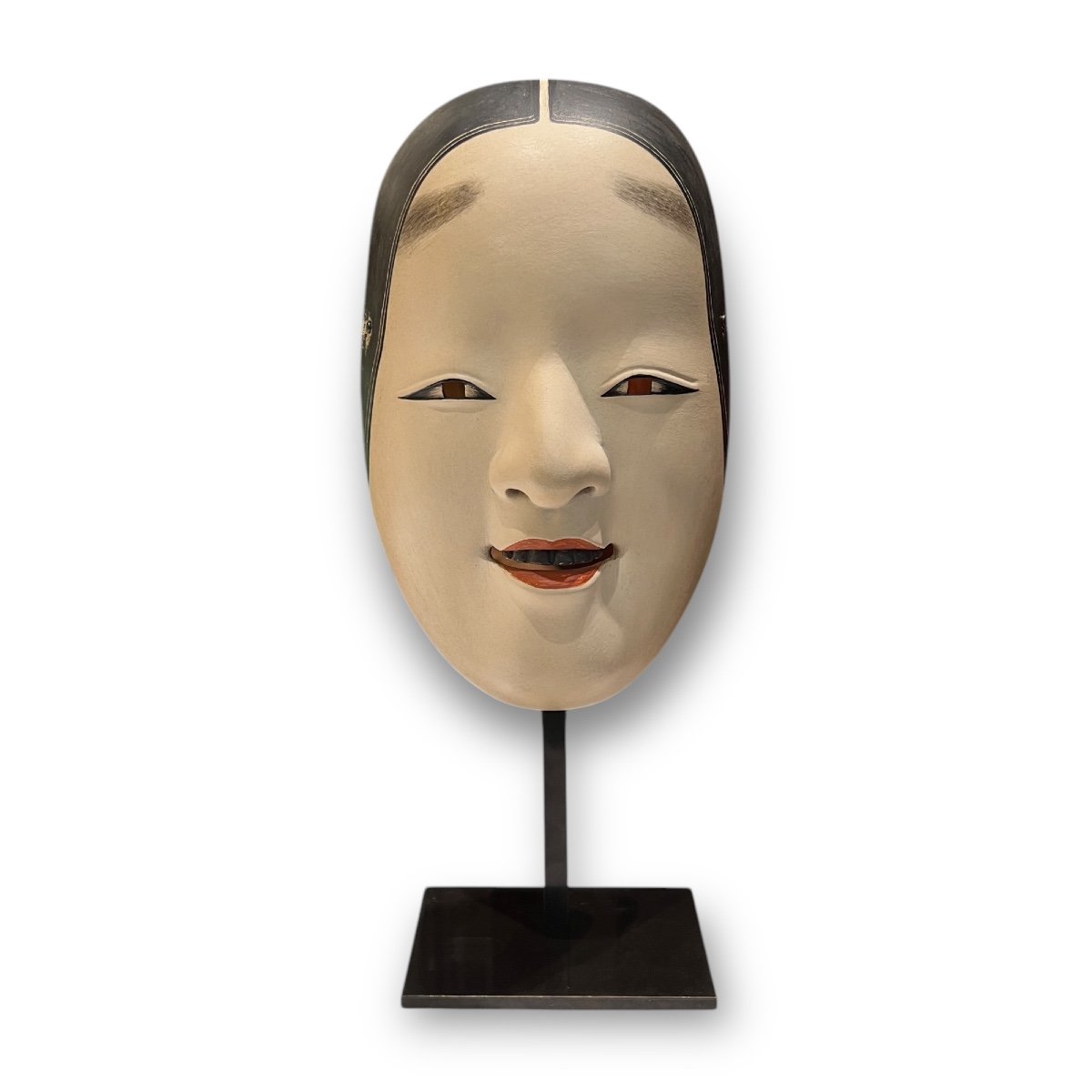


Noh theater mask representing Ko-Omote, Japan, 19th century. This mask is that of Ko-omote, one of the oldest and most emblematic masks of the Noh theater. Carved in Japanese cypress wood, it represents a young woman with a pure and delicate face, evoking the ideal beauty of youth. The subtle makeup, the slightly open mouth, and the eyebrows drawn high on the forehead accentuate a soft and reserved expression, specific to classical elegance. The polished finish but revealing traces of tools on the inner face as well as the thinness of the mask testify to its antiquity and the care taken in its manufacture. In Noh, a dramatic art that appeared in the 14th century, masks play a central role in transmitting emotions and identities. Unlike other forms of theater, they allow for an internalized interpretation, where each inclination or play of light modifies the perception of the expression of the mask. The Ko-omote mask is used to embody young girls or idealized female characters, often in plays with a spiritual or melancholic tone. Although representing a woman, it is always worn by a male actor, in accordance with the Noh tradition. This mask has appeared in several major works such as Hagoromo or Sakuragawa, where it evokes graceful and ethereal female figures. The mask sculptor, called men-shi, gives each creation its own personality, allowing the actors to appropriate the emotion of the role. The Ko-omote mask, through its simplicity and symbolism, embodies both the transience of youth and the depth of Japanese aesthetic traditions, reasons why it is very popular with Western collectors. Ink and gofun on Japanese cypress Custom-made bronze base Minimal traces of use. Approximately 21 x 13 x 7 cm Height with base, approximately 31.5
Explore similar pieces and discover your ideal find:
Wood Sculptures