THIS OBJECT WAS SOLD
The Annunciation, Mid-17th Century French School




The Annunciation
Mid-17th Century French School
Oil on canvas, h. 64 cm, l. 64 cm
17th century carved and giltwood frame decorated with oak leaves and acorns
Framed: h. 80 cm, l. 80 cm
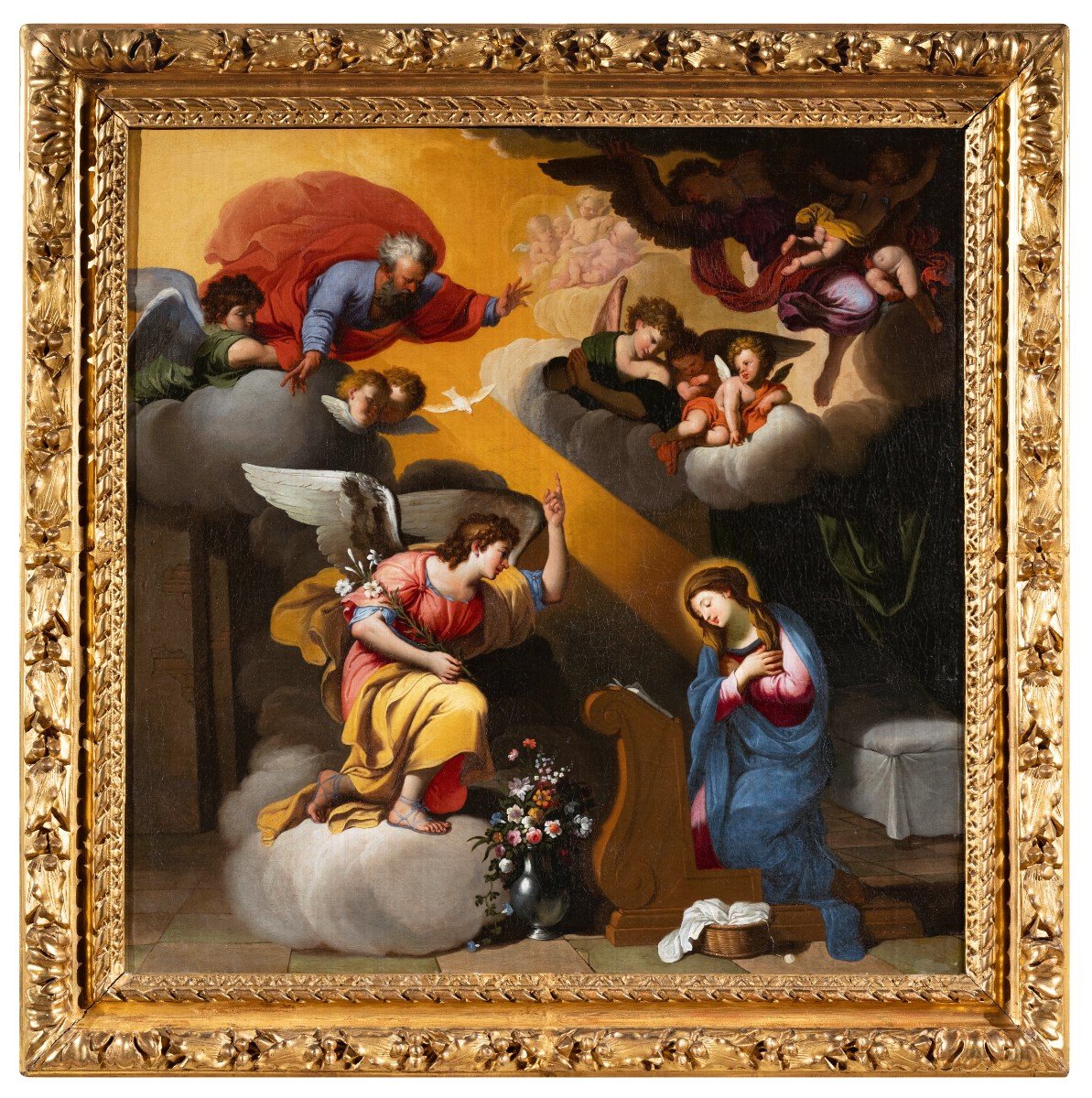
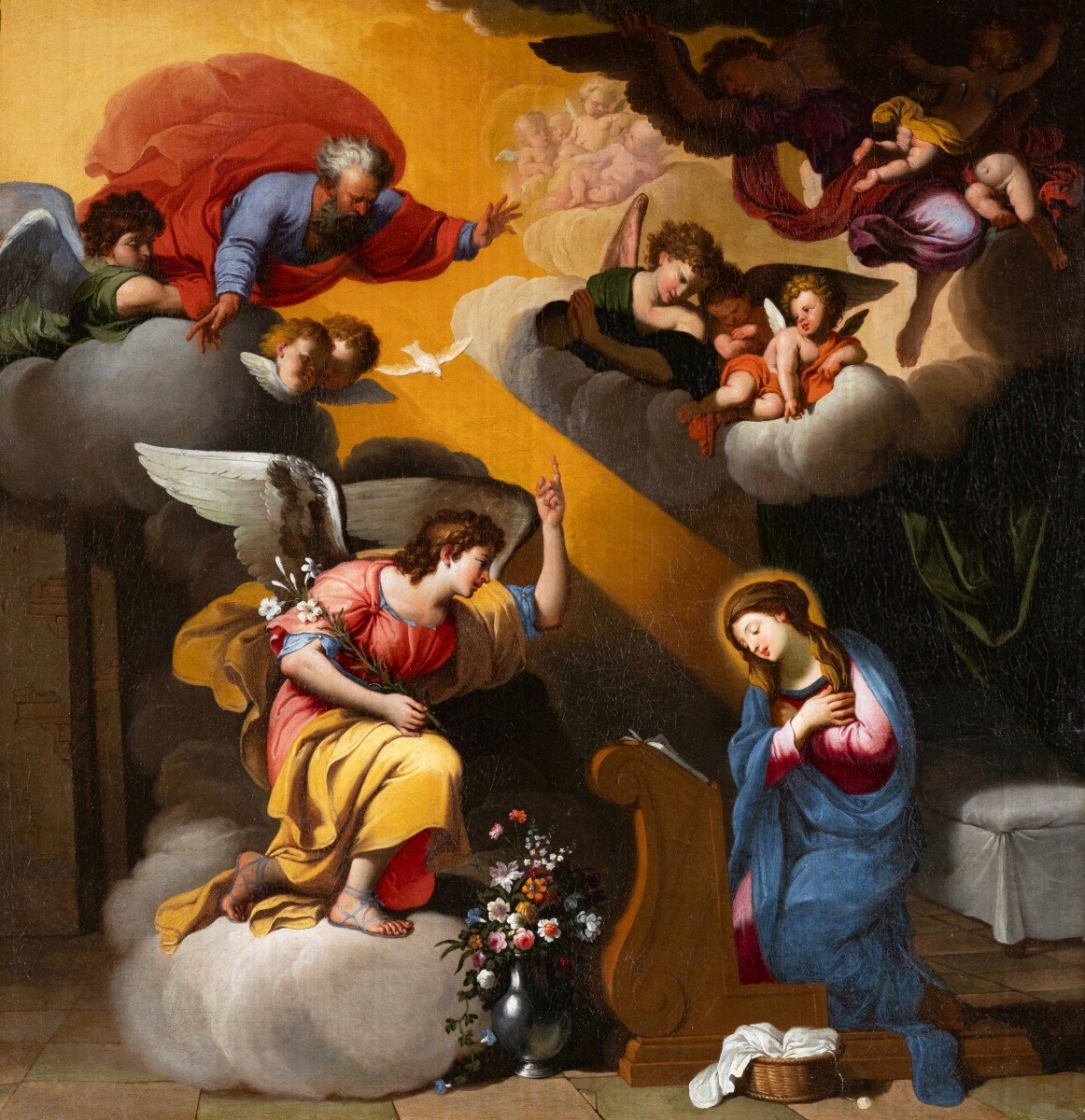
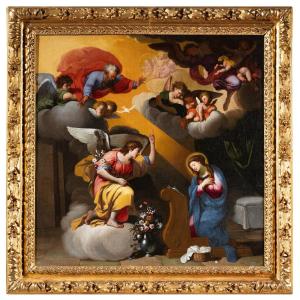
In this magnificent composition illustrating the scene of the Annunciation, the tranquility of the Virgin Mary's room is transformed into a glorious event following the arrival of the Archangel Gabriel and his honorary escort. In this mixed space, both open and closed, two worlds meet, the distinction skillfully executed by the painter who divides the painting into two unequal parts: the golden light with the yellow ochre of the sky contrasts with the half-light that reigns in this sober interior.
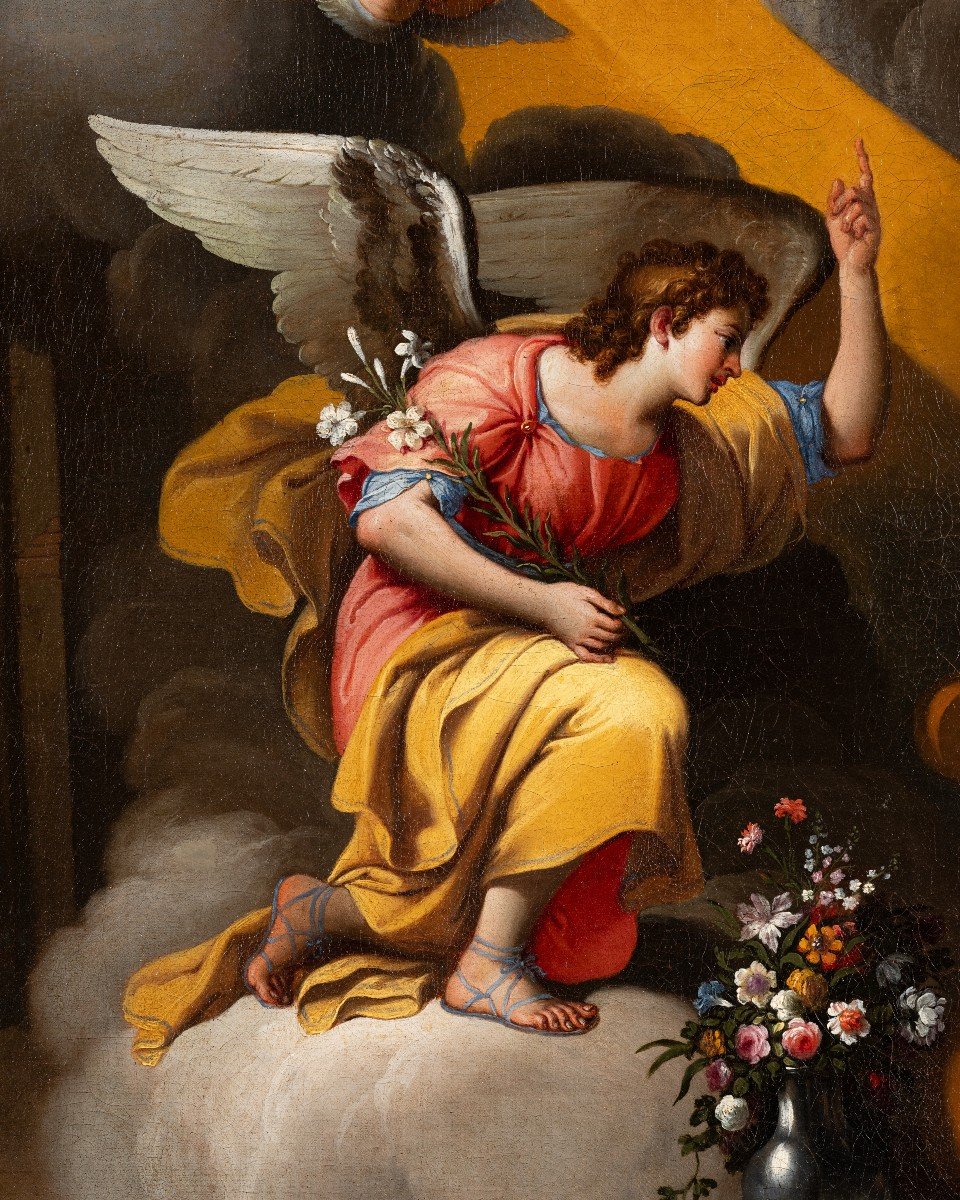
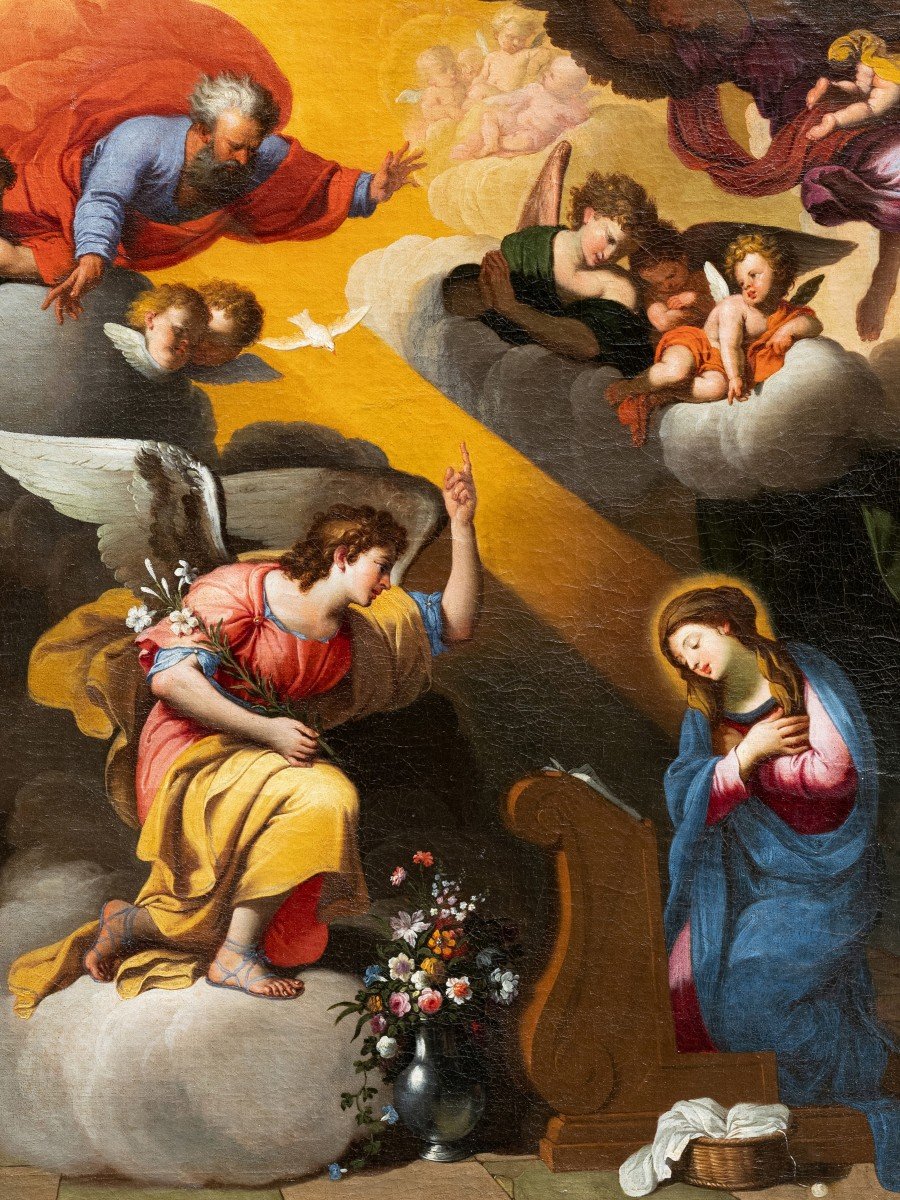
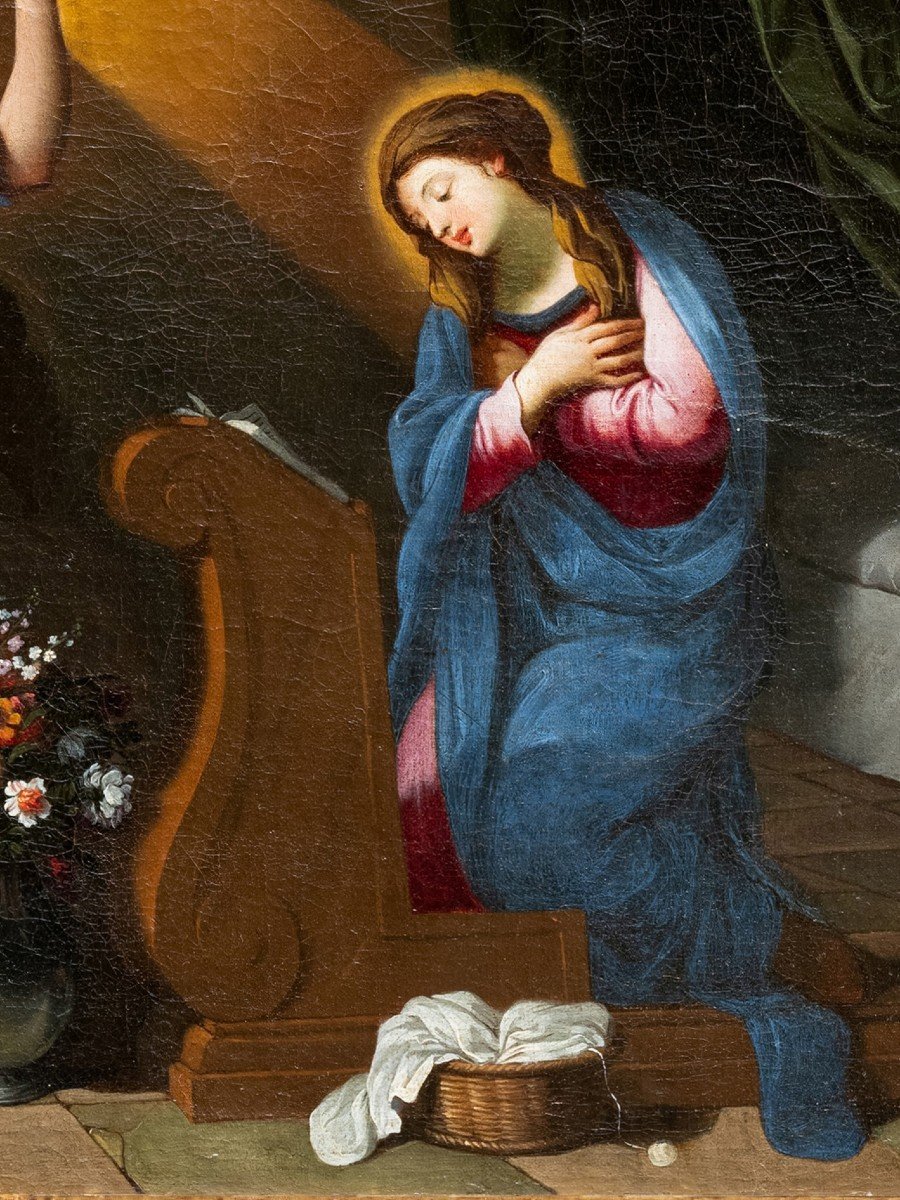
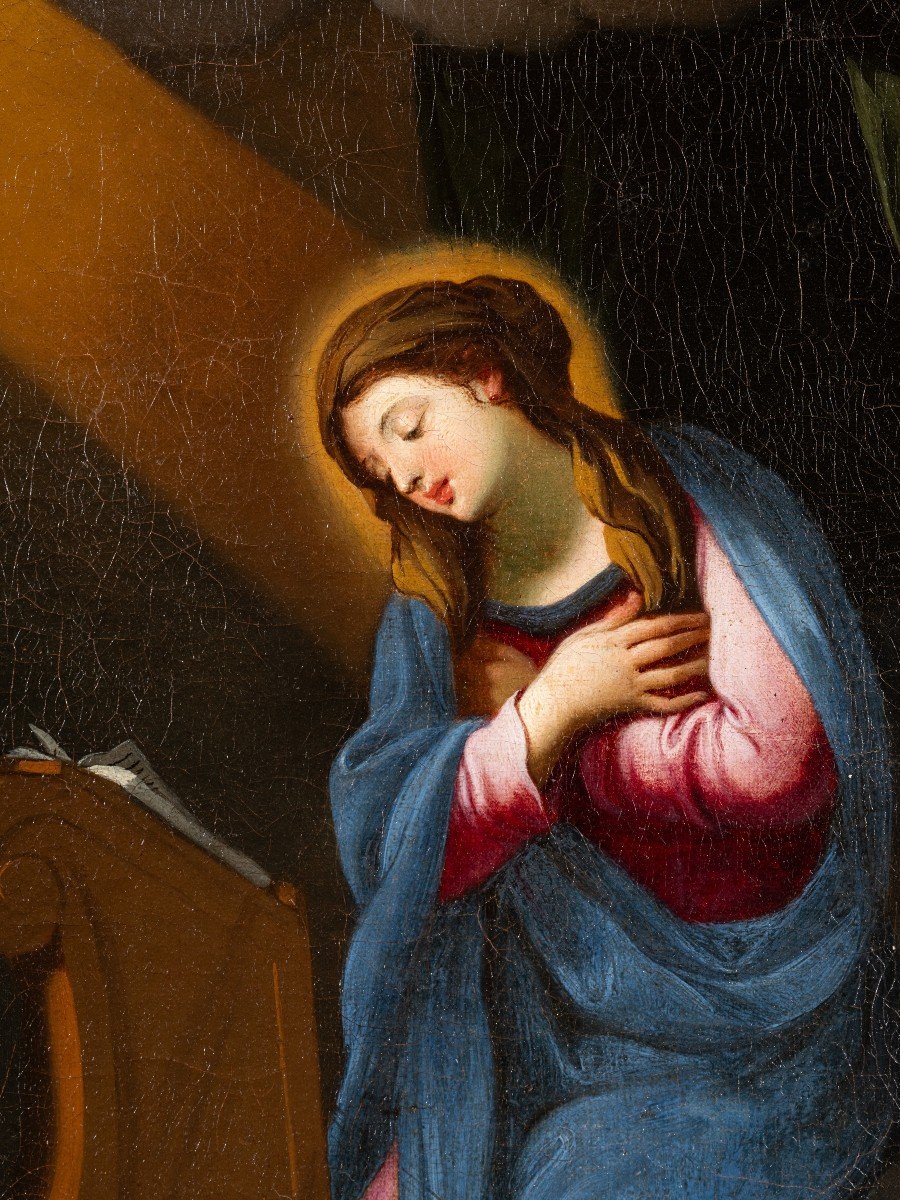
Like a large theatrical spotlight, the ray of light emanating from the chest of God the Father converges towards the Virgin, drawing a halo around her head. Arms crossed, dressed in a pink dress and draped in a beautiful blue coat, the young woman with downcast eyes bows to express her full submission to the divine will, reconciled with her destiny. The ample figure of the Archangel Gabriel with outstretched wings dominates, thanks to the raised cloud, Mary kneeling on her lectern. The celestial assembly composed of cherubs accompanied by God the Father occupies almost all the space of the painting, leaving little room for the Virgin, almost huddled in her corner. This divine domination is highlighted by the painter thanks to the numerous figures in flowing fabrics.
The scene of the Annunciation usually has two moments: the arrival of the angel and the delivery of the message and then, the acceptance of the young woman. Our painting thus illustrates the end of the meeting.
The tumult of the scene is accentuated by the artist's palette, strong and bright colors that attract the eye: saturated blues, yellows and reds. They are tempered by bottle greens and off-whites.
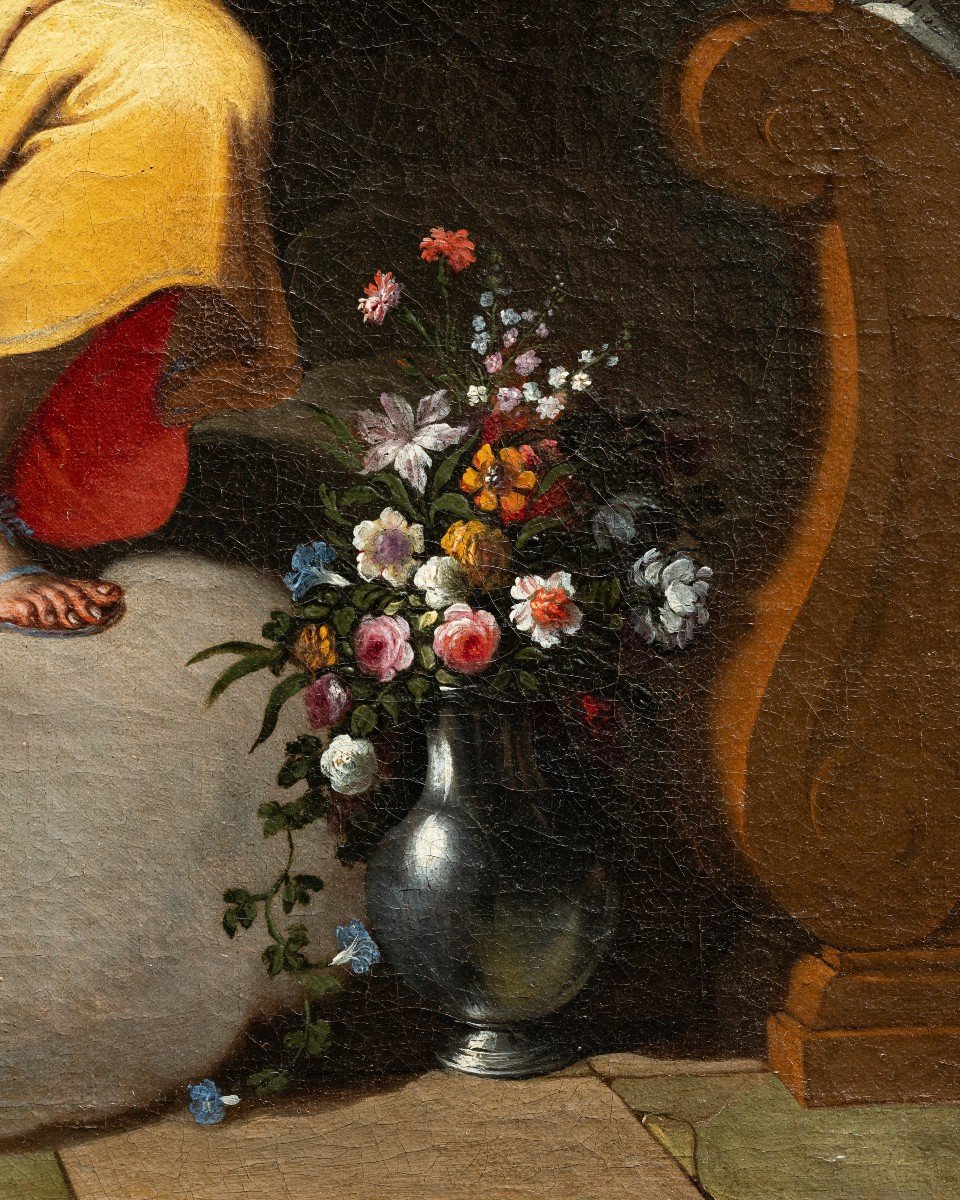
The precise line of the artist in the concern of the realism details the vase with multiple flowers, reminiscent of the French still lifes of the XVIIth century, like those by Jean Michel Picart or François Habert.
This beautiful composition is executed by a painter, whose identity remains anonymous; the excellent colorist he expresses in this work of his artistic sensitivity in the somewhat suave manner, however his plastic approach of the drapes and figures reveals an excellent know-how and a harmonious staging.
Mid-17th Century French School
Oil on canvas, h. 64 cm, l. 64 cm
17th century carved and giltwood frame decorated with oak leaves and acorns
Framed: h. 80 cm, l. 80 cm
In this magnificent composition illustrating the scene of the Annunciation, the tranquility of the Virgin Mary's room is transformed into a glorious event following the arrival of the Archangel Gabriel and his honorary escort. In this mixed space, both open and closed, two worlds meet, the distinction skillfully executed by the painter who divides the painting into two unequal parts: the golden light with the yellow ochre of the sky contrasts with the half-light that reigns in this sober interior.
Like a large theatrical spotlight, the ray of light emanating from the chest of God the Father converges towards the Virgin, drawing a halo around her head. Arms crossed, dressed in a pink dress and draped in a beautiful blue coat, the young woman with downcast eyes bows to express her full submission to the divine will, reconciled with her destiny. The ample figure of the Archangel Gabriel with outstretched wings dominates, thanks to the raised cloud, Mary kneeling on her lectern. The celestial assembly composed of cherubs accompanied by God the Father occupies almost all the space of the painting, leaving little room for the Virgin, almost huddled in her corner. This divine domination is highlighted by the painter thanks to the numerous figures in flowing fabrics.
The scene of the Annunciation usually has two moments: the arrival of the angel and the delivery of the message and then, the acceptance of the young woman. Our painting thus illustrates the end of the meeting.
The tumult of the scene is accentuated by the artist's palette, strong and bright colors that attract the eye: saturated blues, yellows and reds. They are tempered by bottle greens and off-whites.
The precise line of the artist in the concern of the realism details the vase with multiple flowers, reminiscent of the French still lifes of the XVIIth century, like those by Jean Michel Picart or François Habert.
This beautiful composition is executed by a painter, whose identity remains anonymous; the excellent colorist he expresses in this work of his artistic sensitivity in the somewhat suave manner, however his plastic approach of the drapes and figures reveals an excellent know-how and a harmonious staging.
Explore similar pieces and discover your ideal find:
religious paintings