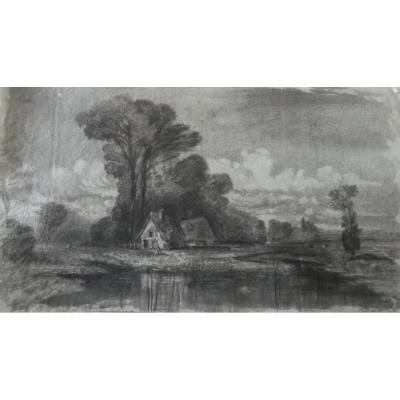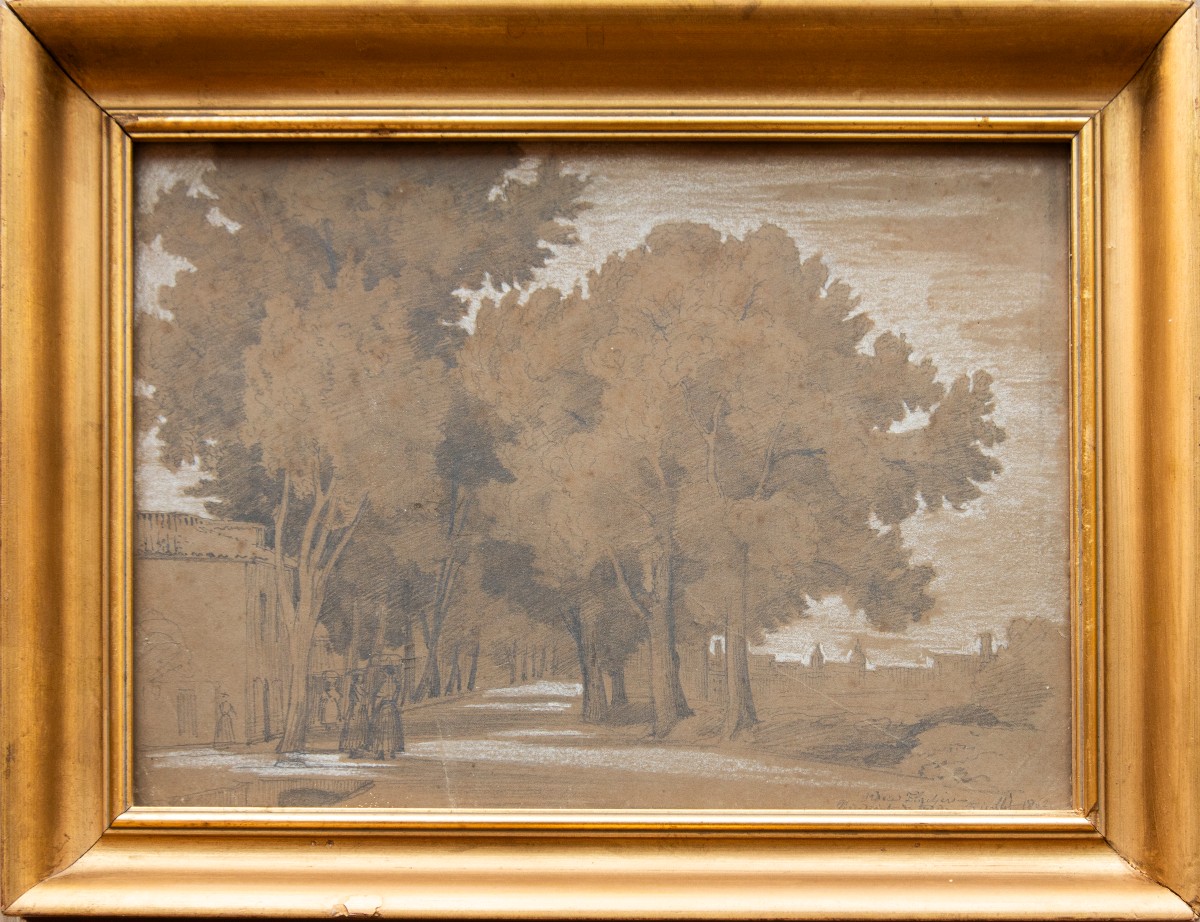
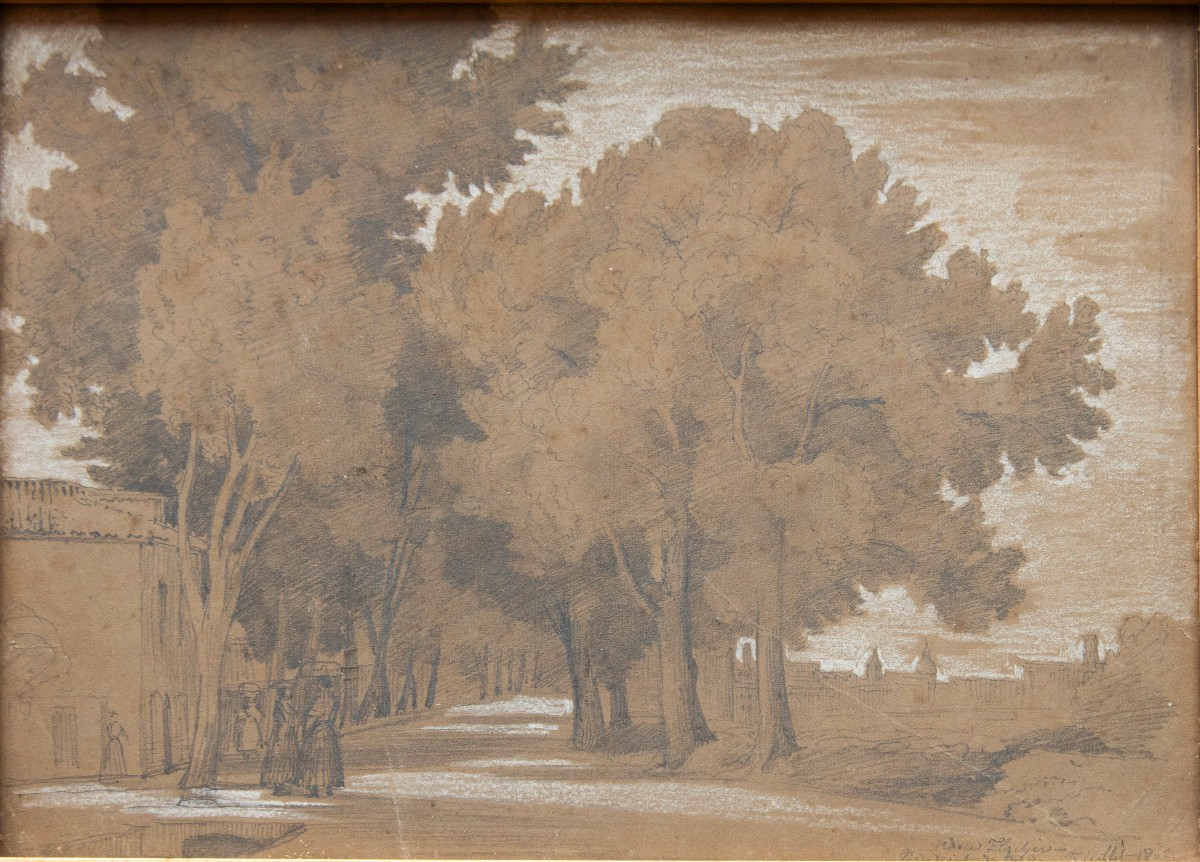
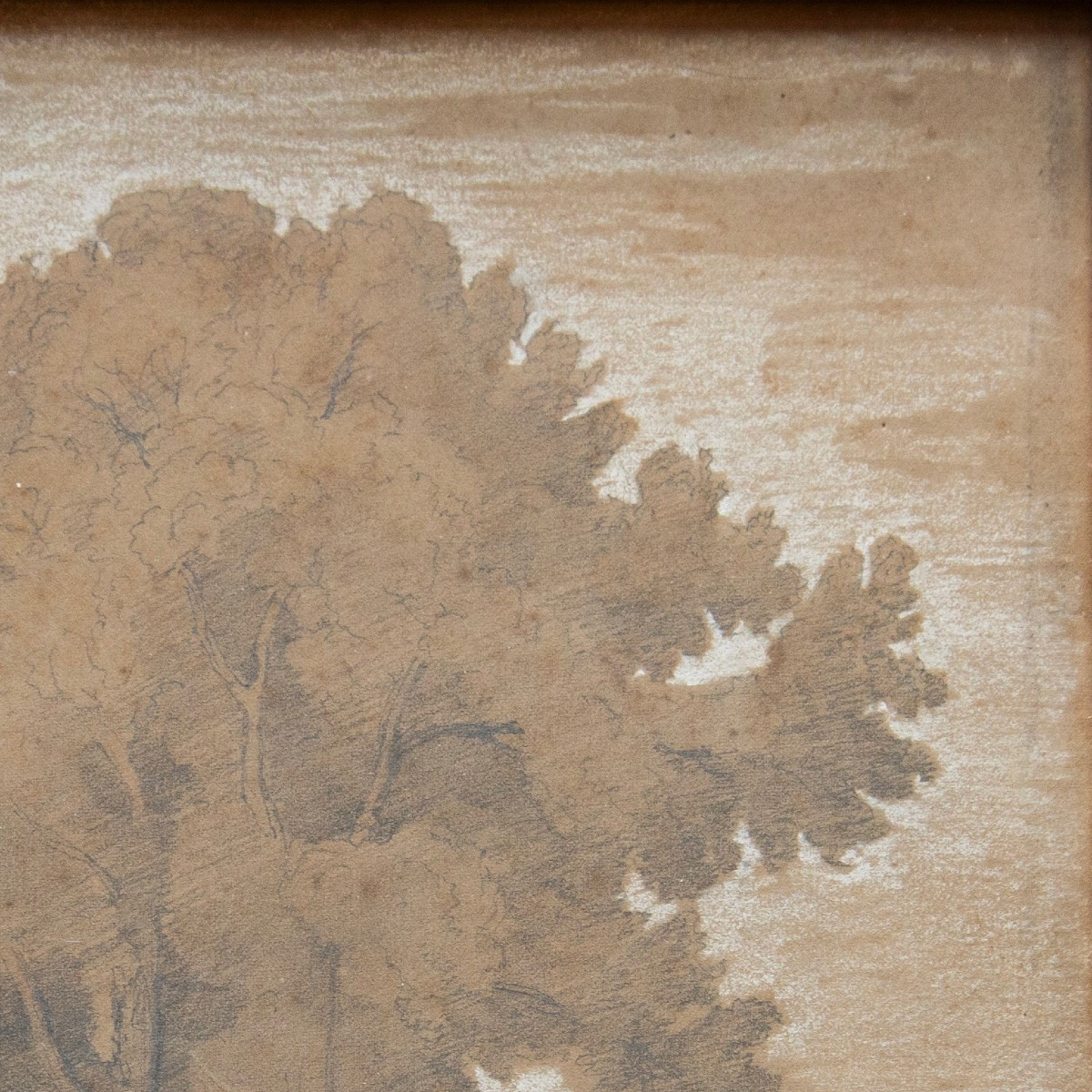
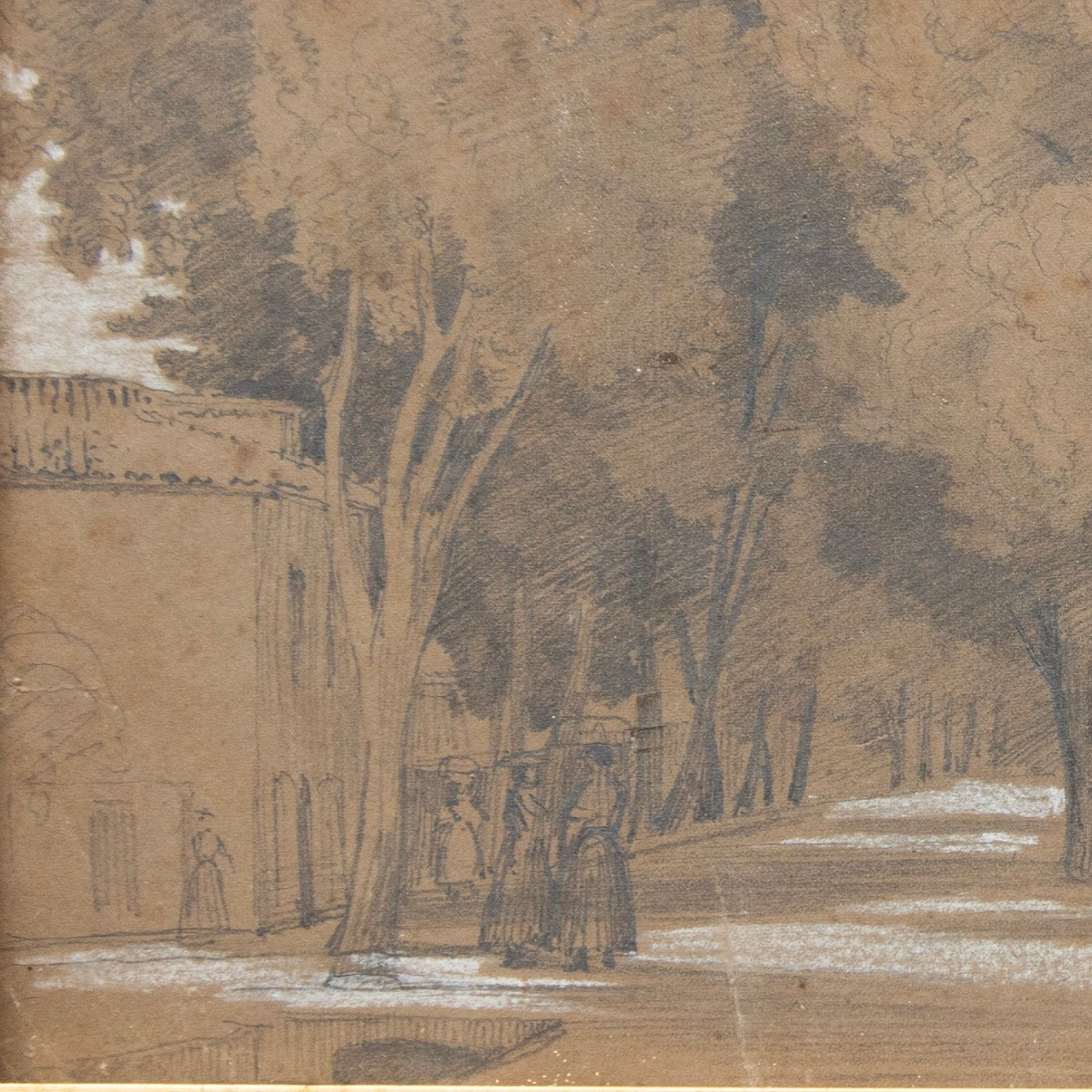
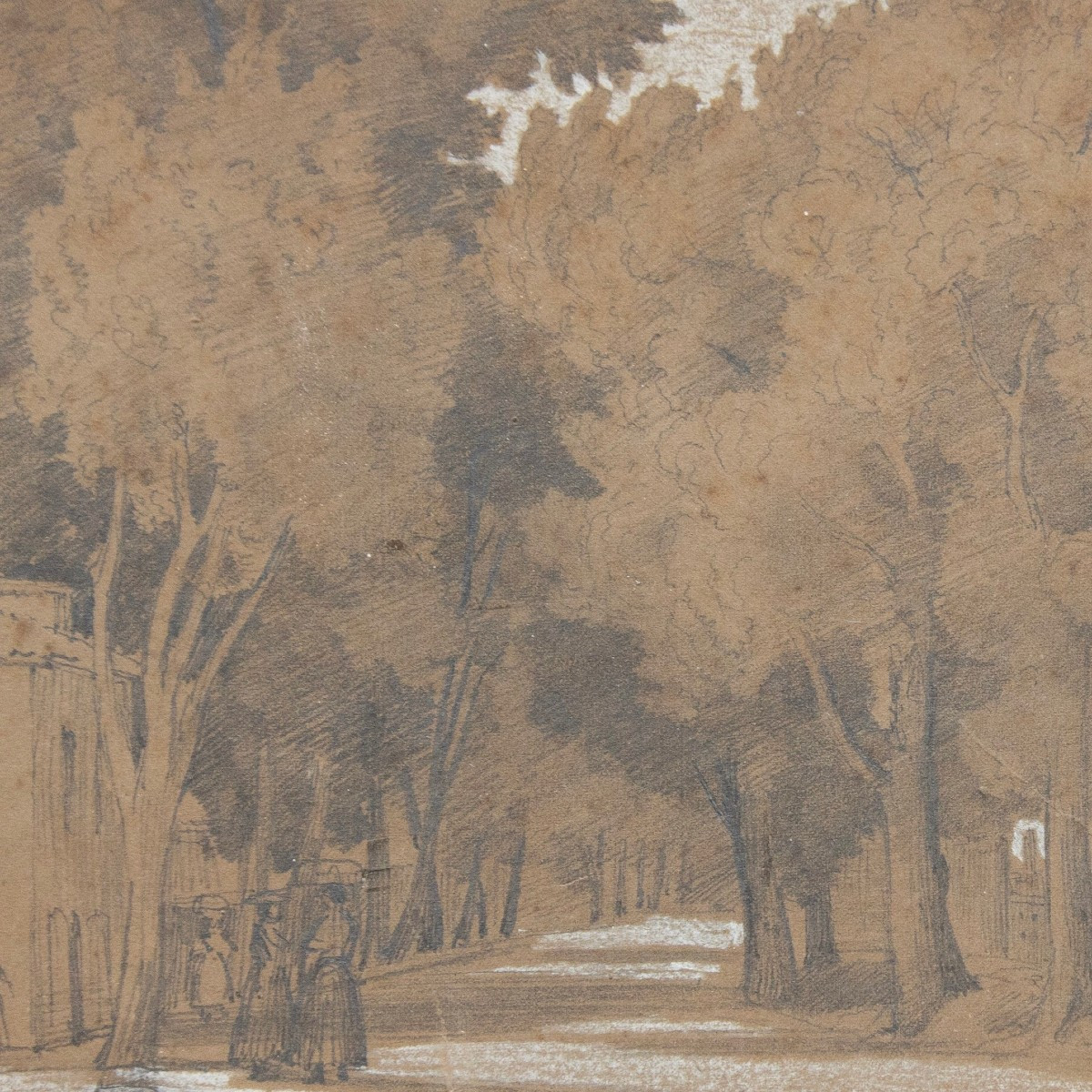


Isidore Flacheron (1806 – 1873), Landscape (view Of Lyon?), July 1862
Artist: Isidore Flacheron (lyon, 1806 - Hyères, 1873)
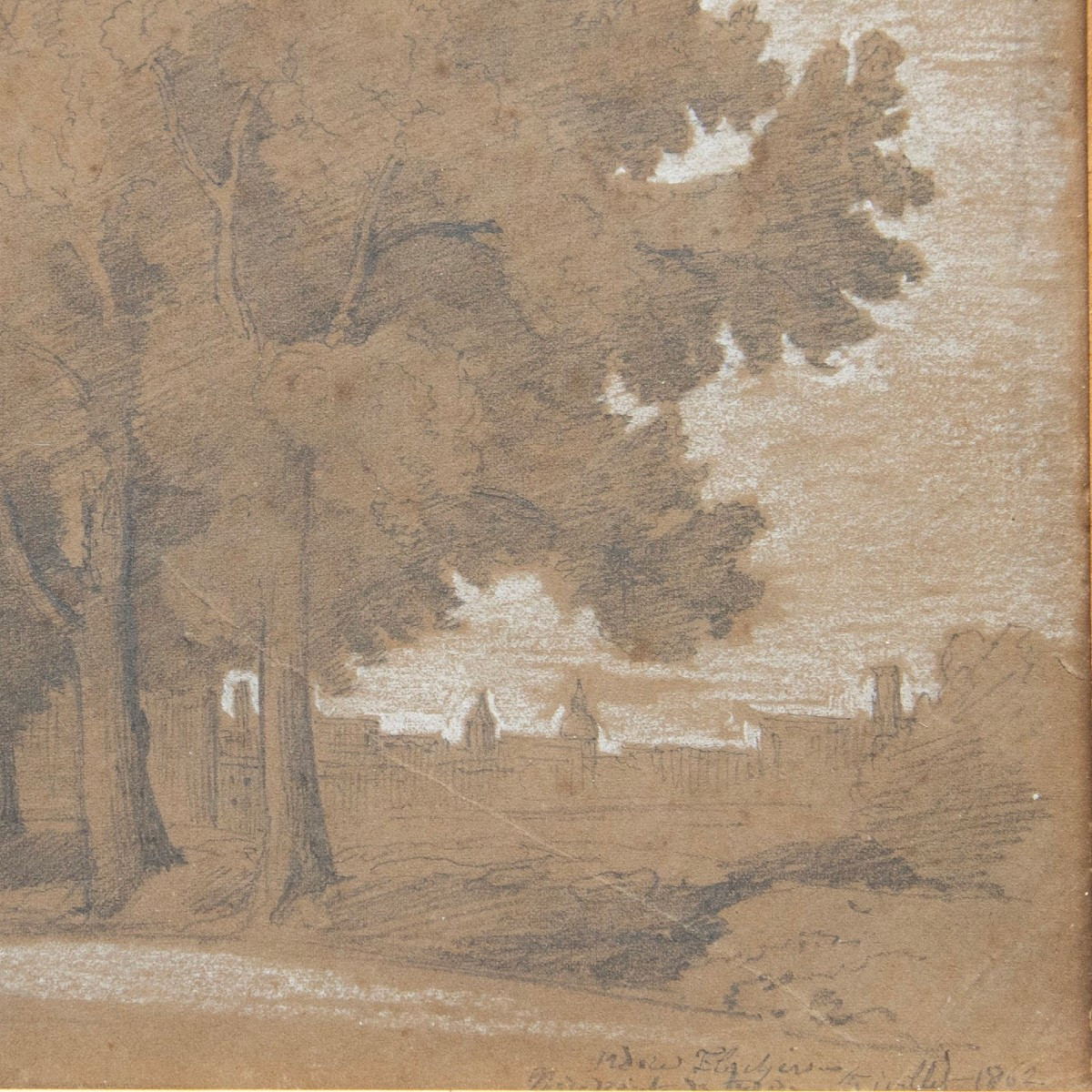
Black chalk and white heightening on tinted paper. Signed “Isidore Flacheron” and dated “July 1862” lower right. A faint inscription below the signature. 23 × 31.5 cm.
Son of the Lyon architect Louis-Cécile Flacheron, Isidore Flacheron trained at the École des Beaux-Arts in Lyon under Pierre Révoil, before joining Ingres’ studio in Paris. He later spent long periods in Rome, where he devoted himself to the motifs of the Roman countryside and its ancient ruins. Exhibiting in Paris from 1833 onward, he received a third-class medal in 1841 for Cain after the Murder of Abel. From 1861 onward, he turned his attention to Provence and the Rhône valley, while continuing to practice drawing and etching with great constancy.
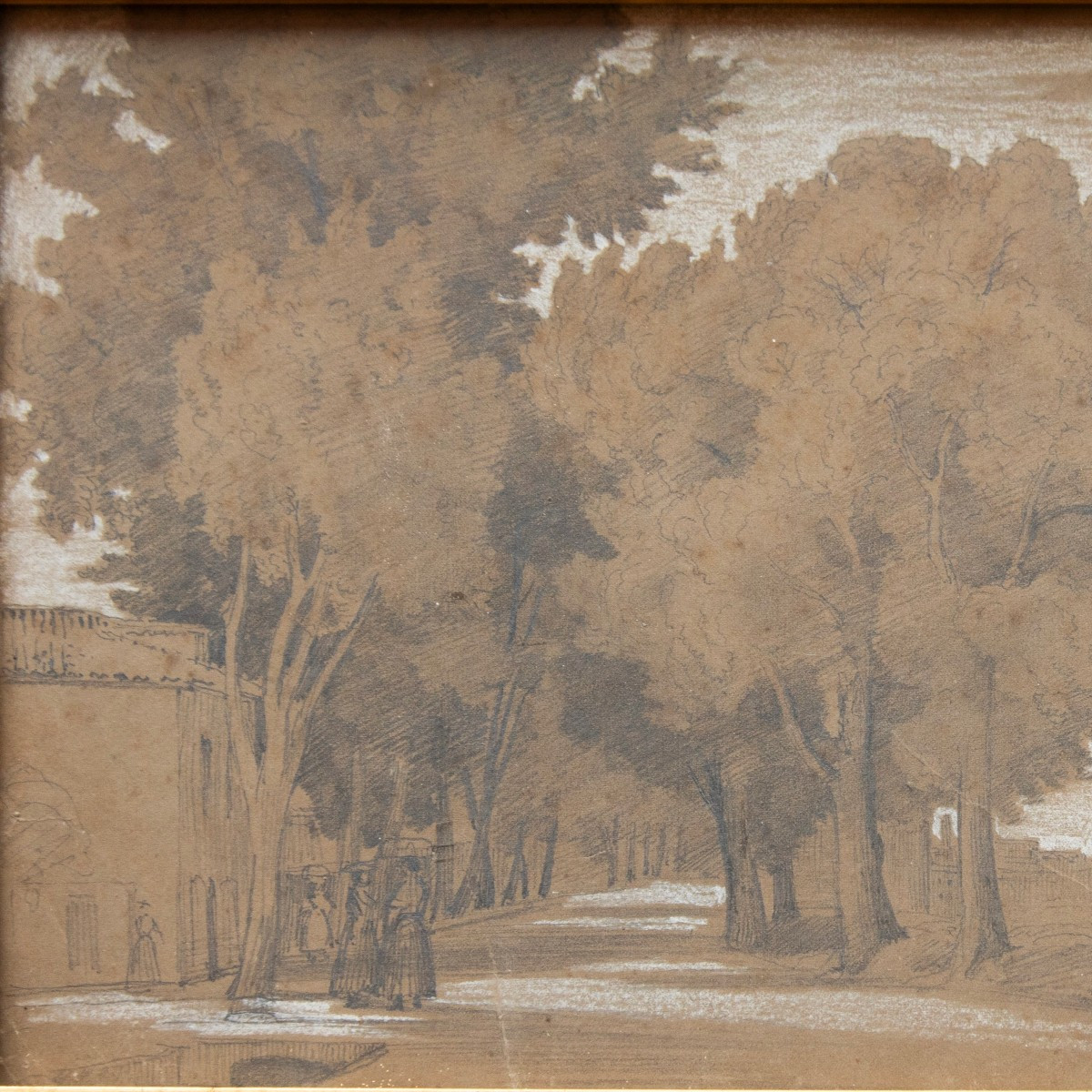
This landscape, dated 1862, reflects the artist’s full maturity. Flacheron masterfully exploits the possibilities of tinted paper: leafy masses are modeled in chalk, white highlights reveal shafts of light, and the composition unfolds in a calm and carefully balanced perspective. On the horizon, the long façade with regular bays surmounted by a domed lantern recalls the Hôtel-Dieu, while the square tower to the right may correspond to the former bell tower of the Charité Hospital.
In the foreground, several female figures wear stiff, winged white caps—types close to the Bresse or Lyonnais headdresses still worn in the 1840s–1860s—suggesting a Lyon setting.
The whole scene conveys a serene and contemplative atmosphere, where the neoclassical discipline inherited from Ingres is softened by a discreet lyricism characteristic of late Romantic sensibility.
Son of the Lyon architect Louis-Cécile Flacheron, Isidore Flacheron trained at the École des Beaux-Arts in Lyon under Pierre Révoil, before joining Ingres’ studio in Paris. He later spent long periods in Rome, where he devoted himself to the motifs of the Roman countryside and its ancient ruins. Exhibiting in Paris from 1833 onward, he received a third-class medal in 1841 for Cain after the Murder of Abel. From 1861 onward, he turned his attention to Provence and the Rhône valley, while continuing to practice drawing and etching with great constancy.
This landscape, dated 1862, reflects the artist’s full maturity. Flacheron masterfully exploits the possibilities of tinted paper: leafy masses are modeled in chalk, white highlights reveal shafts of light, and the composition unfolds in a calm and carefully balanced perspective. On the horizon, the long façade with regular bays surmounted by a domed lantern recalls the Hôtel-Dieu, while the square tower to the right may correspond to the former bell tower of the Charité Hospital.
In the foreground, several female figures wear stiff, winged white caps—types close to the Bresse or Lyonnais headdresses still worn in the 1840s–1860s—suggesting a Lyon setting.
The whole scene conveys a serene and contemplative atmosphere, where the neoclassical discipline inherited from Ingres is softened by a discreet lyricism characteristic of late Romantic sensibility.
500 €
Period: 19th century
Style: Napoleon 3rd
Condition: Perfect condition
Material: Paper
Width: 23 cm
Height: 31,50 cm
Reference (ID): 1316146
Availability: In stock
Print