



Tiles From Herkenrode Abbey, Antwerp, Guido Andries, 16th Century
Artist: Guido Andries
Southern / Habsburg Netherlands or Low Countries (Belgium)
Antwerp
Guido Andries
Workshop Den Salm
Circa 1530 – 1540
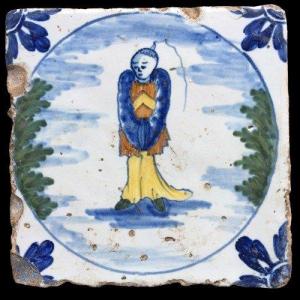
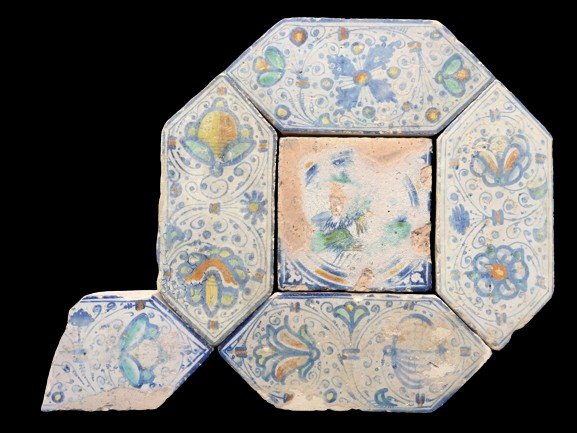
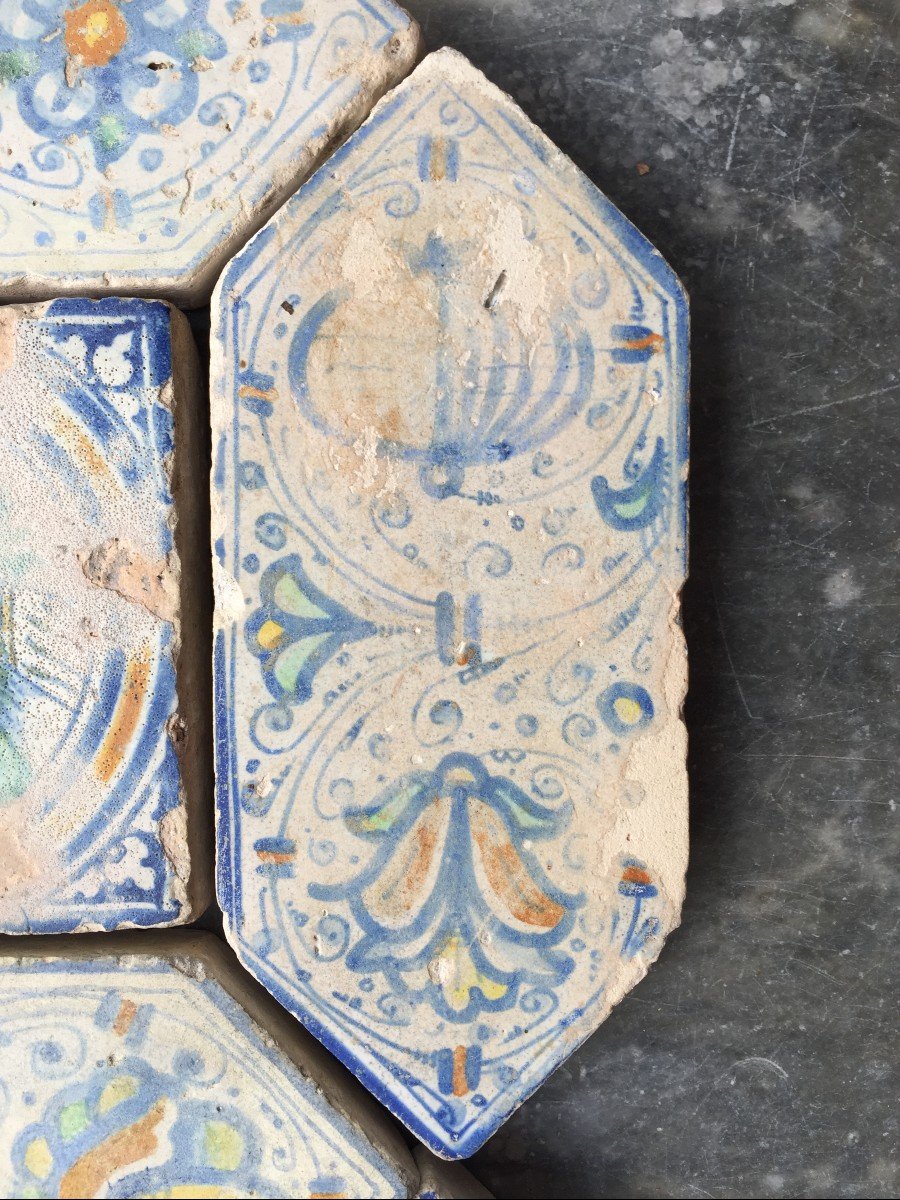
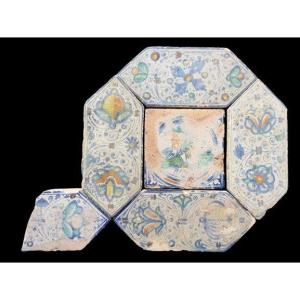
A very rare, early, and thick set of polychrome majolica paving tiles of the type of the Herkenrode Abby.
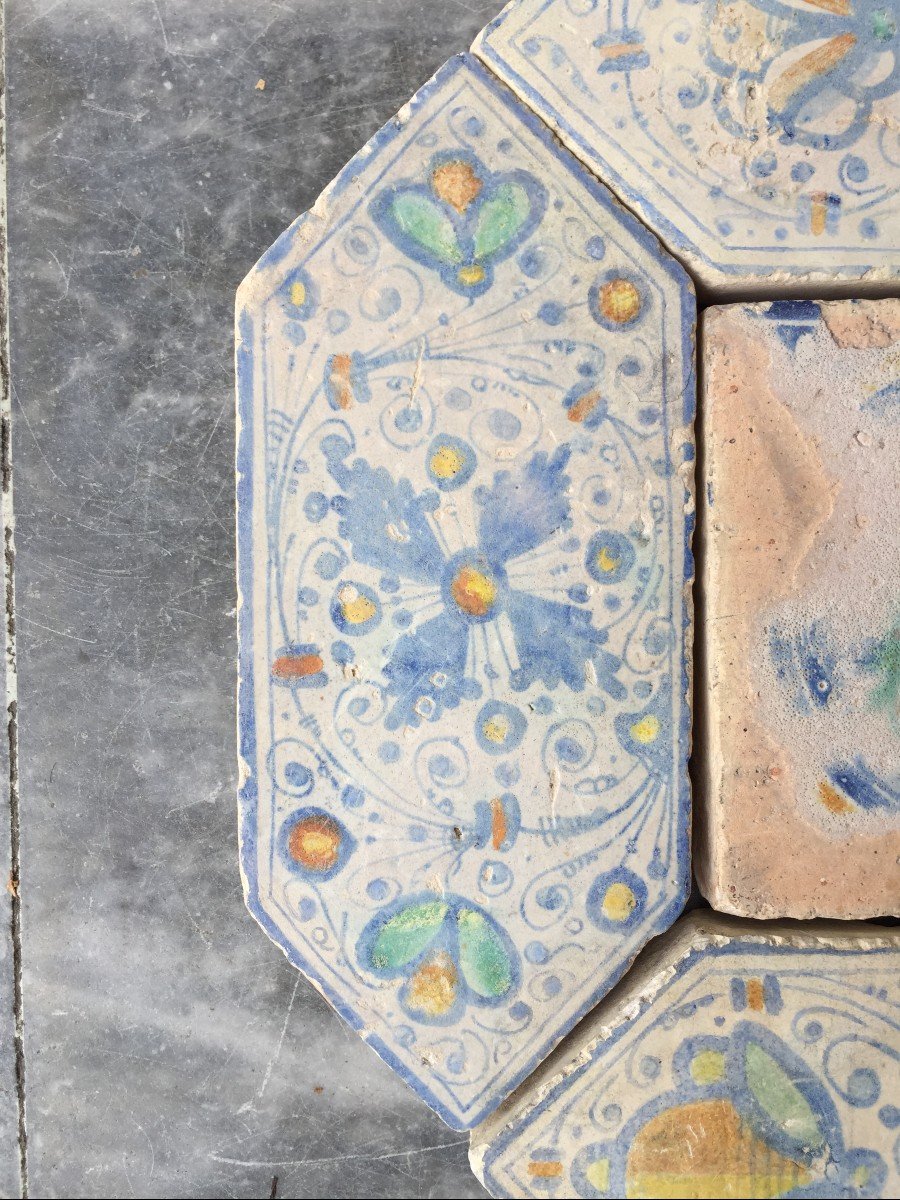
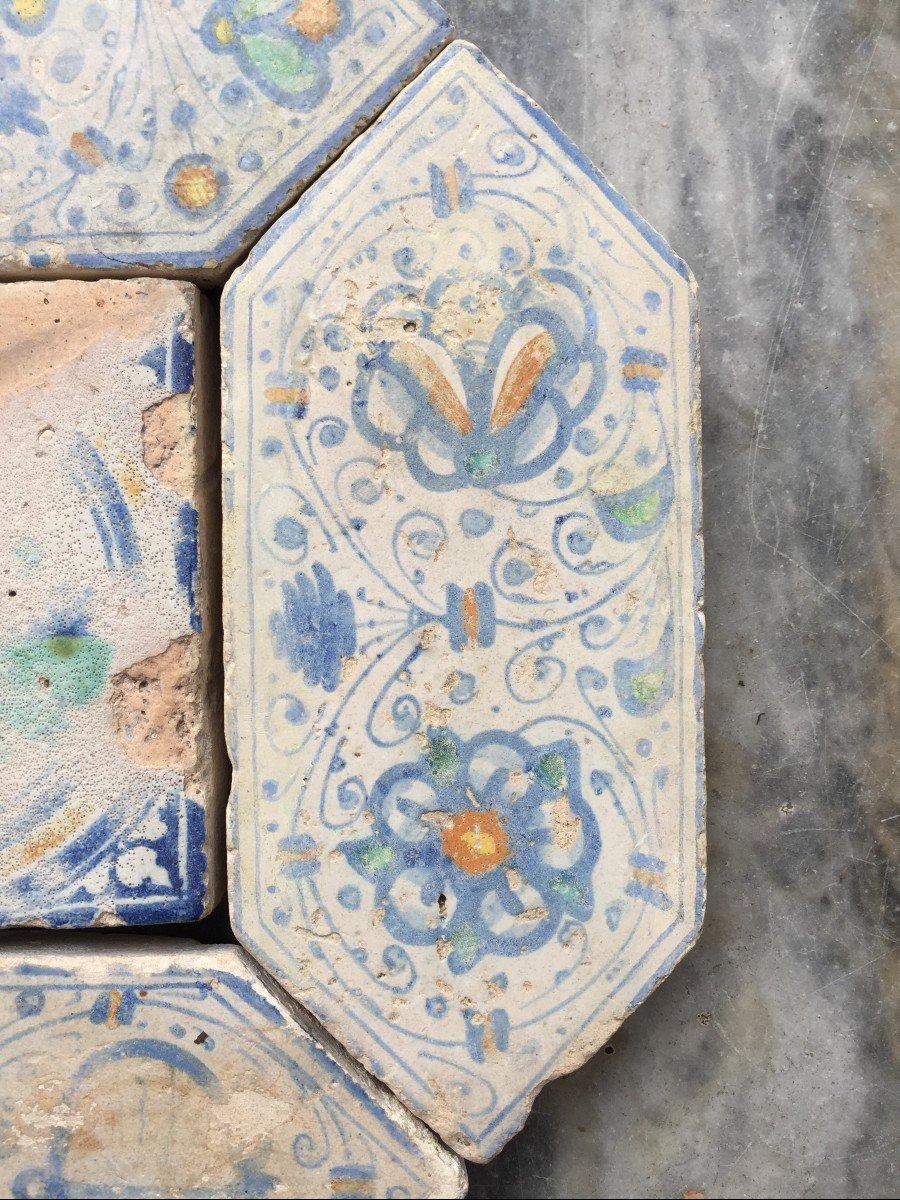
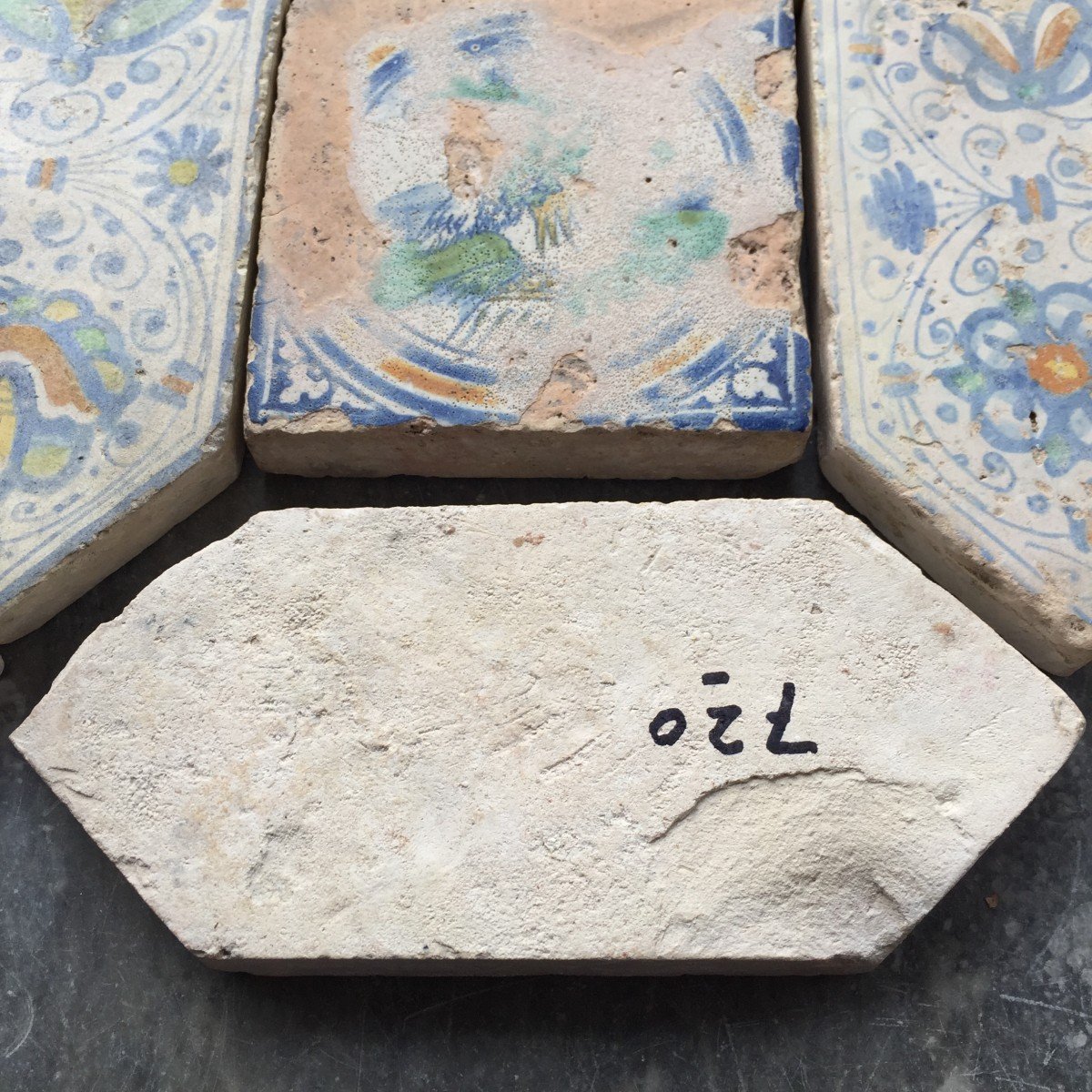
The central tile has a decoration of a portrait of a bearded man. The surrounding tiles have an Italian style decoration of flowers and fruits.
These tiles were specifically designed as paving tiles, after the Italian example, and are a highlight of the Northern Renaissance. These tiles are part of the very early and first production of majolica and polychrome tiles in the Netherlands. The potter and owner of the very first majolica workshop in the Netherlands, Guido di Savino, laid the foundations of a craft of producing high-quality tiles, which still exists today. Guido di Savina, who changed his name to Guido Andries, came from Castel Durante on the Italian East Coast and settled in Antwerp.
The portrait tile measures 11.2 x 11.2 x 2.1cm (4.4” x 4.4” x 0.83”)
The point tiles measure 20.1 x 8.6cm (7.9” x 3.39”) and have a thickness variating between 2 and 2.3cm (0.78” and 0.9”)
The whole set is very charming because of the lived-in effect. This also shows wonderfully how they were used and how fragile these tiles were. The fashion of using majolica tiles as paving tiles therefore also did not last long. Three of the four ‘point’ tiles have small touchups at the edges, further in a wonderful condition according to age.
Antwerp
Guido Andries
Workshop Den Salm
Circa 1530 – 1540
A very rare, early, and thick set of polychrome majolica paving tiles of the type of the Herkenrode Abby.
The central tile has a decoration of a portrait of a bearded man. The surrounding tiles have an Italian style decoration of flowers and fruits.
These tiles were specifically designed as paving tiles, after the Italian example, and are a highlight of the Northern Renaissance. These tiles are part of the very early and first production of majolica and polychrome tiles in the Netherlands. The potter and owner of the very first majolica workshop in the Netherlands, Guido di Savino, laid the foundations of a craft of producing high-quality tiles, which still exists today. Guido di Savina, who changed his name to Guido Andries, came from Castel Durante on the Italian East Coast and settled in Antwerp.
The portrait tile measures 11.2 x 11.2 x 2.1cm (4.4” x 4.4” x 0.83”)
The point tiles measure 20.1 x 8.6cm (7.9” x 3.39”) and have a thickness variating between 2 and 2.3cm (0.78” and 0.9”)
The whole set is very charming because of the lived-in effect. This also shows wonderfully how they were used and how fragile these tiles were. The fashion of using majolica tiles as paving tiles therefore also did not last long. Three of the four ‘point’ tiles have small touchups at the edges, further in a wonderful condition according to age.
9 500 €
Period: 16th century
Style: Renaissance, Louis 13th
Condition: Condition of use
Material: Ceramic
Length: 28.8cm
Width: 28.8cm
Height: 2.3cm
Reference (ID): 1266570
Availability: In stock
Print