

Micromosaic Pedestal Table With Views Of Rome, Italy, Circa 1820-1830
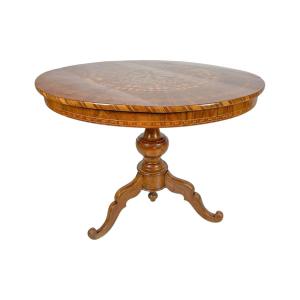
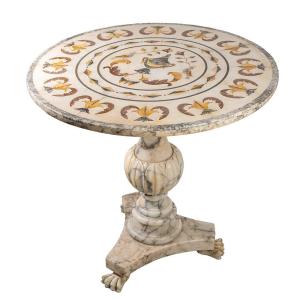
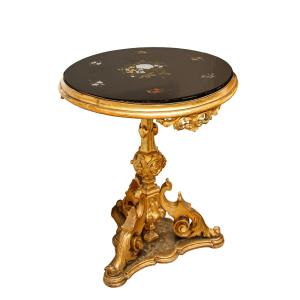
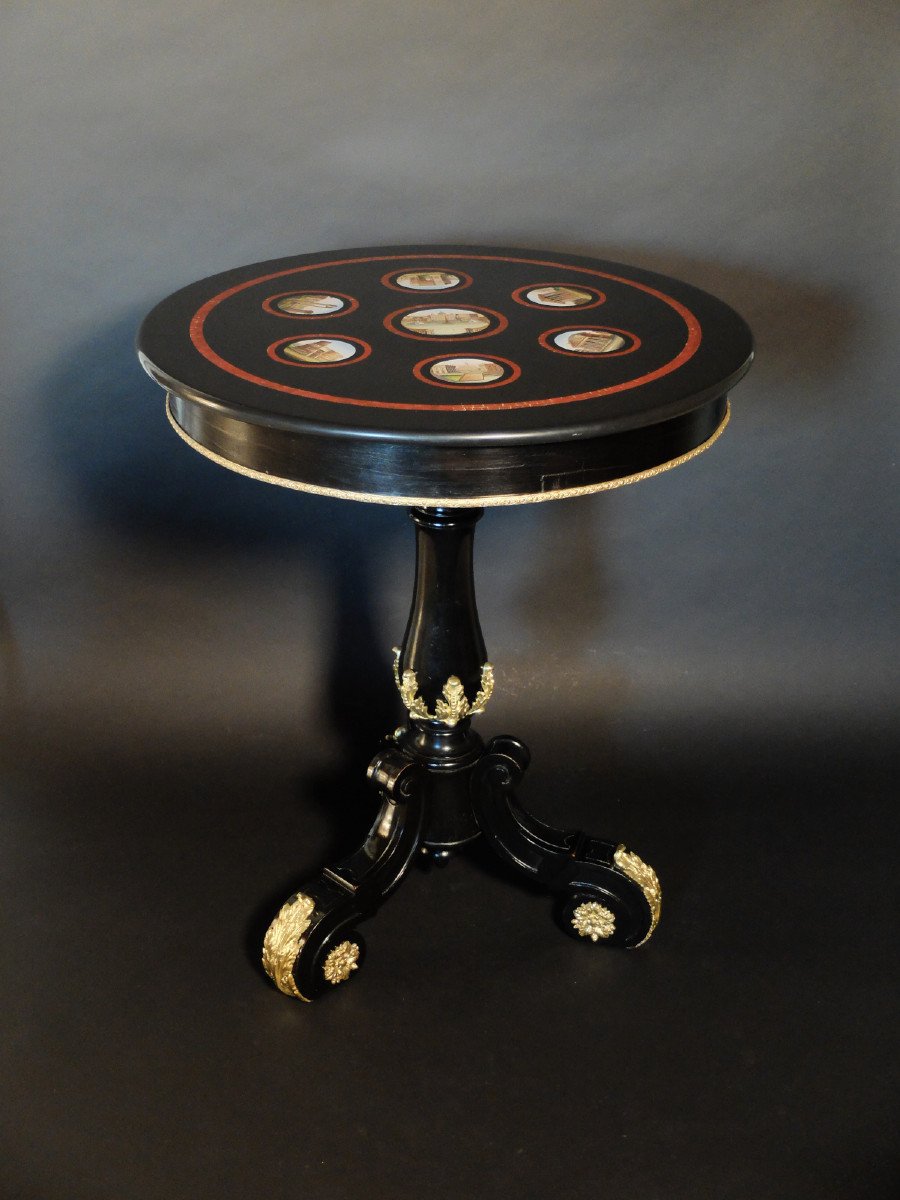
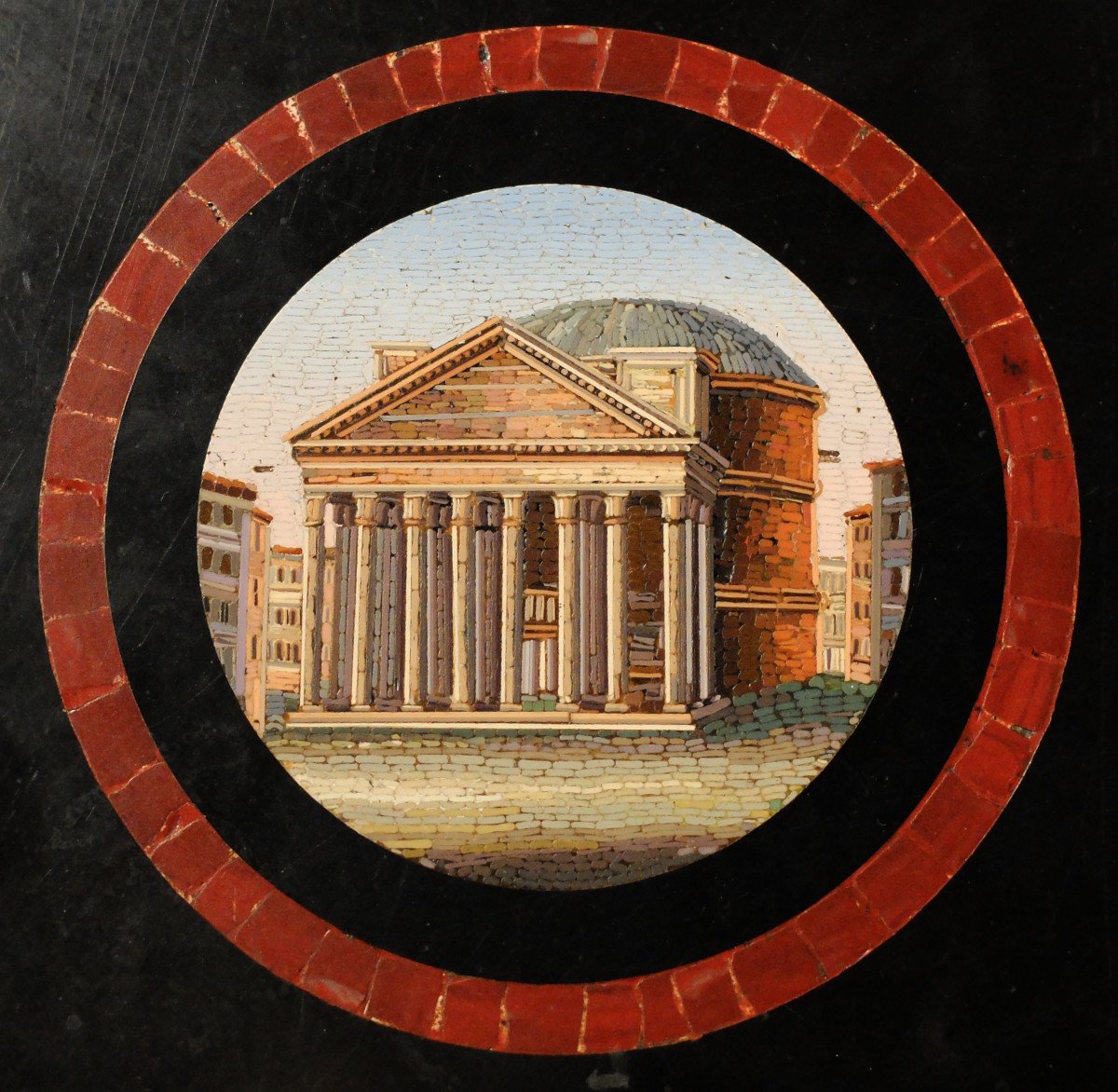
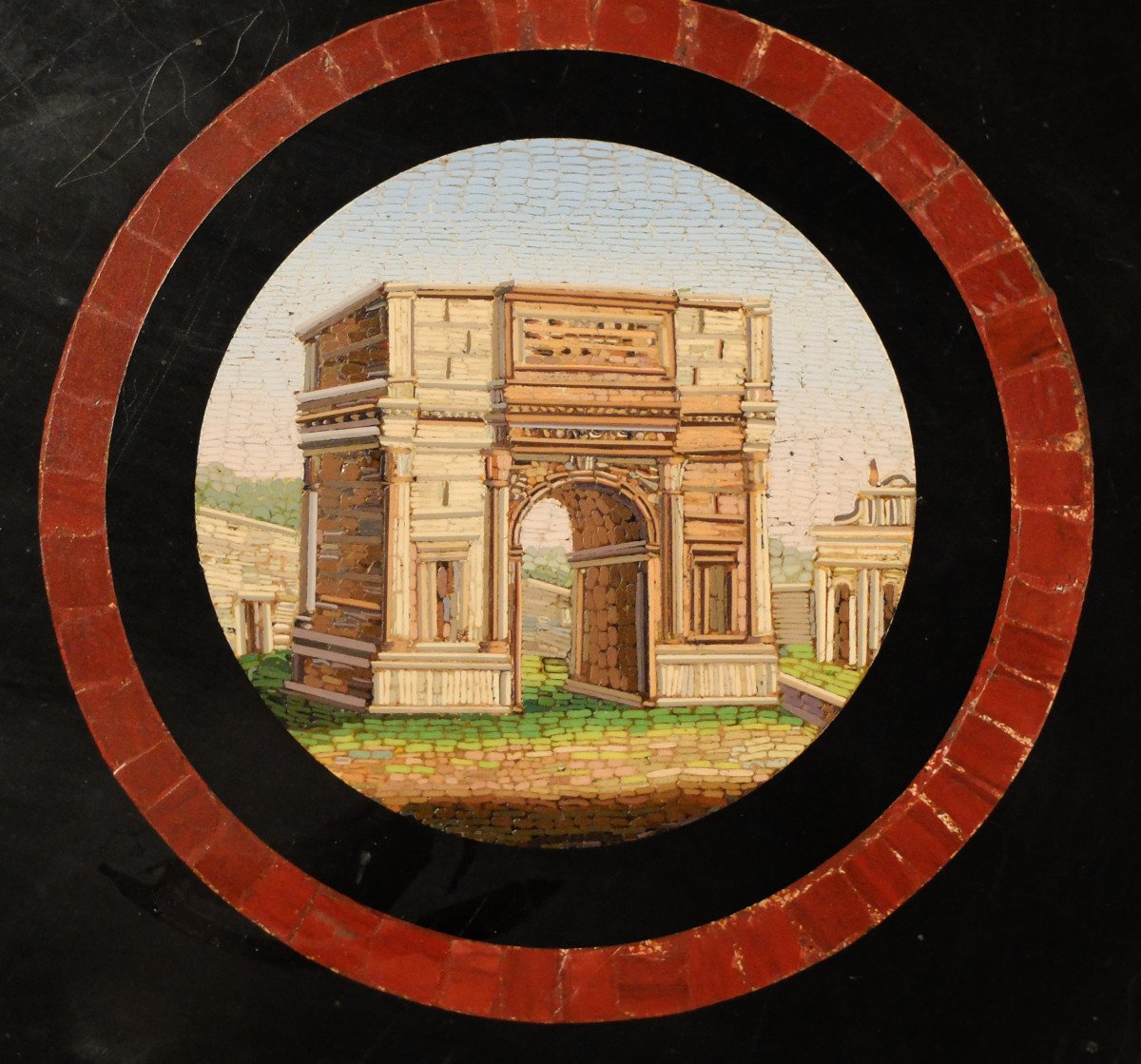
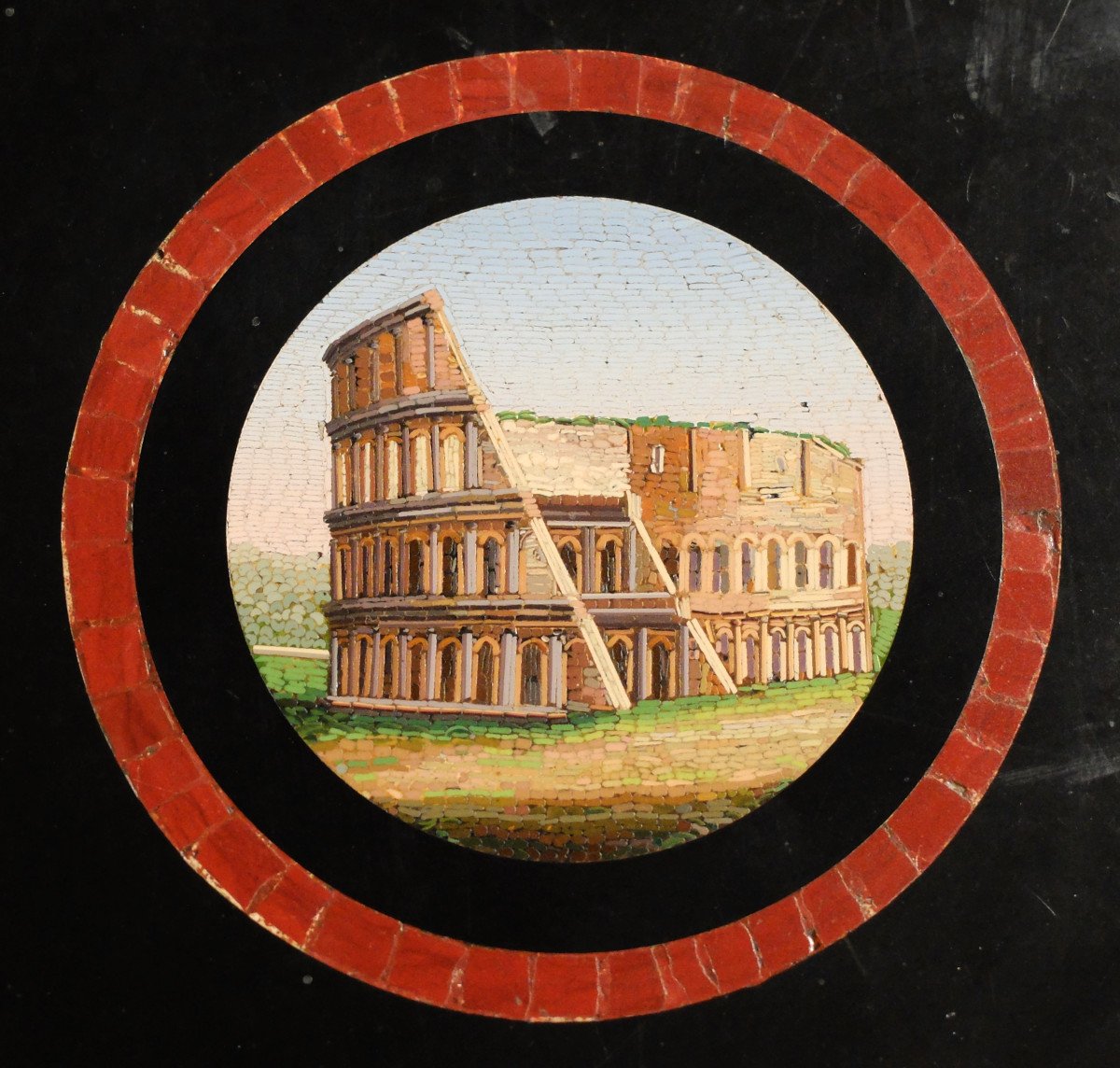
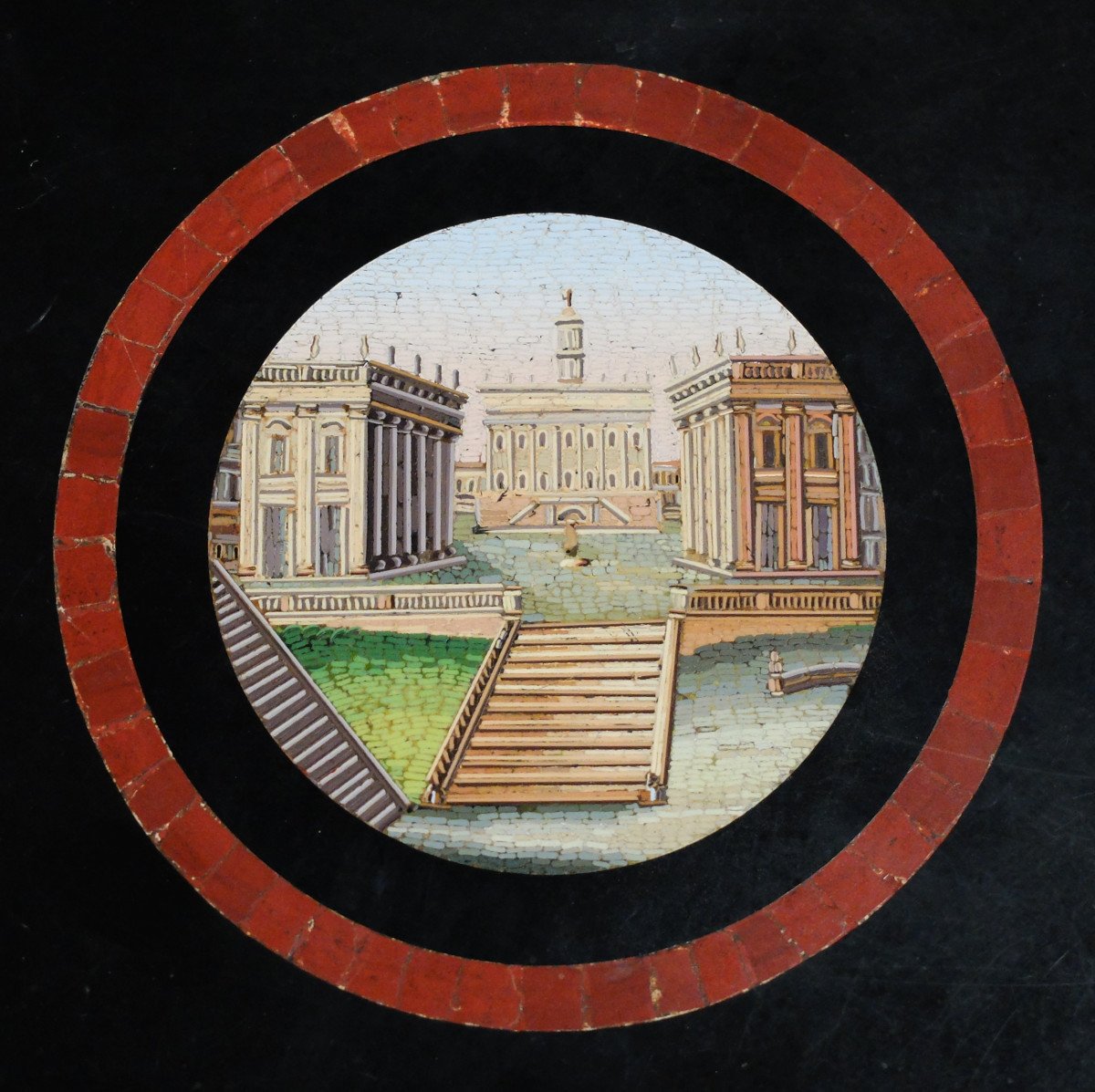
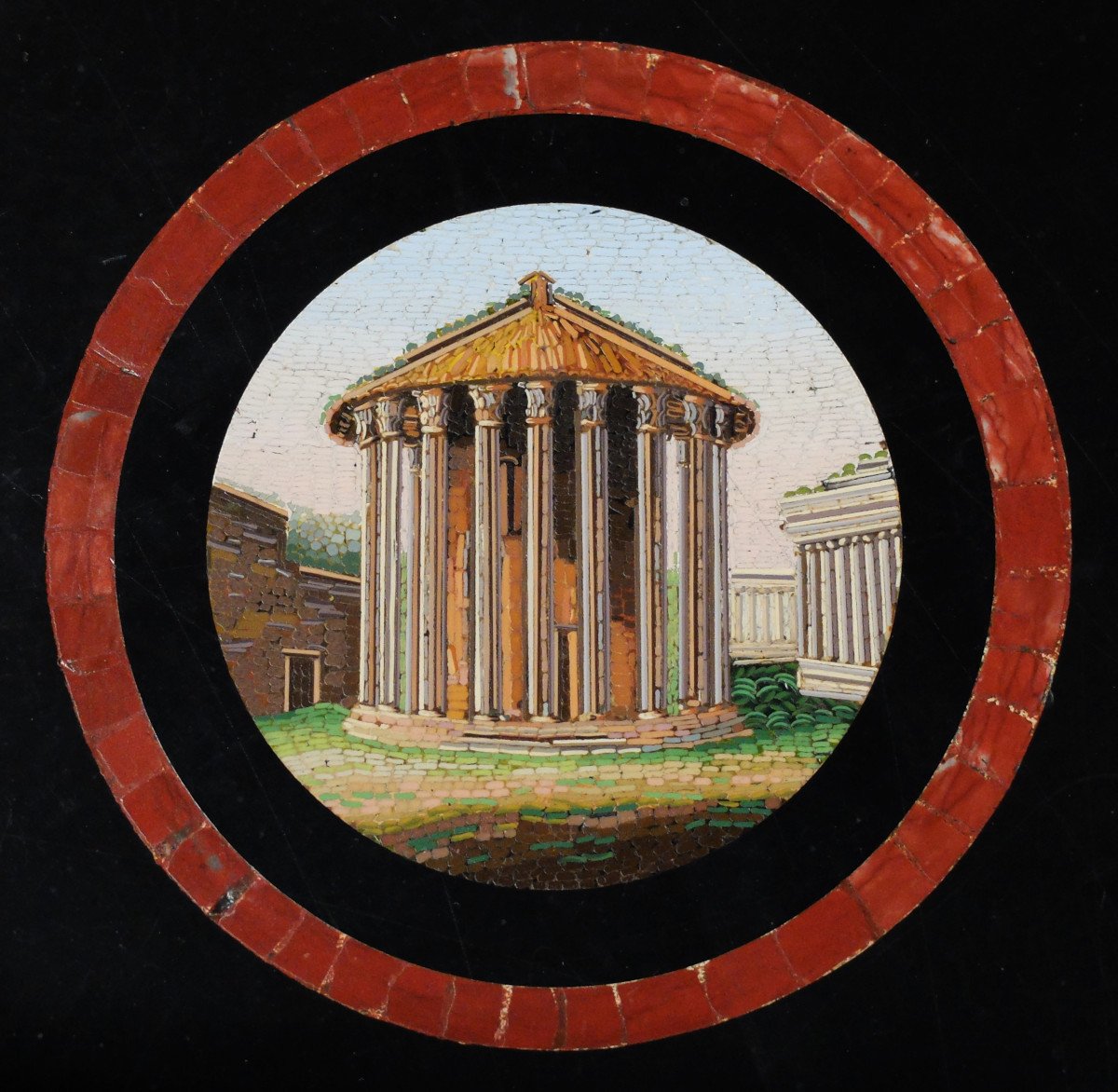
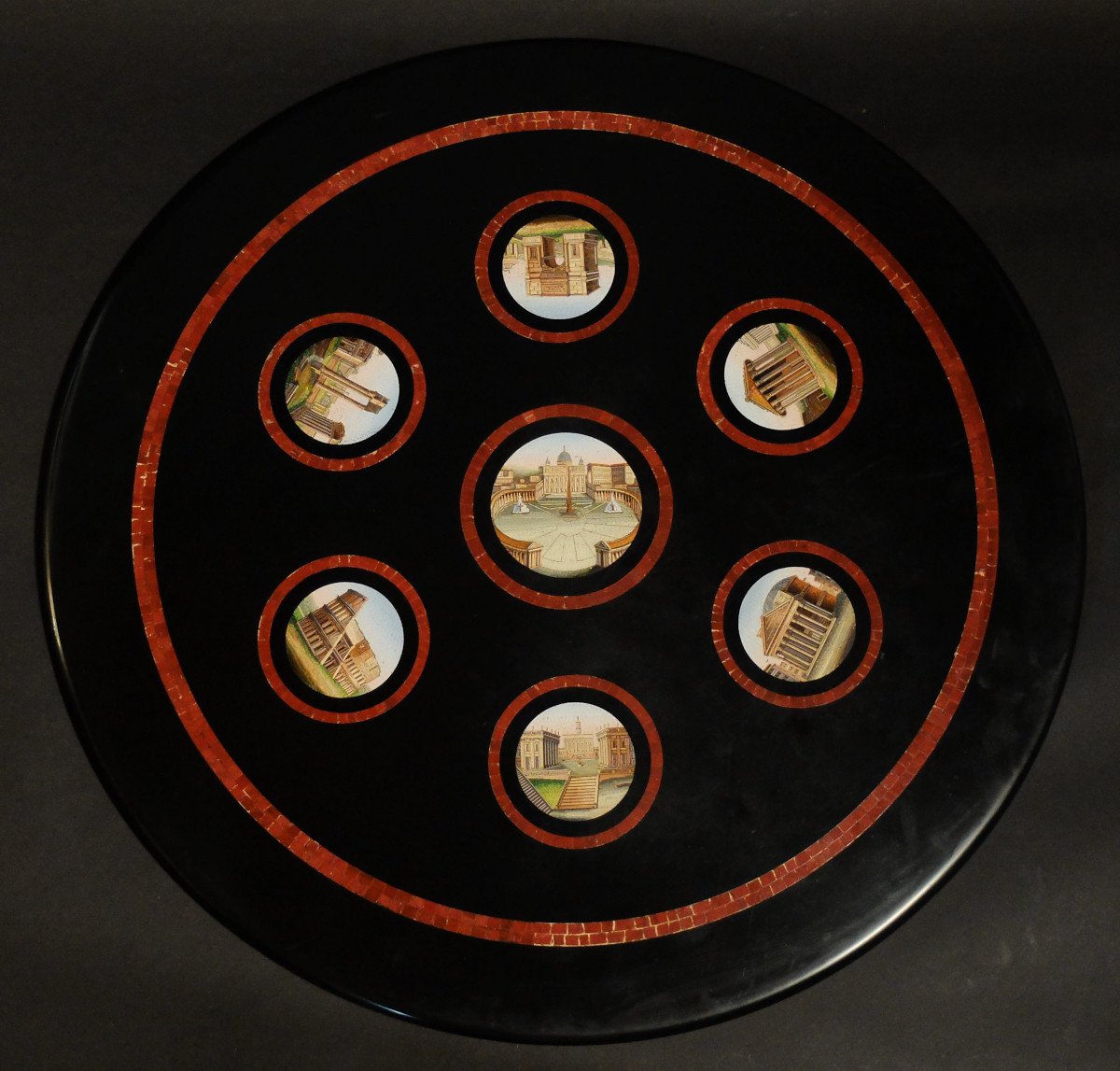
Pedestal table with tripod base in blackened wood, decorated with gilded bronzes and topped with a circular black marble top inlaid with micromosaic medallions with polychrome decoration illustrating the famous monuments of Rome.
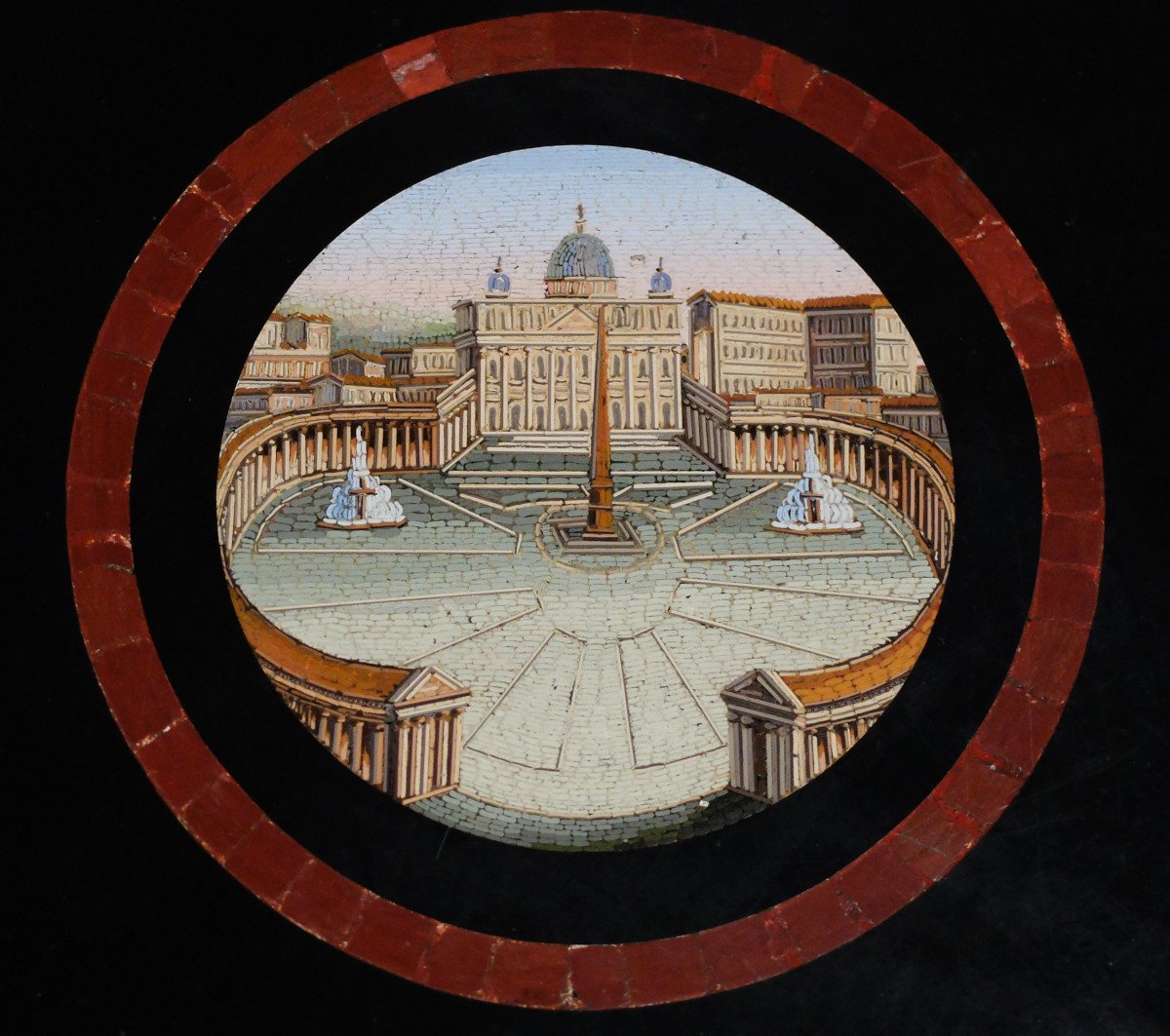
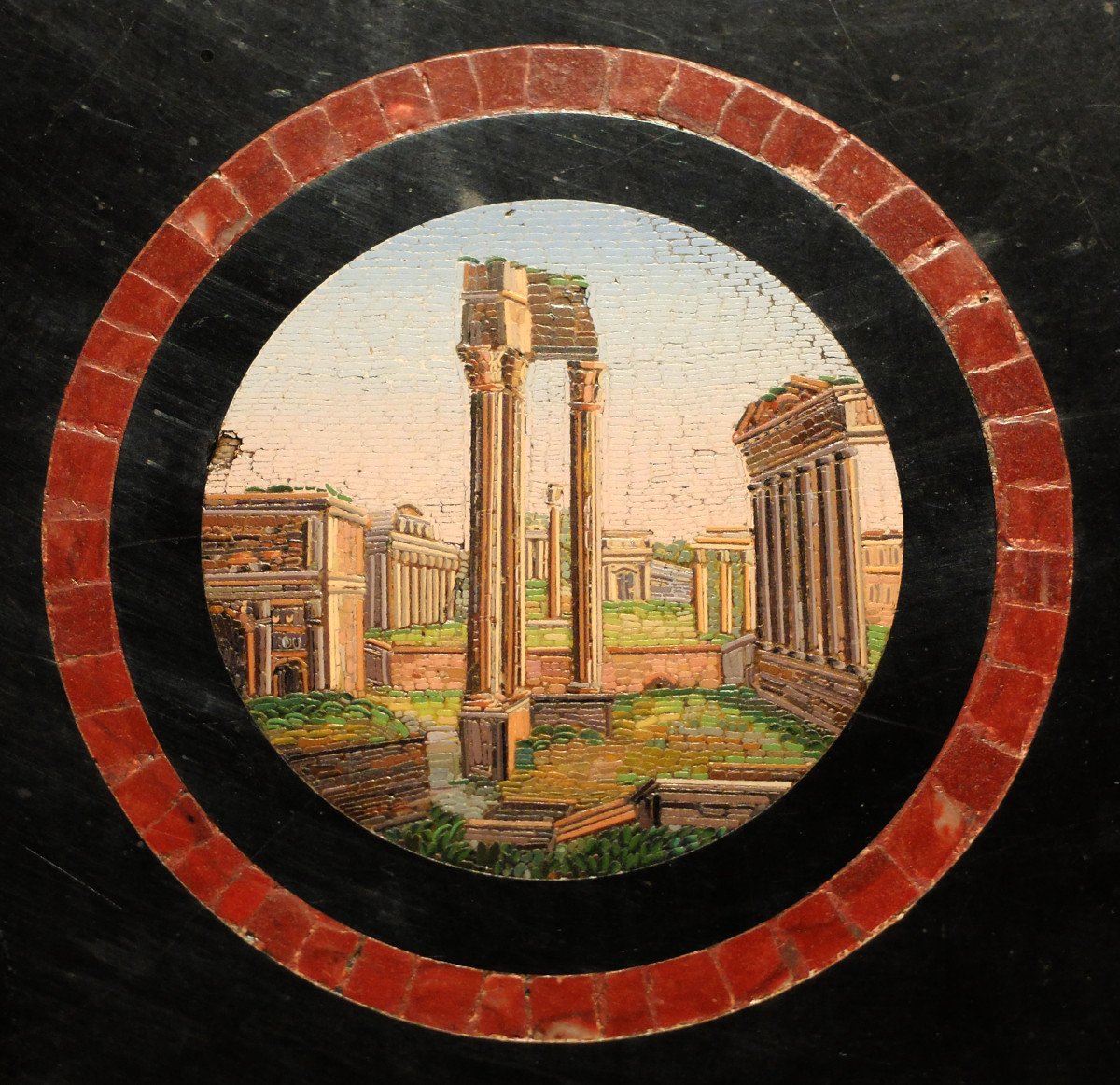
In the center, a perspective of Saint Peter's Square. Around it, 6 medallions punctuate the composition and represent the ruins of the temple of Vesta, the Pantheon, the arch of Titus, the Colosseum, the Capitoline square and the temple of Hercules Olivarius. The whole is bordered by a belt of red marble tesserae.
Roman work circa 1820/1830.
Height: 73 cm.
Diameter: 63.5 cm.
Around 1730, Alessio Mattioli discovered how to obtain, by various processes of fusing parts of glass, glass tiles whose color does not vary.
Giacomo Raffaelli (1753-1836) brought the micromosaic technique up to date using these glass tiles, smalti filati, often no thicker than a millimeter. These tesserae are then fixed using a putty. In 1775, at the age of 22, he gave the first exhibition of miniature mosaics in his workshop in Rome now called micromosaics. The exhibition was a great success and led to a brilliant career during which he produced a large number of varied works.
Micromosaics experienced their golden age at the end of the 18th century and the beginning of the 19th century. At this time of the Grand Tour, the European aristocracy visited Italian cities and particularly Rome. She contributed to the birth of these workshops where these micromosaic travel souvenirs were created. In 1820, Rome had more than twenty workshops. Jewelry, paper plates, micromosaic boxes and, for the more fortunate, furniture and paintings were made there.
Micromosaics are represented in many museums: Victoria & Albert Museum, Minoritenkirche in Vienna, the Hermitage in Saint Petersburg,...
In the center, a perspective of Saint Peter's Square. Around it, 6 medallions punctuate the composition and represent the ruins of the temple of Vesta, the Pantheon, the arch of Titus, the Colosseum, the Capitoline square and the temple of Hercules Olivarius. The whole is bordered by a belt of red marble tesserae.
Roman work circa 1820/1830.
Height: 73 cm.
Diameter: 63.5 cm.
Around 1730, Alessio Mattioli discovered how to obtain, by various processes of fusing parts of glass, glass tiles whose color does not vary.
Giacomo Raffaelli (1753-1836) brought the micromosaic technique up to date using these glass tiles, smalti filati, often no thicker than a millimeter. These tesserae are then fixed using a putty. In 1775, at the age of 22, he gave the first exhibition of miniature mosaics in his workshop in Rome now called micromosaics. The exhibition was a great success and led to a brilliant career during which he produced a large number of varied works.
Micromosaics experienced their golden age at the end of the 18th century and the beginning of the 19th century. At this time of the Grand Tour, the European aristocracy visited Italian cities and particularly Rome. She contributed to the birth of these workshops where these micromosaic travel souvenirs were created. In 1820, Rome had more than twenty workshops. Jewelry, paper plates, micromosaic boxes and, for the more fortunate, furniture and paintings were made there.
Micromosaics are represented in many museums: Victoria & Albert Museum, Minoritenkirche in Vienna, the Hermitage in Saint Petersburg,...
24 500 €
Period: 19th century
Style: Other Style
Condition: Excellent condition
Material: Marble
Reference (ID): 1233456
Availability: In stock
Print